Not during broccoli season, mate…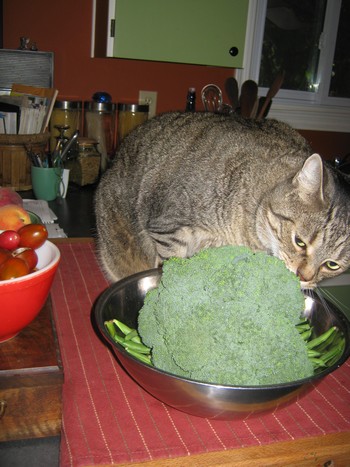
Author: carin
‘morning, glory…
Sunrise.
Sunset.
And repeat…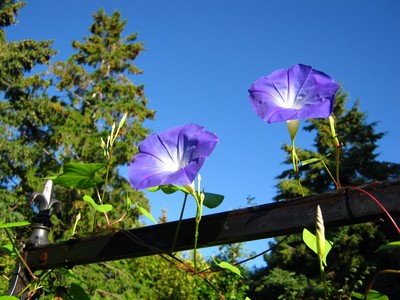
part 9 — finally: speechless in vancouver
The ferry from Victoria can hardly dock for wind and rain and other wonders. It’s been eleven days of damp, but we’re not complaining. Not in god’s country. Not in the land of the lotus. We’re from Ontario. Mountains make us not care about rain.
Our latest B&B headquarters—O Canada House—is in downtown Vancouver where we notice a distinct lack of mountains, but we do have a private patio and the happy vibe continues, so despite the dripping ivy, we pour ourselves a glass of wine and sit outside in boots and rain hats under the eaves where, appropriately, I decide to make a small watercolour painting.
We do laundry on Davie Street and I write poetry at breakfast while looking out at a neighbouring window propped open with books. I find myself in a discussion about the use of zip code versus postal code and what I see as a rampant disregard for the letter ‘u’ in words such as favourite and colour and am told, in merry laughing tones: does it really matter, seeing as how at the heart of things we’re all Americans anyway… at which point my ears become hot and many impolite words cross my mind. Some of them containing the letter ‘u’.
We duck into a restaurant out of the rain and are served a cup of hot chai without even asking for it. We stay for dinner.
At the art gallery there is a Chagall exhibit. My favourite piece is from the illustrations for Dead Souls, ‘The Table Loaded with Food’, which shows whole animals on platters.
One morning, while Peter is doing something else, I join a bus tour with several hundred other people more intent on chatting to one another than listening to the guide. I make notes on what I catch through the din. Vancouver City Hall was purposely built on a hill so that the mayor could look ‘down’ on citizens…
It is in a bookshop at the Bloedel Conservatory that I discover Douglas Coupland’s City of Glass, and then lunch in the tea room under a glass roof in the rain.
On Granville Island we recognize a busker from the Distillery District in Toronto. He cannot say the same for us.
Also on Granville Island, we fall in love with a coffee table, recycled from an old wheel mold from the 1940’s, and in a mad moment, buy it, and arrange for shipment to Ontario. [One of our best purchases ever.]
More than once: calamari at The Sandbar, on the roof patio, by the fireplace, overlooking the water. Then home via paddle boat cab and a short walk.
Toward the end of our Vancouver stay, laryngitis strikes; I’m convinced this is due to not eating enough garlic during our travels. The weather never occurs to me (mountain ‘happy’ effect is very strong). I walk to the Chinese market and buy chicken soup. A day or so later, I’m fine. But Peter, ever considerate, and after two solid weeks together, much of it spent driving, suggests I not take any chances, that resting my voice a little longer wouldn’t hurt…
And that, as they say, is that.
[C’est fini. See ya, BC, it’s been a super yummy slice…]
Part 8 — a trilogy of salmon, dead elk and the raj
Victoria: dry. For the moment.
Not that it matters a lot as we’re on Malahat Drive, north of Goldstream Park, stuck in traffic. An accident has made the two lane road impassable. For several hours, the ignition is off. I alternate between reading and painting my toenails loganberry.
Later, at dinner, we’re zonked and amuse ourselves by guessing what’s up with the people next to us, who we’re pretty sure are divorced but get together and play nice occasionally for the kids—a mixture of hers, his, theirs. It’s the dad’s birthday and the woman has got him a sheepskin jacket and a belt which makes quite a large parcel to open at a small table full of place settings and other dining debris. The man is very cool to everyone and the woman cuddles and kisses only a young girl, ignoring the other two children, one of whom is most certainly only his because later on he and that child leave and then he, the man, returns alone as if having returned the child to its rightful mother. Soon the whole gang leaves. Frankly, whatever the deal is with these people, I don’t think it’s going to last.
Our B&B is named after a small white dog; it has the most comfortable bed I’ve ever slept in [I make note of the mattress but find that it’s been discontinued], a lovely shower and is in a great neighbourhood with good book shops. The only oddity is the owners who, each morning, deliver our breakfast trays to the room, a nice but unusual touch given that they linger just a little too long as if having a look around to see what we’ve been up to in the past 24 hours. I find myself tidying the place before they arrive.
There seem to be no roads that run at right angles in Victoria, nothing east, west, north or south. This plays havoc with my almost non-existent sense of direction. We’re told that when the city was planned by the British, it was considered lower class to have streets running on a grid. So it’s all upper class circles and lanes and things turning into other things without warning or signage. Apparently it doesn’t get better when you live there—they say you can tell the tourists: they’re the ones without the maps.
At the gallery are Paul Drury etchings, my favourite of which is the Old Man Reading in which the man remains exactly the same but the background changes, which completely changes the mood, what we assume he’s doing, everything. Here is the picture: old man sitting at table, head in hand. In the first frame the background is that of a cafe, a newspaper is on the table in front of him. In the next, the walls are blank and on the table is a book, not a newspaper. He has a pipe in his mouth. In the first picture he seems poor, working class, perhaps even out of work, distraught, head in hand as if to say woe is me, I’m rotting away in this grotty cafe, reading yesterday’s paper. In the second, although neither his expression nor his clothing is different, he seems privileged and content, possibly sitting in a library reading Homer, head in hand because he’s so intent, absorbed in its brilliance.
Also at the gallery, a samurai exhibit. Quite a poetic lot, it seems, between bouts of slaughter. The epitome of this class was Miyamoto Musashi, who wrote The Book of Five Rings in the 17th century—it’s still used today to teach business strategies.
Lunch at the Wharfside Restaurant, a little commercial but right on the water, plus we get a window seat. Peter has a wild mushroom pizza and I have the salmon trilogy, which is how I learn I don’t like candied or pickled salmon. The remaining third of the trilogy—smoked—is lovely. Two very small people at the next table order The Dim Sum Experience, The Seafood Platter for Two, which is enormous and on top of which they have a whole lobster each and then share a pizza. They drink beer with gusto and laugh non-stop. Peter leaves to make some phone calls and I linger, watching yet another table… an elderly man and what I assume is his granddaughter, a girl of maybe seven. He tells her stories and she smiles, listens intently, then when he’s finished they chat up a storm and she asks mile a minute questions that seem unconnected. At one point she says: “Are you farsighted?” Eventually I settle down with notebook and pen and for some reason remember a dead elk we passed in the back of a pickup on the way to Tofino. I connect this to baked spaghetti and pickles and somehow manage a short story before Peter returns.
We don’t want to but feel we must visit the Empress Hotel. The whole waterfront area is a bit too touristy if you ask me. Glass bottom boats and Madame Tussaud’s, double-decker buses and Beefeaters in cheap uniforms fit only for photos. A teenager curses us for not giving him bus fare to Port Hardy. Inside the hotel, there’s a great memorabilia collection—photos and menus with food items I’ve never heard of, old registry books [most guests were from the States even then], and my favourite: dance cards listing waltzes, foxtrots, etc., with a space beside each to check ‘taken’. The architecture and the history are worth absorbing, but then there’s something called the The Bengal Room, which strikes me as everything that was wrong about the Raj. All those dead animal heads on the walls, skins, whirring fans, dark panelled walls, serving boys… So dark inside it hurts my eyes to come back into the light of the real world.
Dinner is at Sooke Harbour House where the waiter explains that the menu is ‘nature driven’. By which he means they have a garden. When serving the wine [Sandhill ‘One’ from Phantom Creek Vineyard] he warns that it’s ‘inherently schizophrenic’ and checks back later to see if it [the wine] is becoming ‘unified’ on our palate. For some reason he, or the owner, or someone, takes a shine to us [because we have put up with phrases like ‘inherently schizophrenic’?] and at the end of the meal we’re treated to a couple of glasses of ‘Cobble Hill’—a truly exquisite nectar made by accident in the process of making vinegar. It is sweet and rich and creamy and perfect with the blue cheese and walnuts that are served along with it.
We’ve been on the island eleven days. Most of which have been rainy. It’s raining still on the morning we’re set to cross by ferry to Vancouver and while I’m expecting a rough sail, it’s completely smooth and strangely pleasant; there are very few passengers and so we move through heavy fog in silence, like a chilly meditation.
rise up, indeed…
Any which way you can.
A fresh perspective is a beautiful thing!
Part 7 — we are now one with the rain
Tofino: yes, it’s still raining.
But it doesn’t matter. We’ve forgotten what sunshine looks like anyway so no longer know what we’re missing. What, we’re missing something?? Not only that, but rainy weather means fewer people on the beach and the place we’re staying provides wellies and umbrellas and rain coats and our deck overlooks the ocean and we wrap ourselves in blankets and sit under the awning and have hors d’oeuvre and a glass of something that isn’t vinegar and later we have Dungeness crab for dinner. So you know what? Rain shmain.
Our room is lovely and quiet and we sleep well and in the morning after breakfast play chess in the great hall, next to the fireplace. We don rain gear and walk the deserted beach then head out to the aptly named rainforest where I worry about bears but am assured by someone who’s meant to know that they’re all at the creek looking for salmon. That creek? I ask, pointing, and the wise one says, uh, well, yeah, but not at this part of it, exactly…
Sometimes you just have to believe.
We stop at Tofino Gardens, which is twelve acres of land dedicated to preserving native species. (The only non-native is a 12′ Himalayan Lily, which takes years to bloom; the guy who runs the place says if it blooms in his lifetime he’ll be a happy man.) He’s in the process of creating four distinct gardens to represent the area’s ‘gardening’ history, i.e.:
1) first nations
2) european settlers
3) japanese fishermen
4) hippies
I like his style.
Lunch is at a place built right on the rocks and where waves smash against the windows. We have the perfect table for an excellent view; also, we’ll be the first ones swept out to sea should the glass break, all of which only proves it pays to make reservations.
More beach walking after lunch and then into town for some laundry detergent. A good idea given that we’ve been wearing more or less the same clothes for a week. We meet several locals—Tofinoites—young people mostly, slightly foggy, dreadlocked and pierced. A very relaxed hey dude aura prevails.
Postcards on the balcony while clothes wash. There is more chess by the fire at some point.
Later we are happily tucked into our window table at The Schooner, eating plates of amazingly wonderful Jensen Bay clams; the wine is Hawthorne Mountain Gewürztraminer and the rain…really, who cares?
Our last day in Tofino. We’re relaxed, recharged, bordering on hey dude… We read and walk and walk and read some more, then drive to lunch at the Blue Horizon where there are houseboats moored on the dock of a nearby island. As I indulge in my fantasy of having a giant garage sale and going to live aboard one, our server comes by and tells us there’s a terrible controversy going on between the owner of the island, who, since the 1960’s has been letting people moor regular boats for free, and if they live there, they pay him a small fee. The town, however, is in a snit because it’s suddenly occurred to them they haven’t been cut in on the deal. We’re given binoculars for a better look and told that if we look just there we should be able to see the anchor of the Tonquin, which sank some many moons ago. We see the anchor but have never heard of the ship.
After lunch we walk around the marina and the pilot of a sea-plane that’s just landed comments on the weather: bloody incessant wind and rain and cold; it’s raw!, he says, and we say, ah well, never mind, it’s still a beautiful place to be, and he asks where we’re from and then says, “Yeah, well, I guess if you’re from Toronto anything’s nice…”
Back at the beach for one last walk. We take misty photos of ourselves in wellies and then watch as a huge team of kayakers arrive, all barking instructions, loud and annoying with walkie-talkies.
Time to go.
Part 6 — six things on the way to tofino
1. Cathedral Grove in McMillan Park: rainy but too magnificent to care.
We’re practically the only people here and the feeling of being alone with these ancient trees, in this ancient unchanged space, is almost holy. I’m overwhelmed, in awe. It’s not just that some are 800 years old, 75 metres tall, 9 metres in circumference, or that they survived a devastating forest fire 350 years ago—not to mention surviving Europeans and settlers and us, including somebody’s recent (thankfully kiboshed) idea of a good plan to log the area, plough it over and make a parking lot [Joni Mitchell wasn’t kidding]—I’m not in the kind of awe inspired by facts or history or romantic stories; I could have been dropped blind-folded into this place and I’m quite sure I’d have sensed I was in the midst of something pure, something kinder and gentler than us, bigger in every way. I think of Emily Carr, and how she wrote about the trees she loved to paint, how when she died she wanted to be buried among them so she could give something back. I want to sit, take it in, stay a while and read those passages again now…
2. There’s a weird vibe as we drive through Port Alberni. At the West Bay Hotel (which is attached to a convenience store and where we are the only guests, room 12), the chef, a woman with Farrah hair and big eyes, tells us there’s a lot of sadness in town, that the mills are about to go on strike. Her specialty, and her logger husband’s favourite thing in the world with an ice cold brewski, she tell us, is baked spaghetti. We’ve never heard of spaghetti being baked so we order it along with a glass of the house red [the only wine they have] which turns out to be Gala. Not Gallo, but Gala. [Note to self: baked spaghetti good; shoulda had a brewski.]
3. In the morning we notice a beaver swimming in the pond outside our window and in the dining room a spider has made a mammoth web over our table, connecting chair to wall.
4. Next stop: Ucluelet (which we can’t pronounce until someone tells us that the clue is in the clue)
5. On the road leading into Ucluelet a sign explains how to behave in the presence of a black bear, which is different than if you meet up with a grizzly. The rule is play dead with a grizzly and walk away from a black. That’s right, just stroll away… they’re usually after salmon anyway, so unless you’re in any way orange and a bit slippery, you’ve got nothing to worry about. I disregard the instructions of course and immediately look around, prepared to scream and run at the first sign of fur.
6. There is no fresh crab at the Rusty Anchor as promised on the large sign out front. They apologize, say they don’t have their own traps and are waiting for a delivery—and even if they did have it, it’s best to call 30 minutes ahead to order so they know to put the pot on to boil. We have a lovely table by the window, overlooking the bay and fishing boats with miles of netting; you can only imagine the nets on the huge trawlers, the damage they do. There are whale watching excursion boats up the whazoo and ATV tours to “see nature”. This, we’re told, is what they do to supplement their logging incomes. An elderly woman with long grey hair and tattoos comes in and sits by herself, drawing in a notebook. Our server, a young lad with a local dialect, arrives with our salad; he apologizes for the sans crab situation in the nicest way and hopes we’ll be happy with the mountain of shrimp they’ve given us instead.
[Part 7: Tofino, where it’s said if the wind ever stopped blowing all the trees would fall over.]
Part 5 — at last, oysters
Campbell River: chilly, but clearing.
Travel Tip—When in line for a car ferry, keep your eye on the truckers. As soon as they stop shooting the breeze and checking each other’s cargo you know it’s time to board. Truckers are always the first to know everything.
Lovely sail over to Quadra Island. Chill in the air be damned. Trumped by the view and wind in my hair.
We drive forty-five minutes up the island on beautiful, albeit dodgy, semi country/semi deep woods roads, following cryptic directions from our host (turn right at the lightning-ravaged elm then left where the creek forks and go just past the fava bean farm… not the string bean farm, the fava bean one…). The directions turn out to be perfect and without a single hitch we arrive at a lane and a sign for our organic farm B&B.
As we turn in, a white chicken jumps out of the shrubbery and runs alongside our car in a very excited sort of chicken waddling way, ushering us in the whole way to the house. We’re amazed and honoured. The Mr. of the B&B and a yellow lab greet us and we chat briefly and as I’m remarking on the beauty of the place, saying I’d love to stroll through the garden sometime, the Ms. of the B&B pops her head out the back door and hands me a bowl, and without a hello or a howdoyoudo, says no one goes in or out of the garden empty-handed and would I pick some nasturtium flowers for the evening salad. Oh, I love nasturtiums, I say; would she like leaves as well as flowers? She doesn’t answer immediately, looks quite disappointed in fact, and it occurs to me that she wasn’t prepared for my familiarity with flower eating, that it’s possible I’ve denied her the pleasure of shocking me. In any case, she’s not amused. This is the first sign that we’re not merely at an organic farm B&B as we’d hoped—to breathe clean air, eat fresh food and learn how to pick wild mushrooms—but at a B&B that prides itself on offering an ‘organic farm experience‘ to city folk who for the most part don’t the know the difference between parsley and chives.
Like Elizabeth from Düsseldorf, the other guest at the farm. I meet her at dinner and then again in the morning, in the garden, where she’s working in the rain. She wears big black wellies, a rubber jacket and a red headband. She’s our age, maybe a little older, has been coming here for six years, always for a month, says it’s a much-needed break from her noisy, lonely life in Germany where she has no garden, no animals. I suggest potting up some window herbs or a Philodendron, maybe get a goldfish… she laughs, says it’s all too much trouble, that she enjoys such ‘complications’ on a holiday basis only. In fact she enjoys the farm, the chickens, pigs, the dog, so much that it takes her three months to get over it all when she returns home and then she spends the rest of the year waiting for her next visit. She sighs heavily as she leans on her muddy rake, says it’s a funny thing, but in Germany she hates the rain, here she loves it. [I know this is supposed to mean something… but what??] She’s a bit intense, I decide. Peter says she’s a downer. But she’s quiet and clean and since we share the loo, this is important, and I’m grateful.
Later, I drive Peter to his dive group and then go to a yoga class the Ms. has invited me to. A beautiful space, all windows, surrounded by forest; I do sun salutations to the sound of rain and distant thunder. I figure maybe they’ll help.
The Mr. has promised mushroom picking later today but when I return to the farm he says it’s off. The reason is to be found somewhere in the two-hour infomercial he gives me on the wonders of life at the farm and all he and the Ms. plan to do with it, including offering mushroom picking excursions. There will be honey collecting also in this dream version of things. And jam making and nature crafting. He just has to work it out. For now he’s simply happy to have people come and help him pull weeds and pay him for the pleasure.
But I have my own weeds back home and I don’t remember reading about that side of things on the website; I was expecting to learn how to identify ferns and lichen, preserve wild edibles, make herb infused sausages and goat cheese. Yes well, he’s a bit busy, he says. All this rain screwing things up. Besides, he insists, there’s not much out there, lichen-wise.
I notice a mushroom nearby. I point. Look!
He shrugs, says it’s probably not edible. [Probably?]
At dinner Mr. and Ms. tell us about Victoria, how English it is and how thrilling that will be for us; the Ms. is Irish but speaks with a posh English dialect. The architect of the Empress Hotel, Francis Rattenbury, well, not him but his driver, was related to somebody in her family’s past, or to someone she knew… or knew of. Or something. She rattles on about it all through the meal then loans me a book on Rattenbury. I must have looked interested.
The salmon, we’re told, has been caught especially for us and it’s delicious. Garden veg and homemade wine (which is all the Ms. can drink because of the sulphates or some other ingredient found in good wine). The Mr. is all for the stuff we brought and so is Elizabeth (as is the most recent guest: an Irish cattle rancher who’s just come from a round-up in Alberta). We open a second bottle and finish only half, put the rest in the fridge where it disappears by morning. We guess it was Elizabeth but don’t begrudge her given she’s here for a month with only the house plonk.
We have tea and coffee in the lounge by the fire and eat homemade double chocolate zucchini bread with freshly whipped cream. Elizabeth sits morosely in a corner, likely contemplating the swiftness of passing days until she has to return to her self-imposed lifeless life in Düsseldorf. But the food and wine and conversation has made Mr. and Ms. quite sparkling and pleasant, their strange, accusing, angry sadness temporarily gone, and the evening is really quite lovely.
Could be we’re just getting used to the place. Rubber boots can’t be far off.
We spend another day hiking and climbing, driving around the island, puttering about the farm, and then on the morning we leave we ask the oyster question: where can we get some? Ms. says there’s probably none for sale on the island but we can collect our own; she gives us directions to a pristine little slice of water where for a moment we consider canoeing but it’s raining and we don’t have much time not to mention a canoe and never mind—we stare out at the perfect silence and breathe instead. We see eagles, find oysters. It’s enough.
We bring back the shells all agog with happy anticipation; Ms. laughs, tells us they felt the same way when they first moved here, when they had no idea about farming. She says they took comfort in the oysters, knowing at least they’d never go hungry. But, she adds, things are changing, the logging, shipping, destruction to the land, the water, the oyster beds; soon there won’t be any left. Residents came here for a simple life but nothing’s simple forever it seems. She tells us about the issues, how they have rallies and protests against the machinery and devastation; we’ve seen only a small bit of it, didn’t know how bad it was. And the politics takes time away from tending beehives, she says, and, worse, it does little good. Eventually life on Quadra will be changed; it’s beauty ravaged and the typical man-made mess left behind.
The Ms. lends us her oyster knife and we suck the cold salty meat out of the shells—and this only an hour after a breakfast of rhubarb bumfi, homemade bread and yoghurt, berries and freshly laid eggs. The combination seems odd at first, but then, quite fitting for this place. Quite perfect really.
[Part 6: back to the mainland and over to Tofino. Baked spaghetti en route.]
Part 4 — art and the scent of oysters
Qualicum Beach: Fog.
I see a sign for an arts centre. Let’s stop, I say.
We don’t expect much from the tiny white building in this quiet town, nor do we expect much from the small white woman that sits at the desk inside. She seems startled as we enter, says they don’t get a lot of visitors. She’s very nice but knows nothing about the current exhibit—needlework wall hangings of some kind. There is no literature. We thank her anyway and wander about on our own, trying to figure things out and then another woman appears and life changes completely. She is the curator she tells us, and these are not needlework wall hangings or even embroidery, but tapestries, locally made by a women’s guild. She walks along with us pointing things out, explaining the difference [a tapestry is woven into the cloth, embroidery is done on it]. She describes how they’re made, talks about dye and warp and weft, looms and history, the stories they tell, the symbolism, their original purpose. She cites a few famous, ancient, examples and tells us if we ever find ourselves in Normandy we must see the centuries old Bayeux tapestry, which, she adds, is technically embroidery. She travels all over the world, visiting tapestry museums, it’s her thing, she’s mad for them, she says. By the time we leave, so am I.
Art makes us hungry and we go in search of lunch—aka: oysters [we hope].
At Fanny Bay the air suddenly pongs deliciously of seaweed and salt. An old red boat, once used as a restaurant, is beached near an oyster shucking station set out a good distance in the water, got to by row boat. It’s nothing more than a huge open-sided shed inside of which are oyster shucking tables, piles of oysters and several shuckers. Fanny Bay oysters, we learn later, are mostly huge and used fried or baked or cooked in some other way… oyster burgers are a big thing out here. Near the beached boat is a very small rustic packing plant where oysters are readied for delivery. We ask the assembly line workers where we might go to eat some oysters. They look dazed. Probably wondering why anyone in their right mind would want to eat the #$*&ing things. They shrug, say up thataway, or back thisaway, and we leave with no concrete recommendation of any specific dining establishment.
We head thataway and hope for the best.
At Courtney (still foggy) there’s a tourist info place and we stop to ask about a place to eat. While the guy is showing us a map with a few suggestions, I remember that Courtney is also famous for a glacier. The guy says it’s a five day hike with a guide and I say, oh, I was sort of hoping to see it before lunch. Well… he says, you can ‘see’ it from anywhere in Courtney, on a clear day, that is. He points out the window, says it’s just there on the side of the mountain. [Mountain?? What mountain?] Today is not a clear day.
We have lunch at the Edgewater Grill, which is indeed on the edge of the water but despite being surrounded by oysters, there are none on the menu. We have salad and halibut, clams and chorizo. All very pleasant. Afterwards I make an inukshuk on the beach and Peter takes a picture of me, my hair so wild in the wind that my young niece, on seeing the photo later [I thought the inukshuk would amuse her], looked horrified and said: auntie Carin, what was wrong with you??
part 3 — wanted: a room with a view, that’s all…
Nanaimo: rain.
Plenty of choice accommodation-wise but, as usual, we fly through town without stopping. We’re looking for charm, something sweet on the water. And anyway, what is the point of staying in Nanaimo if we can’t see Newcastle Island for fog… and who wants to stroll along Harbourside Walkway in the rain?? We add it to our list of places to stop on the way back and plod onward in our search for charm.
It is 7pm.
10 pm our time. We’ve been on the move since rising early back in Ontario—then the flight to Vancouver, Victoria, now this drive. We haven’t had dinner yet. The cold chicken lunch in the parking lot off the Malahat seems days ago. We decide to find a place for the night in Parksville; charming is no longer a requirement.
Someone along the way mentioned there was a Tiki Tonki Lodge or something right off the highway, on the water, very nice they said. We find the place and it’s not bad but a little too Tiki Tonki–uniforms on staff, fake logs, cutesy names for bathrooms: heifers and steers, that kind of thing. Also very pricey for a room the size of a postage stamp and it’s not on the water but more in the vicinity. You certainly can’t see water. Still, it would be nice to stop driving, get dry, relax. But, nope, the vibe doesn’t feel right.
We look at a place next door that’s almost deserted; cement breeze block reception area with too-bright lighting and an overly relaxed attendant; we’re told we have to take a grain elevator down to the rooms, which we consider doing until we notice a walking path that also leads to them. The place spooks me. We get back in the car, decide to go into town and find a Best Western. Charm seems too elusive at the moment.
On the way we see a sign: Beach Acres. We pull over and within minutes I know we’ve been led here by the god of weary travellers. The room they offer, at a great price, is essentially a condo unit. Two floors, three bedrooms, one with a deck, two baths, living room, fireplace, kitchen, patio. And… it’s right on the water. Peter runs into town for some take-out grub and we open a bottle of wine, watch the sun set and the moon come out, listen to waves, only sorry we didn’t find this place eight hours ago.
In the morning we walk on the beach at low tide; people dig for clams. I try to do some tai chi but am too self-conscious what with the clam diggers about, not that they’ve noticed me. We find a poor jelly fish holding its breath, waiting for the tide to come back in, take pictures, walk and walk, breathe deeply. It occurs to us there’s no rain and we decide that Parksville may be the most perfect place in the universe. Or at least on Vancouver Island.
Peter calls work and I have the pool to myself, swim almost for an hour. We check out and treat ourselves to a late breakfast at a nearby inn, very upscale Victorian swank. We’re told Rudyard Kipling once stayed there. All I can think is I’ll bet he wouldn’t have if there’d been a Beach Acres then.
Poor Rudyard.

