literary nude

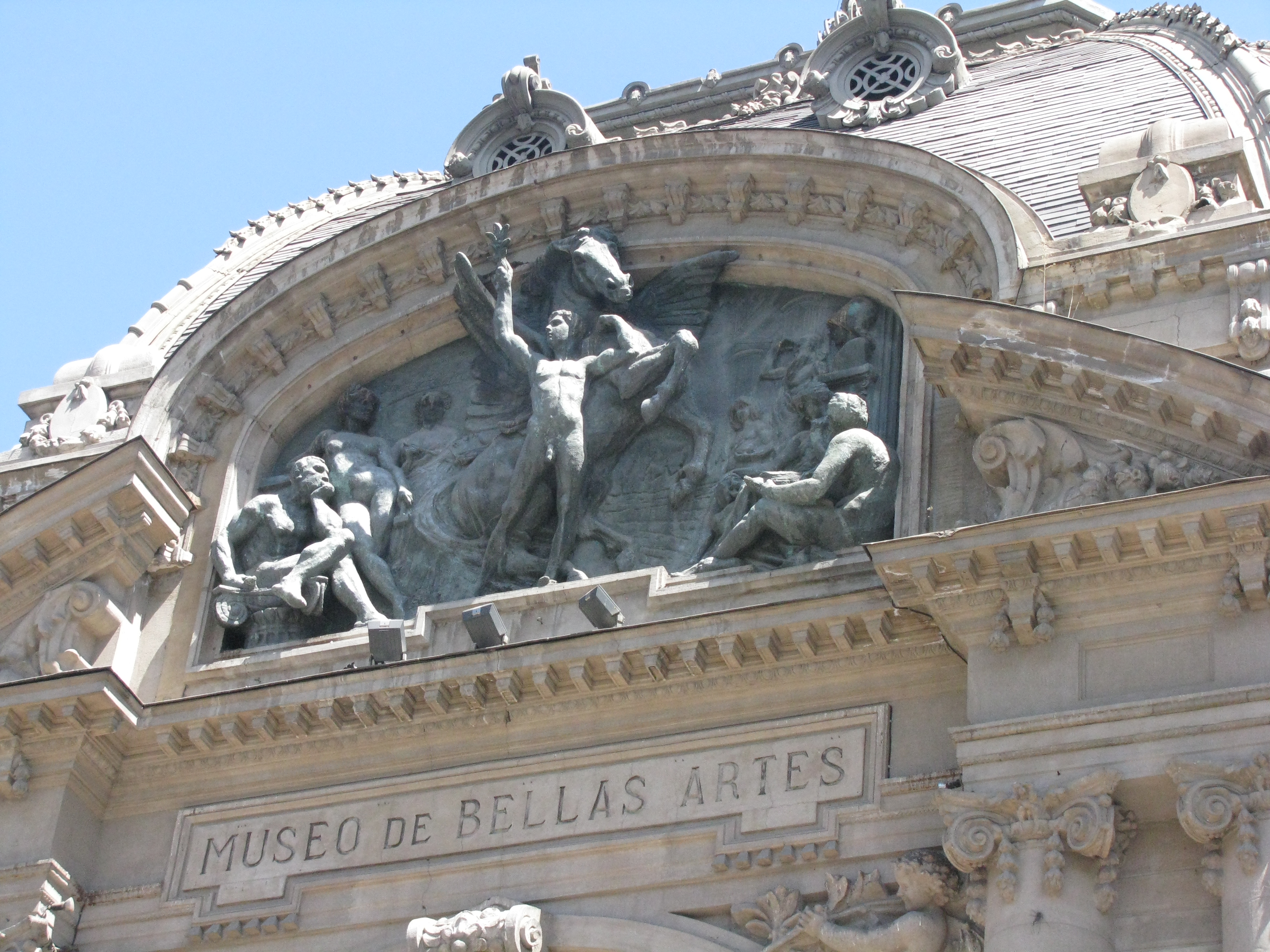
Someone once explained to me that abstract art wasn’t merely a matter of blobbing paint on canvas, which, I believe, may have been my unfortunate description of it at the time. Any artist worth their pigment, I was told, would have an understanding of the fundamentals of structure, balance and light, and would have studied the classic and most difficult subject—the nude—regardless of their own unique and personal style.

It stands to reason then, I thought, that all art must have its own version of the nude, the essential discipline that provides a foundation to which the artist—whether painter, writer, sculptor, chef, musician—is anchored; the percipient vantage point from which they may let imagination take over, adding distinctive colour, texture, words, flavour and melodies.

From Shakespeare to Alice Munro, literature serves as the writer’s nude, the form we study. But merely to read, to admire the body, isn’t enough. We have to know what’s beyond the shape, the words, to look past the skin at the fundamental structures that exist in every story—the style, wordplay, rhythm, the cycle of romantic, tragic, ironic and comedic modes—to find the musculature that gives it the ability to stand on its own before it’s dressed with the details of the action, character and dialogue.

One paints the nude not merely by seeing the obvious, but by appreciating the whole while dissecting its smallest components in order to understand what makes it live, breathe and move.

As writers, reading is second nature—reading the literary nude, however, is a whole other dimension. And until we’ve mastered it, there’s a very good chance we’re simply blobbing words on paper.

this is not a review: help me, jacques cousteau, by gil adamson

Have just read Gil Adamson’s Help Me, Jacques Cousteau, a collection of linked stories narrated by Hazel, an adult looking back on two decades of her life from babyhood to twenty-ish (all seen in present tense, and from a weirdly almost omniscient POV, which, at times threw me off and other times had me convinced there was no other way to go).

Hazel’s family is made up entirely of eccentrics and not one of them knows it. Her father rewires the house whenever he’s nervous, an uncle collects large white animals, which he then takes for rides in his boat, while her grandfather keeps a dead dog in the back seat until he begins to smell it (which, unfortunately, is much later than everyone else does).

Through the ‘younger’ stories, Hazel merely observes and reports (perhaps too much; I would have welcomed more of her), but this, I think, is all part of the apparent ‘nothingness’ of her life as she sees it and, therefore, she’s not really a part of it. There’s a kind of unspecified disillusionment with this family that pays little attention to one another, so immersed are they in their own strange behaviours and coping mechanisms.

Despite it all, there is a strong underlying sense of love, as if everyone is doing the best they can. “My mother and I share a fondness for watching insects from a safe distance.” How they turn out is anyone’s guess.

Adamson’s poetic touches are throughout. A girl has “a mouth like a poppy.”

Clouds “resemble the sand in shallow water.”

Cousins pour out of a car “like fish from a bucket.”

In the very last stories, Hazel the character suddenly comes alive and we’re privy to her feelings and thoughts rather than just what’s going on around her. But of course it’s what’s gone on around her all her life that has shaped her.

The epigraph—”Heaven is a place where nothing ever happens”— ends up having two meanings: in one way, nothing has happened and that’s been the problem; on the other hand, how can a grandfather carting around a dead dog in his car be seen as ‘nothing’…?

tell me again who’s smarter?


As I wait to speak to the clerk at the hardware store about wood filler, I listen in on a conversation he’s having with the chap ahead of me about ants and I remember the winter we had our own infestation.

They came in from a crack near the fireplace and mostly just wandered around the family room, watched some TV with us; it wasn’t a problem until we went away for a few days and the guy that took care of our cats left their food out all day. Suddenly the ants knew where the kitchen was. I wasn’t as blasé about this because—despite my fondness for all creatures and the belief we’ve got to share the planet and it’s not just ours ours ours—it really is quite disgusting to see dozens of ants crawling over some little tidbit on the floor.

Then it occurred to me that it’s equally disgusting to have tidbits on the floor.

I was blaming (and, to be completely honest, squashing) ants for the crime of eating the buffet I’d more or less put out for them. They must have wondered about me. In their world one is encouraged to consume debris, turn it into compost. Imagine their surprise at being attacked while performing the most natural of acts.

I suppose they might have put my actions down to something sensible like a madness brought about by hunger; maybe they even forgave me.

What I’m pretty sure of is that the truth never occurred to them—that humans are simply messy and lazy and don’t vacuum regularly, and that we expect ants to be broad-minded and flexible enough to change their DNA to include an innate understanding that once we erect walls, secure doors and shut windows, the message is: Keep Out.

I want to tell the chap ahead of me that cinnamon sprinkled near the entry point will stop them but it’s too late. The conversation has turned to mice.

____________________________

“These new ants have got into his brain, and he has come back to England
with the idea, as he says, of “exciting people” about them “before it is
too late.” He says they threaten British Guiana, which cannot be much over
a trifle of a thousand miles from their present sphere of activity, and
that the Colonial Office ought to get to work upon them at once. He
declaims with great passion: “These are intelligent ants. Just think what
that means!”

(From—The Empire of the Ants, by HG Wells)

lingering thoughts from mr. blake, with whom i spent the weekend

“Man has no body distinct from his soul, for that called body is a portion of the soul discerned by the five senses.”

“In seed time learn, in harvest teach, in winter enjoy.”

“No bird soars too high if he soars with his own wings.”

“Excess of sorrow laughs, excess of joy weeps.”

“One thought fills immensity.”

“Expect poison from the standing water.”

“You never know what is enough unless you know what is more than enough.”

(Wm. Blake— from The Marriage of Heaven and Hell)

places i (don’t) want to go

I don’t suppose there’s a writer who hasn’t doubted their sanity, much less their ability to write at one time or another. I call it the Why Don’t I Just Take Up Basket Weaving Instead And Put An End To the Frustration Already syndrome.

The answer is always the same: I’m not a basket weaver.

Writing is such a mysterious process on the one hand, and so technical on the other. When you hit a wall it’s sometimes hard to know which way to go—should you hammer away, applying more craft, more discipline, until, by god!, you find an entry point through which you can forge ahead—or is that just never going to happen because what you really need to do at this point is set the thing aside, let it marinate awhile, until you’re ready for each other again…

Unfortunately there’s no one to ask.

I heard Wayson Choy speak to a group once; he said how, in a class taught by Carol Shields, he was assigned a tiny square of pink paper and told to write about it. He hated pink, hated it, and he resisted writing until I guess there was nothing else to do—so, reluctantly, he began writing. As it turned out, what he wrote that day would eventually become The Jade Peony.

His point of course—and it’s been made in other ways by other people, but he’s always the one I think of—is that often the answer we’re looking for, the direction we should take, the thing we should be writing about, lies just beyond whatever we resist most.

So when I’m frustrated to the point I don’t even know what I’m resisting because I’m resisting everything… I take a breath and ‘write colour’. I open my thesaurus, flip to the section on colours and pick one that sounds particularly hideous: zinc sulphide, moleskin, Bismark brown.

If it’s bad enough—and I’m lucky enough—it’s pretty certain to take me someplace interesting that I don’t want to go.

instructions: becoming real

“Real isn’t how you are made,” said the Skin Horse. “It’s a thing that happens to you. When a child loves you for a long, long time, not just to play with, but REALLY loves you, then you become Real.”

“Does it hurt?” asked the Rabbit.

“Sometimes,” said the Skin Horse, for he was always truthful. “When you are Real you don’t mind being hurt.”

“Does it happen all at once, like being wound up,” he asked, “or bit by bit?”

“It doesn’t happen all at once,” said the Skin Horse.  “You become. It takes a long time. That’s why it doesn’t often happen to people who break easily, or have sharp edges, or who have to be carefully kept. Generally, by the time you are Real, most of your hair has been loved off, and your eyes drop out and you get loose in the joints and very shabby. But these things don’t matter at all, because once you are Real you can’t be ugly, except to people who don’t understand.”

“I suppose you are Real?” said the Rabbit. And then he wished he had not said it, for he thought the Skin Horse might be sensitive. But the Skin Horse only smiled.

“The Boy’s Uncle made me Real,” he said. “That was a great many years ago; but once you are Real you can’t become unreal again. It lasts for always.”

(From—The Velveteen Rabbit, by Margery Williams)

from il giardino to valpolicella

Awhile back I wrote a post about a documentary film— Il Giardino; I wrote how the essence of the film had stayed with me and continued to affect the way I looked at my own garden, especially in winter.

It was a post about gardens.

Who knew it would lead to drinking wine with poet and filmmaker, Karen Shenfeld, at her favourite hangout, Il Gatto Nero on College Street (in the heart of Il Giardino country)— Or that it would turn out to be a completely delightful afternoon, filled with good conversation and the discovery of several coincidences, not the least of which being a mutual friend in PEI.

I certainly never expected that, on the way back to my car, I’d be invited into the home of one of her neighbours to see a beautiful piece of folk art and hear the accompanying stories in a voice tinged not only with Portuguese, but with pride and warmth and welcome. 

Of course, all these things happened, I now realize, because Karen has the kind of wide open energy that draws people to her, and vice versa.

Something that struck me most about her posts on Open Book Toronto was the passion she has for her neighbourhood. She offers up the images, writing about the tree outside a window, a book store, art studio, restaurant, a hat shop that was once a tailor. But, as in her film, it’s never really about ‘the thing’— it’s always about ‘the people’.

I’m one of those writers that lean towards the reclusive at times, so the idea of driving into Toronto to meet, essentially, a stranger, to chat about who knows what, should have been uncomfortable.

For some reason I never thought of not going.

The best part of the day, beyond the conversation, the neighbourhood, the wine, was what I took with me when I left—I’ll call it the Il Giardino effect—a kind of energy that inspires, and isn’t soon forgotten.

And one that makes you realize the truth in the saying that there are no strangers, just people who haven’t yet met.