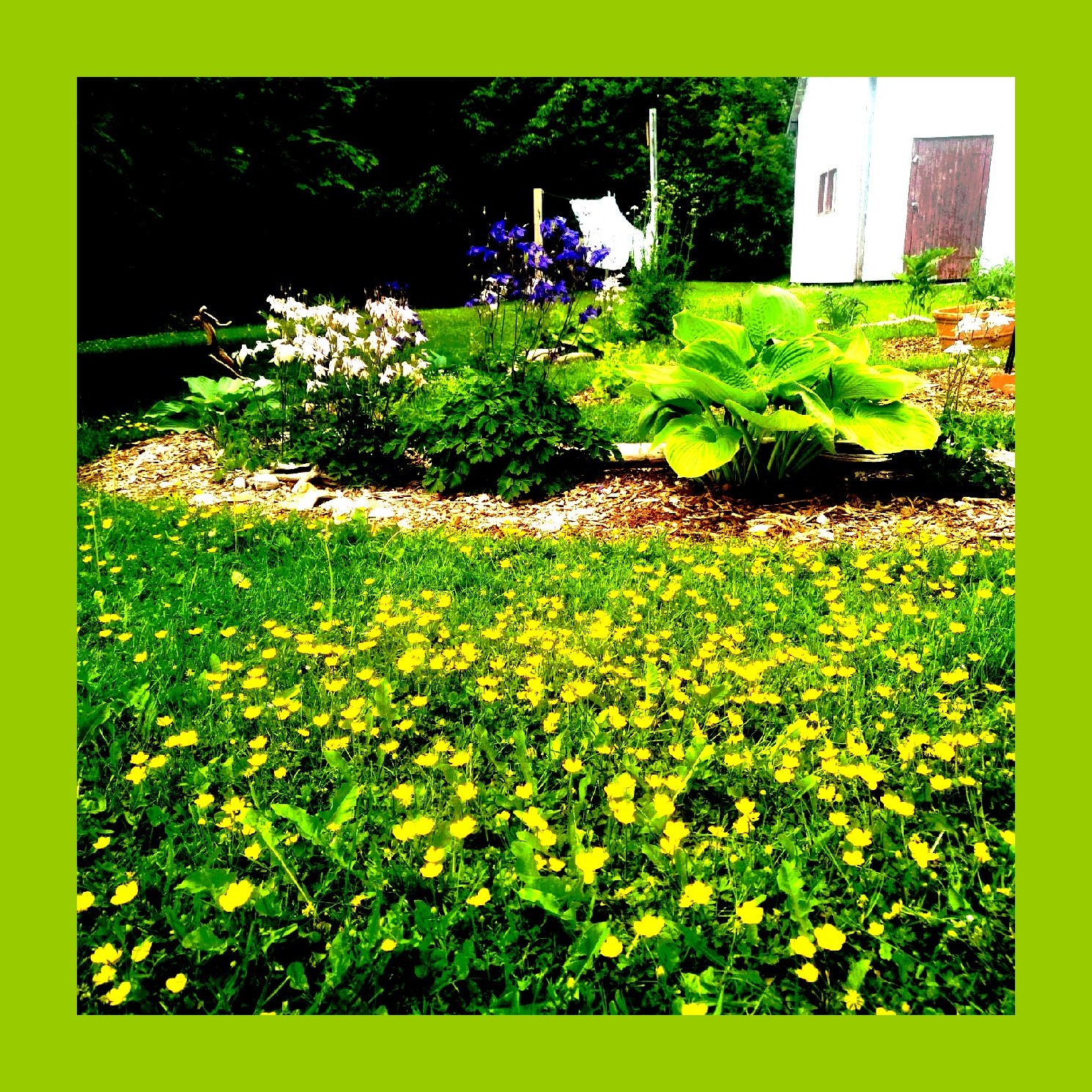
summer postcards: how to write me a letter

seals2 - Copy


Don’t tell me about the weather.

Tell me about rain and sun and wind and the full moon or the new moon and what you are doing with it, the sound of your howling, the colour of lichen at sunrise, the view from where you sit and what your most recent conversation with the cat was about.

Here it was seals.

But it’s often about seals with us.


summer postcards: name that tree

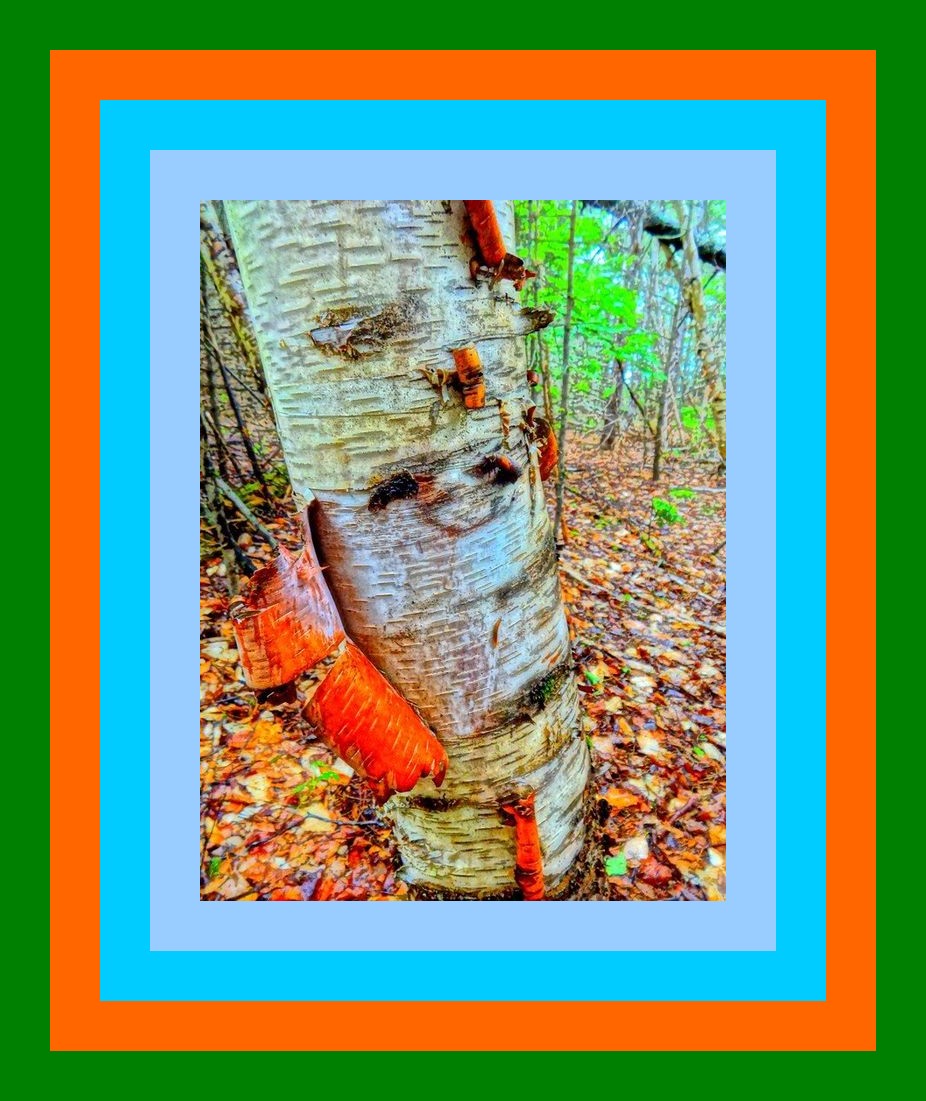
birch1

I’m more in love with trees every day now that I live with a forest. Am learning how they’re a community and speak to one another and how sometimes what we might call ‘crowding’ they call protection and comfort. Left to its own devices a forest pretty much knows how to be.

My interest is in understanding that being.

And these new neighbours of mine, the tamarack, beech, alder and spruce, fir, pine, aspen, among others, have introduced themselves and now that we see each other every day it’s impossible to see them as the same or even similar, impossible not to notice all kinds of differences in the edges of their leaves, their bark, how they each dance to their own drummer in the wind.

I’ve named some of them. Which of course is always a bad thing if you plan on eating a thing. Which, fortunately, I won’t. At least not entire trees. Although many parts are tasty and full of goodness. Spruce tips make excellent jams and pickles. Tea can be made from certain leaves. Most catkins are edible, and so much more.

In early spring I considered tapping a few birch for the water that’s said to be delicious and nutritious (syrup is too fussy for me) but now that we chat regularly, now that the birches have names… I just can’t do it. That water’s in there for a reason. I figure they need it more than I do.

And anyway, they’re already giving me plenty.

how to plant nine onions


Start with 10,000 or so.

Red onions.

Buy one of those little cell packs at the garden centre where they grow crowded together like blades of grass with a hint of white pin-prick bulb at the end. There are at least 10,000 in there.

Plant bulb-side down.

8″ apart.

Run out of space in your onion bed when you have nine left.

Consider squashing a few together because they are SO small, how can it hurt and you’re sure you’ve read something where it’s actually a good idea to squash them together.

Have a moment of doubt.

Consult your trusty gardening guide. (Don’t judge its falling apart condition. It is one of your best friends. Do consider creative use of duct or other tape at some point.)

Discover that onions love tomatoes.

Instead of squashing, decide to plant them companionably in the (as yet unplanted) tomato bed.

Dig over tomato bed and amend with manure from the cow named Rose down the road, which has lived under the tarp since last summer. (Manure, not Rose.)

Figure you may as well amend all the beds while you’re at it.

Dig dig dig. Manure from pile. Manure into garden beds. Finish with rake.

Whew. (wipe brow)

Decide to keep the last bit of manure for pots. Decide to keep it in the wheelbarrow not on the tarp. Enlist someone to help you lift the tarp and tip into wheelbarrow. Move now full wheelbarrow back to shed.

Clean tarp.

Decide to seed white clover over the bare spot left by manure on tarp since last summer.

Cover seed lightly with earth from earth pile (dig dig dig), which you will now have to carry in a bucket because the wheelbarrow is in the shed, full of manure.

Decide to seed a few other bare spots with white clover.

Dig more earth.

Water clover’d areas. (Unravel hose and drag around to clover’d areas.)

Go back to tomato bed and make a row with trowel.

Plant nine onions.

8″ apart.

book

this is not a (book) review — ‘the truffle hunters’


Recently watched ‘The Truffle Hunters’ which someone told me was about nothing and that nothing happens but that I would probably love it.

The someone was right. I loved it.

Wrong about the nothing though.

Far more everything than nothing in the ordinary daily lives of Italian white truffle hunters and their dogs. The dogs being essential to the finding of truffles and the finding of truffles being essential to the livelihoods of these people and how everything is symbiotic.

One long perfect scene is shot from the dog’s perspective in the moments while waiting to be let out of the car, then running through the woods. Another has a man and woman washing tomatoes in deep silence, just the splash of water, tomatoes being picked up, rinsed, put down, picked up, dried, no other sound until the man eventually says: I love fresh tomatoes so much. In another: a man wears shorts in the bathtub while washing his dog. In another: a 90 year old man feeds his dog treats while telling it not to be alarmed but there may come a day when he won’t be around anymore.

The side story is the enormity of the truffle industry with clients around the world, the ugly, ruthless chain of Big Business. But this part is only briefly touched on, more implied, this polar opposite view of a ‘commodity’. Thankfully the focus of the film remains on the simple origins of the commodity, the integrity of the truffle hunters themselves and the love, pride, and passion for their work.

And the dogs.

Everything.

There is of course another element, something the film left out — the fact that any mushroom, even truffles, indicates the presence of fairies.

But I suppose that’s another movie altogether.

And I would probably love that one too.

mushroom

one year


A year ago today we woke up in an RV after spending the night with our cats parked in front of a motel on the border of Quebec and New Brunswick.

We’d paid for a room but only to get the parking space. Covid protocols were wild and up until a few days earlier we hadn’t been sure we’d get the green light to travel at all, still didn’t know what would happen at the New Brunswick and PEI borders.

Anyway, we woke up in this rinky dink gravel parking lot where all night beside us was a small red car, motor running, and a group of (based on their clothing) young Amish or Mennonite folk with a parrot in a cage and a dog with a rope tied to its collar, both of which critters they kept taking in and out of their room for what seemed to be ‘walks’ or feeds from plates of scrap food. They were a highly excited group of kids, laughing, running about (maybe sixteen, eighteen years old, tops), not offensively loud just… overly happy for the time of day. It started to rain at one point and yet they still larked about, in and out of their room, the car still idling, until about 3 a.m. when we heard what sounded like car doors opening and closing and then (after much loading of wotnots)… they drove away. Bliss.

At the time it felt like sleep was important but now looking back, I’m grateful they were there. Grateful also for the night before, also spent in a parking lot (another room paid for but not used) and waking to watch a man in an electric company uniform doing tai chi beside an electric company van. I remember looking out the window of the RV as I ate my breakfast, thinking how little we know about people, how if I’d seen this guy doing his electric company work I would never have guessed that this is how he starts his day.

It’s no cliche, the journey is everything and we didn’t rush, not especially. Three days of driving and two nights in the RV, many picnic stops along the way. Lovely to have our own kitchen, bathroom and bedroom with us, felt like being a snail, travelling light yet impossible to forget anything. One of us drove the RV with the cats (who were fabulous) and I drove a pick-up filled with garden plants. My travelling companion in the passenger seat was an avocado tree given to me by my niece.

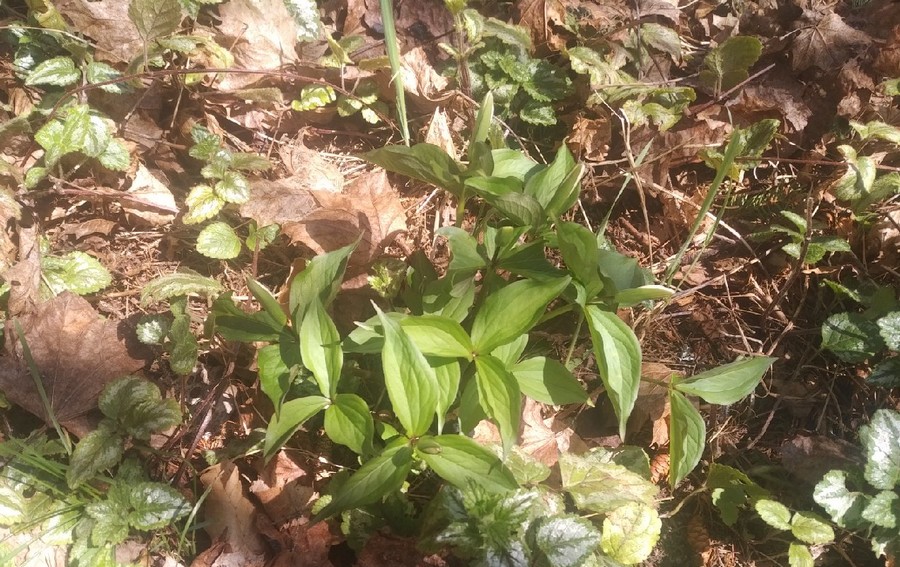
The plants have all survived, including the Ontario trilliums… that I only just discovered the other day, not yet blooming, but they survived the winter, and it was a thrill to stumble upon them; I’d forgotten I’d brought them and I’m just so glad they approve of their feet being in red soil.

A year ago today, after one last long day of driving, we pulled up in front of a house we’d never seen in person and it immediately felt like home.

There’s a good chance those young people were also heading to PEI; I’ve since learned there are sizeable Amish and Mennonite communities here. They were smart, we realized later, to cross borders at 3 a.m. — no line ups — and I often wonder about their drive, that small car crammed with feathers and fur and excitement, and sometimes wonder where they are now, how this year has been for them, if they, too, were in the process of moving from another province when our paths crossed, and I hope they, too, are happy to have their feet planted on this magnificent red soil.

And the parrot of course.

I hope the parrot is enjoying all the many pleasures of salted air.
trillium

promises, remembered


I wrote this post several years ago on the first day of Ramadan. I now live a thousand plus kilometres away but hearing that Ramadan has started I immediately think of my lady in the dry cleaner in the town where I used to live. Can picture her hunched over a sewing machine, a tiny television set tuned to an Arabic language station, the always-exhaustion in her voice and in her eyes and the day those eyes smiled and how it left me feeling that our connections might sometimes feel strange or tenuous but they’re always there, that regardless of everything else, we are all connected, in moments, in milliseconds sometimes, and in the most surprising memories.

This following first appeared as “Promises”, on July 10, 2013.

A couple months ago in a post that began as one thing but ended up being about my dry cleaner, I wrote about how my dry cleaner’s husband kept telling her that he wanted her to have nice hands and how this frustrated her because she worked too hard to have nice hands. She would love to wear polish, she said, but who has the time.

It reminded me of a dance that went on for years between my mum and dad, who’d also come here as immigrants.

I promised myself I’d buy my dry cleaner some really good nail polish and give it to her, and today I did. When I entered the shop she was sitting at a sewing machine, head covered in a shawl. I’d never seen her in a head scarf before and wondered at the reason for it but didn’t ask.

I gave her the polish. Hot pink. I explained why, reminded her of our conversation and she laughed, said she loved the colour, asked how much she owed me and I said, no, that it was a gift. She was surprised and delighted and then told me it was the first day of Ramadan. She said it’s especially hard when it falls at this time of year because of all that daylight stretching late into the evening. The month-long fast, which includes no food OR water or anything, ends each day when the sun goes down and begins again when it rises. Much better in November, she said. Even March is good.

She normally walks an hour to work but for the next month she’ll be getting a ride. I was happy to hear it given the humidity and heat.

I said I hadn’t realized Ramadan began today, that it was just a fluke I came in, but that I was thrilled to be able to offer some small thing to mark the day and happy to have learned something so wonderful and I thanked her for that. She smiled, said she’d pray for me.

I said I’d do the same for her.
IMG_7439


not a rhetorical question


What if the compassion that caused our banging of pots led to our demanding that the needs of front line workers be met. What if we had banged pots until they were.

What if we spent two years putting our money where our mouth is so that small businesses came out ahead and the behemoths felt the pinch. And what if we continued that way forever and ignored how deprived we feel at the very idea.

What if we wanted better than to go back to normal.

What if we had stopped throwing garbage on the planet so that when our lives filled with masks we wouldn’t cover the earth with them.

What if we didn’t feel sorry for ourselves.

What if, after two years, we had taught our children (by our own example) to become people who care more about those who have less, and less about what we are missing out on.

What if kindness was the most enviable thing.

What if we had learned to talk to each other.

What if, after two years, we actually understood each other better instead of being convinced that only one of us is right.

index


two random memories about clothes that land on your day and have nothing to do with anything and that suits you just fine


1. 

It’s nineteen seventy something and you’re at the Hadassah Bazaar in Toronto, in the days when such places had no crowds so that you could go on a whim, casually waltz in and wander about. When the perfect white shirt cost ten cents, a shirt you would wear for years until it actually fell so badly apart it could no longer be repaired. A shirt with exactly the right length sleeves (cuffed but not quite to the wrist) and the right blousony looseness (not overly, just right), the kind of magical fabric (cotton) that allows you to tuck or not tuck (you prefer the not-tuck) and that understands how you walk and sit and stand and never has to be adjusted. The kind of shirt you are still thinking and writing about all these decades later because it was the first piece of clothing that when you put it on you were yourself. The kind of shirt that reminds you what clothes are for.

2.

This is the nineties now, in a large department store, the sort of place where you have to take seventeen escalators to buy a pair of socks, during which travels you pass floors of many purposes and in seasonal colours. You would never be in such a store (see above) except to accompany a friend’s mother, a woman more than twice your age who dresses mostly in mauve linen pants and matching blouses and matching jewellery and sometimes prim dresses that end somewhere between her knees and ankles, who wears pumps and stockings even in summer and can most of the time hardly think of a single thing to add to a conversation, who hardly speaks at all in fact except to ask vaguely polite questions, whose entire claim to fame has been a snack she makes out of pretzel sticks and seasoned mini shredded wheat and who, as the two of you pass the fancy part of women’s wear, looks at the sparkling display and says If I could do it all over again, I’d buy a sequined dress.

高雄大立精品百貨_Talee_Department_Store_-_panoramio

Image courtesy of WikiCommons.


the way of love

I’m talking about books of course, book love.

The way a book finds you just when you didn’t know you needed it.

The way a friend who isn’t known for popping things in the mail sends you a book and you think: oh dear because it’s not your usual kind of book and now what? and you open it and begin reading, just to say you did, and before you know it you’re ‘away with it’ because of course it’s your kind of book, you just didn’t (yet) know it and you’re just a little surprised at how she’s glimpsed a side of you you didn’t realized showed.

The feel of the paper (we all have our favourites).

The art of the cover.

The marginalia!! (either finding it — the joy of second-hand books — or adding your own, which is a whole conversation in itself; I would love to have a book club meeting limited to the book’s marginalia; in fact I’m reminding myself that there is a book circulating right now among five friends, each of us encouraged to add notes before passing it along to the next person; each of us using a different ink so we know who’s who)

The books of our childhood, of our lives, that just by opening to a random page or illustration take us back to some summer afternoon and yellow peddle pushers, cool grass on bare legs, an afternoon of pages, a stack of buttered saltines and solitude and never once feeling alone.

Please note: I will never borrow a book from you, at least it would be very very unlikely, because I’m too familiar and relaxed with books. I bend them backwards and fold down pages, mark them up; I take them into the kitchen where the olive oil and blueberries live and to lunch and on tea breaks with chocolate. I stuff them into beach bags among mustard sandwiches and leaky water bottles and leave them under maple trees at night when it might rain and sometimes it does.

Would I lend you mine? Depends. If it’s one I’ve formed a strong relationship with, probably not. But I would love to buy you your own copy to christen with salsa and jam.

~

After all this, and in the spirit of book love magic, what do I stumble across this morning but this passage, by Jill Robinson.

“Once in a very rare year, there comes along a new book, and I say, as I am reading, as my eyes eat words without a blink, as my heart and mind grab each other, This, I say, is The Best Book. I know before the first page is gone. I sense it building. And as the book finishes, I go as slow as I can. I don’t want to leave the book’s world.”

~

And on the same page, my handwritten response:

Treasures that come to us in the arrangement of letters and punctuation. Who knew in grade one that the alphabet we were learning would be everything?

the-new-novel