a writer is a writer is a writer…

“For some time now many people, and publishers, have been asking Gertrude Stein to write her autobiography and she had always replied, not possible..

“She began to tease me and say that I should write my autobiography. Just think, she would say, what a lot of money you would make. She then began to invent titles for my autobiography. My Life With The Great, Wives of Geniuses I Have Sat With, My Twenty-five Years With Gertrude Stein.

“Then she began to get serious and say, but really seriously you ought to write your autobiography. Finally I promised that if during the summer I could find time I would write my autobiography.

“When Ford Madox Ford was editing the Transatlantic Review he once said to Gertrude Stein, I am a pretty good writer and a pretty good editor and a  pretty good business man, but I find it very difficult to be all three at once.

“I am a pretty good housekeeper and a pretty good gardener and a pretty good needlewoman and a pretty good secretary and a pretty good editor and a pretty good vet for dogs and I have to do them all at once and I found it difficult to add being a pretty good author.

“About six weeks ago Gertrude Stein said, it does not look to me as if you were ever going to write that autobiography. You know what I am going to do. I am going to write it for you. I am going to write it as simply as Defoe did the autobiography of Robinson Crusoe. And she has and this is it.”

—From The Autobiography of Alice B. Toklas, by Gertrude Stein.

~

living in the present with an even goldener rule

“…Confucius’ sayings, his wisdom and philosophy, had deeply influenced the way Chinatown raised first sons like me.

“What kind of human being was he to have established as one of the tenets of his philosophy, “What you do not want done to yourself, do not do to others”? How different the assumption that our fear of how others can harm us is the most specific and universal deterrent compared to what has filtered down to Western culture as “Do unto others what you would have them do unto you.” How dangerous to assume that whatever pleases you might please me. None of his teachings ever touched upon the afterlife, none considered the possibilities of a heaven or hell. His concern was with how one might live life in the present. Having survived my almost dying, I was moved by the answer he offered when one of his followers, speaking of death, asked, “But what comes next?”

“Confucius said, “If you do not understand life, how will you know about death?”

—from the memoir, Not Yet, by Wayson Choy, Random House

~

happy booker news

So pleased to see February on The List!

My introduction to Lisa Moore was only recent, after our book club won the House of Anansi’s ‘Art of Book Club Maintenance’ contest—the prize of  which was a visit from one of the ‘Anansi Girls’—ours was Ms. Moore (though, due to circumstances at my end, I had to miss out on that especially nice part of things…).

Still, it brought me to February which I loved immediately. One of those books where you get to the last page, close it for a second, take a breath then start right over without even a glance at your very nearly toppling over TBR pile. Loved it even more the second time. On the brink of a third go-through, it occurred to me I might consider reading her other books… which I oh-so-happily did. Until the next is written I console myself with bits as I find them

My big, wide congratulations to Lisa Moore, and to the wonderful clever House of Anansi!

~

leave the jiggery-pokery at the door

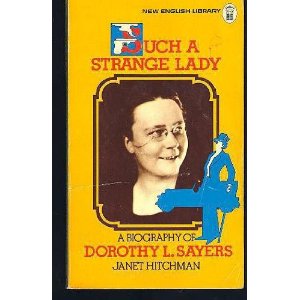
“In 1927 Dorothy joined the Society of Authors and brought many grievances to their notice. She complained bitterly about James Agate’s ‘unfairness’—a mild word in the circumstances—to members of the Detection Club. If the great man did not happen to like the book he had under review he gave away the plots, and as he disliked anything and everything about women (always excepting Sarah Bernhardt) he gave away their plots on principle. Dorothy had written to Agate, and to the literary editors of his papers, but had only received “rude replies”. There was another blight in this field, “a frightful female on The Spectator who slaughtered mysteries wholesale, but she was driven out by a subscriber of my acquaintance, who knew the editor” . Dorothy was a leading figure in the Detection Club, which operated from 31 Gerrard Street. Its members were at pains to point out that they had no connections whatever with the Crime Club, but the perverse public continued, and still do, to see no difference between books about crime, and those about detection. Dorothy enlivened things considerably by introducing all sorts of nonsense with candles and skulls into the enrolling ceremony, and composed an oath for the initiates to swear:

President: Do you promise that your Detectives shall well and truly detect the Crimes presented to them using those Wits which it shall please you to bestow upon them and not placing reliance upon, nor making use of, Divine Revelation, Feminine Intuition, Mumbo-Jumbo, Jiggery-Pokery, Coincidence or the Act of God?

Candidate: I do.”

~

(from: Such a Strange Lady, a Biography of Dorothy L. Sayers, by Janet Hitchman)

reading canada

I like what the LRC has done in the July/August issue, ie. offering up a list of thirteen books that epitomize each province and territory—as chosen by writers from said locale.

Not saying I’m going to read every one of them (and why exactly not? I ask myself…) but I’ll keep the list handy. I am, however, very intrigued with two of the titles. Joan Thomas’ choice: The Two-Headed Calf, by Sandra Birdsell, representing Manitoba, which interests me because—ever since, a couple of years ago, I was hugely and pleasantly surprised by what Winnipeg has to offer (extraordinary art gallery, especially its collection of Inuit carvings; smoked fish, best eaten with thinly sliced red onions, rye bread, and washed down with ice cold vodka; great restaurants in very funky neighbourhoods; Fringe Festival; fabulous kids’ theatre arts program; annual lit festival: Thin Air; the North End; the downtown library; the freaky and beautiful Masonic architecture of the Legislative Building; the Forks, especially Tall Grass Prairie Bread Co. & Deli)—I’ve been very into that province generally.

Also want to read my friend Steven Mayoff’s PEI choice—My Broken Hero and Other Stories, by Michael Hennessey, about which he says, in part:  

“Hennessey’s prose adopts an easy, anecdotal tone…There are also dark streaks of violence… complex undercurrents thrumming beneath what is widely known as the ‘Gentle Island'”.

Hmm.

And because I also love B.C.—and occasionally spend part of my year there nestled in a small trailer in the woods—I may also have to read Lee Henderson’s choice: The Invention of the World, by Jack Hodgins.

Because how can I resist this—

“…about B.C., but also about the bigger ideas of heaven and earth, earning a living, human nature and the supernatural. It is a portrait of the B.C. way of being and one awesome read.”

Then there’s Denise Chong’s pick: Ondaatje’s In the Skin of a Lion, which I’m embarrassed to say I have never read. Madeleine Thien’s choice for Quebec is also intriguing. And I know nothing about New Brunswick and Saskatchewan and I want to know more about Newfoundland (Lisa Moore suggests Michael Winter’s The Architects are Here) and the Yukon and NWT and Nunavut. And how could I not want to read the definitive book of Nova Scotia? I love NS.

And let’s not forget Alberta, a province I lived in for three years and know practically zippity doo dah about except it’s a 40 minute flight from Edmonton to Calgary.

So, yeah, I’ll keep the list handy.

But I’m not saying I’ll read every book.

I’m really not saying that.

I think.


a ripening of cucumbers

Maybe it’s summer, the heat, the mosquito bites. Maybe it’s where I am in the novel—ie. nearing the end [of the latest draft]. Or maybe I’m just not in the mood to read fiction and maybe I shouldn’t keep forcing myself to try.

The truth is I’m presently in love with memoir. Also personal essays, letters, biographies, diaries. It’s not a sudden thing. When I think about it I’ve been heading in this direction for months and months. There have been signs. I don’t know why I pretend to be so gobsmacked.

Still, the question needs to be asked: how did this happen?

Nothing would be easier than to say, oh yes, I know exactly when and where it began—it was with this book, or that book, that’s what led me down the memoir/diary/bio path. But who am I kidding? I can’t pin this whole mood thing on a single book—after all, I was attracted to the book, right? There must have been a reason for that. I was in the mood for what it had to offer.

That’s how these things work. It’s not like you’re so happy with fiction then you trip over a diary and out of the blue go crazy for the genre. You have to have been open for that genre to come into your life in the first place—otherwise you wouldn’t even notice it. And it’s the being open to it that comes as a surprise. Not even knowing what it is you need until it’s right there in front of you.

Anyway. No more guilt. No more pretending or ‘trying’. I’m off fiction temporarily. Period. I’m reading memoir. My stack includes Viola Whitney Pratt, Pablo Neruda, Pat Lowther, I Nuligak: The Autobiography of a Canadian Eskimo, Marina Nemat’s Prisoner of Tehran, Margaret Laurence’s Dance on the Earth, something called The Woman Who Walked to Russia, which I bought on a whim—no idea who or what this is about; The Letters of Alice B. Toklas, a biography of Dorothy L. Sayers, Confessions of an Advertsing Man by David Ogilvy, Wayson Choy’s Not Yet, and two old favourites: Anne Morrow Lindbergh’s Gift from the Sea (in progress), and Alix Kates Shulman, Drinking the Rain.

Sigh.

I swear I feel better already.

“Menus, recipes, small scandals, small journeys; exchange of neighbourly courtesies and little kindnesses, little tasks; an earache, an inoculation; the text of a sermon, a ‘scene’ of some kind in church; sixpence won at cards, or a maidservant’s dismissal; a snowstorm, a ripening of cucumbers, a rumour from the wars in France; the garden, the weather, the walk before dinner—always these three—the garden, the weather…”

(from: English Diaries and Journals, by Kate O’Brien; Collins, London, 1943)

canada eats


Am celebrating the 143rd birthday of our grand beau pays with my favourite things: words and food. Specifically—words about food. 

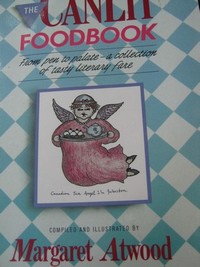
As far as I’m aware (not that I’ve done an extensive survey) I’m the only person I know who has a copy of The CanLit Foodbookwhich, a few years ago, sprang into my arms from the ceiling high stacks at one of my favourite secondhand shops.

Why it’s taken me this long to crack it open, I haven’t a clue.

Assembled in the late 80’s by Margaret Atwood for P.E.N. International and The Writers’ Development Trust, it’s a collection of real and twisted recipes, essays, studies, poetry, fiction, thoughts and observations about food and eating and cooking, as well as reading and writing—about food and eating and cooking—from over a hundred Canadian writers. Or, as Atwood describes it: part cookbook, part “…literary symposium on the subject of food.”

The 200 or so pages are divided into sections [with illustrations by Atwood] such as: ‘Preprandial Prologue: Food as Metaphor’; ‘Cracked Dawns: Breakfast for Barbarians’; ‘Teatime; Strange Innuendoes Over the Cups’; ‘Eating People is Wrong: Cannibalism Canadian Style’; ‘Shindigs: Cocktail Parties, Weddings, Christmases, Funerals and Other Social Disasters’.

Each contribution receives its own brief preamble [again, by Atwood], such as ‘Graeme Gibson’s Right Way with Oatmeal’, about which she says:

Graeme Gibson learned to cook this in Scotland, and does indeed eat it while striding about the room.

Or her introduction to Salutin’s instructions on making toast and tea:

Playwright and journalist Rick Salutin used to have a phobia about cooking, until he mastered this recipe. After that, he went on to other culinary triumphs, such as Heating up Frozen Coffee Cake.

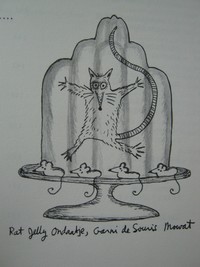
Margaret Laurence makes cauliflower soup, Timothy Findley serves fresh peaches and explains how to cream rodents, while Michael Ondaatje jellies them and Erica Ritter offers an essay on food and dating. There are foodish excerpts from known and not so known novels, precise directions for making Pierre Berton’s version of the perfect black Christmas turkey as well as corned beef hash; Catherine Parr Traill describes the means by which fish are caught and Alice Munro shares her recipe for Maple Mousse.

There is this from Paulette Jiles:

Paper Matches

  My aunts washed dishes while the uncles
squirted each other on the lawn with
garden hoses. Why are we in here,
I said, and they are out there.
That’s the way it is,
said Aunt Hetty, the shrivelled-up one.

  I have the rages that small animals have,
Being small, being animal.
Written on me was a message,
‘At Your Service’ like a book of
paper matches. One by one we were
taken out and struck.
We come bearing supper,
our heads on fire.

~

And that’s just for starters.

Speaking of which, I’m going to begin the reading today with a piece by Mavis Gallant who writes about a meal with one of my favourite painters. And the cooking will begin with Rudy Wiebe’s ‘Warm Potato Salad’…

A happy ‘grand beau pays’day to one and all.

Bon Appetit!

thank god for dames

“ONE DAY LAST SPRING I was standing in the reception area of a fashionable hairdresser’s in midtown Toronto, waiting to pay my bill ($12 for a stark haircut that made me look exactly like one of the Presbyterian aunts I’d spent most of my life avoiding looking like). Ahead of me in the line was this very slick, chic lady of maybe thirty-eight or so dressed exactly as such a lady should be when she is going to spend the morning at the hairbender’s (that’s what chic ladies call all those rickety-cheeky Cockney boys who’ve taken over big-time women’s barbering in the last half-decade) and then on to luncheon with an old friend from school and maybe a meeting of the women’s committee of the symphony. She was wearing a beautifully cut midi coat and dark stockings and a Kenneth Jay Lane bracelet and the kind of tan you get in Acapulco when your husband feels he just has to get away in that dreary time between the skiing and the sailing, and her hair was pale and perfect.

“While the cashier was ringing up her $25 bill (pale and perfect costs more than stark and Presbyterian), she stood looking idly out the window. At that moment, passing in the street, was a couple in their late teens or early twenties, the kind of kids the chic lady doubtless calls hippies, though the way things are going now with kids they may very well have been graduate students in aerodynamics, for all I know.

“The boy had a lot of hair tied back with a leather thong and one of those Iranian embroidered skin vests and very narrow hips and jeans that did them proud, and the girl looked like some kind of curly pre-Raphaelite Madonna in a long wool challis dress with a lot going on underneath that obviously had nothing to do with lingerie. She was sucking an orange and licking the overflow juice from her fingers, and he was holding on to the wrist of her other arm and laughing at her, and they both looked happy or sensually aware, as the Gestalt therapists call it—in any case, as though it was pretty good to be nineteen or twenty-one and with no underwear in the sunshine in late April. The chic lady turned abruptly away from the window and I caught a glimpse of her in the mirror behind the cashier and she was touching her hair with a little rapid patting gesture and in her eyes was this unmistakable look of fear, the kind of o-my-god-why-has-thou-forsaken-me? look, her god being Good Taste or something like that.

“The whole incident didn’t take any more than a minute, but it was a pretty important minute for me because it left me wanting to rush out and phone somebody and say, “Listen, I think I’ve just been witnessing the death of slick.””

~

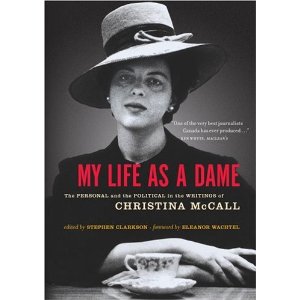
(from the *essay “Requiem for the High Life” in My Life as a Dame, [personal and political essays] by Christina  McCall)

*Originally appeared in Maclean’s, September, 1971.

fruit goes with poetry

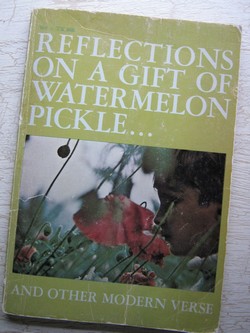
Still finding funny old titles as I slooowwlly clean up my shelves. No idea where I got half of them, like this one—Reflections on a Gift of Watermelon Pickle (Scholastic, 1966). On the inside cover is written, not in my handwriting: English 311, Mrs. Hart. This is always a bonus; I like having an idea what a book’s been up to, imagining who might have read it and why and whether or not it made a difference.

But then every book makes some, even-if-only-so-small-it-seems-insignificant, difference, does it not?

~


How to Eat a Poem

Don’t be polite.
Bite in.
Pick it up with your fingers and lick the juice that may run down your chin.
It is ready and ripe now, whenever you are.

You do not need a knife or fork or spoon or plate or napkin or tablecloth.

For there is no core
or stem
or rind
or pit
or seed
or skin
to throw away.

—Eve Merriam


things read in the shade

I probably spent just a little too much time reading on the weekend under this umbrella (no, I take that back; actually, I didn’t spend nearly enough time).

I’ve been thinning out my bookshelves recently, and coming up with some odd and interesting titles in the process—things I’ve either not read or can’t remember reading. (Which makes me think of the old Born Loser comic strip where the husband is increasingly frustrated by his middle-aged forgetfulness, can’t find his glasses, etc., and his pragmatic wife, who says:

“Think of the positives—soon you’ll be able to hide your own Easter eggs.”)

But the point is…

Oh yes. The books.

One of the more unusual titles I’ve unearthed is Just Add Water and Stir, a collection of essays by Pierre Berton, most of which appeared in the 50’s in what was then The Toronto Daily Star. The book is described by the publisher (McClelland & Stewart) as… “Being a random collection of satirical essays, rude remarks,used anecdotes, thumbnail sketches, ancient wheezes, old nostalgias, wry comments, limp doggerel, intemperate recipes, vagrant opinions, and crude drawings

What often strikes me about writing from this era is the intelligent humour, that black and white Gable and Lombard rat-a-tat pace that’s clever without the need for cynicism or the homogenous drum rolls in which much of today’s humour is packaged. People then, it seems, weren’t afraid to be subtle.

I’m also struck by the whole Hey-Honey-Get-Me-a-Coffee-Willya mentality and the (shudder) girdles-riding-up image that conjures.

For example, there’s a section titled “Seven Men and a Girl”. Not a ‘woman’— a girl. Not boys, men. Seven of them. Some of whom include Glenn Gould, Charles Templeton, Russ Baker (“last of the world’s great bush pilots”), Robert Service, Milton Berle. Then there’s the girl—the sole representative of half the population—a prostitute named Jacqueline.

These happen to be among the few serious sketches about lifestyle, achievement and personality, based on interviews Berton conducted. The one about Jacqueline is meant to dispel the theory that all call girls are unhappy. Unlike so many others, Jacqueline, evidently, “has it made”, mostly because—

“…she’s met a man who has given her his name and expects nothing from her but her love. One may well ask why, under this odd arrangement, he too is happy. And again the answer must be that happiness is not an absolute. Jacqueline’s husband spent ten years in prison. Now he has a steady job and a wife who looks after him. For him, this is enough.

Berton writes that when Jacqueline was asked about quitting “her profession”, she said she’d quit tomorrow if her husband told her to.

“But he hasn’t told her, though perhaps some day he may. And I don’t think Jacqueline really wants to quit, anyway.”

In addition to the ‘serious’ stuff, there are parodies and take-offs of society, of education, the press, bureaucracy, smoking, marketing. Smart satirical re-tellings of fables and fairy tales and recipes. Opinions on Dick and Jane, racial origins, thought control.

More than anything, it’s a fascinating romp through a not really that long ago—yet in another lifetime—era.

~

At the other end of the spectrum, I read a poetry collection recently purchased for my nieceThink Again, by JonArno Lawson, (Kids Can Press, 2010). Beautifully illustrated by Julie Morstad, with simple pen and ink line drawings that just so perfectly capture the essence of emerging adolesence—all beauty and innocense mixed with tension and confusion mixed with childlike joy and what’s left of that fleeting childlike wisdom that they are perfect just as they are.

The poems, written as quatrains, may be a little too angsty or introspective on their own, but complemented by the drawings, the book reflects something pure about the young teenage mind that, as grownups, we’d do well to be reminded of now and then.

What I Want

I’ve objected and complained/But it hasn’t done any good—/I don’t want to be explained/I want to be understood.  (from Think Again)