words starting with ‘a’

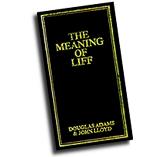
Sorting through shelves the other day, I happily re-discovered my copy of The Meaning of Liff, by Douglas Adams and John Lloyd (Pan Books and Faber & Faber, 1983). Essentially a dictionary of words that are not words but should be. They are, in fact, place names in Great Britain that (as Adams and Lloyd write in the introduction): “…spend their time doing nothing but loafing about on signposts pointing at places.”

They go on to say—

Our job, as we see it, is to get these words down off the signposts and into the mouths of babes and sucklings and so on, where they can start earning their keep in everyday conversation and make a more positive contribution to society.”

To which I say hear, hear!  Bloody lazy words. (And with so many things out there in need of a few well arranged letters to define them…)

_

For example, a few under ‘A’:

Aberystwyth (n.): A nostalgic yearning which is in itself more pleasant than the thing being yearned for.

Abilene (adj.): Descriptive of the pleasing coolness on the reverse side of the pillow.

Ahenny (adj.): The way people stand when examining other people’s bookshelves.

Ardslingnish (adj.) Adjective which describes the behaviour of Sellotape when you are tired.

Aynho (vb.) Of waiters, never to have a pen.

_

Is is just me or does the whole world suddenly feel a teensy bit more coherent?

women’s what?

I’m always stunned at the idea that people actually wander about saying things like “women’s literature” and “men’s literature”. Good glory. Who makes these distinctions? I mean is it the publishers, the media, authors, critics, readers?? And what, may I ask, is men’s literature anyway? Penthouse? (Does that even still exist? It’s been so long since I’ve perused the smutty shelf at the local Mac’s.) (Oh, and pardon me if I’m being sexist in a bad way.)

I read Kerry Clare’s excellent post today, which is what started all this off. I’ve heard, and had, these conversations before, but I think Kerry pretty well nails it when she suggests that the tag “women’s writing” has, essentially, been constructed to fill ‘a gap’.

She refers to a review by Alex Good of Lisa Moore’s novel February, in which Good says Moore is “an author of the female body.” I’m not sure what that means. The novel is about a woman who lost her husband the night The Ocean Ranger oil rig sank off the coast of Newfoundland in 1982.

I might not have been inspired to rant on this subject had I not just recently finished reading the book, and loved it.  Because what I loved about it had nothing to do with bleeding, cracked, and milk-squirting nipples (I refer again to Alex Good’s take on the book).

What impressed me was the language, the sentences, the writing for pity’s sake. And the honesty that Lisa Moore was able to tap into. As a widow, a woman, a human being trying to function among other human beings, a parent, a sister, a friend. I loved how she took us to the event and made us see it through the eyes of someone who has tried to make sense of it for twenty five years but there is no sense because The Company has never admitted their fault. Those men needn’t have died. It wasn’t about weather. It was about stupid manuals that weren’t distributed, training that didn’t happen, equipment that wasn’t in place. Moore beautifully shows the searing hopeless frustration of this through the prism of a widow’s jumbled, broken interior, in the chapter titled “The Portal”… where we learn that Helen has been playing the night of the storm over and over in her mind, imagining what might have happened, inviting us to imagine it with her, in control of every element but the final one.

The story could easily be that of a man after losing his wife/partner (just strike the squirting breasts); the human elements of emotion are the same for both sexes. But maybe that’s the problem—do we attribute emotions only to women?

And mindless car chases to men?

An over-simplification, I know. But you get the point.

Hardly seems right on either count.

I agree, of course, that certain books may have primarily women or men readers (also gay or straight readers, young or old readers, etc.) but I don’t think the authors, or their work, can (or should be) be defined by their readership—it’s often those very definitions that act as Keep Out signs to anyone else.

In the spirit of how far have we really come?, I’ll leave you with Margaret Atwood’s delicious take on the subject in a piece called  “Women’s Novels“.

~

Note: post first appeared in April, 2010.

___________________________________________

—Purchase February online at Blue Heron Books.

it’s black liquor time

“…In the eleventh century, an Italian monk named Theophilus began to make what Samuel Johnson, some seven centuries later, would call “the black liquor with which men write,” by cutting hawthorn branches before they produced blossoms or leaves in the early spring. He laid them in a shady spot for up to eight weeks until they dried out, pounded them with mallets, and peeled off their bark. He put the bark in barrels of water for eight days to allow the water to draw off the sap, then he dumped the water into a big cauldron, heated it over a fire, threw in more bark, boiled the liquid down to a third of its original volume, transferred it to a small container, and heated it again until it turned black and began to thicken. “When you see it become thick,” he concluded, “add a third part of pure wine, put it in two or three new pots and continue to heat it until you see that it develops a kind of skin at the top.”

Got that?

(from Page Fright, by Harry Bruce, McClelland & Stewart, 2009)

how to write a short story

“I have Fink’s how-to book in front of me and I am going to do it, I hope to do it before the sun goes down, but if it takes me till tomorrow then I will stay with it, since, as Fink warns, writing a successful story takes time. He tells us he has toiled countless thousands of hours making his very popular stories, without once being struck by “divine light, by visitation of the muse, by irradiation from within, by lines delivered from God on High, or by any other of the thousand and one kind of crappy ways another author will tell you is how he does it.” Fink has got where he is, he says, by “hard work,” by “focusing the mind,” and by “utilization of a discipline forged in steel.”

” Begin, says Fink, at the beginning.

“I have a warm toddy nearby, plus the dictionary, a thesaurus, a booklet called Don’t Dangle Your Participles in Public, a yellow scratch pad for capturing the hot idea.

Begin, Fink insists, by writing what you know.

“I know, I think, as much as the next guy. What I know for sure is this: I am twenty-three, intermittently, which is to say, seasonably, employed by Rafael Estates (cleaning the pools and grounds, duh), a job my parents got for me when they met Mr. Rafael down in Wahoo. I have, I am proud to say, a cohabitational relationship with a somewhat weird but beautiful girl named Sasa as of two months ago. I hold a high school diploma and nine credits from the Hortenhuaser School of Broadcasting, I am something of an authority on French cuisine, on vinery (the primitivos of southern Italy being a specialty), and I placed 32nd among 1,700 in last year’s local marathon, which means I’m fit and know about running. I know heaps about Rwanda, the genocide of a few years back, 800,000 Tutsis and good Hutus dead in one hundred days, thank you, Madame Allbright, but that would take a book. Things I know zip about and won’t get into in this story include sex, or sex prior to my cohabitation with Sasa, economics and such, history and such, politics and such, current events, biology and physics and such, all the sciences, let’s say, including the occult, philosophy, architecture, animal husbandry and the rural arts generally, astronomy, religion, together with the thousand and one other things that no one else knows much about either. I won’t be going into any of those, so you can sit back and relax.

Keep your paragraphs short, Fink says.

“Okay.”

(from: How to Write a Successful Short Story, by Leon Rooke, in the collection The Last ShotThomas Allen, 2009)  


patina and perspective

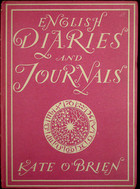
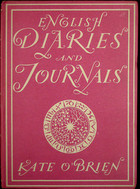
“Let me begin with the hard saying that the best English diaries have been written by bores…. A bore has been excellently defined as ‘a person who mentions everything’…. and face to face with us, across the fireplace or the dining table, the exponent of this art is very nearly intolerable; but at the remove which lies between a writer and a reader, when the ‘everything’, printed not spoken, is in our power, to be taken or left as we feel inclined, and when distance, time, have given it patina and perspective, he who in life might have been our plague becomes our entertainer, and sometimes more than that—a light, a lamp, a gentle, accidental resurrector for a while of what had been cold and dead.”  (From English Diaries and Journals, by Kate O’Brien— COLLINS, 1943)

this is not a review: the anthologist, by nicholson baker


I’ve been reading things recently about not writing as a tool for better writing, which, to me, makes perfect sense given that I believe procrastination (when handled with care) has a valuable (necessary) place in a writerly toolbox. Walks, cups of tea, headstands in the garden, rarely fail to loosen a brain (and a loose brain is a thing of envy indeed).

It’s no wonder then that I so completely enjoyed Nicholson Baker’s The Anthologist where procrastination is the art form.

The narrator, poet Paul Chowder, has been asked to write the introduction to a poetry anthology and for 243 pages he lets us in on every distraction and digression that flits through his head as he avoids doing so.

Or so it appears. In fact, writing the anthology is exactly what he’s doing for 243 pages. The breakup of his relationship, badminton games next door, the comings and goings of a kitchen mouse, are merely forms of life he notices from another plane where he lives and breathes beats and rhyme and the mathematical precision of rhythm. Where everything is light and shadow. Pauses. Enjambment.

What the narrator is actually doing is tearing open the whole world of poetry as he feels it, and staring it down; this takes time. He doesn’t do it on purpose, but still it requires the kind of courage that allows you to stand back from a project, do nothing, all the while hoping to god you’ll do it in exactly the right way for exactly the right amount of time.

The end result is a delicious ‘conversation’ with the reader, full of passion and brilliance, easy humour and cheeky digs (Baker is either really good friends with Billy Collins or he hates him); it made me want to read and re-read a number of known and unknown (to me) poets, including Swinburne to see how he ruined things.

None of it is dull.

Of the Elizabethans, he says: “They really understand short words. Each one syllable word becomes a heavy, blunt chunk of butter that is melted and baked into the pound cake of the line.”

Of Sara Teasdale: “One day she hit her head on the ceiling of a taxi while it was driving over a pothole in New York, and afterward she said her brain hurt and she dropped into a funk and eventually she took morphine in the bath and died.”

When he sees endoplasm on the first page of a twenty page poem submitted by a student he says “I went cold, like I’d eaten a huge plate of calamari.”

(Chowder eventually gives up teaching as a source of income because it depresses him and drains him; he takes up house painting instead, which he finds much more agreeable.)

He talks about the link between weeping and meter, how as babies we cry in a rhythmic way we lose as we grow up. “Poetry is a controlled refinement of sobbing.”

And this about truth: “…you can choose to tell the truth or not to. And the difficulty is that sometimes it’s hard to tell the truth because you think that the truth is too personal, or too boring, to tell. Or both. And sometimes it’s hard to tell the truth because the truth is hard to see, because it exists in a misty, grey non-space between two strongly charged falsehoods that sound true but aren’t.

“I have no one. I want someone. I don’t want the summer to go by and to have no one. It is turning out to be the most beautiful, most quiet, largest, most generous, sky-vaulted summer I’ve ever seen or know—inordinately blue, with greener leaves and taller trees than I can remember, and the sound of the lawnmowers all over this valley is a sound I could hum to forever. I want Roz.”

I love the poetry lesson throughout, the musings on life, the soul baring honesty mixed with just the right amount of sarcasm, but mostly I love the message inherent in the structure: that sometimes procrastination, distraction and a particular kind of diddling about are the only way to loosen our brains enough to let the good stuff come through.

(~Read on the weekend in the company of sweet woodruff tea.)

(~Discovered through this post at Carol Bruneau’s Blog.)

____________________________________________

The Anthologist is available online at Blue Heron Books. Support indies!

letting truth lie

Truth is merely a perception. Memory, a feeling. Right?

In other words, does it really matter that (you think) your sister always got the extra spoonful of fried bacon on her polenta, or why your mum was draped over the ironing board, weeping, that bright Saturday afternoon in June (or was it August?) the year you turned nine or maybe seven and came home with a tadpole in a jar. Or was it a bee?

It´s what we take from it that counts. It´s the part that remains that has all the punch. Even if we made it up.

I´ve been thinking about this kind of thing since reading Lynn Crosbie´s Liar, (Anansi, 2006). Though not about being nine or bees in jars—it´s about adult love betrayed—the same principle applies. We remember what we need to, and if we´re lucky we figure out a way to do something with it that allows us to move on.
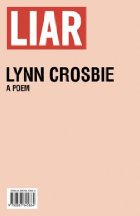
In this case, Crosbie has chosen to write a poem that reveals love in all its dimensions, including the kind that lingers as something important yet also suddenly somewhat irrelevant

It would surprise you, how seldom I think of you…not hating you as much as what you have done.\ You could be anyone.

Never whiny or even slightly cruel, her prose shows us the world she lived in through the prism, the remnants, of perception; a looking ´back´ at love once it´s  morphed into something clearer, more honest. It´s all memory and feeling; truth and lies in various forms.

It is unpleasant to see people change. It feels contagious, it feels as if it is their own fault.

I am tired of watching women who, in their terror of being left, are changed also.

Large women, as insistent as thunder, made small, their allure recast as repulsion, all of them looking for dust in the corners, freezing sauces, probing themselves with sharp instruments.

Crosbie shares what it´s like to be both betrayed by someone and by oneself. The things we tell ourselves in order to keep what destroys us. We protect the liars by lying to ourselves.

The piece is focussed throughout, without slipping into notes of revenge,  imposing hurt, or issuing blame. Even references to sexual intimacy are muted as if to respect the former lover´s present life.

Clearly, this is not about The Other, it’s about Self. A much harsher truth to face.

Deception itself is pleasing, because it alters you, entirely.\ Then things resume as they were.

Despite knowing her relationship (with the unnamed beau of several years) is crashing, and even though she has, by now, forgotten him ‘in theory’…. It is our life I cannot cross over, as though we sunk our savings into a business that leaked money, that bled us dry.

Heaving, you  began to speak and  blocked out my past.

And then, the end, only realized by his new  beginning and…the tiny anchor of her diamond.

The moment we let someone into our lives, they come equipped with enough ammunition to destroy us,\ though the terms of destruction are unclear.

I had let him see too much. In doing so, he  became disgusting to me.

I especially enjoyed her memories of trying to integrate with him, his family…

I was following your mother around the kitchen, trying to help. Wiping the counter, re-folding the gingham tea towels.\ Have you tried this new Swiffer thing, she asked, and the intimacy of the question disarmed me.\ I was sorting through five different answers when she said, With that place it´s not likely to make a difference.

She, the narrator, remembers watching him as he slept…. watched your eyes drift like fish under your lids.

And her own insanity, her own culpability in things (and I adore her for this, especially)…

What are you doing in there, I would ask. This sort of recollection makes me understand your departure  better.

Maybe the saddest line in the book is when she refers to his marriage to someone else, and hers with him that had no ceremony, but had other markers…

…every day you rushed home to me, without stopping.

Liar is about different forms of betrayal, a love poem and a lesson.

Ultimately, perhaps, it´s a gift to self—and quite possibly the best form of revenge.

(~Read under a large umbrella, next to a small vineyard in the foothills of the Andes.)
meet anton

 
“You may have heard of Rapunzel.

“Against the wishes of her family, who can best be described by their passion for collecting miniature dolls, she went to live in a tower with an older woman.

“Her family were so incensed by her refusal to marry the prince next door that they vilified the couple, calling one a witch and the other a little girl. Not content with names, they ceaselessly tried to break into the tower, so much so that the happy pair had to seal up any entrance that was not on a level with the sky. The lover got in by climbing up Rapunzel’s hair, and Rapunzel got in by nailing a wig to the floor and shinning up the tresses flung out of the window. Both of them could have used a ladder, but they were in love.

“One day the prince, who had always liked to borrow his mother’s frocks, dressed up as Rapunzel’s lover and dragged himself into the tower. Once inside he tied her up and waited for the wicked witch to arrive. The moment she leaped through the window, bringing their dinner for the evening, the prince hit her over the head and threw her out again. Then he carried Rapunzel down the rope he had brought with him and forced her to watch while he blinded her broken lover in a field of thorns.

“After that they lived happily every after, of course.

“As for me, my body healed, though my eyes never did, and eventually I was found by my sisters, who had come in their various ways to live on this estate.

“My own husband?

“Oh well, the first time I kissed him he turned into a frog.

“There he is, just by your foot. His name’s Anton.”

(from—Sexing the Cherry,  by Jeanette Winterson)

this is not a review: help me, jacques cousteau, by gil adamson

Have just read Gil Adamson’s Help Me, Jacques Cousteau, a collection of linked stories narrated by Hazel, an adult looking back on two decades of her life from babyhood to twenty-ish (all seen in present tense, and from a weirdly almost omniscient POV, which, at times threw me off and other times had me convinced there was no other way to go).

Hazel’s family is made up entirely of eccentrics and not one of them knows it. Her father rewires the house whenever he’s nervous, an uncle collects large white animals, which he then takes for rides in his boat, while her grandfather keeps a dead dog in the back seat until he begins to smell it (which, unfortunately, is much later than everyone else does).

Through the ‘younger’ stories, Hazel merely observes and reports (perhaps too much; I would have welcomed more of her), but this, I think, is all part of the apparent ‘nothingness’ of her life as she sees it and, therefore, she’s not really a part of it. There’s a kind of unspecified disillusionment with this family that pays little attention to one another, so immersed are they in their own strange behaviours and coping mechanisms.

Despite it all, there is a strong underlying sense of love, as if everyone is doing the best they can. “My mother and I share a fondness for watching insects from a safe distance.” How they turn out is anyone’s guess.

Adamson’s poetic touches are throughout. A girl has “a mouth like a poppy.”

Clouds “resemble the sand in shallow water.”

Cousins pour out of a car “like fish from a bucket.”

In the very last stories, Hazel the character suddenly comes alive and we’re privy to her feelings and thoughts rather than just what’s going on around her. But of course it’s what’s gone on around her all her life that has shaped her.

The epigraph—”Heaven is a place where nothing ever happens”— ends up having two meanings: in one way, nothing has happened and that’s been the problem; on the other hand, how can a grandfather carting around a dead dog in his car be seen as ‘nothing’…?

lingering thoughts from mr. blake, with whom i spent the weekend

“Man has no body distinct from his soul, for that called body is a portion of the soul discerned by the five senses.”

“In seed time learn, in harvest teach, in winter enjoy.”

“No bird soars too high if he soars with his own wings.”

“Excess of sorrow laughs, excess of joy weeps.”

“One thought fills immensity.”

“Expect poison from the standing water.”

“You never know what is enough unless you know what is more than enough.”

(Wm. Blake— from The Marriage of Heaven and Hell)