places i (don’t) want to go

I don’t suppose there’s a writer who hasn’t doubted their sanity, much less their ability to write at one time or another. I call it the Why Don’t I Just Take Up Basket Weaving Instead And Put An End To the Frustration Already syndrome.

The answer is always the same: I’m not a basket weaver.

Writing is such a mysterious process on the one hand, and so technical on the other. When you hit a wall it’s sometimes hard to know which way to go—should you hammer away, applying more craft, more discipline, until, by god!, you find an entry point through which you can forge ahead—or is that just never going to happen because what you really need to do at this point is set the thing aside, let it marinate awhile, until you’re ready for each other again…

Unfortunately there’s no one to ask.

I heard Wayson Choy speak to a group once; he said how, in a class taught by Carol Shields, he was assigned a tiny square of pink paper and told to write about it. He hated pink, hated it, and he resisted writing until I guess there was nothing else to do—so, reluctantly, he began writing. As it turned out, what he wrote that day would eventually become The Jade Peony.

His point of course—and it’s been made in other ways by other people, but he’s always the one I think of—is that often the answer we’re looking for, the direction we should take, the thing we should be writing about, lies just beyond whatever we resist most.

So when I’m frustrated to the point I don’t even know what I’m resisting because I’m resisting everything… I take a breath and ‘write colour’. I open my thesaurus, flip to the section on colours and pick one that sounds particularly hideous: zinc sulphide, moleskin, Bismark brown.

If it’s bad enough—and I’m lucky enough—it’s pretty certain to take me someplace interesting that I don’t want to go.

instructions: becoming real

“Real isn’t how you are made,” said the Skin Horse. “It’s a thing that happens to you. When a child loves you for a long, long time, not just to play with, but REALLY loves you, then you become Real.”

“Does it hurt?” asked the Rabbit.

“Sometimes,” said the Skin Horse, for he was always truthful. “When you are Real you don’t mind being hurt.”

“Does it happen all at once, like being wound up,” he asked, “or bit by bit?”

“It doesn’t happen all at once,” said the Skin Horse.  “You become. It takes a long time. That’s why it doesn’t often happen to people who break easily, or have sharp edges, or who have to be carefully kept. Generally, by the time you are Real, most of your hair has been loved off, and your eyes drop out and you get loose in the joints and very shabby. But these things don’t matter at all, because once you are Real you can’t be ugly, except to people who don’t understand.”

“I suppose you are Real?” said the Rabbit. And then he wished he had not said it, for he thought the Skin Horse might be sensitive. But the Skin Horse only smiled.

“The Boy’s Uncle made me Real,” he said. “That was a great many years ago; but once you are Real you can’t become unreal again. It lasts for always.”

(From—The Velveteen Rabbit, by Margery Williams)

grownups from the inside and the outside


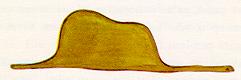
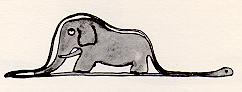
A boy draws a picture of a boa constrictor digesting an elephant (from the outside). He proudly displays it to the adults, but they see only a hat.  

So he draws another picture of a boa constrictor digesting an elephant. This time from the inside.

The adults advise him to give up drawing boa constrictors of any kind and to devote himself to geography, history, arithmetic and grammar instead.

“Thus it was that I gave up a magnificent career as a painter at the age of six.”

The boy becomes a pilot and throughout his career spends much time with grownups.

“I have seen them at very close quarters which I’m afraid has not greatly enhanced my opinion of them. Whenever I met one who seemed reasonably clear-sighted to me, I showed them my drawing No 1, which I had kept, as an experiment. I wanted to find out whether he or she was truly understanding. But the answer was always: ‘It is a hat.’ So I gave up mentioning boa constrictors or primeval forests or stars. I would bring myself down to his or her level and talk about bridge, golf, politics and neckties. And the grown-ups would be very pleased to have met such a sensible person.”

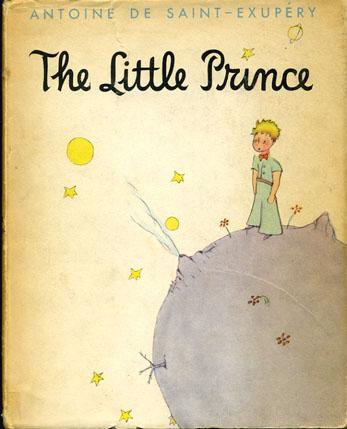
So begins Antoine de St.-Expury’s, 1943 classic, The Little Prince, about a pilot who crashes his plane in the desert and meets a prince who tells him he has travelled from another planet. The prince recounts his adventures, the strange people he met on his journey, the flower he loves and the baobab trees that threaten it.

The story, read as a children’s book is simple.

The real joy, however, is to read it as an adult book, taking pleasure in the satire, the layers of meaning in every sentence, and the revelations about the human condition, all best appreciated through the prism of age.

Children will miss the point entirely.

And that, of course, is the point.

Adults and children see the world differently. But who can say which is the ‘true’ perspective? Bottom line: we have much to learn from each other.

This is the kind of book that ought to be read regularly, and at different ages, as a reminder not to take ourselves too seriously and to hang on to some of that magical childlike wisdom we all once had, ensuring that we can at least entertain the possibility that what appears in every way to be a hat, may very well be a boa constrictor—from the outside.

c’est us, n’est pas?

 
Heremenegilde Chiasson’s marvellous book,
Beatitudes, begins like this:

“those who raise their heads in astonishment at the raucous cry of birds,

those who await the end of twilight,

those who ceaselessly leaf through catalogues and order nothing from life,”

—and continues, in  incomplete single sentences of a few, or few hundred, words, leading us on and on to an (incomplete) image of ourselves: funny, sad, beautiful, unsettling, always true.

“those who are euphoric about the mystery of snow crystals, delicately carrying home their unique fragility on woollen mittens,”

“those who scribble graffiti on their bodies with lead pencils, engraving their story in the secret depths of their skin, scratching themselves until they bleed, making a lie of pen and paper,”

“those who pull off their gloves with their teeth,”

118 pages of ‘those’…

Who would have thought the universe was big enough, that there were so many nuances…needs…differences…samenesses…things that unite us, tell us who we think we are, who we don’t want to become, who we may already be.

This book is a celebration of what it is to be human, a meditation, and a mirror.

new books

Am writing from somewhere under a stack of books received over the holidays and enjoying a moment’s pause with each as I (no rush) make my way to the top where I’ll choose a place to begin reading for real.

The stack:

The Collected Stories of Joseph Roth (translated by Michael Hofman); I’ve been slightly nuts about Joseph Roth since reading What I Saw so was extremely excited about cracking this open. In fact when I happened to wake up at one something a.m. (last night) I decided to turn on the light and read the first three stories.

What I Saw, by Joseph Roth. My introduction to him came via a library copy. Now I have my very own, thanks to P. 

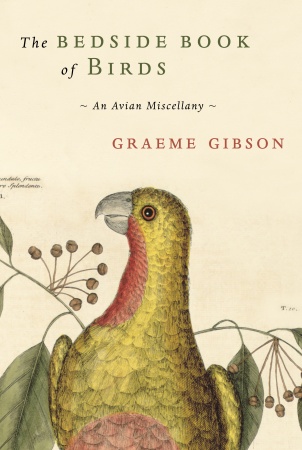
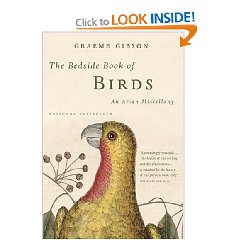
The Bedside Book of Birds, by Graeme Gibson. I’d forgotten that this was on my list of Books to Get and for some reason the starlings’ twilight dance last month brought it back to mind so I trotted right out and bought myself a copy. Have only flipped through the pages and read a few entries so far but even doing that is a joy—the book is a work of art: the drawings, prints and photographs, the combination of poetry, fiction, facts and folklore, the feel of the paper…. I look forward to spending much much time with it.

The Golden Mean, by Annabel Lyon. (Ever since Oxygen I’ve been eager to read anything Annabel Lyon writes.)

Here is the opening sentence:

“The rain falls in black cords, lashing my animals, my men, and my wife Pythias, who last night lay with her legs spread while I took notes on the mouth of her sex, who weeps silent tears of exhaustion now, on this tenth day of our journey.”

“Canada and Other Matters of Opinion”, a collection of essays by Rex Murphy.

The Spare Room, by Helen Garner.

David, by Ray Robertson.

The Little Prince, by Antoine de Saint-Exupery

Help me, Jacques Cousteau, by Gil Adamson

Beatitudes, by Hermenegilde Chiasson (translated by Jo-Anne Elder)

Dowsing: A Journey Beyond our Five Senses, by Hamish Miller

A Certain je ne Sai Quoi: Words we Pinched from Other Languages, by Chloe Rhodes

Nonsense Botany and Nonsense Alphabets, by Edward Lear

Cat Naps: The Key to Contentment (a tiny square book of quotes and pictures of napping cats, intended to remind us not to take ourselves too seriously…)

Excerpts:  Nature does not hurry, yet everything is accomplished. (Lao Tzu)

Yawn and the world yawns with you. Snore and you sleep alone. (Anonymous)

Alligator Pie, by Dennis Lee. From me to me. Because it was high time.

not just another bookstore

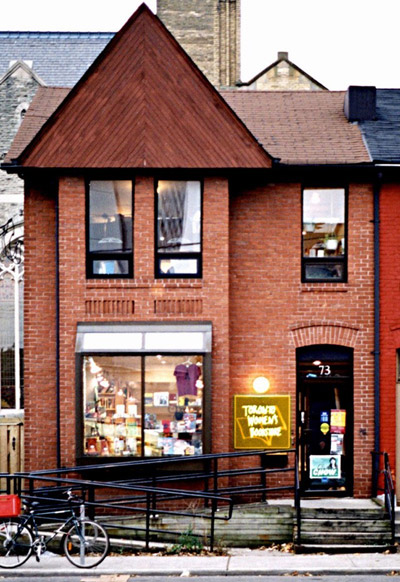
The Toronto Women’s Bookstore is in danger of closing.  If that happens, the whole city loses. Not just women, not just the people who buy books or attend workshops and readings or are served by the TWB outreach programs. We all lose. In Toronto, outside Toronto, across the country. Because every institution, every facility and service, wherever it happens to be, creates a ripple effect—positive or negative—on both the immediate community and society in general. 

If the TWB closes we don’t just lose another book store, we lose one of society’s positive ripples and risk making (yet more) room for the less valuable, the innocuous, the downright toxic…

It’s up to us which way things go.

If, one by one, we let these tiny positive influences on our society disappear in favour of giant homogenized nothings that cajole us by slick marketing to fill our lives with indigestible dreck that only dulls our minds with the addiction of wanting more, we’ll have—if not what we need—certainly what we deserve.

And their pockets will be full.  Because that, of course, is their bottom—their only—line. 

The choices we make, where we choose to spend our money is what determines what stays and what goes. It’s we that build our neighbourhoods, cities and societies.

This isn’t just about a bookstore, it’s about creating the kind of world we want to live in and the power of individuals to influence that world. The TWB is simply the latest canary in the coal mine.

HOW TO HELP.

when words and nature meet, good things happen

Last night on the way to the grocery store, I looked up and saw thousands of starlings flying en masse—their shape changing with every swoop—every wing catching twilight at the same moment—flashing silver— then another turn and all wings are black. The entire flock moving together, gliding, sweeping left then right, expanding and contracting like a perfect shape shifting kalaeidescope.

I’d seen the birds fly in large groups before, but never this pre-sunset ritual, which I’ve now learned is common; supposedly a form of communication before calling it a day.

I stood there alone staring at the sky for maybe ten, fifteen minutes. I assumed the show had only just started, that soon a crowd would gather and we’d all shake our heads and sigh, agreeing that nature is magnificent and we’re inferior dolts that have so much to learn.

But only a  few people even slowed down long enough to look up, and one disappointed voice who did,  said, “It’s just birds,” and turned quickly away.

This is the season for the starlings dance; for robins getting drunk on juniper berries outside my window; for geese arguing about the tidiness of the vee; chickadees, doves, cardinals and finches, a bounce in their step now that the bullyish greckles have finally gone.

With all that avian magic on my mind I happened to come across this interview, which reminded me that I’d wanted to read The Bedside Book of Birds

And now I will. 


“Stevenson remembered the story of a monk who had been distracted from his copy-work by the song of a bird. He went into the garden to listen more closely, and when he returned, after what he thought were only a few minutes, he discovered that a century had gone by, that his fellow monks were dead and his ink had turned to dust. The song of the bird had given him a taste of Paradise, where an instant is as a hundred years of earthly time. Was the same true of time in hell, Stevenson asked himself.”  (From— The Bedside Book of Birds, by Graeme Gibson)

going for a walk

“Confronted with the truly microscopic, all pathos is hopeless, completely meaningless. The diminutive of the parts is more impressive than the monumentality of the whole. I no longer have any use for the sweeping gestures of heroes on the global stage. I’m going for a walk.”

(Joseph Roth, from What I Saw )