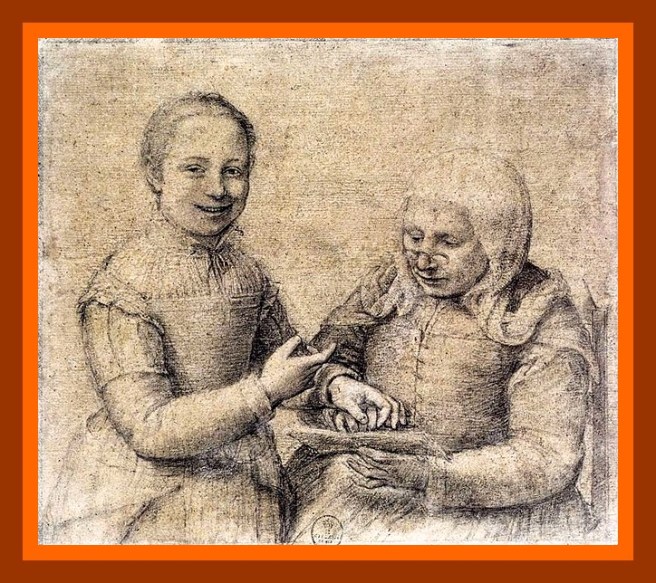
Some many years ago I bought a funky old book with a tattered cloth cover called ‘Autobiography of an Elderly Woman’ because a) I like memoirs, and b) I like elderly women. They seem wise. And I suppose I am one now. So, yeah, they’re so damn wise.
Inside the front cover in pencil is written the name Olive Robertson, to whom the book once belonged, I’m assuming. Also in pencil, the price I paid: $4.75. It’s a first edition, published in 1911, with tons of marginalia throughout (presumably thanks to Olive) and likely one reason for the bargain price. Honestly, I would pay MORE for marginalia. I do love a book with notes for me to read and try to figure out the who of who has read it before me and on what scenes and sentences we both land in the same way and where are we different.
Two things surprised me about this cloth-bound, gold-embossed, rather beaten up book:
The title would have you believe it’s an autobiography. Turns out it’s a novel. Though, I daresay the (transparent) kind of fiction that isn’t really. Which is always slightly annoying, when you can tell it’s not quite fiction, but neither is it ‘true’. It’s a fine line.
Also, nowhere in the book does the author’s name appear. Olive, apparently, was perturbed by this and made reference to it as well. I’m guessing that dear Olive read it before it was possible to search such things on the internets (something about the quality of her name in pencil suggests this). But in these modern times, a quick visit to Wikipedia tells me the author is one Mary Heaton Vorse.
Mary Heaton Vorse (October 11, 1874 – June 14, 1966) was an American journalist and novelist with commitments to the labor and feminist movements. She established her reputation as a journalist reporting the labor protests of a largely female and immigrant workforce in the east-coast textile industry. Her later fiction drew on this material profiling the social and domestic struggles of working women. Unwilling to be a disinterested observer, she participated in labor and civil protests. After returning as correspondent from Bolshevik Russia, she was for a period the subject of regular U.S. Justice Department surveillance.
A most notable aspect of the book is how the author describes experiences of women and girls in (1900 era) society as being gobsmackingly similar to today’s experiences. GOBSMACKINGLY SIMILAR> Not the least of which in terms of how women of various ages see each other, and how judgment has been ever present.
“These young women know so definitely what an older woman may and may not say and do and wear!“
“Each generation permits a different type of young girl, but the older woman must not change.“
Which makes this elderly woman (i.e. me) (and maybe Olive too) smile… partly because I so clearly remember being on the dewy-eyed side of the fence of knowing everything yet none too bright about bigger pictures, and certainly nothing about elderly women. But this is the smile-making brilliance of THIS side of the fence… knowing the fence is irrelevant. And a disservice to women on any side and therefore ourselves at every and all ages.
Society will only change its view of women and girls in time with women and girls changing their view of themselves, and each other.








 Matilda Magtree