♥
From me and Jean Paul Lemieux.
Peace.
Joy.
And the everything of those two elements.

♥
♥
♥
From me and Jean Paul Lemieux.
Peace.
Joy.
And the everything of those two elements.
♥
♥
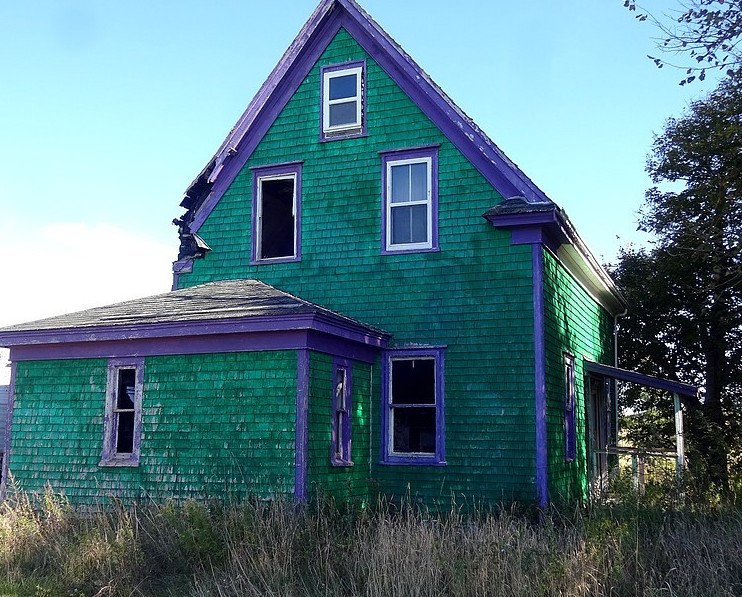
I don’t have the kind of phone with GPS. Or internet. Or texting. I have the kind that’s decades old, half the size of a Crispy Crunch, and only with me when I’m in the car and then only used to call someone should the car stop moving for whatever reason. Never for directions. For directions I use the Pull Over And Ask That Person There system, which involves a) hope, and b) trying to remember what they say about going along this road until you get to where the old liquor store used to be then left at the place that used to be the school and past where the Zellers was, directions that almost always include a big tree or a purple house at some point.
And I’m fine with that. Because even if That Person There isn’t sure, but… or I’ve already forgotten what to do at the big tree, not to mention I haven’t a clue where Zellers was, there’s something rather jolly about the asking, the standing there on the side of a road with a stranger who’s trying their best to be helpful and then possibly getting even more lost anyway but something has changed, this moment of personal contact that keeps me feeling hopeful as I trundle along, discovering a wooden bridge over a stream, a hilltop view, a tearoom, and a tiny community art gallery I’d never have found otherwise and I make a mental note to come back when I have time to explore.
Assuming I can ever find any of it again.
♣
♣
♣
There used to be a little book shop in Toronto, near the corner of Yonge and Eglinton. This was back in the early 80’s. I lived near enough to ride my bike over on a Saturday morning. The shop was above a bakery and I may or may not be imagining that you were allowed to take your goodies upstairs and sit on one of the couches or at little tables (my imagination also recalls a fireplace) and browse the bookshelves. I’d buy the Saturday Star there and a few croissants, which I’d bring home in the basket of my bike. Home being a postage sized single room in the attic of a big old house on a tree-lined street of big old houses. It wasn’t ritzy then. Many of those houses had been divided into apartments and rooms. I lived with my best pal, a black cat named Joshua, who’d spend the day outside and when I came home from work he’d be there to greet me and we’d trot up three (four?) flights of stairs together and settle in for the night. My apartment (a room really) was teensy. Big enough only for a mattress on the floor and a dresser. No couch, no table, a beanbag instead of a chair. and a sewing machine for making most of my clothes while sitting on said beanbag. I had a small television, a shelf for plants and books. A stove, fridge and sink against one wall. It was enough. The bathroom was shared with the teensy apartment next door, where T, who worked for the CBC, lived alone surrounded by giant, unwieldy stacks of old newspapers he couldn’t bear to get rid of and (apparently) mice. (No mice problem at my place given four-legged roommate.) He made a mean kedgeree, T did, and almost always made extra for me and I swear I can still remember the smell and the promise of it as Josh and I walked up those stairs.
All this from a picture that crossed my path the other day. I don’t even know who the artist is, but thank you.
Also… feeling a strong yen for smoked fish and rice.

♦
♦
There is the conversation recently about conversation, how differently it behaves and changes or doesn’t, depending on whether conversing while walking or sitting, which leads me to ponder the differences too when chatting via technology versus carrier pigeon or smoke signal, the differences in email versus inky letters (also quill versus Bic), the way one conversation is better by phone and another in person or vice versa, in which case I wonder: is it the subject being discussed or the person being spoken with that makes the difference because it seems also that some of us are simply better by phone and worse in person and best by email and hopeless in ink or so many variations of the above.
The point is this. There is all that.
And there is the pleasure, too, of this conversation possibly never entirely ending.
♦
♦
There is a cat on on the sill of an open window behind me and freshly fallen snow, a pot of soup on the stove made from frozen summer harvests and the other day, a drive to a thrift shop for scarves and a chat with the woman who runs the shop, who was delighted that I bought so many because, she said, they are buried in scarves and I said that’s music to my ears.
I like scarves, I told her. And she laughed.

♦
♦
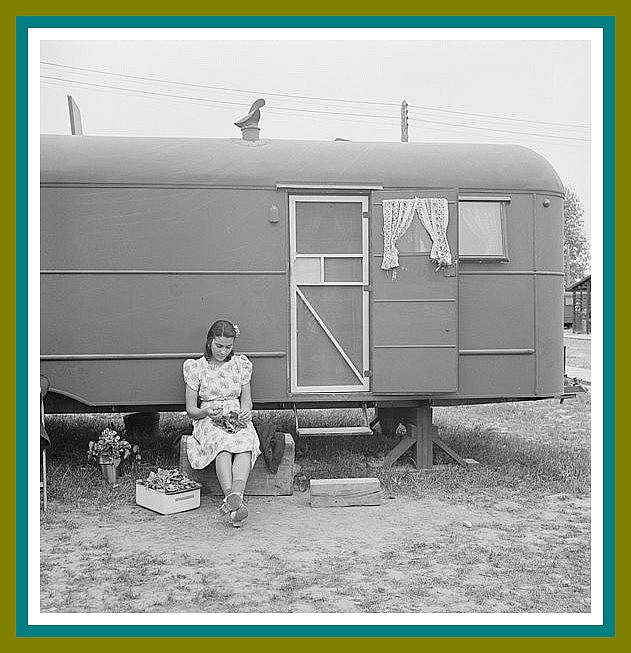
I’ve been *camping overnight in a tiny trailer that currently lives in my backyard. I think I might have been a trailer person in a past life. Something about tiny spaces suits me. I like the snail feeling of carrying your home with you wherever you go; you never forget things that way. I like having less and using it with more reverence. In the morning I linger in my bunk, look out tiny windows at the Big Wide World and eventually make my way to my also really quite small farmhouse to feed the cats and yet, for a moment on entering, it feels, by contrast, SO BIG… all this walking space… look how many steps I can take before hitting a wall. It amazes me every time.
♦
♦
♦
Where are they now I wonder, the clothes we once wore, the red jersey dress and the yellow one, the green culottes, 100% crimpolene!, the Phentex slippers (100% olefin polypropylene!), and those ‘wet look’ knee high boots Moira Something had, boots surely made of congealed raw petroleum… materials that last forever, fragments of which are somewhere and one day, thousands of years down the road, will be excavated by puzzled archeologists searching for the latest fad.

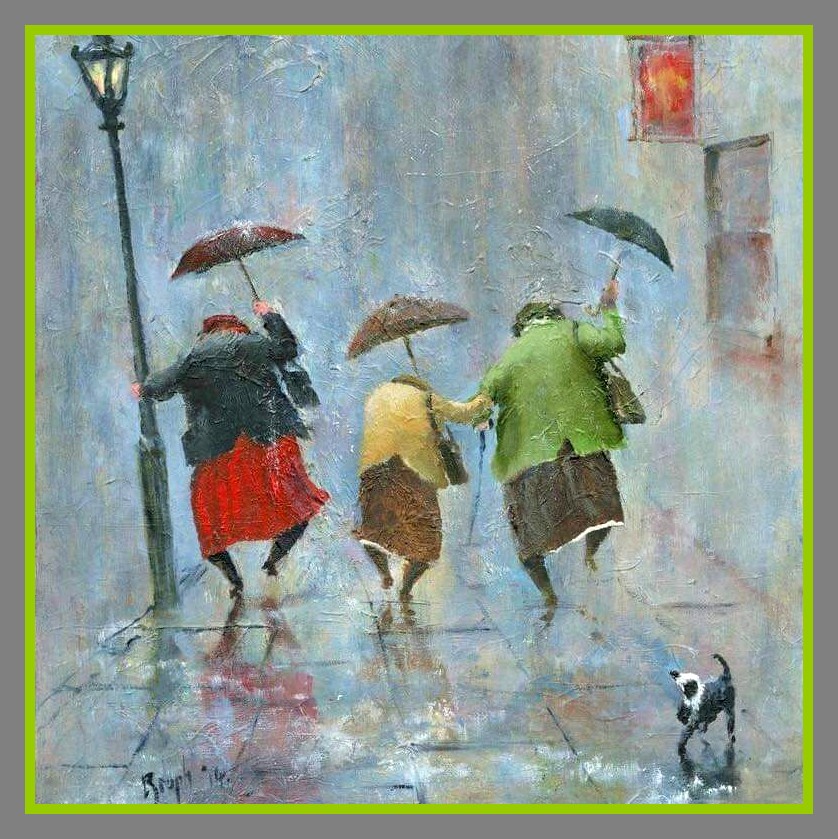
It’s been brought to my attention that I talk a lot about the weather, which I’m assuming is partly because I’m Canadian, but mostly because I’ve loved clouds and snow and thunder for as long as I can remember loving anything. The smell of rain on its way when you’re nine and sitting on the porch, the way the summer-warmed cement steams when it first gets drenched, the way you feel invincible there with your plate of buttered saltines and Freshie as the sound of fat raindrops hit the roof above you, cars sploshing through puddles, the man across the road holding a newspaper above his head as he runs from his car to the front door and you with your Archie and Veronica and not a single place to go.
♣
♣
♣
On a day when thoughts go to maternal places I remember how my mother liked bluebirds and flowers on her cards, the more saccharine the better and preferably store-bought. Nothing made at school with macaroni thankyouverymuch. So I grew up with a certain amount of seasonal card anxiety and my teeth still ache at cardboard bluebirds but what’s more interesting is how this stuff finds its way into our work. Here’s a slice from a story I wrote some years ago and which came to mind today. The first half is narrated by a woman who sees an abandoned chair at the side of the road and picks it up. The second half is narrated by the chair and begins like this:
***
***
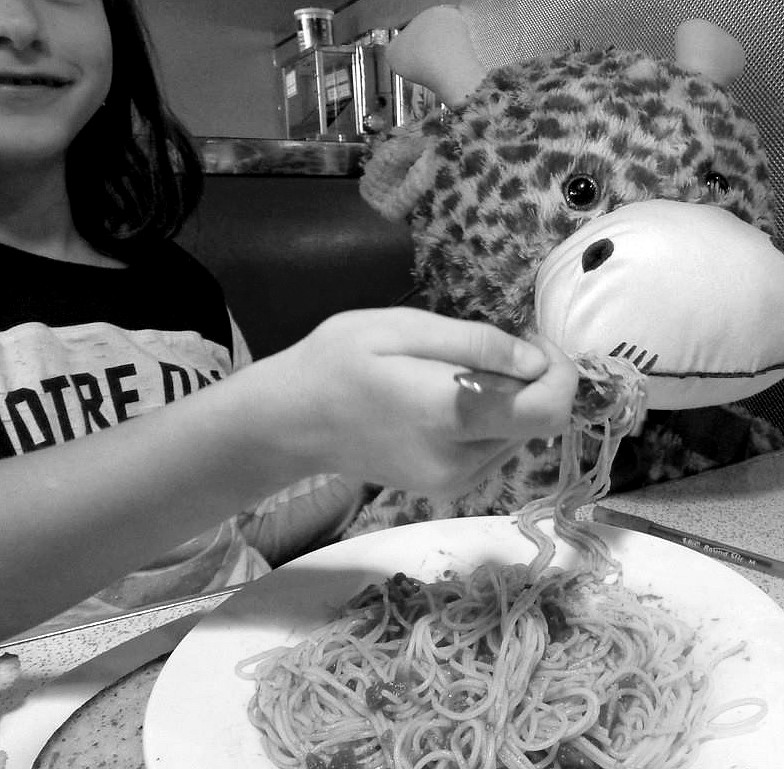
My own feelings on macaroni are that I prefer spaghetti.
About mother’s day cards, I have to agree with the chair, but I feel that way about most greeting cards. Much prefer making my own. But not with macaroni (see above).
And on being an orphan… I come from a family of four. My sister died first, much too long ago, of ALS. My dad next and with that, part of my mother. She was forever different without him and I was too and somehow in our differences we found each other, eventually singing more often than arguing and to be honest I’m not sure she even cared about cards at that point, in any form. It’s a strange thing to feel orphaned as an adult, and maybe it’s not quite the right word but there’s certainly a feeling of being cast adrift in some way and so it fits how I felt for a long time after she died. It’s more than missing a person, more like wondering where you fit now. The miracle is the answer, which is pretty much the same as it always was, but seeing it is the miracle. It’s all a process, isn’t it, sadness but with its own kind of beauty, different and the same for each of us I suspect, on some level anyway.
The chair, of course, might have an entirely different view.
♥
Well. My first Maritime snow storm has come and gone, and I’m thankful for both the coming and the going. I have new respect for those who have long lived in this environment, capably, confidently and with such casual attitudes because, for me, it was an eye-opener to say the least. The ferocity of wind (100+kph) in combination with endless snow is quite a trip. In the past I’ve watched lesser but still exciting storms from the comfort of my house surrounded by other houses in a town or city with amenities nearby and thought about those who, for various reasons, have no such comforts. I still wonder how they survive. But I have renewed respect for them because having the power go out at a rural farmhouse in the middle of blinding wind and snow in the middle of nowhere, where roads can easily be impassable for days wakes you up pretty quickly to what’s really important. What I love is the way people here take it in stride, they’ve adapted and there’s power in that. In the days before the storm, when its approach was mentioned on the weather report, it was mostly referred to as a bit of rough weather ahead. “It’ll be a mess,” one reporter said, “and in 24 hours it’ll be over“, and of course he was right. There is no hysteria, no hand-wringing, the radio plays local tunes not storm watch reports and people know how to prepare. Meals are made ahead to freeze, bathtubs filled with water, storm chips purchased in bulk. Everyone knows where the flashlights, candles and extra blankets are. There is much more of course to the ‘knowing and doing’ and I’m learning. And I’m grateful for that because when it’s over and the world is one stunningly magnificent winter wonderland of pristine snow and all you hear about is the beauty, you realize that’s truer than true. And you are SO grateful for everything you took for granted just 24 hours before. That in itself is worth so much.
Coincidentally, during all this, I was reading Nomadland, by Jessica Bruder, the book made into the film with Frances McDormand. (Both are brilliant in my opinion.) Bruder lived in a van and travelled with the ‘nomads’ for two or three years in order to get the story of this hidden-in-plain-sight segment of society, essentially, and for the most part but not limited to, retired people who have lost all other options and are forced to live full-time, year-round, in their cars, vans, or trailers, moving across the U.S. with the good weather and various ‘nomad’ gatherings where they connect with friends and share valuable info on van-dwelling). Many of these people come to love the simplicity of the lifestyle and become new and better versions of themselves through adversity and finding independence and a sense of power on the other side. Not that it’s considered ideal by anyone, but neither are so many other situations people might find themselves in. This, they rationalize, is simply one choice.
The past few days have found me thinking ever more compassionately about the state of so many lives, Indigenous in remote communities as well as neighbours in towns and cities everywhere, who are trying to survive, literally, every day.
All of which to introduce my next repeat post, written over a decade ago after one of our annual trips to a piece of wilderness in the B.C. hills, where we liked to play at roughing it in the bush. It was definitely fun. And definitely nothing like the real thing.
The following was originally published September, 2011.
♦
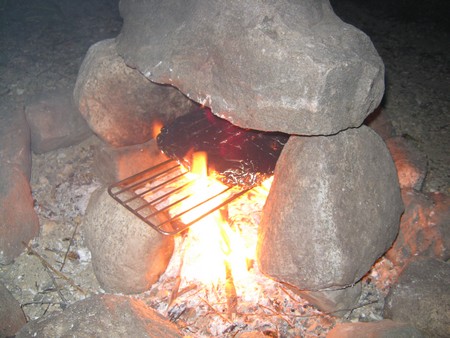
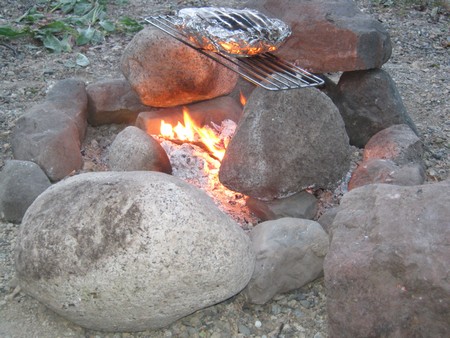
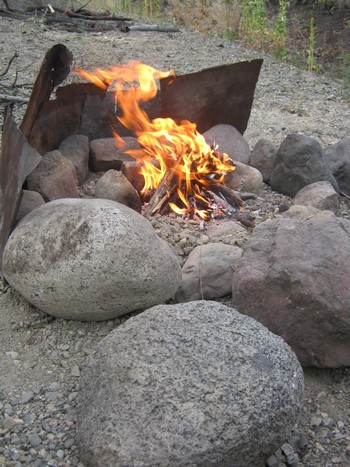
Oh sure, I like a nice hotel, an inn, a B&B, a place with a real toilet and room to shower, but hot water and comfort aside (and I speak for both Thoreau and myself here), there’s really nothing so restorative as a week in the wilderness, under the Milky Way, reading and writing among jittering aspens, searching for the elusive left-handed windshifter and fixing meals to songs about trucks and beer and especiallylittle lady bugs on little yellow blankets…which, regrettably, I can now sing along with…on the only radio station that comes in clearly: Country Something Something FM; nothing so affirming as knowing one can survive on a small amount of fresh, local food, cooked on an open fire made with tinder and twigs and logs collected, sawed by hand (splinters removed with a sewing kit needle); the stars at night, a glass of red, a cup of tea, a handful of stones in an empty Unicorn kidney beans can to shake occasionally (due to bear warnings, not to mention the sight early one a.m. of a big black furry paw pulling at branches on the serviceberry bush outside the door—two metres from the door—of our rented trailer).
Which is exactly why I don’t do tents.
The deer were there too. This year a family of five: mommy deer—not thrilled about our big camper thing but tolerant—who tossed a few as long as you remember who was here first looks our way; twin babies, but for a torn right ear on one, who really really wanted to come closer but I worried mommy deer might have something to say about that so gave my ever-present Unicorn can a little shake (was considering wearing it on a string around my neck); papa stag, who merely followed or led or did whatever he was told to do and seemed mostly concerned with the size of his new antlers, stopping to let us have a good look at them from various angles; there was also another mid-sized adult tagging along, rather unwillingly I thought, which I took to be a visiting aunt. Numbers are significantly down, due, I suspect, to proximity of big black furry paws—only the very brave and the slightly witless linger (and deer aunts who are there under duress, possibly to attend a niece or nephew’s birthday party; all aunts know the best time to visit with nieces and nephews is NOT at birthday parties).
Then there was the bread.
Loaves of it made by a guy with a donkey that turns the grist mill that grinds the flour that is then mixed with fresh mountain spring water, sea salt. Sourdough. Toasted on the fire, buttered, with a slab of jalapeno cheese, slices of fat red onion or made into a pan-fried salami/turkey/romaine sandwich or as accompaniment to red kidney bean soup in chicken broth with chopped coriander, carrots and garlic. We had bread with eggs, bread with fruit, bread salad with yellow tomatoes and garlic bread and green salad with croutons; we had bread with bread and bread with jam and juice and by the end of the week, all that was left of the entire food supply was one tiny crust of donkey milled bread (somehow we’d managed to ration down to the last slice of shallot), which crust I packed and ate on the flight home.
As for the Milky Way—it’s usually directly and conveniently above our campsite but this time the nights were either too cloudy, too bright with the moon, or too windy dark and bear scary. So, like the serendipitous way of the world, today, on returning to emails, we find this amazing time lapse video waiting for us, sent by someone who knew nothing of our starry starry quest.


♦
 Matilda Magtree