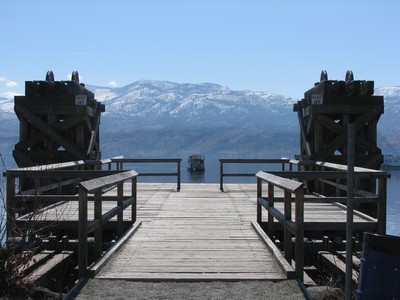
Truth #3: I want to live on a houseboat.
TRUTH #2—I have never read One Hundred Years of Solitude.
I know. I know.
Believe me, this isn’t an easy thing to admit, but because I’ve challenged myself to air a truth a day throughout April—in order to travel that bit ‘lighter’—it had to be said.
Also, there’s a kind of omen-y thing going on. The title has crossed my path three times in the last few weeks. First, in an answer by Charles Foran in a 2008 Q&A with Steven Beattie, which I stumbled over while looking up one of Foran’s books:
“I abandoned a career as a hockey player – okay, I got cut by the Young Nationals when I was seventeen – for literature because of how books rocked my suburban Toronto world. I can even pinpoint the turn. Once I opened the epochal paperback of One Hundred Years of Solitude, a book purchased, largely for the allure of its pastel cover, in my local Coles in my local mall in 1977, or thereabouts, I knew I was a goner. I knew this because of how I read Marquez and, in turn, how Marquez read me.”
Second… I can’t remember what, but there was a second.
And third, in the short story ‘How Healthy Are You?’ from Sarah Selecky’s collection This Cake is for the Party.
“On the first day, they were given their capsules with breakfast. The numbers 009 were printed in black on the outside of the capsule. Carolyn swallowed hers with orange juice. She showered and dressed. She’d brought One Hundred Years of Solitude to read, a journal, her Spanish textbook and some Post-it Notes for vocabulary, and her Canon SLR.”
~
All of which can only mean it’s time to read this magical book (my own unopened copy, purchased close to 100 years ago, is currently packed away in prep for a basement reno; TBR this summer.)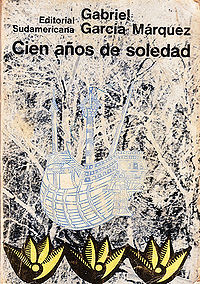
In the spirit of this year’s self-imposed de-cluttering theme, I’ve dedicated April to ferreting out a truth a day from the large container where such things are kept and lugged about for no good reason.
TRUTH #1—I can’t skate, I never drink beer, rarely eat maple syrup, would rather have a bagel than a doughnut, execute a pretty sad J-stroke and really don’t understand hockey (although I like watching it and miss the song).
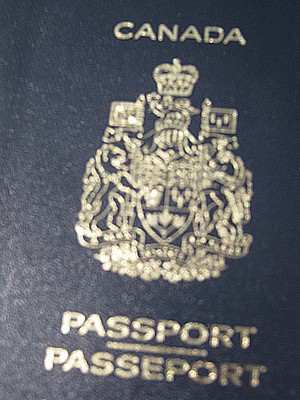
Note: being able to identify grounds for having my passport revoked is my only saving grace…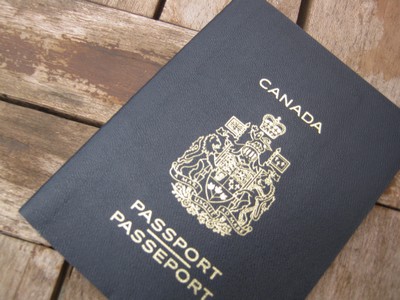
A lone deer at the edge of a field about 100 metres from the highway. A group of men watched from the side of the road. They didn’t look like nature lovers.
A teenaged girl sitting alone on a playground swing, smoking. Something about her made me think she’d secretly welcome someone saying hello, but I wasn’t sure, didn’t want her to think I thought she looked sad and lonely. So I said nothing. That she stays with me makes me wonder if I erred on the wrong side of cautious…
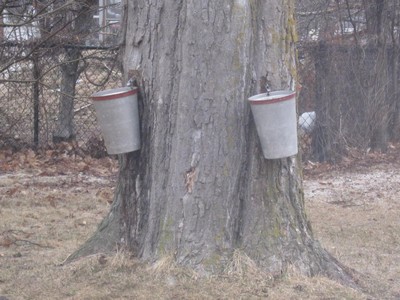
Four silver pails hanging on the trunk of a front yard maple. (I want a front yard maple!)
Some yutz in a silver car with tinted windows who pulled out of his driveway in front of me without looking. I could smell rubber from how hard I braked and swerved in order to miss him. Some choice words tossed about on my part, though his windows were safely rolled up.
First robin of Spring!
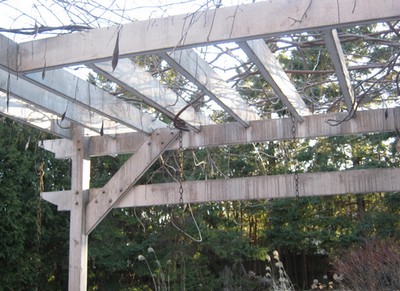
Once upon a time there was a very pretty wisteria vine. It was May and things were fine and fragrant and there was nothing to fear.

By July the purple petals had fallen onto the patio and were swept away by the people who lived there. The vine had grown leafy and become a shady place under which the people sipped chardonnay and nibbled sandwiches all summer long.
Then came October with its spooky witchy ways and blustery habits, dislodging the leaves of the lovelyy wisteria, turning it into something resembling a launch pad of ten thousand alien pods, each of which threatened to disengage the eyes of innocent stargazers.

All winter the people watched the pods dangle menacingly outside their window, fearing for their noggins every time they stepped through their door.
How will we ever remove those ten thousand pods from our wonderufl vine?? they wondered as they gazed at starry solstice skies through swimming goggles.
Then one day in March a great snapping and cracking filled the air. Tiny round missiles hurled themselves at the windows and Jake the Cat meowed something that sounded like: wtf? as he took refuge under the kitchen table.
No, wait. That was me.
The cacophony of cracking continued for a couple of days. And while the sound initially unsettled the people something wicked, they soon realized—around hour 42—what was happening. The pods, it seems, dry into sticks over winter, then twist open—that was the cracking—each releasing four or five penny-sized seeds. That was the pinging against the window.
As soon as it dawned on them that the world was not, in fact, ending, the people relaxed, poured some pinot and began to enjoy the show.
Of course, by then it was almost over.
These people, they’re bright(ish), but nothing stellar.
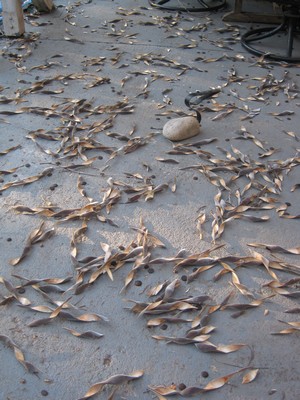
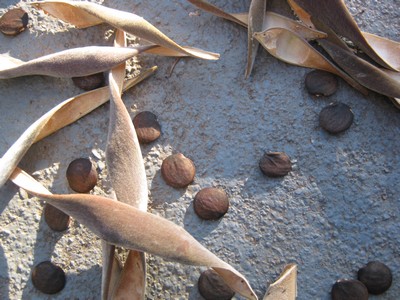
Mother Nature on the other hand—that’s one smart dame.
Today is my birthday. This was my gift to myself.


And chocolate.
Opening my library copy of Sarah Selecky’s This Cake is for the Party I found a nicely printed, glossy card telling me the name of the game is ‘experiments in kindness’ and that I’m now “it”. Funny how such a tiny inconsequential thing by a mysterious no one in particular, can brighten a day.
Will be passing it on tomorrow…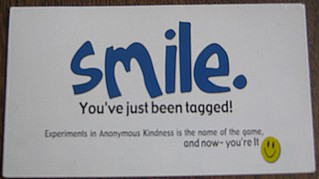
“The fragrance always remains on the hand that gives the rose.”—Ghandi
~

If you do find a baby animal that you think needs help, please refer to TWC’s website for guidance or call the Hotline at 416-631-0662.
Many baby birds spend 1-2 weeks hopping around on the ground after they have left their nest, BEFORE they are able to fly. This is a part of their normal “fledgling” period, and though parent birds are still feeding and caring for their babies during this stage, they cannot protect them from cats.
 Many mammal species also nest on the ground or in places cats can easily access. Cottontail rabbits stash their babies in a ground nest (which are frequently built in urban and suburban backyards) and for 3 weeks will leave them unattended except when feeding them. The babies are unable to run or hop away if discovered by a cat.
Can’t keep your cat indoors?
Here are some alternatives.
—————————————————————————————
Note: I’m guessing the above piece refers mostly to an urban environment.
Still, the cat issue is a tough one, arguments for both sides. Once upon a time I wouldn’t have considered keeping my cat inside, then circumstances forced the decision (I moved into an apartment that was perfect in all aspects other than in/out access for my cat). She adapted and we lived happily ever after, acquiring other cats, which, because she was, became indoor ones also.
And though I’m in a house now, with a yard, I choose to keep them inside because we’re surrounded by roads and I don’t want to see them squashed beside one. Were we surrounded instead by boundless meadows where they could run about eating up mice and other elements of the food chain (all the while taking a risk at becoming part of the foodchain themselves) I may consider letting them out.
Or not.