wordless wednesday (summer postcards)

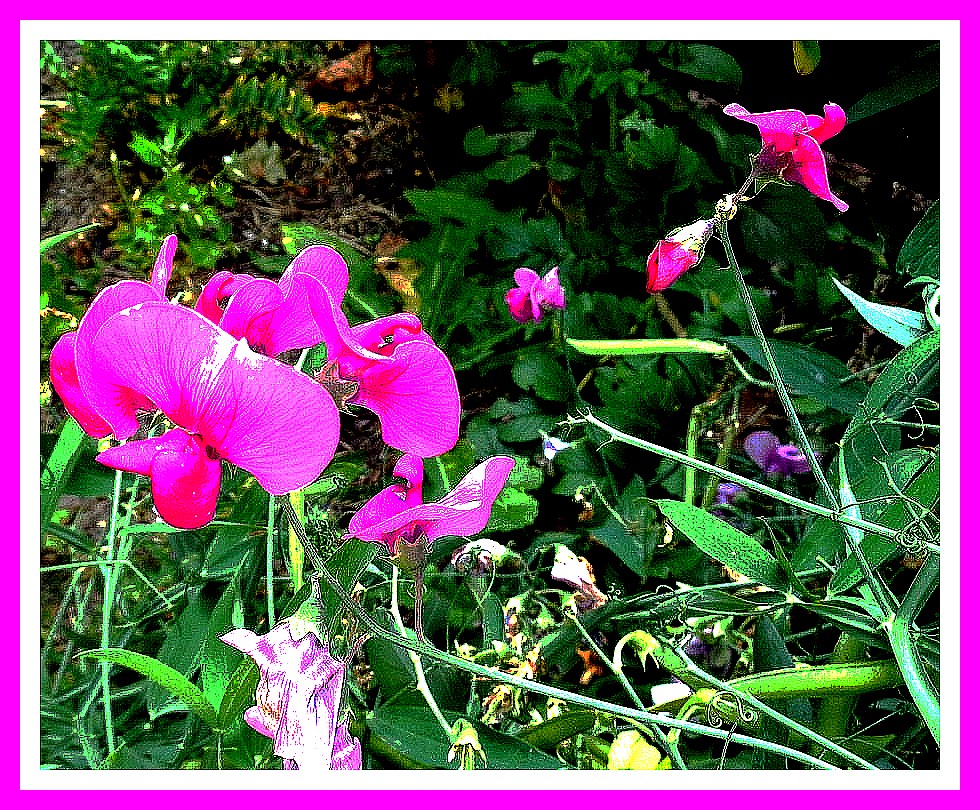
I was going to write about sweetpeas.

About the ones a friend grows and how she lights up when she tells me she’s grown them forever, in every place she’s ever lived, and that she will continue to grow them. Forever, she says. She recently lost her husband and doesn’t grow a single other thing anymore except sweetpeas. I don’t ask why.

Or the ones that were always such a surprise, brought to me as a handpicked bouquet each week one summer when I lived in England under difficult circumstances and wondered if I’d ever get away — not from England, which I loved, but from the difficult circumstances — and how this sweet posy on a table in the middle of my difficult circumstances cheered me and somehow made me believe things would change for the better. And they did.

Or the ones I tried to grow, which didn’t take and I never planted them again.

I was going to write about those and more.

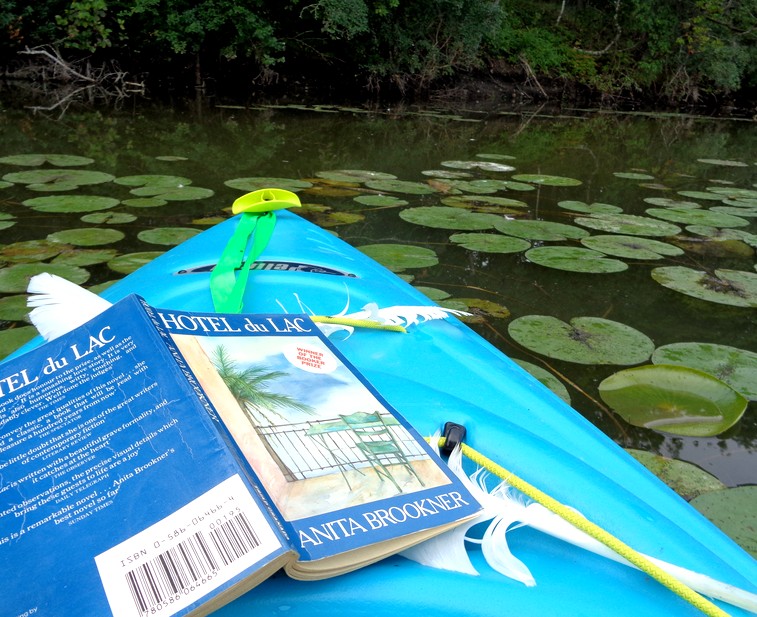
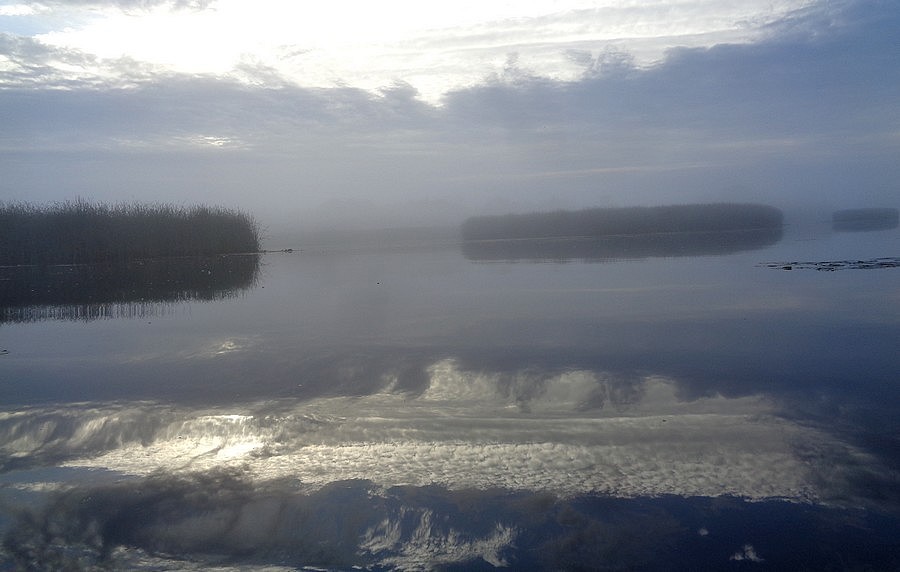
But then I went for an early morning paddle…


… and I forgot all about sweetpeas.


this is not a review: ‘treed’, by ariel gordon


There are certain books that become full-time residents on my coffee table or bedside table or table by the fireplace or sometimes, if the weather is good and the umbrella is up, the patio table. Weeks and weeks go by and the book is there, picked up regularly, set down maybe in a different place to be picked up again. And again. The more I love a book the longer it takes for me to shelve it. Re-reading is a favourite thing. I make meals of sentences, play a scene back in my mind, go back a page and work my way up to it again. I will read the same story or essay or poem over three days in a row, each time finding another layer of meaning or pleasure, some image initially missed.

Treed is one of those books. Currently living on my coffee table, this wonderful collection of essays makes me happy to know it’s there to fulfill any sudden craving I have for a discussion of tree love or a vicarious forest walk with one of CanLit’s most enthusiastic (and real life) forest walkers, the Winnipeg writer and poet, Ariel Gordon.

Gordon has a penchant for the urban forest and after reading about the trees of Winnipeg you practically want to book a flight and see it all for yourself. But you don’t have to… she’s very good at giving you the vicarious experience and her enthusiasm for woodland (& other) greenery is inspiring, the kind of person who instinctively sees, hears, thinks, imagines… who wonders and is constantly curious and learning, finding nothing in the natural world dull.

Just beyond the slough is a big old trembling aspen that has strange vertical scars on it at about chest height. It takes me a few minutes to realize that these are bear scratch marks, which makes me walk faster.

Gordon well knows that even along the same path through the same park or the same neighbourhood street, if you’re open to using all your senses, no two walks are ever the same.

When I was younger, I resisted naming. But I’ve realized, over time, that this tree, that tree, the other tree isn’t as precise as it could be. Names allow us, as writer and reader, to know that we’re talking about the same things. They’re suitcases that carry not only simply information but also historical allusions and memories of what it is like to stand in a field and be surprised by herd of white-tailed deer, for instance. It reminds us of the quality of the sun on their dun backs, little bluestem grass grinding between their teeth, the rattling leaves of trembling aspen on the breeze, the way the doe’s ears telescope at the least noise.

The next paragraph begins: I’ve started spying on barn swallows.

I love how she compares the community of trees to urban communities, the purpose of a tree’s architecture as important as streetlights, the grid patterns of roads. There’s so much to see and discover in her world of trees and, I’ll confess, while I, too, have never found a dull moment on any walk or in any part of nature, Gordon’s writing has made me see trees, specifically and  individually, where once I saw merely the beauty of the whole landscape.

In ‘Outage’, Gordon recalls a week spent in a farmhouse where she intends to spend her time writing but ends up paying attention to the stories and the life around her instead and we are so glad she did.

I come with my own stories and somehow land right in the middle of Sharron and Kerry’s, and through them, Ken and Alverna’s, to the first settlers on the land and the residents of Sandy Bay First Nation, moved and moved again to make room for those settlers.

In ‘Winter Walk’ she writes:

My favourite thing about a real xmas tree? Being alone with it…. I sit in the warm half-dark by myself and smell the tree’s piney scent. I sit quietly, sipping tea or sucking  on a shard of candy cane, and listen to my own heartbeat. I breathe tree.

A tree covered in vines that turn out to be tiny grapes inspires sentences like this:

Eating them – popping the grapes with my teeth and separating the flesh from the seeds with my tongue – is like completing a puzzle with my face.

In ‘Emergency Carrots’ she weaves various threads (including carrots), the memory of trees past and present, with concern for her husband’s health and safety, and it’s all so seamless. (It’s hard to pick a favourite from among the book’s sixteen essays, but this one’s a gem.)

And from ‘The Social Life of Urban Forests’:  

… every settled place across North America had elms and, eventually, an elm canopy. The arches of elm trees that we’ve cultivated here are just as much a construction as the streetlights, as the layout of the streets, their strange grids and confusions. Our communities of trees are as deliberate as the communities we build among ourselves.

The ending of this piece is simply beautiful… Gordon writes about trees that are marked to be taken down due to disease or other reasons, the stumps she finds in her travels, trees already felled… and if you weren’t at the start, by now you’re with her, not only in awareness, but empathy for the trees around us, those we take for granted on streets and boulevards, the urban canopies, the forest and field and farmland trees… and so when she tells you she sometimes stands on those stumps, stretches out her arms and reaches for the sun… you can hardly think of a sweeter homage.


wordless wednesday (summer postcards)


This morning I paddled under an 8 a.m. moon toward a bald eagle named after a British ski-jumper and thought about peaches eaten by a denturist in his dental chair while wielding a large kitchen knife… while I, manning my post at the front desk of his clinic, accepted dentures directly from the mouths of clients with handfuls of Kleenex that I (stunned) was able to quickly pluck from a box that was blessedly nearby. Such thoughts prompted by a discussion heard on CBC radio on the way to my paddling site, a discussion about once-upon-a-time summer jobs. The collecting of false teeth for the mad denturist (who also sent me to the liquor store during quiet moments to buy ‘medicinal’ bottles of brandy… that I was underage seemed not to be a deterrent, either to him or the liquor store… ah, them were the days) being my most memorable job, but there were others… some of which also included fruit. Picking strawberries, for instance. No fortune made. I ate most of what I picked and at the end of the season had zip to show for long days in a sunny field, except a tan and a rash.


Other (not always) wordless friends:

Cheryl Andrews
Allison Howard
Barbara Lambert
Allyson Latta
Elizabeth Yeoman


wordless wednesday (summer postcards)


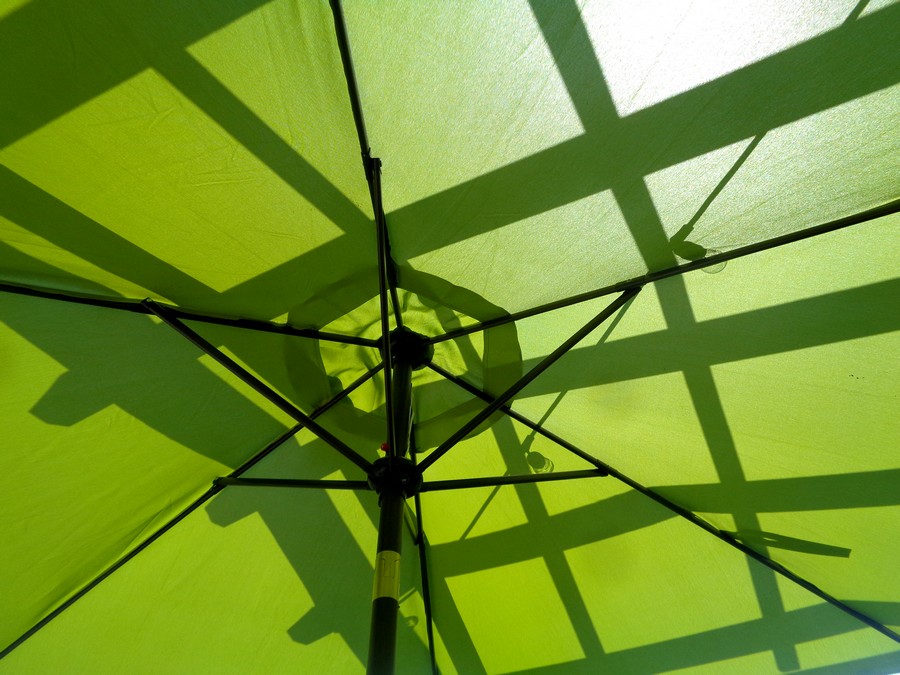
If I were on a patio or a porch or a chaise lounge in the garden of some B&B with a striped cat and a shaggy white dog. If there were umbrellas to hide under during sun and during rain. If the B&B had no wifi or Netflix but it did have a DVD player and a selection of Agnes Varda flicks and that one by her husband Jacques Demy about les parapluies. If it rained all day and I sat in a window seat reading A Gift from the Sea. If it didn’t rain and I walked along a grassy shoreline.

Or if I was at one of those picnic rest stops on the highway eating bread and cheese from a place I’d found in some small town along the way. Or the cafeteria of an art gallery where the food is surprisingly excellent and where I’ve taken a break from all the marvelling of what has compelled humans from the beginning of time to record experience and thoughts. Or if I’ve bought a sack of peaches and now sit under a tree eating them with juice running down my chin which I wipe off with my shirt.

And especially if I found a narrow alleyway, a sliver of peace in a loud city, where gravel and fences and the backs of old brick houses were covered in vines of varying description and a chair had been placed by the kindness of some stranger with a sign saying please sit, please contemplate, I would sit and contemplate and write postcards about umbrellas and rainy windows, good bread and striped cats.


And the tree under which the peaches were eaten.
 

Other (not always) wordless friends:

Cheryl Andrews
Allison Howard
Barbara Lambert
Allyson Latta
Elizabeth Yeoman


this is not a review: ‘leonard’s flat’, by steven mayoff


Leonard’s Flat , a slim, beautifully made volume of ekphrastic poetry, influenced by the art of the author’s uncle, Len Fligel, who Mayoff credits with being the long ago spark that ignited his own “creative ambitions as a writer”… is a tiny gem.

Ten paintings, nicely reproduced on thick, glossy pages, represent a slice of one family’s history but it could be any family. The subjects are simple and relatable:  bread on a supper table, chickens running in the yard, laundry, musicians, domestic scenes. Add to that Mayoff’s insights and recollections, the adult looking back at pieces of art he first saw when he and his mother lived with the uncle in his Glasgow home for a short time, the meaning of which art eluded him as a child yet never left some deeper place in his memory.

Because isn’t that how art works when it’s working at its best.

These ten poems feel like so much more than an homage… more like a testament to not only how we remember, but how we see, not only the past, but the present. Because art in any form is always about the present, no matter when it’s made, no matter when we find it.

“…Gathering round your
Glasgow table when
I was a boy offered

a haven for the stranger
I was to myself…

—From the poem, ‘Meal’


wordless wednesday (summer postcards)

Conversations in my world have turned to radishes and so thoughts turn to a cabin somewhere in Muskoka that probably no longer exists because Muskoka as I knew it no longer exists. In The Days of Radishes, highway 11 was still a place where you could pull over, climb some granite and have a picnic overlooking the (not especially busy) road. Pick some blueberries for dessert. The Year of the First Serious Radish Memory it was raining when we drove north and for some reason we were arriving very late at night, so maybe we left after my parents got home from work. In any case it was late and it was raining and we were on holiday but we didn’t have anything booked. We’d actually driven up north assuming we’d just find a place, tra la, tra la. This is how it was in The Long Ago Days of The First Radishes. You could do things like pack your car for a week’s holiday without any idea where you’d stay. The night got later and darker and rainier and there may have been some raised voices in the front seat as the car filled with Sweet Caporal fumes. I vaguely remember tension but mostly I was oblivious, in my own backseat world singing Country Roads and imagining how beautiful it would be to live in the woods on my own. How peaceful, and smoke free. Miraculously, we found a place. A tiny one-room cabin in which we ate whatever we had left in our cooler, which, in my memory, amounted to rye bread, butter and radishes. Maybe there was more, but that’s all I ate. It was heaven. My mother laughed at how many sandwiches I put away… you want another one???  Sure. They’re open-face, anyone could eat a dozen, no? And with the rain on the roof and the smell of the damp wood and who cares where we’re all going to sleep or where we’ll stay the next day or the next… it makes a kid hungry. In fact I have no idea where we stayed the next night. Maybe the same cabin, maybe we stayed all week. Maybe that was the place where I fell asleep to the sound of my parents’ voices outside a tiny window as they sat in Muskoka chairs under the pines, amazed at their good luck.


Other (not always) wordless friends:

Cheryl Andrews
Allison Howard
Barbara Lambert
Allyson Latta
Elizabeth Yeoman


wordless wednesday (summer postcards)

Theme: objects hanging in trees or trees otherwise adorned.

At the skateboard park in town there’s a tree hung with sneakers in memory of, and to pay tribute to, a lad who died… while skateboarding or not is not clear. But the tree, heavy with sports shoes shouts a certain kind of respect.

There’s the dressing with ornaments of woodland trees in winter.

And just recently I met a man who is stooped and walks with a cane, but it’s like he doesn’t notice these minor impediments, who has a giant something or other tree in his backyard, from whose enormous (and very high) branches he’s suspended a variety of odd birdhouses from ropes on clips, which he removes and cleans annually, and stores over winter. All of which requires a ladder moved about a dozen times. All begun, he told me, when his brother came to visit many moons ago, from Belfast, bringing as a gift a birdhouse in the design of some historical Irish landmark, possibly a lighthouse, I’ve forgotten because as he spoke the details were less important to me than the animation and passion of the telling. He said he thought it was a stupid gift. And then he didn’t. Once he hung it and birds nested there he was hooked. He put out food. And now his yard is a bird sanctuary with feeders and twenty or thirty hanging-from-a-giant-tree birdhouses, most of them occupied, he said in the midst of much feathered to-ing and fro-ing.

A poet in Winnipeg adorns city trees with poems.

I’ve seen a collection of wind chimes in trees, and masks, and a woman who taught me how to work with cement had a few trees hung with glass bottles, dark blue ones and white frosted ones and strings of fairy lights. I didn’t ask why she hung the bottles. They were beautiful. The answer seemed obvious.

There are easter egg trees, and trees on which you tie little flags containing hopes and dreams, ,the clootie wells of Scotland, and in Kamouraska a few years ago I saw my first tree wrapped (so not technically hung) with knitting, which I’ve since seen many more versions of.

All of which makes me wonder why trees? What is our thing with them? Feels wonderfully druid, this veneration of nature and all its magic. And then I think… don’t question it,  just embrace the lucky fact there seems to be a lingering, primitive something in our dna… when we’ve lost so much else.


Other (not always) wordless friends:

Cheryl Andrews
Allison Howard
Barbara Lambert
Allyson Latta
Elizabeth Yeoman


today’s thoughts (from a kayak)


Red winged blackbirds. Darting in and out of reeds, returning sometimes with nesting material. Sometimes I think they just go out for smokes.

Morning pond air chock full of chittering, occasional grunts from somewhere in the bull rushes behind my boat. I tend not to worry about strange sounds on the water… it’s only what’s on land that’s worrisome.

Kingfisher. Flies like she means business.

Seagull. On perpetual holiday.

All this singing, chittering, trilling, cawing. Is it a band or a choir?

[Every time I don’t bring a sandwich, I regret it.]

Yellow finch flits to the accompaniment of frog solo bass.

Have lodged my boat among lily pads and stare at opposite shore wondering what it must be like to understand nature, to know what tree that is or what everything’s surviving on, what kind of fish is it that keeps jumping here, and then here… to have some idea of how to move through the world less clunkily, to disturb little, to be still. I ask these questions then open my tupperware container of market blue berries and eat them with inelegant fingers.

[The lily pads work extremely well keeping my boat in place. I wonder if the voyageurs knew this trick.]

Water level too high for egrets, herons, both blue and green, cormorants too.

Deer. First one, then two. I paddle gently, watching them on the woodland side of the pond but they must see me because their nonchalance suddenly turns to startled and then they turn into the woods. And, poof, they’re gone.

A kind of elation, mild ecstasy, maybe not even so mild… arrives if I stay in one place long enough. The opposite of boredom. The pleasure of being somewhere long enough to have questions, to understand… something…

Two cardinals. I may have caught them in a picture I was taking of the light that has turned lime green yellow bright on this summer morning.

Or maybe not.


wordless wednesday (summer postcards)


I was not one of those kids who got bored during the summer holidays. Curiosity might have been part of it, I don’t know. I remember practicing to be Nancy Drew by picking up gum wrappers, thinking they might hold clues to something. Curiosity maybe, or just early litter warrior tendencies.

For what it’s worth, here follows my own (as well as I can remember details) instructional on summertime activities of the kind that guarantee… absolutely guarantee, non-boredom. You are welcome.

Play Tom Sawyer unsupervised at the edge of the Welland Canal. This is before it’s fenced, when you can still get to the edge of it, sit yourself right down, dangle your feet over the water, tie a string to a stick and a marshmallow to the string and hope for the best.

Use your mother’s sewing chalk to draw a hopscotch on the sidewalk.. Use a wee bit of chain as your thrower thingy. Lands just right.

Climb a tree.

Eat lunch in a tree. (Potato salad recommended.)

Read a book in a tree.

Read a book under a tree.

Ride your bike across the canal to steal peaches from orchards that are no longer there. Stop to watch tadpoles in ditches and a horse in a field and get slightly lost but don’t let that concern you. You have peaches.

Bury people and self in sand at the beach then gritty with sand, eat ice-cream then swim all the dreck away.

Spit watermelon seeds for distance AND accuracy.

Sprinklers.

Hide in a boxwood hedge in order to read comics while you are supposed to be taking tennis lessons somebody other than you thought was a good idea.

Orange popsicles. Also cherry. Not blue. Not rainbow. NOT banana. Maybe grape. Not chocolate.

Creamsicles.

Cheerios in the morning like that kid on the TV ad whose day is made perfect simply by eating Cheerios in the morning. (There’s a rare and specific quality of morning air… not sure if it’s light or temperature or a combination of many stars aligning but even now it conjures up the excitement of those ‘Cheerios mornings’, pedaling into one horizon or another, the bliss of freedom.)

Start a club and call it the Boogie Woogie Club. Hold the first meeting in your rec room but don’t actually have any idea of its purpose. Disband the Boogie Woogie Club. (Trust me, it’s still a wild ride for a couple of hours.)

Dance in your bedroom. Think:  man, I have some moves…

Sing ‘Country Roads’ in the backseat of an Oldsmobile your dad calls Mabel on the way to some rented cottage on Oxtongue Lake where you meet an older girl who is a little free and easy with her favours to various chaps, nothing of which you will understand until years later when, in retrospect, you realize there was a reason you weren’t allowed to join her on her evening blueberry picking outings and who you become pen pals with and when you grow up and move to Toronto (where the free and easy girl lives) you stay with her family for a few weeks until you almost lose your mind from the madness of their life and find a shared apartment instead, where your new roommate turns out to be a middle-aged diabetic alcoholic named Peggy who is often passed out in her bathrobe when you come home from work.

Go fishing with your dad on Oxtongue Lake.

Clover.

Honeysuckle.

Freshly mown grass.

Tag. Hide and Seek. Simon Says. Red Light Green Light. Fort.

A yellow transistor radio set at CHUM. Disregard static.

Graze in the garden… red currants, carrots, peas, pears, plums.

Drink straight from the hose. Ignore awful taste. It’s faster than going inside.

Have picnic suppers on the beach when your parents get home from work.

Koolaid mustaches.

Remember your dad’s Hawaiian shirt and your mother’s muumuu and that one night when you all danced in the rain on the patio.

Remember the sweet nothingness, the very point of summer.


Other (not always) wordless friends:

Cheryl Andrews
Allison Howard
Barbara Lambert
Allyson Latta
Elizabeth Yeoman