this is not a review: ‘her name was margaret’, by denise davy


I’ve pretty much spent every waking hour of the past twenty-four reading this book that, essentially, tells how a homeless woman ended up dying on the streets of Hamilton, Ontario, a story that might strike one as being not especially new. After all, there are only so many ways a homeless person dies. Usually from some form of violence, neglect, or addiction.

This is what I thought, that there was no new story to tell on the subject, so why read?

And yet once started I could not stop reading.

Why? Partly because of how Denise Davy tells the story. Oh my god, where do I begin to even say how well written this is. Throughout, I marvelled at how she, the author, was so very adept at restraint, keeping her emotion out of things and letting the story be entirely Margaret’s.

Margaret Louise Jacobson is the Margaret of Her Name Was Margaret: Life and Death on the Streets. Born to ultra-Christian, missionary parents, she spends the first fourteen or so years of her life being devoted to the church as her (rather unpleasant, austere) parents spread god’s word throughout every aspect of her childhood and the Caribbean. The book doesn’t go into the unnecessary details of their work, only suggesting the effect of all that fundamentalism on Margaret.

Then the voices start. And her family returns to Canada. The reader’s hope at this point is that they’ve come back in order to get help for Margaret, that they will stand by her in what is obviously the early signs of mental illness. But they deliver her instead into the arms of the Canadian mental health system while they return to god’s work and the system lets her down miserably.

That’s the story in a nutshell, but that’s not the story. That’s what we like to think the story is, or a version of it, for every ragged bit of humanity we see sleeping on sidewalk grates. Ah, well, we tell ourselves as we gingerly step around them or cross the street, some tragic tale, some sad past, another person slips between the cracks of a well-meaning system, probably their own fault in some way we can’t quite be bothered to name. If we’re in the mood to make ourselves feel noble, we drop change into a cup.

The other reason I couldn’t stop reading was because of how my mind and my eyes were being opened to a subject I thought I understood.

What Davy has done in this book is not only bring one person to life through making a small, personal connection with her, but also effectively taking us by the hand and walking us through a day, a month, a decade or five, of that life. And she’s done so without lectures or blame or righteousness but simply by saying look at this, and see that over there, and here’s a bit of info you may or may not care to know…

Davy, a well known journalist, received permission from a family member to access Margaret’s extensive medical files and with that (800+ pages), and access also to family letters, photographs and conversations with various people who knew her, she pieced together a life that with every page becomes more real.

Also more unreal insofar as the mind-boggling insanity of ‘the system’.

It is a story both shocking and endearing.

Davy honours one woman especially in this book, but in doing so she honours the homeless collectively and best of all, she offers suggestions for how we, as individuals, communities, and as a society, can honour our most disenfranchised fellow citizens by writing letters and demanding meaningful supports be put into place.

It’s not possible to read this and see homelessness the same way again. Not possible to carry on consoling ourselves with thoughts of how the homeless choose this lifestyle (the majority do not) or that there is simply nothing to be done with people who snarl and lash out, refusing to help themselves or allow others to help.

Because there’s a reason for that.

And there’s a solution.

On top of everything else, homelessness is expensive. The use of emergency and health care services, police, fire, prison, etc., (services used more frequently by the homeless due to lifestyle, mental health issues, and no other options) amounts to approximately $100,000 per year per (chronically) homeless individual. If anyone wants to talk money, it’s actually much cheaper to create supportive housing than support homelessness.

Along with the problems, Davy cites some uplifting examples of countries and cities that have adopted programs (like supportive housing) that work and where homelessness numbers (and costs) have dropped considerably.

Her Name Was Margaret is a compelling, unputdownable and strangely optimistic book for many reasons, not the least being that Davy shows us there IS a way out, a way both humane and economically viable. For that reason alone it’s must reading. Schools and universities included. We need to understand systems in order to fix them, not just sympathize with those caught in the middle.

I don’t know what I was expecting when I opened the book. To learn about one person, that would have been enough. I assumed there would be sadness, but I couldn’t have guessed that it would also contain such hope and be a source of enormous inspiration to DO something toward change.

I will be writing letters asking for change.

Thanks to Denise Davy for the extraordinary heart that has gone into the research and writing of the book. And to Wolsak & Wynn for publishing it.

summer postcards: treasures

DSC01517

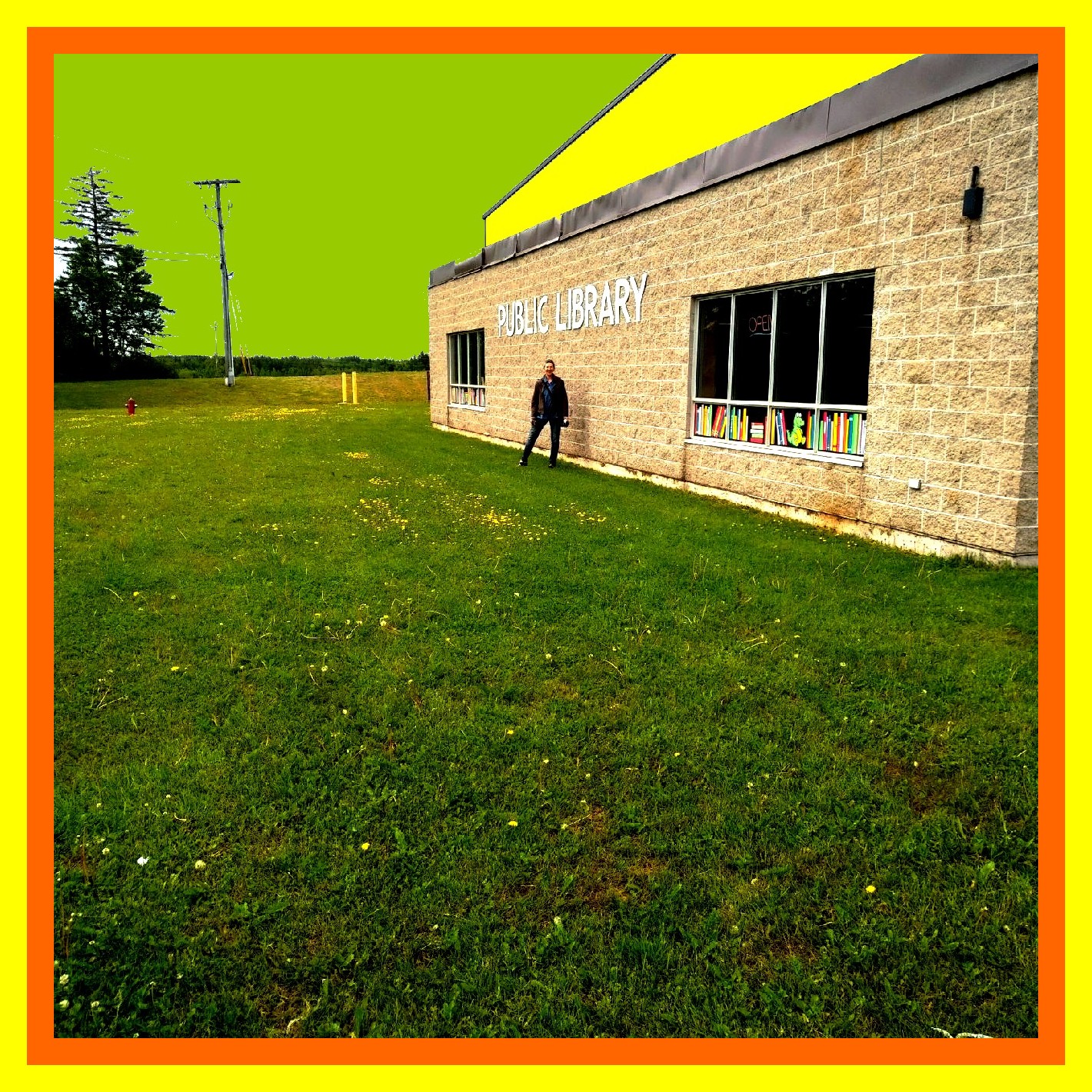
When I was a kid my dad’s answer to questions he didn’t know the answer to was either: get the atlas, or call the library.

The atlas was The Reader’s Digest Great World Atlas, which we’d open on the kitchen table, the two of us elbow to elbow, turning pages not only of maps and places but a double page spread of gemstones, the solar system, constellations, migratory routes of birds, the spread of mammals across continents, the evolution of man across those same continents; it had charts called What the World is Eating, Religions of the World, Patterns of Climate, Life in the Sea, The Vertical Distribution of Clouds, showed the distance between cities and countries, how hot, how cold, how wet, here or there, pages and pages of answers to every question anyone could possibly come up with. We easily spent hours forgetting what my original question was.

That said, it wasn’t infallible. For instance, neither my dad nor the atlas knew if I really had to make THIRTY copies of the chain letter I’d been sent. Could I not just make two or three, I asked. He didn’t know. The atlas didn’t know. Call the library! he said. And I did. And they (am I imagining a stunned pause at their end) answered. Yes, they said, they were pretty sure I could make just a few copies and not be struck down with a plague of locusts. I still feel a certain relief and gratitude for that (official library) advice, not to mention a sense of lifelong preparedness against a threat of locusts.

I still rely on them.

And I still have the atlas, which still conjures up a special kind of wonder.

IMG_20210615_1007019 - Copy

summer postcards: fine dining

IMG_20210813_1502084

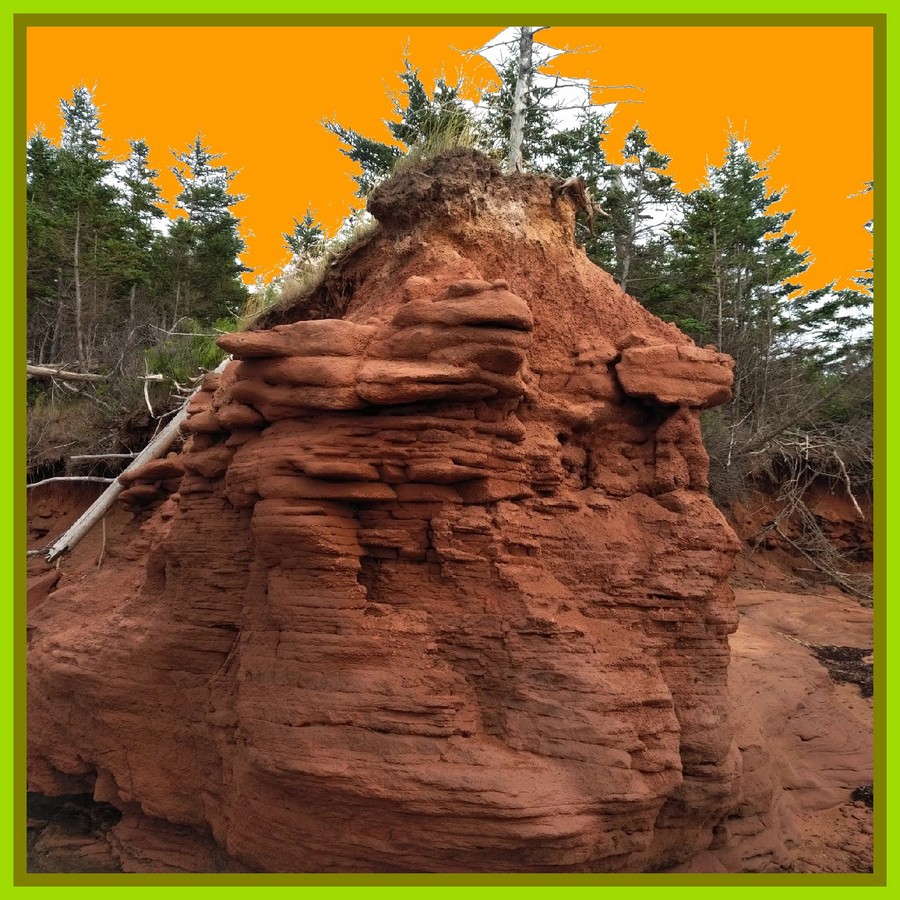
Semi-distant view from an umbrella’d table on the cool lawn outside a harbourside resto in an old house whose spicy fish wraps with extra jalapeno sauce I’m quickly becoming addicted to and where our server is Charlotte two days running, whose mother works in a lighthouse and where on another occasion and with another server we are told of Arthur the resto’s friendly ghost and the woman who lived her whole long life alone in only a few rooms of the enormous house across the street.

The blueberry bread pudding is also quite heavenly.

summer postcards: conversations with trees

IMG_20190915_1154498 - Copy

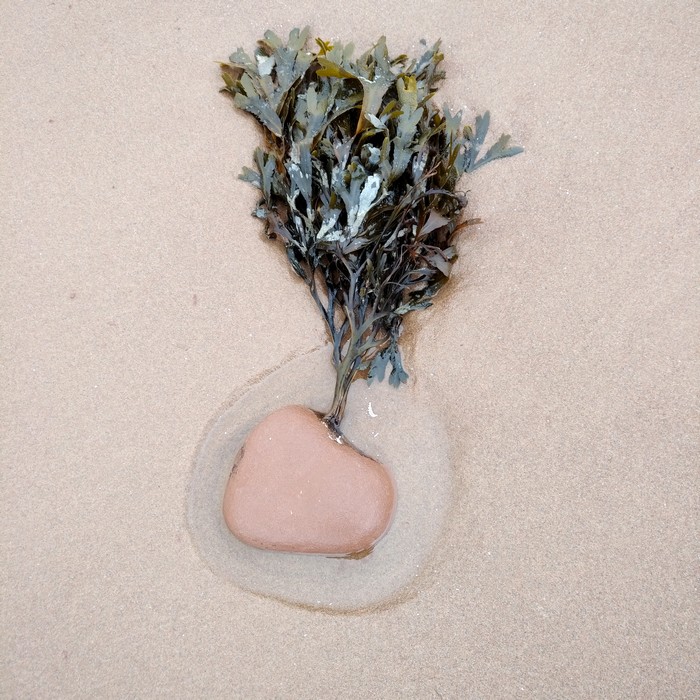
Tree growing out of beach stone, a sweet surprise, the perfect gift from the sea as I consider life between the shorelines I walk and the forest I speak to each morning.

The forest is behind my new-to-me house, new-to-me trees, we’re just getting to know each other. There is shyness on both sides.

My conversations with trees go back decades, as far back as I can remember. They are marvellous listeners, offer excellent advice on fixing paragraphs, and are intuitive when it comes to consolation.

(The language is the same no matter the variety.)

Still, friendship takes time.

I don’t tell them everything.

Not yet.


summer postcards: greetings from toad point

IMG_20210808_1650142 - Copy

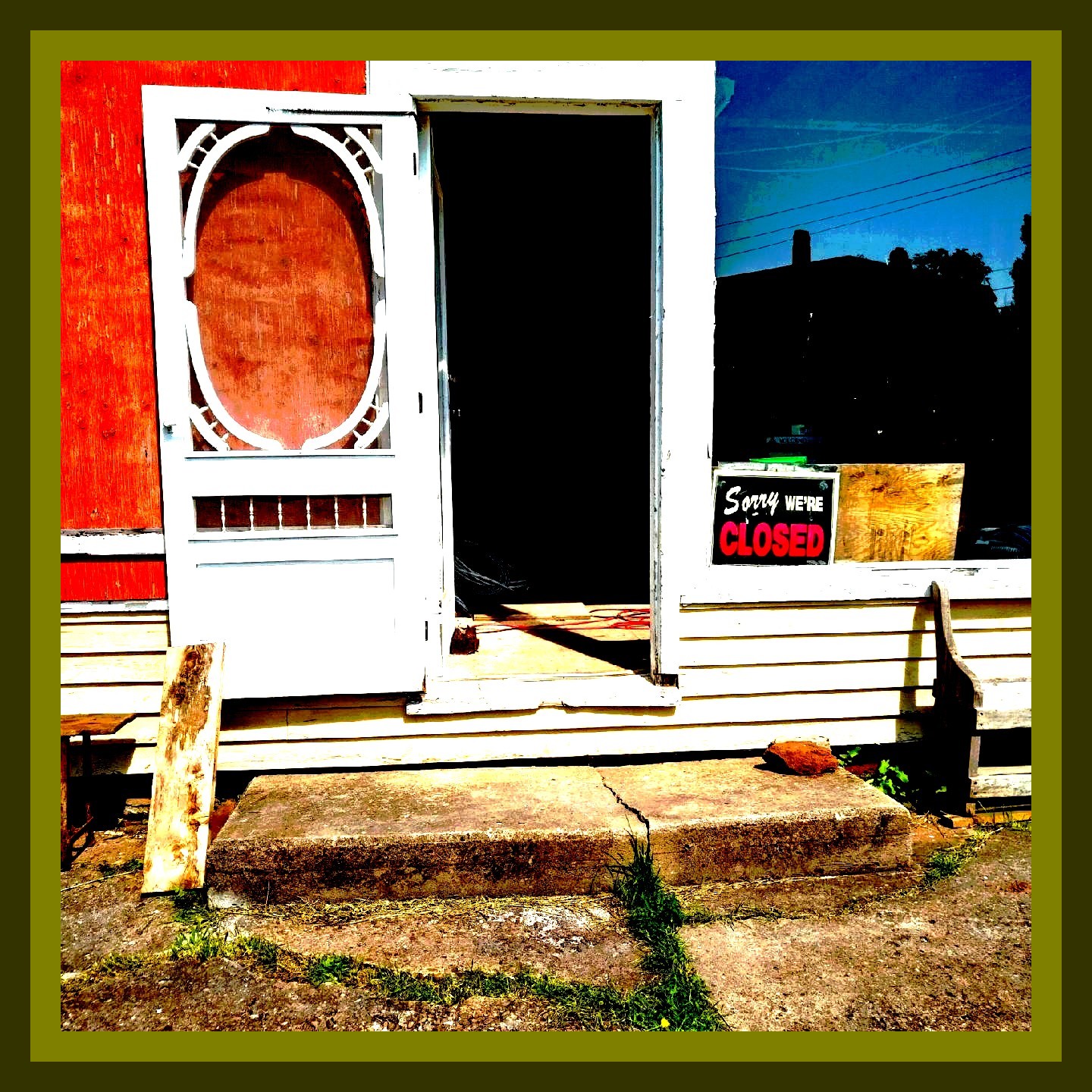
Unpacking more or less done and now at that place where we are naming the new ‘hood in the event we ever have to call in a location, as in “out of mustard at Toad Point, bring reinforcements, mayo is not necessarily a substitute”, that kind of thing.

So far we have the above plus First Point, Little Point, Far Point, Around the Bend, and What’s the Point.

summer postcards: use the good bowl

DSC01431

When you are a kid in yellow jeans eating popcorn out of an orange Fire King bowl in the basement watching Hitchcock’s The Birds while your mother entertains a friend in the kitchen who has just had herself fitted for dentures and has arrived (without them, as her gums are still settling) toothless and somehow generally diminished but oddly happy and you wonder: should you be eating popcorn? Is this the road to diminished toothlessness? You decide that no, that Cracker Jack may pose a danger but not buttered and salted in your Fire King bowl and so you continue eating, but with more care, not biting the kernels, for example.

And when decades later you no longer favour yellow jeans and have traded popcorn for pretzels as number one comfort food and which are best eaten directly out of the bag and when you realize the precious Fire King bowl had for… decades… been ‘preserved’ at the back of a cupboard in the house where you no longer live you give it a place of honour on the counter of your new house and let it dazzle you in the light as it collects vegetable peelings you will later dig into the garden.

this is not a review: ‘in praise of retreat’, by kirsteen macleod

I have my own preferred forms of retreat, not the least of which being an annual solitary escape at xmas to a tiny highway motel about an hour north in the country. The kind of place (I have discovered) divorced men go to lick their wounds and couples whose house burned down await insurance dollars and where you park your car in front of your room, where there’s a metal chair beside the front door if you feel like being conspicuous and a wooden one out back on your tiny private patio. It’s the latter I choose and sit wrapped in a heavy blanket under an awning on a snowy night with a glass of wine or a mug of chai; more stars than at home, the dark is darker, the silence more silent. I’m the only holiday traveller to this lonely sweet place at this time of the year where everyone leaves everyone else alone. I read and write and every night I stamp a labyrinth in the snow behind the motel as I watch the sun set. I eat wonderful meals from my cooler and in the morning I have a square of dark chocolate in bed before breakfast.

I can and I do all of this at home too (not the chocolate in bed and maybe that’s key) but on my retreat it all feels different. That too is key. Not what you do but how it feels.

I’m thinking a lot about all this currently and in the way of how things find you when you need to be found by them, I was found by Kirsteen MacLeod’s ‘In Praise of Retreat’, in which she writes of various retreat-ers, from Thoreau and Celtic hermits to E. Jean Carroll, Emily Dickinson and others whose lifestyle or parts of it demanded serious and regular isolationg from society. A gorgeous and enlightening read in which I’ve learned so much about ’emptying’, including that ‘kil’ is the Celtic word for ‘cell’ and refers to the caves of hermits up and down the Scottish coast.

Each of those place names that begin ‘kil…’ indicate they were once an inhabited space by some monkishly minded soul.

Written in my favourite style, heavily researched but conversational in tone, like lunching with someone whose every word you hang on to the point your soup gets cold and you don’t care one whit. In personal stories of yoga retreats, writing retreats, high and low end, historic and new-fangled retreat facilities in various corners of the world as well as accounts via third parties, MacLeod knows exactly how to balance research with a good anecdote. She tells of people who are drawn to retreats and the different and same things they, and we, are all looking for.

“A retreat is a place, but it is also an act of independence. A resolute effort of will is required. While it’s easier to go with the powerful tide of the mainstream, which requires no thought or cultivation, we can choose to withdraw our attention, step back. Like prayer, piano playing, tennis, yoga and meditation, retreat is a practice –the effort you put in shapes what you get out of it. The practice of retreat attunes you to the extraordinary, to the sacramental world.”

I’ve read other things on solitude that can get preachy or downright ho hum but not here. There isn’t a part of the book that feels heavy-handed, overdone or slow moving including a lovely section on Leonard Cohen that feels fresh with insight, in which she quotes him with this that I love because I love seriousness and it makes me happy to see someone taking it seriously:

“I think there’s an appetite for seriousness… [it] is voluptuous, and very few people have allowed themselves the luxury of it… Seriousness is the deepest pleasure we have. But now I see people allowing their lives to diminish, to become shallow, so they can’t enjoy the deep wells of experience.”

I’d like to paddle in this stream a bit longer, the idea of retreat and solitude, what it means, the various forms it takes, so if you have something to share on the subject, a quote, a photograph, a personal experience, a book, please do. I will be all ears and eyes and gratitude.