I’ve come out of THIS IS NOT A REVIEW semi-retirement to say a few words about ‘Encampment’ by Maggie Helwig.
It’s worth reading. No, it’s not worth reading, it’s essential reading.
In a nutshell, Helwig is the pastor of St. Stephen in the Fields, a church in downtown Toronto, the property around which served for a few short years as home to both long term and transient members of unhoused society. During this time a community developed within the ‘encampment’ and among members of the church and the neighbourhood. Some members of the neighbourhood. Others weren’t so welcoming and as Helwig points out, they had many reasons to be disgusted, worried, and fearful because when people have not a shred of privacy, the things that are performed within sight of all and sundry aren’t always the best of sights.
That homelessness is an unacceptable aspect of our streets isn’t up for debate by anyone, least of all Helwig. While she and her team acted as welcoming hosts to the unhoused, the addicted, the mentally unstable, offering not only comfort, rock solid assistance in countless forms, regular meals and, most important, humanity, this didn’t make them pro-encampment. It simply made them sympathetic to the needs of people who had no other options. There aren’t enough shelter beds. There aren’t enough services. There isn’t enough sense of community across economic and other lines. There IS, however, a kind of magical-thinking belief that somehow ‘out of sight’ equals a solution. Whack-a-mole with human lives.
The book outlines the reality of not only Helwig’s (losing) battle with the city to allow the encampment to continue to exist in its role as ‘something is better than nothing until something better can be created’ and for its huge positive effect on those people who made the churchyard, and Helwig’s heart, their safe place.
Helwig is excellent at illustrating the obstacles faced by the homeless. It’s a greased hill they climb and they get tired and disillusioned. The miracle is that some of them don’t. Some of them rally and support others even as they have nothing but problems themselves. Others are without question (and without knowing them), frightening and offensive. It’s not hard to imagine we might be too, in their shoes.
Helwig illustrates what being in those shoes is like from a vantage point as close as you can get without actually wearing them.
What the book left me thinking was that any solution lies in knowing more not less about ALL the each others we are. Because by the grace of god… etc., we are so very absolutely equal no matter our circumstances. And while we can’t all give our hearts to the same passions, some choosing environment, arts, education, children’s health, the state of the economy, struggling family farms… the inequity of everything… an endless list… the truth is that none of it, including the unhoused, the drug addled, the broken in a myriad of forms that someone can find themselves broken, are less or more important than anything else. By looking away from what offends us we harm ourselves in ways we don’t recognize. What we need is a heart big enough to accept that there is no them vs us. We share spaces differently. And there are reasons for that. But we all want and need the same things. And we all benefit when those basic needs are met.
I would love to see ‘Encampment’ on every curriculum, and in every boardroom.
Solutions to everything, including homelessness, begin with understanding the situation, by asking those who know it best… what is needed? And then listening, and acting.
The solutions may be complicated, but the effect of turning away is even worse.
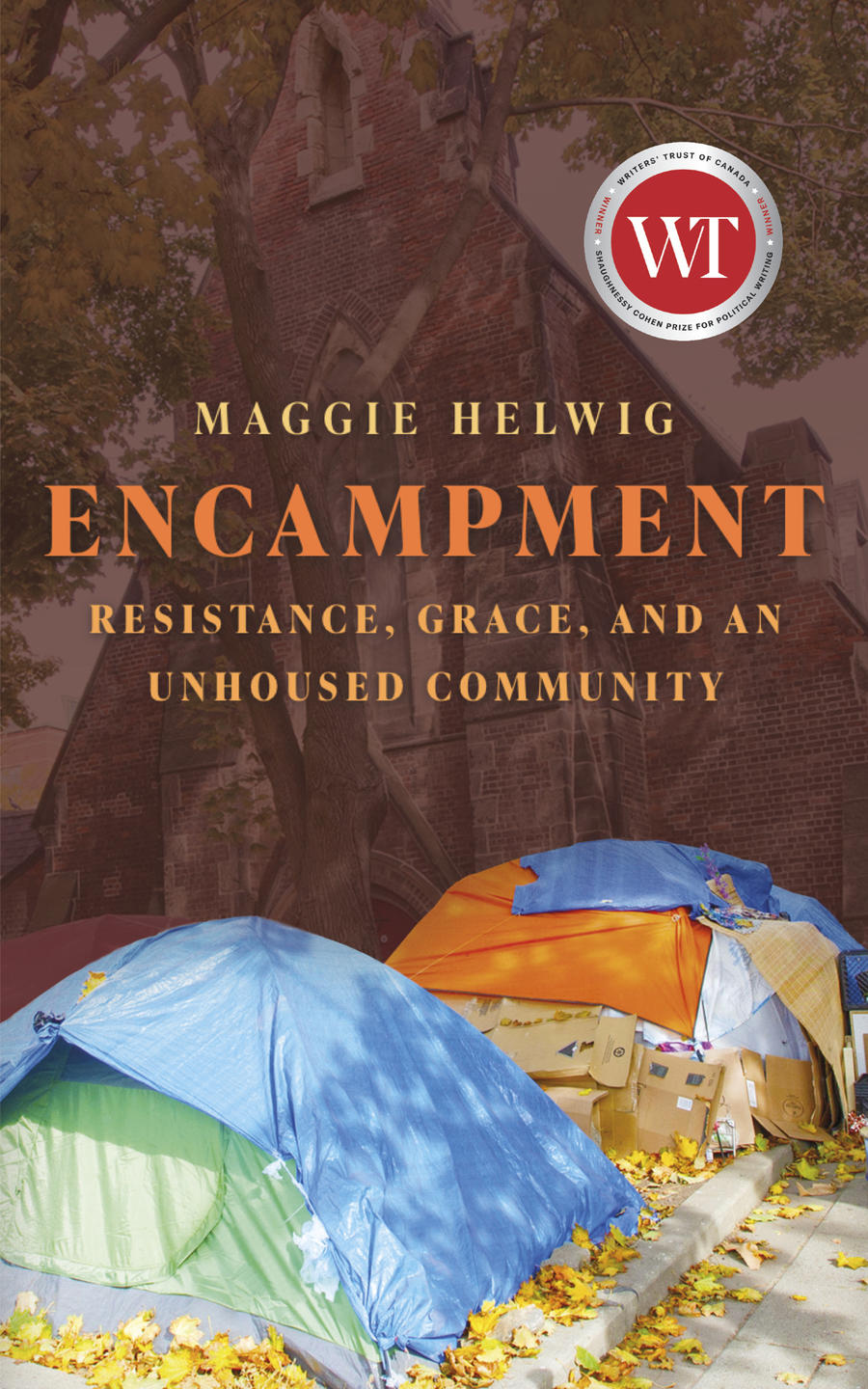
Published by Coach House Books.
*
*
*

