a large enough heart

I’ve come out of THIS IS NOT A REVIEW semi-retirement to say a few words about ‘Encampment’ by Maggie Helwig.

It’s worth reading. No, it’s not worth reading, it’s essential reading.

In a nutshell, Helwig is the pastor of St. Stephen in the Fields, a church in downtown Toronto, the property around which served for a few short years as home to both long term and transient members of unhoused society. During this time a community developed within the ‘encampment’ and among members of the church and the neighbourhood. Some members of the neighbourhood. Others weren’t so welcoming and as Helwig points out, they had many reasons to be disgusted, worried, and fearful because when people have not a shred of privacy, the things that are performed within sight of all and sundry aren’t always the best of sights.

That homelessness is an unacceptable aspect of our streets isn’t up for debate by anyone, least of all Helwig. While she and her team acted as welcoming hosts to the unhoused, the addicted, the mentally unstable, offering not only comfort, rock solid assistance in countless forms, regular meals and, most important, humanity, this didn’t make them pro-encampment. It simply made them sympathetic to the needs of people who had no other options. There aren’t enough shelter beds. There aren’t enough services for people trying to get help. There isn’t enough sense of community across economic and other lines. There IS, however, a kind of magical-thinking belief that somehow ‘out of sight’ equals a solution. Whack-a-mole with human lives. There is also the notion that a few of the least willing to accept help among the homeless represent everyone on the streets. That these are, for the most part, lazy folk living off the kindness of others. Helwig clearly shows why that isn’t the case. There will, of course, always be some who refuse help, true, but the vast majority would welcome it and that would change the landscape, literally. Instead, where homelessness and mental health issues are concerned, the baby is being thrown out with the bathwater.

The irony (if that’s the right word, insanity might be more accurate) is that the cost of providing a bed in prison or hospital is HUGE by comparison with the cost of a shelter bed or a supportive housing bed. Not to mention the benefits derived from constructive solutions, versus the perpetuation of cycles by blaming the ‘problem’.

The book outlines the reality of not only Helwig’s (losing) battle with the city to allow the encampment to continue to exist in its role as ‘something is better than nothing until something better can be created’ and for its huge positive effect on those people who made the churchyard, and Helwig’s heart, their safe place.

Helwig is excellent at illustrating the obstacles faced by the homeless. It’s a greased hill they climb and they get tired and disillusioned. The miracle is that they survive at all. The even bigger miracle is that some rally in support of others as their way to survive. Others are without question (and without knowing them), frightening and offensive. We might be too, in their shoes.

Helwig illustrates what being in those shoes is like from a vantage point as close as you can get without actually walking in them.

What the book does so well is remind us that any solution lies in knowing more not less about ALL of the each others we are. Because by the grace of god… etc.; we are so very absolutely equal no matter our circumstances. And while we can’t all give our hearts to the same passions, some choosing environment, arts, education, children’s health, the state of the economy, struggling family farms… the inequity of everything… an endless list… the truth is that none of it, including the lack of housing and services for people broken in a myriad of forms, is less or more important than anything else. By looking away from what offends us we harm ourselves in ways we don’t recognize. By creating safety for all, we create safety for all. What we need is a heart big enough to accept that there is no them vs us. We share spaces differently. And there are reasons for that. But we all want and need the same things. And we all benefit when those basic needs are met.

I would love to see ‘Encampment’ on every curriculum, and in every boardroom.

Solutions to everything, including homelessness, begin with understanding the situation, and understanding begins by asking those who know it best… what is needed? And then listening, and acting.

The solutions may be complicated, but the effect of turning away is even worse.
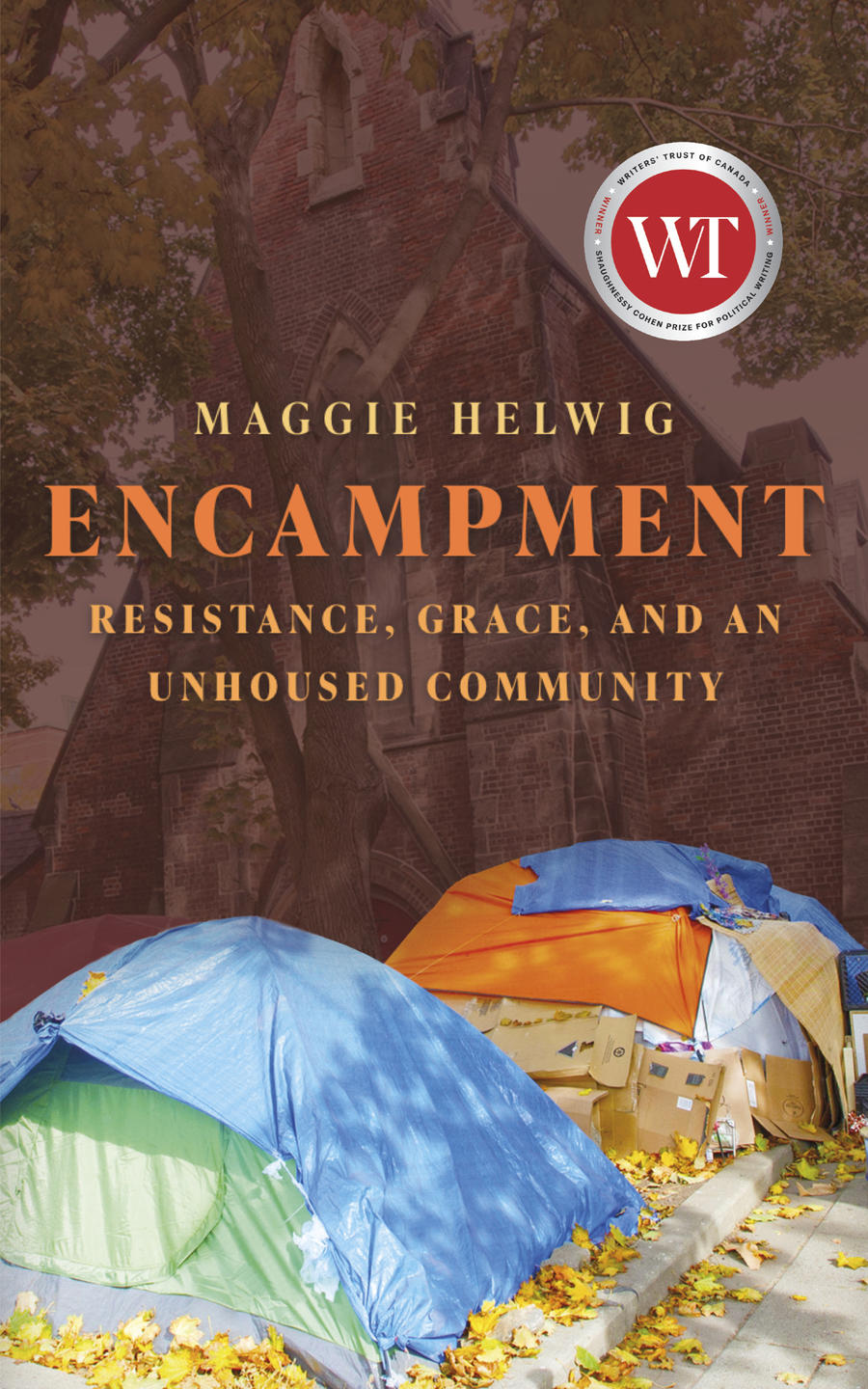
Published by Coach House Books.

*

*

*

it was never home and it always will be

 
(Schmaltz warning)

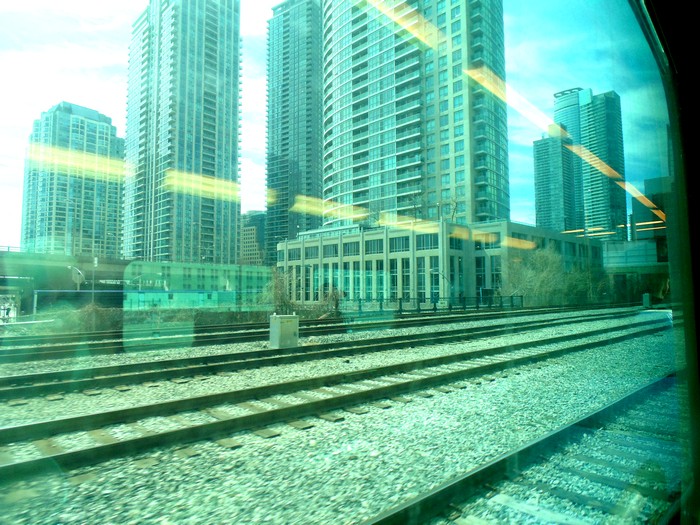
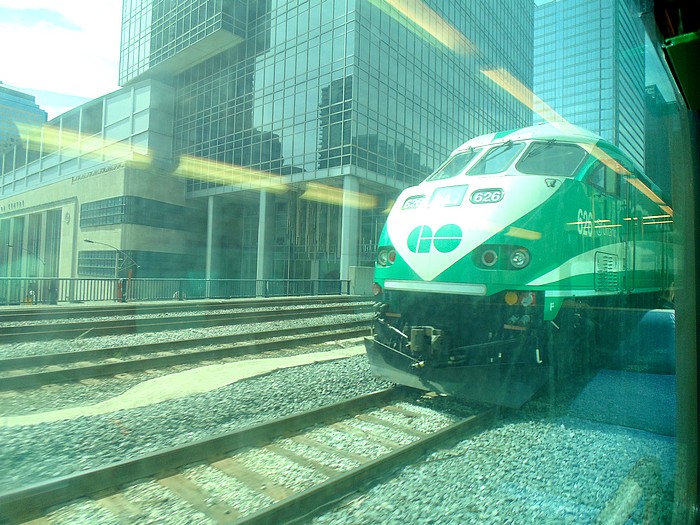
Toronto.

Seems like I’ve been coming or going, to and from it, forever.

DSC02443

First time was as a kid visiting family friends who lived on Admiral Road in the Annex. This was before it was The Annex.

DSC02444

And then I moved there myself.

DSC02449

And lived in at least a thousand apartments and houses.

DSC02450

Then I moved away.

DSC02452

And back.

DSC02453

And away again.

And back.

DSC02459

Away.DSC02461

Back.

DSC02463

Away.

DSC02466 DSC02464

I live away now.

DSC02468 DSC02471 DSC02472

But when I visit, and despite all the changes and the traffic and the lack of space and the changes… so many changes… I still remember the places that used to be and how the Annex was just a place we drove to on a Sunday for lunch and the kid we visited had one of the those table hockey games with flippers and levers and we played with it on the third floor and then after lunch walked around Bloor and Avenue Road… a perfume shop and a delicatessen come to mind…

DSC02474 DSC02475

And I remember so much of what came after that.

DSC02478 DSC02481

Changes, yeah.  DSC02484 DSC02485

But this place that was never home, that’s got this reputation for being cold, where when I first moved at eighteen my (envious I wonder now) friends back home said how could I stand the way nobody spoke to each other, nobody looked at each other…

DSC02487

well, every time I come back, this supposedly aloof and unsociable town in flux says… even after all these years… hey, good to see you; how you been?

DSC02490

define cool

So Vogue Magazine has named a section of Queen Street West in Toronto the second coolest neighbourhood in the world.
DSC01002

Yessirree, bob. You heard that right. The world.

First place is somewhere in Japan.

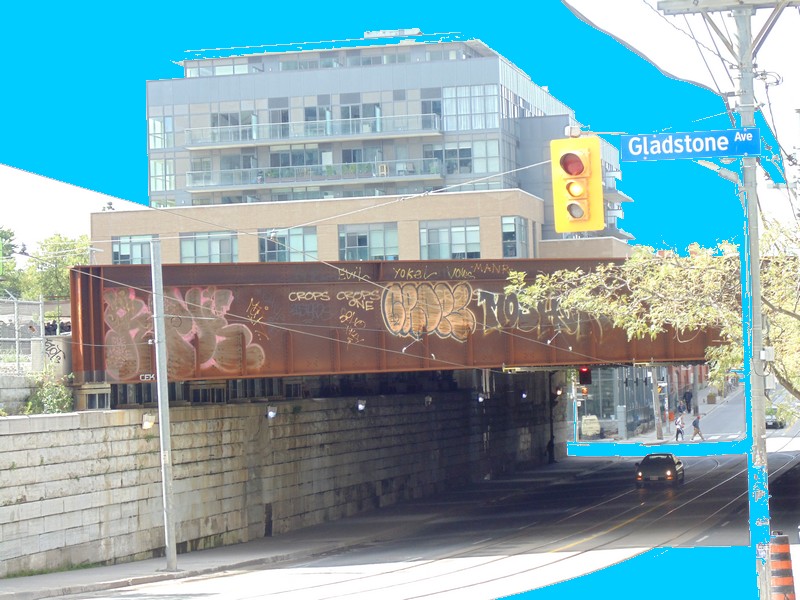
This blows my tiny mind. Not because the ‘hood isn’t a cool one, but because, well, you know, it’s Queen Street. I mean is there nothing ‘cooler’ (and by the way, ‘cool’  is Vogue’s word, not mine. I don’t use ‘cool’, even when I mean ‘cool’, in which case I will tend to use the less cool ‘groovy’) in New York or Paris or Montreal or Sydney or Milan or Vancouver or Reykjavik… than the stretch between Gladstone Avenue and Bathurst Street…??
DSC00994

But I’m not one to judge these things. I like sand.

Still, there I am the other day, strolling these recently hallowed blocks in my beach-loving Birks (which, it turns out, are currently trending with hipsters and I do hope the trend stops soon because these are my shoes and the hipsters have so many of their own)…

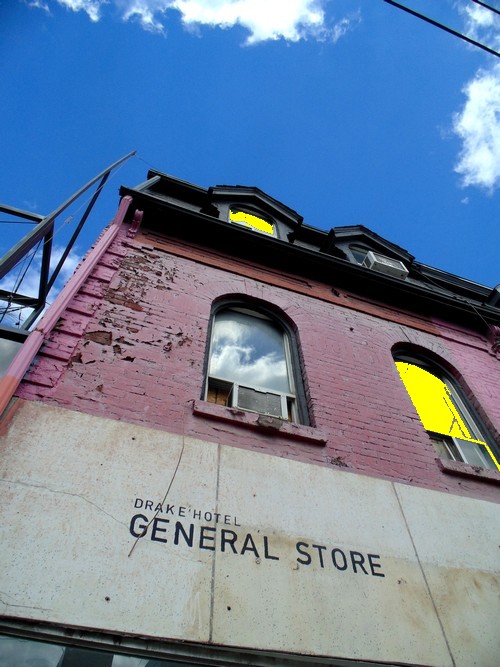
And what I find is that there is indeed much happening of a cool/groovy nature on this bit of pavement.
DSC01014
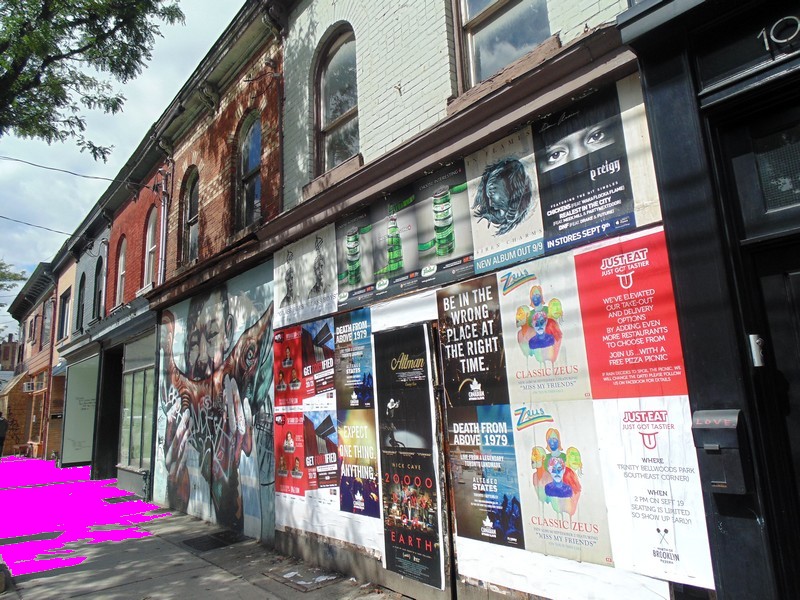
No lack of cool/groovy temptations…DSC01007
in these hipsterville blocks…DSC01012
not to mention roads less travelled within them.DSC00988
There is free, exquisite reading material,DSC01003
and free fashion counselling.DSC00989DSC01010
A stretch of road where economics are no small thing…DSC01009DSC00999
and creative minds are rampant.DSC01006
Where the insults are relatively mild,DSC00997
and the love is coffee scented.DSC00990
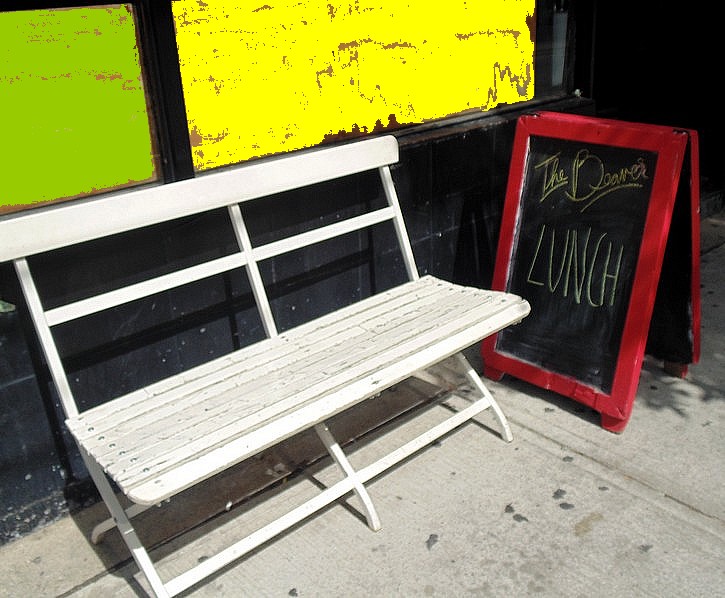
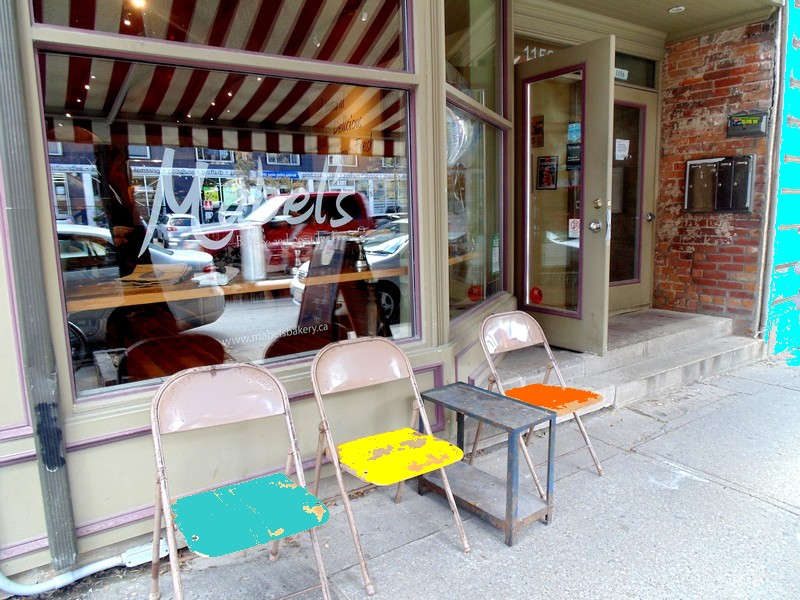
A stretch of coolness where there’s never not a place to sit,DSC00995DSC00996DSC01005

or stock up on dry goods.DSC00998
Where, really, there’s something for almost everyone…DSC01000DSC01008

And yet.

For me, from where I stand, toes exposed to the air… there remain some glaring omissions.

There is no sand.

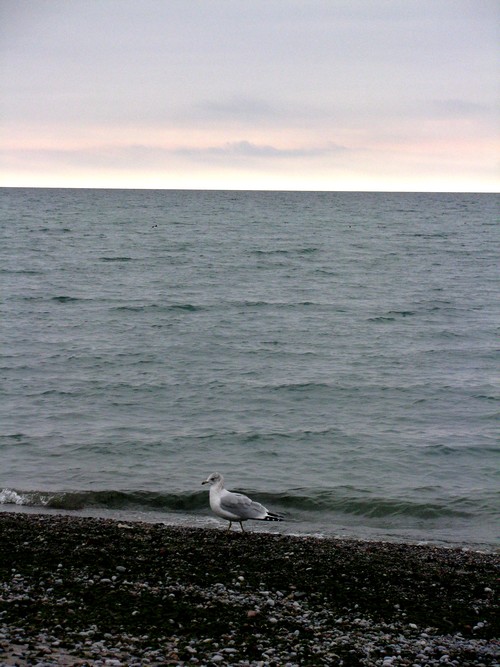
No cackling gulls.

No tide.

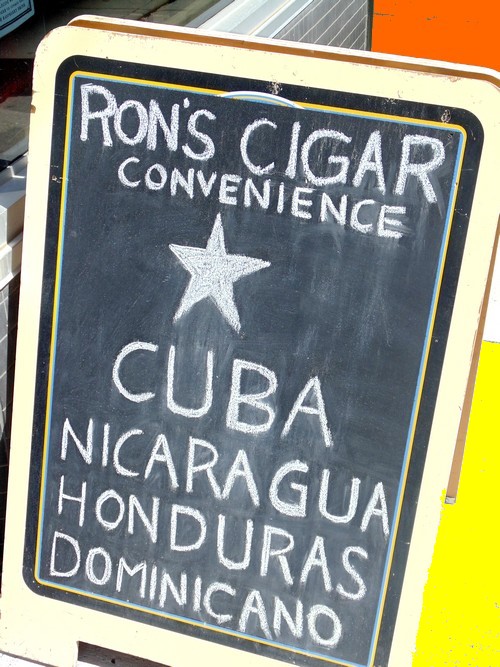
My Birks and me, we love us a tide. We would give up all manner of cigars and quiche and onesie alerts, for cackling gulls.

And that, dear Queen Street West between Gladstone and Bathurst—despite your charms—is very possibly what kept you from making #1.
IMG_0056 - Copy

FYI.

And you’re welcome.


this is not a review — back alleys and urban landscapes, by michael cho

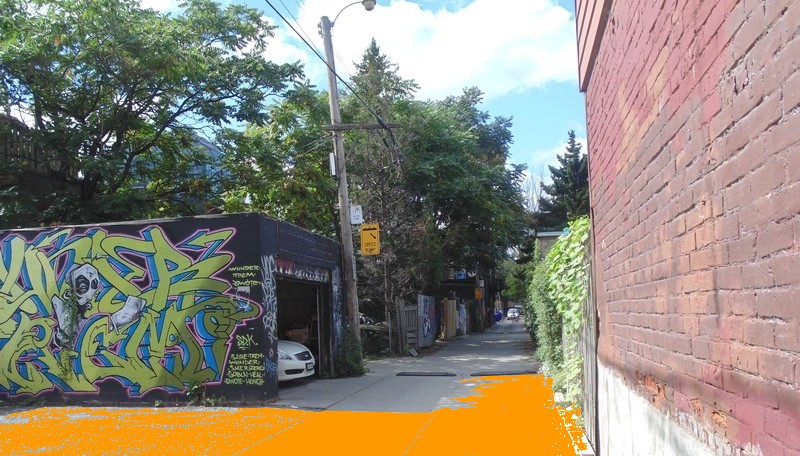
I don’t remember how I first heard about Michael Cho’s beautiful book: back alleys and urban landscapes but the title made it a sure-fire gifty pick for an alley loving friend. The book is more collection of drawings than text—in fact there’s almost no text, which makes the experience of wandering through its pages not unlike ‘wandering’, generally. Flipping through—being careful not to leave jammy fingerprints [is it wrong to test run a gift book?]—I was reminded of my own favourite alleyway behind a Toronto duplex where I carved out a garden in the gravel between dilapidated wooden garages. With the addition of a wonky table and a barely working 61WPGikTBtL__SL500_AA300_BBQ, it became a hub for summer games, watermelon seed spitting contests and the first of many ‘ant hotels’ [ant hills that are left to prosper and grow] complete with No Vacancy sign.

When seen in a certain light, past the grit and the scruff, alleys are more inviting than intimidating… connections not barriers.

Micheal Cho knows this and his drawings beautifully reflect one of the very best aspects of city life.

“They’re family places, quiet and often hidden in plain sight… when you know a city, you know its back alleys. It’s like a house: the dining room is in the front to show guests, while the real living goes on in the kitchen…”  ~back alleys and urban landscapes, by Michael Cho (Drawn & Quarterly, 2012)

_______________________________________

—Purchase back alleys and urban landscapes online at Blue Heron Books.

condoronto

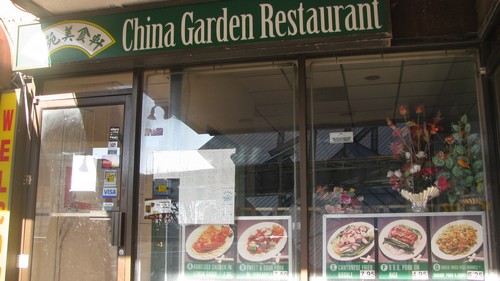
Once upon a time there was a place, a kind of delightfully welcoming hole in the wall across the street from the ROM, where you could get a couple of spring rolls, the best BBQ pork, greens, a bowl of soup and an endless pot of tea for not much money. So you’d leave a huge tip because the owners were so amazing and lovely and even though the place was always crowded with regulars, and you only went in a few times a year, they knew you, remembered what you liked, were all smiles as you walked in. As if it hadn’t been half a year.

The decor was mostly red with magic marker specials that never seemed to change on sheets of bristol board stapled to panelling. There were jars of soy sauce and chili flakes and plastic roses on the tables, the kind that look wet—the first time I saw them, fifteen years ago, I thought they were real. That was before I had a good look around.

We were there a few weeks ago and found a handwritten sign in very bad English taped to the door. The place had closed. The sign said they hoped to re-open sometime. Somewhere. They didn’t yet know where. (Have since googled them and found they’ve moved to a whole different part of the city, a whole different city in fact… )

So sad to lose places that give character and sweetness to a neighbourhood. And how ironic that it’s precisely these places that are part of what draws people to wanting to move there, yet the very act of moving more people in forces the charming places to move out.

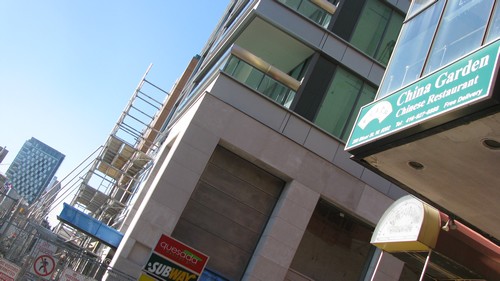
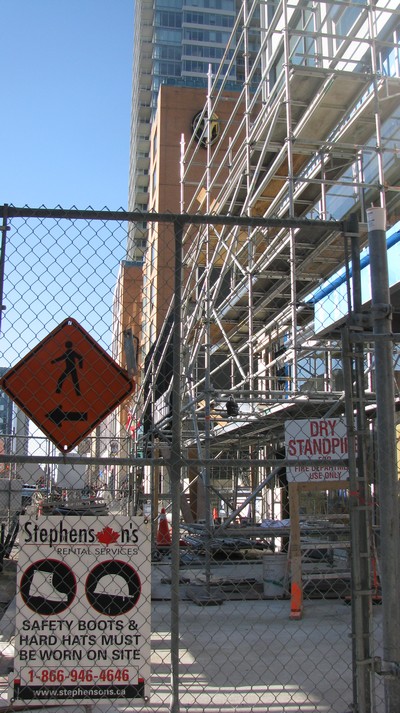
Oh Condoronto, whatever are you doing?? (Fun fact: there are more high rises/condos being built in Toronto than anywhere else in North America.)

I’d be surprised if a year from now there’s even one restaurant left in this neck of the woods (or many others) that has anything resembling plastic roses with fake water droplets and people who shout Hello! and remember, even after six months, that you like the pork lean and always with baby bok choy.

Whatever they build, they can’t build that.

can we ever stop comparing??

In last Saturday’s Toronto Star, Karen von Hahn wrote a piece suggesting—no, stating—that not only does Chicago sit “smack dab in the middle of the North American continent” (by the way, it doesn’t), but that its music, architecture, shopping, dining, general amusements, and occasional citizenry are superior to Toronto’s. 

Oh why bother I say…

I’m just so (yawn, yawn) tired of the endless comparing ourselves with anyone; it’s a bad, silly, and negative thing to do. And serves zip purpose. Except of course to encourage people to take sides and engage in conversation, which is always divine. So, okay, well done and thank you, Ms. von Hahn, for that, for igniting some small debate at this end.

My response (which ran in yesterday’s paper—for some reason without my final comments re Winnipeg) is as follows:

Re Karen von Hahn’s “Chicago wins style smackdown”— Sat., Oct. 9th/2010

Sigh. Not again with the comparing. This is so tiresome, and ultimately pointless. Fine, fine, Chicago has a brilliant waterfront and a few things Toronto doesn’t have. So? Do we really want to be like Chicago? Are we meant to come back from every little sojourn bleating and mewling that Pisa has a tower that leans…why doesn’t ours? And why aren’t we like Stockholm or Reno or Santiago? Why can’t we have Ayres Rock?? Seriously, do we really care that there’s no Barney’s on Bloor? Is that how low we’ve sunk that we define our style by some other city’s retail spaces?

In any case, if we must make lists, may I suggest the article missed a few key things. Like beaches, parks, the islands—the wisest minds may not have been at the wheel when configuring the waterfront, but we do have some spectacular green spaces right in the middle of our city. And true, we don’t have ‘Chicago blues’ but neither does Portland or Berlin. We do, however, have Caribana, the Pride Parade, the Toronto International Film Festival, to name but an easy three.

As for the Shedd Aquarium ‘equivalent’ Ms. von Hahn says “we’re still waiting for…” —we are? I’m not waiting. Is anyone waiting for this? Frankly I’m very proud we don’t have an upscale Marineland in our midst. This is style?

Ms. von Hahn says Chicago has Oprah and Obama. Yes but we had/always will have Jane Jacobs. Now there’s style for you. And she chose to live here. Imagine that. Especially when she could so easily have returned to the States, moved to, oh, I don’t know… Chicago maybe.

Ms. von Hahn suggests these comparisons matter because great cities attract great leaders, or vice versa. The implication being, I guess, that Chicago’s had some good management in the form of a “mayor with a vision for positive and stylistic changes, and the power to make it happen”. Maybe so, but not until they clean up the mess that is Chicago’s west side or the south side’s Englewood, will I covet what they’ve got.

And probably not even then because everything’s a package—the good, the bad—and I’ll take Toronto’s good along with some of its bad—including an opera house that lacks a piazza—anytime.

Finally, and if nothing else I’ve said changes your perspective one iota, please, please, Ms. von Hahn, get this straight: Chicago is NOT the centre of North America. That distinction—you will find if you only press google—is Winnipeg’s.

~