Truth #24: By the time you read this both ears will be history. (I’m pacing myself.) Happy Chocolate for Breakfast Day!
Author: carin
better than finding eggs
It looked like not much…
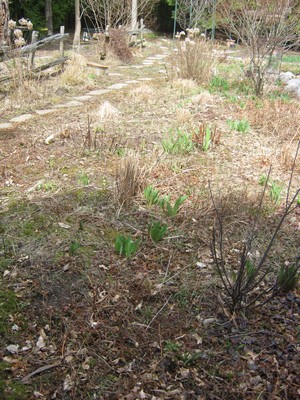
…until I looked more carefully.


thirty truths: 23
thirty truths: 22
Truth #22: When done correctly, a nap is a beautiful thing.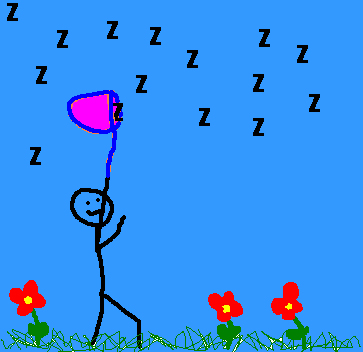
not a kool-aid drinking stepford commune
To Whom it May Concern,
It’s about The 905.
You may have heard the term bandied about as if it’s a place, one homogenous ‘thing’.
The truth is this: 905 is an area code not a place, not a ‘type’ of person, not a demographic and not the reason a faux kitten fancier is still in Ottawa.
As for The 905 being The Suburbs of Toronto—as at least one CBC host has intimated—well, I feel it’s my patriotic duty to set the record straight.
The fact is the ‘suburbs’ (which, btw, means “any place in a metropolitan area outside the central city”) are included within Toronto’s area codes of 416 and 647.
There are, however, over a hundred towns and cities across southern Ontario that have a 905 area code. But not a suburb among them.
For the record, here’s a complete list of 905 communities:
- Ajax–Pickering
- Ancaster
- Aurora
- Beamsville
- Beeton
- Bethesda
- Binbrook
- Blackstock
- Bolton
- Bowmanville
- Bradford
- Brampton
- Brooklin
- Burlington
- Caledon
- Caledonia
- Campbellville
- Castlemore
- Castleton
- Cayuga
- Claremont
- Cobourg
- Colborne
- Cold Springs
- Dundas
- Dunnville
- Fisherville
- Fort Erie
- Freelton
- Garden Hill
- Georgetown
- Gormley
- Grafton
- Grimsby
- Hagersville
- Hamilton
- Hampton
- Keswick
- King Township
- Kleinburg
- Maple
- Markham
- Milton
- Mississauga
- Mount Albert
- Mount Hope
- Newcastle
- Newmarket
- Newtonville
- Niagara Falls
- Niagara-on-the-Lake
- Oakville
- Orono
- Oshawa
- Palgrave
- Pelham
- Port Colborne
- Port Hope
- Port Perry
- Port Robinson
- Queensville
- Richmond Hill
- Ridgeway
- Roseneath
- Selkirk
- Snelgrove
- St. Catharines–Thorold
- Stevensville
- Stoney Creek
- Stouffville
- Sutton
- Thornhill
- Tottenham
- Unionville
- Uxbridge
- Victoria
- Vineland
- Wainfleet
- Waterdown
- Welcome
- Welland
- Wellandport
- West Lincoln
- Whitby
- Winona
- Woodbridge
Towns and cities, a few hamlets. No suburbs. Go ahead, click on a couple and see.
Click Beamsville, for instance, and you’ll find it’s a town settled by United Empire Loyalists; the industry mostly fruit and wine, and in the late 1800s the hockey net was invented there by a couple of locals.
These are real places, not housing tracts. Many have old fashioned main streets and general stores, barbershop poles and diners where there’s one kind of coffee and two kinds of pie. Together they cover a huge area from Niagara Falls through wine country, over the escarpment, along the shores of Lake Ontario and up through the Oak Ridges Moraine. They include all manner of rural, urban and ‘urbral’ geography.
The people also are a motely crew. Which is not the impression anyone gets, especially at voting time, when they all get lumped together like some koolaid-drinking Stepford commune.
As you’d find anywhere in this great country there are descendants of those founding loyalists, indigenous folk from whom the land was taken, recent immigrants, the lovely farmers of the St. Lawrence Market, sane and mad transplants from east and west and north, including transplanted Torontonians, which has caused some of these small towns and medium sized cities to grow—but the growth has been in the small towns and medium sized cities, in the communities that have been in existence for a century or more.
They are not suburbs. Not ‘types’.
They are increasingly diverse. They make cars and trucks. Maple syrup and wine. They have town fairs, libraries, local theatre ( big-time too), botanical gardens, women’s shelters, wax museums, ice-fishing, Asian markets, casinos and canoeing; there’s a bike trail that follows the Lake Ontario shoreline for hundreds of kilometres and a century old carousel at Lakeside Beach that Walt Disney wanted to buy but St. Catharines said no (you can still ride it for a nickel); there’s jerk chicken and yacht clubs, jails and flea markets, swank country spas and food banks, train tracks and a canal system; there’s hot and cold yoga, Caribbean grocery shops, Santa Claus parades, symphony and Shakespeare in the Park, manicured lawns, orchards, wild gardens and xeriscaping; delicatessan, curry and moussaka; there are literacy and outreach programs, AA meetings, lineups outside the Sally Ann on fill-a-garbage-bag-for-a-dollar day, strawberry suppers at the legion and knitting circles; there’s an increasing number of arts communities, including some of the best independent bookshops and studios in the country; there are poetry readings, indie bands, concerts and new Halal markets next to decades old farmers’ ones; there’s some of the country’s finest programs in environmental studies, horticulture and viticulture; there are cooking schools, pioneer museums, fair trade coffee shops, hiking trails, organic farms, emu, happy chickens and cows, heritage homes and condos on the lake; there are assholes and saints, a variety of excellent dining with patios and corkage, and some of the most amazing galleries in the province. (Hamilton, Kleinberg and Oshawa, for starters)
The 905 are a big chunk of southern Ontario. They are not suburbs.
And despite the occasional, unfortunate outcome, not everyone takes the Kool-Aid on voting day.
I say all this having lived in Toronto for the better part of twenty-five years, before moving to a 905 town. I still love the big smoke for all its wonders, but it bothers me when, increasingly, I hear the ‘905’ term used, especially by Toronto’s media; it’s often pejorative, always misleading, if not downright incorrect. At best it’s divisive.
Bottom line: do we really need to perpetuate more division in society—is that the best use for the intelligence and the power of media? Or might it be a source of clarification and education, with a view, not to create differences, but to find similarities, understanding and cooperation .
The power of many can change the world.
Divided we fall.
And all that stuff.
For everybody’s sake, let’s stop type-casting. Let’s just get it right and get it together.
Sincerely,
thirty truths: 20
I play it down but the truth is I’m thrilled that Peter is as nuts about growing things from scratch as he is. I don’t have the patience for fiddling with dirt inside.
This year, in addition to his famous peppers and tomatoes, he’s got English cukes, bright orange cosmos and what he hopes is gold bar zucchini (we had it one year—makes the best soup—but have never found quite the same variety since)… AND—my favourite—mini cornichons from seeds he bought in Paris. (Best pickled and eaten by the fire on nuits de neige with a bottle of vin rouge, tiny boiled potatoes, thinly sliced parma ham and raclette.)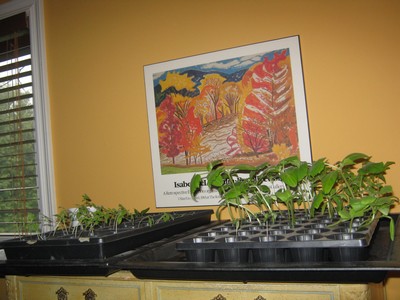
thirty truths: 19
This morning I saw a guy back an eighteen wheeler flatbed from a busy main street into the narrow driveway of a small parking lot; men working on the windows of the building next door stopped to watch but I didn’t think it was particularly special. I waited in a short queue of cars, feeling nothing but mild irritation.
Only later did it occur to me that art comes in many forms.
*Note: I wanted a picture of a semi for this post but because I hadn’t taken one myself, I googled “eighteen wheeler, picture” and this came up with the caption The Burning Man Project, which meant nothing to me. So I googled it and—amazingly—it happens to be an art festival.
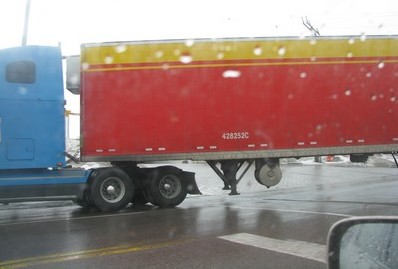
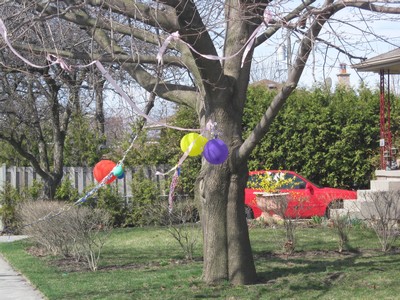
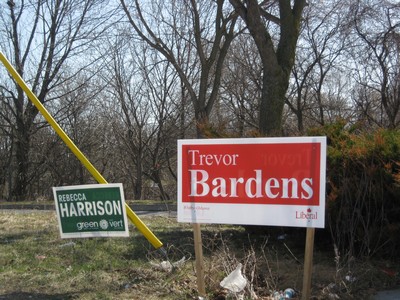
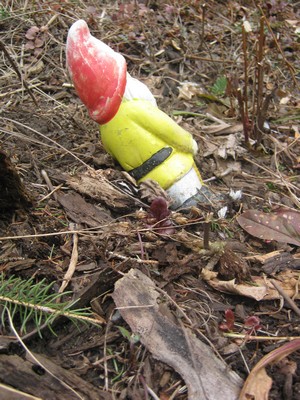
primary colours


thirty truths: 18
For the first time in my life (other than a long ago fling with Agatha Christie) I’m developing an interest in reading mystery novels.
The truth is I have no idea where to begin.
thirty truths: 17
I’ve been listening carefully for a while now, and it’s true: Sunday sounds different than the rest of the week.
 Matilda Magtree