♦
Other (not always) wordless friends:
Cheryl Andrews
Allison Howard
Barbara Lambert
Allyson Latta
Elizabeth Yeoman
♦
Other (not always) wordless friends:
Cheryl Andrews
Allison Howard
Barbara Lambert
Allyson Latta
Elizabeth Yeoman
One is fueled by love,
which,
among other things,
includes altruism and respect…
the other is fueled
by fear,
which includes anger and greed.
In everything we do
every choice we make
we’re moving toward
either love
or
fear…
Love or fear.
There is no other direction.
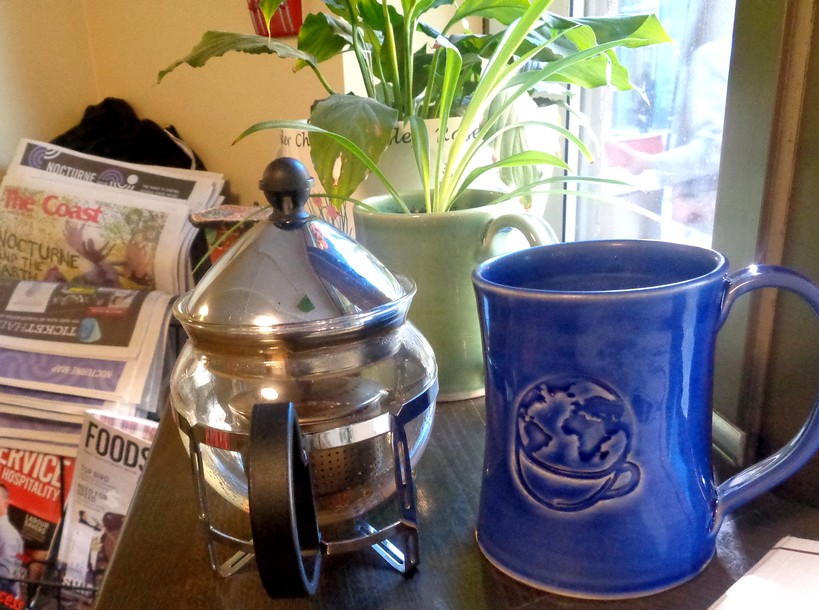
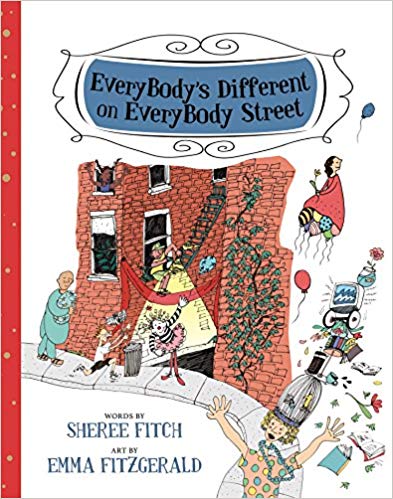
This morning I made a pot of lemon verbena/peppermint/orange mint tea with leaves from my garden and read Sheree Fitch and Emma Fitzgerald’s extraordinary Everybody’s Different on Everybody Street..
Is there a better way to start the day than tea and a (picture) book?
Answer: hardly.
And so I sipped. And marvelled over the brilliantly colourful, completely delicious illustrations… (birdcages on head, balloons up one’s
skirt, laundry and tomatoes on the roof, street meditation in the presence of turtles [personal favourite], an empty fridge, a command to dance, someone in a wheelchair, others kissing in a tree, a homeless man, an angry woman, images of loneliness and images of joy, all woven against a background of a father reading a story to a young child who imagines this ‘Everybody Street’ as crowded with so many ‘others’ and who comes to realize all of those people are actually one…that we are all of those people and all of those people are us… “Yes… EVERYONE is travelling on EveryBody Street and EveryOne IS EveryOne and AnyOne you meet…”
And as I read I could feel emotions rising as the everbodyness contained in Fitch’s buoyant poetry practically floated off the pages.
This book is a testament to community, and to joy. It’s also about mental health/illness in its many forms. And to be honest, the power of it kind of takes you by surprise.
Oh but we are in such good hands here because, as only Fitch can do, we are gently (playfully!) shown that all those people who look and act ‘differently’, who for whatever reason fall outside the punishing parameters of what society calls ‘normal’… are simply displaying aspects of being human that we all share.
The very young will only see peacocks and happy chaos… in the way of the very young, who don’t judge. But the message of inclusivity is there, the subliminal suggestion of non-judgement and, for those old enough to understand or who, in the company of a reader sensitive enough to explain, it becomes a thing to celebrate, to embrace, the beginning of meaningful conversation.
I look forward to sharing this with my eight year old niece. We will eat french fries at the beach while we read and we will talk about how we feel some of these feelings some of the time and we’ll notice people around us and make up lives for them… and remind ourselves that they have feelings too.
(The Afterword, written by Fitch, explaining the motivation behind the story, and the difficulty of taking on this subject, is an equally powerful read, in which Fitch says “I don’t like poems that tell me how to think; I like poems that make me think.”)
What a bold book.
And what an important one.
♦
I got my copy at Blue Heron Books, and you can too!
Support indies!
The guy who looks so bored you wonder why he even comes to the beach, never taking more than a few steps onto the sand, looking around as if to find ‘something’ but the something just isn’t there… no hanging gardens of Babylon, no herds of wildebeest (to quote Basil Fawlty). He scowls, checks his phone while the woman he’s with wanders nervously in small circles nearby, never really hitting any kind of happy confident stride, probably because she knows they never stay anywhere long enough.
And then they leave.
Two teenagers, chattering and smiling, walk by hand in hand with the energy of puppies let off the leash.
Three girls, maybe twelve or thirteen years old, walk waist deep into the water and stand there laughing and squealing. They are in love with each other in the way that only girls of that age can be. Swimsuits all the same shade of navy and neon pink, but different styles.
They will either all swim or none will.
A couple has erected a tent on this windy day. We’ll see how that works out.
The girls are still squealing, still standing waist deep, but not swimming.
The tent is still up but requires constant attention and as if the people in it have no understanding of wind, what they choose to read on this windy day is a newspaper.
The girls have come out of the water, no swimming, but they’re soaked anyway and are now wrapping themselves in towels which they hold strategically for each other as they slip in and out of wet and dry things in the way only girls of a certain age can do.
The tent is eventually taken down.
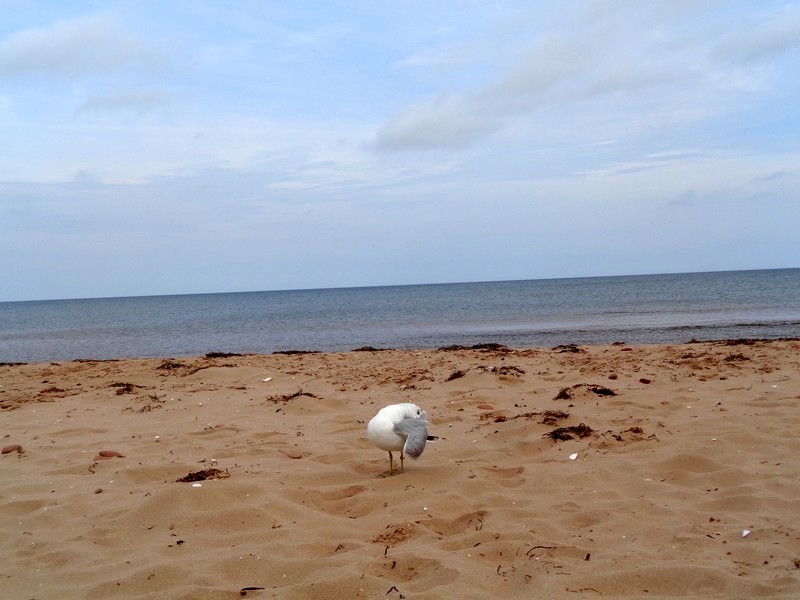
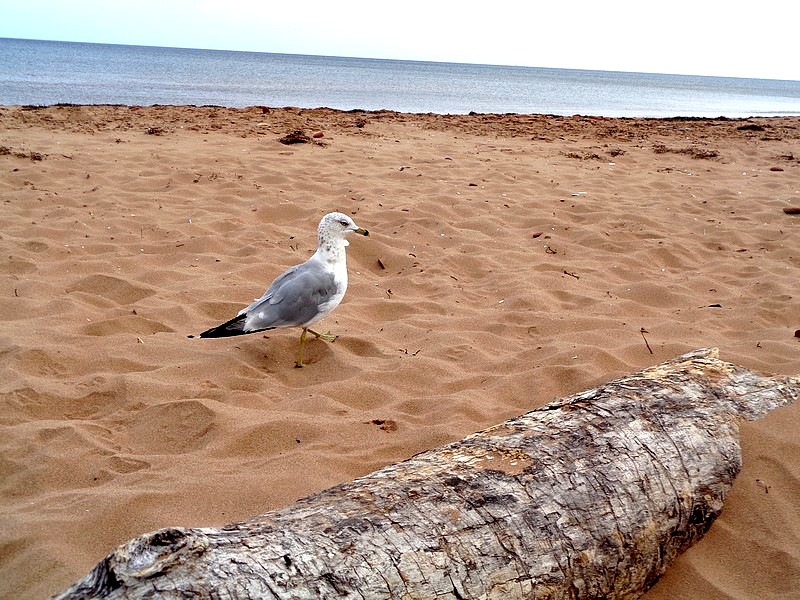
This bird has been with me for most of the morning.
We’re both beginning to think about lunch.
Also…
It’s the ’90s. I do a birthday party for a gaggle of 8 year olds…bowling and lunch. When it’s over and parents come for the kids, the kids head to where I’m sitting, where I’m (perhaps too enthusiastically) waving goodbye, and ask for their loot bags. Loot bags? What’s a loot bag? The last kids’ birthday party that I was at, I was the 8 year old …and that was when kids were allowed to run around blind-folded armed pins, looking for donkey’s rear ends and went home with nothing but stomach aches from too much Betty Crocker icing.
It’s the ’70s. And possibly the only time I actually bowled. I vaguely remember someone named Arnold wearing plaid pants and how there was melted orange cheese on the food and how knocking over pins was taken way too seriously. All to a backdrop of KC and the Sunshine Band or similar. I’ve blocked most everything else out. Was there more? Oh, yes, the shoes…
♦
Other (not always) wordless friends:
Cheryl Andrews
Allison Howard
Barbara Lambert
Allyson Latta
Elizabeth Yeoman
Greetings from the garden tour!
(aka outdoor galleries of love, green stuff incidental)
♥
The woman whose backyard is a solid field of day lilies (hundreds and hundreds and hundreds of them) and who at first I think must be slightly unhinged until she explains her joy at every day coming outside to see what new bloom among dozens and dozens of varieties has opened. She not only grows them but cross pollinates to create unique hybrids and borrows her kids’ backyards because there’s no room in hers anymore. She wins awards.
Hers husband is on the patio, watching the crowds, and as I leave I stop and say to him, Nice place but you ought to consider getting some day lilies…
The woman who turned a tiny shaded downtown lawn into a glen of cool sanctuary complete with three locally made wrought iron pyramid towers and places to sit and contemplate them.
The woman with a deck full of passion flower vine and other tropicals who doesn’t have a sun room in her house but simply asks the plants to do their best in various windows and they oblige her and are stunningly beautiful and vibrantly healthy. Singing to them doesn’t hurt she says when asked for tips.
The woman whose yard is full of crazy objects, tea cups hanging from branches, giant wooden playing cards nailed over three sides of fencing, mirrors, bird feeders, figurines, mobiles, sun catchers, flea market and thrift shop finds… too much!! my brain screams as I wander in and consider wandering out again but just then the woman appears and we talk and her joy changes the scene from something I don’t understand… to one that brings utter contentment and peace as she explains the pleasure it gives her to see it all from her kitchen, or from her place on the couch. She would rather look out the window than watch TV on a rainy day, she says. She puts this stuff out each spring and puts it away again in giant bins each winter. It’s time consuming and possibly a form of madness she laughs, but I shake my head, say it feels more like her form of art. She nods. Then she takes me round to the front to show me a few things I might have missed on my way in.
♦
Other (not always) wordless friends:
Cheryl Andrews
Allison Howard
Barbara Lambert
Allyson Latta
Elizabeth Yeoman
There is a framed series of photos on my kitchen wall. Clouds scudding across a Florida sky. Each photo shows the exact same square of sky above a couple of palm trees, as seen from a poolside chair so many years ago I was still using 35 mm film and my trusty Pentax.
There are only four shots. But they represent the whole morning and my idle joy in having nothing to do but read… no idea what I was reading, but possibly The Portable Dorothy Parker (I remember her from around that time) or River of Grass, by Marjory Stoneman Douglas, about the almost decimation of the Everglades. In other words not a novel. Am guessing my mood couldn’t have been focused enough for a novel if I was able to take notice of the sky changing every so often and carefully positioning the camera to take precise shots (film was expensive) between and above those precise palm fronds.
Those aren’t the actions of someone engrossed in a novel.
The first photo in the frame shows a clear sky with only a wisp of cloud. The second, a larger, but still small, cloud moves in from the left. By the third shot, the sky is mottled with cloud cover, though wispy still, and by the fourth, heavier clouds have moved in and I probably decided it was time to gather my pool toys and go have lunch.
I love these pictures, the memory of a holiday, yes, but also a reminder of how this follows that, how time is passed and passes, and continues…
Someone once told me they rarely look up. I was astonished — how can anyone take the whole sky for granted? But it occurs to me that maybe it comes from our habit of looking *for* something… something useful, or unusual, something to compare ourselves with, as in looking at people, or something beautiful, as in a sunrise or sunset or rainbow.
Each morning I stand outside in approximately the same place to greet the day and every day I look at the same slice of sky above a cedar hedge in the space between two very tall spruce. And every day the sky is never the same. Sometimes the colour of Laurentien pencil crayon Peacock Blue, sometimes another shade. Sometimes speckled or fluffed or water-colour-streaked with cloud. Now and then picture-worthy… most often not. Over the years I’ve seen flashes of lightning in that space, the occasional plane on its way to Toronto, and one year the Snowbirds performed for a local school named after a fallen comrade and I stood in my backyard and watched, in awe, as they swooped and ducked and dived in that very bit of sky.
It is also, apparently, part of the Trans Canada Flight Path for geese.
There’s nothing magical about that slice of blue, it’s just the one I happen to most often look at. Not from a lounge chair and never for an entire morning as you do on holiday, but just as habit. Sometimes I go outside and look up, without realizing it even, with maybe a question on my mind…
And a cardinal flies by in answer.
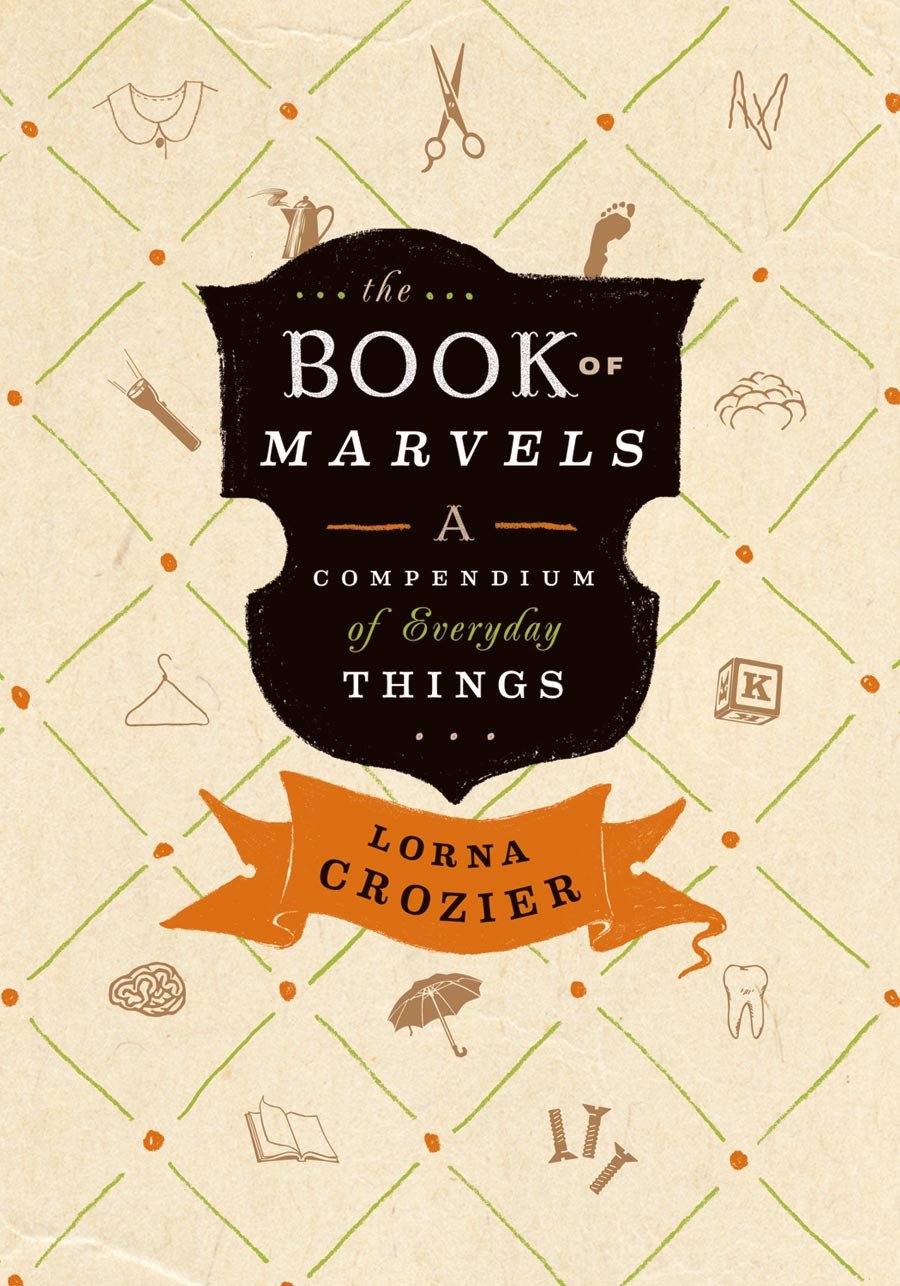
I have a fondness for the overlooked and easily abandoned, things that seemingly have no use or appear to be limited in their use or have the misfortune of being in the company of people with no imagination. I suspect Lorna Crozier shares this fondness because The Book of Marvels is dedicated to exactly that… the easily overlooked, the rarely if ever thought about, things that are right there, like air and eggs, ironing boards, crowbars, darkness and the brain… “The brain thinking about itself is thinking about the brain thinking. The brain not thinking about itself is thinking about the brain not thinking.”
I could just stop right there and mull that over for half a day.
But I’m compelled to read on, to savour the next bite-sized morsel, one more beautifully presented, poetic prosey observation about something I’ve never thought of in quite the way I’m reading it here. I make my way through the book like it’s a bar of 85% chocolate.
About the sky… “The sky is a blouse snatched from the back of a woman. No. The sky is a muddle of clouds that won’t sit still in the lecture hall. No…”
And then I look up at the sky and ask is it a blouse? Yes of course! And no.
About a clothes hanger, Crozier points out the “cryptic punctuation mark”, the “?” atop the ‘shoulders’ of the wire or plastic or wooden frame, shoulders that are hidden by clothes but the “?” is always visible, creating within our closets a row of “?????????????”… that “bring to your attention …the multitude of questions whose answers you don’t know.”
She refers to feet as our “nethermost telluric twins” and I’ve learned a new word. And then she goes on to reflect on the moment of their first walking out of prehistoric waters “… our spines straightening, our gills slamming shut, the salt on our skin crusting in the dry air, our hands astonished into being hands and not another pair of feet.”
The hinges of a bird’s wings, the way one word hinges on another… how this is where poetry begins.
The pointlessness of an ear lobe.
The way a stone is “… a clock whose face you can’t read.”
The book is small. The marvels take up no more than a page each, a short paragraph or two. They are listed alphabetically. The only item under ‘O’ is ‘Objects’ in which Crozier quotes William Matthews who said “… if an object fails to interest us, it’s not its fault but our own.”
Couldn’t agree more. The Book of Marvels is rich with the fruit of paying attention to connections, to the minutia that surrounds us, the frippery that has nothing yet everything to do with how we live. It’s a book that changes how you look at a flashlight, an eraser or a doorknob.
And isn’t that just so refreshing?
__
The Book of Marvels is available online at Blue Heron Books
and Hunter Street Books.
♥
Support indies! (These are two of my faves.)
A new anthology, called GUSH: Menstrual Manifestos For Our Times, is
making some people uncomfortable… why must these things be spoken of??
And making others relieved… thank god we can finally speak.
Because I have a short piece in the book (about the perils of attending a pool party in the 1970’s), and because I believe in saying the word menstruation out loud,
I recently sat outside Blue Heron Books with a little sign that said Menstrual Memories? — And waited to see what would happen.
Young children were rushed past.
Men looked uncomfortable. Women too. One woman actually sneered.
But after a while, I noticed people coming back, and some of them stopped. Then many more stopped. It was as if they’d been initially blindsided by the question… but… now that you mention it, yeah, I do have some memories I’d like to share.
And so they shared.
Menstrual memories.
And why not?
A man asked if he could take a picture of the table. I asked if he had any menstrual memories. He said no. We laughed and I liked that the word was spoken between genders. It’s hard enough sometimes just between women.
And that of course IS the whole point of the book, i.e.Why are women made to feel awkward and embarrassed about a basic function of biology?
The first to stop was an 83 year old woman from Cape Breton who whispered about shame and flannel cloths worn like diapers, about the horror of washing them and hanging them to dry. After a few minutes she stopped whispering as one memory twigged another and her friends got into it, all of them swapping stories, and I could tell they’d never had this conversation or anything like it before. As she began to leave, she stopped, smiled and said thank you, this has been fun. She seemed slightly surprised that it turned out that way. And I have no doubt that part of the fun was the relief of speaking the words… at last.
Following are memories so many women shared with me… on a sidewalk, outside a bookstore, on a beautiful summer night… in their own words:
♥
♥
When I got my cycle at age thirteen my mum told me I had to carry a purse for “my stuff”. The way she said it was like it was the worst thing on earth.
♥
My dad worked in a factory that made menstrual products and got an employee discount but was too embarrassed to bring them home in the company box, which ‘advertised’ what was inside and so made a whole production out of wrapping the box in brown paper so that neighbours wouldn’t be any the wiser as he brought it into the house from the car. It was treated like contraband.
♥
♥
My mom left a booklet about “being a woman” on my dresser one day. In my closet, that same day, on the top shelf, was a box that had a lovely picture on it of a lovely woman in a long white gown. I was very excited about my new dress (which I assumed was inside!!).
♥
My period started on the way home from school on the #28 Davisville bus. Me in my school uniform: white blouse, kilt, knee socks, blazer. I felt the ‘gush’ and when I stood up I was mortified. I tied the blazer around myself as I exited the bus.
♥
♥
Boys made jokes about girls who were on their periods. (On the rag & worse.)
♥
♥
When I got my period my mother took me aside and said I was to avoid boys now. She didn’t clarify why or which boys so I avoided them all, including my brothers, to the point that I was afraid if our elbows touched as we passed on the stairs. It completely changed our relationship.
♥
Got my period at eleven. I was on a toboggan with two boys.
♥
♥
A menstrual memory for me is when I was in my twenties and playing softball. I was either pitching or shortstop, and I felt something. Uh oh…
♥
My periods were heavy and I didn’t carry a purse. I worked as an auctioneer.
I used to keep extra pads down the sides of my cowboy boots.
♥
♥
My periods stopped the day my mother died. I could feel it starting as I sat with her in the hospital. She died that night, and my period proceeded normally for the rest of week. And that was it. I never had another. I was only in my forties.
♥
We didn’t have products. We used flannel cloths, like diapers, and they had to be washed and dried and re-used. It was an embarrassment when it was your time because people would see the bulge of the pin through your skirt.
♥
♥
I lived near the ocean and it was a real concern, people would tell you not to swim, to be careful of sharks, and they weren’t kidding.
GUSH: Menstrual Manifestos For Our Times available from Blue Heron Books
♥
Support indies!
Postcard greetings of the market kind where a good time is being had by all. Not the least for having discovered the new shiitake vendor… AND scoring seed potatoes, ‘eating’ potatoes, BLACK CURRANTS!!, yellow plums, and a few more things in other and various hues.
p.s. Am slightly addicted to the greenhouse tomatoes Meredith sells (I wanted to wait for the vine-ripened, I swear I did, and I thought I could just taste ONE of the greenhouse beauties, I thought I could handle it, that they’d have no power over me.) I had it sliced on toast with mayo. Do not send help.
♦
Other (not always) wordless friends:
Cheryl Andrews
Allison Howard
Barbara Lambert
Allyson Latta
Elizabeth Yeoman