



Author: carin
one thing
They will have you believe the only way is in numbers.
And they will count on you believing the numbers will never be in your favour.
That there will never be enough of ‘you’.
They will let you believe that ‘they’ have power—governments, corporations.
And of course, they have.
But not without us.
Not without you.
They will not encourage you to believe the power of one person.
They will not ask you: what is the one thing you could do differently?
Not once but always, one thing that you can do differently forever.
That if you did it forever, it would change one sliver of the world.
They won’t ask, I guarantee it.
Because you might answer; it might cause you to think.
You might say: I will only buy local apples in the month of October.
Or, I will buy fewer books this year but all of them from an indie book store.
Or you might say you will turn off the tap as you brush your teeth.
Or find a better place to buy your coffee, your lunch, your shoes.
You might choose as your one thing to write a letter a month to an MP.
Or a letter a year.
Or walk from here to there instead of drive.
Or pick up a piece of litter every Friday afternoon.
They won’t ask.
But you can ask yourself.
What is the one thing you can do differently?
You can do as many things as you like of course.
But this is just about doing one.
Big or small.
Just choosing it.
And doing it.
That’s all.
There’s no rally, no meeting, no placards.
No marching.
No club dues or posters.
Well, maybe posters.
All of that has its place.
But not in this game.
It’s private, this.
Be prepared; they will laugh.
Say things like ‘frivolous’ and ‘inconsequential’.
Words of fear.
They will point out that they’re winning.
Will hope you see it that way too.
Will hope you feel small and give up.
They will never, ever tell you the truth about the tiniest actions.
How they have immense power when they’re consistent.
And they will pray you never believe it’s true.
So this is my proposition: a movement of One Things.
One person at a time.
Changing just one thing you do.
Just one thing.
You can tell the world what it is.
Or you can tell no one.
It’s harder to tell no one.
Harder to just keep doing it.
The difference is in the action.
And the action will be felt.
Millions of people doing one thing differently.
A hard target for ‘them’ to attack.
Millions of individuals.
Silently changing the world.
sounds of summer
Gulls. Always gulls.
Then something else, a party of black birds, a celebration.
Ten thousand voices in the reeds.

The sound of roses.

—Wilting in the heat, the kerplunk of falling petals almost lost against the din of all that invisible black bird revelry.
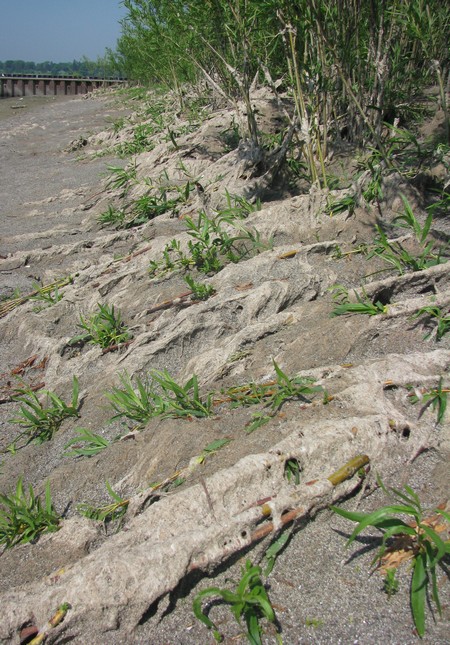
Seaweed drying.
It sounds like this: schwimfftmtzwuft
You have to lean over to hear it.
The splash of a dog named Winston belly-flopping into the drink.

The slosh of my feet and the surf blocks voices of walkers, strollers, the breath of joggers, a herd of cyclists and a grown man working out on the monkey bars.

But a woman comes through loud and clear, warns of dog poop ahead.
“Somebody let their dog just poop, poop, poop…”
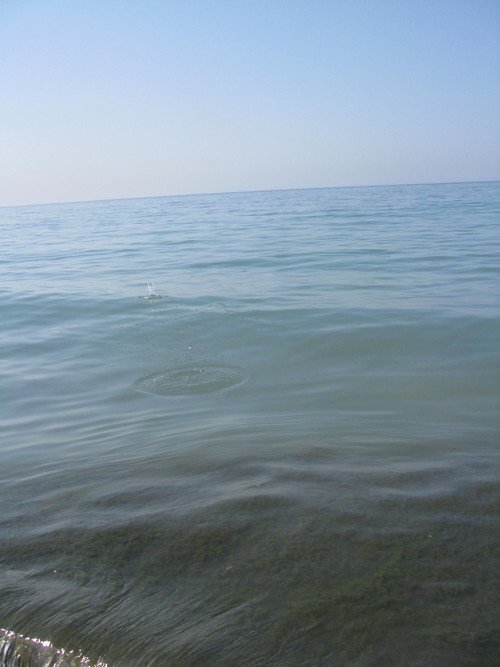
The skip of a stone.

Scrunch of pebbles.
Me cursing the mentality that appreciates beauty enough to come here, then spits in its face.

But no one warns of litter ahead…

Inhale.

Exhale.
we had to make them beautiful
“For me, feminism is not a theory, but a way of living one’s day-to-day life, its origins made up of incidents and observations stitched together. Some of them remain such odd shapes it’s difficult to make them fit, these old scraps of cloth that I recognize, that I wore with shame or joy. Above my desk I’ve taped a quotation that circulated around women’s groups a decade ago. Attributed simply to ‘a pioneer woman’, it reads: “We had to make the quilts fast so the children wouldn’t freeze. We had to make them beautiful so our hearts wouldn’t break.””
—from ‘Piecing Together a Childhood’, by Lorna Crozier, in the anthology Click: Becoming Feminists, edited by Lynn Crosbie) (Macfarlane, Walter & Ross, 1997)
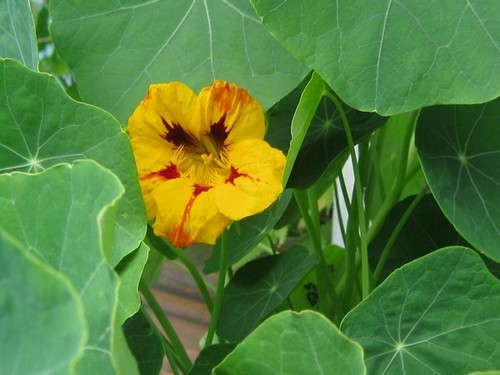
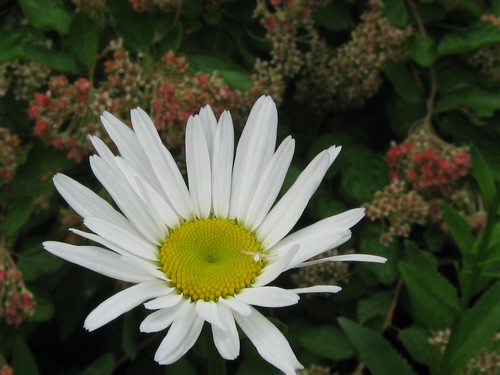
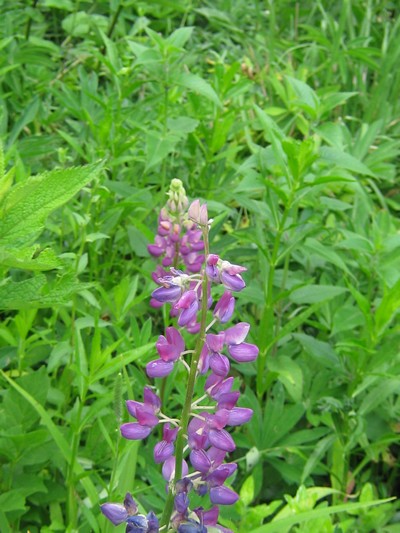
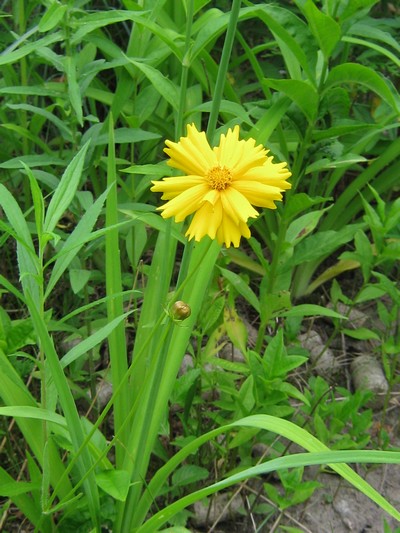
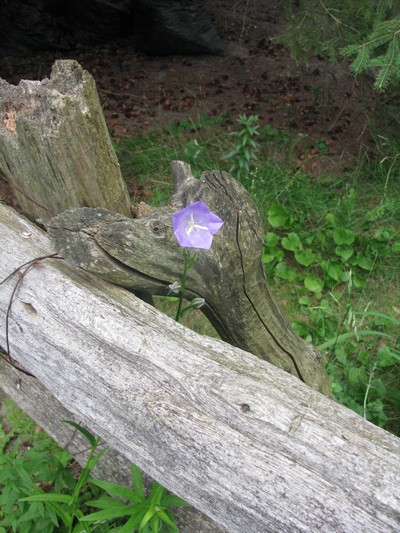
singles night in the garden



the happiness vortex
I can’t explain the pleasure I get from visiting the local dump.
Pretty sure it started with weekend jaunts as a kid when my dad would take in a load of old lumber and then nose around for wotnots, spare parts, a hubcap. It was like a free garage sale. That was when you could still nose around and the junk really was mostly junk. Treasures were rare. Now there are fines for scavenging.
Oh the irony.
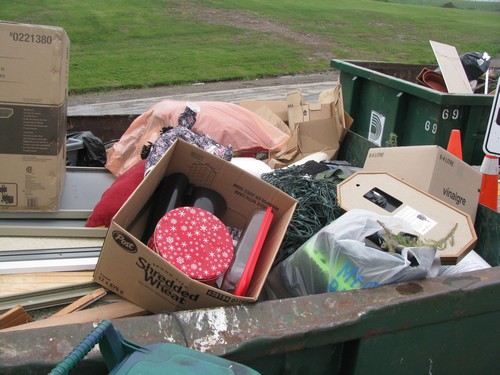
Because it’s not just plywood that people are dumping anymore. Now the bins are heaped with treasure. You could open several stores daily with the amount of quality goods being pitched.
A woman with a load of furniture tells me she’s a professional recycler, she’ll come to your house, pick up any junk you’re getting rid of, sell what she can, keep what she likes, and take the rest to the dump. She says she’s furnished her whole house this way, including appliances, and makes a decent living on top of it.

I watch a guy toss in two whole bikes.

What are the odds both are broken? And anyway, didn’t people used to fix bikes?
While I’m considering this, another guy tosses in another bike, a tiny one, so tiny it was probably ridden exactly three times. And okay, so the kid’s grown out of it. You’d think there might be someone it could get passed on to… like maybe dear old Sally Ann?

It’s staggering the amount of crap we have in our lives and the ease with which we toss and replace it. In the few minutes I’m there I see more than a few bins replaced or the contents squashed to make room for more. There’s always more. The bulldozers and bin movers and squashers are busy everywhere you look.

Despite all that, I’m oddly happy here.
And it’s not just me. The staff are consistently cheerful. From the guy in the booth when you arrive, to the one who tells you what dumpster to use, the woman in the building that takes cardboard or the guy in hazardous waste, the people you pay on the way out… everybody’s so friendly, so pleased to see you. It occurs to me that I’ve never met one cranky employee at the dump. Ever.
Sure, it could be drugs.
But I have another theory. Isn’t it just possible that all those people letting go of all that stuff, all that purging, creates a giant cleansing vortex? And who wouldn’t be happy in a spanking clean vortex?? By which reasoning it can be assumed that a shopping centre, a place where stuff is accumulated, would be one of the less therapeutic places to work. [It’s starting to make sense isn’t it?]
Anyway—not that anyone’s asking—given the choice, shopping centre or dump, I’d pick the dump.
For the vortex, obviously.
Plus I’m pretty sure they get dibs on the loot.

this morning i danced
This morning I danced to Ladysmith Black Mambazo in front of a winter scene by Lynne Campbell, black-legged sheep in falling snow. I didn’t think much about winter or sheep, or Africa for that matter although I wondered if the music was inspired by the land. I would assume so, drums and heartbeat. And then I thought of a pueblo in New Mexico full of tourist buses and the woman I met as I walked across a parking lot who lived there and for some reason stopped to tell me that when the buses and the people were gone you could feel the energy of the red earth through your feet.
I’m often thinking about land in one form or another and so as I danced it wasn’t unusual that I began to think about the wild, unkempt garden outside my window with its bushy native shrubs, serviceberries just ripening, rows of lettuce and cucumbers, the robins and rabbits I share this with, and then I thought beyond it to my town—not especially picturesque or special, just mine—and the lake that I love despite its pollution… the gulls, the peace, the way the lake knows how to be itself and do what it’s supposed to do despite what we do to it because we don’t know how to be—and how all of it links me to childhood, to the flinty smell of factory on my dad’s clothes as he comes through the back door—my mum, with a picnic hamper of potato salad, homemade bread, radishes, a thermos of Koolaid, another of coffee; us heading to the beach for supper and a swim.
I dance to Ladysmith Black Mambazo thinking how what’s happening in Ottawa this week, this month, is a crying shame. That this act of devastation to the land and the water, to the rights of everything alive, is being trampled without explanation or apology. That these changes to the environment and the eco-system are not merely wrong and unfair and unkind to the planet, to ourselves and the creatures we’re meant to protect—which in turn we can thank for our survival; see how far you get without bees—but what the madness in Ottawa changes is how generations will think, how they’ll live, whether they ever eat radishes on a beach, what they’ll have to think about, care about. What they’ll have left to care about…
That woman in the pueblo recognized the inevitability of economics, she knew that ridiculous as it is, we’ve created a society where there are concessions that need to be made. But What Ottawa is doing—turning its back on the environment—is more than a concession, it’s unconscionable.
And yet it’s happening right now, a Parliament all eager willingness to bulldoze and deceive. Something wicked this way comes…
My new favourite mantra comes from @Belgraves: “What our country needs is for Canadians to act like the people they think they are.”
It’s not possible to sit back and do nothing.
So I dance, try to feel the earth beneath my feet.
And then I wonder: what can I do? How do I sing the rhythms of this land?

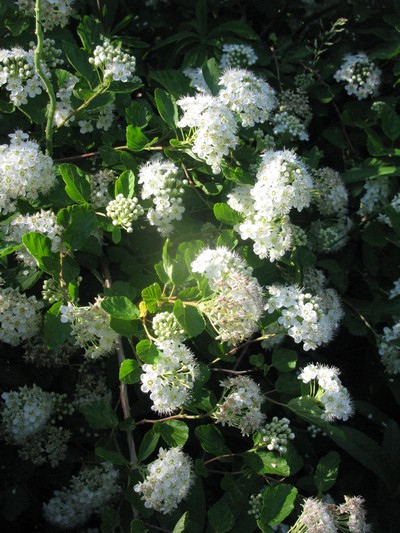
today’s colour

the postman brought all that
Here’s what I love:
— that someone went into a shop and chose an image from a rack or a shelf
— that they had to get stamps too
— and a pen
— and then find a mailbox
— the whole process maybe taking a day or two, the postcard in their pocket or bag until they found a place to sit down and write it out… a cafe, no, a trattoria, or a park bench surrounded by pigeons, piccioni… all the while a small connection between sender and sendee—not to mention a trace of Italian sunshine still there in the corner…
I love all that.
Before I even read a word.
So grazie, young travellers, for knowing how much this would make us smile!
why didn’t anybody say…
“In first grade, I came home crying because a boy at school had pulled my long, beloved braid so hard that my scalp still hurt. My mother laughed and said, “That’s how you can tell 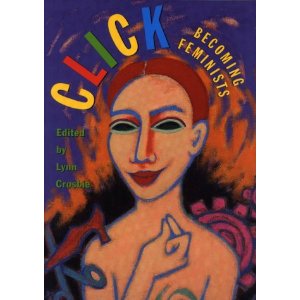 that boys like you.” The next time it happened, I turned around and punched my tormentor in the mouth, knocking out one of his teeth. I wound up in the principal’s office, and my mother cut off my hair. Oh no, I thought, something is very wrong here. Why didn’t anybody say… That’s how you can tell that girls like you”?”
—from ‘A Click is a Noise that a Woman Makes’, by Pat Califia, in the anthology Click: Becoming Feminists, edited by Lynn Crosbie (McFarlane Walter & Ross, 1997)
 Matilda Magtree