celine dion/cheese spread–see the connection?

My love of cheese occasionally takes me to odd (albeit merry) places; witness this piece I discovered about the word, or concept of, “cheesiness“, as in Las Vegas Elvis, Celine Dion and tropical themed weddings in the Poconos—far too long to read in any one sitting, but so weird it’s brilliant and I find myself returning now and then to nibble off yet another, and another, mad bit.

From Sailing the Seas of Cheese, by Erik Anderson:

“On the one hand, there is no food product cheesier than Cheese Whiz. On the other hand, there is nothing about Cheese Whiz itself that is cheesy in the aesthetic sense. Of course it might be strikingly cheesy to serve Cheese Whiz at a cocktail party or something like that, in which case, Cheese Whiz would be cheesy in both senses of the term.” 

I just may have that Artexed on my best cocktail party tray.

women’s what?

I’m always stunned at the idea that people actually wander about saying things like “women’s literature” and “men’s literature”. Good glory. Who makes these distinctions? I mean is it the publishers, the media, authors, critics, readers?? And what, may I ask, is men’s literature anyway? Penthouse? (Does that even still exist? It’s been so long since I’ve perused the smutty shelf at the local Mac’s.) (Oh, and pardon me if I’m being sexist in a bad way.)
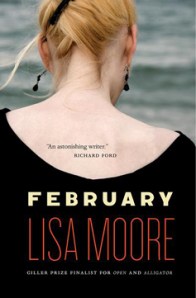
I read Kerry Clare’s excellent post today, which is what started all this off. I’ve heard, and had, these conversations before, but I think Kerry pretty well nails it when she suggests that the tag “women’s writing” has, essentially, been constructed to fill ‘a gap’.

She refers to a review by Alex Good of Lisa Moore’s novel February, in which Good says Moore is “an author of the female body.” I’m not sure what that means. The novel is about a woman who lost her husband the night The Ocean Ranger oil rig sank off the coast of Newfoundland in 1982.

I might not have been inspired to rant on this subject had I not just recently finished reading the book, and loved it.  Because what I loved about it had nothing to do with bleeding, cracked, and milk-squirting nipples (I refer again to Alex Good’s take on the book).

What impressed me was the language, the sentences, the writing for pity’s sake. And the honesty that Lisa Moore was able to tap into. As a widow, a woman, a human being trying to function among other human beings, a parent, a sister, a friend. I loved how she took us to the event and made us see it through the eyes of someone who has tried to make sense of it for twenty five years but there is no sense because The Company has never admitted their fault. Those men needn’t have died. It wasn’t about weather. It was about stupid manuals that weren’t distributed, training that didn’t happen, equipment that wasn’t in place. Moore beautifully shows the searing hopeless frustration of this through the prism of a widow’s jumbled, broken interior, in the chapter titled “The Portal”… where we learn that Helen has been playing the night of the storm over and over in her mind, imagining what might have happened, inviting us to imagine it with her, in control of every element but the final one.

The story could easily be that of a man after losing his wife/partner (just strike the squirting breasts); the human elements of emotion are the same for both sexes. But maybe that’s the problem—do we attribute emotions only to women?

And mindless car chases to men?

An over-simplification, I know. But you get the point.

Hardly seems right on either count.

I agree, of course, that certain books may have primarily women or men readers (also gay or straight readers, young or old readers, etc.) but I don’t think the authors, or their work, can (or should be) be defined by their readership—it’s often those very definitions that act as Keep Out signs to anyone else.

In the spirit of how far have we really come?, I’ll leave you with Margaret Atwood’s delicious take on the subject in a piece called  “Women’s Novels“.

~

Note: post first appeared in April, 2010.

___________________________________________

—Purchase February online at Blue Heron Books.

reasons i like lists

In celebration of The New Quarterly’s upcoming “list issue“—edited by the Queen of Lists and Many Other Things Too—Diane Schoemperlen—I offer a few thoughts on the almost-koan: why list?

1. Well, one very big reason for me is because it Hoovers my brain so I can walk around in it comfortably without tiny bits of debris sticking to my feet, distracting and annoying me.

2. And I can see a list. Not so with the inside of my head. And even if I could, it would be all kaleidoscopey; things changing and morphing every second, in patterns impossible to follow, much less recall, days, or even hours, later.

3. Then there’s the tacit reassurance of having committed things to paper; a kind of wink wink communication that says: go on, you can do something else now, I’ll be right here when you get back—honest.

4. A list gives me things to cross out, which in itself is a very satisfying and cleansing act.

5. A crossed out list is no longer a list of where I need to go but a chronicle, a meditation even, if the mood is right, of where I’ve been. And I think it’s important, possibly useful, and mildly entertaining at the very least, to know when you’ve been somewhere.

6. Finally, it’s never really finished; it can be as long or as short, as complex or simple, as you, the lister, likes. There’s no right or wrong way of making a list and if in the middle of making one you decide to stop

perspective is the handicap


While waiting for my for my mum outside the hairdresser, one of those oversized pickup trucks pulls in beside me. The guy driving is bearded, tanned, leathery skin, the rugged outdoorsy type; six foot something probably, built like a brick shi—  Well, you get the idea.

When he opens the door he’s holding a block of wood on a string… I see hardware that converts the foot pedals to hand operated ones and I see that the man himself, while rugged indeed, is closer to three foot nothing. He lowers the wooden block to the pavement, slides down to the running board, onto the block, hops off, and places it back on the floor of the truck—all in one smooth movement.

Then he slams the door shut and makes his way toward the bank.

Ten or so minutes later he comes back out and at the same moment my mum emerges from the salon. The guy gets to his car first, opens his door, reverses the wooden block process, and drives away.

Meanwhile my mother is settling into the passenger seat beside me and says, “Did you see that poor handicapped man…?”

And I think:   no, I didn’t.  

The word handicapped just didn’t apply.

What I saw, I realize, was a short man making adjustments for himself in a world designed for five and six-footers. Anyone paying attention to his actions rather than his size, would see him as resourceful not handicapped.

It’s a matter of perspective.

Let’s say that every vehicle, house, appliance and shopping cart in the world is designed for people three feet tall. Newspapers and labels on food are printed only in Braille. Lectures and plays are conducted only in sign language. If that were the case it would be us—the so-called able-bodied—that would be unable to function. We would be handicapped by a mere change in the design of things around us.

It seems we’ve merrily built a world suited only to one type of person, to one idea of normal—then allowed ourselves to judge those who can’t easily function in it as abnormal. It’s like greasing the dance floor and standing aside, clucking our sympathy for those who fall.

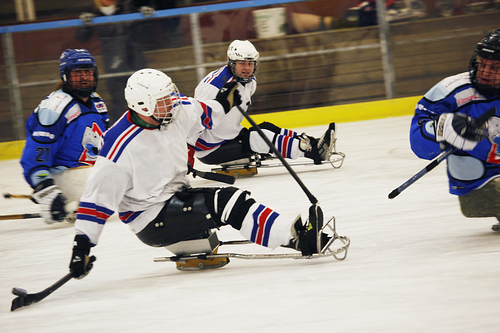
I think about all this during the meagre coverage of the recent Paralympics—and how those events are seen as secondary to the ‘other’ Olympics—how the athletes are referred to as dis-abled. And why that is.

Perspective.

Because the guy in the truck wasn’t dis-abled.

And the athletes in the Paralympics certainly aren’t.

There are, of course, the truly dis-abled, those who can’t function due to physical or other limitations—

—and then there’s those of disabled through ignorance, who define ‘normal’ in relative terms…perpetuating the views of a society whose perverse logic once deemed the left-handed next to useless.

a slap in the face

Given the general hoopla dedicated to the Vancouver Olympics, Part One, I had this stupid idea— that is, I assumed —Part Two, the Paralympics, might also get some attention.

Not that I expected it would get as much of course. Good lord no. Afterall I understand that it’s hard for small-minded marketers to find the same promotional ‘qualities’ in visually impaired, armless, or wheelchair bound athletes. (Though why that is, I can’t quite fathom. One would think—if one were thinking—that not only are these men and women of the Paralympics extraordinary athletes in top physical condition—moreso even than the Part One Olympians when you consider things like cross country skiing without poles or downhill without sight—but their clothing and equipment must also be absolutely top of the line.)

Seems to me lots of marketing opps missed here.

But then, could be we’re dealing with teeny, blinkered brains in the corporate and marketing arenas where sponsors prefer spokes-models of a certain size and limb count.

Small brains seem also to reign pretty mightily over at CTV where, I discovered I will NOT be able to watch the Paralympic opening ceremonies tonight. That’s right, the official Canadian broadcaster for the Vancouver Olympics feels that the latest episode of Medium, an American TV series, is more important.

The opening ceremonies are on TOMORROW (of course, what a great idea!) after the games have actually begun.

Well, here’s news for the CTV Einsteins who came up with that plan—I’m a funny person, I like to watch opening ceremonies at the OPENING. (FYI: that means BEFORE the event gets rolling.) I might be alone in this, I don’t know. 

What I do know is that it’s a huge oversight that the Paralympics are consistently treated like some second class show  but when the show is being held in our own country, you’d think we might just deem it worthy enough to treat it with a little more  respect and dignity. And maybe, therefore, allow ourselves to be more broadly introduced to this incredible event.

Of course that would require intelligence and a certain kind of balls that apparently don’t exist in the CTV boardrooms where this decision was made.

To say that not airing the opening ceremonies is a slap in the face, not only to the athletes, but to viewers eager to share in the excitement, is an understatement. I’m puzzled to say the least. Embarrassed because I thought we were better than that. And more than slightly disgusted.

I never thought I’d say this, but God bless the internet.

Fortunately Part Two of the 2010 Vancouver Olympics can be seen here, live. Including the opening ceremonies.

Generously sponsored by Visa and Samsung.

tell me again who’s smarter?


As I wait to speak to the clerk at the hardware store about wood filler, I listen in on a conversation he’s having with the chap ahead of me about ants and I remember the winter we had our own infestation.

They came in from a crack near the fireplace and mostly just wandered around the family room, watched some TV with us; it wasn’t a problem until we went away for a few days and the guy that took care of our cats left their food out all day. Suddenly the ants knew where the kitchen was. I wasn’t as blasé about this because—despite my fondness for all creatures and the belief we’ve got to share the planet and it’s not just ours ours ours—it really is quite disgusting to see dozens of ants crawling over some little tidbit on the floor.

Then it occurred to me that it’s equally disgusting to have tidbits on the floor.

I was blaming (and, to be completely honest, squashing) ants for the crime of eating the buffet I’d more or less put out for them. They must have wondered about me. In their world one is encouraged to consume debris, turn it into compost. Imagine their surprise at being attacked while performing the most natural of acts.

I suppose they might have put my actions down to something sensible like a madness brought about by hunger; maybe they even forgave me.

What I’m pretty sure of is that the truth never occurred to them—that humans are simply messy and lazy and don’t vacuum regularly, and that we expect ants to be broad-minded and flexible enough to change their DNA to include an innate understanding that once we erect walls, secure doors and shut windows, the message is: Keep Out.

I want to tell the chap ahead of me that cinnamon sprinkled near the entry point will stop them but it’s too late. The conversation has turned to mice.

____________________________

“These new ants have got into his brain, and he has come back to England
with the idea, as he says, of “exciting people” about them “before it is
too late.” He says they threaten British Guiana, which cannot be much over
a trifle of a thousand miles from their present sphere of activity, and
that the Colonial Office ought to get to work upon them at once. He
declaims with great passion: “These are intelligent ants. Just think what
that means!”

(From—The Empire of the Ants, by HG Wells)

knee deep in coffee cups

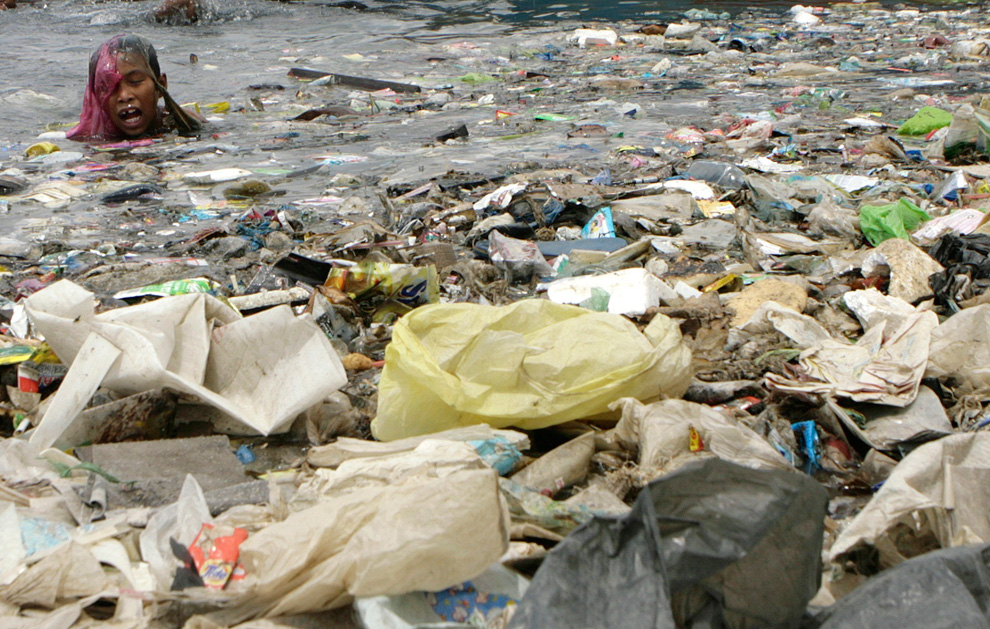
Most days I take a walk through a ravine near my house. I go there with the intention of breathing deeply, letting my shoulders drop a little while I focus on the birds, the sometime deer or fox. More and more often, however, I find myself focussing instead on the ever increasing amount of debris along the way. Always a puzzling sight. Makes me wonder what sort of person, having decided to spend some time in the beauty and peace of nature, then decides to bung their garbage at it.

Fortunately, or unfortunately, I’ve come to anticipate it; I keep my coat pockets stuffed with bags, hardly notice the birds some days.

And before anyone shrugs and says Ah, kids! What can you do? it’s not kids that are responsible for the majority of it. Most of the traffic is adults, lots of dog-walkers especially, and most of the debris these days, I’ve noticed, is take-out coffee cups.

Not that I’m saying anything.

Except this:

1) What is wrong with you People Who Can’t Take a Walk Without Coffee and Then Decide You Can’t Be Bothered Hanging on to the GD Empty Cup Until You Get to a Bin/Car/Home?

and,

2) Tim Horton’s, Coffee Time, Second Cup, Starbucks (for starters): here’s an idea—how about spending a few cents on an anti-littering campaign or two? Not that the disgusting habits of the population are your fault, but much of the dreck all over our streets, peering at us from ditches, advertising the next sale—does have your name on it.

Surely you feel at least some responsibility to clean it up…

As must our governments.  Surely.

Maybe they’d all welcome letters chock full of ideas? Here’s one: maybe run a nationwide contest for ideas.

Whatever. The point is we can’t just keep throwing this stuff around. And no, it’s not a small thing in the face of larger problems. It’s about respect: for the earth, animals, neighbours, strangers. And that’s not insignificant because if we can’t respect what’s in our own tiny space, no wonder we have larger problems elsewhere.

So, short of putting garbage bins on every corner (though not a bad idea), we need to get creative in changing the way we think.

One of the best anti-litter campaigns I’ve heard of hails from Texas where it seemed impossible to get the locals to stop littering until they were persuaded that it was not themselves, but the no-good, low-down, tourists and other out-of-state varmints (I may or may not be paraphrasing), that were the problem. The move not only convinced many locals to stop littering (not wanting to be put on the same level as tourists) but also increased a sense of ownership and pride in their surroundings. And it’s still going strong.

Doesn’t it just warm the heart to see the power of marketing—the power of anything—put to good use?  There is hope.

things to do (and not do) with ice

At lunchtime I passed a group of children in fat snowsuits who were noisily, happily, sliding on patches of ice in a schoolyard until someone (a schoolyard lunchtime ice monitor?) came out and shouted:

“Stop sliding on the ice! Sliding is NOT ALLOWED.”

As I walked by, I wondered how old you had to be in order to slide on ice without someone yelling at you. I kicked a block of ice down the street as I went, which eventually attracted some strange looks. And then I wondered: how young do have to be in order to kick a block of ice down the street without people looking at you strangely…

(For those with an excess of ice, try this.)