orwellian times

Flipping through a collection of Orwell’s novels I notice that all but one opens with a reference to the time of day. And two begin in April.  I’ve never studied him… perhaps this is common knowledge and I’m among the last to be amazed.

Burmese Days (1934)

“U Po Kyin, Sub-divisional Magistrate of Kyaukfad, in Upper Burma, was sitting in his veranda. It was only half past eight, but the month was April, and there was a closeness in the air, a threat of long, stifling midday hours.”

A Clergyman’s Daughter (1935)

“As the alarm clock on the chest of drawers exploded like a horrid little bomb of bell metal, Dorothy, wrenched from the depths of some complex, troubling dream, awoke with a start and lay on her back looking into the darkness in extreme exhaustion.”

Keep the Apidistra Flying (1936)

“The clock struck half past two.”

Coming up for Air (1939)

“The idea really came to me the day I got my false teeth. I remember the morning well. At about a quarter to eight I’d nipped out of bed and got into the bathroom just in time to shut the kids out. It wa a beastly January morning with a dirty yellowish-grey sky.”

Nineteen Eighty Four (1949)

It was a bright cold day in April, and the clocks were striking thirteen.”

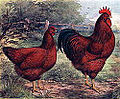
The one that doesn’t begin with ‘time’ is  Animal Farm  (1945), which begins instead with a pie-eyed farmer.

“Mr. Jones, of the Manor Farm, had locked the hen-houses for the night, but was too drunk to remember to shut the pop-holes.”

Hmmm… better look out, Farmer Jones… could be your time has come.
images

the warrior way

“John Lennon always felt like an Indian to me. In the words and music of this white rock ‘n’ roller, I found the essence of the warrior way. That way is not about being bitter or resentful. It’s not about getting what you think you’re due. It’s not about blaming history for the condition of your life. It’s not about pursuing revenge for injustice. It’s about living a principled life despite all the seeming crap, about living with soul, about embracing the flame of your spirit and letting it burn brightly. It’s about embracing the light of others, too, regardless.”
~ from One Native Life, by Richard Wagamese, Douglas & McIntyre, 2008
War_and_Peace

a league of nomads

“We were hockey gypsies, heading down another gravel road every weekend, plowing into the heart of that magnificent northern landscape. We never gave a thought to being deprived as we travelled, to being shut out of the regular league system. We never gave a thought to being Indian. Different. We only thought of the game and the brotherhood that bound us together off the ice, in the van, on the plank floors of reservation houses, in the truck stop diners where if we’d won we had a little to splurge on a burger and soup before we hit the road again. Small joys. All of them tied together, entwined to form an experience we would not have traded for any other. We were a league of nomads, mad for the game, mad for the road, mad for ice and snow, an Arctic wind on our faces and a frozen puck on the blade of our sticks.”

~ from Indian Horse, by Richard Wagamese

treasure among my stacks

Stumbled over during a recent bout of perusing…

“He says, slowly, that there is an island in Grand Lake called Glover Island. And Glover is the largest island on the island of Newfoundland. And on Glover there is a pond. And on that pond there is a smaller island. I want, he says, to paddle up Grand Lake and portage over Glover Island. Get to that pond and cross to the island and spend a night. He says there’s only one other island in the world with a lake holding an island, and a pond on that island with an island in that pond, and that place is Sumatra. And if you took a globe and put a finger on Newfoundland and another finger on Sumatra you’d see they’re pretty much on opposite sides of the earth.”   —Excerpt from a story by Michael Winter, as found in the essay: The Ends of the Earth, by Lisa Moore (The Walrus, July/August, 2006).

But what Michael Winter story is it from??

“Oh, Mrs. Turner is a sight cutting the grass on a hot afternoon in June! She climbs into an ancient pair of shorts and ties on her halter top and wedges her feet into crepe-soled sandals and covers her red-gray frizz with Gord’s old golf cap—Gord is dead now, ten years ago, a seizure on a Saturday night while winding the mantel clock.” —Opening paragraph, ‘Mrs. Turner Cutting the Grass’ by Carol Shields

“God, this is what literature is supposed to sound like—one man simply telling another man the simple humiliations and agonies and always-too-late epiphanies that add up to his and everybody else’s life—and not a sack of tricky tropes to be toted out and professionally employed in order to expertly con the reader into imagining a pretty little Book Club-approved daydream.”from What Happened Later, by Ray Robertson

“I grew up cynical, married an optimist. A field biologist who held the legs of songbirds pinched between thumb and fingers and described their plumage to me. We hiked through boreal forest, scrambled above alpine meadows, strolled the banks of the North Saskatchewan River. We walked beneath the ten thousand rustling wings of crows bedding down for the night on the electrical wires beside a remnant stand of trees. As we walked, beneath our feet we found the torn feathers of a grouse, the long shadow of a hawk. Death, I saw, is part of the beauty of this world, as painful as it is. And so, I learned to balance here. Walking with my optimist, I found I could stay standing even if the world would not stay still.”from the essay ‘A Container of Light’ by Lisa Martin-Demor, The New Quarterly #120.

“Everyone wants in on it. Everyone! Not just the cat, the pig and the dog. The horse too, the cow, the rhinoceros, the orang-outang, the horn-toad, the wombat, the duck-billed platypus, you name it. There’s no peace any more and all because of that goddamn loaf of bread… It’s not easy being a hen.” —from ‘The Little Red Hen Tells All’, in the collection Good Bones, by Margaret Atwood

“I remember a story my father once told me. A boy is playing in the sandbox in the schoolyard, and darkness falls. He hears the voice of his mother calling him in for supper. On his way home, he loses his way in the shadows and walks until his feet are sore. He curls up against the side of a stranger’s house and falls asleep. In the morning, the sun pries open his eyelids. He is back in the schoolyard. He realizes he is not the boy at all, but the sandbox, and so he is already home.” — from ‘Bouncing’, in the collection Buying Cigarettes for the Dog, by Stuart Ross

120px-Rhode_island_red_1915_lithograph


this explains everything

So I’m in bed Sunday morning reading and loving the stories, the reminiscences of various Canadians in Everybody’s Favourites as they recall special books from their childhood. I make a list of titles to get—for me, for friends, nieces and nephews, ones to browse through at the library. I note that many of the books mentioned I haven’t read and I begin to wonder what kind of childhood did I have??

Then a title jumps out at me: Island of the Blue Dolphins.

I know this book.

I can see the cover, a darkish blue, the illustration of a girl on the grassy edge of a cliff by the sea, a cradle floating in the water. I remember that it’s a slim hardcover and suddenly I’m overwhelmed with a whim to see it, maybe even crack it open again. I go down to the basement, sort through my sadly unsorted kid collection.

I find it.

And I’m right about the cover; it’s exactly as I remember. Only it’s not Island of the Blue Dolphins. It’s a completely different book— Child of the Western Isles, by Rosalie Fry.

No dolphins.

Familiar as I am with the cover, I don’t remember ever reading it but it has drawings [by the author] and so I take it upstairs and snuggle back under the covers and after a page or two… I do remember… and I’m eight or nine or ten again and it’s summer and I’m not sitting on my front porch amongst pots of wax begonias but am right there on one of those wind-swept, wildflowery all-cliffs-and-rocks-and-sea islands off the coast of Scotland wherever Scotland is, and I’m tearing around with Fiona, who was born in the Western Isles, lucky bugger, but left as a child with her family to live in a city where a few years later she became unwell and the doctor ordered her back to the health-giving properties of life by the sea with her grandparents where she adventures about, rows boats, plays with oyster shells, befriends seals and finds a lonely cabin to live in before eventually uncovering the mystery of a long-lost baby brother.
Spoiler alert: there’s a happy ending.

How could I have forgotten this story? I used to want to be Fiona (that is, when I wasn’t wanting to be Nancy Drew). In fact, I think it may be Fiona, Child of the Western Isles, that’s responsible, at least in part, for my love and fascination of watery environs, of gulls and oysters and wind-swept hills. Not to mention lonely cabins and row-boats.

It may even be this story that led me to invent a baby brother one year. When my teacher asked if my parents would be coming to the parent/teacher night, I replied that no, they wouldn’t be going because my mother was in the hospital having a baby, a boy, I said. I’m not sure if I gave him a name. I only remember my mum and dad coming home from the event and telling me how surprised Mrs. Thingy was to see them…

This book, I notice, is one of the handful I own that is stamped with the name of my elementary school and that I possibly forgot-to-return, aka pilfered. So ancient is it that it has a strip of foolscap glued onto the back inside cover with the word Due handwritten at the top and a list of dates written below it in a variety of ink and handwriting styles. March 1st [no year] is the last date. I really can’t give it back [by that I mean I really don’t want to], but I’m thinking I’d almost like to write to the school and pay for the book. [But not the late fines!]

Then again, I wonder… is owning up a noble and good idea or am I just inviting the very-late-and-possibly-pilfered-book-patrol to show up at my door with a warrant?

savoury sentences from several sources — part 1


“A single moment, a day, can shift into something profound by the reading of a single perfect sentence at the perfect time.” ~ Matilda Magtree, aka me

“The boy was said to be a cousin of Kathleen Burnham and was up from New Hampshire, working at the sawmill, though he was no bigger and looked no older than an adolescent sugar maple.” ~ from Olive Kitteridge, by Elizabeth Strout (Random House. 2008)

“Physical pain, like a poultice, has a way of drawing out what is hidden in the heart.” ~ from the essay ‘A Container of Light’, by Lisa Martin-Demoor, TNQ, Fall 2011

“What passes for identity in America is a series of myths about one’s heroic ancestors.” ~ from Lies My Teacher Told Me, by James W. Loewen (The New Press, 1995)

“She sits at the edge of the narrow cot, neatly made and covered tautly with a white embroidered blanket, the kind that, if you run your hand over it with your eyes closed, feels like a skin disease, tiny white embroidered circles that pop up like pimples.” ~ from ‘A Well-Imagined Life’, in the collection Can You Wave Bye Bye, Baby?, by Elyse Gasco (McClelland & Stewart, 2001)

“It was the kind of party where no one ate the chicken skin.” ~ from The Forgotten Waltz, by Anne Enright (McClelland & Stewart, 2011)

“Because she is ten years old under an open blue sky, because there is not reason ever to arrive anywhere, because she has never felt exactly this way before—this loose in the world, this capable of escape.” ~ from The Juliet Stories, by Carrie Snyder (House of Anansi, 2012)

“Jake and I grew up without a mother, which wasn’t that bad, although we ate a lot of boiled peas.” ~ from the story ‘After Summer’, by Alice Peterson (The Journey Prize Stories,  2007)

“It was no more than a peep, the sound you might make if a butterfly lands on your hand.” ~ from the story ‘A Bolt of White Cloth’, by Leon Rooke

“There’s aggression even in the way they kiss each other so flagrantly, like they’re trying to suck the other’s gums out, like an old horse chasing a lost scrap of ginger nut biscuit down the palm of your hand and up your sleeve.” ~ from Malarky, by Anakana Schofield(Biblioasis, 2012)


savoury sentences, part 2

hi nancy!

For all the years I read Nancy Drew, and well beyond, I thought she, Nancy Drew herself, was the author. This was before I noticed anything like third person narration and ‘Carolyn’ and ‘Keene’ were just words on the cover. At one point my greatest ambition was to become a blonde detective who wrote novels.  

Then I grew up and at some dinner party or wherever such things are revealed I was horrified to learn that ‘Carolyn’ and ‘Keene’ was the author.

Then I grew up some more (this time only very recently, in the last month or so) and learned that even Carolyn Keene was a sham, that the Nancy Drew books were written by a posse of writers employed by a syndicate—all under the pseudonym of Carolyn Keene—each of them receiving $125 per book.

Not a small shock to the system, this.

I’ve kept a handful of the series, I’m not sure why, and flipping through them I wonder—because I don’t read much YA—how much and in what way books for kids have changed. For instance, Nancy Drew is eighteen in the first book, ancient really, considering we were reading this in grade four or five. And her friend, Helen Corning, is three years older… twenty-one. Does this still happen? Are books with eighteen year old protagonists who have friends that are the legal drinking age written for nine and ten year olds? I’m not saying they shouldn’t be… although it does seem a little odd, but just wondering how and what and why things have changed.

What do ten year old girls read today?

Who are their literary heros?

Nancy Drew began peeling off her garden gloves as she ran up the porch steps and into the hall to answer the ringing telephone. She picked it up and said, “Hello!”

“Hi, Nancy! This is Helen.” Although Helen Corning was nearly three years older than Nancy, the two girls were close friends.

“Are you tied up on a case?” Helen asked.

“No. What’s up? A mystery?”

“Yes—a haunted house.”

Nancy sat down on the chair by the telephone. “Tell me more!” the eighteen-year-old detective begged excitedly.

“You’ve heard me speak of my Aunt Rosemary,” Helen began. “Since becoming a widow, she has lived wither her mother at Twin Elms, the old family mansion out in Cliffwood. Well, I went to see them yesterday. They said that many strange, mysterious things have been happening there recently. I told them how good you are at solving mysteries, and they’d like you to come out to Twin Elms and help them.” Helen paused, out of breath.

“It certainly sounds intriguing,” Nancy replied, her eyes dancing.

“If you’re not busy, Aunt Rosemary and I would like to come over in about an hour and talk to you about the ghost.”

“I can’t wait.”

After Nancy had put down the phone, she sat lost in thought for several minutes. Since solving The Secret of the Old Clock, she had longed for another case. Here was her chance!

~from The Hidden Staircase, Nancy Drew Mystery Stories, by Carolyn Keene

drawing from humble springs

“Mechanically we have gained, in the last generation, but spiritually we have, I think, unwittingly lost. In other times, women had in their lives more forces which centered them whether or not they realized it; sources which nourished them whether or not they consciously went to these springs. Their very seclusion in the home gave them time alone. Many of their duties were conducive to a quiet contemplative drawing together of the self. They had more creative tasks to perform. Nothing feeds the center so much as creative work, even humble kinds like cooking and sewing. Baking bread, weaving cloth, putting up preserves, teaching and singing to children, must have been far more nourishing than being the family chauffeur or shopping at super-markets, or doing housework with mechanical aids. The art and craft of housework has diminished; much of the time-consuming drudgery—despite modern advertising to the contrary—remains. In housework, as in the rest of life, the curtain of mechanization has come down between the mind and the hand….

“….The answer is not in going back, in putting woman in the home and giving her the broom and the needle again. A number of mechanical aids save us time and energy. But neither is the answer in dissipating our time and energy in more purposeless occupations, more accumulations which supposedly simply life but actually burden it, more possessions which we have not time to use or appreciate, more diversions to fill up the void.”

~from Gift from the Sea, by Anne Morrow Lindbergh (pub. 1955)

You might also like:
planting solitude

little things (the big stuff always is)

“If you are like me, learning about bees will change your life. I’m not suggesting that you’ll drop everything and devote yourself to studying insects (though that is possible). What I have in mind is more subtle: a new alertness, a quickening of wonder. Little things that, in the past, have slipped by almost without notice will now demand that you stop and pay attention to them. The hum of wings: whose wings? An insect darting among the flowers: is it a bee or a beefly, a bumblebee or a wasp? What is it doing? Where is it headed? True, it may take you a bit longer to water the petunias or pick the beans, but in those few stolen minutes, you will have been on safari. Gradually, you will begin to sense that a garden is not just a bunch of plants set out in pots and rows: it is a world within a world, a half-tamed ecosystem, full of some of the most exotic and astonishing creatures on the planet.”

—from Bees: nature’s little wonders, by Candace Savage (Greystone Books, 2008)

stories we (still) like

I didn’t spring from a literary family. Our shelves didn’t contain the classics or even the near classics—more like a strange collection of mistakes from The Book of the Month Club, discards from the library, or sometimes outright thefts books that somebody forgot to return. These were the days when withdrawals were noted in ink on slips of cardboard tucked into tiny pockets on the inside back cover. Easy for the odd book to fall through the cracks.

Our incomplete set of encyclopedia came from the various weekly promotions at Food City. Buy enough laundry detergent and you, too, could go home with The World Book of Knowledge [C through N], unmatched towels or flower-stamped dinner plates.

I remember a Reader’s Digest anthology, a fat wine-coloured Websters, an atlas with full-page colour pictures of gemstones, ocean life, constellations, that my dad and I would pore over at the kitchen table after dinner. After supper. We’d look at maps and I’d flip those huge pages, ask daft questions, revel in his answers, true or made up. We sometimes lingered for hours.

There were no kid books, no one read stories out loud. But I discovered the library early and dragged home stacks of things and don’t feel deprived in the slightest. The memory of choosing books, the way they smelled, the joy of surrounding myself with them in my room… I’m sure I missed out on something by not having them read to me, but fortunately I have no idea what that might be.

The only book I owned as a kid was a ‘Laidlaw Reader’ called Stories We Like. There were some Aesop fables and condensed Grimm’s among its contents, but mostly it was a collection of crazy little things about pillow eating geese, mud turtles, mornings on a farm, a talking brass kettle, what kittens dream about, a homesick monkey, flower fairies, and one delicious story about a boy sent to deliver three perfect cherries to the king but the cherries looked so good and it was so hot that he ate two of them en route and when the king read the accompanying note that mentioned three cherries, he said: Well, where the bloody hell are the rest?  Or words to that effect. The boy, bless his heart, admitted he ate them, prompting the king to say: You ate them? How the hell did you do that?  To which the boy replied, “Like this!” and popped the last one into his mouth.

God, I loved that story.

Still think of it every time I eat cherries.

I found the book the other day, among the many kid books I’ve collected as an adult. Lovely to open it again, immediately felt about eight. For the first time, I wondered about the authors—Louise Abney, Eleanor V. Sloan, Gerald Yoakam, M. Madilene Veverka, Margery Clark. Googling them only brought me to a lot of ‘Laidlaw Reader’ links that amounted to zip information. I suspect they were pseudonyms anyway. They have that ‘Ernest Hemingwaithe’ ring to them.

It’s beat up and written on inside and out, my name all over it, The Monkees etched into the cover, then I notice a stamp with the name of my elementary school. Uh oh. A bit late to take it back. Does anyone even read ‘Readers’ anymore? And who writes them? Are there still a team of Eleanor V. Sloans and Gerald Yoakams out there? It might actually be fun to show up at the Principal’s office, book in hand, apologize, admit to being a bit of a slow reader

But, nah, I’m pretty sure it was a discard.

That’s my story anyway, and I’m sticking to it…

Anyone else feel like confessing questionably attained books of youth?