paroxysms of laughter and copious tears

“My mother read to all three of us when we were children. I loved A.A. Milne’s Winnie-the-Pooh stories, mostly because it fascinated me to see my mother tied up in paroxysms of laughter over words on a page. In particular I adored the bit when Piglet fell down the hole and was so terrified he mixed up his words, and cried out “Help help a Herrible Hoffalump,” etc.

“My older sister had German measles and scarlet fever when I was perhaps seven, and I was supposed to sit in the room with her so I would catch it, and therefore have had it, so I wouldn’t catch it later (this was the logic of the fifties). During that time my mother read aloud to us a novel set in Scotland called Lad with a Whistle, and we all wept copious tears. It was a wonderful book, and has now disappeared entirely from circulation. I did not catch scarlet fever or German measles.

“After I could write my name in cursive, I was allowed to search out my own books in the adult section of the library. One of my first discoveries was Victor Hugo’s Les Miserables in English translation. I read it, gripped in horror at the life of persecution which followed Jean Valjean’s theft of a loaf of bread. It certainly turned me off any thoughts I might have had of pursing a life of petty crime.”

Katherine Govier, from Everybody’s Favourites: Canadians talk about books that changed their lives (by Arlene Perly Rae; Viking, 1997)

no relation

“From then on, Matilda would visit the library only once a week in order to take out new books and return the old ones. Her own small bedroom now became her reading-room and there she would sit and read most afternoons, often with a mug of hot chocolate beside her. She was not quite tall enough to reach things around the kitchen, but she kept a small box in the outhouse which she brought in and stood on in order to get whatever she wanted. Mostly it was hot chocolate she made, warming the milk in the saucepan on the stove before mixing it. Occasionally she made Bovril or Ovaltine. It was pleasant to take a hot drink up to her room and have it beside her as she sat in her silent room reading in the empty house in the afternoons. The books transported her into new worlds and introduced her to amazing people who lived exciting lives. She went on olden-day sailing ships with Joseph Conrad. She went to Africa with Ernest Hemingway and to India with Rudyard Kipling. She travelled all over the world while sitting in her little room in an English village.” ~from Matilda, by Roald Dahl

diana athill, let’s have lunch…

 
Because lunch is what you want to do with someone who looks out at you from the cover in such a saucy Oh do I have a few stories up my sleeve sort of way. And in that necklace.

And when that lunch turns out to be just you and the book and maybe a salad at a corner table in a cafe, it’s really okay because Diana Athill’s Somewhere Towards the End reads like a chat, the tone is casual as she shares her philosophy of life (which includes a lovely riff on tree ferns). And while you munch on your croutons she goes easily from one thing to the other: memories of painter friends, writer friends, thoughts on loyalty, faith, death, genes — both good ones and not so good—  sex, London, night school, religion, gardening, driving, love, reading, writing and books — never focussing overly on opinions or even offering any of this from the perspective of age, but merely from the perspective of someone who’s paid attention.

At the end of your salad you close the book, look at that face, that DaVinci-style grin, and all you can hope is that you might grow up to be even one tenth as interesting and wear big jewellery with that kind of panache.

“There would be an agreeable sort of itchy feeling, a first sentence would appear from nowhere, and blip, out would come a story. One of them won the Observer’s  short story competition, an intoxicating thrill in that it showed I had been putting down words in the right way, but it didn’t  make any more stories come after a tenth had fizzled out after two pages. That was followed by a lull of almost a year. Then, looking for something in a rarely opened drawer, I happened on those two pages, and read them. Perhaps, I thought, something could be made of them after all, so the next day I put paper in my typewriter and this time it wasn’t blip, it was whoosh! — and Instead of a Letter, my first book, began. Those stories had been no more than hints of what was accumulating in the unconscious part of my mind, and the purpose of that accumulation, which I hadn’t known I needed, was healing.” ~ from Somewhere Towards the End, by Diana Athill

fuel for small talk of a purple nature…

“It is the irresistibly deep and beckoning colour of leather, heather, feathers, sagebrush, winter slush, Tibetan mush, age, sage, shade, grapeade, a forest glade, mince pies, winter skies, a harlot’s eyes, a baby’s cries, vicious lies, butchers’ dyes, and purple drifts of evening snow.” ~from The Secondary Colors, by Alexander Theroux

From the same book, and the essay titled Purple, come the following bits of essential trivia:

1.    Shakespeare never once uses the word violet as a colour, only purple; nor… does he ever employ the words heliotrope, mauve, lilac, or fuchsia. Burgundy was a place, a duke, and, by extension, a wine.

2.    The Nile, in literature, is often said to be purple.

3.    An amethyst placed under the pillow promotes pleasant dreams, and wine drunk from an amethyst cup is said never to intoxicate.

4.    The infamous [in some circles] shade of ‘Tyrian purple’ was discovered by the Phoenicians by extracting the dye from the cyst or vein near the head of a mollusk; 250,000 shellfish were required to make one ounce of dye as each mollusk secreted only one drop.

5.    Rimbaud regarded the letter ‘i’ as purple.

6.    There is, apparently, purple soil [somewhere] in Tahiti.

7.    Henry James saw Italy as picturesquely violet.

8.    A polar bear’s tongue is purple. [Also a giraffe’s.]

9.    Also the sunshine through a person’s paper-thin ears.

10.  The spaceship Endeavour went into orbit on March 2, 1995, with the specific mission to try to determine the nature of ultraviolet light in space emitted from stars and quasars.

11.  The rarest of food colours. There are no purple M&Ms, for instance, though they were made for a short time but proved so unpopular, they were replaced by tan ones in 1949.

12.  Horace on purple prose: “Often to a work of grave purpose and high promise, one or two purple patches are sewed on to give the effect of colour.”

13.  There’s speculation [in some circles] [what circles would these be??] that all seven of Salome’s veils were purple.

14.  The dominant colour of Gillikin Country in L. Frank Baum’s The Wonderful World of Oz.

15.  Except for plum, all shades of purple lose their lustre in candlelight.

16.  The naturalist, John Muir, wrote a letter to a friend on purple sap from a 4,000 year old redwood.

17.  Rumour has it Anatole France, Voltaire, Diderot, Flaubert and Balzac all wore a purple dressing gown while they worked.

18.  Sherlock Holmes, on the other hand, owned three dressing gowns. One brown, one blue, one purple.

19.  Daisy, in the film version of The Great Gatsby, wears a violet dress, scarf and hat, on her reunion with Nick, who sports a purple silk shirt.

20.  Twiggy’s favourite colour.

21.  Harriet Quimby, first women pilot to fly across the English Chanel, always wore a plum coloured flying suit.

22.  From The Colour Purple, by Alice Walker: I think it pisses God off if you walk by the colour purple in a field somewhere and don’t notice it.

23.  Gloaming = Twilight [and, according to Theroux, it is dark purple brown]

because it’s sunday

“…Wake early one Sunday and smell the person sleeping next to you. Do it. Lean over. The inside of the neck will do, just below the ear. Take a deep breath. The knowledge of this scent is lodged in the deepest part of your brain.

“Breathe deeply, if only to remind yourself of why you are where you are, doing what you’re doing.

“Now go into the kitchen. Throw two eggs into a bowl with a cup of milk and a cup of flour. Add a quarter teaspoon of salt and a tablespoon of melted butter. Mix until smooth, but don’t overdo it.

“Pour the batter into buttered muffin tins, filling the cups no more than half-full. Put the tins in a cold oven. Turn on the heat to 450F. After fifteen minutes, turn the oven down to 340F. Wait for fifteen minutes more.

“This recipe comes from the Fannie Farmer Baking Book by Marion Cunningham. It’s an important book, with clear recipes and much new thinking. For example, prior to Marion, popovers, were always started in a hot oven. This is a small thing, but one which changed my life.

“While you’re changing yours, make some coffee and squeeze a couple of oranges. Do want you want with a pear or a pineapple. Get a tray ready to take back to bed.

“Now open the oven. It will make you smile. They don’t call these things popovers for nothing. They look like little domes, golden brown and slightly crispy on the outside.”

~From Comfort me with Apples, by Joe Fiorito (McClelland & Stewart, 2000)

(p.s. If you like this, here’s more from the same book.)

epigraphs, dedications and other things worth mentioning up front


This book is for
my wife Diana and our siblings Carol, Fiona, James, Neil, Adam, Charles and Jo-Jo, together with any others whom I may have inadvertently overlooked.
~ Douglas Sutherland, The English Gentleman’s Child (Penguin Canada, 1979)

The names of all the white people who worked at the Indian schools mentioned in this book have been changed. The events actually happened. We genuinely regret any inadvertent similarity between these fictitious names and the names of real persons.
~ Jane Willis, Geniesh: an Indian Girlhood (New Press, Toronto, 1973)

This book is dedicated to the humble cod. May its fate be a lesson to those who would be humble. Let the meek and tasty stand on guard.
~ CODCO,  The Plays of CODCO (Peter Lang Publishing, 1992)

I was thinking about the way a girl had talked to me on her houseboat in Chelsea, and the way two girls had talked in a singles bar in New York, and the way a German girl had talked in Hamburg, and the way the women used to talk on Saturday night on the last bus from Liverpool to Prescot, when I was a conductor, and the way Germaine Greer and Betty Friedan and Kate Millett and Shulamith Firestone and Marion Meade and other stalk through their books, when it struck me that I had hardly ever heard women talk like this in the theatre; there was a silence like Siberia.
Then in Doris Lessing’s The Golden Notebook I read this sentence: “I thought there here is a fearful trap for women, but I don’t yet understand what it is. For there is no doubt of the new note women strike, the note of being betrayed. It’s in the books they write, in how they speak, everywhere, all the time.”
And so, Old Flames.
~E.A. Whitehead, Old Flames (Faber & Faber, 1976)

Author’s Note: I am not I; thou art not he or she; they are not they.
~Evelyn Waugh, Brideshead Revisited (Little Brown and Company, 1946)

from the bookshelves

 
The culling continues.

New shelves = less space for books = the slow process of reading obscure things in order to make Keep/Toss decisions.

This weekend’s obscurity mission turned up one toss and one brilliant gem.

The toss: a paperback on the monarchy in which one learnt (among other things, how to use words such as ‘one’ and ‘learnt’) that the Queen travels with dozens of merrymakers (many many more than one can even bloody believe), including a Yeoman of the Plate Pantry and a Yeoman of the Glass and China pantry. Yes, they travel with her, and no, the plate guy cannot do china. (And the fact that one does not know the difference between plates and china is exactly why one is not in the monarchy.) Also a hairdresser, footmen, Household Cavalry troopers, ladies in waiting and maids for the ladies in waiting, various clerks and secretaries and personal assistants. A page for pity’s sake. To name but a few. Oh, and her own water supply, which deeply offended the Austrians on a trip to Vienna, given all that fresh mountain stuff they have there.

The gem: A Tough Tale, by Mongane Wally Serote, which I’d paid 99 cents for at Goodwill who knows when and had never read. I was blown away; published in 1987, it’s one long poem about life under apartheid but contains not a whiff of anger. Frustration, sadness, disbelief at the depths humanity can sink, yes, but no rage, no resentment. In one passage Serote refers to the futility of complaint by comparing what’s happening in his country to a mother who’s gone mad, “…you would rather help her to sanity than just talk about her madness.”

My favourite bit comes near the end and though not quite the last word, it could be. It stops me dead and I read it over and over again before I can carry on with the last few pages. I keep thinking about the ‘gift’ of sudden freedom, the reality of And Now What?—that all important question after liberation of any kind, including that currently being experienced in Libya, Tunisia, Egypt and elsewhere, the ‘freedom’ given to the aboriginal people to live in their corrugated houses of mould, the freedom of an abused woman who, after somehow finding the courage to walk out, after the women’s shelter, the counselling and a bag of clothes, one day finds herself holding a set of keys, opening the door to her new home and standing, with the memory of her bruises, in an empty room.

… one morning
my people will hang on a sunrise
as a child after falling would to its mother;
the morning
we shall stand face to face with the sun
like a woman would
who has been raped and raped and raped
a woman whose eyes will stare
whose face will be there without expression
for indeed
many words, many deeds and many things
shall have lost their old meanings;
we shall stand face to face with the sun
we shall hang on a sunrise
perch on the dawn of a day
leaving behind us
so many dead
wounded
mad
so many senseless things
we shall have buried Apartheid—
how shall we look at each other then,
how shall we shake hands,
how shall we hug each other that day?
ah
how shall we smile and laugh
what first words will we utter?
We are a wounded people
so many nights
have we huddled into our dark night
hurt
crying
learning to fight anew
so many nights—
what shall we look like when that sunrise
comes?
what shall we do with its first minute
first hour
first day?

from A Tough Tale, by Mongane Wally Serote

excuse me a minute while i navel gaze

 
While I don’t completely love the fact that our tidy new bookshelves hold considerably fewer books than our old disorganized disaster, I’m enjoying the eclectic reading it’s allowing as I do a very careful scan of every volume before chucking on the Keep, Toss or Not Sure pile. This weekend included a few memoirs, one by May Sarton—Recovering—about the writing life, solitude, loss, the need for occasional navel gazing, and ultimately getting back in gear. Written in 1980 when Sarton was in her late sixties, it smacks of a gentler time in some ways, yet, at the root of things, not that much has changed. We still thrash about when it comes to ‘the writing life’, still need solitude—maybe more than ever—still need to limit the navel gazing and find ways of getting back to work, no matter what. Because that’s what the whole shebang is about, n’est pas?  

Another was an obscure book of tiny essays, observations mostly, some letters, reminiscences, Creative Living, by someone I’ve never heard of, Doris Henderson. I didn’t mean to read every word, but before I knew it, I had. Born in 1900, she writes about her involvement with the Esperanto movement in 1961; she remembers the first world war, the second…

While the people of all lands had been relaxing from [WWI] and drugging themselves with the uncomfortable belief that another war would be unthinkable, their military establishments had been increasing the quantity and efficiency of their arms, with great financial profits to all concerned.”

… the Korean.

She writes about the privileges of being a British woman in China in 1920 and how that made her both grateful and uncomfortable. About the shock of racism in 1950’s Louisiana and how in 1965, she and her husband were in Wales and on a whim decided to drop in on Bertrand Russell, someone they admired but didn’t know from Adam.

“When we knocked on the door of his home, a grandchild came and invited us in. After we told the child we were from Canada and hoped Lord Russel could spare us five or ten minutes of his time for a brief visit, Bertrand Russell greeted us and invited us into his office.”

Okay. Some things have changed.

One of my favourite bits is from 1970 when she found hippies camping on her property and instead of shooing them away she tried to understand their philosophies and in the process began a long friendship and correspondence with one of them, a young woman named Gail, who wrote: “…This is one of my reasons for my optimistic outlook for my generation. We may appear to be rebels, but we are not rebelling against the basic philosophies of religion and the Good and Right. We are rebelling against [the hypocrisy of nationalism] that can rationalize war, capitalistic Americans who can rationalize exploitation, and religious loyalists who can rationalize bigotry and prejudice.”

—and signed off with Love and Peace.

Then again, some things don’t change…

I also found a thin volume titled Mark Twain: By The Riverside, which contains many of his bon mots, short essays, pictures of Hannibal, Missouri, and something called a Mental Photograph Album, a short questionnaire, sent to him by an unnamed New York publisher. Am thinking of making it my xmas card this year, sending it to friends with a return envelope. (You know who you are and you’ve been warned.)

For now, I thought I’d include it here—and then follow it with my own answers. Which is where the navel gazing really begins.

~

Mr. Twain’s—

WHAT IS YOUR FAVOURITE TREE?

Any that bears forbidden fruit.

FAVOURITE GEM?

The Jack of Diamonds, when it is trump.

WHAT IS YOUR IDEA OF HAPPINESS?

Finding the buttons all on.

WHAT DO YOU MOST DREAD?

Exposure.

WHAT DO YOU BELIEVE TO BE YOUR DISTINGUISHING CHARACTERISTIC?

Hunger.

WHAT ARE THE SADDEST WORDS IN THE WORD?

“Dust unto dust.”

WHAT ARE THE SWEETEST?

Not guilty.

WHAT IS YOUR AIM IN LIFE?

To endeavour to be absent when my time comes.

WHAT IS YOUR MOTTO?

Be virtuous and you will be eccentric.

~

And mine—

WHAT IS YOUR FAVOURITE TREE?

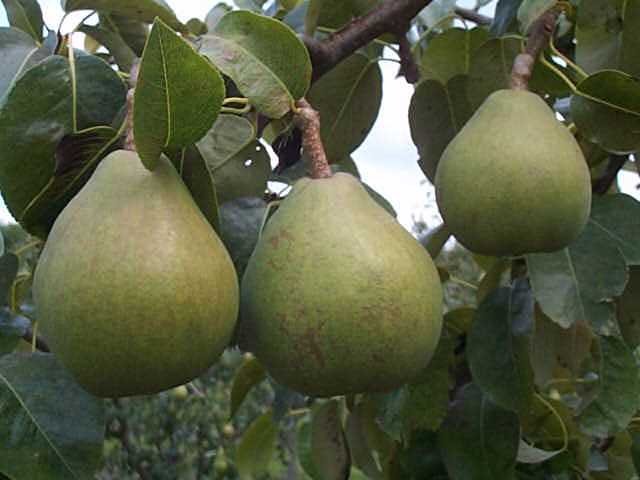
Pear. Have spent many happy hours in one (some years ago now).

FAVOURITE GEM?

Beach glass.

WHAT IS YOUR IDEA OF HAPPINESS?

Radish sandwiches in a cabin in the rain.

WHAT DO YOU MOST DREAD?

Running out of garlic.

WHAT DO YOU BELIEVE TO BE YOUR DISTINGUISHING CHARACTERISTIC?

A combination of something naive, earnest and skeptical.

WHAT ARE THE SADDEST WORDS IN THE WORD?

I hate.

WHAT ARE THE SWEETEST?

Hello you.

WHAT IS YOUR AIM IN LIFE?

To finish all those projects.

WHAT IS YOUR MOTTO?

Remember to say thank you.

i know that she is growing…

In the context of Robin Black’s story ‘Gaining Ground’—in the context of serendipity or cooincidence, of insight and knowing yet not understanding, of not wanting yet being obsessed, of the death of a woman’s father on the night electricity runs in her child’s bathwater—in that context, or on its own—this is beautiful:

Because I see my father. I do see him there. I see him standing outside of that tunnel, in the dark. And I see myself at that moment dipping my beautiful naked child into her bath. I know exactly where they found him. I know the path he walked from the Place. And I know the ripples of water around her small body as she plays. I know the slight gray tinge of daily dirt that falls around her, and rings that bathtub. And I know how he got out. Which nurse had her back turned. Which orderly thought he knew that my father was tucked into bed. And I know the smell of my daughter’s shampoo. The way her ears emerge as her hair rises into lather. I know what my father was wearing, his gray wool pants I mail-ordered him last month, a white T-shirt bought by my mother God knows when, no shoes. The last time I saw him, he’d lost so much weight. His food was all poisoned, he believed. I know that. The air was growing harder for him to breathe. The air that Allison breathes. I know that he couldn’t breathe her air anymore. I know he was diminishing. I know that she is growing. The nurses were pouring toxins into his room with their words. I know the songs I sing to her as she bathes. The songs she begs me for. He wouldn’t let anyone speak around him. He had forbidden even me to speak. Every word was deadly. Every breath was painful for him.” ~ from the collection If I Loved You, I Would Tell You This, by Robin Black [Random House]

no, i’m not reading hemingway

…Just clearing shelves.

HOW TO DEAL WITH A CHARGING BULL

1. Do not antagonize the bull, and do not move.

2. Look around for a safe haven—an escape route, cover, or high ground.

3. If a safe haven is not available, remove your shirt, hat, or another article of clothing. (This is to distract the bull.) 

4. If the bull charges, remain still and then throw your shirt or hat away from you. (The bull should head toward the object you’ve thrown.)

**NOTE: IF YOU ENCOUNTER A STAMPEDE of bulls or cattle, do not try to distract them. Try to determine where they are headed, and then get out of the way. If you cannot escape, your only option is to run alongside the stampede to avoid getting trampled. Bulls are not like horses, and will not avoid you if you lie down—so keep moving.

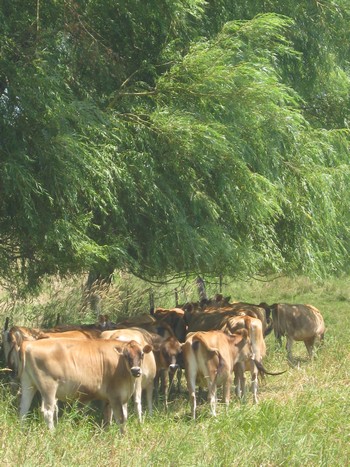
~ from The Worst-Case Scenario Survival Handbook by Joshua Piven and David BrogenichtAnd then there are cows.
No instructions needed.