“I wonder what it would be like to live in a world where it was always June.” — L.M. Montgomery




“I wonder what it would be like to live in a world where it was always June.” — L.M. Montgomery
I was in Niagara recently, driving past the house where I grew up. An elderly woman was sweeping the front walk. I pulled over and watched, remembered how on that very bit of pavement, next to the stone planter, I wore a bathrobe with pink rosebuds and corduroy slippers and a bowl haircut and wrote my name in sparklers one firecracker night while my dad—in a Hawaiian shirt, cigarette tucked into a wide smile, face tanned and dark hair falling forward a bit, Clark Gable style—scrunched down, arms around me, for a photo.
He built that planter, two of them in fact, from stones I helped him collect at the beach. I see that someone has knocked one of them down and put nothing in its place.
On a whim I get out the car, pace in front of the house. The sweeping woman doesn’t seem to notice but it occurs to me the pacing might look odd so I decide to walk over, tell her I’m not staking the place out; I explain that I used to live here, that my parents lived here forty something years. She asks if I’d like to see around. I wasn’t expecting that, but yes. The woman’s name is Minerva. She’s from Nova Scotia and she says Come along then, my dear.
We start in the backyard. My dad’s gardens, rockeries [more stones from the beach] are wildly overgrown. Trees and shrubs haven’t been trimmed for years, a rose bush has become a tree. The vegetable garden is gone, but the conch shells my parents brought back from Bermuda thirty years ago are still there in a small triangle of white stones beside the patio. I ask about the blackberries that grew on a trellis and she shows me through a forest of leaves that, yes, they’re still there. She says there’s not much fruit though. I don’t explain about pruning, how that increases yield. She’s smiling the whole time, proud, beaming, clearly in love with this mad wilderness.
We move inside where things are tidy with doilies on furniture, tea cups in a china cabinet. There are homemade quilts and afghans, newly stencilled walls. The bathroom is bright blue with a nautical theme, maybe for memories of Nova Scotia. A mural of flowers and trees is painted on the inside of the front window. She takes time finding the switch to turn on fairy lights woven among some branches in a large floor vase, a gift from her son. She likes to knit. She shows me a yellow dress for her granddaughter.
The whole time, I’m kind of listening, mostly remembering. She’s made changes, yes, but not as many as I imagined. (She kept a wall-sized mural of a beloved Bermuda beach scene that my dad painted a million years ago.) It’s different, definitely, yet absolutely familiar. We are everywhere here—my mum, my dad, my sister. And we are nowhere. They’re gone, it’s just me.
And Minerva.
And her life in this house. Her son, her grandkids.
And it’s okay. It’s very good in fact. If anyone had to live here, I’m glad it’s her.
We’re oddly connected, all of us.
She tells me to come back anytime.

I couldn’t find that firecracker night picture, but here’s another. Five hundred years ago, the blackberry trellis in the background. He, wearing a sweater I gave him that my mum accidentally shrunk and that he would not let her throw out.
◊
When you wake up all grumpy and don’t feel like taking a walk because you’d prefer to wallow in grumpiness and toast but then the sky’s like this…

and you can never argue with a sky like that. It always wins.
So you put on your sneakers and you walk.

Until it occurs to you that maybe you’re walking a little too fast…
and thinking too much about your grumpiness and not enough about the sky, which is still there but changing every minute…

along with everything else.

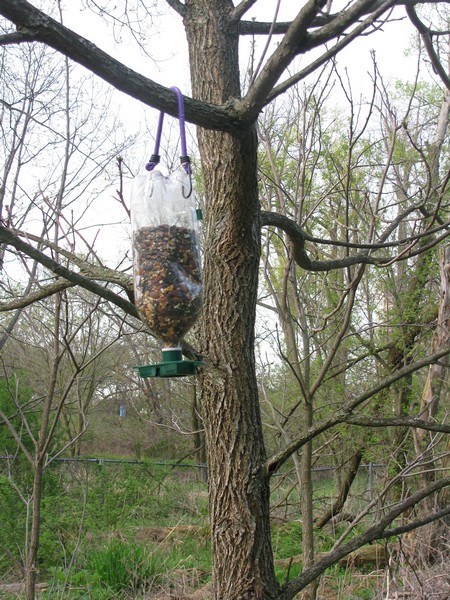


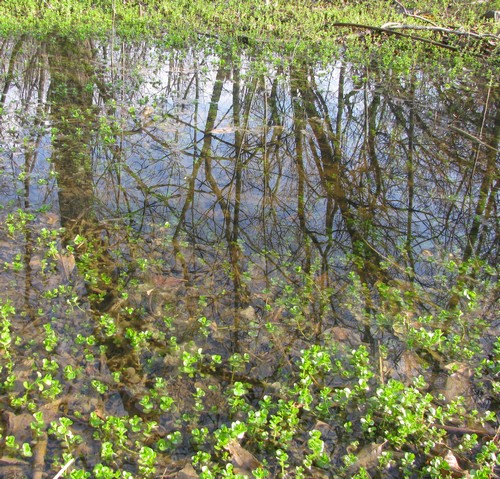
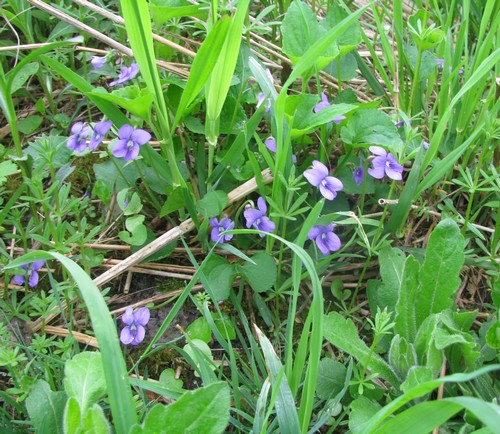

Until… and, at last, you wonder where grumpiness goes when it’s not being used.

Two years ago on this day I was feeding my mother breakfast. I was sitting beside her bed tearing toast into bite size pieces and wondering how it was possible for anyone to chew so long on a miniscule bit of scrambled egg. Watching as she reached for her coffee or juice, her fingers shaking and the whole thing taking so long I just wanted to grab the cup, hand it to her… but I resisted. Reaching for her own drink was one of the few things she could still do.
I remember that the radio was on and they were talking about it being International Women’s Day. I expected my head to fill with thoughts of strength and achievement in this celebration of voices, past and present, loud and clear against the best efforts of those who’d prefer they remain silent. Suffragettes. Women who climbed various mountains to change the world.
But on this morning, two years ago, I found myself considering a different aspect of womankind—I thought about all those women everywhere who are caring for women, and how that’s often the way it goes… how the women so often outlive their men and how it’s the daughters, sisters, granddaughters, nieces, friends, that you see in the hallways of nursing homes, arriving with fresh nighties or flowers, a case of Ensure, a toilet frame… visiting, care-giving, and then I thought how it’s my mother’s hand I recall on my five-year old, eight year old, fourteen year old forehead when I had a fever, bringing me something for an upset tummy, a sore throat—my mother’s hand that comes to mind whenever I smell Vicks VapoRub. I remember my dad’s part in things too, how he’d thunder in at the end of the day and I’d hear his voice, anxious, asking how The Little One was, then a few minutes later appearing at my door trying to look casual, smiling, telling me I’d be up and at ’em soon. He’d cough, say Okay, get some sleep now! then escape to kitchen for a smoke—god bless him and all that, but it’s my mother that slept on the floor beside me one year when I was so young I can’t remember why.
And so there in my mother’s room on International Women’s Day two years ago, instead of thinking about a century or more of feminists who paved the road so that we could all walk more easily, I was thinking about the time I saw my mother-in-law leave the hairdresser with a friend. Both of them in silver perms, frail, careful of every step, helping each other to the car, and how I knew that to have intervened, to have offered my arm, would have taken away what they still needed to know they could give each other.
I thought of the woman who came to the nursing home every day and on Wednesdays took her mother’s laundry home in a basket to wash and hang on the line, even in winter, for the fresh smell.
And as I helped my ninety year-old mother with her breakfast and waited as it took forever in the washroom and got her back to bed, I glanced occasionally at a picture by the window where she no longer sat because even sitting took too much out of her. The picture is of her and my dad in the alps, at the top of a mountain they’d just hiked. They’re all smiles and twenty-something gorgeous against an endless sky.
Both my mum and my mother-in-law have since died. I don’t know about the woman with the fresh laundry.
I want to celebrate strength on International Women’s Day but I find myself celebrating love instead.
Then again, maybe they’re one and the same.

It begins with the discovery that I have no onions. It ends with a swim.
The part in-between goes like this:
I say bad words about the sudden and surprising lack of onions because I had intended to make bread and butter pickles at the crack of dawn before the heat set in. I’d already picked and salted and soaked the sliced cukes in ice water and chilled them in the fridge overnight. Seeing as how there are no onion mongers open at the crack of dawn in these parts—and I, like a wally, didn’t grow any onions—I have no option but to consider bread and butter pickles made without onions, which, really, is just sheer folly so I scrap the idea immediately. Instead, I pull out a bag of green beans I got from the farmers’ market the other day. Still fresh and snappy enough to pickle. My niece recently flattered my beans. I did them last year with jalapeno peppers and chili flakes. They had a nice zing. I said I’d do her a few jars.
I’m tremendously impressed with my resourceful flexibility—being able to move effortlessy from pickles to beans like this. Then it occurs to me that I have no jalapenos. The ones we’re growing aren’t yet ripe and the peppers that are ripe, aren’t zingy. My beans need zing. I wonder if I could just double or triple the amount of chili flakes but even as I think it I know it won’t be the same.
More bad words.
After that I go outside and sweep the front, pull out weeds and say good morning to Riley next door, a puppy of uncertain parentage.
Breakfast is scrambled eggs, homemade pesto and tahini slathered toast.
The tea is sage with lemon balm.
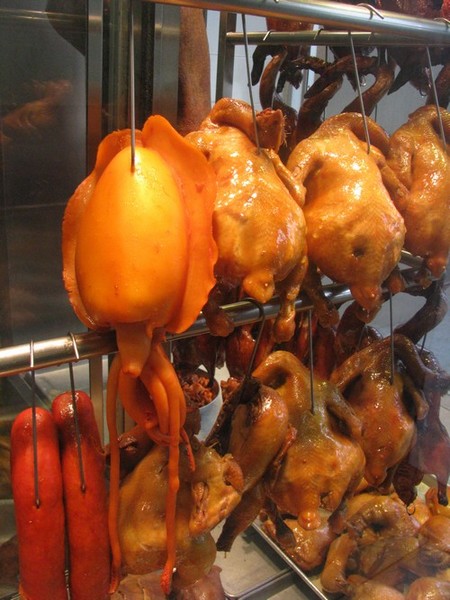
I take the tea to my desk and spend a couple hours moving a semi colon around the page then go to the dentist but not before stopping at the barbeque pork place that also does duck and a few other things, but I only ever get the pork. Today I point at a strange hanging bit of flesh and am told it’s cuttlefish—do I want some the woman asks. I say not today thanks. Cuttlefish, it seems, is a cross between squid and octopus and looks like a miniature orange bagpipe with an attitude. I ask her how to eat it and when she says you just eat it, that’s when I say oh, okay, maybe next time. She smiles and nods like she believes me.
On the way home I stop at a place that sells concord grape juice, made in Canada with Canadian grapes. You’d be surprised how few juices are made with our own fruit. Most of the orchards disappeared and packaging places in Niagara closed years ago because the brilliant minds behind giant manufacturers of fruit products decided that because it was cheaper to out-source fruit and packaging it must be better to out-source fruit and packaging.
But I digress.
Last stop, the onion and jalapeno monger who also has some stunning apricots and a stunning apricot is a thing not to be overlooked. I have a fondness for apricots, having grown up with a tree in the yard until my dad one day mistook the gas pedal for the brake and knocked it down with his Toyota.
I buy the apricots.
Lunch is barbeque pork with a zucchini, carrot and beet salad. Similar to this.
After that I make the gd pickles.
After that I do some work.
After that I have a swim.
After that it’s night; the phone rings, there’s more food involved and a few other things go on.
But this isn’t about the night.
Because we know who we are…
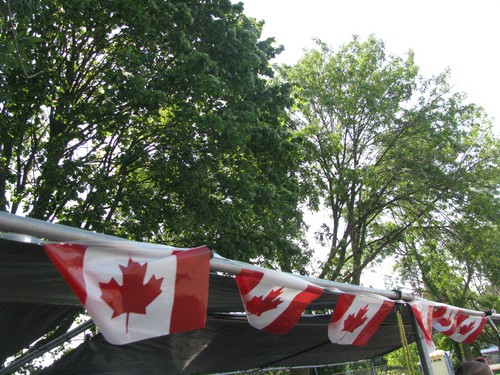
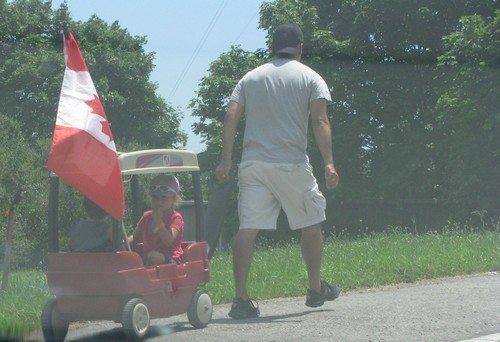

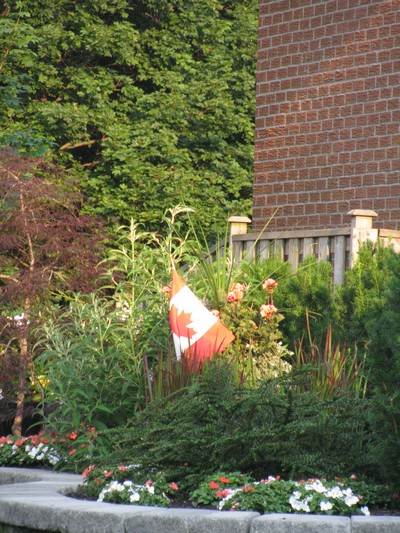

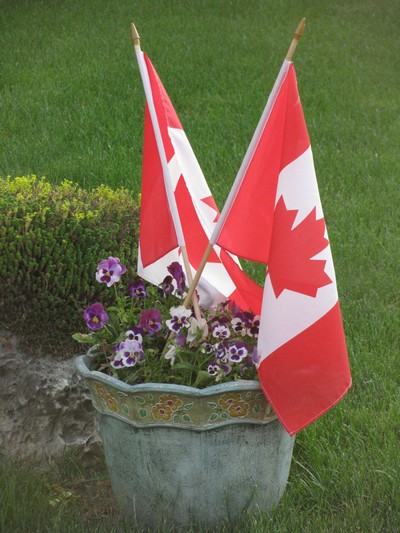

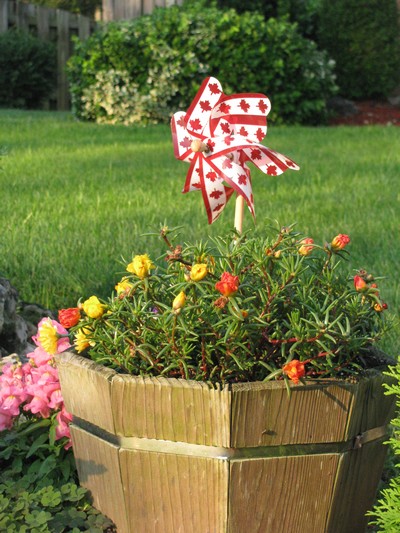

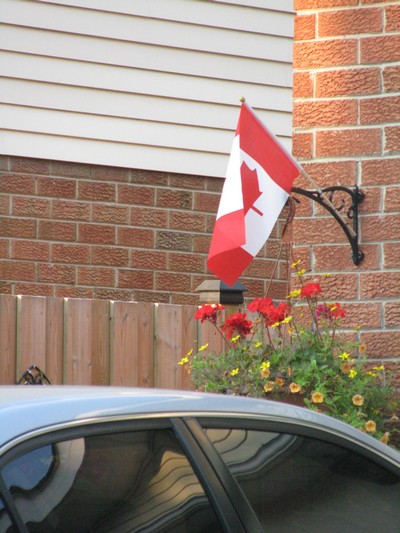

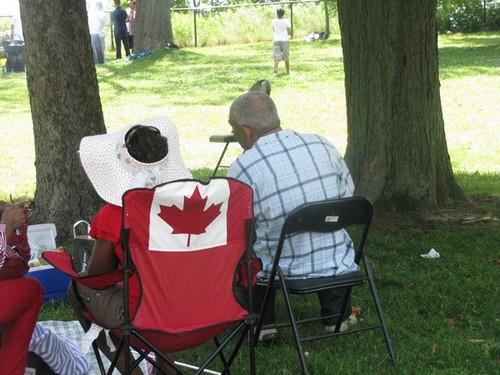

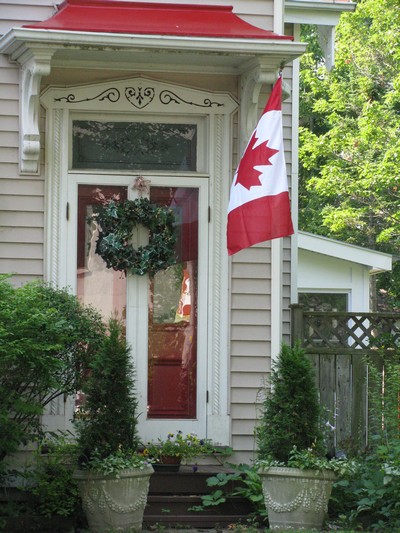


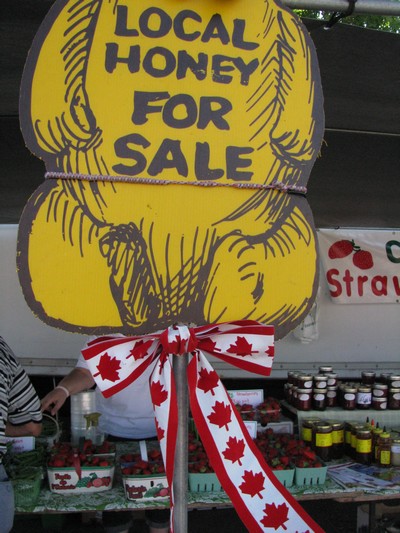
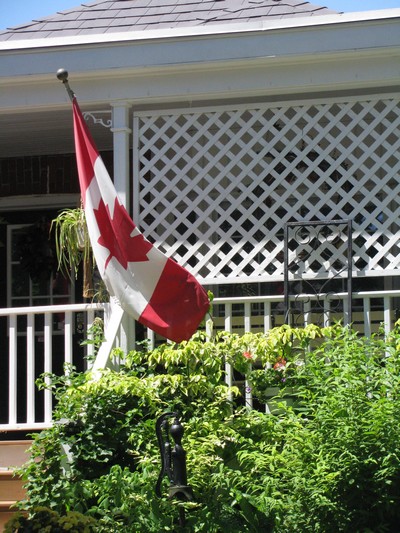
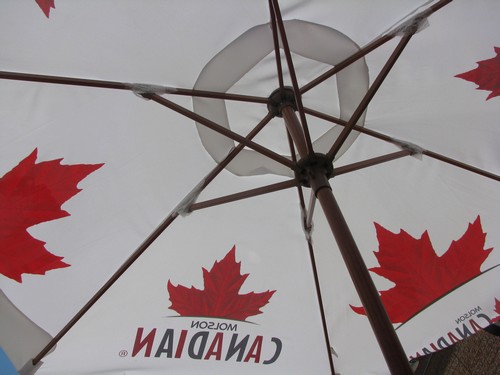 (Technically not a flag but it seemed wrong not to include it.)

Happy you-know-what day…
Starts with a massage.
My occasional luxury of choice. (Which really isn’t a luxury at all if you talk to Hippocrates.)
No complaints there. Even though the massage therapist tells me she’s not a morning person. I worry momentarily about cold stiff hands and lethargic moves, yawning from above, but she turns out to be great. Even gives me a couple of tips:
1) buy a timer to remind myself to stand up at my desk now and then, move about, roll my shoulders, breathe, etc.
2) get a new mattress every ten years.
So I go to the dollar store and buy a timer in the shape of a pear and while I’m in line I think about evolution and wonder if humans accidentally stopped evolving a lot sooner than we were meant to. I mean, everything else in the universe seems to have the sense to remember to roll its shoulders without the help of plastic fruit.
The woman ahead of me has two baskets filled with what I recognize as the fixings for loot-bags and I remember the first birthday party I organized for my stepson. He was nine. We did the usual: cake, lunch, games, arts and crafts, then a trip to the bowling alley for some five pin action. At the end of the day, as the parents started arriving to pick up their kids, and as we waved and said bye bye now, you little darlings, one of the kids said: so where are the loot bags? I had no idea what he was talking about. Last kid party I’d attended I was nine myself and the only thing I brought home was a piece of cake wrapped in a soggy serviette.
From there I take my still squishy, flushed, massage face with its massage table indentations to the library where I hope not to frighten small children. I smile the smile of the freshly massaged who have three books waiting to be picked up:
Gould’s Book of Fish: a novel in twelve fish, by Richard Flanagan
Indian Horse, by Richard Wagamese
We Tell Ourselves Stories in Order to Live, by Joan Didion
I wander over to the free-giveaway shelves where I find a bumper crop of Canadian Gardening magazines. It would be selfish to scoop them all so I sit down and flip through each one in order to choose. Then scoop them all. (I paint a rosy cast over this unbecoming behaviour by telling myself I’ll return them to the giveaway shelves once I’ve finished reading them and have become a brilliant gardener; it could be a while…)
There are also a number of French books, including dozens of Harlequins, which remind me of a friend who once told me she learned French by reading stacks of Harlequins while living in Paris. I grab one for her for old times’ sake and one for me, as a learning aid. Also find a copy of Gabrielle Roy: De quoi t’ennuies-tu, Eveline? The cover shows a matronly woman in feathered hat and fur collared coat, a snow-covered field and two small houses in the background. I like it already. Er, that is… Je l’aime deja. (BTW, I had to google translate that, which tells you all you need to know about my French; I can only pray the Harlequin will do its magic.)
I should be heading home now but instead find myself entering a little second-hand clothing shop. The woman sitting by the till is covering for her daughter who has pleurisy. She’s taking care of her grandkids also. She looks tired. She lost her husband in February and helping her daughter keeps her mind off things, she says. I tell her she must remember to look after herself as well and she nods, smiles, says no one sails stormy seas forever. When I knock over a display with my shoulder bag she calmly fixes it while I apologize and worry about any teacups in the debris. She says no, nothing breakable, laughs, says it happens all the time. She’s one of those people. I’ll bet it doesn’t happen all the time at all.
I buy a floral print jacket in lime green and pale pink. An odd choice given that I mostly wear black with occasional splashes of white or grey. Never prints. Especially flower shaped ones. (Could it be that I picked up some weird pourquoi pas? c’est printemps! vibe among all those books with their covers of feathery hats, heaving bosoms and holiday themes…?)
By now it’s almost lunchtime so I decide to get some rotis and fish cakes from the Carribean place next door, and a new thing called ‘doubles’—a spicy chick pea wrap.
At home I pick dandelions in the garden, sorrel leaves too, make a salad and watch The Big Bang Theory, which I admit I’ve developed a slight addiction to.
I write.
I hang sheets.
I tidy the yard and make a note to buy more seeds.
Later I will have a glass of chardonnay on the patio and eat grilled salmon and Peter’s double baked potatoes, which we will douse with butter and sprinkle with garlic chives.
We will talk about the day. His, mine.
There will be reading.
Some gossip about the neighbours.
Plans for tomorrow.
And—despite the possiblilty of evolutionary glitches—very big chunks of gratitude.
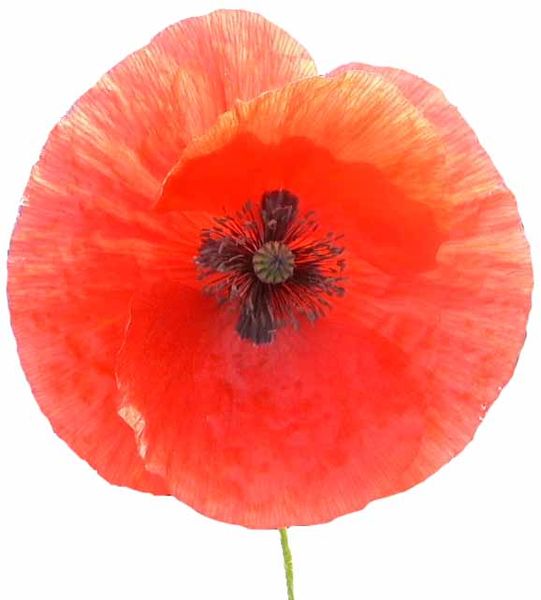
Each morning I visit the nursing home where my mother now lives. I help her dress and give her breakfast. I always leave by 10 a.m. But this morning, Remembrance Day, when we walk to the common room for a bit of exercise, the chairs, each with a photocopy of ‘O Canada’ on its seat, are lined up in rows facing a podium. There’s a large screen at the front and poppies everywhere.
I consider staying the extra hour or so but Phyllis isn’t interested in ceremonies. Me neither. I prefer observing my own two minutes of silence, alone and in my own way. We find a sunny spot at the back of the room, and I read Barbara Kingsolver’s piece about water in the National Geographic while Phyllis sleeps in the chair beside me.
It’s nine thirty. I’ll take her back to her room at quarter to ten.
But at twenty to ten they start arriving.
Soon there’s a row of four men and one woman seated beside the podium, facing the rows of chairs. “Residents who served” I overhear someone say. One, in a wheelchair, sleeps with his head back and mouth wide open. The woman sits quietly confused with her ankles crossed, and a happy man with a British dialect tells everyone who passes “you’re wonderful”, and to the man with dementia beside him who’s beginning to nod off and fall sideways, the happy man says Are you alright, Tom?
Someone straightens Tom out and asks what it was he did during the war but Tom just looks straight ahead. The happy guy says: What we all did… sink or swim.
More residents are wheeled in. A few come with aluminum walkers or a nurse. None come unassisted. The room is filling up with bodies and sounds. Phlemgy coughs, orphaned words, mumbles. The woman who yells all day I want to go home, somebody help me, what am I going to do? arrives, pushed in her wheelchair by a nurse and placed at the front of the room. Where am I? Where are you taking me? she yells. She has terrible teeth and long thin hair. I’ve never seen her family; she may be one of the many abandoned to the system, completely dependent on the mood of staff and Ministry guidelines, at the mercy of Long Term Care politics and rubbery cream of wheat.
‘One Tin Soldier’ plays in the background. By The Original Caste. I remember being young and hearing it for the first time and not really understanding what it was about. Listening to it now, surrounded by so many drooling tin soldiers of yore, it takes on even deeper meaning and I realize I’m staying for the ceremony.
I stay for these men and women who did, and others who continue to do, in a mad world because it’s, sadly, still the only way any of us knows to say thank you. I stay because we’re all a product of our past and because we’re all connected whether we like it or not.
I stay for my dad whose only comments about the war had to do with unexpected kindnesses from all sides. He didn’t speak of heroics.
The German man down the hall from Phyllis is brought in to sit with former enemies, which makes me wonder at the word ‘enemy’. Circumstantial at best. They all sit quietly confused together now, eating the same gruel, wondering perhaps what it was all about anyway.
Oh, yes. A madman. There’s always a madman.
Tom keeps falling over so his son moves him off to the side where he can keep him upright. He’s brought his dad’s beret and medals and pins them on a slightly stained beige pullover. The son takes pictures of Tom, asks Tom to salute. Tom just stares straight ahead.
It would be easy to leave. Wake Phyllis and go. I don’t want to hear ‘In Flanders Fields’ and cry with strangers. But I stay because it’s such an honour to sit in among the muddle of their confusion, their dignity and continued bravery in this forgotten place of forgotten people where the beauty of old age is seen as ugliness, as something to pity.
During the ceremony I watch a daughter put a pink sweatered arm around her mother, pull her close and kiss her face. Another daughter is her mother, thirty or forty years earlier, so striking is the resemblance. A man in a motorized wheelchair wipes his eyes with a facecloth, says it bugs him that he can’t stand up to pay his respects. The happy man occasionally blurts out: Too much talking, too much talking and he’s right of course; there’s always too much talking. I notice his breathing is difficult, like my dad’s the year he died.
I notice the woman who yells all day is quiet.
And when eleven o’clock comes the whole room is suddenly hushed except for the sleeping veteran who snores loudly beside the podium and the happy man who says Hallelujah. But the muttering and coughing and shuffling stop. It’s like these people, who aren’t sure of much, can still sense what’s important. Maybe that’s what makes us human.
As the ‘The Last Post’ is played, and while I blow my nose, Phyllis wakes, looks at the rows of silent backs in front of us and says: Wow, it must be a good movie.
The ‘residents who served’ are recognized and the anthem is sung and then later a video clip is shown, based on a true story about a guy in a Shoppers Drug Mart who was outraged that the store observed two minutes of silence, causing him to wait—two minutes—to pay for his purchases.
The happy man is again saying Too much talking, too much talking, and when the video and the ceremony end, and we’re thanked for being there and all is done, the happy man, breathing hard in his veterans’ seat, says: Peace at last, peace at last.
On our way out, I stop and ask Tom’s son if I might shake his dad’s hand. He beams, says Sure! and explains to Tom what I want. Tom in his beret and strip of medals pinned to his sloppy sweater, stares back, silent. His son helps him extend a hand. It feels soft and weak, the kind of hand that hasn’t worked in years except maybe to scratch an ear, adjust a bib at lunch. I hope that on some level he might still understand what a handshake is. And even if he doesn’t, I do.
I try to find something in his eyes to connect with but they stare in a kind of trance; I wonder what they’ve seen and whether I’d have the stomach for knowing.
Thank you, sir, I say, and Tom’s son tells him: Say you’re welcome, dad!
And ever so quietly, Tom does.
 Matilda Magtree