things that stuck

What he taught me:

Keep your vice closed at night.

For anyone without a dad-with-a-workshop, a vice is a clamping gizmo attached to the work bench… He obviously had great hopes for my future in carpentry.

Nail biting and driving don’t mix.

The deal was he wouldn’t teach me to drive until I stopped biting my nails. So I stopped. Then he taught me to drive by yelling at me from the passenger seat. This did my nails no favours.

A parking lot is the most dangerous place in the world.

Especially during the holiday season…

Happiness is a warm potato.

I once found him sitting on the stairs between the kitchen and the back door, eating a just-boiled potato with butter and salt. He shared it with me and as I sat there on the floor with him I thought — I knew  — it was the best thing I’d ever tasted.

Pioneers did too have aluminium foil.

They apparently wrapped their just-caught, so-small-it’s-barely-legal fish in foil then tossed the package into a hole dug behind their rented cabin and lit a bonfire on top, which, by the way does exactly diddly squat as far as cooking fish goes.

Do not answer a question, any question… with just one word.

It’s bloody rude!! he explained. (I think he might have regretted the lesson when I started answering simple questions in paragraphs and chapters.)

Spider!!!!! sounds like Fire!!!!!! when shouted by a small child from her bedroom in the middle of the night.

And when what’s been shouted is clarified, the dad who has rushed into the small child’s bedroom, will say oh for christ sake, is that all  but will take the spider outside before going back to bed.

If you get a chain letter and aren’t sure whether to make-ten million-copies as-instructed-or-you’ll-be-hexed… call the library!

Because the library knows everything. This was pre-internet but, still, libraries continue to trump in my books.

He also showed me that sitting can be an art, whether taking a break during or after hard work; it must be done with pleasure and deep contented sighs, coffee or tea, silence or words, alone or in company, and entirely without guilt. And that if you need a thing you haven’t got, see if you can make it before you go out and buy it. Not to save money but for the satisfaction you get from being clever and using stuff that’s just laying around anyway. He taught me about seeing and wondering and imagining impossible things that might just be possible and he showed me how to laugh until my stomach hurt in the best way and that even the strongest, tallest people in the world will cry sometimes.

In the months before he died I sat with him, a sense of pleasure at being in his company, thin contented sighs mixed with something else, often in silence, with tea, reading Emily Carr’s Growing Pains , holding his hand as he slept.

The things that stick.

untitled


the story of my name

 
Oh, you spell it with a ‘c’…?

And an ‘i’…?

Well isn’t that different.

At which point I usually say yes, I guess so. My dad’s idea. He read it in a book. It was his turn to name the baby. My mum named my sister. Mary.

I was supposed to have a middle name. Lynn. No idea why. Another book probably. He liked the idea of how the two went together Carin Lynn, almost Carolyn but without the commitment.

But he forgot to mention the middle name at my christening or when they did the paperwork. Something.

I’m glad actually. I like having only one name.

Until I was ten or eleven or twelve, I thought that name was Karen. My parents were immigrants and when they enrolled me in school, the school wrote my name as Karen. My parents didn’t want to upset the apple cart with their weird immigrant spelling. They wanted to fit in. And so they let it stand. Never mentioned a thing to anyone, including me.

Until I was ten or eleven or twelve when, for whatever reason, they said Oh, by the way, you know your name is actually spelled with an ‘i’.

It is?? Well I’ll be darned.

So I started spelling it Karin. I still have a few notebooks and report cards that shows this progression.

Then in grade eight or nine I needed my birth certificate for some reason and noticed the Carin spelling.

What’s that about?  I’m not sure who I asked. My mother probably.

If she was stirring something at the time she didn’t stop. What do mean?? That’s your name, what do you think it is?  Stir, stir…

I suggested it was a little weird, didn’t she think???, that I was just now finding out how it was spelled. She, apparently, did not think it was weird.

That may have been when she told me the story of my name.

Or maybe it was my dad who told it.

Either way, it’s good to know how to spell my name. I’m glad I only have the one. And I’m glad it was my dad’s turn to pick.

My mum said her choice would have been Brunhilda.

brunhilde2

the sweet blather around us


“So did Japan bomb Pearl Harbour… or Halifax Harbour??”

Discussion among three teenaged schoolgirls, studying together
—Pickering Library (11:35 a.m. to noon):

I was going to buy a notebook [laughs], obvious, like, all this stuff we’ve learned, like, like, Imperialism, tests are easy, I don’t, oh, FaceBook without WiFi, nothing’s working??? click on something, I’m on a profile, wow I can’t go on mine, search, no internet connection, quiet revolution or whatever it is, civil rights, on TV, all I know, page 246, looking over my stuff, didn’t study hard, so nice not having to study, after science, history tomorrow, so simple, whatever, no WiFi, there is WiFi, here, don’t know anything about Nellie McClung, wasn’t she, speaker, fought for women in the kitchen, right to vote, go on page 40, like she was, women’s christian temperance movement, in french, oh, whatever, I thought it was WTCU, or women’s temperance christian union, or is that just the same? Halifax explosion, bombed harbour, only know from going to Halifax, and time of Germany, Hitler came out of nowhere, sided with Japan, U.S. got cheesed off, Japan decided to bomb Pearl Harbour, Canada got mad or whatever, Japanese people being treated bad, Pearl Harbour so close to Canada and so are they going to bomb Canada also? No, Halifax Harbour, oh. I think it was an accident, I got confused when she said Pearl Harbour, I kept thinking of Halifax, so Japan bombed Pearl Harbour or Halifax harbour? bombs in water, remember in Finding Nemo they had those chairs? have to know about bombing, I lost a whole section, who were the Bolsheviks? wanted higher salary, revolution in Russia, communism, I found prohibition, WCTU during war, proposed factories, used wheat for food for soldiers and ammunition, 1918, WWI or II? What time period??

IMG_4723 - Copy

it may seem we’ve come a long way but you’ve got to admit, the bar was pretty low…


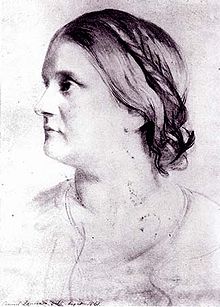
In 1854, Barbara Leigh Smith Bodichon published a pamphlet, A Brief Summary in Plain Language of the Most Important Laws Concerning  Women; Together with a Few Observations Thereon” ; this is an excerpt:

“A man and wife are one person in law; the wife loses all her rights as a single woman, and her existence is entirely absorbed in that of her husband. He is civilly responsibly for her acts; she lives under his protection or cover, and her condition is called coverture.

A woman’s body belongs to her husband; she is in his custody and he can enforce his right by a writ of habeas corpus.

What was her personal property before marriage, such as money, becomes absolutely her husband’s, and he may assign or dispose of them at his pleasure whether he and his wife live together or not.

A wife’s chattels real (i.e., estates) become her husband’s.

Neither the Courts of Common law nor Equity have any direct power to oblige a man to support his wife….

The legal custody of children belongs to the father. During the life-time of a sane father, the mother has no rights over her children, except a limited power over infants, and the father may take them from her and dispose of them as he thinks fit.

A married woman cannot sue or be sued for contracts—nor can she enter into a contracts except as the agent of her husband; that is to say, her word alone is not binding in law….

A wife cannot bring actions unless the husband’s name is joined.

A husband and wife cannot be found guilty of conspiracy, as that offence cannot be committed unless there are two persons.”


* In 2007, the British equal rights campaigner and feminist Lesley Abdela came across the grave of Barbara Bodichon. The grave lay in the tiny churchyard in Brightling, East Sussex, about 50 miles (80 km) from London, in a state of disrepair, its railings rusted and breaking away and the inscription on the tomb almost illegible.[  About £1,000 has since been raised to restore the site.

220px-Barbara_Bodichon_sketch

* With thanks to Wikipedia.

today’s colour

Yellow-square

I haven’t posted any Today’s Colour for a while. Just haven’t been seeing things that way recently, but the other day, walking downtown for some breakfast, I notice freshly painted yellow lines in a parking lot. And in between those lines, a bright yellow car.

I take a picture but without a chip as it turns out. And so there’s no proof of anything.

Not of the lines or the car or the bright yellow hydrant nearby. Not even the mysterious metal pole next to it, in exactly the same shade.

Also no picture of the large yellow plastic bin on the porch of what used to be the town’s main library—a lovely Carnegie one—which is now home to a legal firm. Maybe the box is where you deposit gratuities. Or bribes. Or suggestions, delicately, or not so delicately, phrased.

There is no picture of the bag of salt resting in the doorway of a convenience store.

Today’s colour comes, instead, with a story. The Story of Yellow. Which begins in my bedroom when I was about seven or eight years old. Maybe I was four or five. Young enough anyway not to know what my favourite colour was when my dad suddenly appeared at my door hollering What’s your favourite colour??

Um….. um….

Welll???  (veins beginning to pop in his neck)

Yellow? (I have no idea why I said yellow.)

Turns out he was on his way to Canadian Tire.

The next thing I remember is my entire bedroom—four walls AND the ceiling—painted lemon yellow.

After that I was given yellow sweaters as gifts. A yellow sippy cup (so I guess I was younger than eight; we can only hope…), yellow toothbrush, hairbrush, bath towel, bathing suit. My first pair of jeans were yellow.

I grew up hating that colour. When I left home I turned my back on it, refused to be the yellow piece in a board game.

Then one day I came home to visit my mum and dad and my room had been wallpapered with pink and red roses. The ceiling was white. It was hideous and I loved it.

On a weekend in nineteen ninety something I painted the kitchen of my house yellow. The irony of this didn’t even register. The yellow tablecloth my mother had given me years ago, which I’d never used, I suddenly loved. I bought yellow tea towels, yellow bowls. I painted all the bedrooms various shades of pale pale jaune.

I have no idea what changed. I only know that it no longer bothers me to be the yellow piece in a board game.

Though if I had the choice, I’d probably pick orange.

Yellow-square

Pick a colour, any colour…


story of a recipe


Once upon a time there was a folk dance group that required its female dancers to wear a dirdnl’ish costume with a corset over a cotton blouse and sometimes real, sometimes fake, carnations stuffed down the front of said corset. This effectively rendered the girls dancing flower pots. Boy dancers were encouraged to ‘smell’ the carnations while the girl dancers twirled coquettishly from one to the other. When they weren’t sniffing carnations, the boys danced ‘figure’ dances, pretending to chop wood or other acts of physical prowess meant to attract the hapless flower pots.

I was a member of such a folk dance group.

For the record, it wasn’t my idea to join. I was fourteen and shy and my parents thought it would be just the ticket to bring me out of my shell.

I suppose in a way it did. It was also where I learned to drink beer.

And it’s where I met Laura, from whom I received the recipe mentioned in the title. Laura wisely left both the dance group and town at the first opportunity, stuffing everything she owned into a small car and driving west until she got to Calgary.

A few years later I followed. Not to Calgary, but to Edmonton. Close enough. Only 300 km away, it made Alberta a place where I knew someone. We’d visit each other on occasional weekends, mostly me going to her place, the main floor of a big old ramshackle house with no yard but access to a back stoop, room enough for a Hibachi.

The kitchen smelled of meatloaf, coffee and Joy dishwashing liquid.

Laura was the first person I knew (my age) who not only liked to cook but talked about food, grew herbs on windowsills, owned actual cookbooks and shopped for food with all kinds of serious enthusiasm. Even more amazingly to me, almost ten out ten times she preferred inviting people to her place for a meal over meeting at a restaurant. She was interesting in different ways (she once moved into an apartment with a bright red fridge and spaghetti on the ceiling; beyond enviable when the rest of us were still living in bungalows) but this cooking thing struck me as a little over-the-top… remember, this was eons ago, when food as a ‘thing’ hadn’t been invented yet. When only five people in the whole world read Gourmet.

In that ramshackle Calgary kitchen Laura served me my first Caesar salad, and I remember thinking it was pretty groovy that she made the dressing by throwing ingredients into a jar and shaking it like maracas.

I came across the recipe recently—the original paper version I wrote out while she dictated precise instructuions all those decades ago. More than slightly splattered and used (though not for some time now as I’ve since discovered other recipes. Julia Child’s and Ina Garten’s, for two).

But they don’t come with a story.

(Actually, the Julia Child one does… it can be found in the book From Julia Child’s Kitchen — a tradition in this house is to have someone read the passage while someone else makes the salad…)

But that’s another story entirely.

DSC01314

(All recipes with stories welcome. In fact that would be exceedingly groovy…)


this morning, the smell of chrysanthymums

When they were still fresh, a month or two ago, my single pot of blooms took me directly to a wooden fence made by my dad from driftwood gathered at the beach. Planted alongside was a row of perennial chrysanths. Burgundy. Still the only shade I consider ‘real’ and their smell, decades later, is still about summer winding down, jackets, the grass feeling cooler, street lights coming on sooner.
DSC01598

This morning I notice how they’ve faded, they look more bronze than burgundy.

I lean down, inhale, expecting to be on that fence again but it’s a different smell, earthier, a pile of raked leaves from the pear tree (burgundy and bronze!) and some going brown. Leaves I’d raked myself, a few more every day, the pile growing until my dad said it was time to haul them away. (What did he do with them? Burn them? Bag them? Dig them into the garden?)

I only remember the raking and the leaping and the laying, starfish-like on top, staring up through a canopy of bare branches. I remember tossing handfuls in the air and the dewy wetness of the middle of the pile.

That’s the smell this morning. The middle of that sweet pile.
DSC01777


strawberries on my mind

And it’s not even the season… except that I was recently given a pint of freshly-picked ones by someone who informed me that there are new cultivars that grow through summer, or at least through much of it. Huh. News to me. I’ve been walking snootily past strawberry displays at the farmers’ markets for ages, assuming they’re imports from re-sellers. And even if I’d known about the all-summer variety I’m pretty sure I’d have given them a miss, assuming hybrids taste yucky.

But the gift strawberries were in no way yucky. And they went very well with ice-cream, just like the real kind. If anything, these were more flavourful than the early varities, which I’ve noticed in recent years have been losing ‘something’.

But that’s not what’s on my mind, strawberry-wise.

It’s picking them. My first serious job. Aside from babysitting and selling Sarah Coventry Jewellery, Avon and Regal Gift Cards door to door. (Actually, Sarah Coventry was sold at ‘parties’. Of which I had one, my mother being my ‘party host’ and whose responsibility it therefore was to invite a rec room full of friends. The host received a complimentary Sarah Coventry brooch or scarf holder or mood ring… Anyway, can’t remember if/what I sold. It was such a sad, sad thing for a child to experience, it effectively ended my whole Sarah Coventry career.)

My strawberry picking career lasted much longer. Almost a whole strawberry season, as I recall. (Please note the season was much shorter then; the people who invented the hybrids had not yet been born.)

The best part was being picked up in a flat-bed truck at the corner of Bunting and Scott at something like 5:30 in the morning. Not only was it great riding in the back of a truck through the city, but none of my friends were up to see how nerdish I was, grinning madly, wind in my face, the sense of berry-fueled adventure coursing through my veins…

The worst part was the rash I got from eating more strawberries than I picked.

When I got my paycheque (I can’t believe I didn’t owe them money), I thought I’d made it, that it just didn’t get any better than this. I had a paycheque for god’s sake. With my name on it.) A picture exists of me holding this cheque. I’m wearing a tie-dye tee-shirt, cut offs and a blue paisley scarf over my hair (tied almost pirate style, but not quite) the way we did in the 70’s when we weren’t embroidering flowers and peace symbols on our jeans.

There’s a good chance I spent it on a Gordon Lightfoot album, incense and a pair of huaraches.

untitledThank you, WikiCommons


The above memory, courtesy of a post by Gwen Tuinman about her summer job picking tobacco leaves. (I win! You can’t eat tobacco leaves.)

Any other summer jobs of yore out there? Consider the baton passed…


degrees of bilingual

I blame the seventies for any sense of inherent confusion I might possess. I was a teenager for much of that decade—a confusing enough time of life, but on top of that, and other mind-altering details floating freely about in those groovy days, it was when Canada went metric.

Here’s the question though: did we actually go metric… or did we more sort of ooze into it?  Either way, the point is this: by the time the eighties rolled around I was a functioning dysfunctional bilingual.

And in large part I remain so.

What I mean is that I’m not completely comfortable in all areas of metric, nor am I comfortable in all areas of whatever the other way is called. The miles and inches way.

For instance. I am five feet, seven inches tall. If you asked my weight I would tell you in pounds. [maybe…]

Area is measured in square feet. But fabric, in metres. The height of a tree or a building is metres also. Yet I have a ruler and a yard stick.

I know what the air feels like in Fahrenheit from about 60 degrees up. Below 60, I wouldn’t be sure what to wear. I’d need to know what it is in Centigrade.

I register all AIR temperature in Centigrade. But water temps only make sense to me in Fahrenheit.

With respect to distance, I can wrap my mind around a mile if pressed [it’s less than a kilometre, right? or more??], but, truthfully, I prefer the metric version. Even so, I say things like: we walked for miles; it may as well be a million miles away; you can see for miles…

Speed, also, must be in metric. I don’t know how fast 75 mph is except that a cab in St. Louis did it once and it wasn’t good.

A kilo has no weight at all. And ovens are in Fahrenheit for good reason.

I can process one litre easier than 1000 thingies but please don’t ask me to pour you anything in millilitres and if you refer to a gram I will ask Which one? Your mum’s side or your dad’s?

IMG_1878

If a tree falls in the forest and no one is there to measure it, is it still bigger than a breadbox?

If you remember the metric conversion era, you will remember breadboxes.

But I digress.

I blame the seventies.


aka: a lady of leisure

The following, ascribed to ‘Anonymous’, but thought to have been written by Florence McLandburgh, is taken from the 2014 Herstory calendar, an annual celebration of women that I have raved about at least once before.

*

No Occupation

She rose before daylight made crimson the east
For duties that never diminished
And never the sun when it sank in the west
Looked down upon work that was finished.
She cooked an unending procession of meals,
Preserving and canning and baking.
She swept, she dusted.
She washed and she scrubbed.
With never a rest for the taking.
A family of children she brought into the world,
Raised them and trained them and taught them.
She made all the clothes, patched, mended and darned
Till miracles seemed to have wrought them.
She watched by the bedside of sickness and pain
Her hand cooled the raging of fever.
Carpentered, painted, upholstered and scraped
And worked just as hard as a beaver.
And yet as a lady-of-leisure, it seems,
The government looks on her station.
For now, by the rules of the census report
It enters her—No Occupation.

*

Note: the rules changed in 1931, when “homemaker” was allowed on the Census report.
396PX-~1

Picture courtesy WikiCommons