utopia


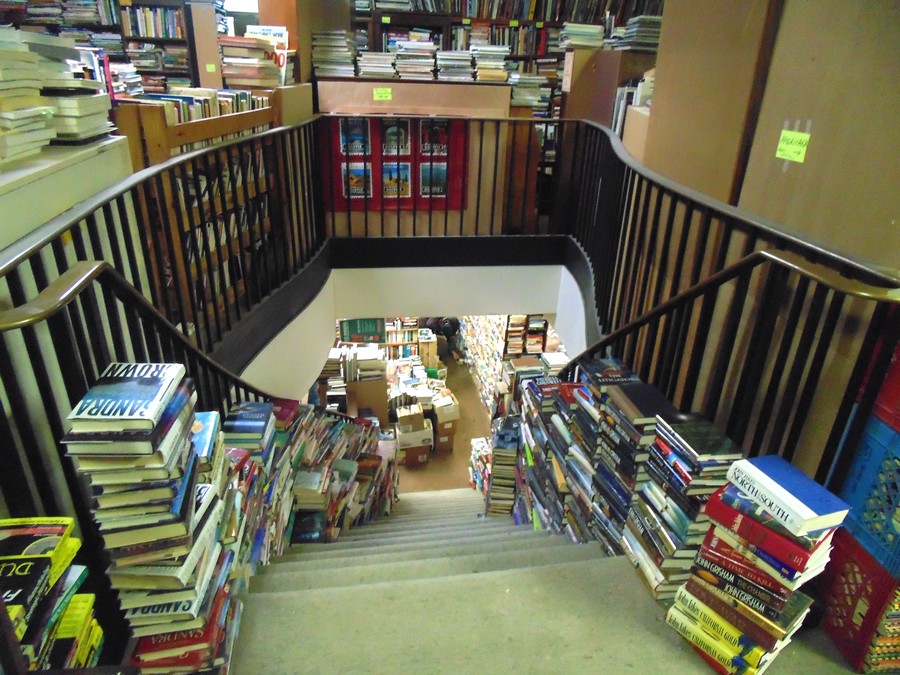
A strange conversation, recently overheard…

In a book store yet.

DSC02069

One woman to the other: I get fidgety if I sit too long.

The other agrees, says, yes, that she has friends who can read for hours;
she has no idea how they do it.

Exactly!  says the first. l mean, I Iike to read… but not for  hours.DSC02070

Another exchange, in the same shop, one that made more sense—

I ask the owner how many books he guesses he has in here. DSC02072

His answer: not enough.

Every day, he says, someone comes in and asks for something he doesn’t have.

DSC02075

We get that, right?

“Literature is my Utopia.” ~ Helen Keller

the art of nothing


I was googling the title to see if there were already a hundred things called this and it seems there are not. In the process I found a short film made by an actor posing as one Hans Freeberling, an artist installing a show about nothing. The gallery is empty. People come. They think it’s real, that the artist is real, and so they try not to scratch their wee wannabecultured noggins until, eventually, they make up Their Own Point for the point of the nothingness. Because there must be one, right??

As a satire, it’s gorgeous. Says so much about us. Most of which is questionable, but there’s this too: that faced with a blank canvas, real or metaphoric, we can choose to impose our own thoughts. This is a kind of art form in itself. Getting People To Think From Ground Zero, we might call it.

The lack of ‘something’ might also be compared to a one word poem. Or a single toilet cemented to a wall. I mean, we can have real discussions about these things. (I recently had a strangely satisfying time discussing the ‘poem’ balloon. One word. Discussion went along the lines of who says it has to have only two L’s and where’s the law about the emphasis remaining on the second syllable… and so on.)

There’s always the chance these chats will lead to… oh, something interesting or important even. Possibilities are always endless where conversation is concerned and, really, anything at all can be a prompt.

But because something serves as a prompt, or because it causes us to think in possibly new ways… is it art? And who gets to say?

And what isn’t  art?

And who gets to say?

I’m not looking for a definition. Or even an answer. Is there even an answer? Tons of opinions. And all manner of conversation and argument and (most sadly of all) very little light-heartedness about things, including toilets, so I’ve decided to stop asking. In fact this whole ramble is a digression.

**

What I meant to write about is nothing, the art of it.

Which leads me directly to my dad, a chap who would not have called himself an artist though he played with paint, on both canvas and walls. He built our first house then spent decades renovating the second. The garden too. Rockeries and rose beds. Our hedge was almost a topiary. If he wanted a fence, he’d go down to the beach, find some driftwood and make one. Then he’d make a driftwood coffee table, an end table, a floor lamp. He made bookshelves. A fireplace, a BBQ and a bird bath out of stone and in the rec room he painted a wall to wall, floor to ceiling mural of a favourite spot under a tree on a beach in Barbados. He included my mother’s striped beach bag hanging from a branch. (The people who bought the house after my parents died, said the mural was a selling point.) He built two patios and a car port, refashioned our front door, and the back one too, to look more Spanish, a style he liked. And then he began making the inside look more Spanish too. To his mind anyway.

He did all this after his day job, and on weekends. Mostly in Hawaiian shirts, paint splattered pants and shoes with no laces.

This was his thing, this making.

I used to wonder how he thought up all this stuff. How could a wall that looked perfectly fine to me in its bareness or with a few holiday pennants hammered on, to him scream: paint a beach scene!!! don’t forget the bag.

He did a lot of sitting in-between the making. This was all before busy-ness was invented, when people really were   busy, doing real things without an abundance of appliances and before nannies and dog-walkers. These ancient busy people, it seems, made time to sit, have a coffee, light a pipe, and if you were to join them, say, at the picnic table on the handmade patio, they wouldn’t talk about being busy, they would say something about squirrels or sedimentary rocks or have you noticed how many buds are on the apricot tree this year? You might be wearing pedal pushers and drinking Koolaid when you ask if there’s such as thing as UFOs and they might draw a few times on their pipe, think for a minute, let the smoke out nice and slow as they say could be, who the hell knows…

My dad would be surprised to learn that the most important thing he taught me was not to make sure the vice on my workbench was closed at night or how properly to wash a car, but how to love what you do, to do it as well as you can and, most importantly, to take time for the nothing. In fact, he’d be surprised to know he even did it.

Some of my favourite moments, those nothing ones. Still are. I realize in my own nothings that that’s where we re-fuel, where we find our next mural.

A whole different kind of art.
DSC02051 DSC02055


lines and circles


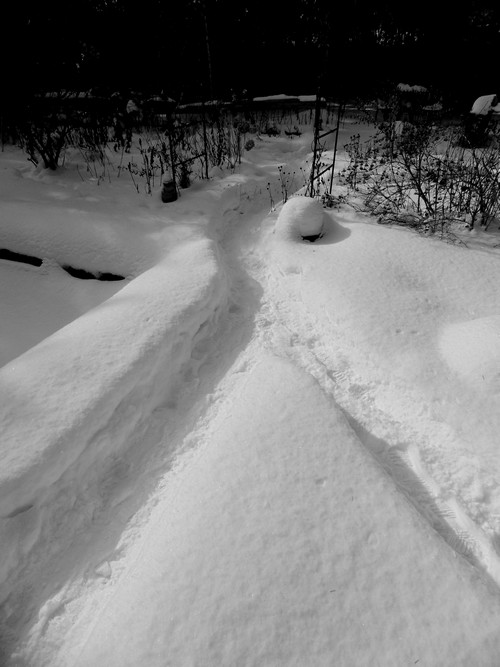
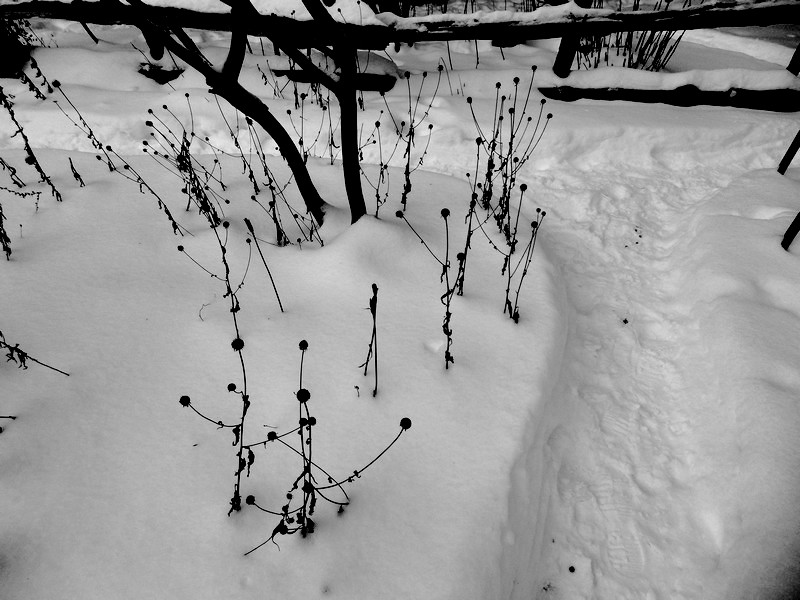
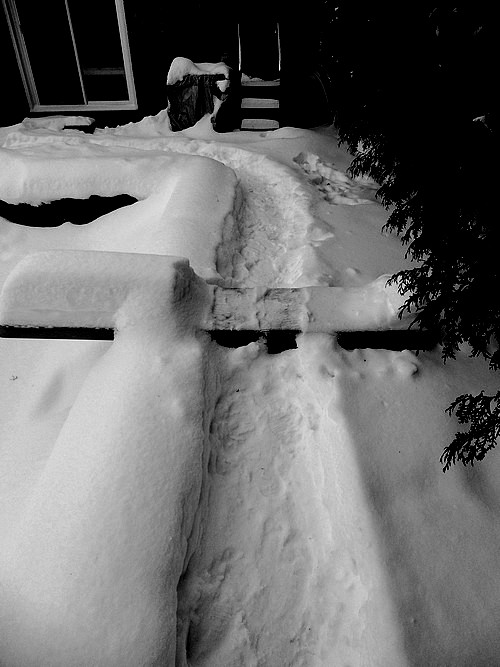
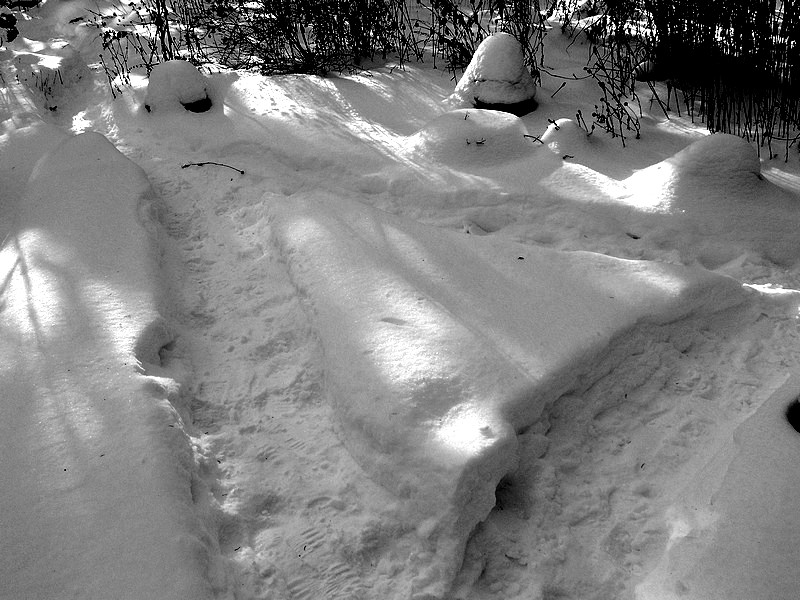
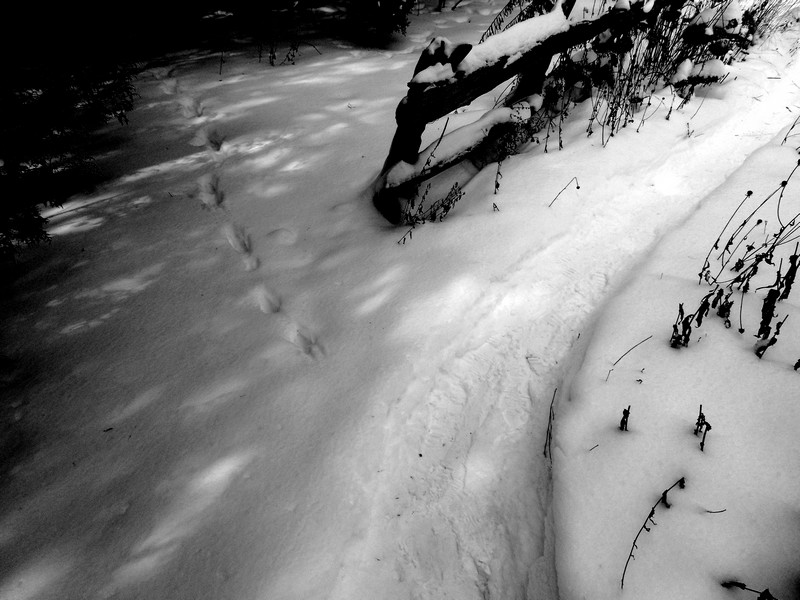
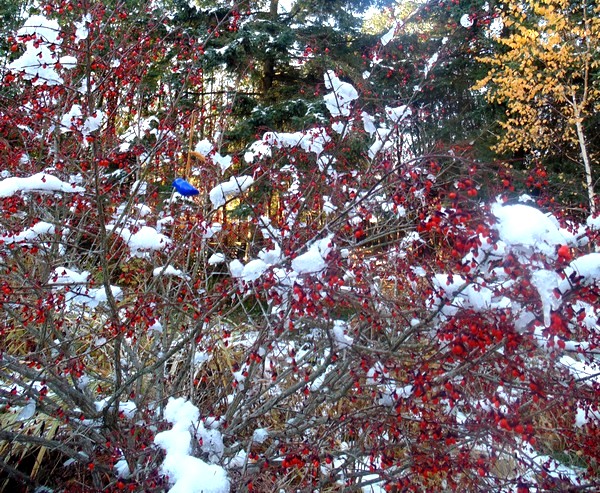
I have a labyrinth.DSC02015I made it out of snow.DSC02017It runs past all the stuff I didn’t cut down because the birds like the Rudbeckia seeds… and I didn’t get around to the tall grasses or the hydrangea.DSC01932_1DSC01927A trained eye will see that it’s technically more “snowy paths in my yard”… but it works exactly the way a labyrinth does.DSC01922That is, you walk and walk and walk in a more or less circular way, turning left or right without thinking because the goal is not to think — once you begin thinking you’re toast. At that point it becomes less meditative labyrinth walking and more I wonder if the neighbours are frightened yet  walking.DSC01921If you’re doing it right, you’re not thinking a single thing except maybe about the crunch, crunch, crunch of the snow under your steps. The zen of crunch.DSC01946It’s occurred to me to wonder how many steps long the labyrinth is but I’ve never paced it out. There are angles to be considered and the whole process would require a certain amount of addition.
And who needs the math…

DSC02020

On the subject of labyrinths…

story of a recipe


Once upon a time there was a folk dance group that required its female dancers to wear a dirdnl’ish costume with a corset over a cotton blouse and sometimes real, sometimes fake, carnations stuffed down the front of said corset. This effectively rendered the girls dancing flower pots. Boy dancers were encouraged to ‘smell’ the carnations while the girl dancers twirled coquettishly from one to the other. When they weren’t sniffing carnations, the boys danced ‘figure’ dances, pretending to chop wood or other acts of physical prowess meant to attract the hapless flower pots.

I was a member of such a folk dance group.

For the record, it wasn’t my idea to join. I was fourteen and shy and my parents thought it would be just the ticket to bring me out of my shell.

I suppose in a way it did. It was also where I learned to drink beer.

And it’s where I met Laura, from whom I received the recipe mentioned in the title. Laura wisely left both the dance group and town at the first opportunity, stuffing everything she owned into a small car and driving west until she got to Calgary.

A few years later I followed. Not to Calgary, but to Edmonton. Close enough. Only 300 km away, it made Alberta a place where I knew someone. We’d visit each other on occasional weekends, mostly me going to her place, the main floor of a big old ramshackle house with no yard but access to a back stoop, room enough for a Hibachi.

The kitchen smelled of meatloaf, coffee and Joy dishwashing liquid.

Laura was the first person I knew (my age) who not only liked to cook but talked about food, grew herbs on windowsills, owned actual cookbooks and shopped for food with all kinds of serious enthusiasm. Even more amazingly to me, almost ten out ten times she preferred inviting people to her place for a meal over meeting at a restaurant. She was interesting in different ways (she once moved into an apartment with a bright red fridge and spaghetti on the ceiling; beyond enviable when the rest of us were still living in bungalows) but this cooking thing struck me as a little over-the-top… remember, this was eons ago, when food as a ‘thing’ hadn’t been invented yet. When only five people in the whole world read Gourmet.

In that ramshackle Calgary kitchen Laura served me my first Caesar salad, and I remember thinking it was pretty groovy that she made the dressing by throwing ingredients into a jar and shaking it like maracas.

I came across the recipe recently—the original paper version I wrote out while she dictated precise instructuions all those decades ago. More than slightly splattered and used (though not for some time now as I’ve since discovered other recipes. Julia Child’s and Ina Garten’s, for two).

But they don’t come with a story.

(Actually, the Julia Child one does… it can be found in the book From Julia Child’s Kitchen — a tradition in this house is to have someone read the passage while someone else makes the salad…)

But that’s another story entirely.

DSC01314

(All recipes with stories welcome. In fact that would be exceedingly groovy…)


in this tiny space was everything


Years ago I lived in a tiny furnished apartment on the second floor of an old Toronto house — and in this tiny space was everything I needed.

DSC01232

A single closet the size of a phone booth in which I managed to hang all my clothes and all my coats, as well as store my shoes and winter boots.

DSC01242

A bathroom in the hall, shared with the woman in the apartment next door.
I heard her come and go but we never once, in all the time I lived there, met face to face.

DSC01252

At the end of the street, a fruit and veggie monger. In winter I would sometimes buy expensive tomatoes from some faraway place where tomatoes were grown to be luscious. I ate them with basil and listened to Joan Armatrading and Van Morrison and had a white cat and a bedroom made almost entirely of windows.

DSC01244

I once called a friend to come and eat tomatoes and basil with me and she came, expecting, I think, a whole lunch but it was just those perfect tomatoes.

DSC01275

Basil.

Oil and salt.

DSC01263

Joan Armatrading, and Van.

DSC01266

And it was enough.


this sky at night, my own delight


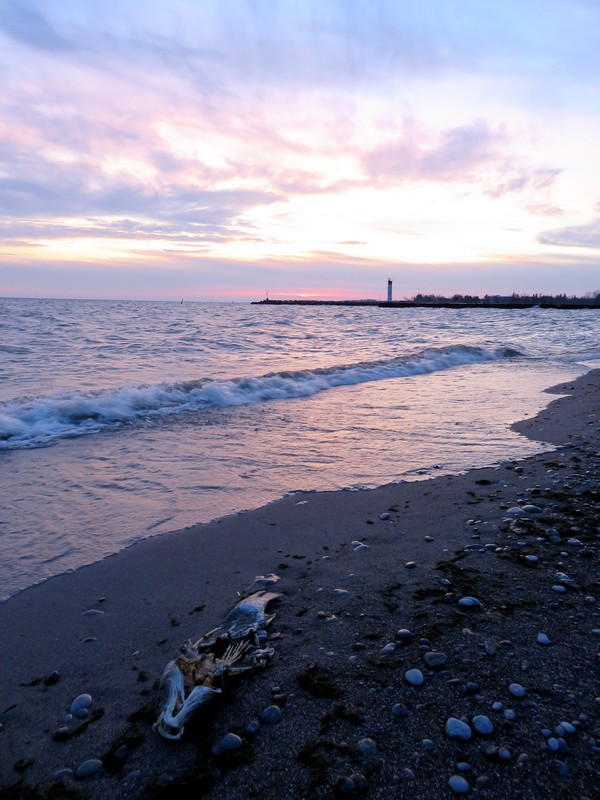
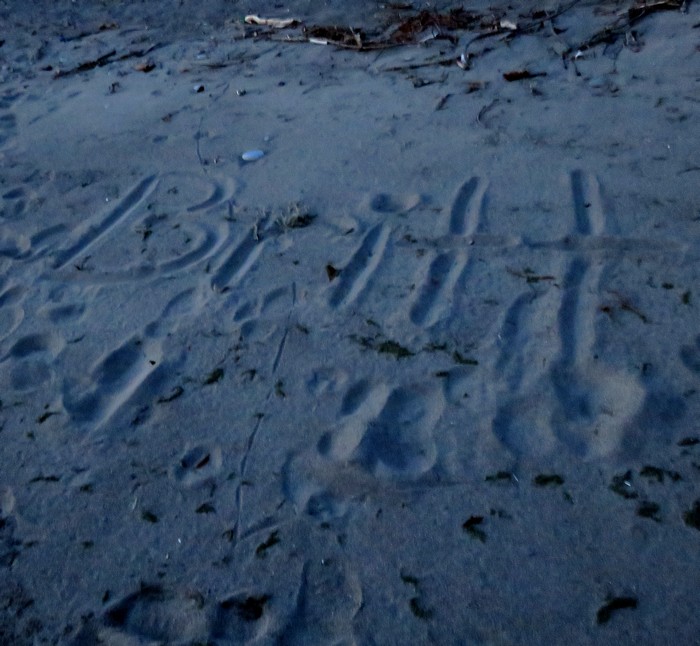
There is evidence of activity at the shoreline—

Someone has shuffled about in the sand, skipping stones maybe, or staring at the horizon, cloud formations, a sailboat…
IMG_0149
It’s almost as though someone else has been here.

But no. It feels too private, this place where I walk.

Except for the litter, the footprints, a name drawn with a stick, except for all that, surely I’m the only one ever to have been here.
IMG_0158 IMG_0159
Right now, that view, this red sky that delights me (possibly because I was a sailor in another life, a pirate according to a woman claiming to know such things; but I don’t like sailing, I explained. Ah, she said, that’s likely because I went down with my ship.)

—this sky

is mine.
IMG_0143IMG_0141IMG_0148IMG_0144
And no one—not pirates nor stone skippers—has ever seen it exactly like this.


you say salon, i say pass the cheese ball

So I had a salon. In my living room. Which may be redundant.

Let’s just call it Writers in My Residence.
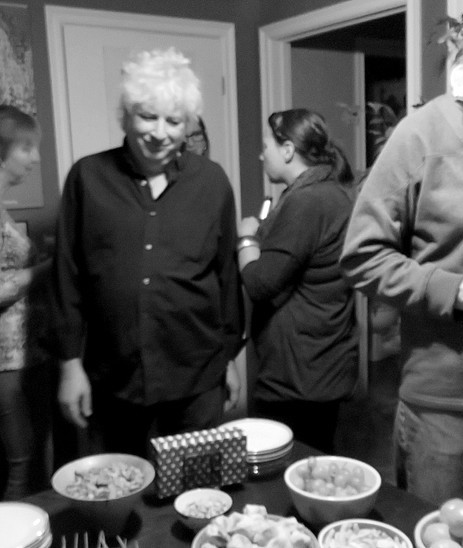
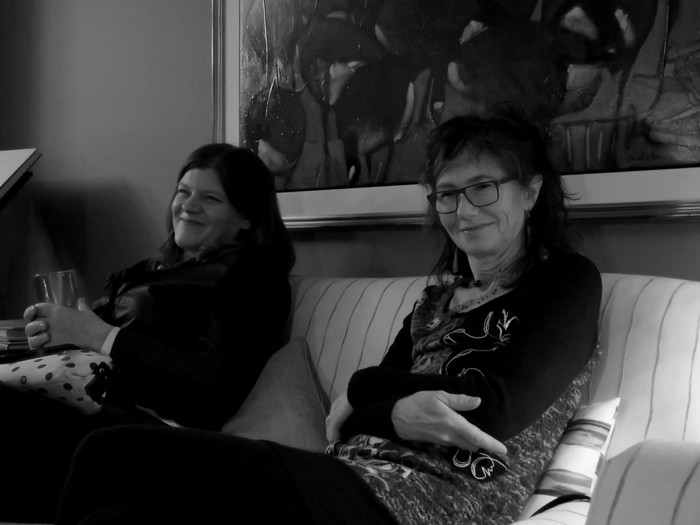
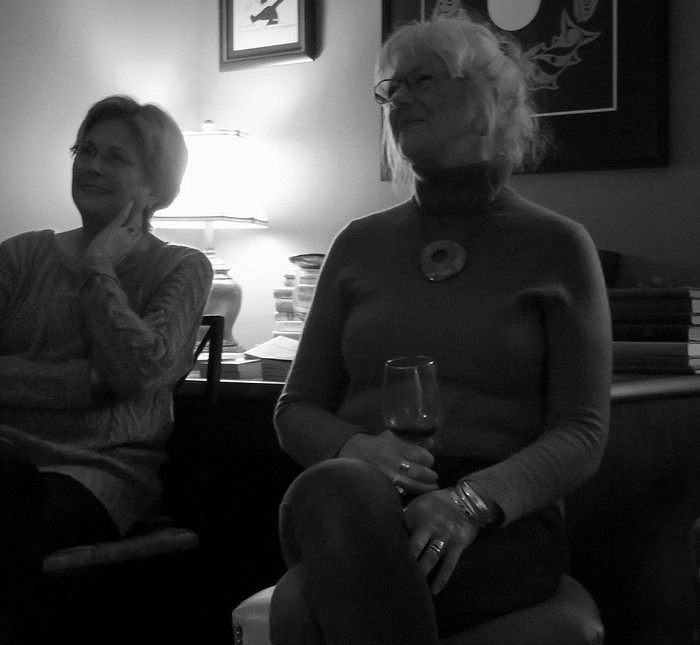
IMG_0102Bob Dylan came. He liked the samosas. IMG_0103I liked that I knew some people in six degrees of separation ways, but not really. It made for much to talk about. IMG_0104Sculptors and writers talking in the kitchen pleases me. IMG_0105Poets and painters talking in the front hall worries me. What are they plotting??? IMG_0106Here they are. Writers, artists of all stripes. Readers. Mostly readers. Word lovers. The best kinds of persons. Nestled in front of bright blue art by Rhonda Pearl.
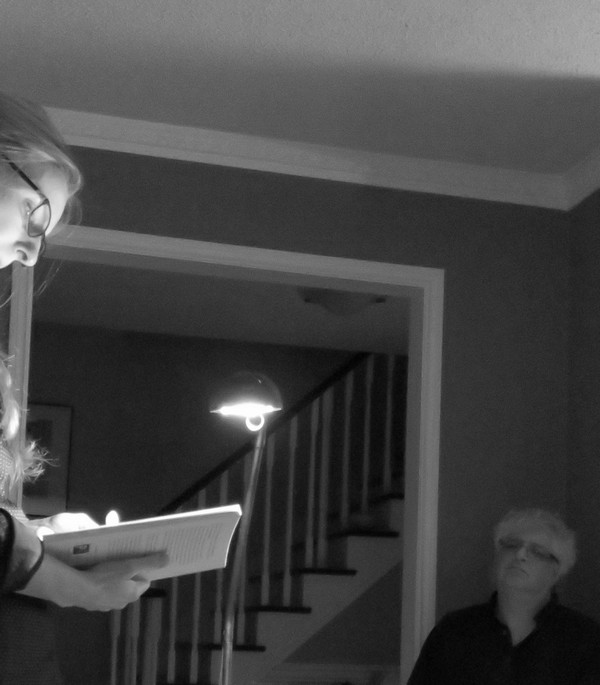
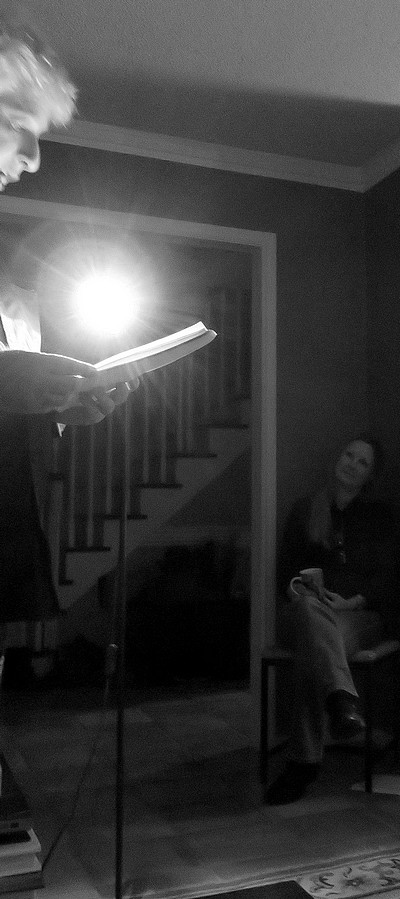
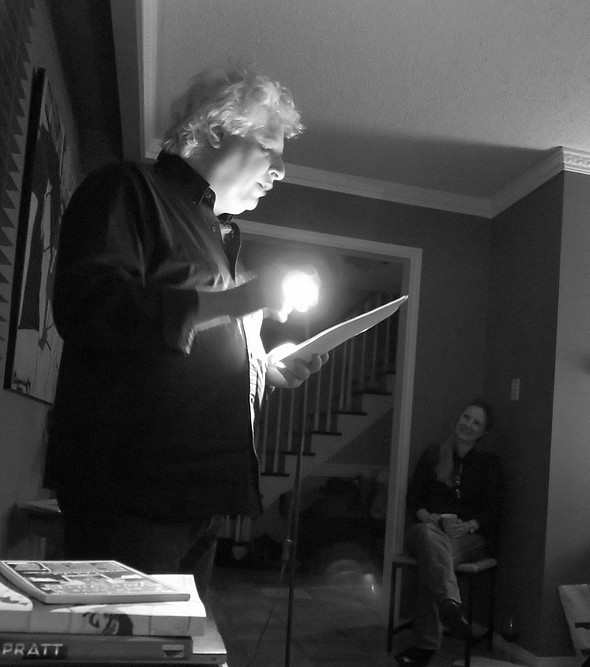
IMG_0109Reading and listening. IMG_0110One reading is about Anne Wilkinson, a little known modernist poet who is now being more known through The Porcupine’s Quill ‘Essential Poet’s’ series and the good work of Ingrid Ruthig, editor of the The Essential Anne Wilkinson. IMG_0116Another reading is new fiction by Stuart Ross, followed by poetry from his new book Our Days in Vaudeville (Mansfield Press). Here, the omnipotent poet holds in his hand an errant firefly that had been terrorizing the living room for months.IMG_0118 We laughed.
IMG_0119 We were enraptured. (Enrapturized?)
IMG_0120We had food and drink and indoor sunshine.

Such is the power of words in enclosed spaces.

Big thanks to a beautiful bunch of participants for this beautiful night.

<><><>

this morning, the smell of chrysanthymums

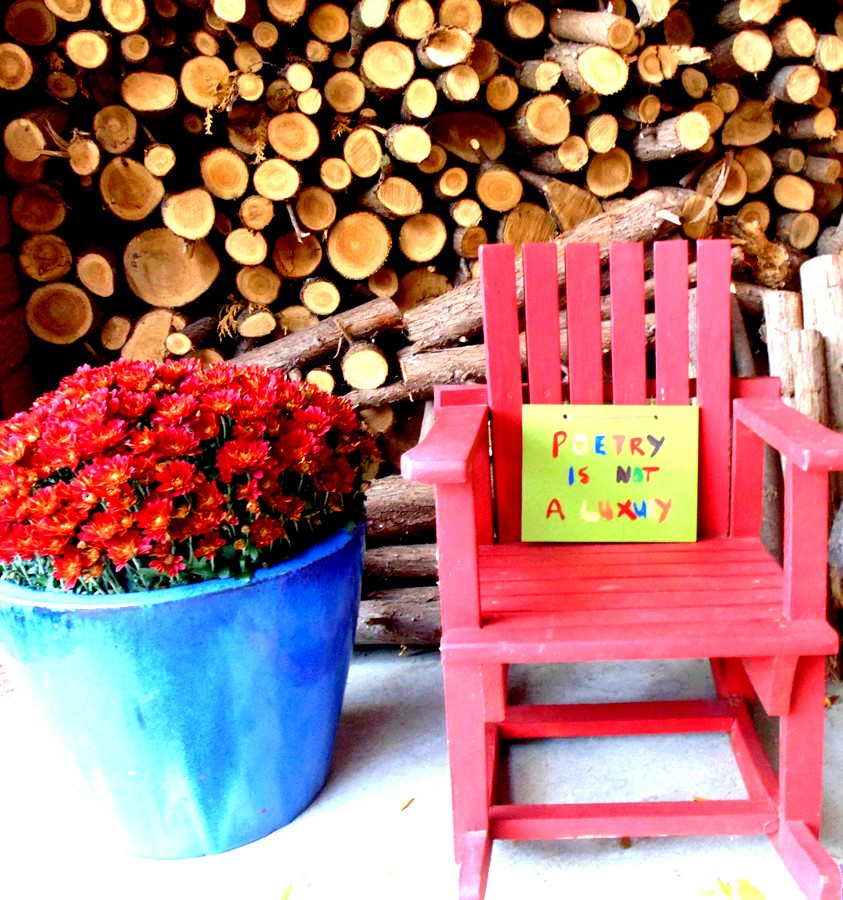
When they were still fresh, a month or two ago, my single pot of blooms took me directly to a wooden fence made by my dad from driftwood gathered at the beach. Planted alongside was a row of perennial chrysanths. Burgundy. Still the only shade I consider ‘real’ and their smell, decades later, is still about summer winding down, jackets, the grass feeling cooler, street lights coming on sooner.
DSC01598

This morning I notice how they’ve faded, they look more bronze than burgundy.

I lean down, inhale, expecting to be on that fence again but it’s a different smell, earthier, a pile of raked leaves from the pear tree (burgundy and bronze!) and some going brown. Leaves I’d raked myself, a few more every day, the pile growing until my dad said it was time to haul them away. (What did he do with them? Burn them? Bag them? Dig them into the garden?)

I only remember the raking and the leaping and the laying, starfish-like on top, staring up through a canopy of bare branches. I remember tossing handfuls in the air and the dewy wetness of the middle of the pile.

That’s the smell this morning. The middle of that sweet pile.
DSC01777


it is not saying yes to a dream or illusion

[Our] ‘yes’ to life may initially be a passive ‘yes’, born of lassitude and of regrets, but it can eventually become a ‘yes’ of openness, of acceptance, a ‘yes’ of joy. This ‘yes’ to life, which springs from the deepest part of us, is not a naïve or idealistic ‘yes’’; it is not saying yes to a dream or illusion. It is a ‘yes’ to our deepest self, a ‘yes’ to our past, to our body, to our family, a ‘yes’ to our inner storms, our winters, our pain; a ‘yes’ also to the beauty of life, to sunshine, to fresh air, to running water, to children’s faces, to the song of birds. It is the ‘yes’, to our destiny and our growth. It is the ‘yes’ to our own true beauty, even if, at certain times, we cannot see it. 

~ from the beautiful spirit of Jean Vanier
DSC01705


bikeless in ontario

I’ve been thinking about bikes more than usual lately. I haven’t had one in over a year and everywhere I look it seems there are places to cycle or things to gather and bring home in a basket between handlebars. I love my old car and where it takes me that I would never go by pedal power alone but there are just so many places between walkable and driveable that perfectly suit two wheels.

And maybe because I’ve been thinking about them, I happen to see more of them, and not just the usual sort either. The other day I saw a tricycle built for two; this large three-wheeler with two seats and two sets of handle-bars, one behind the other. The couple driving were seniors and it was just the most wonderful thing.

I saw a teen-aged lad on a unicycle a few weeks ago. I wanted so much to stop (my car) and take a picture but I felt it might unsettle him and I didn’t like how that possibility played out in my mind. (How does one even stop a unicycle?)

And there’s a guy, maybe in his fifties, maybe older, who rides/pedals/powers a bike that has steps rather than pedals. Like a step machine in a gym. It’s a standing bike that the rider/pedlar powers by stepping one foot at a time, so that one’s whole body moves up and down. I love this thing. The idea of standing instead of sitting seems vastly more comfortable and, given how much sitting we already do, maybe better for the hip joints.

I think about hip joints more and more every year.

The bikes I’ve had in the past are not the bike I want now. For instance, I do not want the red and white tricycle I loved at age six or seven or eight, which I drove at top speeds, fancying myself the envy of both peers and adults. I’m no longer interested in speed or style.

The one after that was green and huge and originally belonged to my much older and much, much taller sister. I don’t remember ever being able to sit on the seat and pedal at the same time.

Then there was the gift of a brand new golden three speed during my teen years. I rode it but never loved it. I didn’t like the colour and instead of a funky banana seat it had the standard issue kind, seriously uncomfortable. And only three speeds? It served me well though. Spent lots of time riding along country roads looking for places to steal fruit and trees under which to read. It had a utilitarian pack above the rear wheel which I could stuff with peaches and paperbacks.

When I moved to Toronto I bought a rust-coloured bike at Canadian Tire, called it Rusty. When I moved to Edmonton, I took Rusty with me. We had some good times and I wouldn’t have wanted to be there without her. But then I moved to England and left Rusty behind. Sold her, gave her away, I can’t remember and if you don’t mind I’d rather not talk about it… [sniff]

In England I had a big black Oxford bike that I rode through a field to get to Waitrose, and down a cobbled hill to get to the corner shop.

Back in Toronto I had a bike that I can barely remember and when I first moved to the town where I now live I had a ten-speed that was entirely wrong. Ergonomically wrong. For me anyway. For one thing it required me to sit hunched forward, grasping those twisted-under handlebars, which I don’t like. I like normal handlebars and to sit upright like old schoolmarms.

The last bike I had,  a hand-me-down from my mother-in-law, was sky blue and had the right kind of handlebars. I got a wicker basket for it and quite liked it, but the dear old thing was ancient and eventually toast.

All of this to say: I’m in the market for an addition to my list.

Suggestions, anyone?

Makes, models, testimonials welcome…
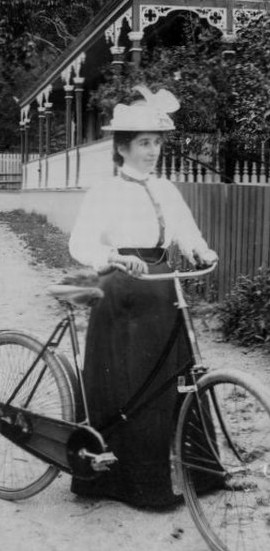
Cyclists_In_Thames_New_Zealand_Ca_1895

WikiCommons knows bikes.