tiny rant: space vs oceans


Just a wee rant for a Monday, a nutshell version to suggest that if only a fraction of space money was used to clean up the oceans (forget even the lakes and rivers, just the oceans for now) wouldn’t that be a Grand Thing?

But it’s not likely to happen, is it.

I’m guessing space people and ocean people don’t share money, much less philosophies.

I do wonder though: WHY DOES THE SPACE PROGRAM HAVE SO MUCH MORE MONEY THAN THE OCEAN PROGRAM?

And is there even an Ocean Program????

I’m also guessing the answer is that space is sexier than oceans (to some). More fun to play with spacey toys and go where “no man has gone before”…

(ah, therein lies a clue)

And all that space junk hardware, rockets and lasers and wotnots, oh my!

So much more fun (for some) than keeping dolphins and whales happy.

But why aren’t we angrier about this?

I think it’s because everybody, no matter where they are, can SEE space, so maybe that makes the buy-in easier, the universal “sure, endlessly exploring space makes sense” attitude instead of the ocean’s hard sell (because so many people have never even been to an ocean and probably never will). This is what the ocean is up against. It’s simply a LOT more fun to see pictures of Mars,  a place you can actually look at from your chaise lounge on a summer night while having drunken chats with friends about the possibility of living there one day, so much merrier than to look at pictures of seas teeming with pollution WE’VE put there through our stupidity and short-sightedness.

Responsibility is such a downer.

And then there’s the not drunken imaginings part where, in reality, and in the not so distant future, very very very wealthy rich folk will be able to take a ride into space themselves. (Of course the drunken conversations then become about those rich bastards… and lottery ticket sales go up.)

Someone will say that selling space ride tickets to rich people is a money-maker. But does the space program REALLY need your sheckles??? Or, more valuable than that, do they just want to keep you oblivious to the giant waste of money that this kind of farting around actually is…

I don’t mean to suggest putting a stop to the WHOLE space thing, by the way, just the farting around part. If they could ditch that much and use the savings on ocean clean-up, that would be swell.

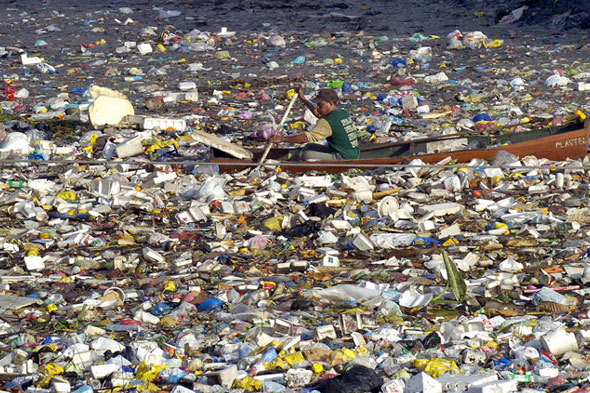
Public aquariums are beginning to get on board insofar as offering a nod to how deplorable the seas have become with pollution. But they could do so much more. It would be good if pollution was their entire focus at this point. Forget the selfies with rainbow fish. Forget the happy tra la, tra la, of an outing to pretend all is well. Instead, have every aquarium dedicate a proportional amount of space within its walls/tanks equal to how much of the oceans, lakes and waterways are polluted. If the oceans are 70% polluted then 70% of the aquarium’s tanks should be filled with floating garbage. Forget the happy fish and clean water displays. They belong in the history museum.

The oceans need us. And vice versa. It’s the ultimate symbiotic relationship and I cannot believe a space ride beats that in anyone’s mind at this point.

(What can we do besides rant? We can write governments. We can write aquariums too for that matter — not insignificant. And we can stop buying single use plastics… opinions backed by spending habits are powerful.)

Also, we can stop thinking that if all else fails we can move to Mars.


Photos courtesy of the following articles:
https://www.weforum.org/agenda/2016/08/plastic-pollution-which-oceans-contain-most/

https://www.thehagueinstituteforglobaljustice.org/latest-insights/latest-insights/commentary/a-sea-of-debris-oceans-governance-and-the-challenge-of-plastic-pollution/

https://www.theoutbound.com/josh-michele/it-s-time-to-stop-polluting-our-oceans
http://plastic-pollution.org/
https://nypost.com/2019/04/26/plastic-pollution-in-worlds-oceans-could-have-2-5-trillion-impact-study/
https://www.pri.org/stories/2016-01-13/5-countries-dump-more-plastic-oceans-rest-world-combined

https://blueocean.net/plastic-ocean-pollution/

this is not a review: ‘treed’, by ariel gordon


There are certain books that become full-time residents on my coffee table or bedside table or table by the fireplace or sometimes, if the weather is good and the umbrella is up, the patio table. Weeks and weeks go by and the book is there, picked up regularly, set down maybe in a different place to be picked up again. And again. The more I love a book the longer it takes for me to shelve it. Re-reading is a favourite thing. I make meals of sentences, play a scene back in my mind, go back a page and work my way up to it again. I will read the same story or essay or poem over three days in a row, each time finding another layer of meaning or pleasure, some image initially missed.

Treed is one of those books. Currently living on my coffee table, this wonderful collection of essays makes me happy to know it’s there to fulfill any sudden craving I have for a discussion of tree love or a vicarious forest walk with one of CanLit’s most enthusiastic (and real life) forest walkers, the Winnipeg writer and poet, Ariel Gordon.

Gordon has a penchant for the urban forest and after reading about the trees of Winnipeg you practically want to book a flight and see it all for yourself. But you don’t have to… she’s very good at giving you the vicarious experience and her enthusiasm for woodland (& other) greenery is inspiring, the kind of person who instinctively sees, hears, thinks, imagines… who wonders and is constantly curious and learning, finding nothing in the natural world dull.

Just beyond the slough is a big old trembling aspen that has strange vertical scars on it at about chest height. It takes me a few minutes to realize that these are bear scratch marks, which makes me walk faster.

Gordon well knows that even along the same path through the same park or the same neighbourhood street, if you’re open to using all your senses, no two walks are ever the same.

When I was younger, I resisted naming. But I’ve realized, over time, that this tree, that tree, the other tree isn’t as precise as it could be. Names allow us, as writer and reader, to know that we’re talking about the same things. They’re suitcases that carry not only simply information but also historical allusions and memories of what it is like to stand in a field and be surprised by herd of white-tailed deer, for instance. It reminds us of the quality of the sun on their dun backs, little bluestem grass grinding between their teeth, the rattling leaves of trembling aspen on the breeze, the way the doe’s ears telescope at the least noise.

The next paragraph begins: I’ve started spying on barn swallows.

I love how she compares the community of trees to urban communities, the purpose of a tree’s architecture as important as streetlights, the grid patterns of roads. There’s so much to see and discover in her world of trees and, I’ll confess, while I, too, have never found a dull moment on any walk or in any part of nature, Gordon’s writing has made me see trees, specifically and  individually, where once I saw merely the beauty of the whole landscape.

In ‘Outage’, Gordon recalls a week spent in a farmhouse where she intends to spend her time writing but ends up paying attention to the stories and the life around her instead and we are so glad she did.

I come with my own stories and somehow land right in the middle of Sharron and Kerry’s, and through them, Ken and Alverna’s, to the first settlers on the land and the residents of Sandy Bay First Nation, moved and moved again to make room for those settlers.

In ‘Winter Walk’ she writes:

My favourite thing about a real xmas tree? Being alone with it…. I sit in the warm half-dark by myself and smell the tree’s piney scent. I sit quietly, sipping tea or sucking  on a shard of candy cane, and listen to my own heartbeat. I breathe tree.

A tree covered in vines that turn out to be tiny grapes inspires sentences like this:

Eating them – popping the grapes with my teeth and separating the flesh from the seeds with my tongue – is like completing a puzzle with my face.

In ‘Emergency Carrots’ she weaves various threads (including carrots), the memory of trees past and present, with concern for her husband’s health and safety, and it’s all so seamless. (It’s hard to pick a favourite from among the book’s sixteen essays, but this one’s a gem.)

And from ‘The Social Life of Urban Forests’:  

… every settled place across North America had elms and, eventually, an elm canopy. The arches of elm trees that we’ve cultivated here are just as much a construction as the streetlights, as the layout of the streets, their strange grids and confusions. Our communities of trees are as deliberate as the communities we build among ourselves.

The ending of this piece is simply beautiful… Gordon writes about trees that are marked to be taken down due to disease or other reasons, the stumps she finds in her travels, trees already felled… and if you weren’t at the start, by now you’re with her, not only in awareness, but empathy for the trees around us, those we take for granted on streets and boulevards, the urban canopies, the forest and field and farmland trees… and so when she tells you she sometimes stands on those stumps, stretches out her arms and reaches for the sun… you can hardly think of a sweeter homage.


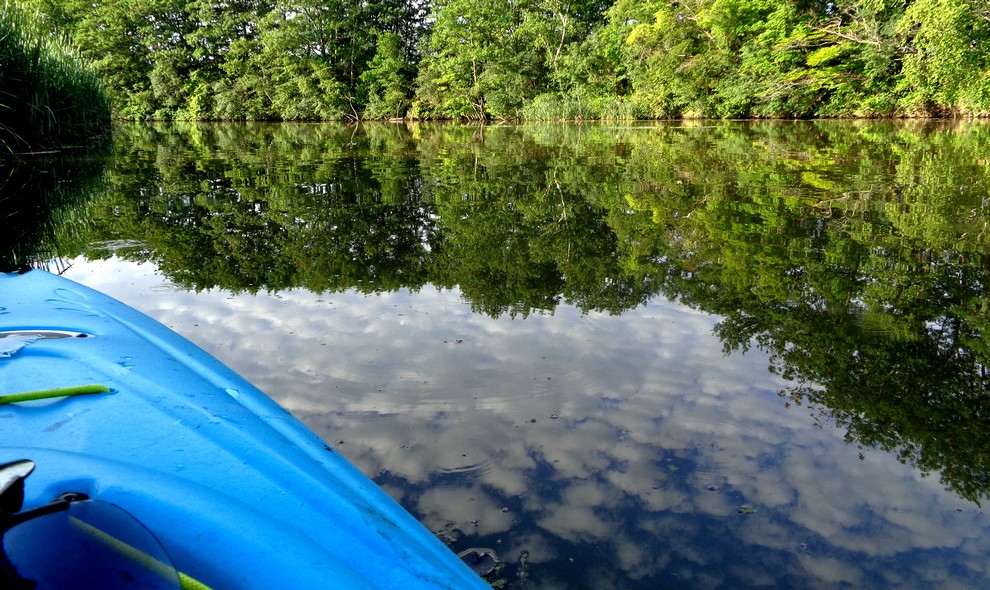
today’s thoughts (from a kayak)


Red winged blackbirds. Darting in and out of reeds, returning sometimes with nesting material. Sometimes I think they just go out for smokes.

Morning pond air chock full of chittering, occasional grunts from somewhere in the bull rushes behind my boat. I tend not to worry about strange sounds on the water… it’s only what’s on land that’s worrisome.

Kingfisher. Flies like she means business.

Seagull. On perpetual holiday.

All this singing, chittering, trilling, cawing. Is it a band or a choir?

[Every time I don’t bring a sandwich, I regret it.]

Yellow finch flits to the accompaniment of frog solo bass.

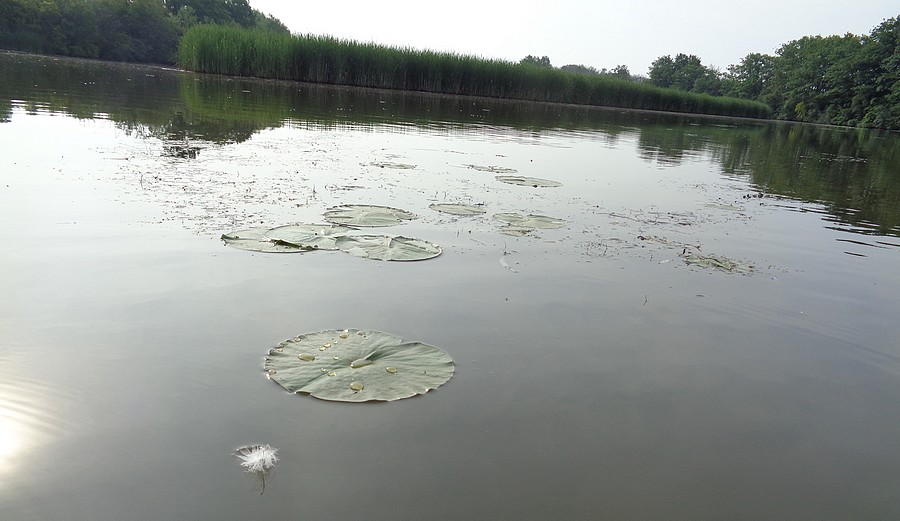
Have lodged my boat among lily pads and stare at opposite shore wondering what it must be like to understand nature, to know what tree that is or what everything’s surviving on, what kind of fish is it that keeps jumping here, and then here… to have some idea of how to move through the world less clunkily, to disturb little, to be still. I ask these questions then open my tupperware container of market blue berries and eat them with inelegant fingers.

[The lily pads work extremely well keeping my boat in place. I wonder if the voyageurs knew this trick.]

Water level too high for egrets, herons, both blue and green, cormorants too.

Deer. First one, then two. I paddle gently, watching them on the woodland side of the pond but they must see me because their nonchalance suddenly turns to startled and then they turn into the woods. And, poof, they’re gone.

A kind of elation, mild ecstasy, maybe not even so mild… arrives if I stay in one place long enough. The opposite of boredom. The pleasure of being somewhere long enough to have questions, to understand… something…

Two cardinals. I may have caught them in a picture I was taking of the light that has turned lime green yellow bright on this summer morning.

Or maybe not.


the joy of stopping


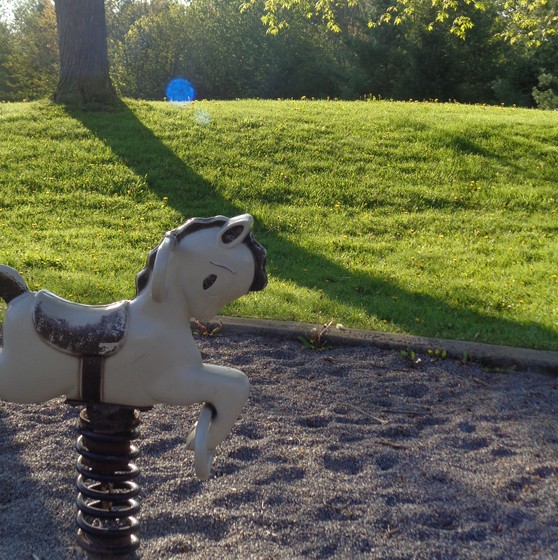
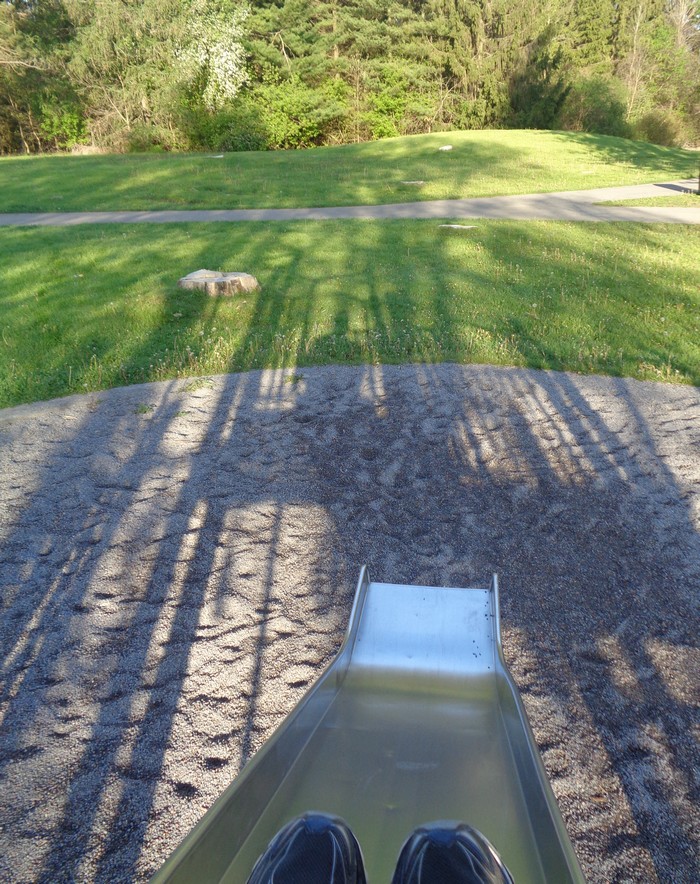
Following my instinct I stop at a playground early, early, in the morning with the sun up only an hour, still inching above the treeline. I surprise myself as I stand in mountain pose a moment and feel the warmth of it.

I do not go on the monkey bars because I do warrior I and II instead.

And I do not go on the slidey thing but use the vertical posts either side of it for balance in king dancer pose.

I do a version of sun salutation and the breathing is exceptional.

And before I know it…

…I’ve been there long enough for the sky to turn blue blue blue.

And then I climb up the ladder and slide into the day.


my bit of sky


There is a framed series of photos on my kitchen wall. Clouds scudding across a Florida sky. Each photo shows the exact same square of sky above a couple of palm trees, as seen from a poolside chair so many years ago I was still using 35 mm film and my trusty Pentax.

There are only four shots. But they represent the whole morning and my idle joy in having nothing to do but read… no idea what I was reading, but possibly The Portable Dorothy Parker  (I remember her from around that time) or River of Grass,  by Marjory Stoneman Douglas, about the almost decimation of the Everglades. In other words not a novel. Am guessing my mood couldn’t have been focused enough for a novel if I was able to take notice of the sky changing every so often and carefully positioning the camera to take precise shots (film was expensive) between and above those precise palm fronds.

Those aren’t the actions of someone engrossed in a novel.

The first photo in the frame shows a clear sky with only a wisp of cloud. The second, a larger, but still small, cloud moves in from the left. By the third shot, the sky is mottled with cloud cover, though wispy still, and by the fourth, heavier clouds have moved in and I probably decided it was time to gather my pool toys and go have lunch.

I love these pictures, the memory of a holiday, yes, but also a reminder of how this follows that, how time is passed and passes, and continues…

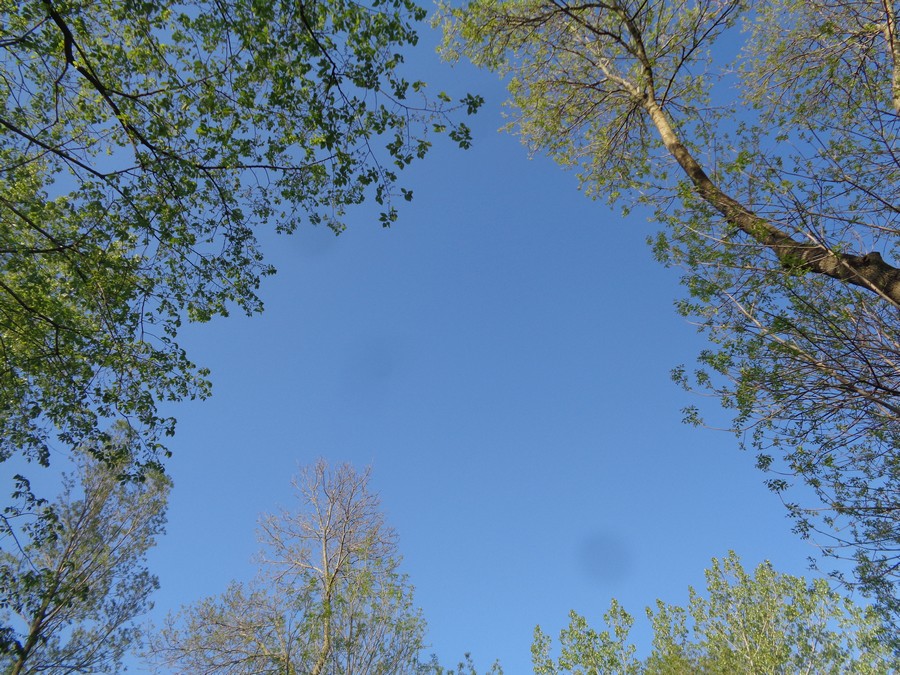
Someone once told me they rarely look up. I was astonished — how can anyone take the whole sky for granted? But it occurs to me that maybe it comes from our habit of looking *for* something… something useful, or unusual, something to compare ourselves with, as in looking at people, or something beautiful, as in a sunrise or sunset or rainbow.

Each morning I stand outside in approximately the same place to greet the day and every day I look at the same slice of sky above a cedar hedge in the space between two very tall spruce. And every day the sky is never the same. Sometimes the colour of Laurentien pencil crayon Peacock Blue, sometimes another shade. Sometimes speckled or fluffed or water-colour-streaked with cloud. Now and then picture-worthy… most often not. Over the years I’ve seen flashes of lightning in that space, the occasional plane on its way to Toronto, and one year the Snowbirds performed for a local school named after a fallen comrade and I stood in my backyard and watched, in awe, as they swooped and ducked and dived in that very bit of sky.

It is also, apparently, part of the Trans Canada Flight Path for geese.

There’s nothing magical about that slice of blue, it’s just the one I happen to most often look at. Not from a lounge chair and never for an entire morning as you do on holiday, but just as habit. Sometimes I go outside and look up, without realizing it even, with maybe a question on my mind…

And a cardinal flies by in answer.


i prefer walking quietly, alone, however…

 
I make exceptions for certain people.

And dogs.

And always birdsong.

But this morning I would welcome the company of a serious bird brain, someone who could tell me who’s singing from the top of every tree, following me with very obvious intent to serenade.

The sound is too big for a chickadee dee dee dee.

And it’s not a robin, or a cardinal (& so ends my song recognition repertoire).

A botanist would be handy too. I’d ask what is this shrub in pink bloom that every year I swear I’ll make a note to go back and find when it’s fruiting so I know what kind of shrub it is and then always forget to check…

But the only person I see is a guy standing at the creek, facing the morning sun, just standing there, and then he raises his arms in salutation.

I recognize the impulse.

And so I walk very quietly by…


celestial smoke and mirrors


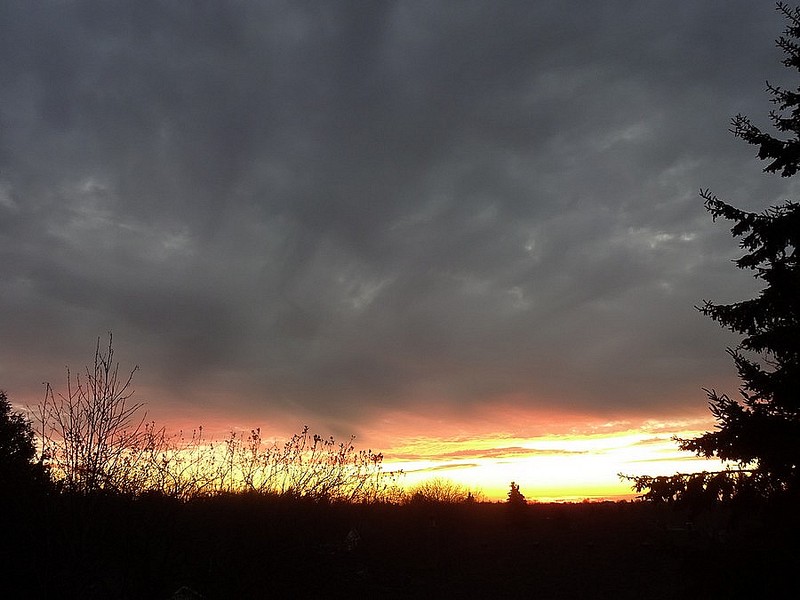
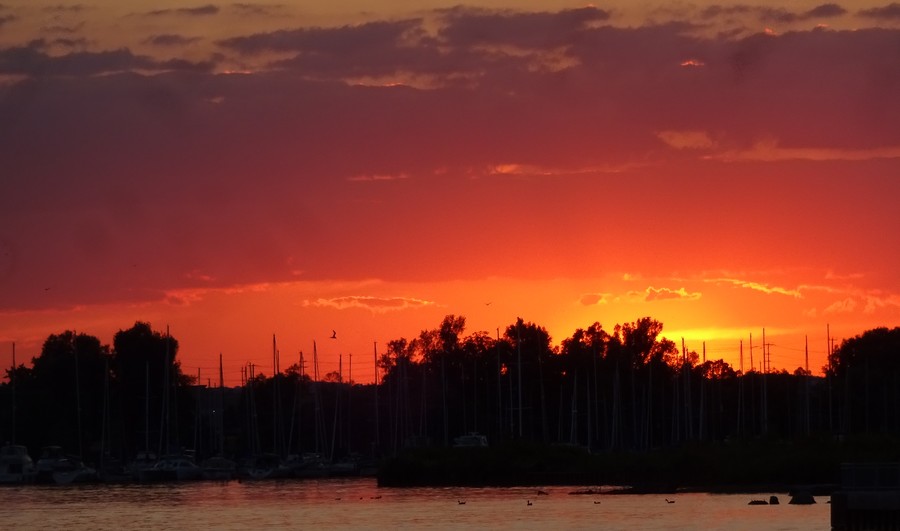
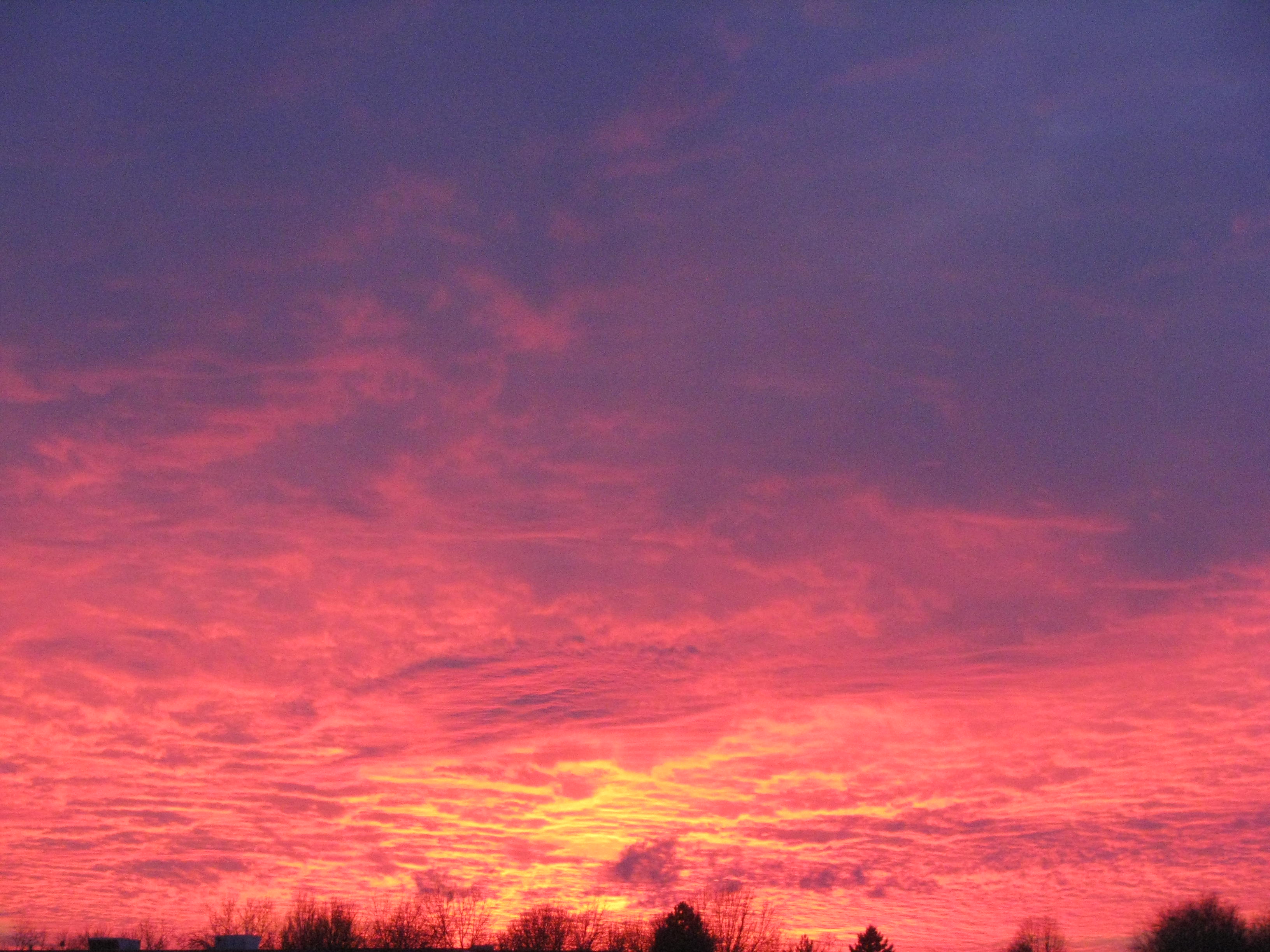
The other morning the sunrise was all thin layers of acid tangerine and atomic yellow, like some psychedelic celestial torte.


Today, sunrise is invisible. The sky, stone grey. Nothing edible.

I read somewhere that the colours are an optical, not exactly illusion,  but an effect created by various molecules in the atmosphere and their length and/or density and/or how they line up and/or etc. on any given day.

The point being that everything, it turns out — this rising and setting, the spinning and movements of planets — all goes on in exactly the same way every day, which means that—

—it’s only our vantage point

and therefore our perceptions—

that change.


it’s the small stuff that connects us


From Welcome to the Hood,  a work in progress.

Glynnis is wearing pink cotton shorts, a striped tee shirt, support hose and brown sandals. Her toenails are painted red. She is only 56 but lives in a nursing home because she is epileptic with brain damage—the kind of brain damage that has rendered her almost childlike. She can’t function on her own. Or even walk. If I don’t visit for a week or two it takes her a minute to remember we’ve ever met. Her parents are close to ninety. Until recently she lived with them. She tells me all this, matter of factly. She thinks the nursing home isn’t a bad place but occasionally has issues with the oatmeal.

She likes colour. So do I. It’s what we talk about. The colour of everything. Look at the bird, I say as I wheel her past a cage in the sunroom, he’s such a beautiful bright blue. She laughs, says that’s not a bird. What is it then, I ask, and she looks at me, back at the cage, then at me again. It’s a bird!  she says, still laughing. I never know what part of her is confusion and what part is just plain smart-ass funny. I think she likes it that way.

I take her out to the courtyard where no one ever goes. Tables and chairs, umbrellas, gardens, a walking path, a bench under an ivy-covered trellis; it all makes for good optics when the inspectors come but in reality it’s too much trouble for the staff to move people outside. Instead they’re crowded around a TV screen near the nurses’ station. No one looks at the set. Most nod off. Some watch the comings and goings in the hall, others beg to be taken back to their rooms.

None of them has the slightest idea there’s a courtyard full of sunshine on the other side of perpetually drawn shades.

There’s a purple hibiscus bush that reminds Glynnis of one her mother has. Her mother’s garden is magnificent, she says, and then we pass a window where we see Marion in her room staring out at something. When she sees us she taps on the glass, points. Marion doesn’t talk much, mostly she sits alone in the dining room and counts her collection of plastic cutlery. But now, this tapping… I’ve never seen her so animated.

At first I can’t tell what she’s pointing at and this frustrates her, she points harder. Maybe she means the hibiscus. I point at the hibiscus. No, no, she shakes her head. I want to tell her to open the window, but it would be too complicated. She may not know how, it may not even open. I don’t want to frustrate her further. She hangs her head as if giving up, then looks at us again, makes a face, annoyed, sad, says something, points. Jab, jab, her finger tapping on the window, intent on getting her message across.

“What’s wrong with her?” Glynnis says.

“She’s trying to show us something.”

“Who cares.”

Glynnis wants to get going.

Marion keeps tapping.

Finally, I see what it is. A bird’s nest tucked into a niche in the trellis. I show Glynnis. She laughs, says her mother has a bird’s nest. Marion smiles, her whole face relaxes and as each of us, from three different vantage points, stare at the bits of grass and twigs, it occurs to me that in this split second of discovery we experience the wonder of this tiny thing in exactly the same way, with exactly the same joy. And in that fraction of a moment I see the connections between us and know that the differences are only an illusion.