women’s what?

I’m always stunned at the idea that people actually wander about saying things like “women’s literature” and “men’s literature”. Good glory. Who makes these distinctions? I mean is it the publishers, the media, authors, critics, readers?? And what, may I ask, is men’s literature anyway? Penthouse? (Does that even still exist? It’s been so long since I’ve perused the smutty shelf at the local Mac’s.) (Oh, and pardon me if I’m being sexist in a bad way.)

I read Kerry Clare’s excellent post today, which is what started all this off. I’ve heard, and had, these conversations before, but I think Kerry pretty well nails it when she suggests that the tag “women’s writing” has, essentially, been constructed to fill ‘a gap’.

She refers to a review by Alex Good of Lisa Moore’s novel February, in which Good says Moore is “an author of the female body.” I’m not sure what that means. The novel is about a woman who lost her husband the night The Ocean Ranger oil rig sank off the coast of Newfoundland in 1982.

I might not have been inspired to rant on this subject had I not just recently finished reading the book, and loved it.  Because what I loved about it had nothing to do with bleeding, cracked, and milk-squirting nipples (I refer again to Alex Good’s take on the book).

What impressed me was the language, the sentences, the writing for pity’s sake. And the honesty that Lisa Moore was able to tap into. As a widow, a woman, a human being trying to function among other human beings, a parent, a sister, a friend. I loved how she took us to the event and made us see it through the eyes of someone who has tried to make sense of it for twenty five years but there is no sense because The Company has never admitted their fault. Those men needn’t have died. It wasn’t about weather. It was about stupid manuals that weren’t distributed, training that didn’t happen, equipment that wasn’t in place. Moore beautifully shows the searing hopeless frustration of this through the prism of a widow’s jumbled, broken interior, in the chapter titled “The Portal”… where we learn that Helen has been playing the night of the storm over and over in her mind, imagining what might have happened, inviting us to imagine it with her, in control of every element but the final one.

The story could easily be that of a man after losing his wife/partner (just strike the squirting breasts); the human elements of emotion are the same for both sexes. But maybe that’s the problem—do we attribute emotions only to women?

And mindless car chases to men?

An over-simplification, I know. But you get the point.

Hardly seems right on either count.

I agree, of course, that certain books may have primarily women or men readers (also gay or straight readers, young or old readers, etc.) but I don’t think the authors, or their work, can (or should be) be defined by their readership—it’s often those very definitions that act as Keep Out signs to anyone else.

In the spirit of how far have we really come?, I’ll leave you with Margaret Atwood’s delicious take on the subject in a piece called  “Women’s Novels“.

~

Note: post first appeared in April, 2010.

___________________________________________

—Purchase February online at Blue Heron Books.
things to do with weeds

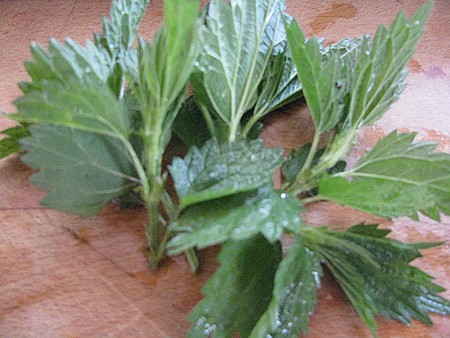
Chop nettles. Don’t worry, they don’t bite. Much.

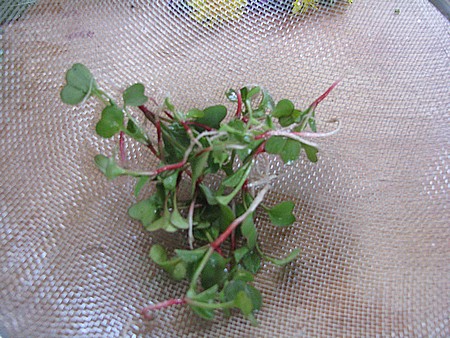
Rinse radish seedlings (these are the ‘thinnings’ you pull out so the others have leg room to grow into plump little morsels).

Add chopped garlic, cucumber and broccoli stems (peeled), shredded carrot, dandelion blossoms and violets. Toss with lemon juice and olive oil. Sprinkle with sea salt. Take outside and eat in the sun. Smile. Weeds are good.

reasons i like lists

In celebration of The New Quarterly’s upcoming “list issue“—edited by the Queen of Lists and Many Other Things Too—Diane Schoemperlen—I offer a few thoughts on the almost-koan: why list?

1. Well, one very big reason for me is because it Hoovers my brain so I can walk around in it comfortably without tiny bits of debris sticking to my feet, distracting and annoying me.

2. And I can see a list. Not so with the inside of my head. And even if I could, it would be all kaleidoscopey; things changing and morphing every second, in patterns impossible to follow, much less recall, days, or even hours, later.

3. Then there’s the tacit reassurance of having committed things to paper; a kind of wink wink communication that says: go on, you can do something else now, I’ll be right here when you get back—honest.

4. A list gives me things to cross out, which in itself is a very satisfying and cleansing act.

5. A crossed out list is no longer a list of where I need to go but a chronicle, a meditation even, if the mood is right, of where I’ve been. And I think it’s important, possibly useful, and mildly entertaining at the very least, to know when you’ve been somewhere.

6. Finally, it’s never really finished; it can be as long or as short, as complex or simple, as you, the lister, likes. There’s no right or wrong way of making a list and if in the middle of making one you decide to stop

poetry lesson at pablo’s


It’s just about noticing, isn’t it? Sunrise, food, insects on a windowsill; temperature, skin before lovemaking, and after. Cloud shapes, stones, the texture of floor, sheets, wine glass against lips. Neruda says something or other is “abandoned like a wharf at dawn”—and maybe because I’m standing in his house when for some reason I think of it, I realize this is how it starts—seeing the wharf, abandoned, or just imagining, finding, comparing, word  painting; noticing the shade of blue in the centre of an iris and giving that to a part of the body, a vein maybe; now I look for eyes and hollows in throats among twists of driftwood at certain times of day, in light, then in shadow.

It’s like the the A-Z of butterfly wings; seeing what’s there and naming it something that until that moment doesn’t exist—all of that, in order to see it.

the first

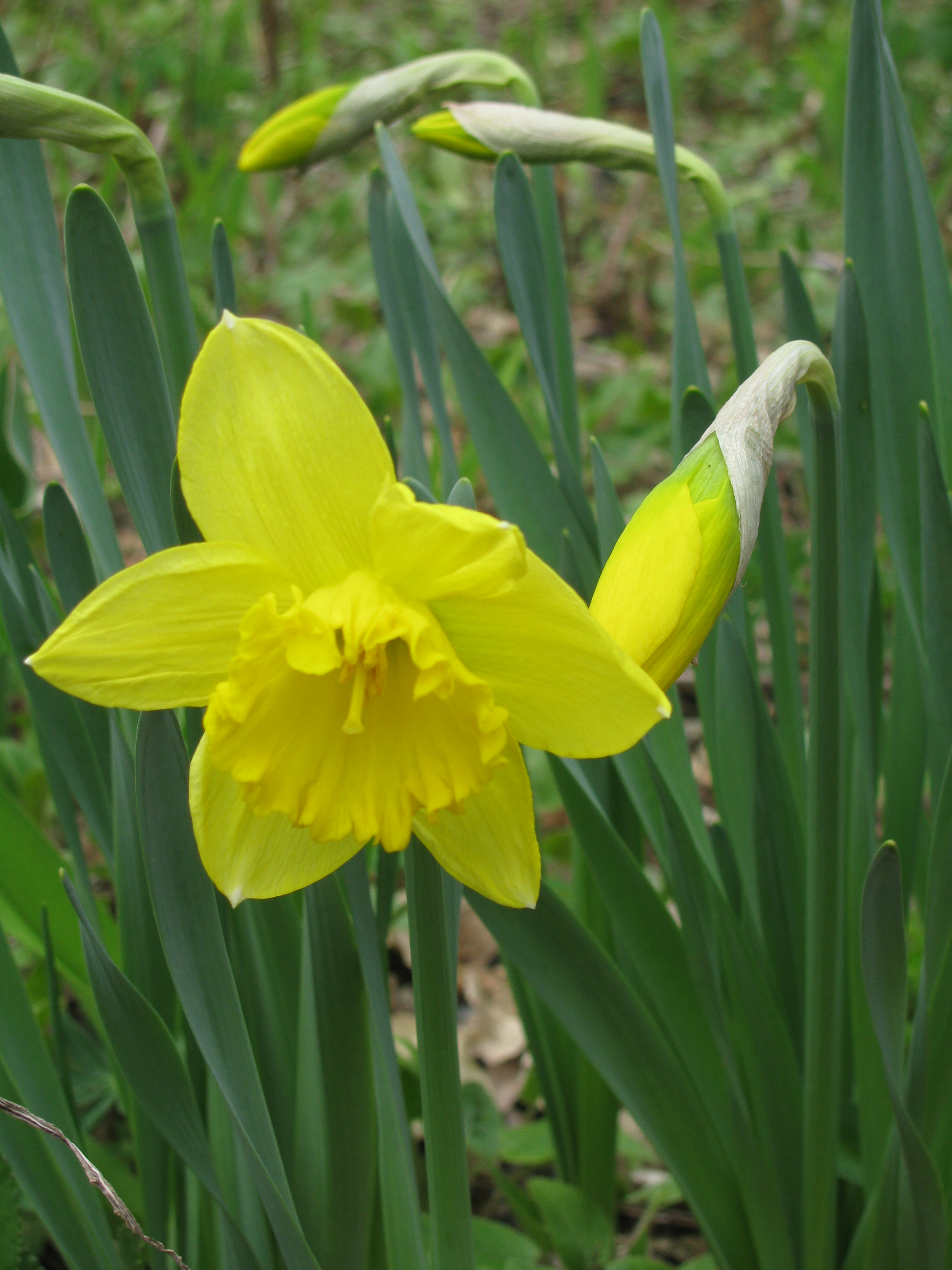
Narcissus, "King Alfred" Daffodil
“Each evening, before the dive boat returns, I sit on the deck of the cantina, watch the sun fall into the ocean. Sometimes I see Pearl and her daughter, flashes of silver in the distance, and I raise my glass to them. They’re bottlenose, I learn from my fish book, related to the killer whale; their main enemy is the shark, the left-facing variety of course. I leaf through pictures of basket starfish, eagle rays, familiarize myself with the habits of the curious giant stinking vase sponge and memorize dive terms so that at dinner with the gang I don’t end up saying, “Narcosis, I’m all for that, why I plant at least two dozen each fall…” (From Bliss, by ‘me’, Room—31.1)

it’s black liquor time

“…In the eleventh century, an Italian monk named Theophilus began to make what Samuel Johnson, some seven centuries later, would call “the black liquor with which men write,” by cutting hawthorn branches before they produced blossoms or leaves in the early spring. He laid them in a shady spot for up to eight weeks until they dried out, pounded them with mallets, and peeled off their bark. He put the bark in barrels of water for eight days to allow the water to draw off the sap, then he dumped the water into a big cauldron, heated it over a fire, threw in more bark, boiled the liquid down to a third of its original volume, transferred it to a small container, and heated it again until it turned black and began to thicken. “When you see it become thick,” he concluded, “add a third part of pure wine, put it in two or three new pots and continue to heat it until you see that it develops a kind of skin at the top.”

Got that?

(from Page Fright, by Harry Bruce, McClelland & Stewart, 2009)

small steps and giant leaps

On this day in 1917:

Women won provincial voting rights in B.C.

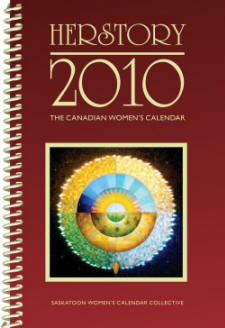
Source: Herstory, The Canadian Women’s Calendar which I’m happy to say I’ve been receiving as a gift for years and which, while it’s a desk calendar, and I use it as such, the first thing I do every year is read it like a book.

Each page features a historic photograph, work of art, or brief account of past and contemporary lives lived and contributions made—by people like Lois Vallely-Fischer who founded one of the first university faculty unions in Canada.

It also covers aspects of history not usually mentioned in the usual history books, such as, for example, that of women’s rowing—not until the 1970’s were all-women crews allowed in competition (boxing was practiced by women for almost a century before the first women’s boxing club opened in 1996). 

It’s a favourite read every year and never fails to leave me stunned and grateful for the work that’s been done, and continues to be done, in this country, by women—many of whom I suspect no one ever hears much about. And how, amazingly, there’s never a shortage of women to fill its pages.