this is not a review: ‘mitzi bytes’, by kerry clare

 
Whether reading her blog Pickle Me This, her essays or short fiction, The M Word  or trash writing... I’m never disappointed with Kerry Clare’s style… that kind of literary voice that feels conversational, as if what you’re reading is something you could also be hearing over lunch with a friend.

Mitzi Bytes  is no exception. You lean forward into the pages, waiting for the next thing, the next laugh (Oh my god, the No Angle tatoo!), the yes yes, I get that!,  or the next bit of outrage and when it comes you lean back, take a breath and wonder how you’ll figure it out, this problem, this mess of a situation, whatever it happens to be, because by this point you are totally signed on.

Pass the bread.

Order some wine.

Keep talking.

Clare excels at writing about the ordinary, which happens to be one of my favourite subjects. She draws the reader in with wide open, honest emotions and isn’t afraid to say this is the truth as I see it  in exactly the way you hope the best of your friends will always say things.

In Mitzi Bytes  she writes about blogging, which is really about noticing.

Sarah Lundy is someone who notices. She’s the person behind a popular blog called Mitzi Bytes. She’s also the author of some very successful books, compilations of her “domestic tales”. But it’s the blog where her notoriety lives, along with her candid, often bitchy posts, which she writes anonymously and which mostly centre around the people in her life, none of whom, including her husband, have any idea that Sarah and Mitzi are one and the same.

Until a comment comes through the site saying she’s been found out.

This is where we meet Sarah, on the verge of her world imploding. She has no idea who would want to do such a vile thing… no idea mainly because the options are many. After all, she’s made a career, literally, of mocking and judging others. (But to be fair, she has also mocked and judged herself in the process.) The *who* of this threat is only one part of the mystery the book sets out to solve. The other is how Sarah’s world became this vulnerable to attack in the first place… not to mention what, exactly, she’s hiding, protecting, and afraid of losing.

But, really, it’s about so much more. It’s about living online, the need to share every thought through a keyboard, the way of virtual friendship and the reality of remaining angry, afraid and alone IRL.

It’s about children and marriage and the effort of not losing oneself (or one’s melon baller). It’s about the history of blogging and the way history is recorded.

“She was thinking of the mother of the baby in the bathtub… Of all the men in towers supposing they were conducting the business of the world, imagining themselves to be the foundation civilization was resting upon–financial markets, circuit boards, and machine guns. Systems to which libraries of multi-volume encyclopedias had been devoted…. while women’s real lives, the stuff of life itself–blood, milk, sweat, tears, and the burn of fevered foreheads–was deemed inconsequential, or even worse, these stories weren’t acknowledged, weren’t even written down, let alone read, reviewed, history continuing on as it had ever been, delivered by the pens of men.”

And it’s about the kind of insecurity society breeds and the way the internet is a place to pretend we’re someone other than we are. Sarah Lundy represents all of us in a way, the part of us that’s just trying to clunk its way through life. What Clare does so well is show us this process in a way that we see Sarah and also see ourselves in  Sarah. We recognize the insecurity in her railing, know that it’s the frustration of powerlessness. The question then becomes: why do we give our power away?

A lovely read. And so discussable. Book club or lunch, you choose.

Mitzi Bytes is available online

at Blue Heron Books and at Hunter Street Books.

Two of my favourites. (Support indies!)


this is not a review: ‘meatless?’, by sarah elton

 
I so enjoyed Meatless? : A Fresh Look at What You Eat…. a book (but also a really lovely, enlightening and important conversation) about eating meat or not eating meat… the choice being ours and the emphasis being on choice. (There is nothing, nothing, nothing judgy or even suggestive of one ‘side’ being righter than the other. It’s merely info.)

The author, Sarah Elton, is a well known food writer. She also eats meat, although she truly understands the ‘other’ side. This, in my view, is the ideal perspective by which to write such a book. Balanced, in other words.

It’s picture book size with loads of gorgeous illustrations by Julie McLaughlin, and tons of easy to digest info. Really the most brilliant tool to start a chat with kids about veggie-ism, before they get their ideas on the schoolyard or to clarify some already-got misconceptions.

A smattering of things of note:

♦ It was Pythagoras that came up with the germ of the idea that became veggie-ism. He felt animals were reincarnated humans.

♦ Why is meat the MAIN part of a meal? And why, in a restaurant, do we order ‘the chicken’ that comes with the lentils and asparagus…. instead of ordering the ‘lentils and asparagus’ that come with chicken?? (This one item is a whole conversation in itself in my world.)

♦ 20 million pigs are killed EACH YEAR in Canada.

♦ 14.5% of greenhouse gas emissions come from the production of meat and dairy. This is more than from cars. (Kids will love the ‘how’ of this one!)

♦ There’s a terrific section on food combos that create complete proteins (for the days you choose not to eat meat). Beans, rice, legumes… nut cheeses. All of which are equally nutritious in terms of protein, but much cheaper. Good for students and families who need to make their food dollars stretch. A few meatless days a week = money saved.

♦ From the section titled ‘Telling Your Friends and Family’, this struck me as a fair warning: “Meat eaters sometimes take offense or react defensively when they hear someone is a vegetarian…”  Equally valid, that veggie people sometimes need to stop preaching. (And this is the best thing about the book…. no defensiveness, no preaching. The message is that there’s no way to be wrong, just misinformed. And that judgment serves no purpose.)

♦ Gallo Pinto is a beans and rice dish that I want to make. The name means spotted rooster.

♦ There is a small section on animal welfare, the reality of factory farms,  overcrowded stalls, pens, and feedlots, and animals that can barely move.

And before everyone starts wringing their hands about how the wee ones mustn’t be traumatized by the truth and that surely it’s better they believe ‘meat’ has nothing to do with animals… that, instead, it arrives by pelicans, already saran-wrapped at Costco or delivered with pickles in a burger under golden arches… and that the animals that are used to create such happy ‘bargain food’ have indeed lived sunny lives… let’s remind ourselves that country children grow up knowing where meat comes from and they somehow manage to understand, and survive the info..

Tell kids the hard truth about unethical meat farming, I say. And, harder still, tell ourselves while we’re at it.

Like Elton, I’m a meat eater, though it’s not a huge part of my diet and I can easily go a week without missing it or even noticing that I haven’t eaten any. I’m not a vegetarian but I do care about where my meat comes from. I care about how the animal lived and died and I care about its food source. I care about over-production and over-consumption and waste and I continue to hope that the big players, the golden arches, the chicken purveyors and bacon mongers, will one day insist their meat suppliers follow more humane practices because, mostly, I care about responsible farming practices. I hope, too, that maybe some of us will consider the effects of supporting the alternative. And given that information, we make our choices.

That’s really what this book is about… the idea of informed choices.

Meatless? : A Fresh Look at What You Eat  can be ordered online at Hunter Street Books.

Support indies!

this is not a review: ‘why shouldn’t i drop litter’? by mj knight

 
I’ve recently set out on a quest for trashy reading and have been happily led to what appears to be not only a most wonderful book on the subject of litter but to a whole line of (very smart) books being published by Smart Apple Media, primarily for schools as far as I can make out, but they’re such excellent things it would be a shame not to flaunt them more broadly.

Formatted as one of those hardcover, mini encyclopedia for kids, Why Shouldn’t I Drop Litter?  opens with a colour photo of autumn leaves on the ground and the reminder that this, too, is called ‘litter’, leaf litter.  The difference being that “Nature has ways of dealing with things that are no longer wanted…”

And with that perfectly passive aggressive irony, we enter the book by addressing a few facts about ourselves and how much we throw away every year (about five pounds per person  EVERY DAY). That *you*, personally, don’t throw that much away doesn’t matter. It’s not a problem that’s searching for someone to blame. It’s a problem that requires everyone to take responsibility. At least everyone who lives on the planet.

The pages, 32 of them, are beautifully laid out and not crowded with information in the way this style of book can sometimes be. Nor is its intention to scold or even shock. Rather, it seems only to want to remind us of the consequences of litter, that something which seems so trivial and innocuous has all kinds of horrible consequences.

Hedgehogs, for example, tend to get stuck in yoghurt containers because their quills make it impossible to back out.

Used or tangled fishing lines are often cut and left in the water (because we’re such geniuses). And if you can’t understand how this is dangerous for birds, fish, turtles, dolphins, etc…. google fishing lines/wildlife  sometime. Meanwhile, here’s a two minute story with a happy ending.

And those plastic holders that six-packs come in? If you haven’t yet heard, all kinds of birds and animals, fish too, get them wrapped around their beaks, bodies or necks and die that way. If you see one laying around, please pick it up. You may save a life, and you won’t die of cooties.

Oh, but if it’s germs you’re worried about, consider the gum that’s all over pavement everywhere. It costs between $2 and $3.50  PER PIECE to scrape off. Apparently no one has yet figured out a better way to remove it. Probably because all the money and brainpower is working on how to inhabit Mars (which will only remain gum free until we get there).

One of the biggest problems in the matter of waste is that which comes from fast food restaurants. Our convenience is apparently nature’s problem. It’s no small potatoes what we choose to support with our dollars. When we give all the money and power to fast food places we shouldn’t be asking ourselves why standards are slipping everywhere we look.

(Of note: interesting how people will throw money at the burger joint that happily pollutes the world for profit, but the same person resents paying a few extra bucks to keep a community well supplied with garbage cans.)

The problem is always us.

The solutions too.

It’s about the choices we make.

Anyway, the book is part of Smart Apple Media’s ‘One Small Step’  imprint, which seems designed to inspire engagement in our individual slivers of the world, to encourage us to understand that problems like litter are not someone else’s problem, but something we can work together to improve.

I think it would make dandy reading for families that give a hoot.

~

Also, if you come across books that deal effectively with the subject of litter, garbage, recycling, you get the idea… please let me know. I’m compiling a list for The Litter I See Project.

A million thanks.


this is not a review: ‘the year of living danishly’, by helen russell


I shot through this on the weekend. A delightful read that had me google searching the author, Helen Russell, for more Helen Russell pov. Turns out she writes for The Guardian and, according to her website, has a new book coming out in December, also a sort of how to find happiness  type 9781848318120-289x450thing. It’s a genre I don’t read a lot because I’m already pretty jolly most of the time. The book was mentioned in an article about hygge, the Danish word for coziness or comfort, although it’s more than that… it’s a state of mind, a state of being, a lifestyle, a homestyle, an all-encompassing thing  that has no equivalent word in English.

I wanted to know more.

Hygge  sounded awfully appealing.

Enter The Year of Living Danishly  which is written in a very breezy, but not too annoyingly (although it gets a little close at times) conversational tone, in monthly chapters that cover the year the author lives in rural Denmark. She decides to use the time to write a book on what makes this supposedly happiest country in the world tick. To that end she talks to people in various fields and presents some stats. As well, she asks people to rate their happiness out of ten. Turns out no one she spoke with is less than eight. Pretty much every agrees the secret is  equality, that everyone is equally  well off.

Equality is big in Denmark. And it appears to be the key to finding hygge…. and happiness. Everyone is equal, regardless of age, status, job. There is no hierarchy. Jante’s Law is gospel.

For instance, everyone earns a fair wage and a doctor or lawyer or banker is not seen as a higher status job or more important than a grocery clerk or garbage collector or teacher. Especially not a teacher. There is apparently such an extraordinary focus on learning that it makes your eyes water to think how brilliant schools can be when people take it seriously.

And it starts from the get-go. And the children learn more than finger-painting. They are, apparently, encouraged to think, to question authority even. A tendency that may have its roots in the German occupation of Denmark in WWII, after which it was seen as essential to teach children to go against authority if they didn’t agree with what they were being told.

…We wanted citizens who were democratic and could have their own ideas, so self-development is a big part of learning in Denmark.”

Almost 90 percent of packaging is recycled and people take recycling very seriously to the point of neighbours knocking on a newcomer’s door to explain if they’re not separating things correctly.

There is extraordinary healthcare and assistance in caring for children.

There is a refreshing absence of blue for boys and pink for girls. Russell cites advertising that shows boys playing with Barbies and girls with tractors and suggests it’s not a nation of girly girls and tiaras on toddlers. Independent thinking is valued not feared.

Sex education begins early and is matter-of-factly inclusive of all manner of sexually relevant subjects. Gender in all its forms is not a hot button topic or reason for shock or under-the-breath muttering, judgments or bullying. She points out Denmark was the first European country to allow changes of gender without sterilisation.

Private schools aren’t popular as it goes against the idea of equality.

Danish pastry is as good as rumour makes out.

Unemployment is low.

As with all northern latitudes, the winters are dark with some months averaging an hour and a half of daylight. This leads to a high number of SAD cases, as well as depression, and suicide.

Taxes are high but apparently put to good use to equalize earnings so that all are well compensated. Russell does not mention striking sanitation workers, teachers or nurses. Instead we see an absence of class system, or at least the social inequities are small and because everyone has what they need, resentments and judgments are fewer. Back to equality, which might be the simple math of happiness.

Also, Russell says, there is trust. And this is huge, an essential value to Danish life. People trust one another.  They have faith in their government and their administrative bodies. Things work…  Because it’s easier that way, for everyone. And everyone knows that the good of all is pretty much the collective mantra of all. There is an absence of one-upmanship culture; to have more than someone else doesn’t sit right with Danes.

Back to Jante’s Law. Which basically means that no one is better than another, and which was referred to in almost every interview the author conducted.

Equality and trust.

Imagine!

Russell writes with humour and for the most part it’s welcome, though a little less would also have been good. On missing the noise of London, she notes:
“I now hear birdsong, tractors or, worse, nothing. The place is so still and silent that the soundtrack to my day is often the ringing of long-forgotten tinnitus…”

She does not mention senior care, nor does she indicate how diverse the population is, except to say that diversity is increasing.

Ultimately, she and her husband fall in love with the place and decide to stay on a second year.

“…it’s no wonder Danes are so happy. They have an obscenely good quality of life. Yes, it’s expensive here. But it’s Denmark – it’s worth it. I don’t mind paying more for a coffee here because I know that it means the person serving me doesn’t a) hate me or b) have a crappy life. Everyone is paid a decent wage, everyone is looked after, and everyone pays their taxes, just as I pay mine. And if we all have marginally less money to buy more stuff that we don’t really need anyway as a result, well I’m starting to think it’s a deal worth making”

At the end of the book she summarizes in ten elements How to Live Danishly, which is a little gimicky, but makes its point nonetheless. The greatest interest in the book, for me, was knowing that it’s possible for a country to put happiness right up there on the agenda, in seriously practical ways.

And to better understand the magical powers of hygge.

It’s the kind of book I’d like to send to a few world leaders…

**


this is not a review: ‘what milly did’, by elise moser

 
Milly Zantow falls into the category of People You’ve Never Heard of Who Have Changed the World. In this case, the world of recycling. Because Milly Zantow is the person who created a tiny thing called the global recycling standard for plastic,  more commonly known as the-numbers-inside-those-little-triangles-on-your-water-bottles-and-stuff.

It’s what made plastic recycling possible.

But it’s the HOW this all came about that’s jaw dropping. What Milly Did  (a childrens’ book for all ages, including adults in my opinion) by Elise Moser, is an extraordinary story about a woman who, at age sixty or so, decides to do something about the growing problem of plastic in landfills.

9781554988938_1024x1024Turns out that plastic wasn’t recycled because no one thought it could be done.

Enter Milly, an ordinary woman, raised on a farm, who has no experience in anything even remotely related to anything to do with recycling but who just really believes that something can be done.

So she says pfffft  to the naysayers and starts reading about plastic; she studies it, takes courses, learns everything she can then cashes in her life insurance policy, buys a gigantic grinding machine and opens a company called E-Z Recycling where she and a few others do much of the grunt work by hand, seven days a week.

“She called the Borden Dairy Company in Milwaukee and asked them how they manufactured their plastic milk jugs. What did they do when they made a mistake? she asked. They told her they just melted the deformed jug down and reblew it. That was an ‘Aha!’ moment for Milly.”

Moser captures Milly’s spirit as a woman who is in no way ego driven. Nor is becoming rich her motivation; she simply wants to make sense of trash and to that end she does whatever she can to help people recycle, including establishing programs in nearby towns.

Eventually her vision catches on. Various community groups form, tipping fees for landfill sites are established and in 1988 her system for grading plastic is adopted by the Society of Plastics Industry, which means a standardized recycling practice across North America.

The story, of course, isn’t quite that simple. There are many hurdles along the way, people who laugh, who say that what she’s proposing is impossible, and then there are the times themselves, the 1970’s and early 80’s, which aren’t overly receptive, or even friendly, to the idea of recycling. Moser has done an excellent job of telling Milly’s story against this back drop of time and place.

A clever addition to the story are sidebars throughout the book, telling about bridges and boats made of plastic bottles, stats on current plastic usage and where it all goes, yo-yo trivia!, the ABCs of modern recycling, innovations in biodegradable plastic… all bite-sized, very readable for any age, and all to the accompaniment of sweet b&w illustrations by Scott Ritchie.

That this is such an unknown story is mind-boggling. I’m grateful to Elise Moser for telling it. It needs to be shared. I hope the book will find its ways to schools and to homes, not only as an eye-opener to an important piece of history, but to open at least two kinds of conversation… One,  about the problem of a planet full of garbage and, two, the power we have as individuals  to make the world better.

Finally, what maybe I love most about this story is what Milly didn’t  do… she didn’t complain, blame, whinge or whine or suggest that this problem to solve was someone else’s job… 

Or that the difficulties she faced were someone else’s fault.

She just got on with it.

The world could use more Milly.

life’s a beach (aka: accidental seaweed)

 
One of my favourite books is Drinking the Rain,  by Alix Kates Shulman.

beach-8It’s about how, at the age of fifty, Shulman runs away for the summer to a rustic cabin on an island off the coast of Maine and has all kinds of little epiphanies, mostly about her relationship to nature. Having grown up and lived her whole life in New York City, it has never occurred to her that nature is especially significant except as a nice place to visit now and then.

beach-7 beach beachbeach-8 beach-2beach-5She returns to the cabin every summer for years, each time trying to bring the feeling of these epiphanies back with her to NYC in the form of shells and bits of seaweed and eating the way she did on the island, but apparently it’s hard to forage in Manhattan. So it never feels quite the same, it feels ridiculous in fact, this tree-huggy approach to life once her feet are firmly back on pavement. And it bothers her, initially, that she has to divide herself between this new sense of exhilaration and freedom as the island person and the reality of living most of the year in the city.

beach-9 beach-9 beach-11 beach-2The book is about finding her way to being both sides of herself, regardless of where she is.

***

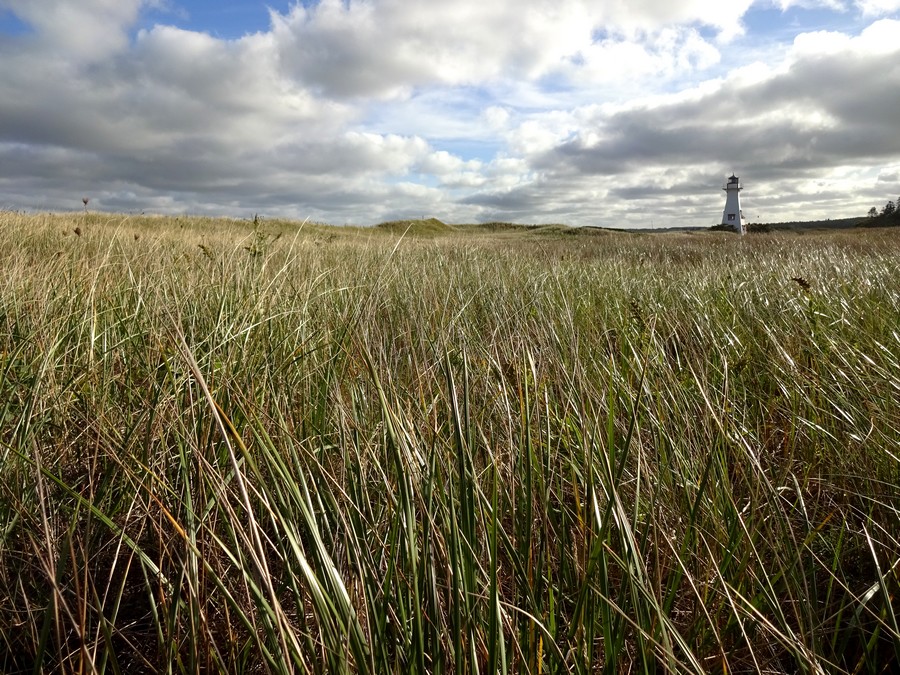
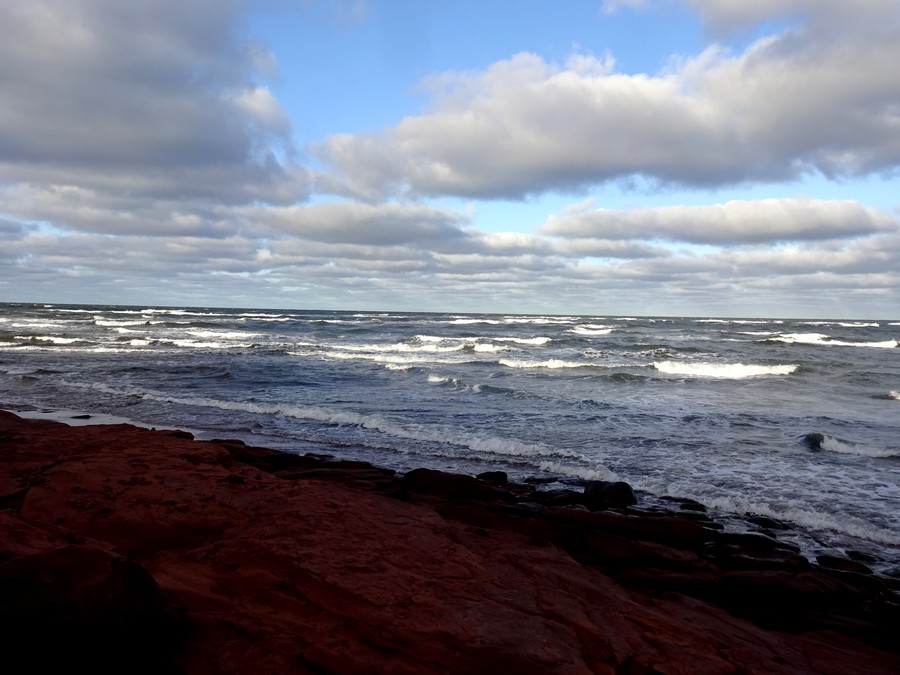
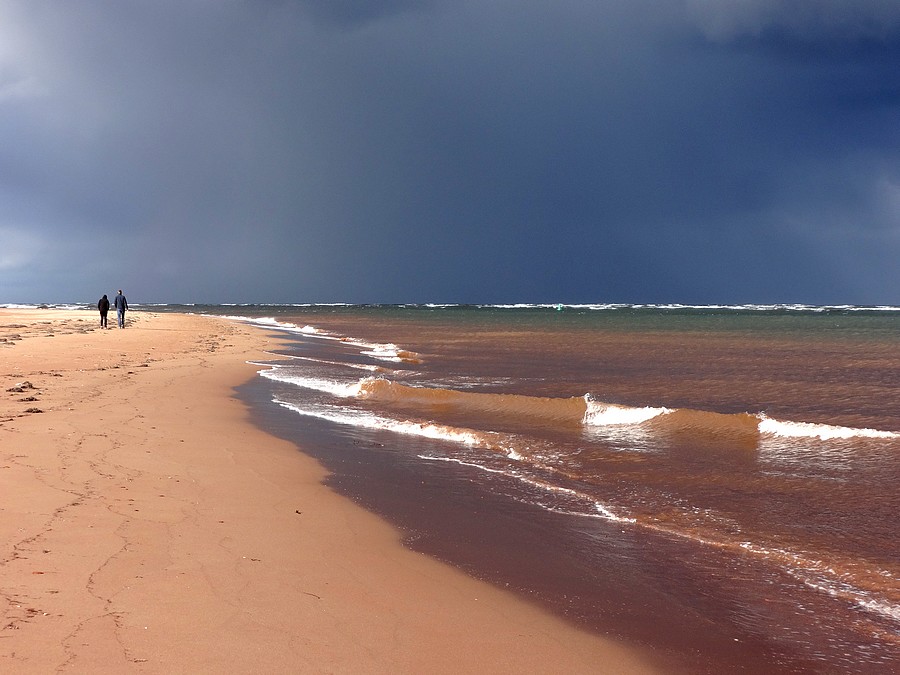
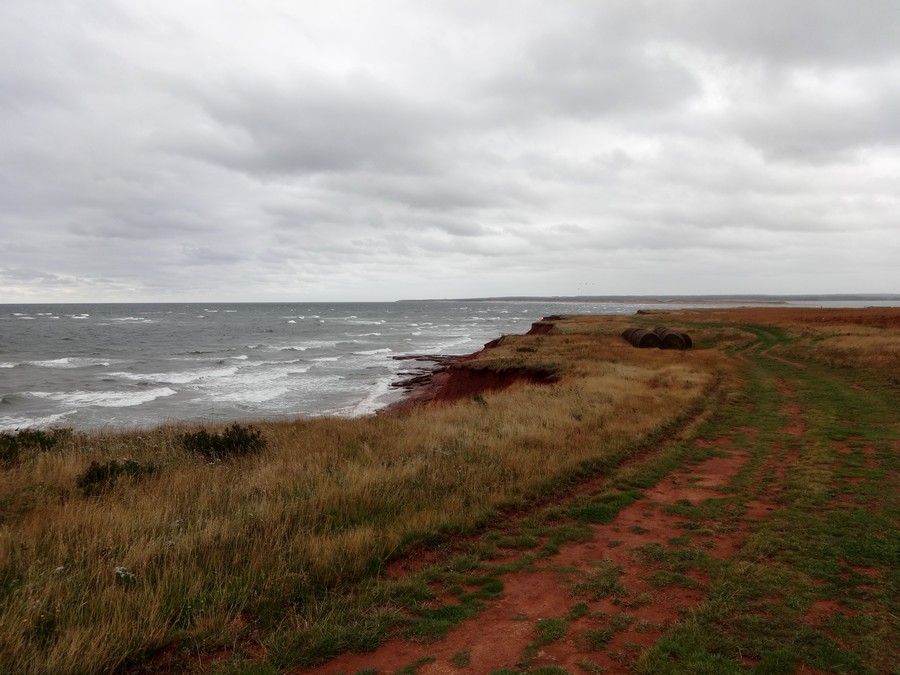
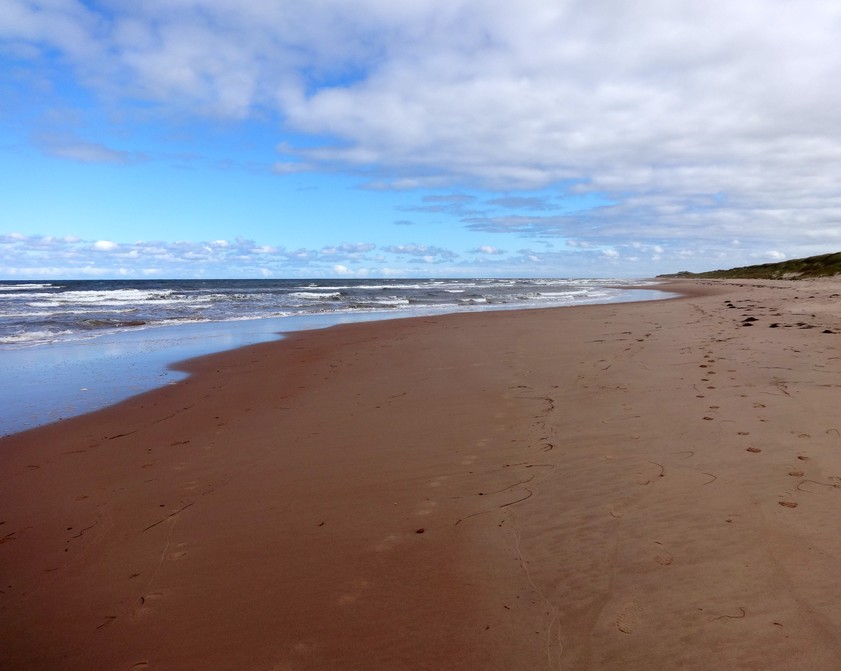
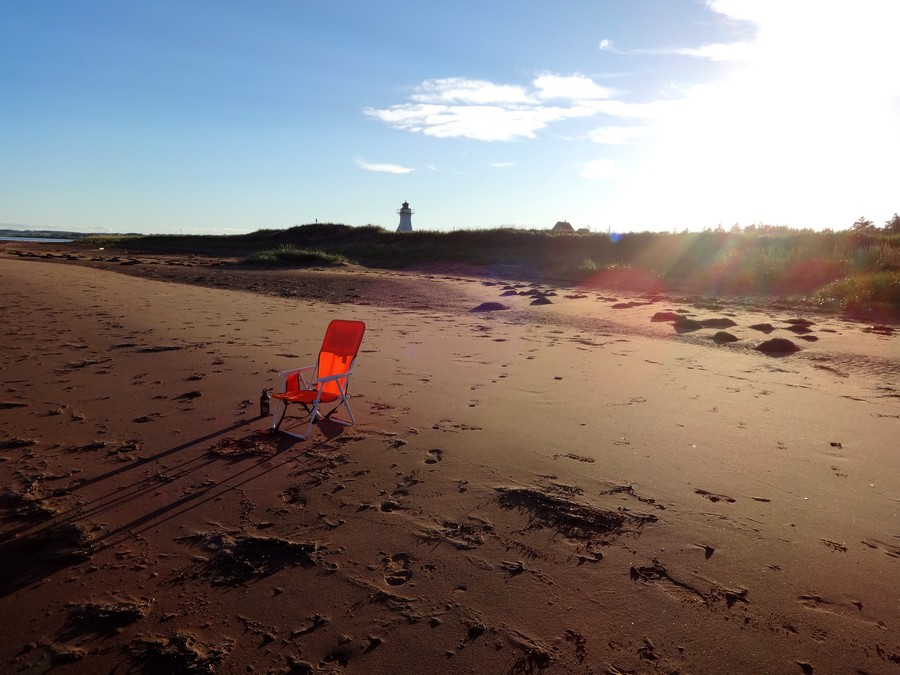
But this post is about PEI, my personal choice of islands to run away to.

beach beach-3 beach-2There is magic there, and when you feel it you understand why islanders want so very much to protect it. The first post I did in this Week of PEI  was one called ‘Home and Away’… I get it. I’m grateful there’s so much love of place from those who call it home.

beach-12 beach-6 beach-7The island’s magic is in good hands.

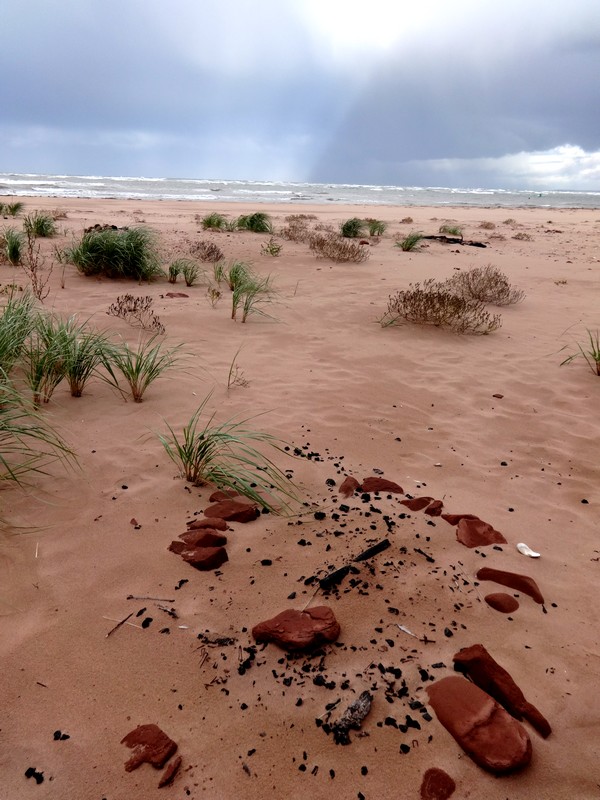
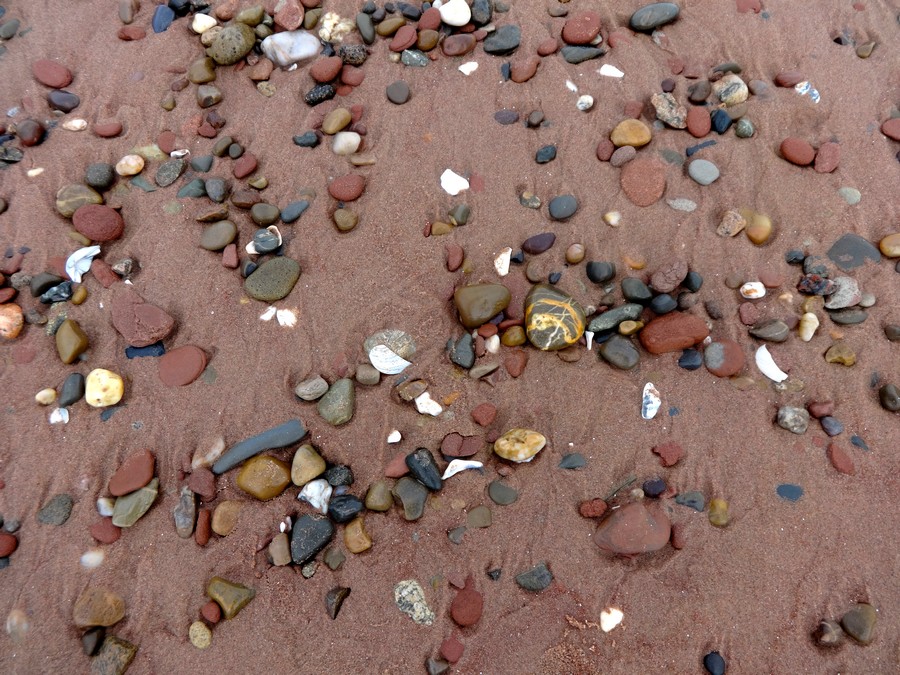
beach-10I also get what Shulman says about the island vibe and how you can’t bring that back to wherever you live, but what happens is maybe even better because if you embrace that feeling, gather the moments, the essence of the place, like stones on a beach, and tuck them inside yourself… a kind of alchemy happens… those moments hold bits of energy that change who you are, wherever you are.

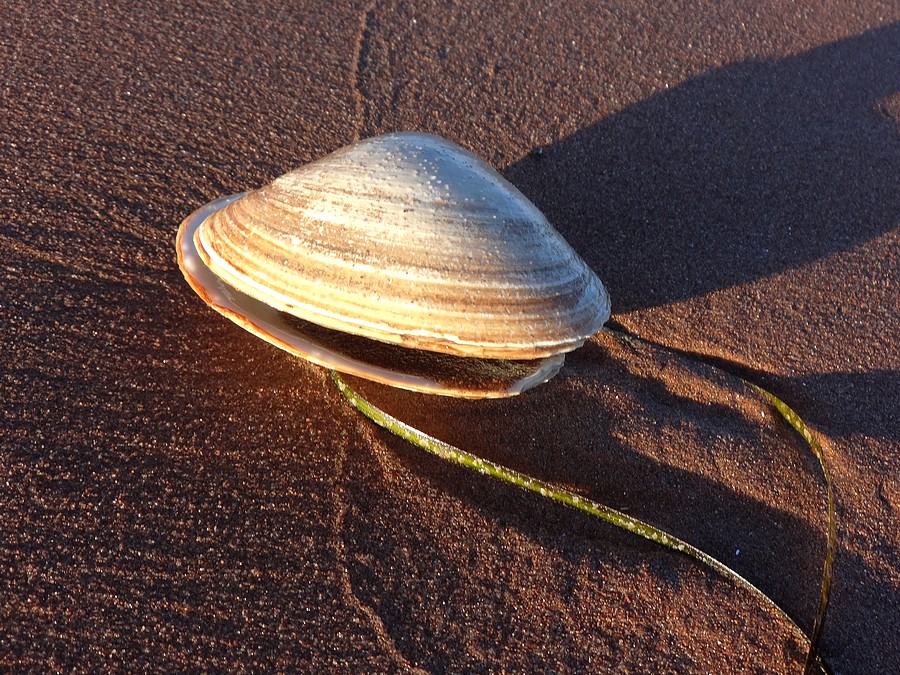
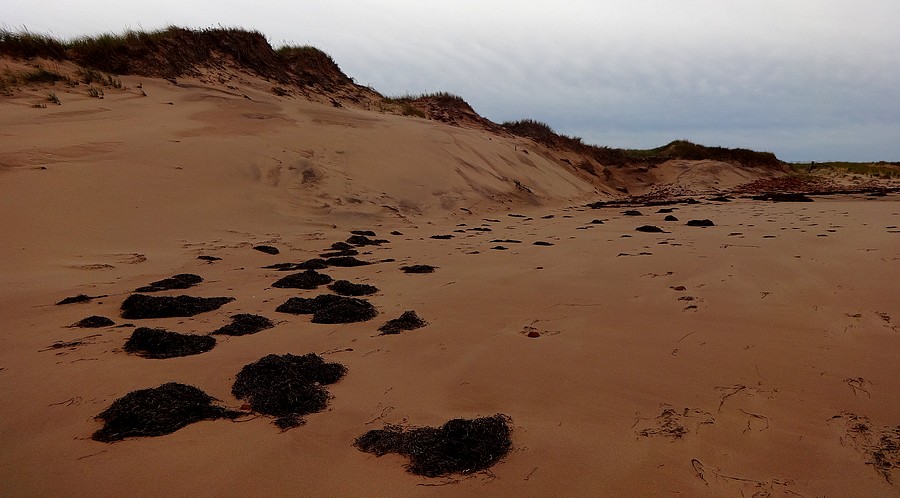
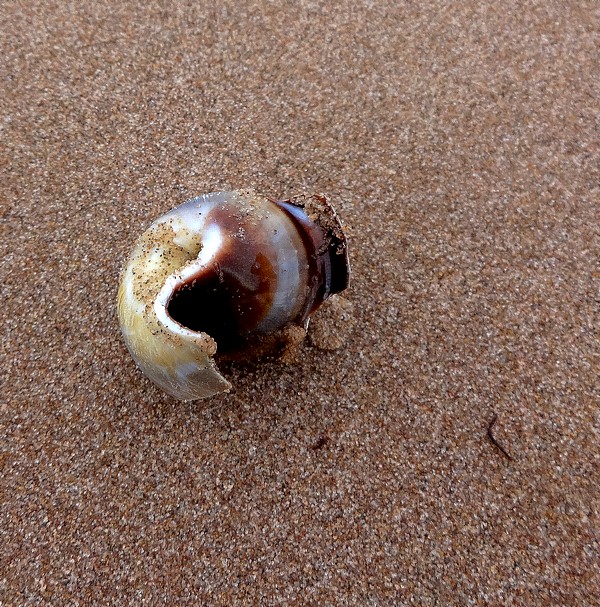
beach-3 beach-2 beach-3beach-4I bring back stones. And shells. And sometimes accidental seaweed.

beach-4Reminders of magic.


fave pictures taken this weekend, with not a care in the world (nor a chip in my camera)

 
Me on George the tawny horse with a butterscotch mane at the trail ride stables.  I say to the trail guide, “Take one of just me and George… I want to put it in my office to look at every day.” George is magnificent and uninspired to moving too quickly. His whole raison d’etre being to follow the lead horse at a reasonable pace and sneak the occasional bit of greenery, which is often as I have no ability to use the reins and George knows this. We are happy together.

Kayla the trail  guide.  All blonde hair and freckles, a country lass unaware of her sweetness and the charm of her stories about being home-schooled and how she lives for horses, has five part-time jobs to keep one horse and how a horse will tell you what’s wrong with you, emotionally or physically, because if you spend enough time with it the horse takes on your problems and you can see yourself in them like a mirror.

Children in my house eating watermelon and jumping on a mini trampoline. Occasionally at the same time. To which I say: “No choking please…  because
I am not in the mood today for children choking in my house.”

Tiny hands shoveling spoonfuls of peaches and ice cream.

Tiny hands picking fat blackberries. Also argument over how there isn’t an equal number of ripe ones for all three sets of hands.

Three orders of poutine at the beach. Most of which is eaten. None of which is mine. Mine is an order of fries.

Seagulls awaiting poutine.

Flip-flops flopping in the water.  Until they’re nearly stolen by the lake and the better idea by the wearer of the flip-flops is that I carry them.

Skinny legged beach cartwheels.  Dozens it seems, one sweeter than the next. Not mine, by the way. I have neither skinny legs nor ever been able to master the sweet cartwheel… only the kind that goes by a different description. After that, some other gymnastic moves that need only ribbons to make them an Olympic event. (Now there we have something I’m good at: ribbon dancing.)

Lad skipping stones. Correction. Lad trying  to skip stones. Lads, I discover, aren’t especially amused when aunties come along and say Want me to show you how it’s done?   And then do.

And other stones. Especially those as described in the wonderful Pinny in Summer, which is read aloud to the soundtrack of Lake Ontario waves. (Smiles all around when we find JUST THE PERFECT ONE.)

Cloud shaped like the skeleton of a rabbit.  Sad but true.

A radiant palm holding five colours of beach glass:  white, green, dark blue, brown and possibly yellow, or just pale pale brown. Either way, ridiculously exciting haul.

9781554987825_1024x1024

(at) eleven with ariel gordon: ‘stowaways’

 
I was introduced to Ariel Gordon’s work through her essay in Kerry Clare’s anthology of motherhood, The M Word. Strange, perhaps, to discover a poet via an essay but I think, very often, if you like someone’s work in one genre, you’ll also like it in another.

Ariel_Gordon-Stowaways_origIn any case, that’s what happened here. And happily so.

Turns out Gordon writes about some of my favourite things—the natural world and its intersection with the urban world is a big one. This is especially the case in Stowaways, which, in the chat below, she says was written while cheating on a Thomas Edison inspired manuscript. I love that kind of backstory.

It was my absolute pleasure to have the chance for this back and forth recently with Gordon while she was on retreat in The Pas, Manitoba, and to discuss not only her work, but a few general thoughts on books and writing and the mystery of why poetry isn’t more widely embraced.

As with all (at) Eleven pieces (and for no other reason than I like both food and books and like nothing more than when they find each other) there is a suggested-by-me menu at the end of the Q&A, tailor made for this book.

A million thanks to Ariel Gordon for her generosity in this exchange.

I sincerely hope no retreat writing time was harmed in the process.

And with that, here we go…


What literary character did you want to be as a child? 

AG—The first novel I read through on my own was E.B. White’s Charlotte’s Web, followed by Frank Herbert’s Dune. I don’t think I wanted to be any of the characters. I was just so thrilled to be myself, plowing through books like it reading-on-my-own was a new technology or a dormant superpower. The character I probably identified with most strongly with was Valancy Stirling in L.M. Montgomery’s The Blue Castle. But that was mostly mopey-teenager wish-fulfillment: “No one understands me! I am not beautiful! I will go live in a romantical cabin in the woods all by myself!”

Also, it gave me my first example of a working nature writer. Though Barney Snaith was pretty immature/mopey, come to think of it…


I’m interested in how people come to various forms. How did poetry find you? Also, do you have any memory of one your earliest pieces?

AG—I don’t recall the poem so much as the experience of writing it. In junior high, my Language Arts/Computer Science teacher, Ron Lamoureux, used what I now know is a fairly standard CW exercise to get us writing. But back then, it was incredible. He turned off the lights! And played boisterous classical music! And told us to write!

It was great fun. Not being able to see the page meant that my handwriting was big and loopy and ran everywhere on the page. All I had to do was follow the images the music presented me with and write them down, even if I might not be able to read my handwriting later.

After a few months of similar prompts, he compiled a booklet of poems and we launched them in the school gym. I think I even read my poem! Out loud!

During that time, I was also working on a fantasy novel I started when I was 13, on the computer my father’s employers gave him for home use. He never used it that I could tell, but I immediately started working on my book. Of course, every year I had to spend a lot of time revising the previous year’s writing, but it was immensely satisfying. I filled notebooks with drawings of my characters and pictures I ripped from magazines that resembled what I thought the world I was creating looked like. I even tried to come up with my own language…

I kept writing that book until I was 19 and in my second year of university. At the same time, I started working for the student newspaper and taking creative writing classes. So I started writing short stories that were the same length as the articles I was writing, about a page and a quarter in Word.

Eventually, these became more compact and started to look more like poems. And then I started calling myself a poet.


Do you still enjoy the revision part of the process?

AG—Writing is re-writing. I like the rush of first draft, but I’m under no illusion (most of the time) that the finished poem (or article or essay) will look anything like it.

You might say that I’m in a long-term relationship with revision. Which is to say: it’s hard work but it’s work that I love, that I’ve chosen.


Are there books you like to go back and re-read? 

AG—Thanks to the home-reading program at my daughter’s school I’ve been actively rereading Asterix et Obelix  and Barbapapa  comics. Luckily, her teachers are also sentimental former French-Immersion kids! I also recently re-read some of the slim fantasy novels of my youth, including Anne McCaffrey’s Dragonsong. (More angsty-teenager wish-fulfilment, as it turns out, except in this case it involved massive talent going to waste because of misogyny…)

I re-read Robert Kroetsch’s early novels—The Studhorse Man and Badlands  in particular—every few years.

But other than that, there’s so much to read out there that I don’t often deliberately go back, especially over the last couple of years where I focused my reading on non-fiction as my writing practice expanded to include non-fiction. Which means that I’m the worst-read person in a variety of genres, given that I read fiction, non-fiction, and poetry. Oh and comics.


I was speaking with a friend recently, someone who doesn’t read a lot of (any) poetry, but she’s a voracious reader in other forms. We talked about The Why of ‘poetry fear’, which she admits to having … and schools came into things, as in the way most of us are introduced to it… and the poems we’re introduced to. That feeling of dread rather than pleasure sticks in some way. We’re talking another generation of course; maybe things are different now. I’ve heard of excellent programs at the college and university levels but I wonder what kids are being taught in high school, poetry-wise.

AG—I had an English teacher in grades 9 & 10 who was at the very end of her career. And she made us pin down & analyze poems. Although it was obvious that she had great passion for poetry, she had decided what the correct meaning was of each poem and wouldn’t accept any other interpretations. She also didn’t teach any contemporary Canadian poetry.

More fatally, I gave her one of my stories to look at and she not only covered it in red ink, she gave me a lecture on the fact that none of her students, in thirty years of teaching, had ever become a writer. How the school system wasn’t designed to create writers.

Now this wasn’t much of a discouragement; I kept writing and found other teachers to share my work with.

But in first year university, when I was sitting in my 20th Century Lit class and we were starting our poetry unit, I put my hand up and said: “Deborah, I just want to say that I don’t like poetry.” Deborah being Deborah Schnitzer, who has published several books of poetry and experimental fiction.

She just said, “Oh, Ariel, you don’t,” in her amused, musical voice, and as it turns out, I was writing poems by the end of the year.

And later, when my first book of poems came out, my old English teacher showed up at the bookstore where I was working and very pointedly bought a copy of the book. It was like it was her penance…

My daughter is in grade four now and she’s already read and written poetry in her classes, so I’m not worried…


What about themes… are you ever surprised by a recurring theme in your work? Is there something you find yourself drawn to writing about without even realizing it until after you read the work? 

AG—I’ll answer this, but first, I want to get you to answer a theme question:

“What do you think are the themes at work in Stowaways? Were they on the surface or did they creep up on you, like the references to sound?”

(The reason I ask is that you have no idea how hard it is to talk about themes. They’re largely subconscious during the writing, unless the poet is working on a highly conceptual project from the get-go, but then the poet has to be prepared to sharpen them, acknowledge them, in the editing and, also, the promotion of the book.)


Yes, I get the difficulty of theme talk/identification, but mostly from a fiction pov, which is where most of my work lives. A friend of mine once said she only knows what her books are about when she reads the reviews. Haha!
I wonder how this is the same or different with poetry. In what way it might be harder to discuss themes, which I assume it is because poetry is just that much more bare naked. I’m thinking of the difference between, for example, a collection of short stories vs a collection of poetry… insofar as how they’re put together thematically. I suspect there are similarities, in that they are rarely ‘written’ that way at all. It just happens, or doesn’t, or there’s some (even tangential) similarity between pieces that readers and critics can feast on. And once arranged, there’s an alchemy sometimes…

AG—Part of the reason I asked too, was that I know what I think Stowaways  is about. I wrote the catalogue copy, for instance. But I’m always curious to see what other people think it’s about. Because part of publishing writing is about being in dialogue with the people reading it.

For me, the themes in ‘Stowaways’  are 1) the foibles of human nature and the way we butt up against nature, our own and the other kind, and 2) nature, the marvel of it, the way it’s there, no matter what we do; life, death, cycles, the real deal of it. The ‘How To’ section, for instance, is gorgeous in the honesty of its ‘human natureness’. 

AG—Thank you for that. (Sucking on your descriptions like they were small candies…)

The majority of the poems in Stowaways were written when I was cheating on what was supposed to be my ‘next’ book, a collection of poems on Thomas Edison. I conceived of it while editing Hump, my first book, but didn’t realize how much of a leap it would be from the first-person, experiential poems I had written to poems written from the point of view of a variety of characters that drew heavily on the technology and language of Edison’s era. I also had to set the ms. down for almost a year while promoting Hump, which may have starved it. TO DEATH.

So, as I attempted to revive the Edison ms, as I butted heads with what I knew and didn’t know and what I would have to accomplish in the poems, I would sneak off and write poems about my day-to-day. More mothering poems. Urban nature poems. How-to poems, which I based on wikiHows and were a way to force myself to write when I wasn’t feeling inspired. I also did an image/text collaboration with Darryl Joel Berger, a writer and visual artist based in Kingston.

The whole time I felt bad for not being able to force my way back into the Edison ms. I literally felt like I was cheating on my arts practice.

Then my publisher came to me and asked if I had my next book ready. Which was an enormous relief, even a compliment, but I was NOT ready for that question.

But it was asked, so I looked at the poorly-lit rooms of the Edison ms. and realized it wasn’t even CLOSE to being finished. But instead of confessing all of this to my publisher, I said, “Yes, I should have something. When would you need it for?”

And then I got to work. I admitted (to myself at least) that I couldn’t make the Edison ms. work with my current skill set and resources. And then I started collecting all my cheating poems, every dinky little poem I’d written when not putting my head down and running at the Edison ms. like a goat. Or a bison, because I like them better.

And holy shit, I had three-quarters of a book that seemed to hang together, thematically, even though the poems weren’t written with any larger project in mind. And I had six months before this new manuscript was due.

So I wrote more poems. I wrote every poem I could think of. And I was terrified they wouldn’t be good enough, because they were so very new, but my editor thought they hung together too…

To me, Stowaways is about living in cities and trying to figure out how to be both an animal and a human. Figuring out how to connect to the people around me AND the flora/fauna. They’re about how life and death our every day is, from rescuing the adolescent merlin that lived in the tree next to my house after he crashed-landed to figuring out how to be in a long-term relationship.

(Are those themes? I told you I was bad at knowing my own themes…)


Oh, I love this background. You could have called the book ‘Cheating on Edison’. Of course I’m going to re-read the poems now with this in mind and see if I can find the influences…

It’s strange how we do this, how we (think we) are focussed on one thing but really, our minds are building a whole ‘other’. (We could call it the Edison Syndrome!) It applies to any form, I think. The way someone spends five years writing a novel about the relationship between character A and B and then in year six realizes it’s actually about character D and K.  Fortunately, you trusted your instinct and ‘cheated’. Smart move. It wasn’t the Edison book’s time.

What didn’t the Edison project allow you to explore that brought your thinking to what became ‘Stowaways’?

AG—Trusted/distrusted, more like. But that’s completely par for the course in my writing life: I’m the most patient impatient person you’ll ever meet.

In some ways, Stowaways  seems like a natural bridge between Hump and the Edison ms. (though I STILL haven’t gotten it up and running again…): voice poems, long poems, poems that borrow and steal from instruction manuals. “How to Learn Morse Code” is obviously a remnant of the Edison ms., but I think I would have been attracted to it even if I hadn’t been Edison-obsessed. Just like I was attracted to “How to Survive Flooding.” They’re meaty subjects. I think “Apparent Magnitude: The Finlay 15P,” a long poem about comets, barn swallows, and the death/disappointment of one’s parents towards the end of Stowaways  is my formal apology to the Edison ms.

Maybe I’ll finish the Edison ms. some day. Maybe not. Maybe it’ll be my star-crossed ms.

The more I write, the more I realize that writing is about discarding writing. Not so much killing your darlings so much as leaving them behind.  (“I’ll think about you every time I turn on a light, dear one…”) The infuriating thing about the Edison ms., why I fought it for so long, is that I still felt that the poems I’d written had a lot of juice. It was like a weak battery: it would jolt me every so often.

What about you? What are you working on? Have you ever had a ms. go limp?


I see what you mean about the bridge between Hump and the Edison idea.
I haven’t read Hump, but one description calls it “a mash-up of pregnancy-and-mothering poems and urban/nature/love poems that functions as an anti-sentiment manifesto”. Which pretty much tells me a niece of mine will love it. I’ll include the poem ‘Primipara’ from Stowaways, which feels like a wonderfully twisted paean, brave in how it honours the work of mothering so honestly. (My niece is a ‘hood-dwelling, tough nosed, soft hearted boxer who is devoted to her twin 16 year old boys.) Can you tell me about ‘Primipara’… its origins. And why isn’t this word in common usage, given how many women are ‘it’? And I wonder if there’s a word for women who have ‘borne just two children’.

AG–I wrote that description. And given that one of my favourite expressions is “I like my tea as black as my heart,”  your niece and I would probably hit it off. (Or hate each other…)

“Primipara” came out of a co-worker announcing that what they thought was going to be their oops-third-child was actually going to be their oops-third-AND-fourth-child, three weeks before they were due. My daughter was two or three at this point. I instantly felt the tickle of an imminent poem. All I had to do, when sitting down to write, was try to imagine that happening to me, as someone who hadn’t necessarily wanted ANY children, and then go straight to best worst-case scenario I could think of. And then, because I’m sort of a jerk, I gave the finished poem to my co-worker to share with his wife.

But I wasn’t finished with the poem. I wrote an essay of the same name for Kerry Clare’s The M Word: Conversations About Motherhood anthology. (Which you may recall, as I believe you reviewed it for your blog…) The essay called “Primipara” also included the poem “Primipara”. The essay was about only wanting one child, about trading a larger family for my writing practice, about siblings and cousins and nieces and how my daughter would have none of them. Compared to the poem, it wasn’t at ALL fun to write. But it got me re-started writing non-fiction, which I’m grateful for.

I stole the title from a medical dictionary, which is what I do when I don’t immediately have a title for poems: I troll dictionaries. (I like RhymeZone and OneLook). And I’ve had to re-look it up, but I believe the term is “secundipara” for two. Also, the term “primipara” is apparently more complex than I’d first thought:

“A woman who has had one pregnancy that resulted in a fetus that attained a weight of 500g or a gestational age of 20 weeks, regardless of whether the infant was living at birth or whether it was a single or multiple birth.” http://medical-dictionary.thefreedictionary.com/primipara

So it has more to do with the number of pregnancies a woman has had, not how many children she’s wound up with. So my co-worker’s wife would theoretically only be a tertipara. But then, I have no idea how many pregnancies she’s had…what an odd way to categorize someone, eh? I’m not sure why it would be at all relevant, medically.

Which is why I had to poem it.


To answer your question about mss that go limp… what I find happens more often is that great chunks are sliced out for the sin of pointless distraction and clutter. But of course that causes a domino effect, things need to be rebuilt with fewer sticks and sometimes it becomes obvious there are not enough sticks. I’m thinking limp is something different. It implies a sense that resuscitation is possible…  

AG—For me is more about the energy of a work. You can trim a dead poem as much as you want. It’s still dead.

The poems (or mss.) that still have a breath of life in them are the most frustrating, because they tantalize you for years. And you think, “Maybe if I try this. Or that.” And it still lies there, it’s mostly-dead eyes glinting at you.


Apart from the ‘commentary’ of the birds that runs through the first section of the book (although ‘apart’ isn’t quite right given how ‘part of’ the whole these voices are) the collection is wonderfully rife with sound. A thud, a purr, a daughter’s chirp; twilight screams, pipes clang and “trains clatter by & fat horses delicately cross tracks, hooves striking steel: Thump”. There are hums, roars, radios blaring, soft snores, sympathetic howls, “the river’s thousand tinkling chandeliers”, a click of shutters, sirens at Portage and Main, yodelling, squealing, noisy suckling, the clacking of chopsticks. All of which is presented so subtly that I was well into the book before it occurred to me that I was hearing (the soundtrack) as well as reading the poems.

In one of my favourite pieces, ‘How to See Deer’ you present what feels like the perfect balance of human and nature: “Boots on snow. Boots on snow. Birdsong.”  The heartbeat of it! So, the question is this: Is sound an element of your work that surprises you when you realize it’s there, or is it a more conscious effort to capture it? (And please tell me about the bird voices!)

AG—My work tends to be very visual and based in the urban-natural world. So: lots of movement, lots of colour, a fair amount of narrative. But I want to make the work as complete as possible, so I try to bring in the other senses. How things feel and how they sound are easiest for me, as I have almost no sense of smell.

I included the birdsong because it made me happy.

I included the birdsong because I realized that I had birds in the poems that weren’t making any sound. And they make immense amounts of noise. (I’m sitting here with the window open, writing these responses and I can hear probably 10-15 different bird calls. I can’t identify any of them, of course, but they’re part of the ambient noise, like trucks on the road, like wind moving through the trees, like the hum of the fridge.)

The inclusion of the phonetic spellings of the birdsong came from the bits of research I’d do on the creatures I was writing about. I really liked that people had figured out how to describe birdcall in words, which seemed to be similar work to what I was doing as a poet, describing things-in-the-world using words, using words to create images, textures, moods. I tend to use a fair bit of internal rhyme as well, so I’m always aware of vowel and consonant sounds and how they’re arrayed in the poems.

So I wanted to include the birdsong SOMEHOW. The reason they’re not in the poems themselves is that I didn’t want to be hooting and cawing at readings. I’m performative, but not THAT performative. I was worried I’d giggle instead of cooing properly, you know? (Although Yvonne Blomer, who did a book largely focused on birds called As If a Raven, published in the same season as me, managed it. It became my favourite part of our joint readings…)


One of the things I’d love to talk about more, generally, with poets is the fear readers have of poetry. The worry of not ‘getting’ something. I think it keeps it at arm’s length in a way that other forms of writing aren’t kept. 

AG—That fear is why I do so many readings, because I want to convince people that they shouldn’t be afraid of poetry. That It’s all just human conversation, that much of it is playful and fun. That they don’t have to worry about knowing terminology to “get it,” the way that you don’t have to know anything about music to listen to music or to appreciate it.

I think you convert people to poetry it one person at a time. One poem at a time, even. So I’m always glad when someone comes up to me after an event and says something like “Well, I’ve never been to a reading before, but that was great…” or “I came for X fiction writer, but I really enjoyed your poetry.”


You’ve been on retreat throughout this Q&A. How important is retreat to your writing practice?

AG—Essential. I tend to get more writing done, in terms of overall volume, in my everyday than while on retreat, but those weeks to myself are essential for shifting my thinking, for rebooting my tired brain. Also, I get to catch up on sleep…

For instance, this trip was three weeks and featured two weeks of writing. By the end of the third week, I looked in the mirror and realized that I hadn’t thought about lip gloss or bundling up the recycling or whether or not Anna needed a new pair of sneakers—all those points of contact we have with the world, all those daily tasks we wear like neckties—for quite a while.

Also, because I’m a poet I’ll probably never make a million dollars from my writing. So borrowing someone’s house in north/central Manitoba for three weeks or going to an ‘official’ retreat somewhere is my low-cost way of seeing the world.


Okay. My favourite question (and please forgive me if you hate it): What question would you like to be asked about the book that you’re never asked? And your answer.

AG—“Why are you SO brilliant and yet still SO unknown?”

More seriously, I have a hard time answering this question, because part of the delight in being interviewed is getting to see the work through the interviewer’s eyes, at least briefly. I also like noticing patterns in what people ask about, out of all the things they could ask about, you know?

I suppose I’d like to have more conversations about urban nature, about place, and how I’m sneaking up on eco-poetry in Stowaways. About making lowercase “p” political art. About humour as a defence mechanism.


Choices:

Pen or keyboard?  Both.

Cake or cheese?  I like cake—deep dark chocolate in particular—but eat way more cheese.

Heat wave or deep freeze?  Deep freeze. You can always put on another sweater but you can’t take off your skin.

Chanterelles or truffles?  Neither: stinkhorns and lobster mushrooms and dead man’s fingers…

Haiku or Ghazal?  For most of my writing life, I’ve resisted forms, but lately I’ve been writing glosas. (Here’s one of them: http://scholars.wlu.ca/thegoose/vol14/iss2/35/)

Stage or Film?  Film, though mostly because film is more available to me…

Ocean or lake?  Grew up swimming in lakes. Still very intrigued by oceans, though the salt just kills me…

andre-kertesz_the_fork_1928_500pxMatilda’s Menu for Stowaways:

Open-face tomato sandwich on crusty (toasted) Italian bread
Black Iced Tea
Yellow Pears drizzled with honey

(with a centrepiece of peonies)

Ariel Gordon is a Winnipeg writer. Her second collection of poetry, Stowaways  (Palimpsest Press, 2014), won the 2015 Lansdowne Prize for ariel2Poetry. Current projects include creative non-fiction about Winnipeg’s urban forest, which is slated for publication in 2018 with Wolsak & Wynn and an anthology of texts about menstruation, co-edited with Rosanna Deerchild and Tanis MacDonald.
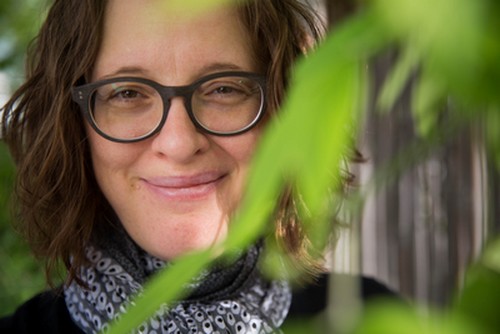
She can be found at http://janedayreader.blogspot.ca


this is not a review: ‘five roses’, by alice zorn

 
So much of how life feels lies in the phrasing,
in the way a thought starts, then turns back upon itself
until its question hangs unanswered in the breeze.”
— from ‘North Point North’, by John Koethe

When I read these lines in Koethe’s poem I immediately thought of Alice Zorn. It’s such a perfect description of how her new novel, Five Roses, is written… all rhythms and patterns, loops, questions and connections that satisfy in surprising ways while leaving us with yet another question we’re only too happy to contemplate until the loops and connections bring us to the next answer. And so on.

It’s a delightful ride.

The story is set in Montreal, in the working class neighbourhood of Pointe-Ste-Charles where Zorn has lived for close to fifteen years. (In the spirit of disclosure may I say that I have the pleasure of calling Alice Zorn a friend, which allows me to confirm that she knows well, and loves, this part of the world. And her humour is delicious.)

“The women in tight skirts standing at the corner of Wellington, leering at the traffic, weren’t waiting for the bus.”

Not only is the story set on her home turf, but this funky ‘hood is pretty much one of the characters—a neglected and, in many ways, unknown part of town. Apparently bus service didn’t even arrive until 1992. A place of historic but crumbling townhouses once home to the workers that built the Lachine Canal, Pointe-Ste-Charles has only in recent years been ‘discovered’ and is still being gentrified. But Zorn has not written about the now. Her interest is in that sliver of time between the 1970’s when the hippies were still there, to the early 2000’s, when life in these increasingly derelict houses just trundled along, when police avoided the area and “People… knew to ignore what didn’t concern them.”9781459734241

And the people are as richly drawn as the ‘character’ of place. One man “…chewed gum with his front teeth.”  In another case “A comma of shaving foam hung from one earlobe.”

In a tiny but telling scene, a woman rides her bike to a corner shop, outside of which sits an eccentric old man in a battered kitchen chair. “She said hello so he would know she knew he was there and expected him to watch her bike, which she leaned against the storefront.”

No words are exchanged yet the moment says so much about the community that exists here and the importance of knowing how to navigate it.

Of course not everyone knows the rules of navigation and part of the happy trip of reading Five Roses  is being privy to the learning process, watching the naifs and the newbies try to ‘get it’.

Fara and her husband are two such newbies. They’ve purchased their first home, thrilled with the bargain price. The catch is that a former resident hung himself in the front room. Not a detail easy for anyone to overlook but, for Fara, it serves as a constant reminder that her sister also killed herself several years before, something she has yet to come to terms with, the guilt of the survivor. “… it wasn’t ghosts that haunted people. It was memories.”

There is Maddy, who we first meet in the 70’s when, as a naïve teenager, she finds herself living with hippies in a Pointe-Ste-Charles flophouse where “…They weren’t homes but steps toward homelessness.”  The hippies ultimately leave but Maddy stays, eventually owning the house and working as a *baker at the nearby Atwater Market. It all sounds nice enough but survival, unlike so much in The Pointe, doesn’t come cheaply and she’s made some hard choices over the years.

Last, is Rose. Named for the iconic Farine Five Roses sign. A young woman raised in a cabin in the woods north of Montreal. (Who even imagines woods north of Montreal?) She comes to the city, a complete innocent, totally unfamiliar with ‘society’, hardly able to converse; her greatest comfort being time spent weaving on a loom back at the cabin (a loom she eventually moves to an empty factory she uses as a studio; squatting is big here). One of my favourite lines, a playful adaptation of Woolf: “A loom needs a room of its own.” (And there is a stunningly beautiful description of weaving that I can not now find… but will add when I do.)

The women well represent the burden of secrets and private lives that each of us carries. Meanwhile the neighbourhood, The Pointe, where it’s assumed there are secrets (what’s life without secrets?) is a mecca of mash ups and messed up lives within which a unique community is formed. Both the women and the neighbourhood share a history of harshness, yet there’s forgiveness at the same time. Whatever you call it, there’s comfort there once you accept it, and it accepts you.

The book reminds me that every kind of neighbourhood, no matter how unassuming, has its own vibe and perhaps even draws a certain kind of person to it for whatever reason. Sometimes it’s so the person can give something to that particular place, other times it’s because they need to receive something that could come from nowhere else.

I like walking around neighbourhoods, seeing how they’re laid out, where do people buy bread, how far is it to the library? I like getting a glimpse of life through the windows and wondering who lives there and who lived there before. It’s less the way a place looks that strikes me as how it feels. And this is what Alice Zorn does she takes the reader by the hand and says see this house, this street? Let me tell you the story of it. And it’s not a story you hear or even read so much as feel.

You know an author has done her job when you close the book and for a while you continue to wonder what the characters are getting up to, you miss them a little, that guy in the kitchen chair (is he still watching bikes?)…

So, yes, if there’s ever a Five Roses  walking tour, sign me up.


Not incidental that before moving to Montreal, Zorn worked at a Toronto bakery where, among other things, she learned to make creampuffs. In a  promotional postcard for the book she shares a recipe that must not be missed. (I don’t even bake and they were flawless.)


Support Indies!

Five Roses  can be ordered on-line from Blue Heron Books.

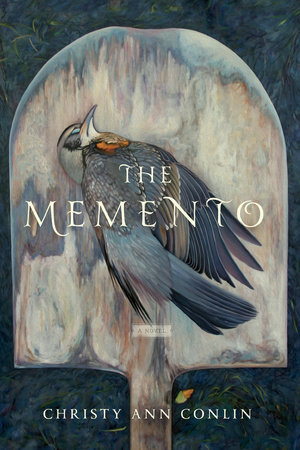
(at) eleven with christy ann conlin: the memento

 
I dreamed of ghosts while reading this book.

But not in a bad way.

There are, after all, different kinds of ghosts out there and in The Memento   Christy Ann Conlin  introduces us to at least a few possibilities. Those that follow you home from a funeral, for example. Which is why you have mirrors placed beside your front door. On the outside. An old Maritime tradition.

The book has plenty of Maritime vibe, and tradition too. It takes place on the Fundy shore, in a house—correction—a grand old estate, called Petal’s End, one of those places you dreamed of being able to explore as a child… with a garden named ‘Evermore’ (a nod to the macabre?), several outbuildings, a 9780385662413carriage house,  even a room for nothing but arranging flowers. That kind of place.

It’s the summer Fancy Mosher turns twelve (a not insignificant number) and is given a letter from her beloved and deceased grandfather in which he explains that a family ‘gift’ has been passed along to her:  the ability to see the dead.

The story that unfolds is one of small town written even smaller. A place with very little privacy yet chock full of secrets because gossip isn’t the same as truth. And memories, well, they can be adjusted to suit any purpose.

Fancy lives from age three to nine with her grandfather, a gardener at Petal’s End. It’s a good life if you don’t mind that your mother’s  bit of a case and rarely around. And anyway, there’s Loretta, the housekeeper, practically a surrogate mother, the kind of woman who “…didn’t get annoyed—she got concerned.”

The family who own the estate, the Parkers, for whom Fancy and her grandfather and Loretta and others work… are rarely home anymore. (There’s a reason for that.) The staff are kept on regardless. The staff know things. The Parkers and the house and teacups know things. Especially the teacups. (In Maritime lore it’s said old teacups carry spirits within them, and I don’t mean gin.)

Everybody, it seems, knows ‘something’. But no one’s talking.

Or at least they haven’t been. Until now.

It was my pleasure to chat with Christy Ann Conlin about this genre-bending mystery cum ghostly folk tale cum literary work.

So without further ado, may I welcome the sparkling Christy Ann Conlin:

~

1.  What literary character did you identify with as a child?

CAC–Harriet, from Harriet the Spy, and Charlotte, from Charlotte Sometimes. As a teenager, with David, from The Mountain and The Valley, and Anne of Green Gables. All of these characters are outsiders, who either create fantasy worlds to retreat into, or as in Charlotte Sometimes, get lost in an alternate world. These are books which deal with identity and belonging and finding a sense of place. The characters are all outsiders and have to find a deep internal strength to navigate the world and community they are in, some successfully, and some not so successfully. I think these early identifications have really shaped my own fiction writing, my understanding of how we negotiate and map out our journey in life guiding and forming the journey of characters in my stories.


2.  Can you recall your first piece of writing? A poem, short story, essay in finger paints?? What was it about?

CAC–I wrote a story in grade six and the teacher told me it was terrible. I was devastated as it was my first attempt. I have learning disabilities and writing was so hard for me. I failed printing in grade four and it is one of my most humiliating memories. The messiness seemed to be a part of my hand, the death clutch on the pencil, and grinding it into the paper. So my effort in grade 7 felt heroic to me. Then I gave up but the next year had a grade eight poetry assignment I had to do. I didn’t understand what was being asked and I didn’t like the poems we were supposed to dissect.  My mother had always read poetry to me, as well as my grandmother, so I got out the poetry books and I copied these poems into what we could now call a scrap book. I did a drawing inspired by each poem, and decorated each page to reflect the mood, voice and imagistic world of the poems. And I also wrote a poetic response to each poem, and did a word list for each one. By word list I mean I extracted words which I felt were significant.  My teacher gave me 100 %. It was the first time I had ever done well in school and now looking back, I see it was the first time I not only found my writing voice, but found the creative confidence which is mandatory for a writer.  

But the years that followed were all about formal essay writing and I really struggled and finally gave up on writing. I fell into it by accident, when a friend suggested I write the story of my life because I liked writing letters so much. My own story was a cure for insomnia and I was soon drooling at the keyboard. Fictionalizing elements of my life, and then sheer abandonment of reality and entry into the realm of the imagination was what brought me to writing.

My school years were very difficult ones, and I found the public school system, certainly in a very rural area, marginalized those who were a bit different, creative or unusual. There was not much respect for eccentricity in the school halls and playgrounds. Imagination and fantasy can be lifeboats for those of us who are outside the mainstream.


3.  What were you reading at age fifteen?

CAC–Surfacing by Margaret Atwood. Flowers for Algernon. To the Lighthouse by Virgina Woolf. Doonesbury. Jane Austen. The Brontes. H.P. Lovecraft. Poe. Emily Dickinson. Charlie Brown. Ray Bradbury. Stephen King. Wordsworth. T.S. Eliot. S.E. Hinton and many, many more.


4.  Do you have a favourite passage (from any book)?

CAC–Many, but one that I’ve loved since high school is the final paragraph of Look Homeward, Angel, by Thomas Wolfe.

“Yet, as he stood for the last time by the angels of his father’s
porch, it seemed as if the Square already were far and lost; or, I
should say, he was like a man who stands upon a hill above the town
he has left, yet does not say “The town is near,” but turns his
eyes upon the distant soaring ranges.”

I find this so heartbreaking, that we really can never come home again, even though we can see it, but there is also that sense of yearning for something bigger than what we have come from.


5.  Are there recurring themes in your work that surprise you?

CAC–No, not really. I am a bit surprised by what is now my life long rumination on our relationship with memory and the idea of sensory detail as portals into the past. I love that scent and sound, for example, can carry us through time. What does surprise me about my work is the ever present thread of humour, sometimes dark and sometimes whimsical and often pure hilarity. I think tragedy and comedy are twins.


6.  We think of a memento as being an object, usually received as a gift to remind us of someone, some experience, some thing, time or place. We assume it’s connected to a good memory—but it needn’t be. In the book, the gift is the ability to see the dead, passed down from a grandfather to his twelfth grandchild, Fancy Mosher, on her twelfth birthday… and much of the story’s tension comes from how this will manifest in Fancy and whether or not it’s an especially welcomed ‘memento’. Two questions: how did the title come to you? And, what is the significance of twelves?

CAC–The title seemed obvious as the book revolves around this inheritance of a gift the Moshers call the “family memento”, a euphemism for a dark ability.  Also, the book really is a memento mori, a piece of art which explores the concept of mortality, and our obsession with immortality. My novel is an exploration of memory and loss, of both embracing and letting go, but always a reminder that life and time pass with every breath.

The twelves come from a few things. Fancy’s mother says that twelve is a special number because Jesus has twelve disciples. This plays into the strange mountain religion mentioned in the book, the Holy Mother Mercy sect which is hinted at.

Also, The superstitions surrounding the red cardinal. The bird trills at dawn and dusk, twelve hours apart, a herald of day and night. Cardinal eggs have a twelve day incubation period. Cardinals don’t migrate, present for twelve months of the year, representing the cycle of seasons. There is a folk belief that if you see or hear a cardinal it carries a message for  you. It was irresistible symbolism for a writer, creating a mythology around this. I love the day being broken into two twelve hour pieces, the time of light arriving and fading, and the time of darkness arriving and fading.


7.  The play of children is cleverly mirrored in the way adults and families ‘play normal’ (and it’s the kids who are dealing with reality so much better, or at least trying to). Also, Fancy knows and senses so much more than she gives herself credit for but she has yet to develop the confidence to believe her own instincts. Is this something you were exploring… i.e. how much of Fancy’s ‘insecurity’ is a normal part of growing up and how much is imposed by family shame (her mother, especially), mythology and (other) dysfunctions?

CAC–I think most of the insecurity is imposed by her mother, her family, society, the Parkers. She inherits her family memento, secrets, and the legacy of shame and fear which accompanies it. I think these forces are what make her so close to the edge, to the mystery, to use a Flannery O’Connor term.


8.  The Moshers have been employed for many years at Petal’s End, a large estate owned by a family rarely in residence. The estate serves as an idyllic backdrop to the carefree aspects of Fancy’s childhood. It’s also the site of much weirdness. This juxtaposition of horror and normal runs through the book in different ways. (I’m thinking of the scene where they’re discussing ‘the Annex’ on the day of Fancy’s birthday, the tacit horror of it… then the scene shifts to Loretta bringing out the cake, singing Happy Birthday.) I can’t imagine the same story unfolding in a ‘normal’ house. Something about the space people need to hide from each other… I’m curious of course: what inspired the setting? (I’m in love with the flower arranging room, btw.)

CAC–Yes, juxtaposing beauty and horror, innocence and wisdom, trust and betrayal, youth and old age, life and death, love and hate…and on and on, these contrasts define this book. We cannot have one without the other.

I also love the idea of something simple, like fragrant air full of the smell of flowers, being more than that, the air being literally embodied by flowers which are alive. We have a saying where I am from, that hot humid summer air is “close”. I love that, how the air is alive, so intimate and engaging with our very being, in our personal space. The book is full of these sorts of normal and yet fantastical elements.

The estate and seaside, the setting of The Memento is a classic gothic element — a grand sweeping home of beauty and decay, from the outside almost a castle, and inside, a labyrinth of stairs and hallways, rooms and chambers, secret passageways, a mansion set in a parkland, with forest, gardens and statues and flowers. It’s a fairytale setting and we all know how the magical world of fairytales holds such an uncanny blend of innocence, beauty, horror and intrigue.

The actual manor home in the book was inspired by several grand estates, here and abroad. I had a remarkable experience in Ireland, in Drogheda, where I was with some friends and we found an abandoned mansion on a river, and behind the mansion, a sprawling parkland with a massive walled garden. There was a hole in the high stone wall and I climbed through and found a sprawling and intricate garden which brought to my mind The Secret Garden, except creepier in how long it had been let go. That moment stayed with me and was the genesis of Petals’ End, the haunted garden in The Memento.

I was also inspired closer to home by Prescott House, a Georgian Manor home at Starr’s Point, Nova Scotia, very close to where I live. I have taught creative writing workshops there in the sunroom, and have had students who remember when the elderly Prescott descendants would serve tea in one of the formal rooms. It feels inhabited by a living history. It’s now a provincial museum, close to the water and complete with restored gardens. There is another grand home, The Queen Anne Inn in Annapolis Royal. It is a house which calls to you from the roadside, which implores you to enter and discover her secrets. Fortunately, it’s an inn, so you can come in and be enveloped by the stories and history of the mansion!


9.  While paranormal events figure into the story, there is another kind of creepiness in all the secrets, especially those children are asked/expected/forced or threatened in some way to keep. You play off this alternate ‘fear’ nicely with the mystery and secrets of ‘the dead’. I’m wondering at what point they conflate in the minds of families over generations…  Is it possible that people tend to hide family truths behind family legends? And might that be one reason for those legends?

CAC–Sure, I think reality, when recounted inevitably takes on a life of its own, and becomes a story merely for the act of telling. And then when it’s passed along again, it takes on more shape and form. Each teller imbues the story with a sense of voice and detail. It’s an organic process and one which keeps evolving, based on the personality and time of the teller. I love this about the oral tradition.

And sure, family stories become a way of entombing the past, with clues and hints and maps that lead back to the past, if a bit of care and attention is paid. I think it’s part a hiding of a truth in a family legend, a part of a family truth which gets lost in the story.  We can search for what is hidden, and we can stumble upon that which was lost. And often, what we lose or secret away, is really hiding in plain sight – it is but for us to put the story in the right order, the words in the right tone, and the truth tumbles out.


10.  What is the one thing you’d like to be asked about the book?

CAC–That’s a great question, ha ha!  This is what I have been hoping someone would ask and no one has yet:  “Why did you take risks with narrative traditions and bypassed trendy and write a book that defies description—a genre-bending literary ghost story for adults for solitary silent read or by contrast, a story for reading aloud by fireside?

The simple answer is I’ve always loved books that read as a page turner and have a complex web of a plot which unfolds seamlessly, and transport the reader right into the story. I really wanted to do this in The Memento.  As I wrote, elements from different traditions came together, and rather than picking one and dropping another, they began to merge. This was the only way to capture the bridge and the co-existance of the past and the present and the future. This idea fascinates me and I wanted a story which embodied this in the actual narrative so the reader would experience this.

Have you ever walked into an old house and then walked out and thought, wow, that was like being back in the 1940s or the 1970s, or even earlier? And yet as you get in the car and Tweet a photo, you are back in your time. This captivates me. The same way that we travel in time with a scent or a sensory trigger.

I love Jane Austen, the Bronte Sisters, Edith Wharton’s ghost stories, James’s Turn of the Screw, those old world books. Kazuo Ishiguro captures that world in Remains of the Day, the old and a newer world, and their collision.  In Jane Austen novels are very much concerned with finding a place in the word, and navigating rigid social parameters, especially for women. I find it interesting how this still continues in society, and wanted to create a thread from the old days to the new, the continuity and persistence of class and gender restrictions. In The Memento, the Parkers are aristocrats with the power of their upper class and the Moshers are in the serving class, and limited in that way. But both have freedoms which also come with their class.

I wanted that old style novel with exquisite language and setting and sense of place, where the world of the book is like a character itself, and yet a contemporary element, which threads through to reflect how old ideas persist and permeate reality.

There is a lot of play with sense of time, and timelessness, in The Memento, how the old world exists within modern society, and you can step in and out of it.

So, this is why some readers and critics have said The Memento reads like Jane Austen or Edith Wharton but as though David Lynch had a hand in the story!


11.  Choices:

Canoe or bike? These days, canoe, because of the contrast of silence and sound, movement and stillness. The thrill of the glide and being on water. There is a sleek elegance in canoeing. And on a lake or a pond there is only bird song, the splash of water, rustle of wind, and the sound of your own breathing if you are paddling hard. And you can stop and sit there in the canoe and feel the rhythm of the body of water as it moves whether on a pond or a river or a lake. We have a small canoe for our pond and paddling in the waterlilies is extraordinary.  In The Memento Fancy recalls being in a canoe on a lake with her mother, collecting waterlilies. This was drawn from my own experience of sunrise canoes.

Song or poetry?  They are one and the same to me right now, as I’ve been working with lyrics in The Memento, the fragments and lines of from ballads and lullabies uses as text in the novel. They become wisps of poetry in her mind.

A ballad used in The Memento which is poetry-to-song: Down By the Salley Gardens – a poem by William Butler Yeats published in The Wanderings of Oisin and Other Poems in 1889. The poem is really a reconstruction and restoration of an old song Yeats had heard. It was which was later put to the traditional music of The Moorlough.  I love the blending of song and poetry as they are one in the same in many ways…poetry is not always words or just words…

Afloat or ashore? At the edge of the shore looking out over the water, watching the reflection of the sky in the water, the sun and the moon, watching the wind ripple through the lily pads and wondering then about the forest behind me as I sit at the water’s edge.

Picnic or fine dining? The antique picnic wicker basket with linens and table cloth and carefully packed lunch carried to a special secret spot in a meadow or on a beach.

Fat book or skinny? A book size which suits the nature of the story.

Ice cream or cheese? Neither.  Lime or cherry sorbet served in an antique depression glass bowl.

andre-kertesz_the_fork_1928_500pxFood and books. Is there anything better?

For that reason I like to offer my version of the menu inspired by the book.

Matilda’s Menu for The Memento:

baked ham

strawberry shortcake

freshly baked rolls

sassy lemonade

(no tea, thankyouverymuch)


Christy Ann Conlin. Photo Credit Bruce DienesCHRISTY ANN CONLIN’s acclaimed first novel, Heave (2002), was a Globe and Mail  “Top 100” book, a finalist for the Amazon.ca First Novel Award in 2003 and was shortlisted for the Thomas H. Raddall Atlantic Fiction Award and the Dartmouth Book Award. Heave was also longlisted for the 2011 CBC Canada Reads Novels of the Decade. Her novella, Dead Time, was published by Annick Press 2011 and received a starred review in Quill & Quire. Her short fiction has appeared in numerous anthologies and literary journals including Best Canadian Stories, Room Magazine, Blood + Aphorisms, and Numéro Cinq. Conlin also hosted the popular 2012 CBC summer radio series Fear Itself. The Memento  is her first novel in fourteen years. Conlin teaches at the University of Toronto School of Continuing Studies online Creative Writing program. She lives in Wolfville, Nova Scotia, in a big yellow century house at the edge of a lily pond with three little boys named Winken, Blinken and Nod, and her loving husband, Andy Brown, publisher at Conundrum Press.

She can be found at http://www.christyannconlin.com/


*Author photo: Bruce Dienes