and this…

…. when checking on my scarves, which are daily feeling like metaphors blowing in the wind, I find a nest I assume is a hummingbird’s so I ask an island expert on such things and she tells me that, no, not a hummingbird but a vireo made this beauty, which delights me because I’ve heard what I dared to fancy were vireos chorusing in this particular neck of the woods and now I wonder if this little place will be returned to like a swallow’s box because the very truth of it having withstood the heavy snow, pelting ice, and winds of winter is astonishing and if the vireo owners are maybe thinking of subletting, I’d like to suggest that ‘durable’ would not be an overstatement in any ad.

The picture distorts size. Imagine the cupped hand of a small child. Also, know that it’s hanging in mid-air, fixed to thin branches by spit, grasses, and hope.

A hummingbird, I’m told, makes a nest the size of thimble.

my scarves

the light getting in

There’s a beach where I sing Cohen’s Anthem to the seals, the chorus anyway, about cracks letting in light, the perfection of imperfection. I’m pretty sure that’s what the seals are singing too.

But this post isn’t about seals.

It’s about trees, which is part of the reason I’ve been inconsistently present for the better part of a year,

I’ve been wandering among what’s left of the them ever since Hurricane Fiona struck the east coast, when the island is said to have lost 40% of its trees on that single day in September, 2022.

Much has changed about the landscape since, not to mention the shoreline, not to mention the bridges, wharves, barns and houses demolished. The everywhere piles of timber have become a testament to the art of log stacking.

I’ve been wandering in what’s left of wandering space in the forest around my house, initially dazed, less so each time. We’ve done mammoth cleanups and have begun to cut a few new trails but we’re taking our time. I realize I don’t need a whole forest to wander through in order to feel awe.

There is new sunlight, saplings too, and mossy glades have sprung up among the still standing spruce and eastern larch (tamarack), the maple and birch, groves of beech, mountain ash, serviceberry, alder and aspen.

The other day I counted eight or nine new oak trees I’d never seen before. A few days after that I saw twenty on the same walk. This morning I stopped counting. This is the way of trees, I realize, the slow reveal of them. A forest at a glance is… green space. Up close it’s an unending universe.

Just the other day, at the edge of the tree line, I found two new apple trees, each a great distance from the other. One I call the galette tree for its tiny perfect fruit, tart enough for galettes, one of the few things I enjoy baking, precisely because the crust wants to be imperfectly shaped.

The old linden beside the house was perfectly shaped, but also imperfect because it had grown so large it almost touched the hydro lines and a month or so ago when another hurricane threatened, and because the direction of the forecasted winds (different than Fiona’s) would force the tree’s branches right onto the power lines, we took no chances, and had it cut down. I expected to be sad, pained even, but it wasn’t in the least painful, not a bit sad. There was a sense that the tree itself knew it had become a danger and the space it left was given like a gift, not only to the bee balm and juniper, lilac and witch hazel that have barely survived in its shadow but to me, personally. Its stumps invite me to weave ribbons around them and carve them with Cohen’s words.

Now every morning I salute these stumps and the space once filled with the old linden’s canopy, thank it for its willingness to continue standing despite (we realized) rotting from the middle and something eating its leaves, for making it easy to do what was necessary, and for the light its absence allows.

The other day in my ramblings along the tree line, I noticed among the ‘greenery’ a tiny grove… of linden saplings.

What else to say…

Here’s to the cracks and the light.

Ring all the bells.

light gets in

it’s been too long and i miss this space

Hard to fathom it was back in September last year when I was last on this site, no intentions to take a break of seven months, no idea then that Hurricane Fiona was days away.

The aftermath of which was certainly a big part of my absence. And not just in the way of getting over the shock, or even the clean-up, which will be years in the doing, but because big events cause big shifts in ways you sometimes don’t even know are possible. Big shifts in the crevices of our lives. The way we think about things mostly.

Not the least of which is how I’ve come to think about the forest. When we first arrived here to this house near the sea and at the edge of the Wald (a german word that I love), I remember looking at some leaning trees in the distance and bemoaning the fact that they were too far away to cut or straighten, that they cluttered the otherwise beautiful Wald, gave it a messy look because of course trees should be upright, never dead, and full of twittering bluebirds. The best forests are like that. Aren’t they?

Turns out they are not. If you look closely at any healthy forest (not a park setting but a natural woodland) you’ll see dishevelment. You have to look closely though. A quick glance only gives the Disney impression, moss and ferns and rich earth, dappled sunlight, etc., all of which is there too. But look at the dead wood, the fallen trees, the decay that becomes new habitat, the saplings that find slivers of sky and sunshine that reach out and take those saplings by the hand and say this way!

Even so.

Fiona created more than dishevelment.

I spent hours every day walking through our ravaged Wald. Wept at the number of trees down, hundreds of them, like piles of enormous pick-up sticks, only most of these will never be moved except by time and the elements. It occurred to me that I was walking in the Wald more often than I did before Fiona, when the trails were clear. I was always drawn to the shore then, the forest was right there, it could wait. But now the forest called to me several times a day as if it had something to teach, it actually felt that way, and as I took in the devastation daily, sat amongst the debris breathing deeply in sadness but something else too, I noticed a huge white pine I’d never seen before, still standing, and named her Mother for the comfort of her presence, how she seemed to suggest that, despite appearances, all was in fact well, that life goes on. I soon realized that the yin yang of everything is here too, renewal in disaster. I was in anguish for the forest but the forest didn’t feel troubled. And pretty soon neither did I.

The forest, it turns out, is an excellent teacher.

I began to notice all kinds of things that felt new, things I’d walked past before. The tiniest twigs, which I now took the time to identify and celebrate as young birch, maple, oak, or beech. I watched red squirrels move into piles of brush as we cleared new paths and thought how the space had never been so alive with birds (had it?), chickadees greeting me every morning, landing on my outstretched hands, the way sunlight came through new gaps in the canopy. I’ve always embraced nature in a huge way, even as a kid. Outside is my favourite place to be, trees were always my friends, and the cycle of regeneration was something I’ve always known about but didn’t think about it in a deep way, something I just took for granted. Fiona made it impossible to take much for granted.

So this is part of what I’ve been doing all these months.

Falling in love in a new way.

And loving the surprise of its domino effect.

cathedral

promises, remembered


I wrote this post several years ago on the first day of Ramadan. I now live a thousand plus kilometres away but hearing that Ramadan has started I immediately think of my lady in the dry cleaner in the town where I used to live. Can picture her hunched over a sewing machine, a tiny television set tuned to an Arabic language station, the always-exhaustion in her voice and in her eyes and the day those eyes smiled and how it left me feeling that our connections might sometimes feel strange or tenuous but they’re always there, that regardless of everything else, we are all connected, in moments, in milliseconds sometimes, and in the most surprising memories.

This following first appeared as “Promises”, on July 10, 2013.

A couple months ago in a post that began as one thing but ended up being about my dry cleaner, I wrote about how my dry cleaner’s husband kept telling her that he wanted her to have nice hands and how this frustrated her because she worked too hard to have nice hands. She would love to wear polish, she said, but who has the time.

It reminded me of a dance that went on for years between my mum and dad, who’d also come here as immigrants.

I promised myself I’d buy my dry cleaner some really good nail polish and give it to her, and today I did. When I entered the shop she was sitting at a sewing machine, head covered in a shawl. I’d never seen her in a head scarf before and wondered at the reason for it but didn’t ask.

I gave her the polish. Hot pink. I explained why, reminded her of our conversation and she laughed, said she loved the colour, asked how much she owed me and I said, no, that it was a gift. She was surprised and delighted and then told me it was the first day of Ramadan. She said it’s especially hard when it falls at this time of year because of all that daylight stretching late into the evening. The month-long fast, which includes no food OR water or anything, ends each day when the sun goes down and begins again when it rises. Much better in November, she said. Even March is good.

She normally walks an hour to work but for the next month she’ll be getting a ride. I was happy to hear it given the humidity and heat.

I said I hadn’t realized Ramadan began today, that it was just a fluke I came in, but that I was thrilled to be able to offer some small thing to mark the day and happy to have learned something so wonderful and I thanked her for that. She smiled, said she’d pray for me.

I said I’d do the same for her.
IMG_7439


yellow cup

Yesterday a cousin sends pictures of alpine snow heavy on branches, mountains, rooftops, and me here in the rain feeling snow envy, sending a message back to her… “A slice of heaven!” I write and forget my laundry on the line and then this morning I open the blinds and see snow heavy on branches and rooftops and the morning light is just starting and I put the kettle on and go out to the porch, my laundry frozen and me here in coat and boots and a bright yellow cup, lemon balm tea as the sun rises through a slice of heaven.

IMG_0860

IMG_0862

how to find a prairie in southern ontario during a pandemic


Begin with endlessly sorting your bookshelves. Keep, donate, keep, donate….

At the back of the shelves, find a book on road trips that looks boring and decide you don’t want to keep it but then notice a newspaper clipping tucked inside — an ‘Out Walking’ column from the local paper, by Margaret Carney, a (Whitby) resident, writer, and naturalist.

Notice the date: September 10, 2000.

Read the clipping.

Get excited about sentences like this:

“One of the biggest thrills of my whole summer was visiting a precious remnant of original tallgrass prairie — the site of a historic cemetery — and then, high on a bluff overlooking the Otonobee River, a magnificent restoration of acres of prairie wildflowers in bloom. Both are just east of Durham Region, on the Rice Lake Plains — a pleasant jaunt for anyone out for a drive.”

Consider whether you have enough cheese in the fridge to make a picnic.

(If yes, pick a sunny day, pack a cooler. Include peaches. The peaches are wonderful this year.)

Head out on the road.

Bring the newspaper clipping.

As you drive ask the person in the passenger seat to read out the part again where Carney says the cemetery, because it’s on land that has never been plowed, contains one of the rarest surviving plant communities in Canada.

Also the directions. Could they please read out the directions again.

Because you’re having trouble finding the place.

Though you do find some nice views and happy surprises en route and for a moment you think you’ve found the cemetery. But no…

Just as you’re about to give up, just as you begin driving away, heed the seemingly pointless impulse to turn the car around and drive back a few kilometres along the same road for the third time.

When you see a man on a small tractor (who was not there just a few minutes ago) drive onto his property in a cheerful manner, and apologize for interrupting. Ask about the cemetery and be a little surprised that he knows exactly where it is. Smile when he says have a good time. Grimace when he says watch out for snakes. Snakes??  Oh, sure, he says, there’s snakes out here. Bear too, and mean yellow-eyed Fishers (which you will google later.)

Drive back along the road for the fourth time.

And then marvel at how exactly where he said it would be, there it is, the Red Cloud Cemetery, once part of a community called Red Cloud.
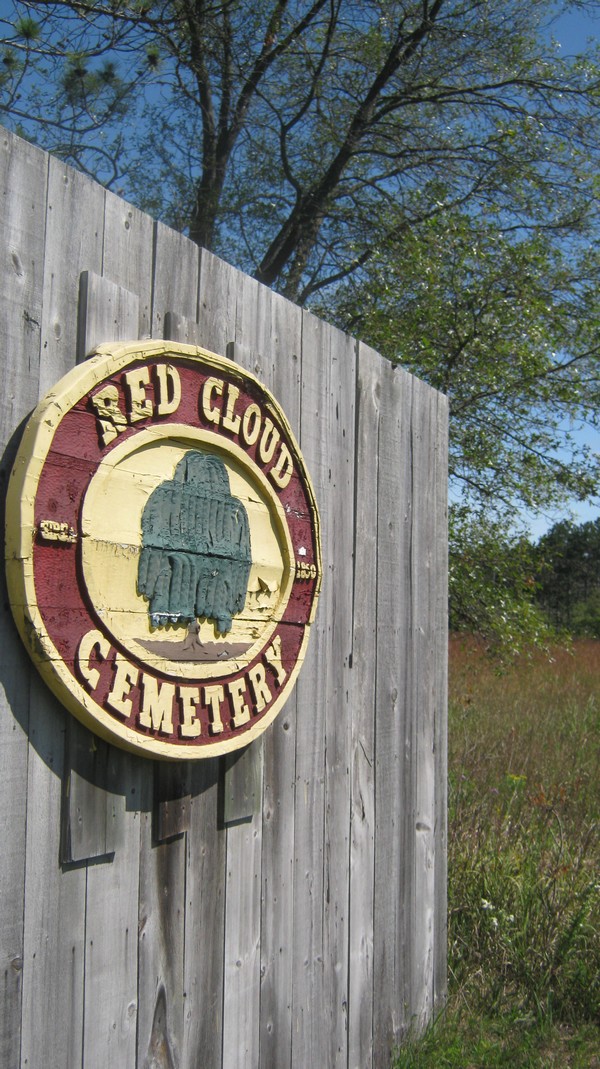
Walk through this small slice of undisturbed grassland with reverence for the people who lived here, for those who’ve come and gone, and wonder about their stories (first burial in the early 1800’s, the last in 1940).  Reverence too for this slice of rich history and remnant of original landscape that looks so ordinary it makes you dearly want someone to explain what’s what.

Above all, feel reverence for the quiet energy that fills this space.

Decide it’s the perfect place for a picnic.

Open up your lawn chairs and haul out your cheese sandwiches. Notice the size and diversity of the trees and wonder how many eyes have looked at them from exactly this angle against a sky exactly this shade of blue. Do not think about snakes. Although because of possible bears, keep the picnic site close to the car.

From there follow Carney’s instructions an hour or so west, to the Rainbow Tallgrass Prairie Restoration Site near Rice Lake, which she describes as twenty acres of private farmland that a family is restoring to its original tallgrass prairie roots.

Once again be unable to find the place.

Once again notice a man on a tractor. A larger tractor this time, driving along the gravel road. He will tell you the prairie is long gone, the property sold to new owners who plowed it over in order to farm the land. He will wonder how it is you came to be looking for it. Tell him about the twenty year old newspaper clipping. Watch the confusion on his face, followed by an expression that might translate to something like: city people.

He will give you directions, tell you it’s over that hill, turn right at the next lane. He will tell you the sign is still there but nothing else and you decide to go look for it anyway, for the sign and for where the prairie used to be and once again, it’s all exactly where the man on the tractor said it would be.

Or would be if it still existed.

Decide to head home now that you are filled with knowing what you already knew, that some parts of nature are preserved and others are not. Be happy that if a tallgrass prairie restoration project had to be razed, it was for someone to make a living. Remind yourself that this isn’t anything new and just embrace the fact that tall grass prairies once covered this part of the province, wherever the soil is sandy. Imagine it.

Be grateful there are still small, independent farmers.

Sigh deeply. For the beauty and the sadness and the joy and the reality of the ever changing change of things. For the miracle of men on tractors appearing just when you need them. For not seeing snakes. Or bears. For the luxury of sandwiches made with local cheese and peaches grown on Ontario trees. For the privilege of being able to spend a day breathing in such peace.

Point the car in the direction of home.

Turn on the radio.

Be grateful for the person in the passenger seat.

And when the mood strikes, stop and stretch your legs, climb up to lookouts and see where you’ve been

and if there are no cars in the parking lot of a bakery, don your mask and enter, leaving with one perfect butter tart,

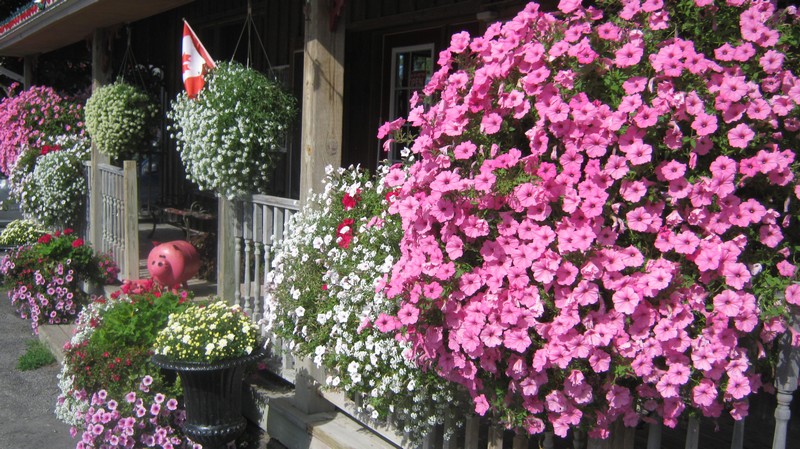
and when, like a mirage, a field of grapes appears where probably a tall grass prairie once stood, and a sign for libations… take a long deep breath for irony’s sake, slip on your mask, and find the patio.

And if there are only two other people there and they are waaaay at the other end — and down wind to boot — pull down your mask and enjoy the view.

More tallgrass prairie love here.


this morning i went to my place of worship


This morning I went to my place of worship.

Does it matter where it is, what it is, whether it’s recognizable, made of feathers or cement?

Answer: no.

This morning I went to my place of worship.

I brought my camera and my eyes and my gratitude for seeing.

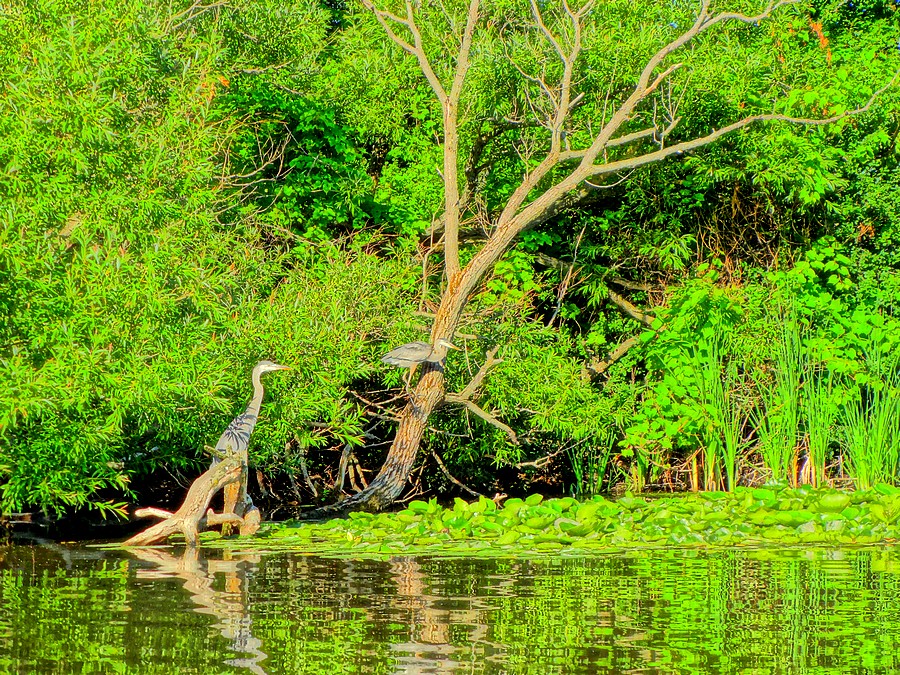
I brought joy at the blue heron’s greeting and the resident swan family out for their morning constitutional, reminding me of how last year I saw the adults perform a water ballet.

I brought silence and received birdsong, wing rustle in reeds. I brought my breath and it got deeper and the shoulders I thought to pack at the last moment, and which were so high and tight they were a burden to carry, dropped and loosened and were suddenly fine to travel with.

I brought no expectation of blue-blue sky  but there it was and me here in my pew, maybe the only one amazed. The trees seemed to take it in stride.

I brought stillness and found the water rippling with invisible insects, fish jumping, bubbles on the surface in the form of a heart. I found the electric blue green of a dragonfly and the white wings of a tern.

I brought the wonder of how everything knows how to survive winter and weather and drought and us. And I brought no judgement. And I was not judged. Of that I’m certain.

I brought a banana.

And I brought some blueberries.

And I ate them, leaving a single perfect one as my offering…

for the collection plate.


chasing the sunrise and missing the rooster


I’m often racing out the door in the earliest a.m., sometimes still partially clad in pjs, heading to the ravine where the sun rises behind an embankment of spruce cedar pine larch maple and birch that look down on a creek running through town.

I’m a sucker for that still-darkness when horizons hint at crimson bursts of red sky madness to come, though the red flash is always momentary, easy to miss, but followed (thankfully) with the burnt caramel of a slowly evolving main act, which (thankfully) lasts longer, has the consideration to build intensity before fading, gives you enough time to take off your mittens and point your camera.

Thing is, in all that sky focus it’s easy to miss the sound of a cardinal unseen but unmistakably singing an unmistakable greeting to that rising sun.

Easy to miss the bare branched ancient tree you’d never guess grew wild apples unless you’d seen it in spring covered in blossoms and bees and later in fruit that makes an excellent crumble.

Easy to miss a small gathering of chilled Queen Anne’s Lace or the footprints of someone not you, and their dog. Easy to walk right over frosted grass without noticing the crackle and crunch.


Or the tiny rhino…


… the seal playing with a ball.


And this guy. (Tell me you see it too.)

cockadoodledoo.


wordless wednesday with words (aka: let us talk about trees… )

I’ve written about trees before.  Trees I’ve loved. And my love of trees.

Trees that replace old (tree) friends.

And I’ve occasionally ‘not reviewed’ books about trees… a couple of my favourites are mentioned here. Also here.

Of course I adore the Tree of the Week feature in The Toronto Star and the way trees are these subtle but enormous parts of our lives that we hardly even think about until someone asks.

So I’m asking.

What’s your tree history?

For instance, was there a beloved tree in your childhood? Was it a pear tree and did you read Nancy Drew and eat potato salad in it? Did your father knock down the apricot tree at the end of your driveway because he stepped on the gas instead of the brake, after which your mother no longer made apricot jam because she never found apricots that were as good as her own? Did you read James Michener in a quiet leafy park while eating stolen peaches from a nearby orchard? Do you have any tree stories at all that don’t involve fruit?

Feel free to share even the tiniest wee memory.

Also… I would love to know what I’m missing in the way of literature where trees feature prominently, including kid lit, poetry, and essays.

if you were a tree, what tree would you be?


one exquisite thing, #gratitude


“I get so much comfort in thinking of our long friendship, and how it has grown so much stronger through the years, binding us together. If I didn’t have those things at the bottom of my heart I wouldn’t get as much out of blue seas or sunny lands.”

— Willa Cather, (Letters)