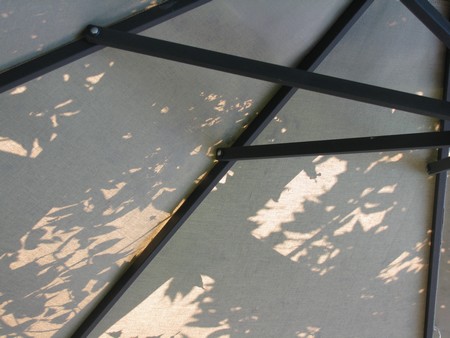
I probably spent just a little too much time reading on the weekend under this umbrella (no, I take that back; actually, I didn’t spend nearly enough time).
I’ve been thinning out my bookshelves recently, and coming up with some odd and interesting titles in the process—things I’ve either not read or can’t remember reading. (Which makes me think of the old Born Loser comic strip where the husband is increasingly frustrated by his middle-aged forgetfulness, can’t find his glasses, etc., and his pragmatic wife, who says:
“Think of the positives—soon you’ll be able to hide your own Easter eggs.”)
But the point is…
Oh yes. The books.
One of the more unusual titles I’ve unearthed is Just Add Water and Stir, a collection of essays by Pierre Berton, most of which appeared in the 50’s in what was then The Toronto Daily Star. The book is described by the publisher (McClelland & Stewart) as… “Being a random collection of satirical essays, rude remarks,used anecdotes, thumbnail sketches, ancient wheezes, old nostalgias, wry comments, limp doggerel, intemperate recipes, vagrant opinions, and crude drawings…“
What often strikes me about writing from this era is the intelligent humour, that black and white Gable and Lombard rat-a-tat pace that’s clever without the need for cynicism or the homogenous drum rolls in which much of today’s humour is packaged. People then, it seems, weren’t afraid to be subtle.
I’m also struck by the whole Hey-Honey-Get-Me-a-Coffee-Willya mentality and the (shudder) girdles-riding-up image that conjures.
For example, there’s a section titled “Seven Men and a Girl”. Not a ‘woman’— a girl. Not boys, men. Seven of them. Some of whom include Glenn Gould, Charles Templeton, Russ Baker (“last of the world’s great bush pilots”), Robert Service, Milton Berle. Then there’s the girl—the sole representative of half the population—a prostitute named Jacqueline.
These happen to be among the few serious sketches about lifestyle, achievement and personality, based on interviews Berton conducted. The one about Jacqueline is meant to dispel the theory that all call girls are unhappy. Unlike so many others, Jacqueline, evidently, “has it made”, mostly because—
“…she’s met a man who has given her his name and expects nothing from her but her love. One may well ask why, under this odd arrangement, he too is happy. And again the answer must be that happiness is not an absolute. Jacqueline’s husband spent ten years in prison. Now he has a steady job and a wife who looks after him. For him, this is enough.”
Berton writes that when Jacqueline was asked about quitting “her profession”, she said she’d quit tomorrow if her husband told her to.
“But he hasn’t told her, though perhaps some day he may. And I don’t think Jacqueline really wants to quit, anyway.”
In addition to the ‘serious’ stuff, there are parodies and take-offs of society, of education, the press, bureaucracy, smoking, marketing. Smart satirical re-tellings of fables and fairy tales and recipes. Opinions on Dick and Jane, racial origins, thought control.
More than anything, it’s a fascinating romp through a not really that long ago—yet in another lifetime—era.
~
At the other end of the spectrum, I read a poetry collection recently purchased for my niece—Think Again, by JonArno Lawson, (Kids Can Press, 2010). Beautifully illustrated by Julie Morstad, with simple pen and ink line drawings that just so perfectly capture the essence of emerging adolesence—all beauty and innocense mixed with tension and confusion mixed with childlike joy and what’s left of that fleeting childlike wisdom that they are perfect just as they are.
The poems, written as quatrains, may be a little too angsty or introspective on their own, but complemented by the drawings, the book reflects something pure about the young teenage mind that, as grownups, we’d do well to be reminded of now and then.
What I Want
I’ve objected and complained/But it hasn’t done any good—/I don’t want to be explained/I want to be understood. (from Think Again)
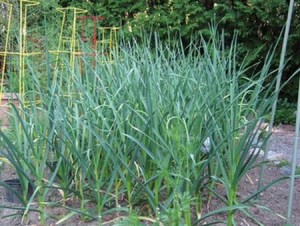 The scapes have started.
 They look like tiny swans’ heads.
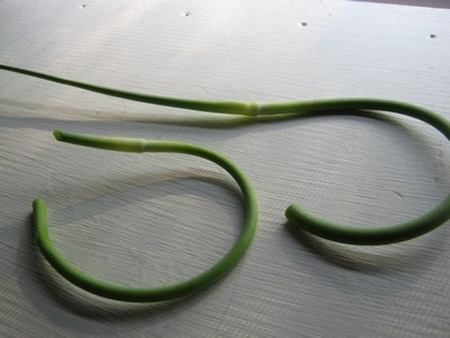 You snap them off, then trim the long chivey ends, leaving the pale green tip and about six inches of stem. Toss them in olive oil, salt and pepper; wrap in tin foil and leave on the grill for fifteen minutes or so. (Bonus: removing the scapes means fatter garlic bulbs.)
 Mmmm. Swan head. Sounds tasty.
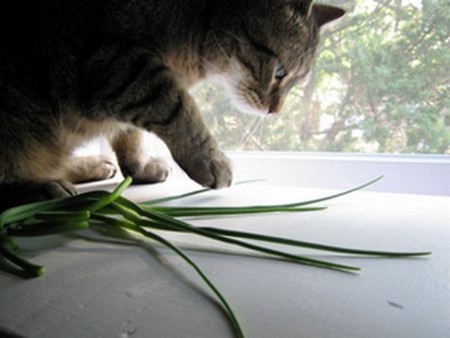 C’mon swan. Wake up.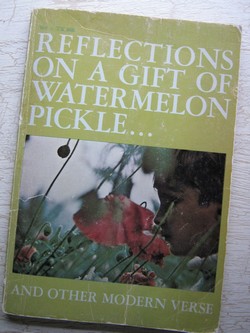





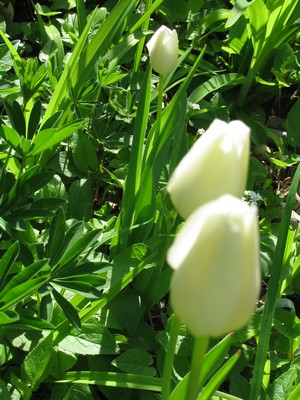 Only after they’ve stopped being gorgeous just as they are—

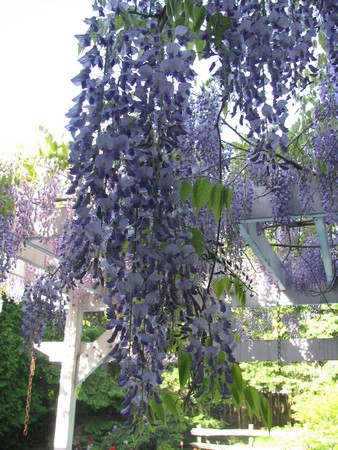
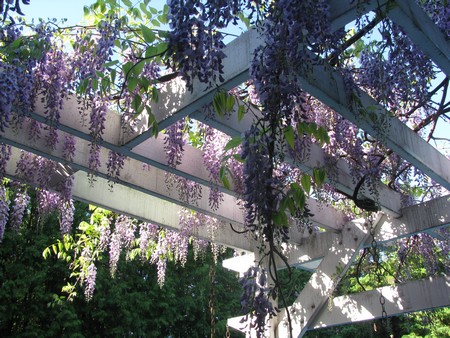 Smells like Hubba Bubba.



 Matilda Magtree