Depending on who you listen to—either today, yesterday, or tomorrow is the Feast of St. Mary of Egypt, patron saint of penitent women who formerly lived in sin.
It’s just so nice to know there’s something for everyone.
Depending on who you listen to—either today, yesterday, or tomorrow is the Feast of St. Mary of Egypt, patron saint of penitent women who formerly lived in sin.
It’s just so nice to know there’s something for everyone.
While waiting for my for my mum outside the hairdresser, one of those oversized pickup trucks pulls in beside me. The guy driving is bearded, tanned, leathery skin, the rugged outdoorsy type; six foot something probably, built like a brick shi— Well, you get the idea.
When he opens the door he’s holding a block of wood on a string… I see hardware that converts the foot pedals to hand operated ones and I see that the man himself, while rugged indeed, is closer to three foot nothing. He lowers the wooden block to the pavement, slides down to the running board, onto the block, hops off, and places it back on the floor of the truck—all in one smooth movement.
Then he slams the door shut and makes his way toward the bank.
Ten or so minutes later he comes back out and at the same moment my mum emerges from the salon. The guy gets to his car first, opens his door, reverses the wooden block process, and drives away.
Meanwhile my mother is settling into the passenger seat beside me and says, “Did you see that poor handicapped man…?”
And I think: no, I didn’t.
The word handicapped just didn’t apply.
What I saw, I realize, was a short man making adjustments for himself in a world designed for five and six-footers. Anyone paying attention to his actions rather than his size, would see him as resourceful not handicapped.
It’s a matter of perspective.
Let’s say that every vehicle, house, appliance and shopping cart in the world is designed for people three feet tall. Newspapers and labels on food are printed only in Braille. Lectures and plays are conducted only in sign language. If that were the case it would be us—the so-called able-bodied—that would be unable to function. We would be handicapped by a mere change in the design of things around us.
It seems we’ve merrily built a world suited only to one type of person, to one idea of normal—then allowed ourselves to judge those who can’t easily function in it as abnormal. It’s like greasing the dance floor and standing aside, clucking our sympathy for those who fall.
I think about all this during the meagre coverage of the recent Paralympics—and how those events are seen as secondary to the ‘other’ Olympics—how the athletes are referred to as dis-abled. And why that is.
Perspective.
Because the guy in the truck wasn’t dis-abled.
And the athletes in the Paralympics certainly aren’t.
There are, of course, the truly dis-abled, those who can’t function due to physical or other limitations—
—and then there’s those of disabled through ignorance, who define ‘normal’ in relative terms…perpetuating the views of a society whose perverse logic once deemed the left-handed next to useless.
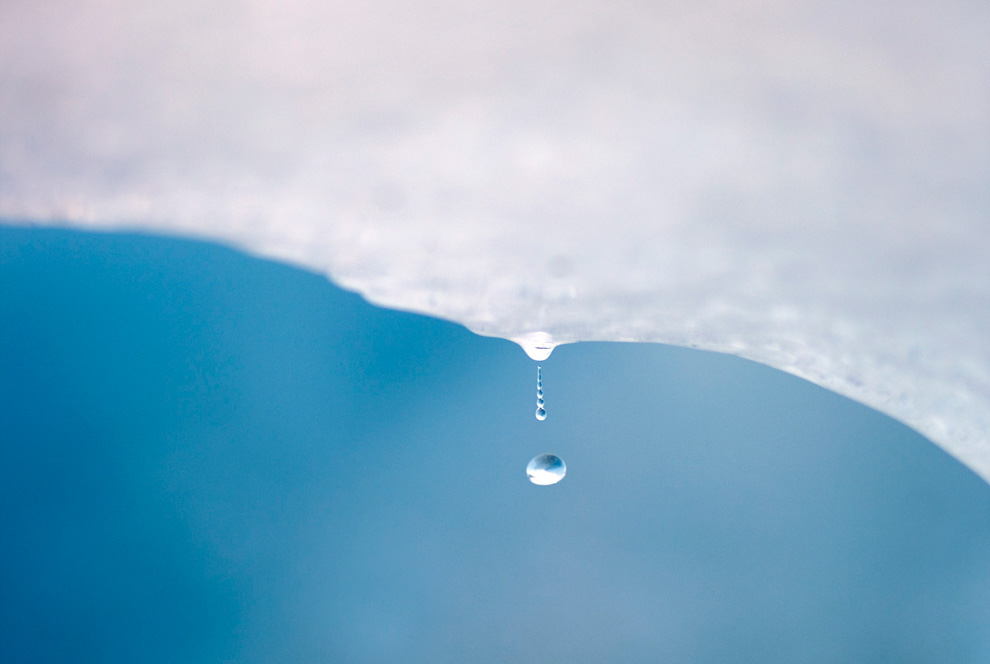

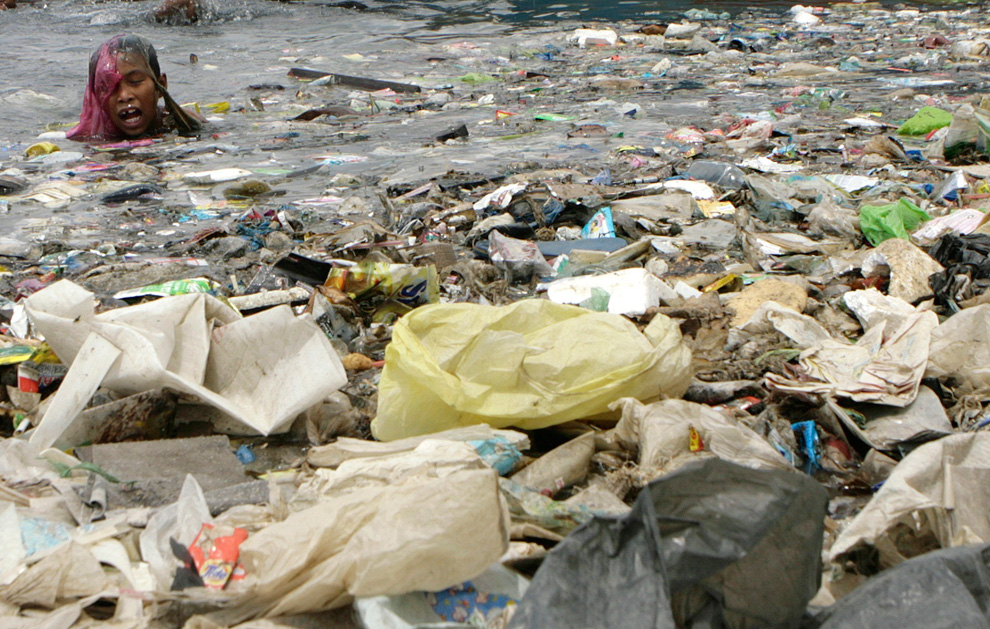 From The Big Picture
URBRAL— Could be the word has been thrown around widely in various circles, for yonks even, but to me it’s new. Just came across it for the first time recently, and loved it.
So naturally I had to google it.
“I have Fink’s how-to book in front of me and I am going to do it, I hope to do it before the sun goes down, but if it takes me till tomorrow then I will stay with it, since, as Fink warns, writing a successful story takes time. He tells us he has toiled countless thousands of hours making his very popular stories, without once being struck by “divine light, by visitation of the muse, by irradiation from within, by lines delivered from God on High, or by any other of the thousand and one kind of crappy ways another author will tell you is how he does it.” Fink has got where he is, he says, by “hard work,” by “focusing the mind,” and by “utilization of a discipline forged in steel.”
” Begin, says Fink, at the beginning.
“I have a warm toddy nearby, plus the dictionary, a thesaurus, a booklet called Don’t Dangle Your Participles in Public, a yellow scratch pad for capturing the hot idea.
“Begin, Fink insists, by writing what you know.
“I know, I think, as much as the next guy. What I know for sure is this: I am twenty-three, intermittently, which is to say, seasonably, employed by Rafael Estates (cleaning the pools and grounds, duh), a job my parents got for me when they met Mr. Rafael down in Wahoo. I have, I am proud to say, a cohabitational relationship with a somewhat weird but beautiful girl named Sasa as of two months ago. I hold a high school diploma and nine credits from the Hortenhuaser School of Broadcasting, I am something of an authority on French cuisine, on vinery (the primitivos of southern Italy being a specialty), and I placed 32nd among 1,700 in last year’s local marathon, which means I’m fit and know about running. I know heaps about Rwanda, the genocide of a few years back, 800,000 Tutsis and good Hutus dead in one hundred days, thank you, Madame Allbright, but that would take a book. Things I know zip about and won’t get into in this story include sex, or sex prior to my cohabitation with Sasa, economics and such, history and such, politics and such, current events, biology and physics and such, all the sciences, let’s say, including the occult, philosophy, architecture, animal husbandry and the rural arts generally, astronomy, religion, together with the thousand and one other things that no one else knows much about either. I won’t be going into any of those, so you can sit back and relax.
“Keep your paragraphs short, Fink says.
“Okay.”
—
(from: How to Write a Successful Short Story, by Leon Rooke, in the collection The Last Shot, Thomas Allen, 2009)
At last. Some excellent coverage of the Paralymic Games over at The Boston Globe. Amazing photos—exciting, gorgeous, inspirational—as coverage of this, or any, major sporting event should be. (And the quality is great—full screen pics with cut lines; the following copies don’t do them justice.)
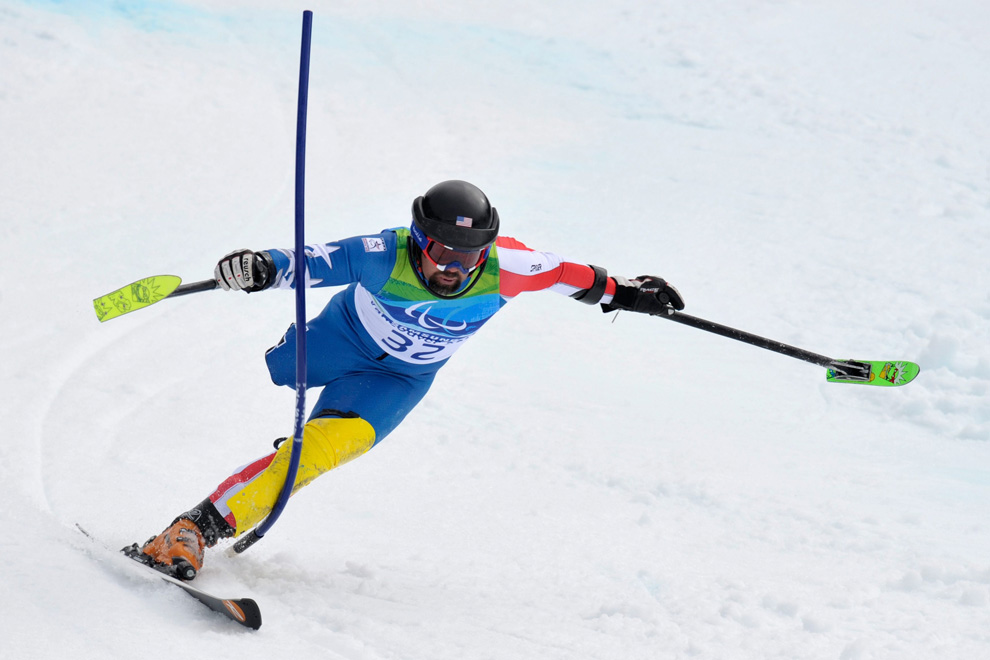


God forbid we should have any coverage (to speak of) in Canada.
As I may have mentioned… CTV is useless. The “highlights” I’ve been able to see are tiny, annoying snippets, showing virtually nothing (the skiing coverage, for instance, didn’t even feature one complete run); and there’s little, if any, commentary about the events themselves, the training, the equipment, the athletes—their stories, determination, the extreme athleticism (the way they do in the ‘other’ Olympics, sometimes—you’ll forgive me—ad nauseum). Furthermore, good luck figuring out when the “highlights” will be on.
As for the major dailies in Toronto (not sure about the rest of the country) none featured the Opening Ceremonies on their Saturday front pages (choosing instead to focus on K’Naan, Savard and Bre-X). And, but for today’s Globe and Mail, the coverage throughout has been embarrassingly scant, often taking second and third place to other, everyday sports news. (Tell me again, these are OLYMPIC GAMES… and they’re in in THIS country, right??)
Clearly, they do NOT have The Big Picture. And we wonder why newspapers are dying… It makes a person want to fan the flames.
To the brains at The Boston Globe… thank you so very much for taking note of a major event that for some reason much of our own media has all but entirely missed.
Thanks too, to Matt Galloway, whose comments on CBC’s Metro Morning today, brought this site to my attention.
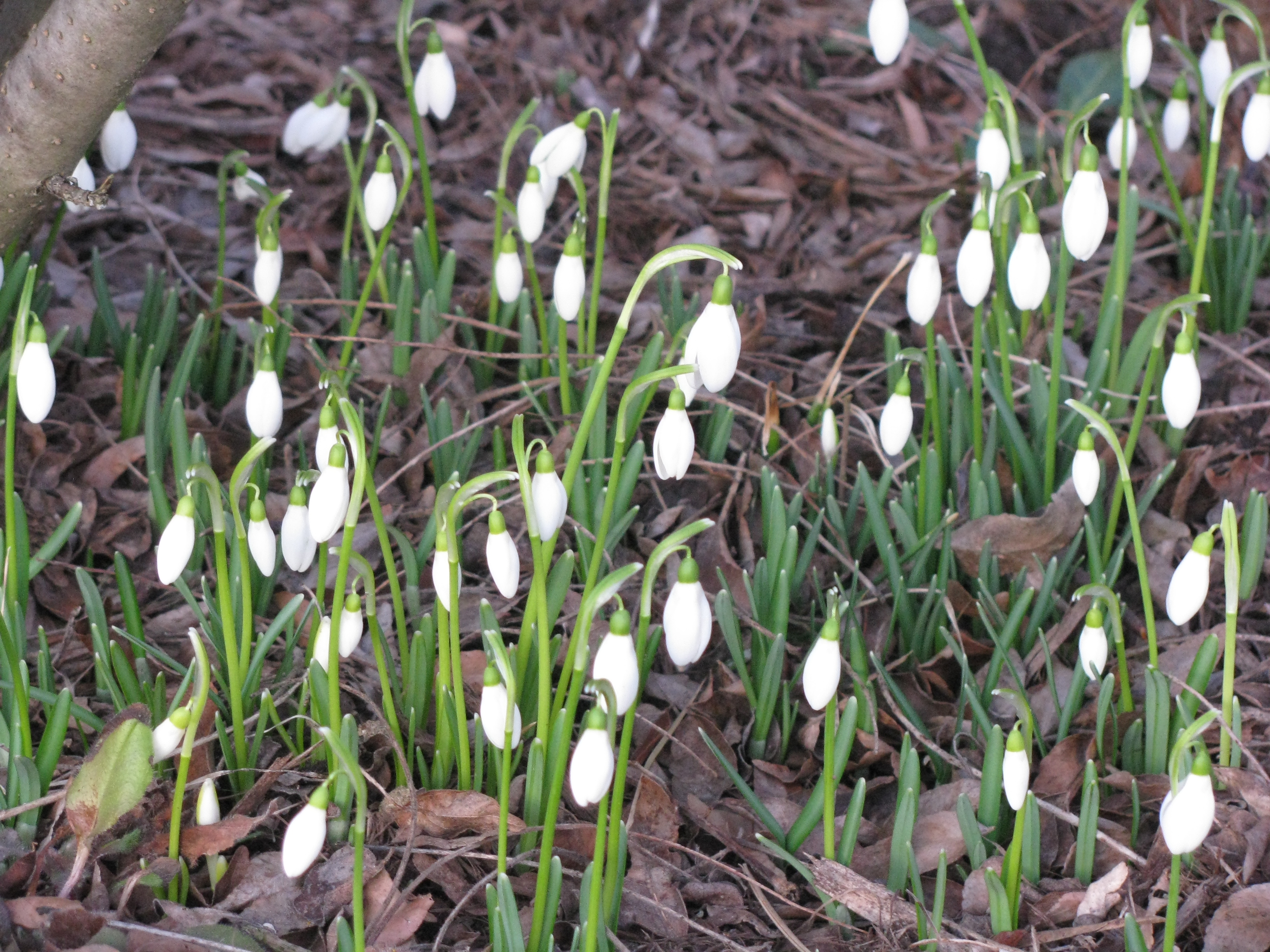 Of course it can still snow. I know that. But for now it isn’t. For now it’s going to be 17 glorious degrees and I’m already planning how I’ll play hookey. (I wonder what the regional expressions for that are? Something like “jigging” in the Maritimes, I think…)
For now it’s about happy dogs named Rex and Dexter that I met in the park—ecstatic about not having salt biting their feet, and to be out of those goofy faux sheepskin coats (I know the feeling). And a young girl with red hair, white skin and a pink smile, sitting beside her dad in a car with all the windows down and her hands at ten to two on the wheel.
It’s about walking around your backyard or down the street and suddenly finding green things coming up out of just-last-week-hard-as-cement-earth—a tiny miracle, that. And every year I wonder how I missed the moment when the world turned from frozen dead to small perfect blossoms and tender shoots.
It’s all just a little giddy-making… like anything is suddenly possible.
(Including snow. I know. But not today.)
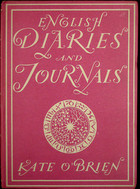
“Let me begin with the hard saying that the best English diaries have been written by bores…. A bore has been excellently defined as ‘a person who mentions everything’…. and face to face with us, across the fireplace or the dining table, the exponent of this art is very nearly intolerable; but at the remove which lies between a writer and a reader, when the ‘everything’, printed not spoken, is in our power, to be taken or left as we feel inclined, and when distance, time, have given it patina and perspective, he who in life might have been our plague becomes our entertainer, and sometimes more than that—a light, a lamp, a gentle, accidental resurrector for a while of what had been cold and dead.” (From English Diaries and Journals, by Kate O’Brien— COLLINS, 1943)
According to my Canadian Wildlife Federation calendar, today is the day the “male grizzlies begin to emerge from their dens”.
.
A few things (possibly) worth knowing if you’re planning a walk: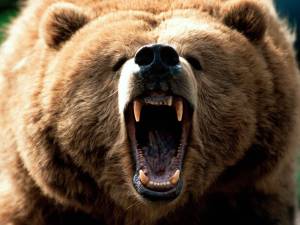
Grizzlies have longer claws than black bears. This is most noticeable on the front feet where grizzly claws can reach 10 cm in length. [I’m pretty sure any claws on any bear would appear long to me. And if I were close enough to see them that clearly I’m pretty sure I wouldn’t know my own name, much less what a cm is…]
Grizzlies do not have a white chest patch; many black bears do. [I find this very interesting, but I don’t want to see the chest; that means the bear is on its hind legs; that can’t be good.]
Grizzlies stand up on their hind feet, not to attack, but to get a better view while they test the air and try to identify you. [Gee thanks. I feel so much better now…]
Happy hiking.
And be careful out there.
 Matilda Magtree