this is not a review: ‘taxi!’, by helen potrebenko


Years ago a friend of mine used to take a lot of cabs. Partly for the usual reasons of not wanting to walk in the rain late at night or because it was faster or simply more convenient and she was feeling flush and in the mood for a bit of luxury but mostly she took cabs for the conversation. She loved discovering a driver’s story or hearing their general thoughts on life; sometimes she’d have semi heated debates and sometimes she was sorry to have to leave the cab because the chat was so good, better, she said, than most exchanges one has in a typical day at work.

So I was keen to tell her about Helen Potrebenko’s Taxi!  which is billed as a novel and narrated by ‘Shannon’, a Vancouver (mostly downtown east side) cab driver in the 1970’s, but which, in fact, feels more auto-fiction than fiction. Like her protagonist Potrebenko also drove cab in Vancouver’s downtown east side in the 1970’s. The style and structure of the book parallels the episodic and fractured structure of Shannon’s driving life, more like journal-keeping and there’s nothing like a traditional arc or through line or even a premise for the story other than this is what it’s like to drive a cab, in case you’re wondering.

Which in another’s hands might be a disaster but somehow Potrebenko makes it work beautifully. Not only makes it work but you step right into that cab with her protagonist Shannon, where you do NOT want to go (I assure you Shannon’s accounts of fares will turn you off any thoughts of pursuing this as a career), but this is exactly the point… she doesn’t ask you to join her. You simply choose to. And then you choose to stay for the ride. But her? She’s just doing her job, driving, revealing a slice of life that most people haven’t the vaguest idea about (including my conversational friend) because what we learn mostly from Taxi!  is that we have no idea how privileged we are if we don’t have to do this, or any job we despise, for a living.

Incidentally, the aspect of female cab driver is a whole other discussion on not only the times, the mid-seventies when things were still only beginning to change for women and men didn’t like it, but the double demeaning role of woman/cab driver and the inner dignity it must require to listen to the crap that riders dish out, the condescending comments, presumptions and attitudes. That and rules that applied only to women drivers such as not being able to work certain hours for reasons of safety.

What I loved most about the book was how Potrebenko managed to show us a gritty view of the streets and the sadness and horror of certain lifestyles, the futility felt by so many, yet contrasting it all with extraordinary humanity, creating a portal by which we see the not so rosy truth of ourselves as a society, the bits we’d sooner turn away from or pretend don’t exist, leaving others to the reality. And this is how the reality continues. For others.

Slivers of loveliness:

“A monotony of passengers gets in and out of the cab…”

“But there were two flights of rickety steps to go up. Why do poor people always have to deal with those treacherous stairs? Is it a commandment?”

“She was a beautiful young woman of about 16. At 5 a.m. she had split with her old man and she had no money and nowhere to go. Shannon gave her $2 for breakfast… She’s an Indian. A really beautiful and healthy Indian woman. There are no jobs for her. Nobody in this democratic society would give her a job. Indian men can get longshoremen’s jobs and a few other kind of labourer’s jobs, but there aren’t any choices for women…. Months later, Shannon was driving down Hastings with a passenger in the car when a woman tried to jump in front of it… she was no longer beautiful but covered with the spit and vomit of Hastings Street and it had only taken three months.”

“There was a man lying on the sidewalk by the West Hotel and Shannon stopped to see if he was dead…. he wasn’t… [but] there wasn’t anyplace he could be taken where he would be helped.”

Potrebenko chronicles the changing face of Vancouver… the increase in drugs, suicides, porn shops, sex trade, racism, murders, unemployment.

“There are more beggars on the streets. People think colourfully ragged young men playing a guitar are romantic.”

“In the afternoon, she drove a couple… to the airport. Aging swingers… on the edge of the ruling class… These people were a different type… Mean from years of cursing each other in private… and being polite with only sarcastic overtones in public. Seething with chronic mean.”

“The man worked for The Royal Bank… He asked Shannon if she was married then told her women shouldn’t drive cabs. [He said] I treat my women employees just the same as the men. I say to them: Honey, if you work hard you can go places. Honey? [Shannon said] Do you call your men honey? You know what I mean. [he said]”

“Shannon thought the fascist philosophy was a very comfortable one. You simply cheered for the winner, who proved by virtue of winning that he should have won. No analysis, no doubts, no troubling moral questions.”

“The man told Shannon it was attitudes like hers that retarded progress and she asked him Steinbeck’s question, which is how come progress looks so much like destruction?”

Should be included in the CanLit cannon as required reading. Doesn’t matter that cab driving has changed, the life she describes for women, minorities, and others, has not.


*Note: above-mentioned friend did not love the idea of the book as I described it. Too unpleasant, too raw, she said (I’m paraphrasing). But this is the experience of the cab driver, a character you say you admire. Doesn’t matter, she said, I don’t want to read about it. I respect her honesty and I suspect she’s not alone (this book remains relatively unknown after all) though it seems a lost opportunity to add a rich layer to her cabbie admiration. Of course she may yet change her mind. Will keep you posted.


wordless wednesday (with words about what i wonder)(so, maybe more accurately ‘wondering wednesday’)

The wondering being what’s the background to someone writing this on the inside of a bathroom cubicle at an art gallery. Have they been inspired by the artwork, collectively or by a single piece, to be themselves, to know that’s enough? The other thing I wonder is would the reason behind the possible ‘why’ be different depending on location. A club or bar, an office, a school…

Just wondering, as you do in art gallery loos.


p.s. the cubicle colour has not been altered;  the yellow, however, is magic.

Other (not always) wordless friends:

Cheryl Andrews
Allison Howard
Barbara Lambert
Allyson Latta
Elizabeth Yeoman


thinking in ink

 
Idle thoughts this morning, outside, pen in hand, and I almost don’t want to write at all because of all this green green beauty everywhere but I’ll write what I hear instead. Cardinal in the distance and a closer trilling (robins??), also some cooing and squawking. Much birdsong in any case and I think of Rachel Carson’s book and I don’t want to read it, don’t want to interrupt (ah, crow!) the beauty of this green fantasy, with reality, which of course is the whole problem with everything, the reason we fill our houses and cars and streets with garbage, our waterways, whole oceans and landfills and the landfills of other countries. And we believe this is evolution. We are experts at not interrupting our fantasy with reality.

Evolution (synonyms):

  • change
  • expansion
  • growth
  • progression
  • transformation
  • flowering
  • increase
  • maturation
  • unfolding
  • evolvement
  • natural process

So I sit outside this morning after the rain overnight  and the still dripping trees, cosy and dry under a patio umbrella and I listen as I write. Cars in the distance, a train. The sound of the still dripping. Earlier I walked barefoot in a puddle on the cement and now a sow bug meanders (wrong word) near my tea mug (un-related).

Sow bug:

Prefers damp or humid areas and darker areas too. Also know as woodlouse.

There are 756,211 shades of green in the yard. At least. Two morning glory vines please me in how their slender tendrils are already grasping for something to climb. (Distant cardinal, crow again…) Rumour has it the cardinal’s song (in the morning anyway) is a call to its mate to say I’m here, I’m fine! A pair have made a nest in the burning bush for the second year.

Crow:

Proportionally, the brains of some crows are bigger than ours.

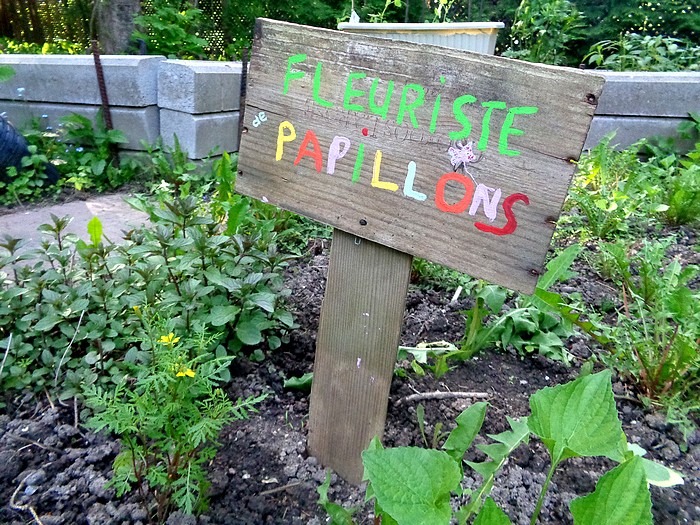
Yesterday I planted a garden for the butterflies and put up a sign: Fleuriste Papillon… It may, I’m thinking, be helpful for butterflies travelling from other places (though aren’t they all?). Of course I realize now that Spanish would probably have been MORE helpful but I was recently in Montreal and saw the papillons in the botanical gardens, which seemed a sad though beautiful thing, though the space was large and light and filled with tropical flowers and trees and nectars. I spoke with someone there and askedif it was indeed a slightly sad thing and she said no, no, not at all, that the butterflies were born into it and knew nothing else and that they had everything there they needed, that most had a lifespan of only days to a few months. Butterflies are a much more complex thing than I realized and the number of varieties, shapes and sizes, was mind-boggling. Overall, an excellent learning space for humans. And they did seem happy enough but who can ever be sure?. Later we passed a number of fleuriste shops and it occurred to me that my two favourite words in French are fleuriste and papillon. And so the sign… though possibly more practical for incoming insects… could not be in Spanish.

Papillon in Spanish:

Mariposa.

et voila.


the joy of stopping


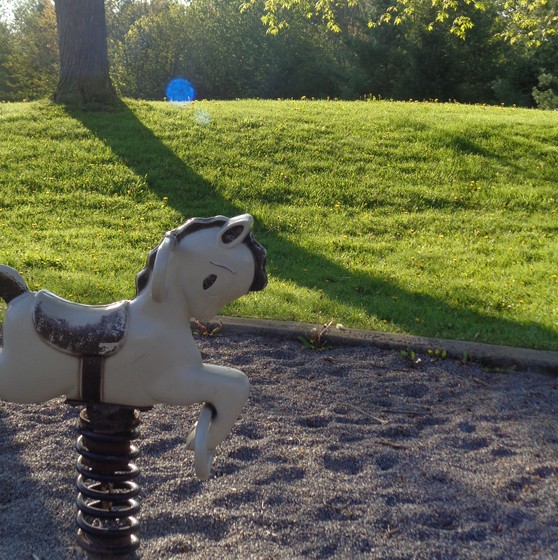
Following my instinct I stop at a playground early, early, in the morning with the sun up only an hour, still inching above the treeline. I surprise myself as I stand in mountain pose a moment and feel the warmth of it.

I do not go on the monkey bars because I do warrior I and II instead.

And I do not go on the slidey thing but use the vertical posts either side of it for balance in king dancer pose.

I do a version of sun salutation and the breathing is exceptional.

And before I know it…

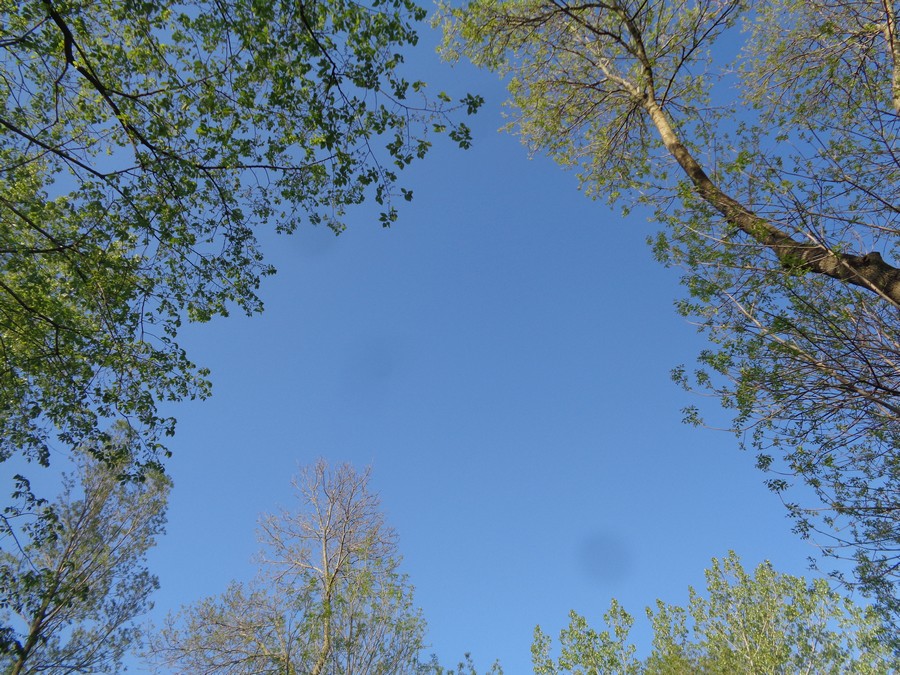
…I’ve been there long enough for the sky to turn blue blue blue.

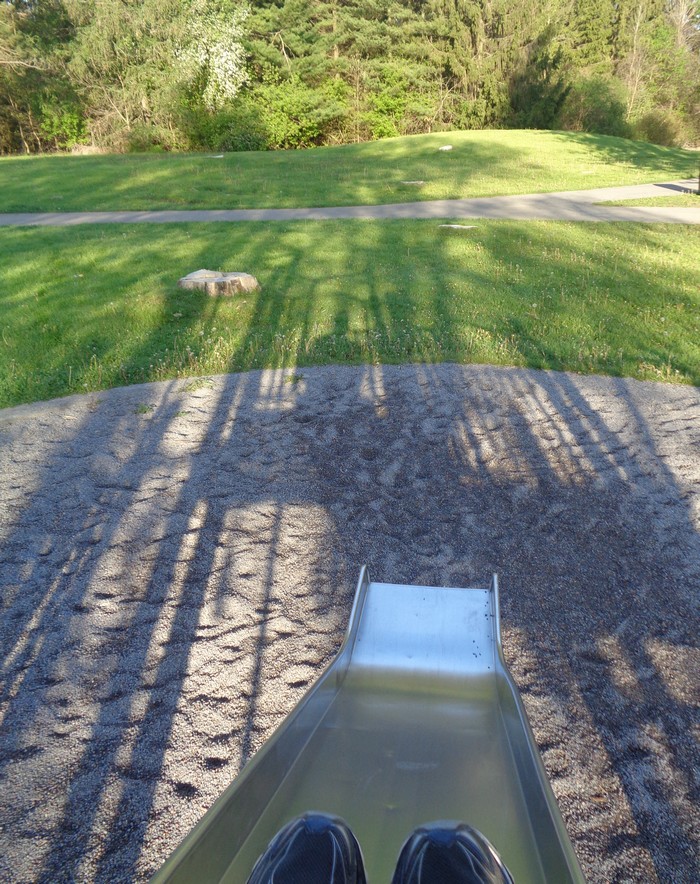
And then I climb up the ladder and slide into the day.


to cut or not to cut… no longer a question


I remember thinking how ridiculous my mother was

when she said she preferred

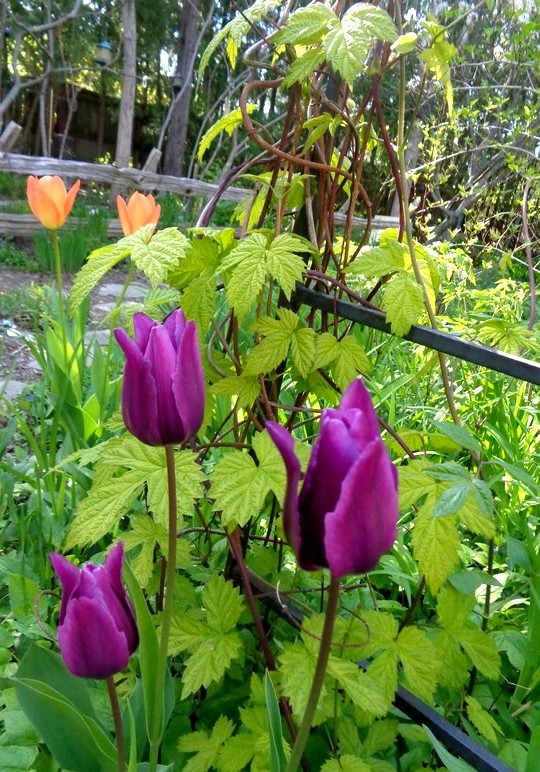
looking at flowers in the garden

rather than in the house.

She only ever cut a few at a time, usually things that needed pruning anyway or had been snapped off.

Why not cut a bouquet, I said.

Why not leave them outside for the birds and bees to enjoy, she said.

And I laughed.

Silly woman, I thought. You’re missing the whole point of a garden.

I was young.

Birds and bees weren’t a thing anyone talked about then.

I get her now.

She’d laugh if she knew.

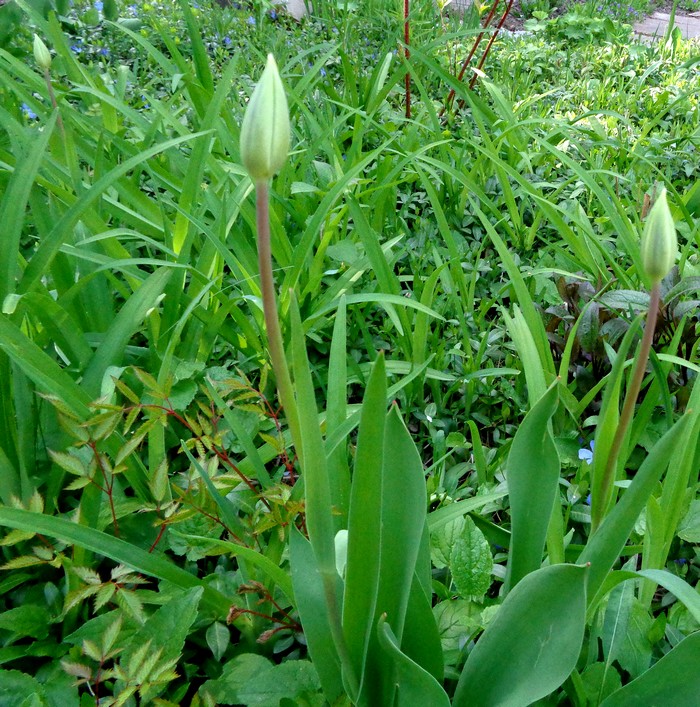
p.s. Anyone with voracious tulip-decapitating squirrels is exempt from above sentiments and wise to cut the biggest bouquets their house will hold.


wordless wednesday

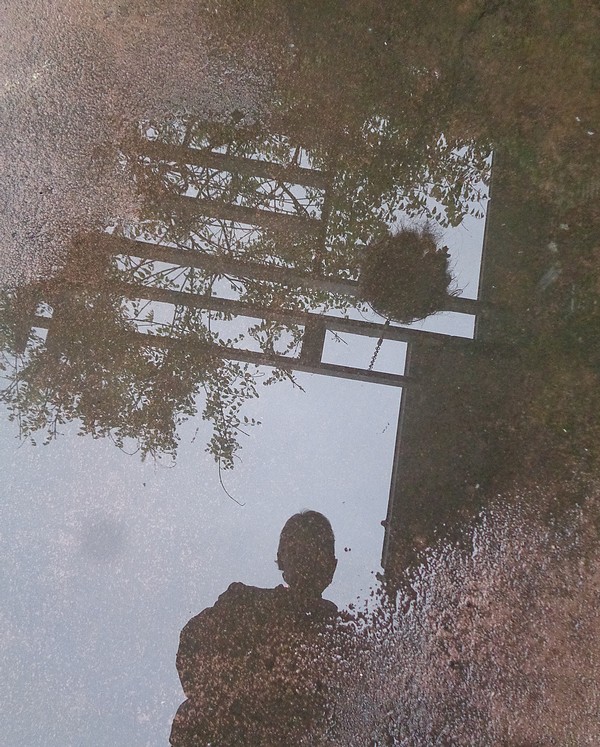
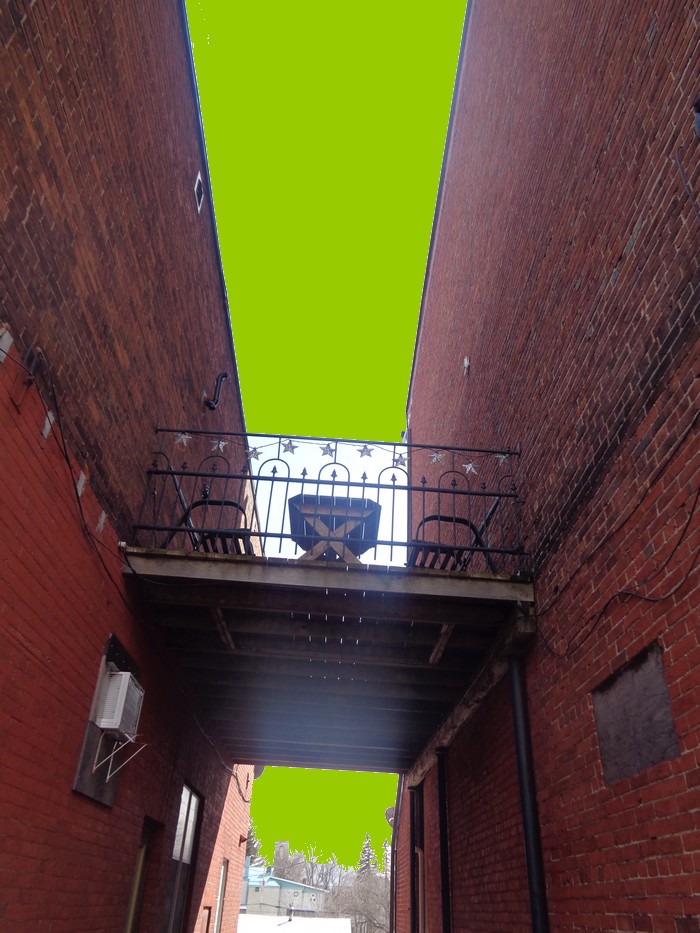
Taken in downtown Almonte, Ontario, which was a whole surprise in itself, the delightfulness of it, its position on the Mississippi River, the mix of upscale this and funky, totally not upscale that… second hand shops, a book shop!, bakeries (yes, that’s plural), coffee and tea places, a diner, a pub on the river with patio and live music, apartments overlooking the rapids (so close I swear they must feel the splash on the balconies). There is a well-supported arts community, a beautiful river walk and fabulous views, a mix of architecture from not-been-touched-in-yonks-shabby-chic, to ultra modern lines (fewer of those so they stand out, but also fit it in). Feels like a place that has figured out how to keep the charm of the past while moving forward.

Note: the sky is only occasionally green.

Other (not always) wordless friends:

Cheryl Andrews
Allison Howard
Barbara Lambert
Allyson Latta
Elizabeth Yeoman

this is not a review: ‘savage fields’, by dennis lee


I’ve been doing some bookshelf cleaning — clearing out the excess to make room for new stuff. Only so much room and I really hate it when I can’t see what I have. Am donating or giving the prunings to various places and friends but before some of them go they will spend time in a new stack called “Stuff to Read Before It’s Definitely Given Away”.

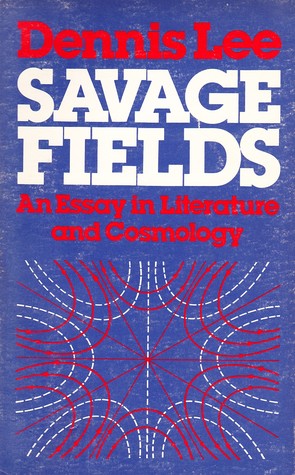
Most recently plucked from the STRBIDGA pile was Dennis Lee’s Savage Fields, published in 1977 by Anansi. Its subtitle: An Essay in Literature and Cosmology  did NOT help it win my attention over the years and more than once I thought to just ‘donate’… but something made me keep it and I’m so glad I did.

Less essay than discussion of Lee’s theory that everything is either of (or about) the earth or the world,  including stories. (Earth being anything natural… World being anything man made.) The savage fields of the title refers to the friction caused when earth and world collide, which of course they constantly do.

His interest is in how that happens in literature, and so he dissects two books as examples:

The Collected Works of Billy the Kid, by Michael Ondaatje (a combination of prose and poetry in which Lee theorizes that Billy is trying, constantly, to kill the earth and so is, in fact, killing himself)

and

Beautiful Losers, by Leonard Cohen (one of two novels by Cohen, which Lee suggests is about freeing a repressed Canadian history through liberation of thought)

I will forgive that both books are by men. Dennis Lee is himself a man. This is often how things go. I will forgive it also because Savage Fields is a fascinating piece of work nonetheless.

I’ll admit that I’ve read neither Beautiful Losers nor Billy the Kid.  The former strikes me as incomprehensible and the latter not up my street but, oddly, I really liked reading about them through Lee’s lens. I enjoyed his analysis and the way he takes the story of each book apart, illustrating his theory of how we continue to screw up the earth because, essentially, we can’t accept beauty when it comes our way, that we have this need to alter it, put our own stamp on it and make it ‘better’. (Better than what? It was trundling along just fine until we got involved.) Lee says that we turn earth to world because we can’t help it and even while knowing on some deep level that we are screwing ourselves.

We’ve been more or less doing this by various means since we invented agriculture, which is when we stopped living in harmony with ‘earth’.

Another of Lee’s theories is what he calls the Isis Continuum, which, essentially, is happiness (Isis being a goddess of Egyptian mythology, wise and unconditionally loving). Again, we, for some reason, often refuse the simplicity of happiness, creating chaos instead as if not believing happiness is truly possible.

Lee posits his way through both books, offering excerpts and outlines of the stories, analyzing characters and actions.

Savage Fields isn’t a difficult read, but it’s an unusual one. One that takes a pot of tea and a Sunday morning to find your rhythm with (best read whole or in two parts, but definitely not fragments). It’s the kind of book you want someone else to read so you can talk about it with them and apply Lee’s theories, to find the savage fields in literature or at least to keep the notion of it in mind.

“World and earth are shown as being at war, yet they keep turning out to be the same thing. How can we resolve the contradiction?… To conceptualize this unusual state of affairs takes a certain amount of effort — indeed, a willingness to bend one’s mind in unaccustomed directions.”

“I started this book in 1972. I knew the title before I knew what the title meant. There are months of drafts between the sentences. The voice kept sounding false, excluding too much of who I was. Now I look at it, and find I have scarcely made a beginning.”

“Clear thought is an achievement of difficult beauty.”

The kind of book where most excerpts are pointless out of context. The kind of book that isn’t easy to quote from and details are soon forgotten, yet you feel inexplicably changed for the better for having spent time with it because suddenly ‘something’ feels clearer. Surely one of the best reasons for reading.

Dennis Lee was a founder of House of Anansi, which prided itself in the late 60’s and 70’s on its difference, its experimental style, and its interest in the Canadian story.


#todaysthought (and a book)


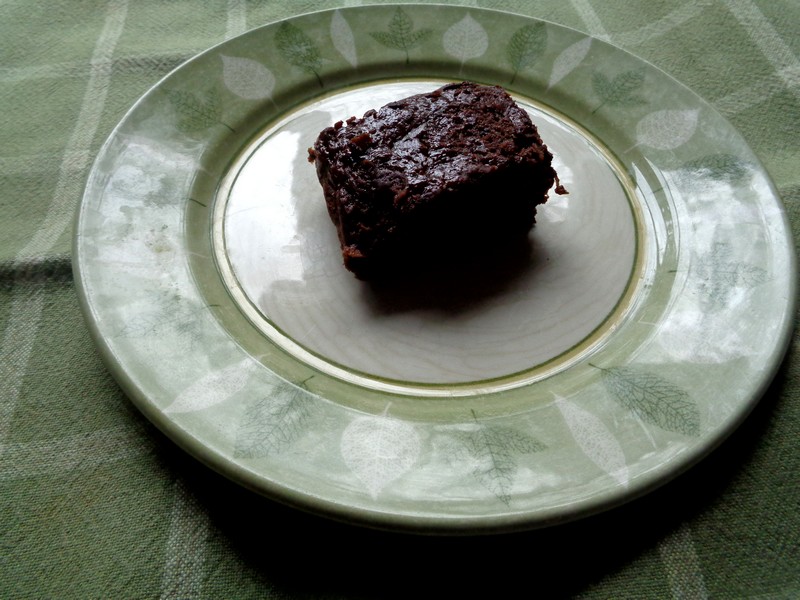
There are brownies in my fridge. The chewy chocolate kind made with shredded *zucchini instead of eggs and milk, and having one with peppermint tea is kind of blissful. Add rain washing everything, turning it this impossible spring green, and new things everywhere budding and opening and blooming and the way cats are able to so totally relax and it gets me thinking about the difference between what we need and what we want. It makes me think that if we’re lucky enough to be breathing, to have the luxury of walking and seeing and hearing, if we have good friends, a smattering of family, an animal or two in our life, a splash of joy occasionally, work we find meaningful, a decent conversation now and then, a place to live, a comfortable chair, a change of scenery once in a while, peace, and the luxury of ordering pizza when the mood strikes… then surely we have everything we need. Anything else is a want.

And yet so often we focus on the ‘want’.

We give it our energy and time, all of which takes away from enjoying what we already have, or from doing something worthwhile, from making one tiny slice of the world a better place, rattling a cage or two, writing a letter, asking questions, demanding answers. All of which brings even more contentment.

If we have what we need, we have the power we need to be worthwhile, the ingredients for contentment, and so can turn our backs on the noise telling us to constantly want more, to be this or do that, what to buy, what to believe.

But I digress. This is really about the pleasure of brownies.

And simplicity.

Which always leads me to thinking about one of my favourite books, Alix Kates Shulman’s Drinking the Rain, in which she asks the best question:

how little do I need in order to have everything?


If you’re missing brownies in the everything, here’s a portal to bliss.

(Just add tea.)

*zucchini used in my version was locally grown last summer and frozen all winter and it worked better than fine