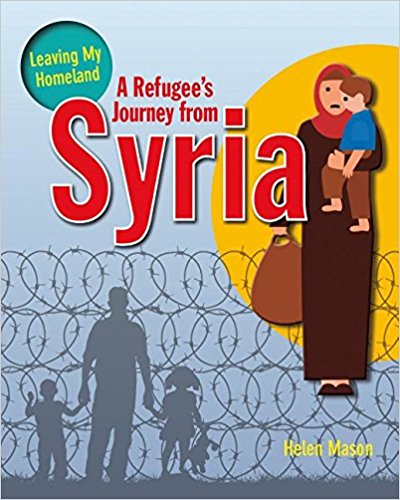
this is not a review: ‘leaving my homeland — a refugee’s journey’


Kudos to Crabtree Publishing for their new ‘Leaving My Homeland’ series of picture book style books focusing on the refugee experience from the perspective of children. Each of the books covers one child’s story.

The series includes:

A Refugee’s Journey From Afghanistan

A Refugee’s Journey From Iraq

A Refugee’s Journey from Syria

(Also Myanmar, Colombia, Guatemala, Somalia, South Sudan, Congo, and Yemen)

Ten books in all.

Brilliantly done with photos and drawings and sidebars with bite-sized summaries of the country’s history, and current political situation, the children’s voices speaking about how they used to live before violence and fear took over, about what they loved and what they’ll miss. (The info is truly bite-sized, yet enough to come away with some basic knowledge of each country. Perfectly done for kids… and many adults could benefit from it too.)

Simple things explained, like the difference between refugees, immigrants and IDP’s (internationally displaced persons).
There are stories of journeys by boat, by air, and those on foot and how each of these journeys feels, the refugee camps they live in, sometimes for years, the people that help along the way and those who betray.

I especially love that these books for children don’t shy away from talk about Islamaphobia and why some people might be afraid of Muslims. They straighten out misconceptions and show children from these countries as simply children.

All of the stories are extraordinary to imagine, but despite the subject matter there is, amazingly, no drama. The books are not intended to shock or create sympathy, but merely to create a level of understanding of The Other.

For example, in A Refugee’s Journey from Myanmar,  by Ellen Rodger, the complicated history and present situation facing the Rohingyas is explained in simple and clear language that not only informs but will, hopefully, lead to questions and conversation.

There are stories about what happens when children go to their new schools, how they don’t fit in, don’t speak the language, but the focus is never on how that makes the child feel sad, or of being bullied or teased, though we know that happens, but instead, the mandate of the books seems to be… now that we know something of the situation these individuals have come from, the things they’re dealing with…. what can we do to help?

Imagine living in a country where fear is normal. You fear government soldiers, the police, and maybe even your next-door neighbour. You might be scared of being attacked if you leave your home. That is what life is like for some people….

Each book also includes a glossary and lists of websites and other excellent reading along the same lines, like Margriet Ruurs’ Stepping Stones and many others. This is really such brilliant, welcome and necessary reading for kids, and families together.

Books that matter. Can’t have too much of this.
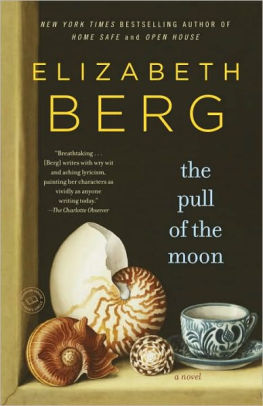
this is not a review: ‘pull of the moon’, by elizabeth berg

Middle aged woman runs away, writes letters home daily to husband whom she has no intention of leaving. She just needs a break. She’s happy with him, now she wants to be happy with herself.

“…the pull of the moon will be shared by you and the ocean and the minds of wild things.”

I love a good yarn about a woman who runs away.

In Elizabeth Berg’s Pull of the Moon, Nan, the protagonist, is fifty. (They’re always fifty.) She buys a turquoise journal and leaves home. She tells her husband Martin (in a letter) not to worry, that she’s not crazy or even unhappy, that she loves him. “I needed all of a sudden to go, without saying where, because I don’t know where.”

In the turquoise journal she writes to a ‘you’… as Anne Frank wrote to her journal ‘Kitty’. “I bought this black pen for you. I feel shy saying this, as though we are friends too new to exchange anything without it being too important.” There’s a sense she’s also writing to a new and still unformed side of herself.

She also writes almost daily letters to husband Martin, wonderful letters, conversational, about things she sees and wonders, things she can’t say to him in person, or has gotten out of the habit of saying.

One of her goals is to ‘talk to women’ and she meets a few in her rather ordinary travels (a quite perfect ordinariness, I should say, that gives her story its power).

“It seems to me that the working minds and hearts of women are just so interesting, so full of colour and life. And one of the most tragic things I’ve seen is the way that’s been overlooked, the way that if you try to discover what the women were doing at any given time in history, you are hard-pressed to find out. Why? I want to say to you that we are not silly, that what we think about and what drives us to talk, talk, talk, this is vital.”

And from the floozy looking woman at the trailer park hanging laundry in silver heels:

“I said what type did I look like and she said I looked like the type that went down and volunteered at some suicide prevention centre in order to save my own life.”

There’s a woman shelling peas. And another being screamed at in grocery store. There are, in fact, women everywhere. And they are living lives that are never mentioned, anywhere.
“I feel a kind of strength happening that is wholly legitimate, that is not some trapping I wear until it falls off. It is as though the thing has roots, and seeks the sun with its face turned toward it. And I know I never would have found it without leaving.”

At one point in her travels she writes:

“Today I woke up and felt the old pull of sadness back… This was disappointing. I thought I’d escaped something.”

But the journey continues nonetheless. And I’m pleased that it doesn’t end with either epiphany and monumental change, or defeat.

“Let it be this way: Let me be eighty-eight. Let me have just returned from the hair-dresser. Let me be sitting in a lawn chair beside my garden, a large-print book of poetry in my hands. Let me hear the whistle of a cardinal and look up to find him and feel a sudden flutter in my chest and then—nothing. And, as long as I’m asking, let me rise up over my own self, saying, Oh. Ah.”


celestial smoke and mirrors


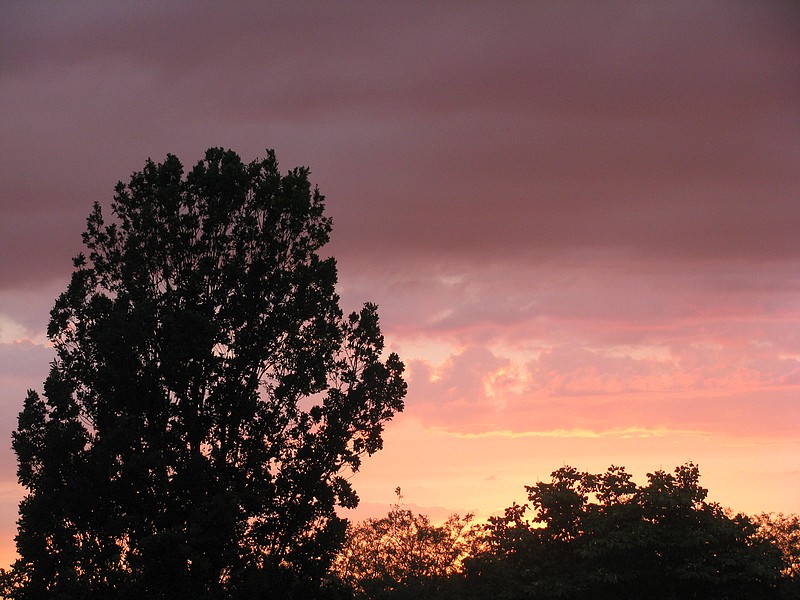
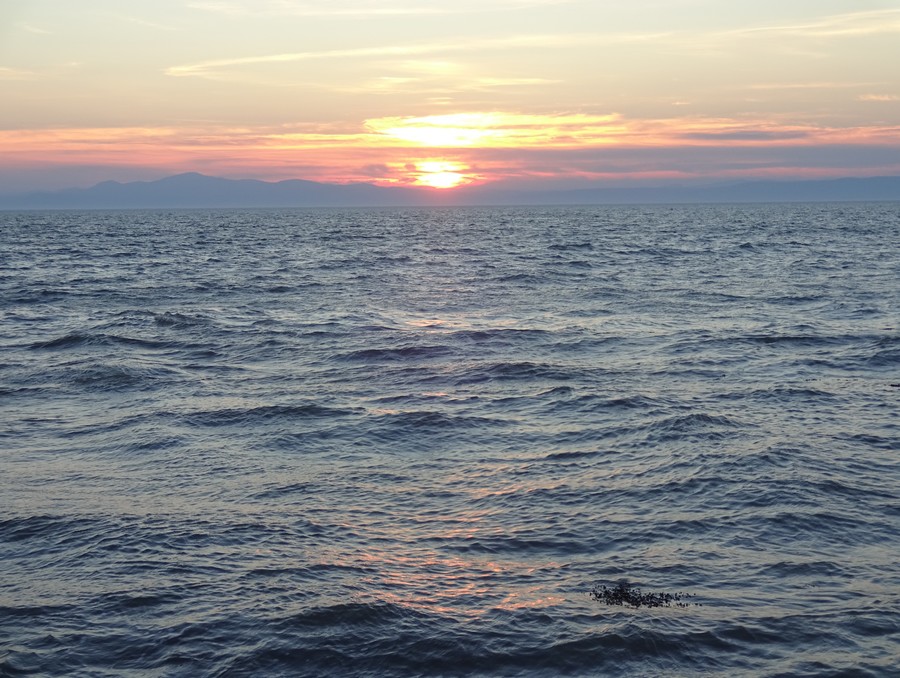
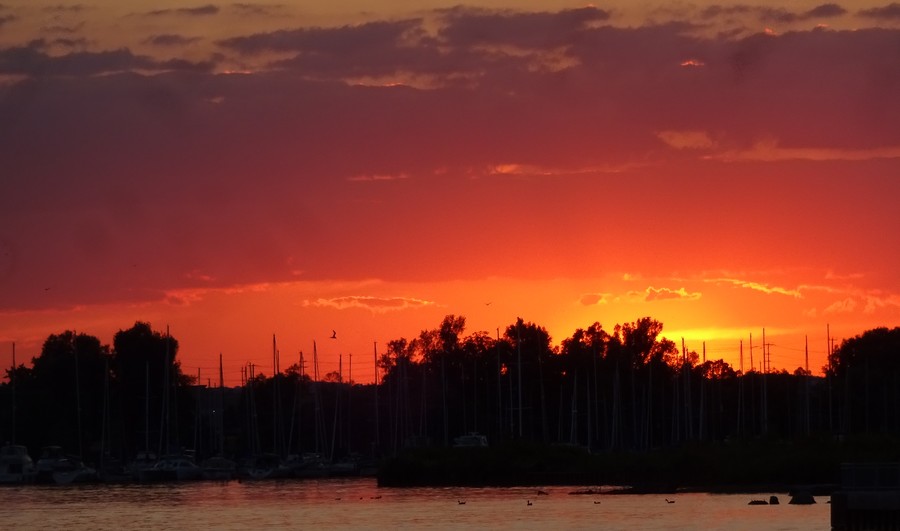
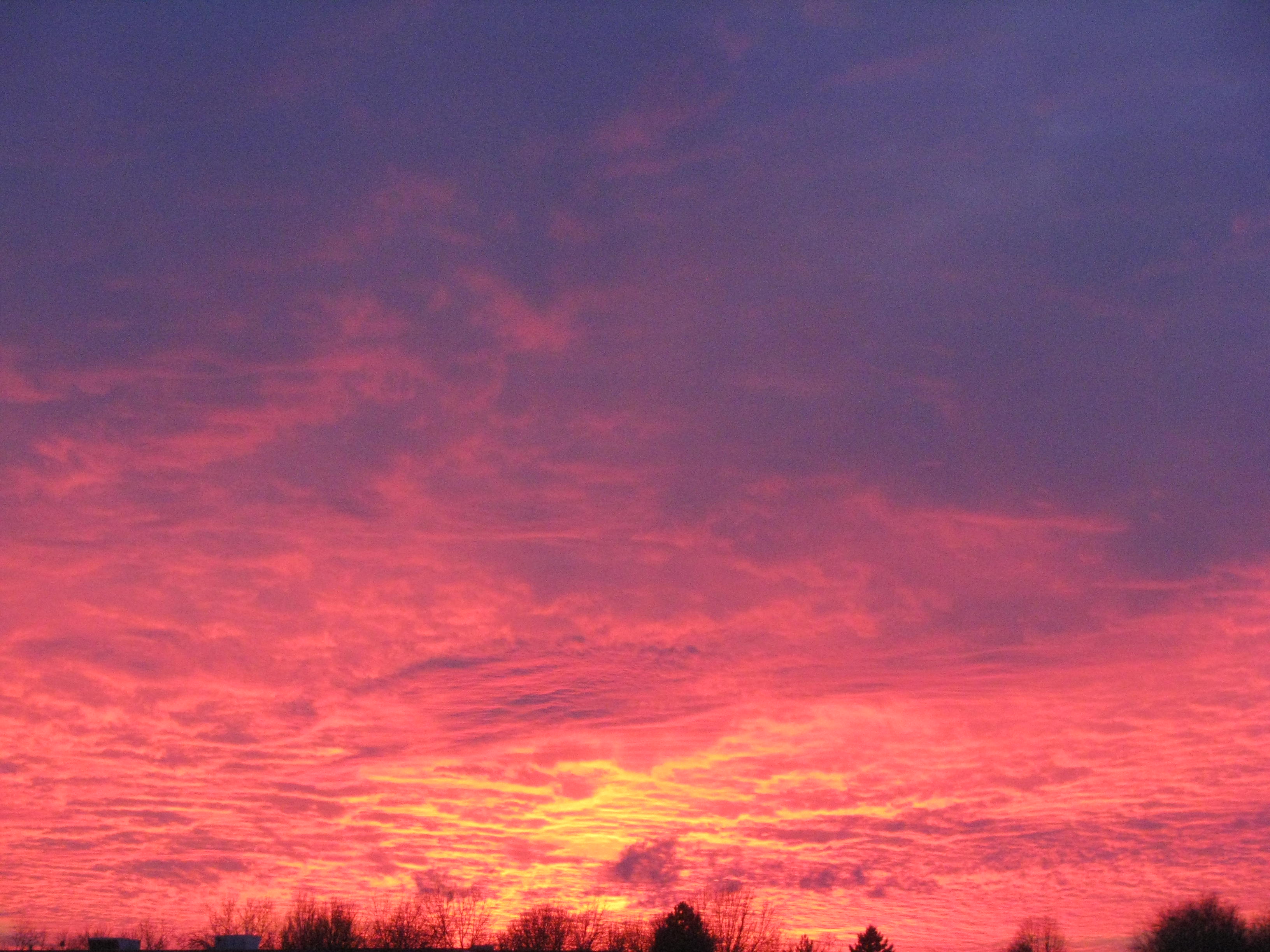
The other morning the sunrise was all thin layers of acid tangerine and atomic yellow, like some psychedelic celestial torte.


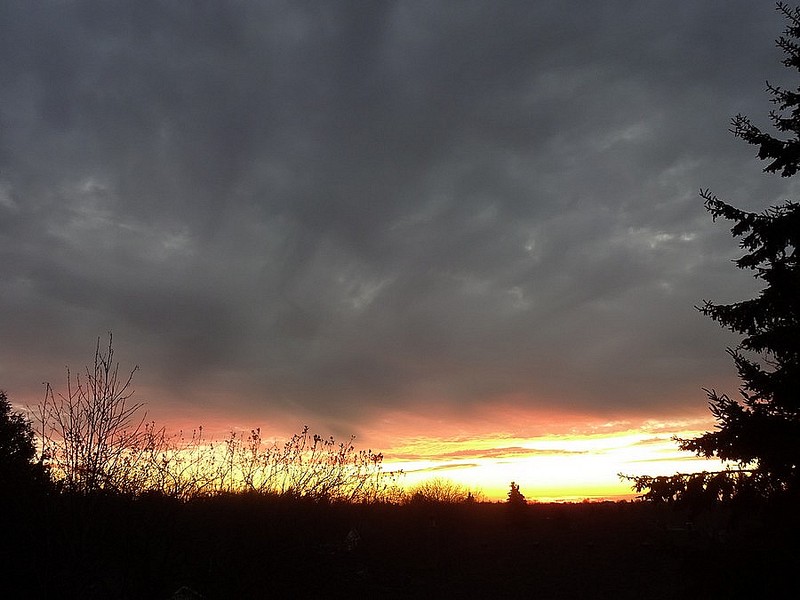
Today, sunrise is invisible. The sky, stone grey. Nothing edible.

I read somewhere that the colours are an optical, not exactly illusion,  but an effect created by various molecules in the atmosphere and their length and/or density and/or how they line up and/or etc. on any given day.

The point being that everything, it turns out — this rising and setting, the spinning and movements of planets — all goes on in exactly the same way every day, which means that—

—it’s only our vantage point

and therefore our perceptions—

that change.


how to: birthday lunch (thirteenth year), in four parts


Part one, the appetizer:

Begin at the fish and chips place you hear is all the rage though oddly it’s entirely empty at 12:30 p.m. on a Friday. (That’s fish day, no?)

Consider leaving until the oh-so-lovely server tells you that Fridays are funny, sometimes busy, sometimes not, that dinner is when things really get hopping and that, “believe me”,  she should know because she has worked there for “twenty five long years”…

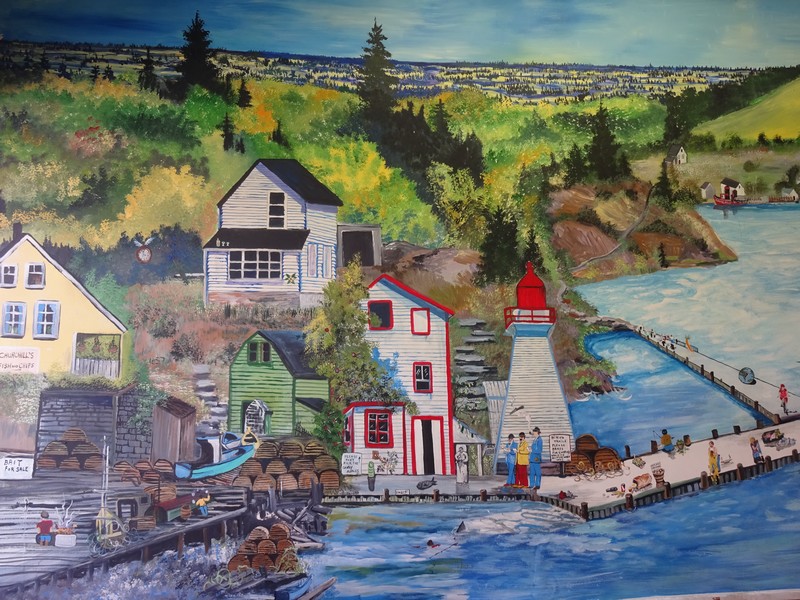
Order a plate of fries and enjoy the art.

Get lost in the beauty of entire walls covered in scenes of nautical joy.

Dig into the fries as you draw up plans for the invention of an electric toothbrush you call The Squiggly  (instead of vibrating it squiggles, obvs) (possibly cat shaped) and discuss A Wrinkle in Time, which the thirteen year old tells you is the first book written in third person that she has liked.

Be a little stunned that she knows about third person.

Part two, the main course:

Head to the Mexican place for tacos.

Try all the hot sauces offered.

Notice the table behind you is is talking about Vancouver at precisely the same time you are talking about Vancouver. Talk about Calgary instead.

Part three,  le dessert:

Hint…. DQ is right next door.

Discuss what sports you are bad at and how you don’t care.

Discuss your dislike of certain kinds of shellfish. And liver.

Discuss how you are both practically vegetarian but not quite.

Discuss how one of you is considering becoming an actual vegetarian.

Discuss how only just this xmas one of you gave an actual vegetarian
a lucky fish.

Discuss the word serendipity.

Part four, the libation:

Decide that The L’il Organic Kitchen is possibly your new book club meeting space (except in summer when you will meet at the beach and eat fries from Jenny’s chip truck.).

And that the first book will be Maud, by Melanie Fishbane.

For the thirteen year old… orange, lime, pineapple and strawberry power juice.

For you, warm coconut milk with turmeric, cinnamon and ginger.

Chat includes things you regret having done.

You— among other things, stealing wax lips when you were nine.*

Thirteen year old— accidentally eating her birthday candle.**

The end.

  *   Lips remained stolen for exactly nine seconds. Turns out you weren’t made for a life of crime… (you left them on top of the mailbox outside the store and ran all the way home).

**  The candle remains eaten.


the world is too much with us


I can’t write sonnets so I’ll write a story instead.

Not about anything useful, not anything that will topple governments or stop people throwing garbage out their car windows.

I’ll write about my bike. Not the giant green one I had when I was eight or nine and had to choose between sitting or pedaling, but the yellow one I had after that when I was eleven or twelve, old enough to ride alone across the canal into the countryside to find streams and tadpoles and pretend I was Henry David Thoreau before I even knew who he was.

I’ll write about Mackintosh toffee and sponge toffee and favourite chocolate bars (Crispy Crunch) and cereal (Cheerios) and how I’d prefer corn chips to sweets any day and Bugles on my fingertips, pretending they were nails.

I’ll write about how anything eaten in a tree tastes ten times better than at a table and about the Bundt cake my mother made every Saturday with swirls of Nestlé’s chocolate milk powder mixed into the batter.

And stolen peaches and reading for hours in long cool grass and freedom.

Picnic dinners thrown together on a Tuesday night when my mum came home from working at Towers and my dad came home from the factory. I’ll write about a thin blanket spread on a sandy beach, swimming with dad while mum laid out melmac plates, a bowl of potato salad, a few slices of meat, a thermos of KoolAid, another of coffee.

I’ll write it all for some young child, young enough not to find it too dull, young enough to want to go in search of tadpoles…

If any still exist.

The World is Too Much With Us


the perfect pack

 
In my quest to never pack too much or too little, I’ve learned the following:

Make a list of ONLY essentials… hand lotion, peppermint tea, ear plugs, etc.

Pack all clothing on a whim.

Trust me.

Overthinking the clothes is the worst possible move.

Finally, MAKE NO LISTS where books or writing materials are concerned.

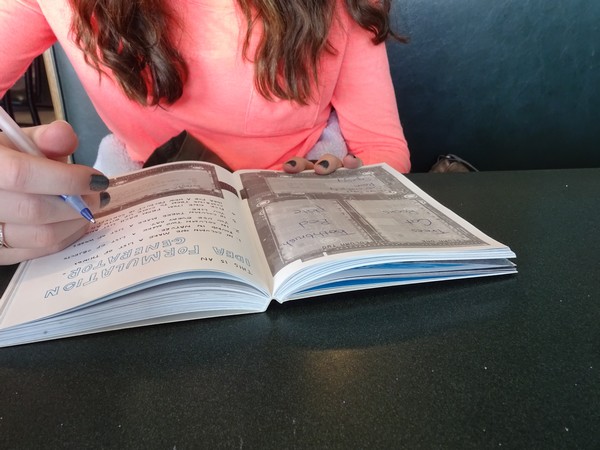
Bung every book you’ve been meaning to read for the past year into a giant suitcase until it becomes almost impossible to move and then drag it to your destination and when you get there spend all your time in…

a) the local bookshop, buying new stuff to read,

or…

b) ferreting through the bookshelves of the place you’re staying and reading about Baghdad in 1985, and William Bartram (a naturalist no one ever heard of and who Audubon felt a little insecure around), Roma Gypsies, Harlem, and Rico, Colorado, which has a population of 150, no stop lights, one grocery store and five saloons.

Eventually settle on a slim volume by Colette.

Happy solstice.