
♦
Other (not always) wordless friends:
Cheryl Andrews
Allison Howard
Barbara Lambert
Allyson Latta
Elizabeth Yeoman
♦
Other (not always) wordless friends:
Cheryl Andrews
Allison Howard
Barbara Lambert
Allyson Latta
Elizabeth Yeoman
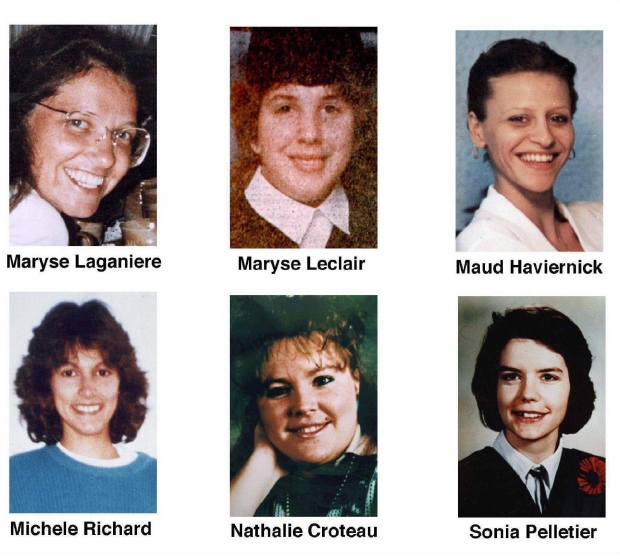
Geneviève Bergeron (born 1968), civil engineering student
Hélène Colgan (born 1966), mechanical engineering student
Nathalie Croteau (born 1966), mechanical engineering student
Barbara Daigneault (born 1967), mechanical engineering student
Anne-Marie Edward (born 1968), chemical engineering student
Maud Haviernick (born 1960), materials engineering student
Maryse Laganière (born 1964), budget clerk in the École Polytechnique’s finance department
Maryse Leclair (born 1966), materials engineering student
Anne-Marie Lemay (born 1967), mechanical engineering student
Sonia Pelletier (born 1961), mechanical engineering student
Michèle Richard (born 1968), materials engineering student
Annie St-Arneault (born 1966), mechanical engineering student
Annie Turcotte (born 1969), materials engineering student
Barbara Klucznik-Widajewicz (born 1958), nursing student

 ♦
♦
Sadly, violence against women continues.
And, sadly, it’s probably up to women to do something about that.
“Let’s not pretend that being hopeful is an easy or straightforward pursuit. Hope can be a fracturing, even a traumatic thing to experience… Experiencing hope may bring oxygen to a stifled set of lungs, but hope also brings the realization that if something else is possible, then the stifling wasn’t necessary or inevitable. Experiencing hope means running the risk of a kind of crushing disappointment and agitated torpor… cruel optimism.
So yes, it’s complicated to be a hopeful feminist killjoy, complicated and necessary.”
—Notes from a Feminist Killjoy, by Erin Wunker
The key is to write more than your name.
 In other words, resist the urge to buy a seasonally affected message under which you leave your signature.
Write words. Thoughts even.
Write in ink. (or pencil or crayon or anything along those lines)
Sit down with your address book, by which I mean an actual book made of paper and cardboard that lives in a basket on your kitchen counter and which is dog-eared and generally beaten up.
Flip through its pages and see names of people you see and talk to all the time and some you haven’t spoken with all year.

 There may be a reason you haven’t talked all year, but not to worry… there’s something very possible about keeping in touch via annual conversations in ink. And in many cases, preferable.
So open your battered address book and begin.
 Remember the woman you haven’t seen since the 80’s that you used to work with and once took an auto body repair class together. You had a rusty Dodge Dart. She made amazing rice. You haven’t seen each other or heard each others voices in more than thirty years. You don’t even email. The only time you’re in touch is at this time of year. By card. You’re up to date on events, if not inner psyches. (Not necessary to be up to date on every psyche.)
And your godmother who you never call often enough and friends across the country, and those who live an hour away but you only meet once a year.
You will find a man who turns 99 this month and still has all his marbles, and a woman who is 83 and has the smile of a teenager.
And the address of an old friend no longer around. You keep her name in the book anyway and every year you think what you might have written to her.
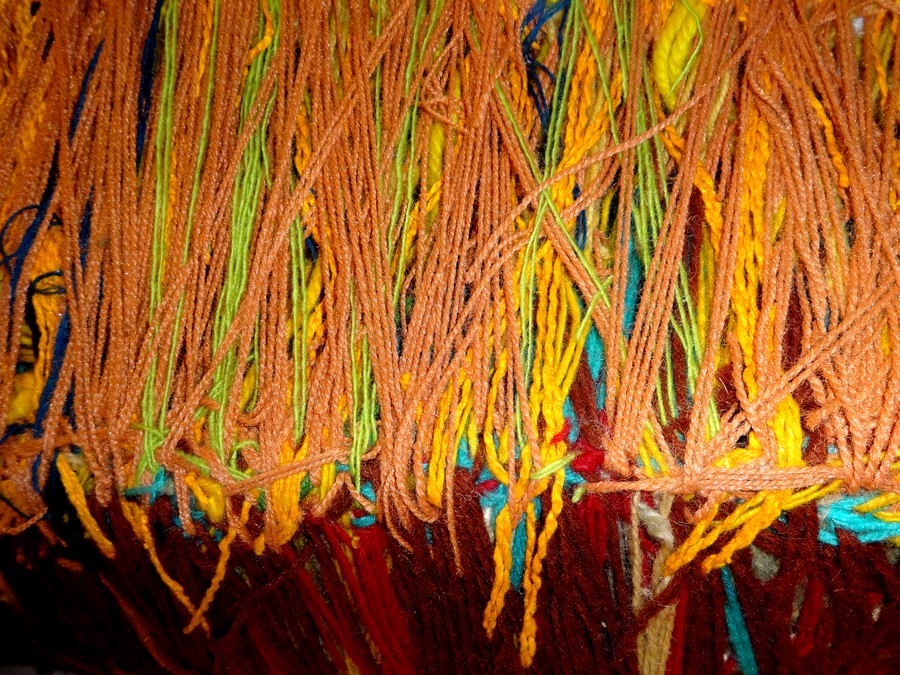 Send notes also to the names you see and talk to all the time because the things you say in handwriting are different than what you say in keyboard or words out loud.
 You can buy cards or make them. From photos. Or potato stencils.
(In the past you may have chosen to drink rum and eggnog as you wrote but have since discovered you’re lactose intolerant and the rum makes your handwriting illegible by the time you get to the L’s in your address book.)
Options: Light a fire. Get cosy. Make tea or open a bottle of wine (see above). If it snows so much the better.
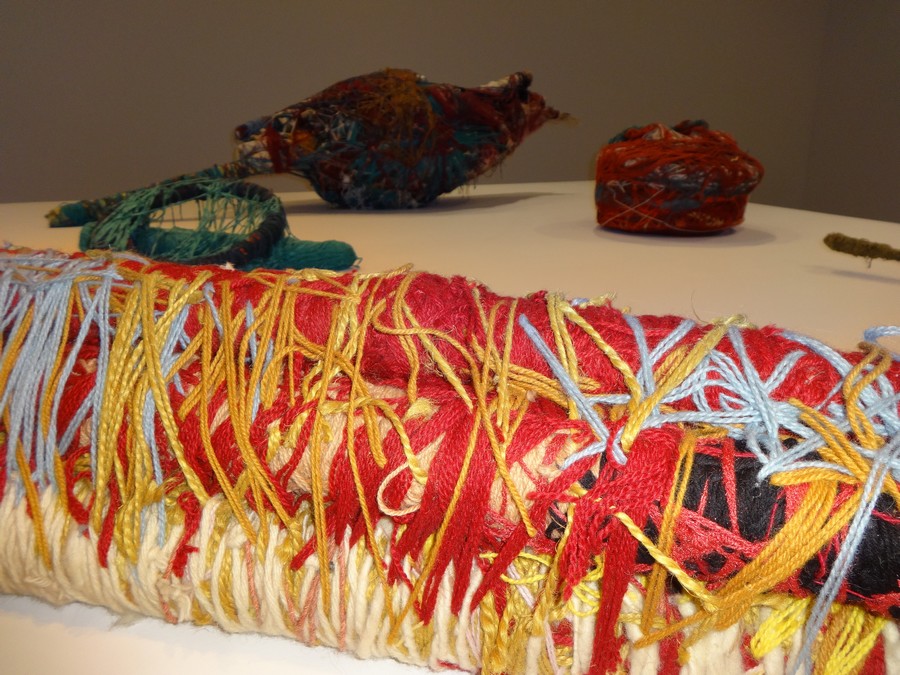 Embrace the remembering that goes with each name and notice the different things you write to each person, the reminder that each relationship is its own thing.
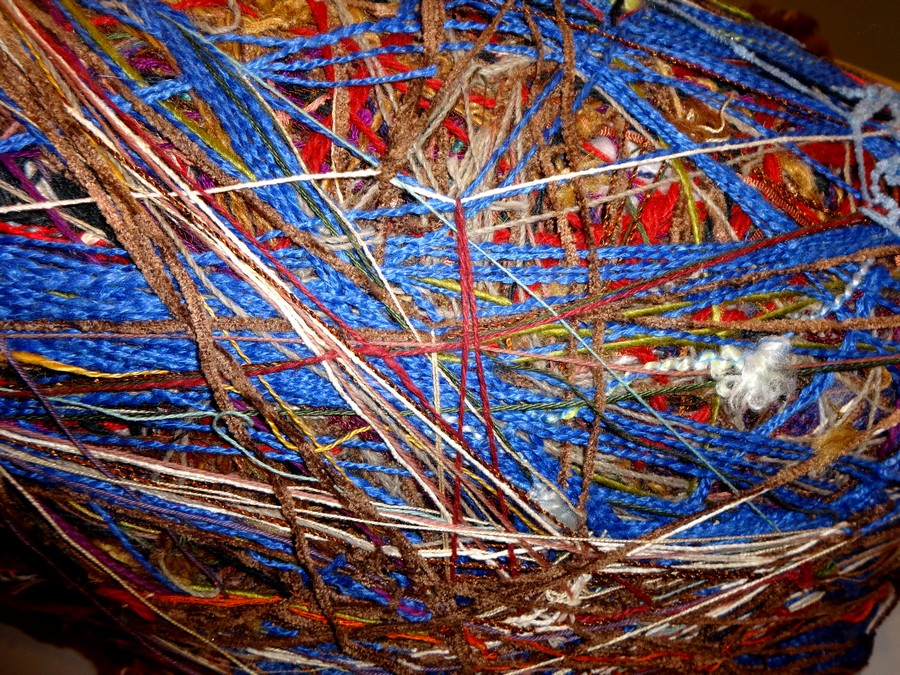
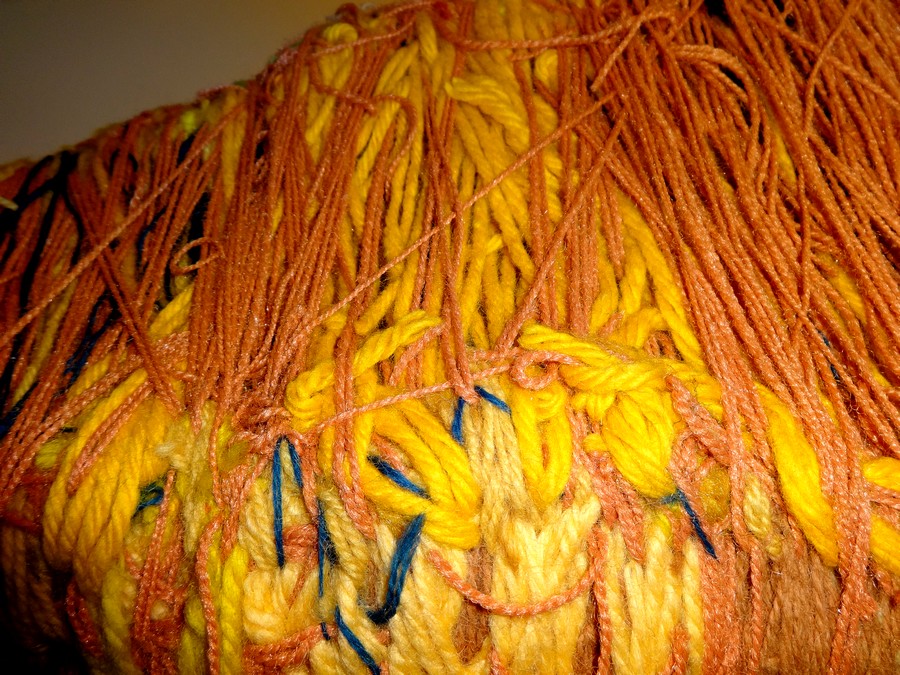
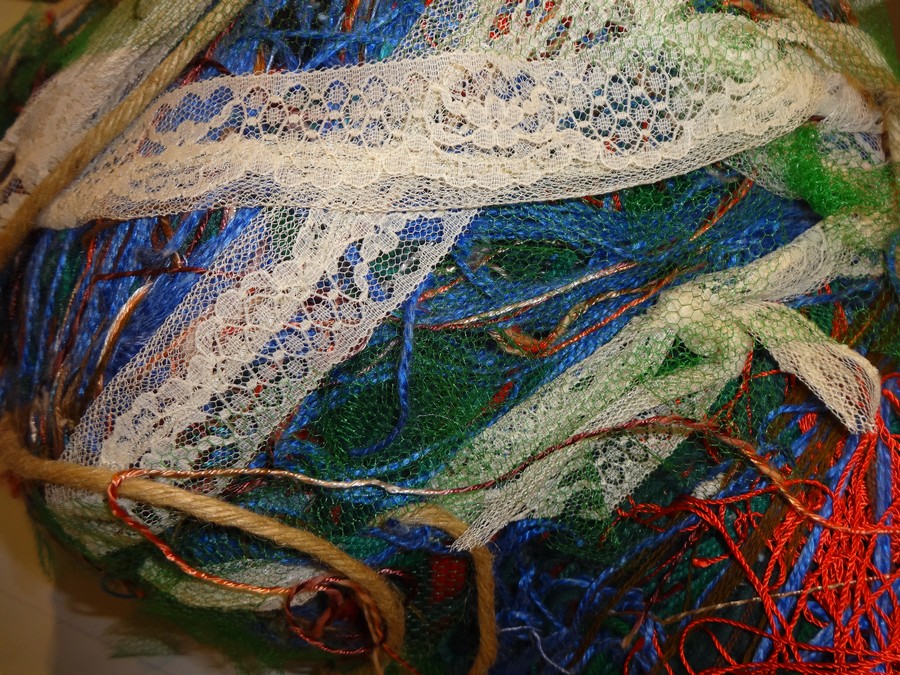
See the exhibit of textile sculptures by Judith Scott (who is part magpie and part genius.)
Go with a friend.
(Stop here for lunch. Have the kale and quinoa salad. Say hey to Debbie.)
Pay a visit to the French store and say yes to that bottle of almond milk hand cream that will not stop flirting with you.
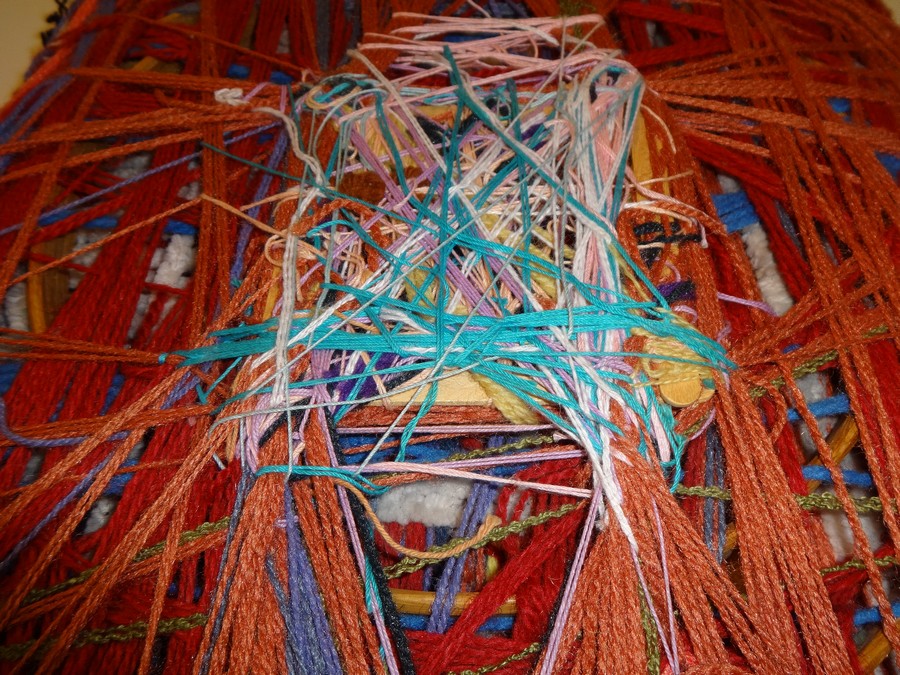
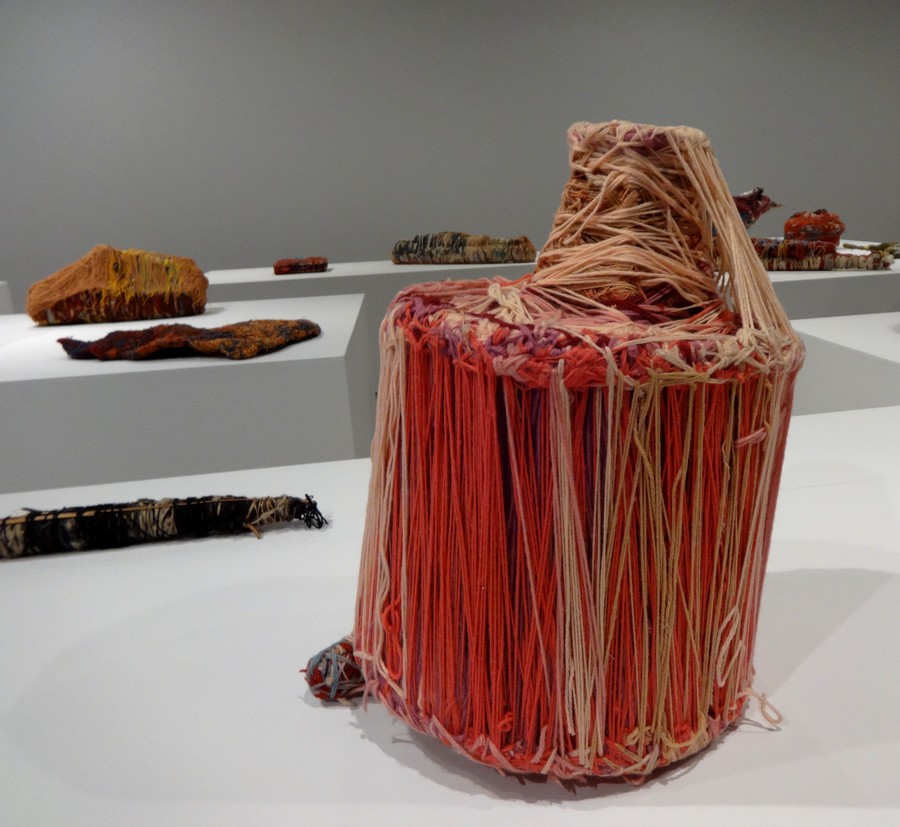
Use pictures of the exhibit for this year’s cards. (If gallery approves said use.)
And even though you just saw the friend, send them a card too.
Especially them.
♦
I’ve never been to Barrie before.
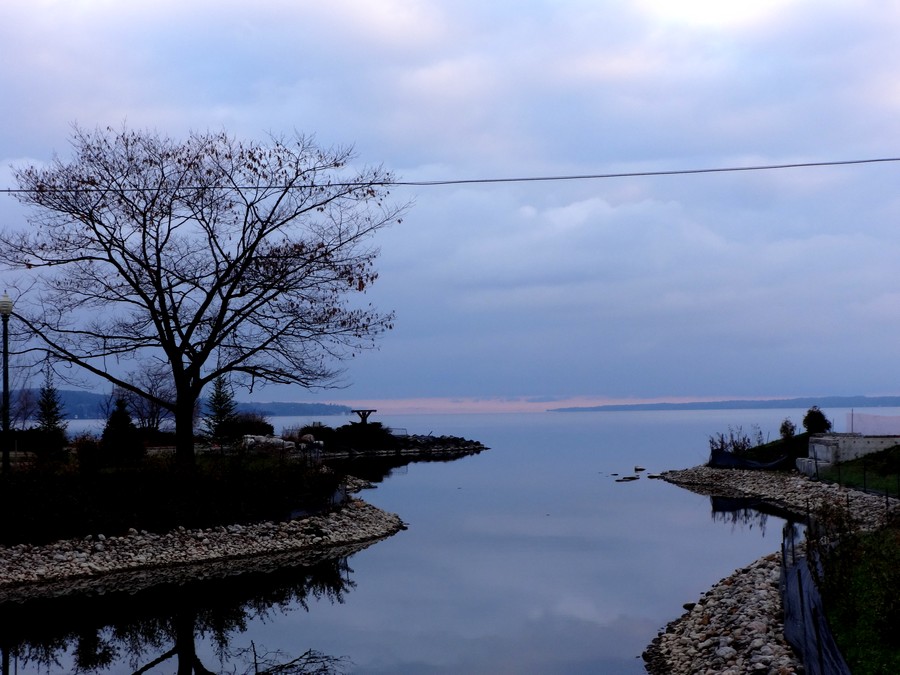 I’d heard there was a nice waterfront.
It’s true.

 But I didn’t go for the waterfront. That was simply a bonus, a nice way to spend the hour before sunset.

 At 7 p.m. I was in the living room of people I’d never met, about to be entertained by one of my favourite musicians, Laura Smith.
And Paul Mills.
A house concert, my first.
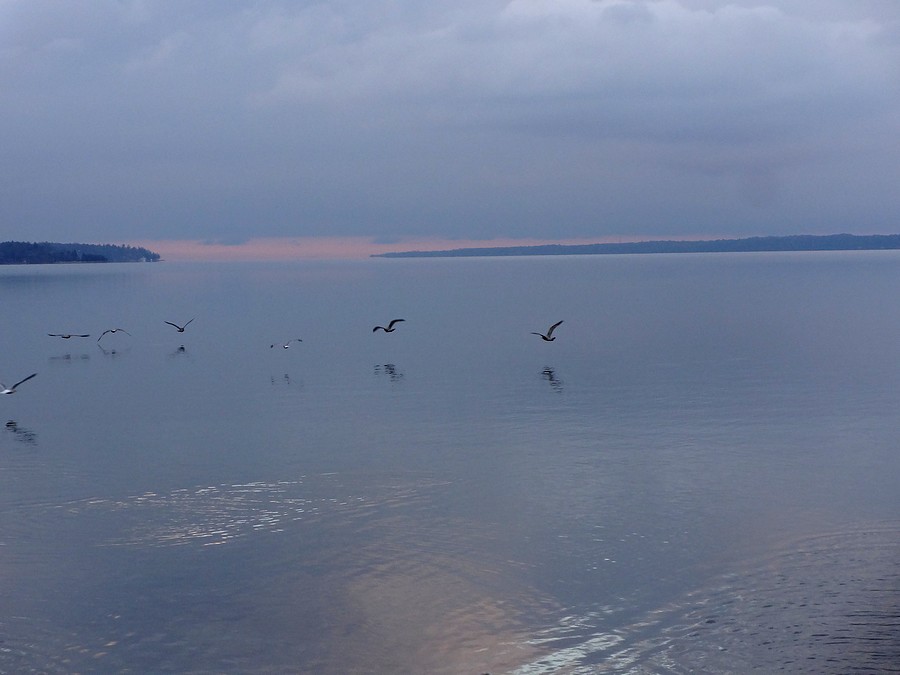
 And I really can’t even begin to describe how extraordinary it is to hear a concert quality performance in the comfort of a private home.
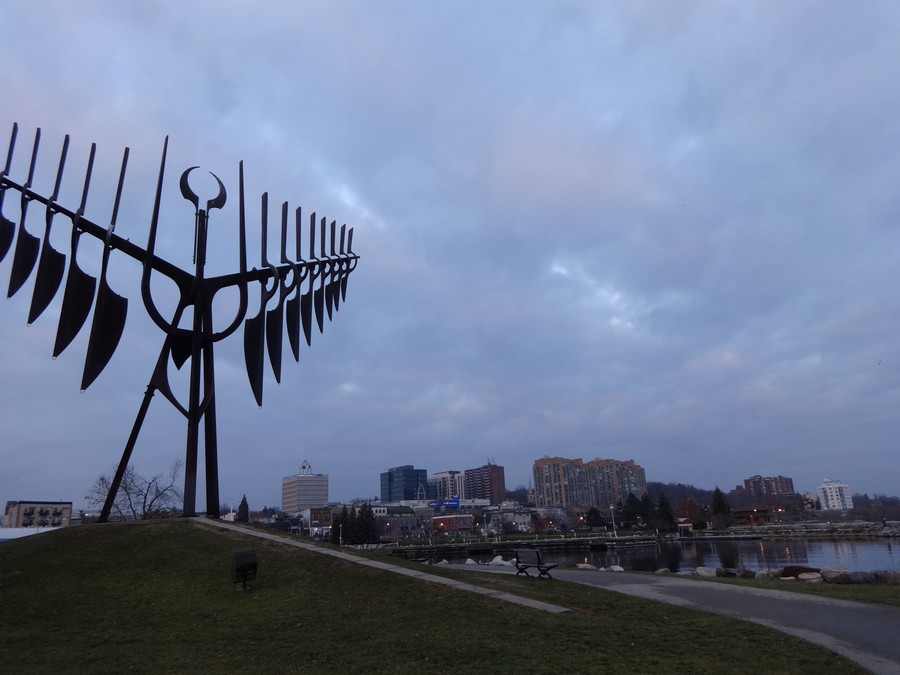 And Laura Smith’s voice… well, if you’ve ever heard it, you might understand the mind-boggling effect of hearing it up close. If you’ve never heard it, listen to this… And more, here.
It was Laura’s voice on a couple of CD’s that kept me company as I drove back, solo, from Prince Edward Island last year. For me, her voice and driving, travelling, looking and seeing and finding new things… are all connected.
I’ve also been known to dance in my own living room to her tunes.
I did not dance in the living room of strangers, though I suspect they might not have minded.
 I must have had the feeling I wouldn’t be able to describe anything and so I scribbled down lines throughout the evening… some from stories Laura told about the origins of the songs, why and how she wrote them; others from the songs themselves. This is a sliver of things, my concert mash up…
I Drove to Barrie to Hear Laura Smith
I was never safer
because of my smart dog
—the hardest part was starting.
Only an echo will answer my name;
I look into your eyes and see stories
that will never get told, like a father
and a daughter—love to have you here
havin’ a beer, right about now, steamin’
with toil, with the seagulls around me
and crows on the plough; you are loved
and you are loved always, you’re home.
I hear voices in the salt spray, the last
light of the sun going down; I sit in the
same chair every night, Jordy—
a bad hair day in a cheap motel—I’m a
beauty. I’m a beauty.
♦

Nothing else to say.
Except, thanks. It was the best…
♦
Other (not always) wordless friends:
Cheryl Andrews
Allison Howard
Barbara Lambert
Allyson Latta
Elizabeth Yeoman
I shot through this on the weekend. A delightful read that had me google searching the author, Helen Russell, for more Helen Russell pov. Turns out she writes for The Guardian and, according to her website, has a new book coming out in December, also a sort of how to find happiness type  thing. It’s a genre I don’t read a lot because I’m already pretty jolly most of the time. The book was mentioned in an article about hygge, the Danish word for coziness or comfort, although it’s more than that… it’s a state of mind, a state of being, a lifestyle, a homestyle, an all-encompassing thing that has no equivalent word in English.
I wanted to know more.
Hygge sounded awfully appealing.
Enter The Year of Living Danishly which is written in a very breezy, but not too annoyingly (although it gets a little close at times) conversational tone, in monthly chapters that cover the year the author lives in rural Denmark. She decides to use the time to write a book on what makes this supposedly happiest country in the world tick. To that end she talks to people in various fields and presents some stats. As well, she asks people to rate their happiness out of ten. Turns out no one she spoke with is less than eight. Pretty much every agrees the secret is equality, that everyone is equally well off.
Equality is big in Denmark. And it appears to be the key to finding hygge…. and happiness. Everyone is equal, regardless of age, status, job. There is no hierarchy. Jante’s Law is gospel.
For instance, everyone earns a fair wage and a doctor or lawyer or banker is not seen as a higher status job or more important than a grocery clerk or garbage collector or teacher. Especially not a teacher. There is apparently such an extraordinary focus on learning that it makes your eyes water to think how brilliant schools can be when people take it seriously.
And it starts from the get-go. And the children learn more than finger-painting. They are, apparently, encouraged to think, to question authority even. A tendency that may have its roots in the German occupation of Denmark in WWII, after which it was seen as essential to teach children to go against authority if they didn’t agree with what they were being told.
“ …We wanted citizens who were democratic and could have their own ideas, so self-development is a big part of learning in Denmark.”
Almost 90 percent of packaging is recycled and people take recycling very seriously to the point of neighbours knocking on a newcomer’s door to explain if they’re not separating things correctly.
There is extraordinary healthcare and assistance in caring for children.
There is a refreshing absence of blue for boys and pink for girls. Russell cites advertising that shows boys playing with Barbies and girls with tractors and suggests it’s not a nation of girly girls and tiaras on toddlers. Independent thinking is valued not feared.
Sex education begins early and is matter-of-factly inclusive of all manner of sexually relevant subjects. Gender in all its forms is not a hot button topic or reason for shock or under-the-breath muttering, judgments or bullying. She points out Denmark was the first European country to allow changes of gender without sterilisation.
Private schools aren’t popular as it goes against the idea of equality.
Danish pastry is as good as rumour makes out.
Unemployment is low.
As with all northern latitudes, the winters are dark with some months averaging an hour and a half of daylight. This leads to a high number of SAD cases, as well as depression, and suicide.
Taxes are high but apparently put to good use to equalize earnings so that all are well compensated. Russell does not mention striking sanitation workers, teachers or nurses. Instead we see an absence of class system, or at least the social inequities are small and because everyone has what they need, resentments and judgments are fewer. Back to equality, which might be the simple math of happiness.
Also, Russell says, there is trust. And this is huge, an essential value to Danish life. People trust one another. They have faith in their government and their administrative bodies. Things work… Because it’s easier that way, for everyone. And everyone knows that the good of all is pretty much the collective mantra of all. There is an absence of one-upmanship culture; to have more than someone else doesn’t sit right with Danes.
Back to Jante’s Law. Which basically means that no one is better than another, and which was referred to in almost every interview the author conducted.
Equality and trust.
Imagine!
Russell writes with humour and for the most part it’s welcome, though a little less would also have been good. On missing the noise of London, she notes:
“I now hear birdsong, tractors or, worse, nothing. The place is so still and silent that the soundtrack to my day is often the ringing of long-forgotten tinnitus…”
She does not mention senior care, nor does she indicate how diverse the population is, except to say that diversity is increasing.
Ultimately, she and her husband fall in love with the place and decide to stay on a second year.
“…it’s no wonder Danes are so happy. They have an obscenely good quality of life. Yes, it’s expensive here. But it’s Denmark – it’s worth it. I don’t mind paying more for a coffee here because I know that it means the person serving me doesn’t a) hate me or b) have a crappy life. Everyone is paid a decent wage, everyone is looked after, and everyone pays their taxes, just as I pay mine. And if we all have marginally less money to buy more stuff that we don’t really need anyway as a result, well I’m starting to think it’s a deal worth making”
At the end of the book she summarizes in ten elements How to Live Danishly, which is a little gimicky, but makes its point nonetheless. The greatest interest in the book, for me, was knowing that it’s possible for a country to put happiness right up there on the agenda, in seriously practical ways.
And to better understand the magical powers of hygge.
It’s the kind of book I’d like to send to a few world leaders…
**
♦
Other (not always) wordless friends:
Cheryl Andrews
Allison Howard
Barbara Lambert
Allyson Latta
Elizabeth Yeoman
I’m thinking of so many teachers on a morning when we woke to find we’d lost one of our best, one who taught through music and poetry, such gentle lessons… the kind that change us in ways that allow us to find the strength to build and change our world with compassion.
Have we made notes? Because it’s up to us now.
And I’m thinking about those who fought against the *isms* … Oh, to find a way of fighting without harming. Maybe that’s the hardest fight of all.
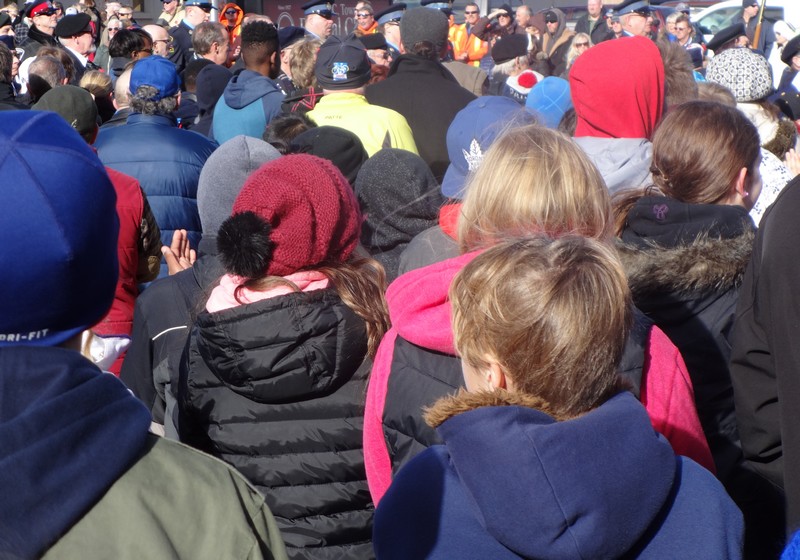
 It’s not much, but I went out onto the main street of our tiny downtown and watched those men and women march to the cenotaph. Each year there are fewer gray heads but those still there always have the same look in their faces, their eyes…
 I’m not a fan of war (are there fans of war?). Or even the military. That’s not what I’m paying respect to.
At least not directly.
I’m there for the individuals, not the machine.
I’m there for the same reason I once stood at the side of the 401 while the car carrying the body of a boy home from Afghanistan passed and the crowd of people went silent and a mother and a father were somewhere doing god only knows what mothers and fathers do at times like that.
It’s not about condoning why people die, it’s about not being able to pretend they don’t.
And so every year since this one I try to make it to the parade and stand in silence, together with neighbours I don’t know, all of us there for probably very similar and yet different reasons.
Does it matter that there are different reasons?

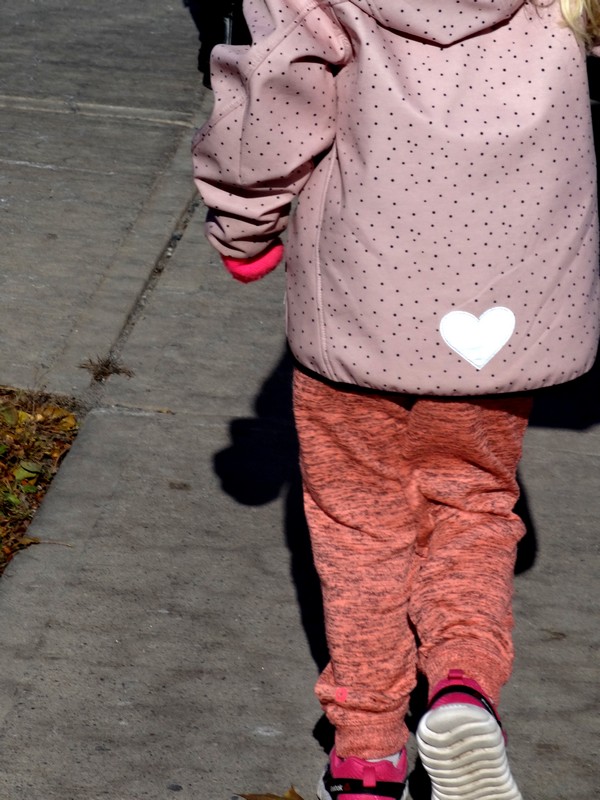
 However you look at it, it’s a sweet thing in a fleeting way.
**
Bonus: on the way back to my car this beautiful old man in a don’t-hit-me fluorescent vest, said hello in that way the very old have perfected as an art. One of those things we might have made better notes of… how to greet the neighbours we don’t know.

**
♣
 On this traditionally wordless day at Matilda, may I suggest that today we use our words. And use them kindly.
Forget the anger. It buys nothing worth having.
No stamping of feet, no pointing of fingers… no giving the anger-mongers more fuel.
 Instead, let’s think of what we can do as individuals, as communities—let’s come together, even as the anger-mongers continue to flail about.
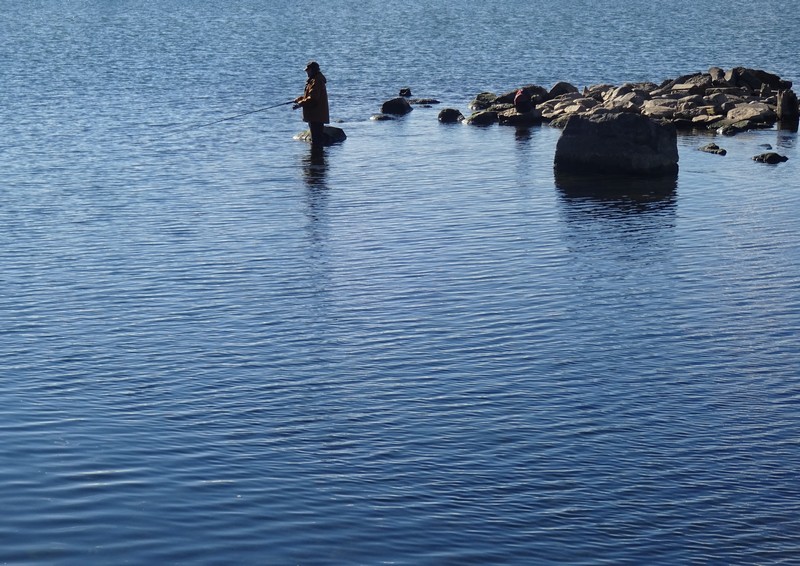 The bottom of the barrel isn’t always the worst thing… it’s often a necessary place to be so that we wake up, say enough, and begin to create the change we want to see. To be that proverbial change we want to see.
 So despite the forever angry-ness of some… and maybe because of the barrel’s bottom in our faces… let’s move forward rather than be discouraged… and let’s do it with the simplicity of kindness as our guide and our goal.
That’s all, just kindness. Pockets of kindness in the giant madness.
If only so we can breathe.
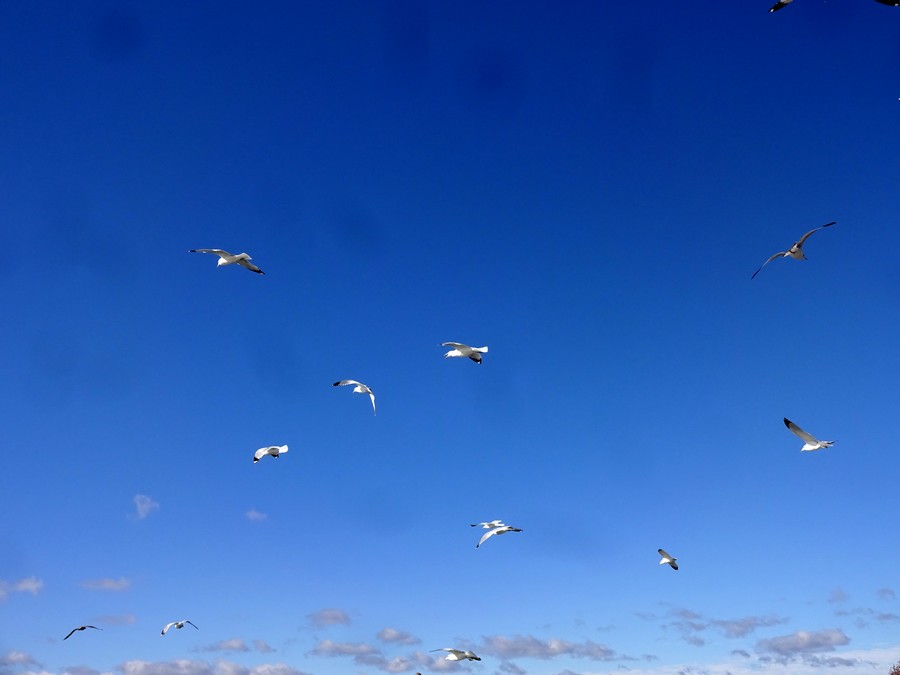 It’s a novel idea, I know. Sappy and impossible some will say.
Still.
What can it hurt?
It’s a start.
 Kindness.
Spread the word.
♦
Other (not always) wordless friends:
Cheryl Andrews
Allison Howard
Barbara Lambert
Elizabeth Yeoman

♦
Other (not always) wordless friends:
Cheryl Andrews
Allison Howard
Barbara Lambert
Allyson Latta
Elizabeth Yeoman
 Matilda Magtree