
♦
Other (not always) wordless friends:
Cheryl Andrews
Allison Howard
Barbara Lambert
Allyson Latta
Elizabeth Yeoman
♦
Other (not always) wordless friends:
Cheryl Andrews
Allison Howard
Barbara Lambert
Allyson Latta
Elizabeth Yeoman
Tell me the beautiful bits, things I might not see if I walked where you walk.
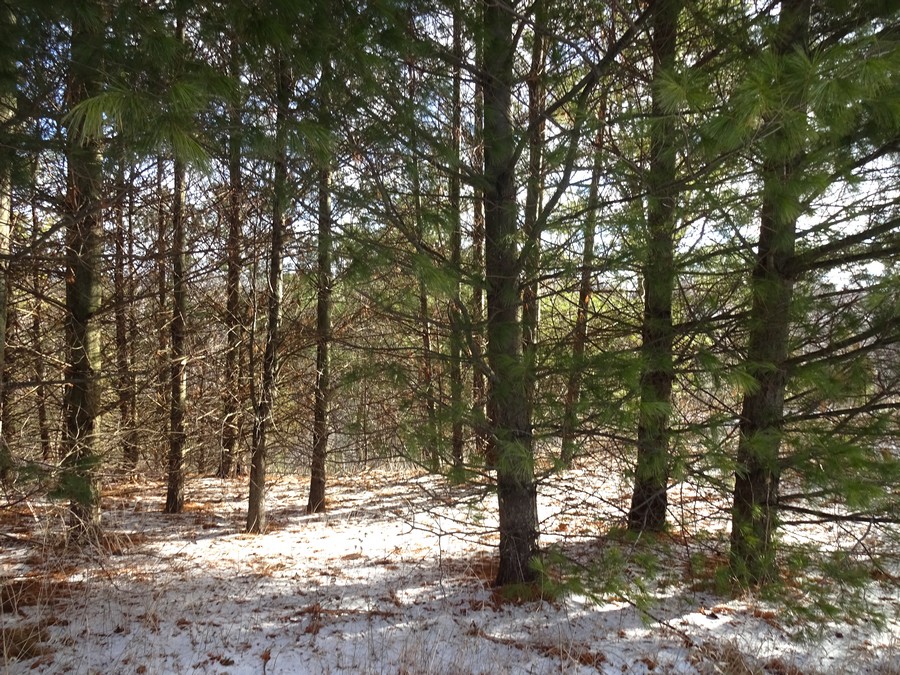 Because we need to see beauty more than ever.
More than ever.
And through the eyes of each other.
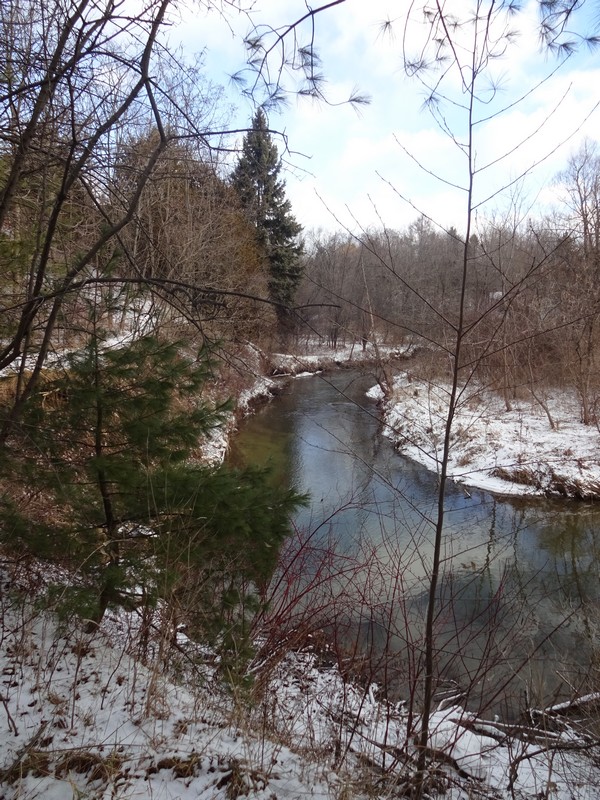 So tell me about a poem that came to you one day as you looked at this scene or that one and how it made you go home and count your blessings.
 And how this tree or that corner or this bench makes you remember a friend and a conversation about bread.
 Tell me about trees taken down with saws and others taken down with teeth. And tell me: where is the dam? (Also: where is a naturalist when you need one to explain where is the dam?)
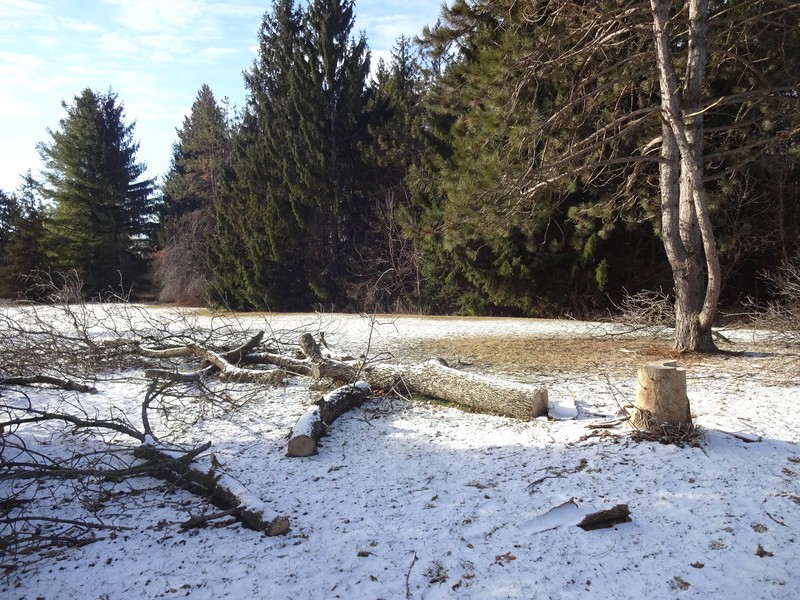

 Tell me about the sound of birds you can’t see and about a loved one who is flying across the ocean at this very moment, homeward.
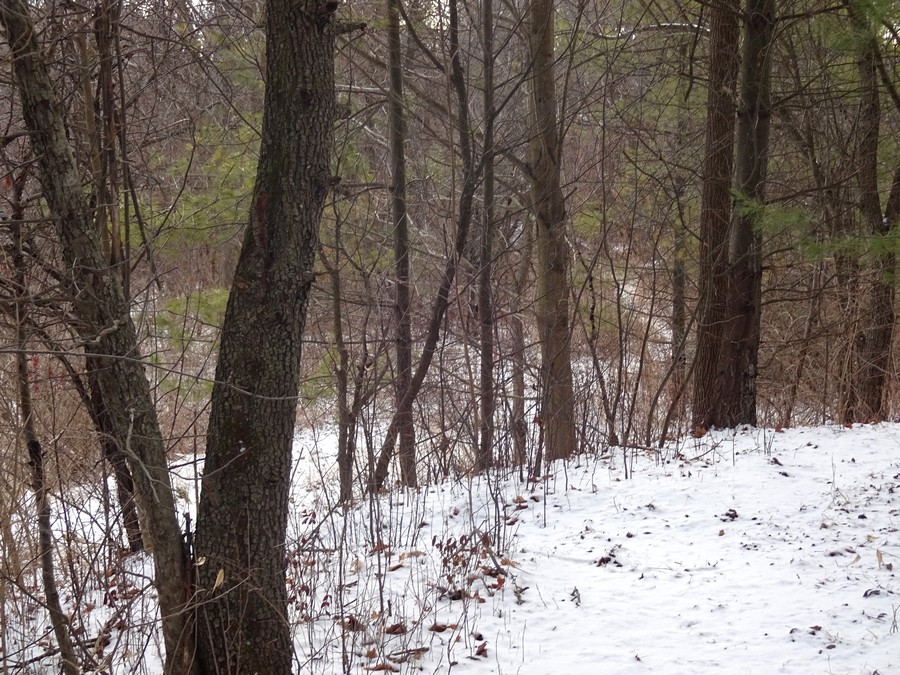
 Tell me about the litter you pick up or don’t pick up and about the bike you once found abandoned in the woods just there and how you wonder where abandoned bikes go… and why ducks’ feet don’t get cold.

 Tell me about the neighbourhood stray.
How he appeared at the window one day when your cat was sitting on the sill and they both nearly scared each other to death and how neither of them have gone anywhere near that window since.
 Tell me about the brim of your hat and how you tilt it upwards because you want to let every drop of vitamin D into your eyes.
And the splash of red you see in a bush, which you assume is another Timmy’s cup and when you get closer you see that it’s not litter but a bird.
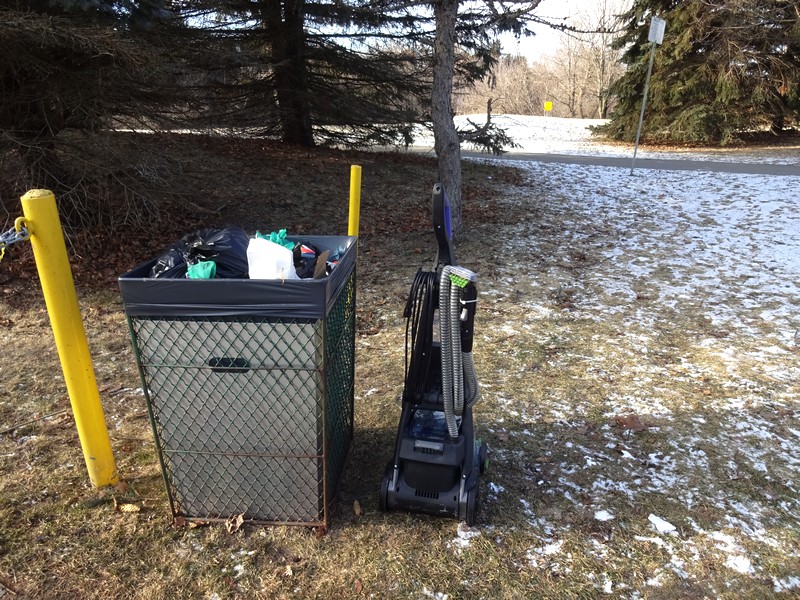
 Tell me about the man doing tai chi in the park and how you’re grateful for all the goodness he’s putting into the air. And how in the very same park someone left a hoover and a giant bag of household garbage.

 Tell me why you walk.
 Tell me it’s to clear your mind, to remind yourself there’s more than madness in the world. Tell me it helps you see that despite all the anger, fear and hate, there’s no value in anger, fear or hate because that’s not how things work, that’s not the essence of what we are.
Despite all appearances, that’s not the essence of what we are.
Tell me you walk to refuel because refueling is necessary… because this isn’t a time for idleness.
Tell me you walk because there is so much beauty.
And so much work to do.
Not encouraging anyone to be wordless today.
 It’s #BellLetsTalk and every single form of online communication using that hashtag (until midnight) will generate five cents for mental health initiatives.
Am writing this not so much for a friend as because of them, someone who is an inspiration to me in ways he’ll never realize. Twenty something years ago his bipolar disorder and psychotic episodes got bad enough that it was recommended he move into a residence designed for people with mental health issues at every level. It’s become home and he says he’s lucky to be there and feels safe, but he also says that most other residents are very low functioning and it can be a depressing environment. So he keeps busy. He listens to the radio in his room. Local news stations, every kind of music, sports. TV is less interesting to him, too much an assault on the senses and, anyway, it’s in the common area, which he prefers to avoid.
Not that he’s anti social. Quite the opposite. He’s forever in search of a good conversation. It’s just that where he lives it’s impossible. So, every day, without fail, he does something to work around that.
He once told me he tried to speak to at least three people a day. Even if it was just to say hello in passing on the street.
He loves the phone. Computers are beyond his ability. He’ll spend weeks composing a letter he sends by mail. He doesn’t have a lot of money but he likes to go out, so he spends afternoons walking and drinking coffee or tea in various cafes where he always asks if there’s anything he can do to be helpful. One place said they’d be grateful to have him tidy up their bulletin board occasionally. He does this with extraordinary devotion to detail and all kinds of pride and tells me why he arranged things on the board as he did that day. This place has become his new favourite haunt and he’ll spend money he can’t really afford on too many muffins just to support them, so grateful is he to be able to tidy that board.
Sometimes at night he’ll go out to hear a local band and if likes them he’ll tell everyone he knows and several he doesn’t that they need to hear this band. Not pushy, just passionate.
He goes through phases of doing things left-handed, brushing his teeth, holding the phone, eating soup. Someone told him it’s good for your brain.
For awhile he took it upon himself to report street lights that had burned out. He would note the location and call the city works department. He gets involved with various local groups, folds envelopes, whatever needs doing. He discovers a second hand shop that’s struggling to make ends meet but the people are nice so he buys a belt he can’t afford, just to help them out.
What he doesn’t do is complain. Which is astonishing to me.
He knows how some people see him. He doesn’t fool himself, he knows what his limitations are, what he’s dealing with. He’s just somehow able to override all that and keep going.
Though he gets weary of it all sometimes.
Occasionally his disorder turns psychotic and he ends up at The Royal, the mental health centre in Ottawa, where he might spend months at a time.
There are aspects of his life that are so frightening I don’t know how he copes as casually as he does. He says he’s used to it. But surely becoming used to something awful can as easily destroy spirit as it can be the reason to work even harder. That his spirit is not only intact but shines as brightly as it does…. is extraordinary. I never take it for granted.
And so he is an inspiration like no one else I know.
I tell him all the time. But I’m not sure he believes me.
He called the other day to remind me of #BellLetsTalk. And he’ll be calling everyone he knows today, at least once. It’s what he can do, so he does it. So, yeah, not wordless today. Let’s talk up a storm.
This one’s for all of us, but especially for E.
Shine on, my friend.

Update as of 2019: E has moved to a much nicer residence, loves his room with a giant window and view of the sunset. He is the star of the facility, named Captain Purel for his job as greeter at a local hospital, (his job being not only to greet but to suggest using the sanitizer on entering and leaving the building) which he takes very seriously and excels at. He has also recently been given a new-to-him dark green LazyBoy chair with all kinds of buttons and a cup holder. He continues to find the joy in simple things, and life. He’s one of the lucky ones. And he is a star in my books.
It won’t work if it’s done only when it’s done en masse.
Or when the beautiful momentum of hundreds of thousands gives it credibility and air time. As powerful and important as that is.
It won’t work if we stop when the cameras stop and the journalists go home and we’re left with our own small lives and make the mistake of thinking what can I do… me… one tiny person?
It won’t work if after stretching to this extraordinary moment of pink power we let the elastic snap back into complacency and start supporting what’s easy instead of what’s right.
Pink is no longer a colour.
It’s an attitude.
Reclaimed at last from the retail aisles and Barbie accessories. Let it stand instead for kindness, equality, respect, truth. Let’s accept nothing less. And let’s find creative and clever ways to live it every day in our own small lives.
Also, let’s remember that however important it is, it’s not the only colour.
But maybe, just maybe… it can lead the way.
Equality. Kindness. Truth. Respect. Across the board.
Although I haven’t worked in an office for years I still work office-ish hours.
So Fridays are very TGIF for me and this one in particular seemed in need of some goodness. A distraction, a need to play hookey, to get away from it all. Bird seed seemed the logical answer. So off I took myself to a nearby town where a source told me I could score some excellent Ethiopian nyger at the local feed shop.
I got twenty five pounds.
It was noon by then so I stayed for lunch. The first place I stopped didn’t want me to sit at a table by the window as I was just one person and that’s primo seating. So could I please move to another table at the back? No, as a matter of fact, no thank you… I do not care to sit at the worst table in a half filled room as penance for being a single diner.
Ta ta, said I.
And wandered down the street feeling oddly buoyant.
 The next place I landed reminded me why things happen the way they do. Had the other folks been nicer I may have never have discovered this place, which not only said sit where you like — it was ten times busier, had a merry vibe, a shelf of books for reading not for decor, people actually seemed happy to see you and the food was out of this world delicious.
AND they had mussels… so………..
I read a cookbook about seasonal food.
 And had PEI for lunch.

Moral of the story — How being faced with the unkind or unjust can still have a good outcome if you put your heart into it, trust your gut, stand for what you believe in, and other bodily metaphors… and how fete-ing myself on Fridays might just become a thing.
Also moral of the story — It’s one way to remain sane.
♦
Other (not always) wordless friends:
Cheryl Andrews
Allison Howard
Barbara Lambert
Allyson Latta
Elizabeth Yeoman
 I’ve recently set out on a quest for trashy reading and have been happily led to what appears to be not only a most wonderful book on the subject of litter but to a whole line of (very smart) books being published by Smart Apple Media, primarily for schools as far as I can make out, but they’re such excellent things it would be a shame not to flaunt them more broadly.
Formatted as one of those hardcover, mini encyclopedia for kids, Why Shouldn’t I Drop Litter? opens with a colour photo of autumn leaves on the ground and the reminder that this, too, is called ‘litter’, leaf litter. The difference being that “Nature has ways of dealing with things that are no longer wanted…”
And with that perfectly passive aggressive irony, we enter the book by addressing a few facts about ourselves and how much we throw away every year (about five pounds per person EVERY DAY). That *you*, personally, don’t throw that much away doesn’t matter. It’s not a problem that’s searching for someone to blame. It’s a problem that requires everyone to take responsibility. At least everyone who lives on the planet.
The pages, 32 of them, are beautifully laid out and not crowded with information in the way this style of book can sometimes be. Nor is its intention to scold or even shock. Rather, it seems only to want to remind us of the consequences of litter, that something which seems so trivial and innocuous has all kinds of horrible consequences.
Hedgehogs, for example, tend to get stuck in yoghurt containers because their quills make it impossible to back out.
Used or tangled fishing lines are often cut and left in the water (because we’re such geniuses). And if you can’t understand how this is dangerous for birds, fish, turtles, dolphins, etc…. google fishing lines/wildlife sometime. Meanwhile, here’s a two minute story with a happy ending.
And those plastic holders that six-packs come in? If you haven’t yet heard, all kinds of birds and animals, fish too, get them wrapped around their beaks, bodies or necks and die that way. If you see one laying around, please pick it up. You may save a life, and you won’t die of cooties.
Oh, but if it’s germs you’re worried about, consider the gum that’s all over pavement everywhere. It costs between $2 and $3.50 PER PIECE to scrape off. Apparently no one has yet figured out a better way to remove it. Probably because all the money and brainpower is working on how to inhabit Mars (which will only remain gum free until we get there).
One of the biggest problems in the matter of waste is that which comes from fast food restaurants. Our convenience is apparently nature’s problem. It’s no small potatoes what we choose to support with our dollars. When we give all the money and power to fast food places we shouldn’t be asking ourselves why standards are slipping everywhere we look.
(Of note: interesting how people will throw money at the burger joint that happily pollutes the world for profit, but the same person resents paying a few extra bucks to keep a community well supplied with garbage cans.)
The problem is always us.
The solutions too.
It’s about the choices we make.
Anyway, the book is part of Smart Apple Media’s ‘One Small Step’ imprint, which seems designed to inspire engagement in our individual slivers of the world, to encourage us to understand that problems like litter are not someone else’s problem, but something we can work together to improve.
I think it would make dandy reading for families that give a hoot.
~
Also, if you come across books that deal effectively with the subject of litter, garbage, recycling, you get the idea… please let me know. I’m compiling a list for The Litter I See Project.
A million thanks.
♦
Other (not always) wordless friends:
Cheryl Andrews
Allison Howard
Barbara Lambert
Allyson Latta
Elizabeth Yeoman
I hang small flags
 from cedar
 —thoughts stitched
upon the fabric, flickering in a line
across the yard until
 squirrel sees
not thoughts and prayers
 but prayers answered
 and uses one for
its bed.

♦
Other (not always) wordless friends:
Cheryl Andrews
Allison Howard
Barbara Lambert
Allyson Latta
Elizabeth Yeoman
 Matilda Magtree