strawberries on my mind

And it’s not even the season… except that I was recently given a pint of freshly-picked ones by someone who informed me that there are new cultivars that grow through summer, or at least through much of it. Huh. News to me. I’ve been walking snootily past strawberry displays at the farmers’ markets for ages, assuming they’re imports from re-sellers. And even if I’d known about the all-summer variety I’m pretty sure I’d have given them a miss, assuming hybrids taste yucky.

But the gift strawberries were in no way yucky. And they went very well with ice-cream, just like the real kind. If anything, these were more flavourful than the early varities, which I’ve noticed in recent years have been losing ‘something’.

But that’s not what’s on my mind, strawberry-wise.

It’s picking them. My first serious job. Aside from babysitting and selling Sarah Coventry Jewellery, Avon and Regal Gift Cards door to door. (Actually, Sarah Coventry was sold at ‘parties’. Of which I had one, my mother being my ‘party host’ and whose responsibility it therefore was to invite a rec room full of friends. The host received a complimentary Sarah Coventry brooch or scarf holder or mood ring… Anyway, can’t remember if/what I sold. It was such a sad, sad thing for a child to experience, it effectively ended my whole Sarah Coventry career.)

My strawberry picking career lasted much longer. Almost a whole strawberry season, as I recall. (Please note the season was much shorter then; the people who invented the hybrids had not yet been born.)

The best part was being picked up in a flat-bed truck at the corner of Bunting and Scott at something like 5:30 in the morning. Not only was it great riding in the back of a truck through the city, but none of my friends were up to see how nerdish I was, grinning madly, wind in my face, the sense of berry-fueled adventure coursing through my veins…

The worst part was the rash I got from eating more strawberries than I picked.

When I got my paycheque (I can’t believe I didn’t owe them money), I thought I’d made it, that it just didn’t get any better than this. I had a paycheque for god’s sake. With my name on it.) A picture exists of me holding this cheque. I’m wearing a tie-dye tee-shirt, cut offs and a blue paisley scarf over my hair (tied almost pirate style, but not quite) the way we did in the 70’s when we weren’t embroidering flowers and peace symbols on our jeans.

There’s a good chance I spent it on a Gordon Lightfoot album, incense and a pair of huaraches.

untitledThank you, WikiCommons


The above memory, courtesy of a post by Gwen Tuinman about her summer job picking tobacco leaves. (I win! You can’t eat tobacco leaves.)

Any other summer jobs of yore out there? Consider the baton passed…


22 hours in bear country

Arrival in bear country is similar to arrival anywhere.
DSC00753
It begins with fries.

And moves from there along a lane through many trees…
DSC00755
—to a house on a lake across which I’m ferried to a patio with a view.
Caesar salad and veggie wraps are involved.
DSC00760
And then back via nautical means—and views of bear habitat.
DSC00767
And habitats among the bears.
DSC00768
Eventually returning to the house at the end of the lane for quite a bit of this…..
DSC00776
—with exactly the right amount of that…
DSC00777
All the while, plenty of citronella-scrunching to let the mozzies know who’s boss.

Here’s a pink one giving the citronella two fingers.DSC00803
And chatter. Much chatter. And bbq’d salmon. And later an attempt to sit by the dock, thwarted by the absence of light. A decision I don’t question because those trees look much bigger in the dark, and so very much better for bears to lurk behind —bibs tied around their mammoth necks, knives and forks at the ready, lips smacking… Thank god for the absence of light I say.

Instead, we chatter some more and only when voices and stamina give out do we call it a night, and then in my room I find a magic lamp. It has no buttons. You merely approach it with a what the? where’s the frigging button? and it senses your need and lights up. A copy of The Antigonish Review  magically appears.
DSC00790
There are large windows and no curtains and again I wonder about the lurking bears pressing their muzzles against the glass, breaking through, ransacking my overnight bag for snacks. And wouldn’t you know it I happen to have a small container of peanut butter in my purse, snatched from the diner where I had breakfast last weekend.

I try to put this out of my urban mind, concentrate on the winning stories from the 2013 Sheldon Currie Fiction Contest, the plan being to read them, but my eyes are doing that closing thing that no matter how much you try to force yourself to stay awake you just keep going over exactly the same three words.
I give up trying to read or to survive imminent bear attacks and then, as if sympatico to my mood, the magic lamp goes dark with but a touch, or was it a wave?, of my hand.

More magic: the dark hours are over in mere moments and the new day is is all trees and I sit outside and write about vertical things.
DSC00805
There is breakfast.

And a walk with bells on.
DSC00792DSC00795DSC00796
And by the time I leave bear country, I have learned three things:

1) There are no shortage of bees in these parts.
DSC00809
2) The essentials for survival are simple:
DSC00799
3) Most importantly, should a bear manage to break through your curtain-less windows in search of your contraband peanut butter, or is drawn to you by the scent of recently BBQ’d salmon on your breath, or you encounter one anywhere else, whatever you do, do not buy the myth of playing dead. This, apparently, only assures the bear that you are in fact deceased and it will use you as a hacky sack. (This comes to me via my house-in-the-trees-at-the-end-of-the-lane host, and is largely paraphrased. But you get the point.) (Oh, and it only goes for black bears. If you encounter a grizzly, do whatever you want, you’re pretty much toast.)

strolling

It’s raining a bit and cold and someone says the word ‘stroll’ and it sounds so exactly what I’m in the mood to do. Had they said ‘walk’ I wouldn’t have budged. I don’t feel like a walk. I want to stroll.

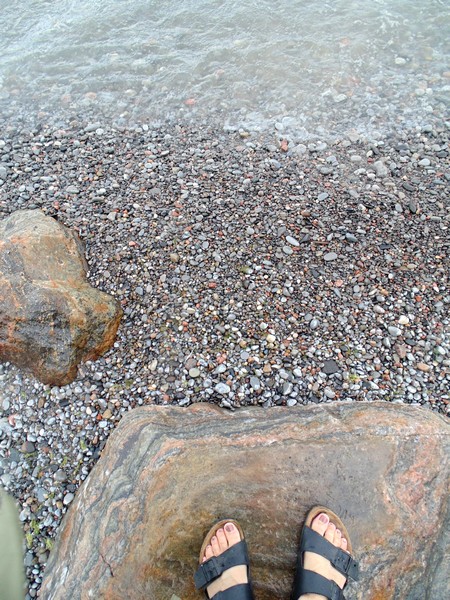
So I go to the beach because there’s no better place to be on a rainy afternoon-almost-early-evening in August.
DSC00730
Strolling implies not thinking, which makes it almost like a walking meditation. However I soon discover that the batteries are low in my camera and nothing is reliable. Sometimes it takes a picture and sometimes it flashes its ‘batteries are low’ signal. I consider not caring, consider not taking any pictures. Walking without taking pictures is also a kind of meditation and sometimes I can do it. Sometimes I crave not taking pictures.

Not today.

Today there is milkweed and a seagull that limps and another that is hunched like an old man against the rain, a scowl on his beak, eyes all squinty and annoyed.

And perched tidily on the bottom step of wooden stairs leading from sand to playground, a tiny pair of purple lace-up sneakers with the heels squashed flat to make slip-ons. I beg the camera to work but no amount of thumping its battery end persuades it. If I wait ten minutes or so, it may be charged enough for one tiny purple shot. But there’s no guarantee and it’s raining and I decide to simply add ‘shoes’ to the list of things I’m trying to remember, to the picnic table buried to its very top in rocks and sand. And a sign that makes no sense.
DSC00734
And then the rain slows down and the sky brightens for a minute. It’s that kind of weather. I consider going back for the purple sneaker shot but, nah, it’s only shoes. I skip stones instead and test the camera while I do it.
DSC00736
I test it again.
DSC00733 - Copy
And then I seriously consider going back for the shoes.

But of course it stops working at the very idea.

So the corn cob that’s abandoned on the sand, unattached from its picnic, goes undocumented. As does a squirrel eating what looks like a timbit, and a white feather, perpendicular among slick stones shaped like eggs…

I stroll by all of it, unable to prove a thing.
DSC00737

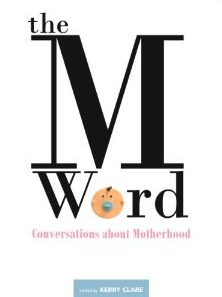
this is not a review: ‘the m word’, edited by kerry clare

 
Warning: today’s ‘Not a Review’ includes internal organs. But not until nearly the very end.

I’m not normally drawn to mothering books but I like Kerry Clare’s work, so it was impossible not to be drawn to her anthology, The M Word: Conversations about Motherhood. I knew I’d be in the hands of good taste and good writing, even if, as a Childless Woman, I couldn’t actually relate. Well, what happened was this: I found myself not only enjoying the read, but relating. In a major way. Because, as it turns out, the essays are both about mothering and not mothering, about the exultant and the reluctant, the non-mothers by choice, the stepmothers by circumstance, women who will do anything to be come a mother and those who will do anything to not. And in every scenario, the difficulties, joys, fears, the way life is changed for the better and sometimes for the not entirely better. There are celebrations, regrets, and such honesty that it’s really quite impossible not to relate.

In other words, there’s something for everyone. Even me. Because if you’re a woman, you fall into some category where motherhood is concerned. This, whether you like it or not. You have the parts. And if you don’t, that may be the problem, or the celebration, depending on your outlook, your personal goals.

And that it is so personal is what I most enjoyed about the book. The writing, yes, but I wasn’t merely reading, you see, I was being drawn into this conversation, being reminded that yes, I also have a story, some history on this subject. And let’s hear it, the conversation seemed to say, because as you can see, no woman is excluded from this club, for here is a truth: if you’re a woman it’s pretty hard not to have a few thoughts on the motherhood thing.m-word-cover

The book is arranged alphabetically, which happens to fit nicely with its ‘lettery’ title, but more importantly it allows for accidental juxtapositions rather than any kind of predictable narrative.
I read it backwards.

Michele Landsberg in the Afterword, on the surprising role of grandmother: “Even though I haven’t had to consider the effect of a child on my lifestyle, the negative or the positive, less is said about that—guilt? It’s interest/improving to help understand friends who’ve been through it because still decades later they talk about it.”

And on over-thinking, a beautifully rendered piece by Julia Zarankin. “If I have a baby in March, when should my husband begin taking driving lessons?”

Sara Yi-Mei Tsian considers the implications on her work: “Motherhood is a study in conflicts, which is why it attracts me as a writer.” and this… I just love this: “…there is a certain nugget of truth… that all writers would like to avoid. We cannot give voice to a character based on someone real without silencing, at least in part, the person who inspired us.”

Patricia Storms presents a graphic essay about the joy of “working for” kids and living without them. And how that’s not something a lot of people seem to understand.

Kerry Ryan on ambivalence about motherhood: “Do you have to have a maternal instinct from the get-go, or does it kick in with your breast milk? And if not, can you wing it, or is your child destined to become a serial killer?”

Heidi Reimer begins with ambivalence, then an adopted daughter, then gets to the “bone of my bone”, “the flesh of my fleshness” when she gives birth and experiences a different kind of love. “I had made a person! I would never do or become anything more important than this.” (Actually, that statement made me wonder about generations past. Did they feel this rush of omnipotence? Now there’s a conversation.)

To her credit, Reimer is painfully honest when writing about these differences.

“I am in love with Aphra, a feeling as effortless and unstoppable as breathing. My relationship with Maia is more akin to an arranged marriage: I made a choice I believed was right, and through that choice, over time a bond solid and close and beautiful as grown. A connection inextricable. If I am sometimes aware that this love was a choice, if that choice is sometimes taxed, so, too, are my relationships with almost everyone I love. Of the several people integral to my existence, Aphra is the only one who came from my body.”

On single motherhood: Fiona Tinwei Lam writes, “Not wanting to be married didn’t mean I didn’t want to have a child.”

And from Ariel Gordon, the need to protect her writing time and space and the choice to have only one child. “When it came right down to it I didn’t think I could be a working writer with more than one child. And I was unwilling to take a break when my writing and my writing life—the time I spent in the company of other writers at readings and conferences and retreats—were finally starting to gel.”

I admire her conviction, the wisdom to know her limits insofar as achieving her goals and how she sees there is more to give her child than a brother or sister to grow up with… but it’s interesting that the ‘maternal’ concern is still there.  “And so, even though the girl won’t have siblings to lean on… I’m hoping that she can lean on the texts I’ve left behind.”

Nicole Dixon chose to not have kids for a variety of reasons, not the least of which is an over-populated planet and consumerism run amok. More diapers and toys don’t help the situation. She justifies her position with a desire to allow herself to be a good citizen in so many other ways. that parents may not always put first.

“People often think that saying no to having kids means saying no to life. My choice not to have kids, however, is a choice made from love. I’ve realized that the legacy I want to leave on the earth after I’m gone is as small a mark, as tiny a footprint, as possible… My choice not to have kids does not close me off from my community or my planet. Instead, it allows me to nurture my own life and to mother everyone’s mother, Earth.”

Most are young or youngish mothers. Myrl Coulter is perhaps the single entry from a very different generation, and this is nice to see. Her piece on unwed mothers in the 60’s is especially moving. She was eighteen and in love with a seemingly nice guy. But marriage didn’t make sense. She became a ‘girl in trouble’ and was whisked away to one of the maternity homes that existed from the 1940’s through the 80’s.

“To call these places maternity homes is highly ironic: maternity homes were not homes nor did they function to promote maternity. They were institutions to house and hide those deemed maternally inappropriate. Also known as homes for unwed mothers, they were busy places in those days. Winnipeg, a small city, had three.”

These girls were not just thought to have made a bad decision one night in the rumble seat, but their whole character was judged and they were vilified. They were also thought to be without maternal instincts yet, curiously, they were denied contact with the babies they delivered, which only proves that everyone, even judgmental pricks, realizes the connection between mother and child.

**

So yes. I read, I enjoyed, I related, I remembered, and the remembering led me to a few other words. The N-D word for instance, as in Near-Death, because it seems fallopian tubes are not a welcoming environment for growing children and near death follows for the host but, before that, after much mysterious pain, internal bleeding, a severe drop in blood pressure and eventually, in the Emergency Department through an increasing haze as one slowly drifts away, the words: you’re pregnant. The only time I would ever hear that sentence where the ‘you’ was me. I remember it was oddly euphoric, even as I lay nearly dying.

The S word is also in my repertoire. Stepmother. I keep forgetting. Easy enough to do in a society that likes its consumers clearly defined as demographics and that doesn’t apologize for the twisted version of things that results when we slap a narrow label on something as big as ‘mother’.

The bottom line is this: The M-Word does what the best conversations do… it shares the stories of others while reminding you of your own.

**

Small note: If forced to offer a quibble it would only be with the choice of colours for the cover. In an effort to leave the pink and blue behind as we move forward, I’d have preferred anything but.

two things for a holiday monday

1.   Dear Moody Long Weekend Mornings… that conspire to keep their skies grey long enough to insist that I linger in bed fluffed with pillows and layered with pages—books, newspapers—and a pot of tea. Peppermint. Sometimes even going so far as to demand I have a square of dark chocolate.

My deep gratitude.
DSC00531

AND 2.   Dear Literary Press Group… who sent me a box of books that fit so well in the above-mentioned fluffing and layering. And all I did was like you on FB. How lovely you are, but please know my like is sincere and goes beyond any number of books (having said that, please also know I am beyond thrilled).

As for the books, well, they are perfectly exquisite gifts. The cover of each is a joy in itself.

I’ve already dived deeply into Rosemary Nixon’s Are You Ready to Be Lucky? because how can I do otherwise with an opening that goes: “Roslyn high-steps up Bantry Street on an icy Alberta evening buffeted by late-December gusts, holding high her sixty by forty centimetre tray of pineapple-stuffed meatballs, trying not to look like a woman who, at the yearly No Commitment Book Club Christmas gift exchange, received a can of gravy and… How to Seem Like a Better Person Without Actually Improving Yourself…”

There is also The Wondrous Woo, by Carrianne K.Y. Leung, and The Fleece Era, poetry by Joanna Lilley, which I’ve only peeked at and already love—not to mention that exquisite stock, the typeset, the black flyleaf. The words, did I mention the words? “I don’t look at paintings/ but at the walls on which they hang.”

Then there’s Swarm by Lauren Carter, a mildly dystopian novel about “a world only one turn of the dial from our own”, and a matter of survival by fishing, farming and beekeeping. My sort of thing. Finally—as if this bounty isn’t enough—A History of Breathing, a play by Daniel MacDonald that, based on a quick scan, I can’t wait to properly spend time with.

All of which to say: a thousand thanks, dear Literary Press Group. A box of books is no small event in this house.
DSC00532DSC00536DSC00537DSC00539DSC00540DSC00521_1

(at) eleven with barbara lambert: the whirling girl


I have a thing for Italy. For its food and the sound of its language, for its chianti and soave wines, for the way people yell at you to eat more (I adore people who yell at me to eat more); for what I imagine is the quality of the setting sun in the countryside and the voices from piazzas in the city as heard from a balcony.

I was in Venice once. I was ten. It’s not a romantic story, although I did paddle a gondola. I need to go back. In the meantime, the next best thing is reading and vicarious travel and Barbara Lambert’s The Whirling Girl  is one ticket to that chianti’d world.

In a nutshell: Clare Livingston, a botanical artist, has inherited a house and property in Tuscany from an uncle who leaves a cryptic message in his will.
A message that niggles and eventually works its way into the deeper spaces of her memory, to a place that touches on the painful, and seems so very incongruous with the quality of that setting sun…

She arrives in Tuscany, to claim her house, to wonder about the why of this gift, and with the idea of researching material for a book of flora (the descriptions of the images can be quite steamy) “Those stamens with their delicate stems… striations on the ovary at the centre of this cluster, and the almost-invisible hairs on the closed bud and on the poppy. But a distraction presents itself in the form of an ongoing Etruscan archeological dig and the people involved with it, which, ultimately, changes her life.

There is love. There is magic. There is history and mystery. There is food.whirling_girl_large

“…tagliatelle  with seafood bathed in saffron, and a noble white wine from Montepulciano… a sorbetto  of passion fruit.”

There is a most wonderful character in the form of Marta, a housekeeper, who is every matriarch that ever lived in any society. A woman who understands life, who has a whole lot to teach anyone who cares to learn.

There are unicorns. As metaphor anyway, insofar as representing that you either believe in something or you don’t; that not everything is provable. This is no small philosophy as Clare tries to unearth her uncomfortable past and to weigh the realities of the present.

Have I mentioned the humour? Lambert writes with a dry wit: “A word of warning, though. Never try to carry a fountain pen through airport security in Brazil. They’re terrified you’ll barge up into the cockpit and try to write a sonnet.”

Annabel Lyon calls this a fairytale for grownups  and I agree. It has just that quality. It’s a book of revealing history, in relationships and in society, the things we search for, what’s left behind, and why. It’s also about a small slice of Italy, a place its author clearly adores. At its essence though, it’s a book about the importance of finding something to believe in—starting with yourself.

But enough from me… I’m thrilled to present, by way of Eleven Questions, Ms. Lambert herself… to whom I’m so very grateful for taking this time.

So, without further ado, the extremely bellissimo  Barbara Lambert…

1.   What literary character did you want to be as a child?

BL— Bagheera, from The Jungle Book — the first story I recall my mother reading to me (the Rudyard Kipling original version). And now, reminded what a thrilling character Bagheera is, I can’t resist quoting two passages. (Substitute “she” for “he”, and imagine a tiny girl becoming that glorious powerful creature):

“A black shadow dropped down into the circle … inky black all over, but with the panther markings showing up in certain lights like the pattern of watered silk. Everybody knew Bagheera, and nobody cared to cross his path, for he was as cunning as Tabaqui, as bold as the wild buffalo, and as reckless as the wounded elephant. But he had a voice as soft as wild honey dripping from a tree, and a skin softer than down.”

And here, “she” speaks for herself:

“I had never seen the jungle, they fed me behind bars from an iron pan till one night I felt I was Bagheera – the panther – and no man’s plaything, and I broke the silly lock with one blow of my paw and came away; and because I had learned the ways of men, I became more terrible in the jungle than Shere Khan.”

2.   What’s a favourite passage from any book, and why?

BL— I am currently reading the collected stories of Anton Chekhov, in 13 volumes, some already familiar to me (or so I’d thought), and many more that I’d never come upon. I remembered The Kiss as a brilliant “Chekhovian” example of a story in which nothing – and at the same time everything – happens. But I had forgotten the searing poignancy of the final sentence, summing up as it does the entire future of a young soldier, in one lethal blow.

“For an instant there was a flash of joy in Ryabovitch’s heart, but he quenched it at once, got into bed, and in his wrath with his fate, as though to spite it, did not go to the General’s.”

3.   Do you sometimes find themes in your work that you weren’t aware of?

BL— What an interesting thought. And looking over my answer to your first question, I’m wondering if those passages appeal to me particularly because in my own work I do seem to keep dealing with people who secretly picture themselves as capable of dropping down like black shadows, but who may never break the locks imposed by their need for safety, self defeat. Is this what The Whirling Girl is really all about? Art and archaeology, yes, and love and lies, as the jacket suggests: but at heart, the exploration of a character so imprisoned by secrets in her past, that in truth even I kept wondering, as her “Tuscan adventure” progressed, whether she’d ever be able to break free?

4.   My theory is that we write what we need to learn. Not directly, of course, but on some, perhaps, subconscious level. So, if that’s true, what do you think you were “exploring” in writing The Whirling Girl? (Of course you may well debunk this theory.)

BL— It’s hard for me to separate out what I needed to learn as a person from what I needed (and need!) to learn as a writer. At first I was going to talk about archaeology, here, as I certainly did need to learn a lot about that fascinating discipline. But on reflection, what I most needed to learn was to trust my characters, trust their true natures I mean: not merely to allow those characters go the way they needed to go in the story, but to look really closely at what their story was: and also, not let them bamboozle me into looking away from some things they wanted to hide.

There is one particular episode in my central character’s background that she really didn’t want to look at; and for a long time I didn’t look squarely at it, either. I changed it, made it less creepy. I suspect that, subconsciously, I feared that readers would also find this episode a place they did not want to go. I have to thank my brilliant editor, Marc Coté, for catching me out on that, giving me the courage to write my complex character Clare as she truly was. What did I learn? Well, aside from what a huge mistake it is to try to appease readers, I hope I have learned to trust the true needs of my characters – and to develop the kind of ruthless bullshit detector that a fiction writer needs, to tell the truth.

5.   We have to talk about the cover, from a Charles Pachter painting. How did it become “yours” … because it’s perfect.

BL— I’m so glad you think so. Choosing a cover (or just “okaying” one) is a crucial and hair-raising business. But I was lucky. Angel Guerra, of Archetype Design, has done many brilliant covers for Cormorant Books, and when my editor sent me a selection of Angel’s ideas I immediately fell for the detail he’d zeroed in on from Charles Pachter’s painting, “The Party”. There’s a theory that a book cover should not show images of people “full face” for fear or supplanting the reader’s own idea of what the character or characters might look like. (That’s why you see so many showing the back of someone’s head against an evocative scene of some sort.) But the secretive and dreamy and perhaps guileful expression on the face of the woman in the painting struck me as so revealing of Clare’s inner nature…. Plus the whole scene is so rich and compelling. I wanted to be at that party. I hoped that anyone who saw the book would want to be there too. So when I learned that Charles Pachter had given his permission for Cormorant to use the image, I felt very lucky indeed to have work by such an iconic Canadian artist grace my novel.

6.   I’m interested in how characters develop. How do you get to know yours? Do you outline, assign qualities and give them strict orders, or do you allow them to surprise you en route? If the latter, can you share one of those surprises?

BL— I suspect that the process, if I can call it that, goes back to before I was school age, an only child on an Okanagan orchard, where I spent most of my time wandering around under the trees “imagining”. I didn’t realize I was making up stories – or that later in life the imagining process might lead to writing. The people in the adventures I made up were not pretend friends though. I never imagined myself as part of that gang of bold girls who swung through the jungle on vines to rescue captured princesses in Indian temples, or out-rode and out-shot bad guys in the wild west, or captivated the hearts of desert sheiks, generally by astounding skill with very sharp scimitars – leaving the whole veiled dancing thing to shadowy others. Though now I do recall that those adventures would often involve a delicious moment when — veiled, or crinolined, or meekly aproned — one of those girls would throw off the socially demanded bonds, and flash a hidden six-gun or scale a mountain peak to rescue the handsome man who’d somehow foolishly come a cropper, thereby winning his stunned admiration and love.

So now your question has made me wonder if what most interests me about the men and women who inhabit my adult imagination is whether they are also packing hidden six-guns so to speak, in the form of suppressed emotions, histories, desires: and whether they are going to turn those powerful forces on themselves, to subvert their own desires, or if they will manage to call on them, at last, to free themselves?

Certainly, as a writer, the moments when a character does burst the bonds of what I’d scripted are the most exciting moments. One example in The Whirling Girl involves the young Italian, Gianni, whose imagination frequently leaps beyond the practical. He runs a sanctuary for endangered species. Clare – who is trying to resist falling disastrously in love with him — has not allowed herself to take his elaborate and fanciful plans too seriously, till, unexpectedly, he makes up a poem for her — of the names of all the butterflies in Europe that have gone extinct. And she is sunk. So was I.

7.   “Tonight a man who believed in unicorns would take Clare Livingston to a wedding that had happened seven hundred years before.”The Whirling Girl has a distinctly ethereal feel at times, the beauty of the Tuscan landscape, the heat, mysterious doings, the unicorns! Okay, the last is merely an in-joke between characters, but so appropriate in this enchanted tale. In the acknowledgements, you refer [tongue in cheek?] to long hours in a hammock… My question is this: how much effect did place have on the style and tone of the novel? [In other words, what would have been different were it not for that hammock…? Be it real or metaphoric.]

BL— I think place had everything to do with the style and tone of the novel. But there’s nothing metaphoric about that hammock. On my initial trip to Tuscany, day-long explorations of the countryside almost always ended with me settling into the gently gently-swaying netting outside the 500-year-old mill house where we stayed, in the valley below the ancient hill town of Cortona. Journal in hand, I’d begin to record the day’s adventures; and even then — well before I began conjuring up a novel set in that countryside — as I drifted off into a sweet rocking snooze, “she” began creeping into my thoughts – someone who (unlike me) might never have to leave this enchanting setting, Now who would she be…? Many pages of my Tuscan journals are tinted grassy-green where the book slipped from the writer’s hands and the scent of flowering lime trees drifted in, spinning magic in my dreams.

But as to unicorns, I must protest. The young man (Gianni) really did believe in them: as a symbol, at the very least, of the possibility — if we humans put all our energy and belief into imagining the seemingly impossible – that we can, by practical effort, save our expiring world.

8.   What was it about Etruscan history that compelled you to write this book?

BL— The Etruscans played no part in my original concept for the novel. But the longer I spent in Tuscany, on succeeding trips, the more fascinated I became by this puzzling race that once ruled almost the whole of Italy, and who — after their conquest by the Romans — disappeared almost completely from the historical record. When their culture did come to light again, little by little, it was mainly through the contents of their underground tombs. But what a culture! The twelve hilltop cities of the Etruscan League were architectural dazzlers looming over countryside made fertile by brilliantly engineered irrigation schemes. At the society’s peak, Etruscan merchant ships dominated the surrounding seas, bringing back riches to their avidly-collecting families. Indeed, it’s thanks to their love of finely-crafted objects that we know so much about Greek society of the same period; for the majority of the famous Attic pottery in museums around the world, with those finely-painted and detailed scenes, were discovered in Etruscan tombs, part of the furnishings the wealthy intended to take along to the “after world”. Those same tombs give us proof that Etruscan women were powerful and literate (a unique combo in ancient times) and stunningly dressed and be-jewelled (we are talking about the “elites” of course; though tomb frescoes do portray the clothing and accouterments of many levels of society in fascinating detail). The Etruscans were avid lovers of food and wine and dance, too, as so many frescoes reveal.

Yet here is a conundrum. This was a culture deeply steeped in religion and a sense of fate.

It was this split mind-set that particularly intrigued me, in relation to my novel. The Etruscans believed that their civilization would last just ten generations. And indeed that was almost exactly its span before it was swallowed by the Romans. How did one thing work upon the other? Did a priestly assurance that it would all end (and when) spur on the vibrant and uncannily beautiful art objects of every sort that they created: even the most every-day utensils packing a wallop of intriguing design? Did this ominous foreknowledge set them free to live with an artistic intensity not seen again until the Renaissance? Or is this theory “a load of codswollop!” (as one of the characters in the novel kept declaring, though in the end he got edited out)? In any case, an aspect of comparable tension between two very different cultural traits seemed to seep in and enrich what I came to know about my central character, Clare: an artist, and idealist — living an undermining life of secrets and lies.

9.   Marta is a favourite character, a sort of inherited housekeeper. She doesn’t have a lot of ‘stage time’ but, in her own way, is essential to the quality of life on the Tuscan property. This is true of so many matriarchs, especially those in patriarchal societies. What drew you to this quality? How is she different from Clare? And… how did she come to have her own blog on your website where she so passionately discusses tradition and food?

BL— Marta has always felt to me to be a downright gift. I don’t know where she came from. She just plonked herself down in the novel and everything she said or did felt right, what a gift indeed. So really, all I can say is that this is what drew me to her, and that through her I felt the novel was able to connect with some essential qualities of Tuscan country life. Also, thinking it over now, I liked that she was so much the opposite of the members of the quasi-aristocracy whom Clare, for better or worse, shortly becomes involved with. But how is Marta different from Clare? Perhaps, not very. They both have their shifty aspects, don’t they: and Marta’s canniness is certainly match for Clare’s secretive nature.

As to Marta’s blogging career: Not long after the novel was published, I was out walking – feeling a little blue, because I’d spent so long on the novel, and I just plain missed being in Tuscany. For that matter I missed the whole process of being immersed in the writing. I started thinking of an early scene, the one where Marta Dottorelli first appears, with a bag of nettles that she’s gathered by the roadside on her way. Marta starts making a pot of nettle soup. She insists that Clare sit down and eat it, which Clare is dubious about…. And as I walked, suddenly a voice popped into my head. “Don’t make me have to tell you how you got that wrong!” Marta’s voice. Complaining that not only did I, the author, know nothing about making nettle soup, but that I knew nothing nothing nothing about her life, and had absolutely no business trying to trap her inside a novel, and that she had not the least intention of staying there. Well. I rushed home and channeled that voice, setting up a blog (starting with her recipe for Nettle Soup) where right off the bat she sets things right about what life on a Tuscan farm is like, and how I have got everything wrong not just with her life but with Clare’s life. And since then, every now and then, a new recipe of hers appears, often with seasonal descriptions of her life, and always with something snarky to say about “that writer”. There are a number of her recipes up there now, at: http://www.barbaralambert.com/writer/author/books/161-Tuscan%2BRecipes/subject/11

10.  Which do you find harder to write… the first sentence or the last? What was the first scene [you wrote] of The Whirling Girl? And did you always know how it would end?

BL —Often a story starts for me with the final sentence popping into my head. And the question: Okay, so who is this about, what’s been going on? But with everything I’ve ever written, by the time I get to the end, that sentence has to go. The first scene I wrote of The Whirling Girl involved Clare driving up the Italian autostrada to Cortona to the property she’d inherited from her uncle. It gave me a huge amount of trouble, draft after draft. There seemed to be so much information I had to get in, right at the start. Eventually I somewhat resolved this by starting with her uncle’s obituary instead. But (a confession) when I do readings, now, from the start of the novel, there are still a few bits that seem superfluous, which I chop. As to whether I always knew how the novel would end — yes. But, in this case, not just the final sentence got cut, but – in a very last-minute edit — the final several paragraphs. A Wow moment.

11.  Choices:

Pasta or Pizza? Pasta

Chianti or Coffee? I refuse to choose.

Ocean or Lake? Lake (if it can be either Trasimeno or the Okanagan)

Thesaurus or Dictionary? Can’t live without either but the Thesaurus comes more frequently into play.

Primary or Pastel? Can I go with some rich in-between shades, like for example (quoting from the novel) terra rosa, ultramarine, moonglow, raw umber…?

Salmon or Steak? Salmon.

Poetry or Song? That’s tough. But I’ll have to say “song”.

Theatre or Film? Theatre.

Canoe or Bike? Canoe.

Cherry or Eggplant? Well I live on a cherry orchard, so…! On the other hand, I hear Marta’s got a bumper crop of eggplant this summer. I wonder…!

Florence or Rome? Florence.
andre-kertesz_the_fork_1928_500px

 Matilda’s Menu for The Whirling Girl

 Antipasti

Zuppa di Ortiche (Nettle Soup)

Pasta Puttanesca

Spiedini al Limone (Skewered Meat in Lemon Juice)

Insalata Verde

Melone di Vino Dolce (Melon with Sweet Wine)

Pan Forte

(But I’m a mere amateur. For the REAL meal to eat with this book,
talk to Marta…)

lambert571 highresBarbara Lambert’s novel The Whirling Girl was published in the fall of 2012. Her previous work includes A Message for Mr. Lazarus (2000) and The Allegra Series (1999). She has won the Danuta Gleed Award for Best First Collection of Short Fiction and The Malahat Review Novella Prize, and been a finalist for the Ethel Wilson Prize and the Journey Prize. Lambert is currently editor of Dr. Johnson’s Corner, an online gathering place for writers too in love with their own words. Further information about The Whirling Girl and Lambert’s previous work is available at: www.barbaralambert.com .

The Whirling Girl is available online at Blue Heron Books. Support indies!


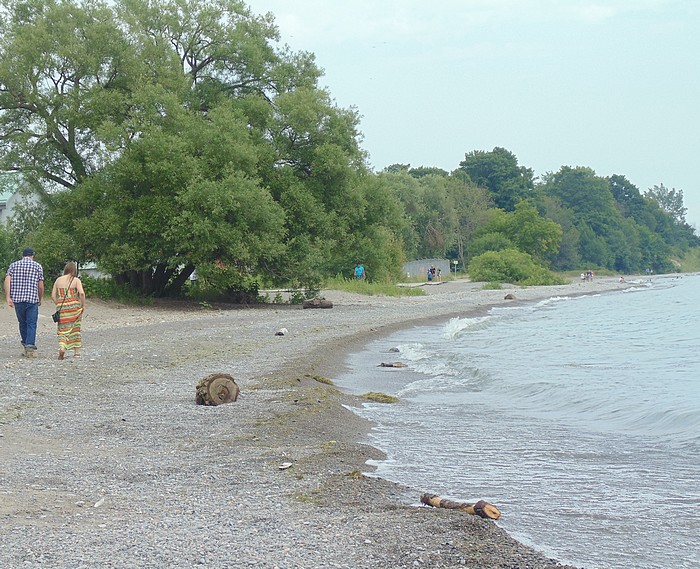
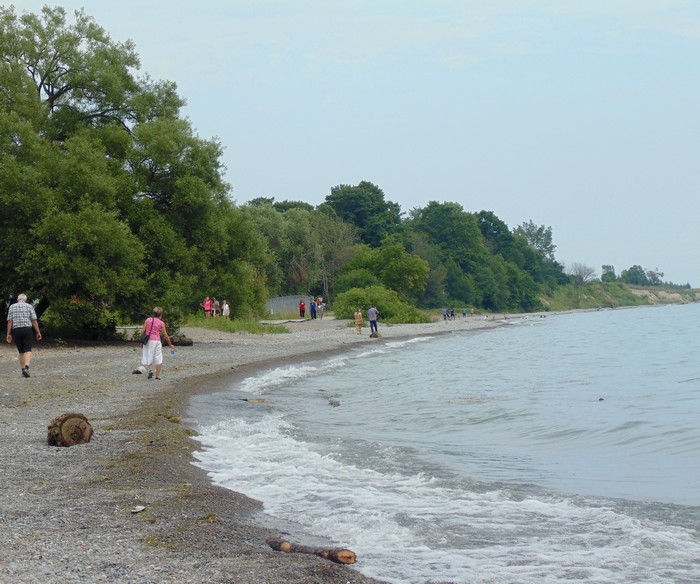
a day at the beach

 
Anne Morrow Lindbergh says the beach is not the place to work or read or even think. I’d gladly argue with her but for the fact that she adds something like ‘initially’, as in first you need to find the rhythm of things, of yourself, the words you take in or mull over or put out.
I notice how right she is when I arrive and set down my bag containing water, lunch, notebook, pen, reading glasses, hat, camera, and before unpacking it all… just sit for a while. I’m hungry. I want to eat and read and make notes, take photos but all that To Do can wait. To reach into that bag too soon defeats the purpose of being here.

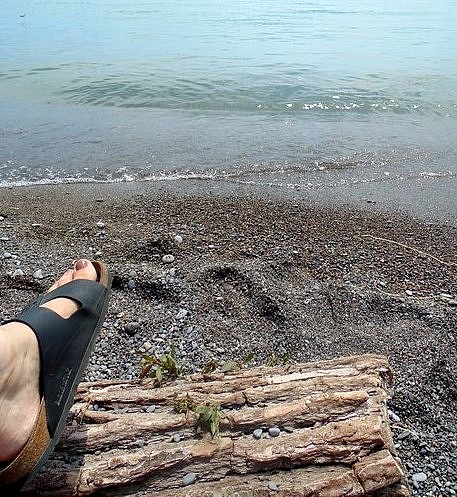
Instinct says sit. And just breathe.
DSC00335 - Copy
It’s not difficult.

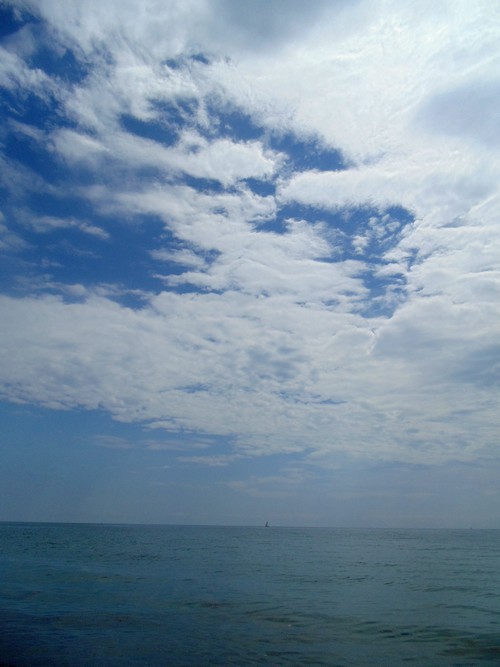
There is the sky.
DSC00343
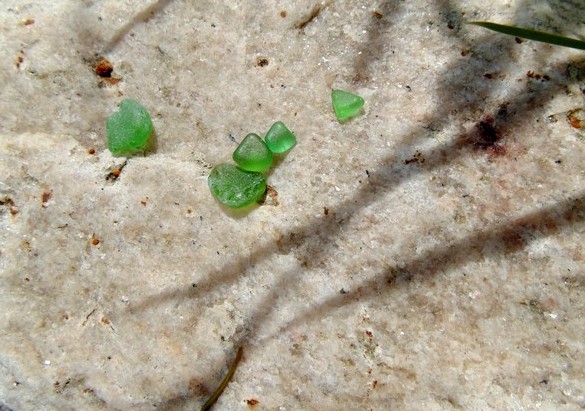
And two women, both in red and white striped tee shirts; one is elderly, the other in her forties maybe, a daughter? They’re collecting something as they walk, reaching down every few moments and picking things up. Beach glass? Are they scooping up ALL the beach glass before I can get any?? I panic a little at the thought and consider racing out in front of them. It occurs to me that in all the hundreds and thousands of times I’ve been here I’ve never once noticed anyone else collecting beach glass. People skip stones and there’s the guy who has a metal detector who showed me the old silver Tiffany locket he found. People carve initials into picnic tables and have BBQs and recently I saw a margarine container filled with really beautiful glass that someone left behind in the playground… but I’ve never seen anyone do the actual collecting.

The red and white stripes are so far along by now that to rush ahead of them would be a spectacle, not to mention tiring in the heat. I decide to let it go, that whatever glass they find is meant for them. I’ll find my own. There’s always more…

Just then two more women, up on the boardwalk this time, an elderly one in a wheelchair and another, younger, pushing. The younger smiles, maybe thinking how lovely this choice of venue but the one being pushed looks sad and I wonder if this is, in fact, the worst possible venue because it reminds her of all those days and years when she was able to walk barefoot in the water… and then I think: with some things, there’s not always more.
IMG_8323_1 - Copy
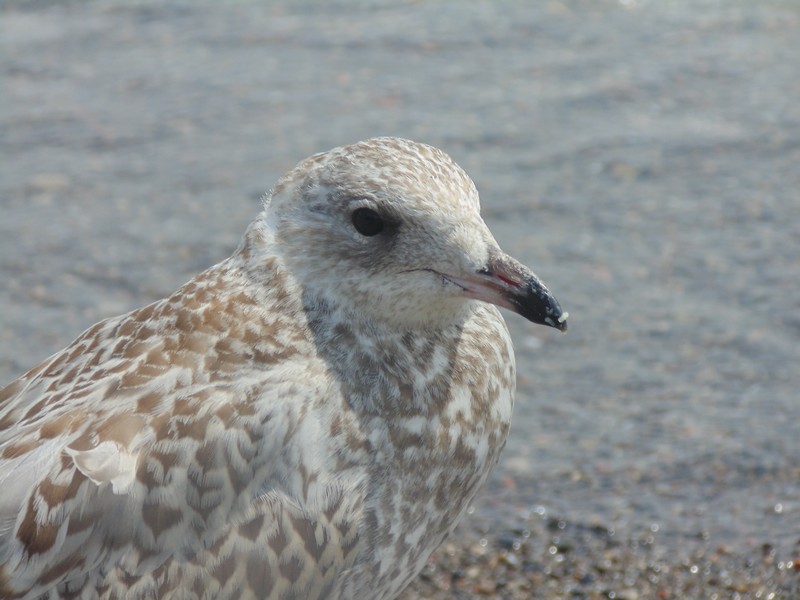
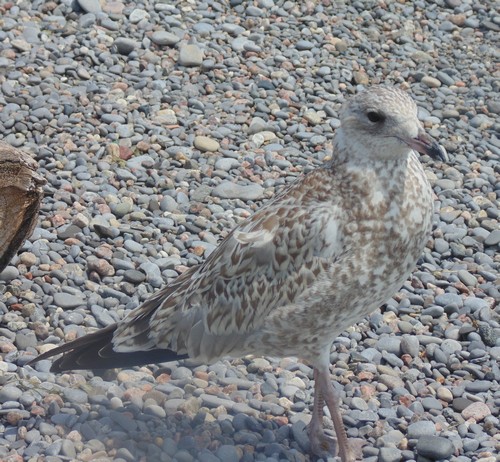
Long before I open my bag for lunch company arrives.
DSC00365
We watch each other a while.
DSC00357 - CopyDSC00348DSC00353
Then back to people. The guy on the jet-ski demanding attention, thundering about the lake doing doughnuts who zooms close to shore, stops, bobs on the water for fifteen minutes… checking his phone… perhaps firing off a few tweets about the thrills and chills of solitary circles at top speed.

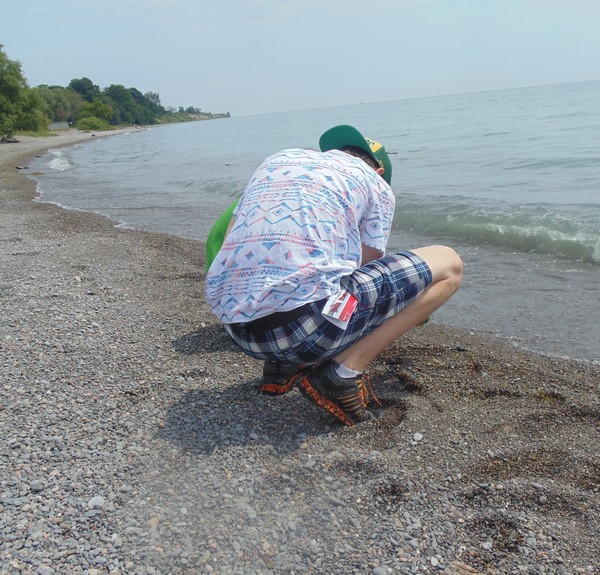
Two boys and a girl named Lily settle down a few feet away and begin digging among the tiny stones at the edge of the water… for beach glass. They shriek when then find some and one of them walks right in front of me and smiles and I smile back but at the same time I send a strongly worded telepathic message that he not even think about digging on my turf. And he doesn’t. Never under-estimate the power of the mind.
DSC00366

Lily soon gets bored and leaves and the boys follow.

The bird has also moved on.

I consider having lunch but on the pier a teenaged boy in plaid shirt and work boots, picks up a teenaged girl in a brightly coloured muu-muu, and pretends he’s about to throw her into the lake. She laughs and then they walk along the shore not holding hands.

And then another couple follows a few minutes later, like a fast forward of fifty years.
DSC00375DSC00378

Only eventually… very very eventually… do I reach for my sandwich and my book…
DSC00404