
Other Wordless Friends—
Cheryl Andrews
Allison Howard
Barbara Lambert
Allyson Latta
Elizabeth Yeoman
Other Wordless Friends—
Cheryl Andrews
Allison Howard
Barbara Lambert
Allyson Latta
Elizabeth Yeoman
Things I know about ‘cd’.
For her first birthday her mother made a cake entirely out of whip cream, sat ‘cd’ down in nothing but a diaper and let her have at it. Which she did. I can’t remember if I was there in person or just remember it from the movie.
She’s an excellent cook, afraid of heights, was good at baseball and has a large dog (when asked if he bites she says: only if I tell him to.)
She was the first person I ever babysat and when she was twelve she came to stay with me for a while in Toronto, during which time she tried to clean my apartment and broke the cover of an electrical outlet so hopped on a bus in search of a replacement. She didn’t find one but it was a fascinating story she told when I got home from work. This was a kid who grew up in a small town; she had zip knowledge of the city. I remember being torn between freaking out and being touched. I think touched won, but I still shake my head over her chutzpah. Years later, on another visit, we were about to order a drink in a restaurant when I sensed something bad about to happen at the next table. We left just in time to see someone being thrown through the front window. ‘cd’ wanted to stay to see how things came out. I was driving. We left.
She says it was me that introduced her to the Crunchie bar. I don’t see her often; she has lived in the States for at least twenty-five years. It is impossible to spend time in her company and not have your cheeks hurt from laughing. Hers is one of my favourite voices to hear over the phone.
♦
How long could you go without talking? A month.
Do you prefer silence or noise? Silence.
How many pairs of shoes do you own? Less than 10.
If you won the lottery? I’d pay bills, buy an island, a beach house or something in Muskoka, kids’ tuition.
One law you’d make? Death penalty for pedophiles. Send sex predators to a remote island all their own.
Unusual talent? Throwing together a meal out of nothing.
What do you like to cook? Mac and cheese (because of the reaction it gets).
Have you or would you ever bungee jump? I haven’t, but I’d love to, but I won’t.
What’s the most dare-devilish thing you’ve done? I once jumped off a cliff into the lake.
Do you like surprise parties, practical jokes? Yes to both as long as no one gets hurt.
Favourite time of day? 8 – 9 a.m.
What tree would you be? An apple tree.
What do you like on your toast? Lots of butter.
The last thing you drew a picture of? Superman.
Last thing written in ink? Hours for work.
Favourite childhood meal? Potato stuffed dumplings.
What [past] age was your favourite? 30
Would you go back if you could? No.
Best invention? Sliced bread.
Describe your childhood bedroom. No windows, no air, hot, stuffy.
Afraid of spiders? Outside, no. Inside, yes. But centipedes are worse.
Phobias? Heights, confined spaces.
Least favourite teacher and why? First grade teacher, wouldn’t let you go to the bathroom.
Favourite children’s story? Little Red Riding Hood.
Ideal picnic ingredients? Bread, wine, cheese, pickled string beans.
Is Barbie a negative role model? Yes.
Best thing about Canada? It’s where I was born. Home.
Best thing about people in general? They can reproduce.
What flavour would you be? Maple walnut.
What colour? Red.
What would you come back as? A horse.
Favourite saying: “Really?” (That’s the PC version.)

♦
I’ve been talking a lot about this book ever since having read it in less than 24 hours, unheard of fast for me. Mind you, it’s written as diary entries so it’s hardly heavy going. And, just to be clear, it’s not the speed at which I read Pondlife that I’ve been talking about, although I mention it every time, but the quirky wonderfulness of its pages.
As I said, diary entries. Each noting the temperature of the Hampstead Heath ponds where the author has been swimming daily, and year round, for something like sixty years. Seventy by the time we get to the end of the book (which goes from 2003 to 2011). This is referred to as ‘cold water swimming’… also madness, but the former is the official term. Have I mentioned that the ponds are outside?
I mean, they’re ponds. Ducks and everything. (Also magpies, grebes, moorhens, thrush, coots, swifts, hawks, heron, terns and more; he watches them as he backstrokes his return to shore and his descriptions of them are some of the loveliest bits of the book.)
“The terns were fishing for breakfast: soar, pause, then the sudden plunge. They seem to fall apart as they hit the water and, for a moment, they’re gone. Then they surge out and beat upwards again, scattering drops of light. If angels existed they would look like terns…”
The water temperatures in January and February go down to 30′ F. This does not deter the cold water aficionados (of which, surprisingly, there are more than just Alvarez)… they happily report that on the coldest days the water is actually warmer than the air, as if making the obvious case for slipping into your Speedo and joining them for a dip.
Thing is they don’t ‘dip’. Some wear wetsuits (Alvarez is a purest; he goes in bare nekkid but for the swim trunks) but all swim, that is, stay in for many, many minutes. Alvarez spends as close to an hour in the water as he can… the time does shorten in the coldest temps.
At first I read this as braggadocio. It felt like the swimmers were competing, that the reason they never miss a day, or rarely, is because they don’t want to be seen by the other kids as wimps. After all, you don’t swim year round outdoors unless you pride yourself on your heartiness. And there are those that surely do it from some exterior motivation like that, but I don’t think Alvarez is one of them or, if he did, he changed his focus somewhere along the line.
He has a bum ankle, a source of much annoyance to him. Walking becomes increasingly difficult over the eight year span of the ‘diary’ and the only time he doesn’t hurt is when he’s swimming. He refers often to the way the cold water rejuvenates, makes him feel ‘reborn’ and how it feels to emerge from it.
“…you are… naked… feeling the weather on your skin… it strips away the comforts and protections that Shakespeare called ‘additions’.”
He is also having a difficult time accepting the changes that come with age. An ex-athlete and serious rock climber, he hates having to slow down, give things up. The swimming is the last of his athletic pursuits, and while that’s the book’s overall theme, and perhaps his original idea for keeping notes, as the years pass, he changes in ways he couldn’t have expected and seems almost reluctant to share those bits, as if the book was becoming something he hadn’t planned. Of course these are the best moments, witnessing the study of his own reluctance.
This could be about swimming, about his passion for it, his solace from it or addiction to it (because surely it’s that), but it turns out it’s about something else entirely, something that, I’m pretty sure, comes to him as a surprise in the writing. If you ask me, it’s about the way cold water makes some things disappear while bringing others into sharp focus. It’s a way of seeing and feeling the world. Some people run. Some meditate.
He admits that he’s keeping a journal with the idea of it becoming a book, although doesn’t ever delve deeply into his own psyche so I sometimes wondered what it was that he wanted to record (I would have liked a little more reflection, actually; and I would have LOVED knowing about the psyching up that’s necessary to dive into water at 30 F). Still, something in the very fact that he’s sharing these private moments suggests he’s exposing the very essence of who he is. Ultimately, this intimacy without personal details, is what I liked best, leaving interpretation of pain and pleasure up to the reader. What I liked least was his curmudgeonly way of seeing past his aging body… but that may be an unfair judgement; he complains but he also hobbles—after recovering from a stroke, and still with a painful ankle—through snow and across ice to swim alone in frigid water.
The structure of the book should be mentioned for its magical qualities—the repeated reports of weather, birds, flora, fauna, water temps, ankle soreness—sounds dull but is just the thing that kept me reading. I’ll admit that early on when, for the umpteenth time he began with weather, I considered giving up, or at least skimming the rest of the book, but then I’d decide to read just one more entry and then the next. That’s the magical part. Bordering on the hypnotic, something about the rhythm created in that structure mirrors the act of swimming… that movement through what seems to be nothing new… only to come out oddly refreshed.
Support indies: Pondlife can be purchased on-line at Blue Heron Books.
Other Wordless Friends—
Cheryl Andrews
Allison Howard
Barbara Lambert
Allyson Latta
Elizabeth Yeoman
Only takes a wee whiff.
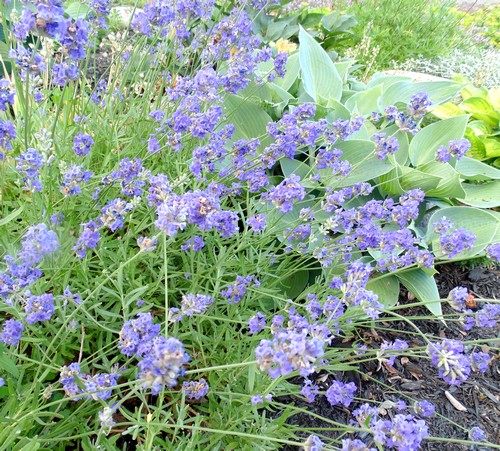
England.
A farm with a huge lavender garden. Me cycling over to pinch a few sprigs and tuck them into books and things all over my room. The farm was down the road from a shop, down a hill that was foggy most mornings. The streets were cobbled and there was a field across which I cycled to town, one time passing an elderly man who I’d heard had recently lost his mum. I stopped and said how sorry I was and he said, hardly missing a beat, “Well, it comes to us all.” I’ve thought of him often over the decades, never more so than when my own mum died.
I remember brambles and roundabouts and orange Squash at room temperature, the cream at the top of those bottles of milk on the doorstep and how fresh garlic was impossible to find (you’d be lucky to even score a jar of the ‘prepared’ stuff in the tiny ‘foreign’ section of Waitrose where the pasta was also hidden).
I remember women on the High Street with their carrier bags and baskets and everyone—really everyone—saying hello to one another. All ages too, if only by virtue of the slightest nod of acknowledgement. One time, getting back on my bike outside the Waitrose, two young boys — teeny boppers — smiled and held out a couple of weedy flowers they’d picked from between cracks in the pavement. There was an ad on TV around that time where the guy does exactly that and hands them to a girl on the street and says Impulse? which was the name of the product being advertised, a body mist. Well, the lads played this scene out with such style and giant grins, that I happily took the flowers and pedaled away, smiling too. I was in my mid-twenties then, a veritable matron, so it was in no way a come on, more like a kind of appreciation from a respectful distance, with elements of a sweet lark that I’m not sure exists anymore among young’uns… though I hope it does. Too wonderful a thing to lose.
Other Wordless Friends—
Cheryl Andrews
Allison Howard
Barbara Lambert
Allyson Latta
Elizabeth Yeoman
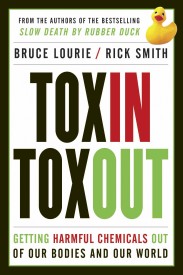
My intention was to skim through this book (subtitled: Getting Harmful Chemicals Out of Our Bodies and Our World) as I assumed there wouldn’t be tons of new information, i.e. we pretty much know that chemicals + bodies and/or environment = bad. What I was looking for was not confirmation, or more to grumble about, but some clear and realistic ideas as to what can be done about this noxious issue—not what the purveyors of chemical-laced products should do, but what WE can do. Us. The simple folk. The minions with wallets. The ones who say we care.
Turns out this is precisely what Toxin, Toxout serves up… a do-able plan for the minions. Along with some eye-opening background as to how and why all that chemical ooze exists in the first place. (Bottom line: we are a species of sheep-like beings that too often chooses cheap and convenient and lots of it) Also clarification on things like the importance of ‘organic’, which is not just to put less crud into our own bodies, but to allow agriculture to work in a way that’s beneficial to a whole chain of events, including environment and economy.
 I especially liked the conversational tone of the book and that it’s not smothered in stats, nor is there any fear-mongering or the drama of doom and gloom. It’s simply well-researched (a bounty of footnotes and source material provided) and straight-forward in its message: yup, there’s a lot of bad stuff out there but we can make a huge difference by what we choose to buy. Of course corporations and government hope we’ll never figure this out, or believe it…
Best of all, Lourie and Smith remind us that it’s actually possible to improve the world. That WE are not necessarily at the mercy of THEM, nor do we have to wait for THEM to smarten themselves up. WE can begin today to create change by the purchases we make. And the path to doing this is a simple one. Really, REALLY simple…
So, no, I didn’t skim. I devoured every page in fact, and am happy to say the book’s info-factor is surpassed only by its offer of serious hope to a seriously growing problem.
Three thumbs up.
Here are some excerpts.
Photos are mine. (Wanted to find a mountain of cell phones but apparently they live in China where they’re sent by the boatload to pollute the air, land and water horribly as they’re broken down and re-shaped into toys and other novelties we don’t need and shipped back to us.)
Another image that’s missing is what’s happening in the oceans with all the plastic.
*
“I like to describe organic agriculture as the hundred-year diet. It’s a system of agriculture that perpetuates itself, that creates a healthy ecosystem that will in turn continue to support plants in the long term, so you’re not in this deathly cycle of creating short-term nutrients—which then can contribute to pest infestations that need to be counteracted by immediate and short-term chemical pesticides, which then kills the life in the soil, which then requires another synthetic input. Just like we need to give our bodies the right tools and conditions to do their detoxifying jobs, organic tries to enable and facilitate the natural predators and the natural nutrition and micro-flora and fauna that should be in the system.”
“A smartphone is replaced, on average, every 18 months, and by 2015 over a billion smartphones will have been sold world-wide. And they don’t just sell themselves: In 2012 Samsung and Apple spent over three-quarters of a billion dollars on advertising campaigns trying to convince us to buy new ones. How much did they spend dealing with the e-waste from the phones they encouraged people to toss out?”

“We need to be working on all fronts to stem wasteful production and consumption. And consumers are part of the equation… the big issue isn’t simply what kinds of stuff we should buy; it’s the fact that we need to buy way less stuff, period. Furthermore, that stuff—whether it’s a car, a soft drink or a smartphone—needs to be regulated by governments, not by the companies who have no interest apart from endless growth in sales. These regulations need to cover what the products contain and how they are disposed of.”


“The rules of the game we’re playing now are best defined by the Malcolm Forbes maxim: “He who dies with the most toys, wins.” We need a different game, with different rules—perhaps “Those who use the least stuff win.” And our economic and regulatory systems need to reinforce that motto with another one—such as this: The more you use, wasted, pollute and discard, the more you’ll lose financially.”


Other Wordless Friends—
Cheryl Andrews
Allison Howard
Barbara Lambert
Allyson Latta
Elizabeth Yeoman
Only just recently discovered this quirky and quite lovely book, published in 1996—another testament to the riches that are CanLit and the fact that so many gems are present for but a moment, before the next thing takes its place… for but a moment.
In other words, it’s easy to miss a few.
I divide books into four categories: new-new, old-new, old favourites, and books I’ve heard nothing about and got merely on a whim. Often, that’s where the treasures are found and, to be honest, it’s my favourite pile. No prejudice nor expectation, no hoopla to live up to… a book from this pile can just be a book.
[Is it just me or does it seem that titles receiving the most hoopla are very often the least hoopla-worthy, while so many gems fly under the radar….]
Blather aside, in the spice house was a delicious find indeed. And a much-needed palate cleanser from the recently hoopla’d.
The food references are not accidental.
Each story [there are 16] in this collection centres around or focuses on or incorporates food and relationships in bold and unexpected ways, which, in my world, is more important than plot. Although there’s plenty of that detail also.
In ‘Mamamilk’ a woman is confronted by a child she lost due to neglect and other slovenly habits. ‘Belly’ is a bit of sarcastic pleasure about home ownership. It begins: “I’m holding a brunch in honour of my lucky friends, the ones with two-car garages and split level lives.” [FYI: brunch takes an ominous turn.] ‘Suck’ is about a chef who loses all self control while watching people eat, and ‘King Cake’ offers up traditional New Orleans fare along with some distinctly original revenge. In ’32 Flavours’ a rapist rues the day he walked into an ice-cream parlour. ‘To Market To Market’ takes us on a ride in more ways than one, and in ‘Obvious Need and Senseless Longing’ Elizabeth David’s death leads to a dangerous romance with the knife obsessed. It begins, “I gave up drinking in favour of buying cookbooks.”
The shortest piece is ‘One Lip’, a sort of fairy tale about the end of love and its inherent difficulties.
The longest, ‘Madame Frye’, is about an unhappily married woman who works in a fish and chips shop and longs to go to Bora Bora or have an affair with a patron named Melinda, whichever comes first. It takes the form of something like diary entries, alternating in the wife’s voice and that of her ultra savvy daughter Penny [it’s her voice that makes it].
The stories are short, bite-sized things, and written in prose that feels like a conversation over lunch with some wonderfully wild and free-thinking companion who never uses the same voice twice in her ‘tellings’—here, listen to this one, each narrator seems to be saying as we sip our Chardonnay, break a piece of baguette, lean forward.
And then we start on the cheese, the olives, order some more wine, all the while leaning in even further…
Viva long-lost gems.

 Matilda Magtree
