the story of rebecca of sunnybrook farm begins with bingo


Actually, it begins with a precocious eleven year old girl arriving in a small country town via horse and buggy, driven by a soft spoken older uncle type who is charmed by her precociousness. (Yes, she is poor and has lively big bright eyes and braids. No they are not red, but black. More about that later.)

But the story of how Rebecca of Sunnybrook Farm came to be in my house in the first place begins with bingo.

The Briny Books Book Bingo Challenge, to be precise. A new thing created by the wonderfully bookish mind behind the blog Pickle Me This (and in partnership with the simply wonderful Blue Heron Books).

I love stuff like this.
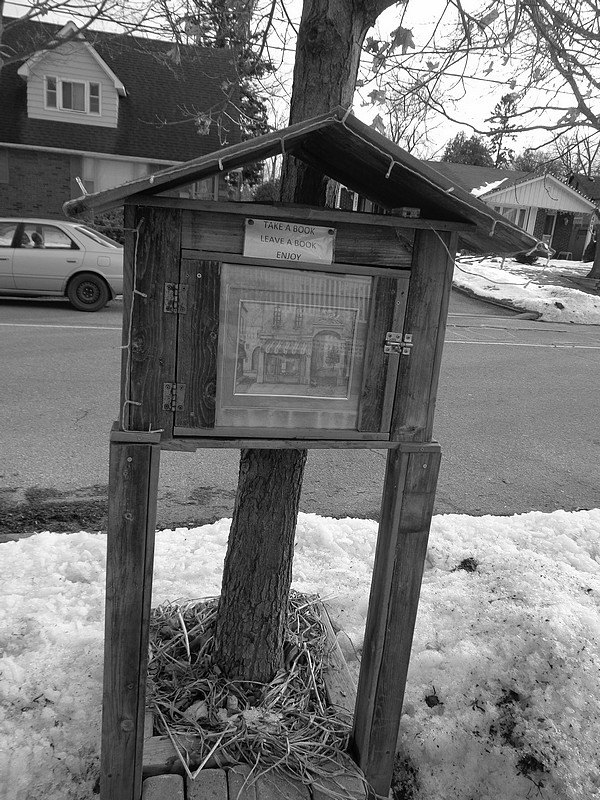
So I started with the first square (you don’t have to go in order though… it’s bingo for god’s sake!), which happens to be “A Book From a Little Free Library” and wouldn’t you know it but that very day I happen to pass a little free library I’d never noticed before.

This is how the universe works.

Unfortunately it was crammed with stuff that held zip interest for me but I was committed to THIS Little Free Library and from THIS ONE I decided I must take a book and read it. Because if I was going to get all choosy then I’m controlling things and that is NOT how I want to play my bingo. But Robert Ludlum? Um, no. And tekky books, macrobiotic diets… egad, what was the universe trying to tell me? And then… squished to one side, there was Rebecca. She was the best of what was on offer but I was still not very happy about things and I seriously considered leaving her there and trying another little library. But it was too late. I WILL NOT CONTROL MY BINGO had already become my mantra and so I took Rebecca, who I knew nothing about except wasn’t she supposed to be some overly cheerful chick like Polyanna?, home. (note to self: read Polyanna)

Well.

Turns out that not only is Rebecca of Sunnybrook Farm delightful and the story perfectly fine and not intolerably sweet and, in fact, very funny even, but it led me to a whole THING insofar as its connection to Anne of Green Gables. The parallels and samenesses cannot be missed. I mean it’s REALLY very similar, not only in storyline but snippets of dialogue are word for word the same, characters (including Anne being a red-haired version of black-haired Rebecca), also voice, tone, descriptions, settings, relationships. I had no idea of the Rebecca story before this and as I read my jaw kept dropping further and further.

Kate Douglas Wiggin’s Rebecca came first (1905), and Lucy Maud Montgomery’s Anne in 1908, which is heart-breaking and makes you wonder: what was Montgomery doing, essentially copying Wiggin’s story??

I researched various reviews and discussions on the subject and while there is no doubt the books are bizarrely similar, there seems to be no broadly accepted WHY. At least no one’s daring to come right out and use the P word.

To make matters worse, Anne, of course, went on to become an international superstar and icon and entire industry. Whereas Becky was pretty much a non-starter outside the U.S. and over time even fizzled away there.

Hardly seems fair, right?

One theory has it that the Rebecca story is more overtly patriotic and American, while the Anne story focuses mostly on the oh-so-quaint village of Avonlea on Prince Edward Island, and while Canada is named and there’s no doubt where the story is set, the overall emphasis is more on landscape than ‘nation’… thus making the argument that the Anne story was more widely and internationally relatable at the time of publication.

All of which doesn’t explain what Lucy Maud was thinking. My personal theory is that she made her book so BLATANTLY the same as Wiggin’s as an homage, as her Canadian version of a story she loved. Because surely she could not have supposed it would be taken as a completely original tale.

Pure conjecture. I haven’t read anything to this effect so it remains a mystery. But if my theory is correct, it would have been a classy move to acknowledge Wiggin’s book right up front, even putting it in the dedication. Or at least have gone on record afterward and explained her reasons for ‘using’ so much of it.

That said, I’m thrilled with my first bingo pick. Who could have guessed it would lead to the discovery of what amounts to a possible literary scandal brushed under the literary rug.

Next up… hmmm.

Not sure.

Because I don’t have to go in order…

… it’s BINGO.

Might just see what comes my way.

Will keep you posted.


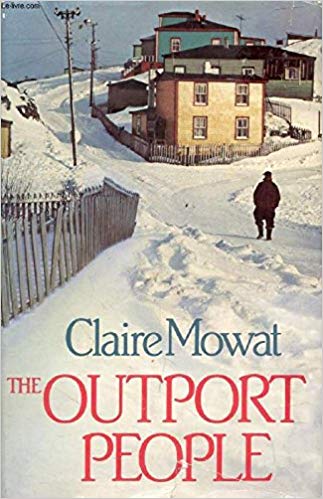
this is not a review: ‘the outport people’, by claire mowat


I have no idea where I got this book nor how it came to be included in my winter reading. I haven’t been talking to anyone about Newfoundland or outports and the only aquatic thing I’ve had on my mind recently is the Georgian Bay trout we get via a local fisherman. But there it was on my To Be Read pile so I casually opened it and wondered if (assumed that) Claire Mowat was related to Farley. She is. His wife. And it was with Farley that she lived in an outport on the southwest coast of Newfoundland from 1962 to 1970.

That pretty much right there is the story. Except for the details. Because life in an outport, apparently, is/was not heavy on drama, intrigue, or big-time action, but details… oh yes. Oodles.

An outport, by the way, is a small, isolated fishing community almost always without roads. Access to ‘anywhere’ is by boat only, which means during the LOOOONG winters… there is no access to ‘anywhere’. Due to their isolation these communities became a lifestyle unto themselves and in their own way thrived up until the 1970’s when outside influences entered into things and changed that lifestyle (not for the better), after which residents were given incentives to move inland. Many moved entire houses, floated them along the coast, because they had no money to buy new. And a way of life vanished.

Mowat was there, unknowingly, for what would be the last decade of that old-world outport life. She shares those remnants by being an excellent observer of nuance and keeping herself in or out of the story in all the right ways.

The Outport People is billed as a fictionalized memoir but it’s generally acknowledged that the only fictionalized bits are names and the occasional need for artistic license in order to make whole cloth of the ‘details’ and shape the story. Capturing the essence of this now lost way of life was, after all, the point of writing the book, something that’s clear from the reading. You can tell Mowat was truly in love with outport life and deeply respectful, in awe even, of the people who lived it.

What comes off as most extraordinary is that they, the residents, seemed oblivious to the increasingly modern world going on around them. More importantly, that’s pretty much the way they liked it. Most people never once in their life set foot outside their remote community and when then did, didn’t much like what they saw.

“In 1939, when war broke out, Ezra was one of the first men in Baleena to volunteer for service in the British Merchant Marine. He was then close to being fifty years old. He made many stormy crossings of the North Atlantic in submarine-hunted convoys, oiling machinery in the throbbing engine room of an ancient freighter. In the port cities of England he first encountered a way of life that was not the way of Baleena. He had never seen so many buildings so close to one another and he marvelled that human beings could bear to live like that. No one ever invited him into a house there, and the pubs and teashops he visited were damp, chilling places that numbed your feet and soul. He was never warm in England. Even the poorest house in Newfoundland, he reckoned, had a kitchen that was warmer than an English castle.”

Once that ‘modern world’ began creeping in via telephones and televisions in the mid to late 1960’s (but remained a rarity in most homes); when the post office was rebuilt and the postmaster of 35 years, who knew everyone by name, retired and was replaced with a key to your own P.O. box so that there was no one to speak with at what used to be a communal hub; when the occasional car began to appear and the fish began to disappear along with the fish plants along with the young people who could no longer hope to make a living, changing the cycle of families so that elderly parents who were once cared for by their kids were now left to grow old alone…  nothing was ever the same or as good in its maybe-it’s-crazy-but-it’s-worked-for-generations way.

But all this comes at the end of the book and the end of the decade. By which time Mowat has painted a picture of a strangely beautiful world… beautiful despite the fact that no one has more than a few dollars at any given moment,  no reliable medical services, no actual shops (back to no one has any money to buy anything), limited food sources, and despite the howling cold weather and brutal life of families who fish for a living or work for the fishing industry (and receive ridiculously little $$ for it)… despite all that and more, there’s a warmth, from the people themselves, from the way they share what little they have, looking in on neighbours to make sure they’re okay, the way children have ten thousand chores but are also free to run and play and discover their enormous yet tiny world because there is nothing else, not a single other thing, to distract them. There’s a complete absence of fear (other than what weather and sea and fishing companies pose).

And the colours! in this grey landscape where no deciduous trees exist… the bright shiny orange of kitchen walls, a red painted floor, yellow table, lime green chairs, a turquoise exterior. (The fishing boats, however, are all proudly dory buff. A kind of beige. Which makes no sense to me… I’d have thought it would be an advantage to have brightly painted boats.)

Mowat also notes cultural peculiarities, what is considered polite conversation, the way it’s absolutely normal for anyone to walk into anyone else’s house and sit down, almost always in the kitchen, and talk or not talk. The tradition of mummers, the difficulty of unions in environments made up almost entirely of closely linked families, what’s important to people, most of whom, have never been or even seen pictures of… anywhere else.

“The economic history of Newfoundland was a subject as taboo in their house as a discussion about religion in Belfast.”

The reason houses and roofs are specifically shaped and why windows rarely face the sea…

“The Roses’ children had long since left home and their house, which once had had two storeys, had been decapitated. Removing the second floor of a house was a common alteration made by elder couples since it reduced both the amount of fuel need to heat it and the housework needed to keep it clean.”

Oh, yes, and the sea.

The book feels like listening to a friend tell the story of living eight years in a place she was initially only curious about but came to deeply love… including, and maybe especially because of, the tough moments. And what’s more brilliantly beautifully Maritime than that?

(All of which aside, I’ve read that in some cases, residents of Newfoundland outports have not found the book as charming as mainlanders have, but that may be a case of being in the forest, unable to see the beauty of the trees. There were occasions Mowat outlines, where residents wondered why she was taking pictures of the water or the boats, things they found so ordinary. There is also the possibility that residents interpreted Mowat’s ‘details’ of outport life as being meant to be demeaning, when in fact it’s all about respect, admiration and awe, with more than a dollop of envy.)

“I wondered if anyone [on the mainland] ever stopped to think, as they laid the fillets in the pan, about the men who had caught them, or the people who had cut them and packed them, or of the risky voyage[s] made to bring all this fish to them. Only rarely do we think about the complexities of the production and distribution of food. It is so mindlessly easy to ignore the human involvement when we simply reach into a freezer.”


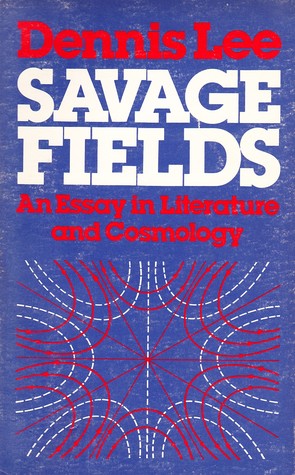
this is not a review: ‘savage fields’, by dennis lee


I’ve been doing some bookshelf cleaning — clearing out the excess to make room for new stuff. Only so much room and I really hate it when I can’t see what I have. Am donating or giving the prunings to various places and friends but before some of them go they will spend time in a new stack called “Stuff to Read Before It’s Definitely Given Away”.

Most recently plucked from the STRBIDGA pile was Dennis Lee’s Savage Fields, published in 1977 by Anansi. Its subtitle: An Essay in Literature and Cosmology  did NOT help it win my attention over the years and more than once I thought to just ‘donate’… but something made me keep it and I’m so glad I did.

Less essay than discussion of Lee’s theory that everything is either of (or about) the earth or the world,  including stories. (Earth being anything natural… World being anything man made.) The savage fields of the title refers to the friction caused when earth and world collide, which of course they constantly do.

His interest is in how that happens in literature, and so he dissects two books as examples:

The Collected Works of Billy the Kid, by Michael Ondaatje (a combination of prose and poetry in which Lee theorizes that Billy is trying, constantly, to kill the earth and so is, in fact, killing himself)

and

Beautiful Losers, by Leonard Cohen (one of two novels by Cohen, which Lee suggests is about freeing a repressed Canadian history through liberation of thought)

I will forgive that both books are by men. Dennis Lee is himself a man. This is often how things go. I will forgive it also because Savage Fields is a fascinating piece of work nonetheless.

I’ll admit that I’ve read neither Beautiful Losers nor Billy the Kid.  The former strikes me as incomprehensible and the latter not up my street but, oddly, I really liked reading about them through Lee’s lens. I enjoyed his analysis and the way he takes the story of each book apart, illustrating his theory of how we continue to screw up the earth because, essentially, we can’t accept beauty when it comes our way, that we have this need to alter it, put our own stamp on it and make it ‘better’. (Better than what? It was trundling along just fine until we got involved.) Lee says that we turn earth to world because we can’t help it and even while knowing on some deep level that we are screwing ourselves.

We’ve been more or less doing this by various means since we invented agriculture, which is when we stopped living in harmony with ‘earth’.

Another of Lee’s theories is what he calls the Isis Continuum, which, essentially, is happiness (Isis being a goddess of Egyptian mythology, wise and unconditionally loving). Again, we, for some reason, often refuse the simplicity of happiness, creating chaos instead as if not believing happiness is truly possible.

Lee posits his way through both books, offering excerpts and outlines of the stories, analyzing characters and actions.

Savage Fields isn’t a difficult read, but it’s an unusual one. One that takes a pot of tea and a Sunday morning to find your rhythm with (best read whole or in two parts, but definitely not fragments). It’s the kind of book you want someone else to read so you can talk about it with them and apply Lee’s theories, to find the savage fields in literature or at least to keep the notion of it in mind.

“World and earth are shown as being at war, yet they keep turning out to be the same thing. How can we resolve the contradiction?… To conceptualize this unusual state of affairs takes a certain amount of effort — indeed, a willingness to bend one’s mind in unaccustomed directions.”

“I started this book in 1972. I knew the title before I knew what the title meant. There are months of drafts between the sentences. The voice kept sounding false, excluding too much of who I was. Now I look at it, and find I have scarcely made a beginning.”

“Clear thought is an achievement of difficult beauty.”

The kind of book where most excerpts are pointless out of context. The kind of book that isn’t easy to quote from and details are soon forgotten, yet you feel inexplicably changed for the better for having spent time with it because suddenly ‘something’ feels clearer. Surely one of the best reasons for reading.

Dennis Lee was a founder of House of Anansi, which prided itself in the late 60’s and 70’s on its difference, its experimental style, and its interest in the Canadian story.


catching up and cleaning up (and thinning out books the NOT KONDO way and still feeling joy)


Feels like forever since I was here. Had some work done in the house and so my office was incommunicado and then after the work was done I needed to recuperate from the work. Not that I did much of it. Although I pride myself on a bit of painting, which, I swear I don’t understand how anyone can actually enjoy doing. As if colour selection isn’t crazy-making enough, the taping and spilling and wiping that goes on, the tedium of painting edges and around windows and baseboards. I know, I know, some people find it meditative and I love meditation so believe me I tried to find the zen, but I prefer my trances to include comfy cushions and closed eyes.

All this work required things taken off shelves, filing cabinets emptied so they could be moved, closets, drawers, all kinds of removal and boxing up and then putting back. The best part of which is that you never put back exactly what you take out… if all goes well, there is quite an enormous difference in fact, with a load of bags and boxes to give away or shred.

So now I’m not even sure what’s making me happier, the new floors, the new wall colour, or the new ‘space’ everywhere. Not that I went all KonMari or anything, I did NOT, but I did discard the stuff that was (literally) blocking me from seeing the actual stuff I like or need to see or from reading the books I have that were so deeply stacked everywhere that I could hardly be bothered to approach any one stack, preferring, instead, the easier (and so very sweet) route of just buying new books. (To then read and/or stack, because they had nowhere else to live….)

The biggest difference (apart from having a functional office) is that my bookshelves are now welcoming spaces (to me and to new books) rather than overstocked storage areas and the best unexpected gift of all this is how the organization of it makes me feel like I suddenly live in my very own bookshop, a place that welcomes browsing, with titles you can read and books that you can easily find and take from the shelf.

I’ll admit that I do have a ‘new’ stack of books… (let’s not be coy, I’ll always have a stack of books)… but these are titles from my own shelves, happy surprises that emerged from the cleansing to say hello! you’ve always meant to read me, remember????

And I’m getting through this stack with such pleasure! The weight, the literal weight of so much unorganized and unread accumulation having been lifted is liberating. (And please understand, I still have shelves and shelves of hundreds of books… books that I actually want.)

The first of the ‘new’ stack that I read was a cloth bound 1937 edition of Letters to a Friend, by Winnifred Holtby, which I bought very many moons ago at Hannelore’s (an absolute brilliant fixture of a second hand book shop in St. Catharines). (The copy is marked with a stamp indicating it was once property of the Naval Vessels Reading Service in Halifax… one of the best things about second hand books is what you find in them.)

Winnifred Holtby was a feminist, a socialist, a pacifist, and pals with Vita Sackville West, Vera Brittain and Leonard Woolf, though these letters are written to Jean McWilliam, whom she met during her time with the WAACs. McWilliam is referred to as ‘Rosalind’ and Holtby signs off as ‘Celia’, a reference to the cousins in Shakespeare’s  As You Like It.

Here is a good outline of the book.

For my part I’ll leave you with a snippet, from the opening page where, in the very first letter to ‘Dearest Rosalind’, there is this… (which, if I should ever receive the like in a letter from anyone, I will insist that person never ever stop writing me letters.)

“The roads were fine and hard, made for walking, spreading themselves across the hills, and opening out at the crossways to tempt us on. We talked about burlesques an school discipline and Dostoevsky and porridge, and whether bread and cheese and beer are really better than stuffed olives and champagne, and neckties and dons and all the thousand and one silly things that one talks about on a long morning when the air is frosty and the roads are dry.”

And, for the record, based on the above, (I mean, Dostoevsky and porridge??? ) this is someone I would dearly love to have walked with.

More excavations to follow.


other people’s bookshelves


It’s Wednesday, which means I ought to be posting a mysterious photo or story prompt… more or less a self-imposed rule, which makes it easy to break.

Instead, I want to talk about bookshelves, other people’s, and how a recent snoop is connected to last Wednesday’s mysterious photo.

Snoop is a harsh word. I was more ‘browsing’ at the cottage where we stayed recently, a remote place in 300 acres of forest, on a lake, surrounded by trails and perfect snowshoeing conditions. We go to this place every year for the seclusion and disconnection from everything other than books, food, wine and fireplace (tea and starlight and thick blankets on the deck also allowed).

As always, my travel bag is mainly filled with books, even for just a few days. But if there’s a bookshelf where I’m staying, chances are I’ll be seduced. (There is something so satisfying in perusing other people’s bookshelves.)

It should be noted that my interest is not to see what they’re reading, as in current titles… bore bore bore… but rather what they’ve collected, the quirky books that might have been culled over time but were kept instead. Those are the ones I’m drawn to. Cloth covers and dust, that kind of thing. Also how the books are filed is interesting… alphabetically, by subject, theme, mood…

This place does it ‘by subject’, which subjects include theology, Shakespeare, political memoir, climate, history, nature, art, Ireland, novels about Ireland, and classic novels, the Brontes, etc., as well as obscure (to me) volumes of poetry such as ‘I Take it Back’, by Margaret Fishback, who strikes me as a sort of poetic Dorothy Parker for all of her delicious rhyming sarcasm as she comments on the state of society. (The rhyming, of course, is essential to the sarcasm.)

To a Baby One Day Old

It seems a sweet absurdity
to call so small a morsel ‘he’.

I mean, to think she was writing about gender identity in the 1930’s…

And this, a little tongue in cheek for, well, you know who you are.

On My Toes

I’m the pronunciation snob who knows
how to cope with the Ballet Joose…
nor does the Monte Carlo Ballet Russe
stagger me as it may do youse.

**

I also read about Lewis and Clarke and how Lewis was a bit of a jackass who thought very highly of his white self and neglected to give credit to the Shoshone wife of a member of the their crew. Her name was Sacagawea and without her they’d have been sunk as she was the only one who knew the terrain, the language and how to navigate the territory, including interactions with indigenous ‘residents’. Fortunately the transcribing of Lewis and Clarke’s journals fell to Clarke after Lewis’s death and he, being a much more decent bloke, gave her the credit she deserved (and which Lewis had conveniently left out of his own notes).

**

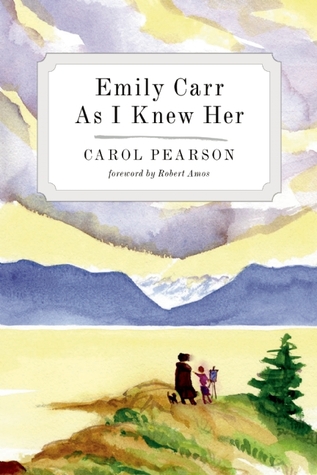
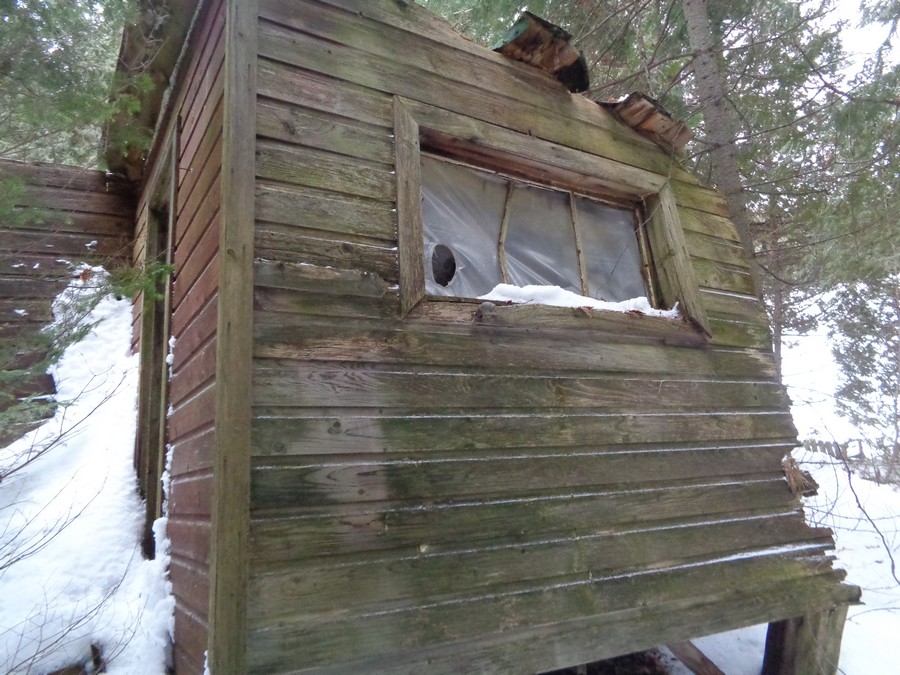
And I read about Emily Carr, who I’ve read, and read about, many times. But this was different in that the book I found was a rather obscure volume, written by one of her art students and life long friend, Carol Pearson. And not only was Pearson a friend of Carr, she grew up to be Aunt Carol to the people who own the cottage we were staying in. And not only that but Aunt Carol had a small cabin of her own in these very woods, which is now ramshackle (but the dish rack remains) and every time we’ve been up here I’ve passed it and wondered who it belonged to. And now I know.

This is what happens when you snoop in people’s bookshelves.

I mean browse.

Other (not always) wordless friends:

Cheryl Andrews
Allison Howard
Barbara Lambert
Allyson Latta
Elizabeth Yeoman


this is not a review: ‘braiding sweetgrass’, by robin wall kimmerer

Oh nuts. Time has whipped by and my inter-library (thank you, *Trent Hills!) copy of Braiding Sweetgrass  is due back before I’ve had the chance to read more than a few of its essays.

This is down to a couple of things. The stacks of books and papers in my house being the only one worth mentioning. (Tho’ if you must know, the other is an obsession with watching taped episodes of Escape to the Country, which occasionally cuts into my extracurricular reading time.)

In any case.

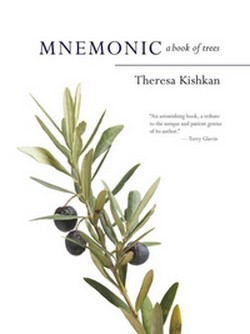
I did read enough to know that I’m not troubled by having to give it back because I’ve decided I need my own copy of the book. In the same way and for many of the same but also different reasons that I needed my own copy of Theresa Kishkan’s beautiful Mnemonic…  a memoir through the memory of trees and, often, the houses and lives surrounded by them, not all of them her own — “All my life, I have wondered at the feeling I have in particular houses, usually ones in which no one lives any longer.”

And Peter Wohlleben’s The  Hidden Life of Trees , which I read in a Kawartha forest cabin and then wandered among the birch and spruce in a whole new way, alert and hopeful for a sense of the conversations I now realized were going on all around me.

And The Sweetness of a Simple Life, by Diana Beresford-Kroeger, one of those tiny eye/mind openers that change your world in the very best way. Every bit of clover in my yard is because of her.

So, yes, I’m looking forward to adding Braiding Sweetgrass  to that particular shelf and to continue reading Kimmerer’s gorgeous essays on nature. Here’s just a wee slice from ‘Asters and Goldenrod’ where she writes about the reason she chose to study botany in the first place… a moment from her intake interview at college:

“How could I answer, how could I tell him that I was a born botanist, that I had shoe boxes of seeds and piles of pressed leaves under my  bed, that I’d stop my bike along the road to identify a new species, that plants colored  my dreams, that the plants had chosen me? So I told him the truth. I was proud of my well-planned answer, its freshman sophistication apparent to anyone, the way it showed that I already knew some plants and their habitats, that I had thought deeply about their nature and was clearly well prepared for college work. I told him that I chose botany because I wanted to learn about why asters and goldenrod looked so beautiful together.”

Kimmerer is my kind of guide through the natural world because she doesn’t see a difference between it and us. (Spoiler alert: she gets into botany school and learns the science, but never, thankfully, unlearns her innate connection and unique eye/heart/spirit for what is real.)

_______________

* That Trent Hills Library happens to be in Campbellford, a place I only discovered and fell into great affection with last year (they have a Stedmans!), is the kind of scrumptious serendipity that makes my heart sing. Also, I love the inter-library system.


savoury sentences from several sources, part 3


“I imagined her at her closet, deciding what you’d wear to go learn something about your child that just might break your heart.”

from We Are All Completely Beside Ourselves,  by Karen Joy Fowler


“She said it with just a hint of bitterness in her voice, enough that I could taste it, like a squeeze of lemon in a glass of milk.”

— from ‘Serendipity’ in the collection Flesh & Blood,  by Michael Crummey


“She had no children and beautiful shoes in a range of colours, and each pair had its own matching bag.”

— from ‘The Green Road’,  by Anne Enright


“It surprises me that he could have seen any delight in Toby Whittaker, an exhausted-looking young man who, after shaking hands, said not a word from first to last, but whose silence emitted a faint air of disaster and gin.”

— from ‘A Serious Widow’,  by Constance Beresford-Howe


“Recently, everything around me felt familiar yet amiss, like the first time you ride in the back seat of your own car.”

— from  Let the Northern Lights Erase your Name,  by Vendela Vida


“The smoke in the dark looked like a dove that whispered the future to saints in paintings.”

— from Lullabies for Little Criminals,  by Heather O’Neill


“Home was something that you could fit into a suitcase and move in a taxi for ten dollars.”

— from Lullabies for Little Criminals,  by Heather O’Neill


“The mixture of cafe au lait and impatience was producing an exquisite vibration.”

— from Still Life,  by Louise Penny


“The problem is he married a Pole. Turns out she doesn’t know her arse from her elbow. Doesn’t even keep Keen’s mustard on hand.”

— from Are you Ready to be Lucky?,  by Rosemary Nixon


“That was the trouble with grown-ups: they always wanted to be the centre of attention, with their battering rams of food, and their sleep routines and their obsession with making you learn what they knew and forget what they had forgotten.”

— from Mother’s Milk,  by Edward St. Aubyn


“They were not merely sentences but compressed moments that burst when you read them.”

— from the essay, ‘Thank you, Esther Forbes’, by George Saunders

♦♦♦
 

More sentences here 710px-Woman_reading,_1930s

and here.


it may seem we’ve come a long way but you’ve got to admit, the bar was pretty low…


In 1854, Barbara Leigh Smith Bodichon published a pamphlet, A Brief Summary in Plain Language of the Most Important Laws Concerning  Women; Together with a Few Observations Thereon” ; this is an excerpt:

“A man and wife are one person in law; the wife loses all her rights as a single woman, and her existence is entirely absorbed in that of her husband. He is civilly responsibly for her acts; she lives under his protection or cover, and her condition is called coverture.

A woman’s body belongs to her husband; she is in his custody and he can enforce his right by a writ of habeas corpus.

What was her personal property before marriage, such as money, becomes absolutely her husband’s, and he may assign or dispose of them at his pleasure whether he and his wife live together or not.

A wife’s chattels real (i.e., estates) become her husband’s.

Neither the Courts of Common law nor Equity have any direct power to oblige a man to support his wife….

The legal custody of children belongs to the father. During the life-time of a sane father, the mother has no rights over her children, except a limited power over infants, and the father may take them from her and dispose of them as he thinks fit.

A married woman cannot sue or be sued for contracts—nor can she enter into a contracts except as the agent of her husband; that is to say, her word alone is not binding in law….

A wife cannot bring actions unless the husband’s name is joined.

A husband and wife cannot be found guilty of conspiracy, as that offence cannot be committed unless there are two persons.”


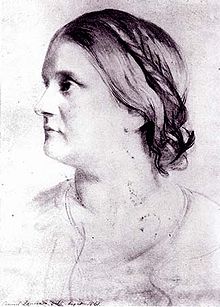
* In 2007, the British equal rights campaigner and feminist Lesley Abdela came across the grave of Barbara Bodichon. The grave lay in the tiny churchyard in Brightling, East Sussex, about 50 miles (80 km) from London, in a state of disrepair, its railings rusted and breaking away and the inscription on the tomb almost illegible.[  About £1,000 has since been raised to restore the site.

220px-Barbara_Bodichon_sketch

* With thanks to Wikipedia.

utopia


A strange conversation, recently overheard…

In a book store yet.

DSC02069

One woman to the other: I get fidgety if I sit too long.

The other agrees, says, yes, that she has friends who can read for hours;
she has no idea how they do it.

Exactly!  says the first. l mean, I Iike to read… but not for  hours.DSC02070

Another exchange, in the same shop, one that made more sense—

I ask the owner how many books he guesses he has in here. DSC02072

His answer: not enough.

Every day, he says, someone comes in and asks for something he doesn’t have.

DSC02075

We get that, right?

“Literature is my Utopia.” ~ Helen Keller

savoury sentences from several sources — part 2


“I always knew that sentences, beautiful perfect sentences, were the minimum of what was going to be required.” ~ Peter Behrens

“… I may be the only narcissist in the world with a case of unrequited self-love.”— Stephen Reid, Crowbar in a Buddhist Garden

“Being the class clown was like always picking up the cheque and having no one appreciate it.” — Heather O’Neill, ‘And They Danced by the Light of the Moon’, The Walrus, July/August 2012

“…one of the mixed blessings of being twenty and twenty-one and even twenty-three is the conviction that nothing like this, all evidence to the contrary notwithstanding, has ever happened to anyone before.” — Joan Didion, ‘Goodbye to all That’, Slouching Toward Bethlehem

“”I’m not religious at all,” says Hilary. And the quick way she straightens her back shows me a woman who was baptized, took communion and knows the Act of Contrition by heart. She might as well be making the sign of the cross.”  [can’t remember who wrote this… help! anyone??]

“”Well, don’t read the bible,” I tell her. “That’s what Protestants do and look at them.””  [ditto above]

“Portugal is a fine country, for example, but I only found a couple of poems there.” — Lesley Choyce, Seven Ravens: Two Summers in a Life by the Sea

“To say what a letter contains is impossible. Did you every touch your tongue to a metal surface in winter–how it felt to not get a letter is easier to say.” — Anne Carson, The Beauty of the Husband

“When the cat died on Veteran’s Day, his ashes then packed into a cheesy pink-posed tin and placed high upon the mantel, the house seemed lonely and Aileen began to drink.” — Lorrie Moore, ‘Four Calling Birds, Three French Hens’,  Birds of America

“Though he looks at her, he doesn’t see her. He sees a version that suits him.” — Marnie Woodrow, ‘King Cake’, In the Spice House  

1024px-Penciltip

savoury sentences, part 1