wordly obsessions


I’ve been mildly preoccupied of late with words that are missing from the English language, also some that have morphed over time. I have no interest in writing about this. Just thought I’d mention it. And then offer, apropos of my current mood, an excerpt from what I believe to be one of the greatest sources of words that should be real… the extraordinary and tiny Meaning of Liff, where all the words not only make perfect sense and you wonder just how you’ve managed without them… but are the real names of real places.

Here follows the always useful ‘Corrie’ series:

CORRIEARKLET

The moment at which two people, approaching from opposite ends of a long passageway, recognize each other and immediately pretend they haven’t. This is to avoid the ghastly embarrassment of having to continue recognising each other the whole length of the corridor.

CORRIECRAVIE

To avert the horrors of corrievorrie, corriecravie is usually employed. This is the cowardly but highly skilled process by which both protagonists continue to approach while keeping up the pretence that they haven’t noticed each other–by staring furiously at their feet, grimacing into a notebook, or studying the walls closely as if in a mood of deep irritation.

CORRIEDOO

The crucial moment of false recognition in a long passageway encounter. Though both people are perfectly well aware that the other is approaching, they must eventually pretend sudden recognition. They now look up with a glassy smile, as if having spotted each other for the first time, (and are particularly delighted to have done so) shouting out ‘Haaaaalllllooo!’ as if to say ‘Good grief!! You!! Here!! Of all people! Well I never. Coo. Stamp me vitals, etc.’

CORRIEMOILLIE

The dreadful sinking sensation in a long passageway encounter when both protagonists immediately realize they have plumped for the corriedoo much too early as they are still a good thirty yards apart. They were embarrassed by the pretence of corriecravie and decided to make use of the corriedoo because they felt silly. This was a mistake as corrievorrie will make them seem far sillier.

CORRIEVORRIE

Corridor etiquette demands that once a corriedoo has been declared, corrievorrie must be employed. Both protagonists must now embellish their approach with an embarrassing combination of waving, grinning, making idiot faces, doing pirate impressions, and waggling the head from side to side while holding the other person’s eyes as the smile drips off their face, until, with great relief, they pass each other.

CORRIEMUCHLOCH

Word describing the kind of person who can make a complete mess of a simple job like walking down a corridor.

Image courtesy of WikiCommons

untitled

spaces designated for art

“Very few buildings [were] built specifically to be art galleries in Canada. The National Gallery of Canada, for example, was housed in the ‘temporary’ quarters assigned to it in 1910, in a wing of the Victoria Memorial Museum. The building also housed the National Museum and the Geological Survey. Elsewhere in Ontario, London and Windsor had spaces designated for art exhibitions in their public libraries and in Oshawa art as displayed in the YWCA. While Montreal and Quebec City had ‘purpose-built’ galleries, farther east, in Fredericton, art was shown in a Quonset hut left over from WWII, Saint John had a gallery in the New Brunswick Museum and in Halifax there was an ‘art room’ in the public library and a gallery in the arts and administration building of Dalhousie University. To the west, the Winnipeg Art Gallery was housed in the Civic Auditorium Building and the Saskatoon Art Centre in the basement of  the King George Hotel; Calgary and Victoria showed art in converted houses, and in Edmonton art was shown in the Edmonton Motor Building. It would not be until the 1960s and ’70s that most Canadian cities would build galleries with the big white walls…”

~ Robert McKaskell, ‘1953, Fifty Years Later’, from 1953  (Catalogue of an exhibition by Painters Eleven, held at The Robert McLaughlin Gallery in Oshawa, 2003/04)
IMG_8711 - Copy

 The National Gallery of Canada


ruins and relics and truth or lies, oh my! (darling)

Imagine picking three books at random—three short story collections—from your ‘favourites’ stack. Imagine having read these books before and this time you just want to read one story from each, to compare styles. Random is the key word here. There’s no rhyme nor reason to any of the choices.

So you open the first to a page that’s part of a story called ‘An Evening in the Cafe’ about a woman from Montreal who is near the end of a teaching term in an unnamed German city. She has a room above a butcher shop, the smell of fleisch is everywhere, even permeating a handkerchief in a dresser drawer. The Chinese restaurant across the road teems with life, while in the café [attached to the butcher shop] where she feels obligated to take her meals, the days and evenings are quiet and predictable—as are the people, including “Oma and Opa… digging into their Schmalz, their broad knives bring up thick portions of seasoned lard from the blue-grey pottery. Now they would be spreading it on their Brot. They would be sipping at their wine and spreading Schmalz on their Brot.”
A letter arrives and creates a stir.

You open the second book at a story called ‘Plum Dumplings’ about a woman in Montreal, anxiously preparing for a [dreaded] visit from her Austrian grandmother, a woman who has nice things to say about Hitler and considers her granddaughter an idiot for living in Canada [she refers to it as keiner da: no one here]. Despite the “fairy wisps of hair” that escape her long braid she remains a tough nut, but then food plays a significant role in shifting attitudes [and is not limited to the title dish]. “Soup in the evening—true gourmandise—brought forth a more expansive Oma. Spooning up broth, folding a slice of bread in half and buttering the end each time she bit…”

Finally, the third book, which you flip open [all still very random] at the story ‘Little Bird’. A young man, an ‘entertainer’ in Berlin, is haunted by his unsettled childhood and his father’s past. He recalls the moment he’s forced to face an awful truth while living in the Caribbean where his Mutti reads Tarot cards and his father sings German folk songs, and where he’s been invited to another’s boy’s house after school, someone he has mistaken as a potential friend. The boys have a snack… “The cook took two slices of white bread from the breadbox and sprinkled them with chocolate, then put the plates in front of us.” 
And then things get ugly.

**

Imagine your delight at these odds: three exceptional stories, randomly stumbled over and each featuring Germany or Austria, the German language, an Oma or a Mutti,  references to bread and, in two cases, protagonists from Montreal.

You just can’t make this stuff up.
IMG_5785

‘An Evening in the Cafe’, from Truth or Lies, by Frances Itani (Oberon Press, 1989)

‘Plum Dumplings’, from Ruins & Relics, by Alice Zorn (NeWest Press, 2009)

‘Little Bird’, from Oh, My Darling, by Shaena Lambert (Harper Collins, 2013)

impoverished spinsters may apply

“According to the usual pattern, she was educated at home with a series of governesses, and a weekly parade of drawing and dancing masters. Boarding schools, although increasingly popular as the century waned, were considered not quite good enough for gentry, since they were now infiltrated by rich merchants’ daughters in pursuit of the social graces of their superiors. It was much more genteel to be educated at home. The curriculum included English literature, a little geography, a very little arithmetic, and a smattering of languages, particularly French. At least half the time, however, was devoted to ‘accomplishments’, which included lessons in painting, music, embroidery and deportment. ‘Accomplishments’ were considered essential bait with which to trap a husband. Young ladies, after all, were educated for matrimony; there were no careers open to them, although it was considered respectable for gently born but impoverished spinsters to turn their hand to governessing, or to novel-writing.”

~ from The Embroidered Tent: Five Gentlewomen in Early Canada, by Marian Fowler (Anansi, 1982)

~

Am loving this book. Have read only the section on Elizabeth Simcoe so far, who I was prepared to label an entitled heiress [which of course she was] and dislike her for that reason. Turns out that despite her not so endearing trait of having zero compassion for underlings, or pretty much anyone of ‘lower class’, she was completely and utterly enchanted by the Canadian wilderness and heartbroken when her boring, whinging and militaristic husband John, decided to return to England. Her marriage was pretty loveless but for the [scads of] children [though children at that level of society were no trouble once ‘produced’ as they were farmed out to wet-nurses and nannies and had only a daily appointment with mother] and there’s a suggestion that she either had an affair, or thought about it a fair bit, with a much more upbeat and outdoorsy chap who lived on the shores of Lake Erie.

She was, it seems, a woman once the epitome of British upper class sensibility, raised to be ‘proper’, who discovered the joy of wading barefoot through a stream, who was never happier than when her husband went on extended sojourns, who learned to drive a wagon on her own over rough roads and who was only too happy to give up the daily round of social engagements and fancy dress balls she once enjoyed in order to watch eagles soar, seasons change, to paint fearlessly on the edge of Niagara Falls as her tight, precise watercolours changed to a wilder and freer style. She could have lived anywhere in Upper Canada but chose to build a home, ‘Castle Frank’, near the Don River, in a spot that, at the time, was no where near ‘civilization’. And then she obligingly gave it all up to return [at her husband’s insistence] to ‘society’ back in the U.K. where she ‘did her duty’ but apparently never completely embraced that world again…

Some of her paintings are in the British Museum, others, in the Province of Ontario Archives.
IMG_4942

Read this for origins on the word spinster.

the first, second, third and fourth gifts of the season


The first gift was finding my old lumber jacket in the trunk of my car, in my Survival Box, which also included a flashlight that didn’t work and inedible chocolate.

IMG_4864The second was doing the debit machine at the grocery store without my glasses and when it said did I want cash back I pressed ‘Yes’ by mistake. I swore and the cashier said “Everything alright?” I said it was and happily received $20. I felt rich.

#3 was receiving a xmas card from a friend I worked with almost 40 years ago and haven’t seen since. It occurred to me that it’s a small miracle we’ve managed to keep in touch through all our moves. We’ve never talked on the phone, or exchanged email addresses. The only time we’re in touch is December, with whatever words can fit on the inside of a card… no white space.

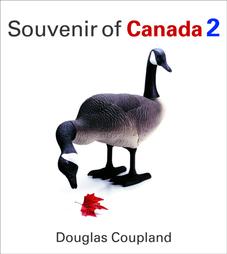
The fourth was a passage recently stumbled over in Douglas Coupland’s 2004 Souvenir of Canada 2. The original is also a joy. As is City of Glass.
My favourite kind of reading: words about the ordinary laid down in such a way that makes you realize nothing is ordinary…

This is from a piece called ‘Zzzzzzzzzz…. The Sleepy Little Dominion’, essentially a love letter to Canada. It begins with the memory of hatching Canada goose eggs in a Johnny Walker box with his brother.

“When [they] hop out of their eggs, they’re turbocharged little bundles of fluff-packed fun… goslings are alert, affectionate, trusting, curious, loyal and entertaining—the exact characteristics we also treasure in our human friends. It was pure delight to watch them tumble and peep daily across our lawn, pond, patio and (J-Cloths in hand) kitchen floor. Because of their innocence, everything was permitted.”

They become part of the family, snuggling for naps with humans and family dog alike.

“By August, though, there was no denying that [they] were now geese, and the time had come for them to fledge… As we had no rules to follow, we simply corralled them … at the top of the cul-de-sac and ran down the hill flapping our arms—and they followed us.”

He goes on to describe watching the first moment of their flight and even though they immediately return to the yard, “you could sense the wildness leaking into their souls.”

Eventually the birds do leave and settle, temporarily, at a nearby lake and when Coupland and his brother call them, they still respond, and even return to the house a few times.

“But then came the next year, early spring. The geese would come home just once. They would land on the roof, always in the morning, and they would honk as if the world depended on it. In robes and T-shirts, we’d run out onto the lawn to look at them there on the roof’s apex. Once they’d seen us, there was a brief moment when it wasn’t humans and geese, but simply a group of friends happy to be together and alive.

“Then off they flew. Just like that. They’d done their duty, and now they vanished into the wild. I’ve spent my life trying to articulate just what that specific wild was they returned to, for that wild is Canada, and when I think of this country, I think of where the geese go when they leave home.”

1553650433

***
Gifts five to twelve are here.

baskervilles, part two: never relax your precautions


“As you value your life or your reason keep away from the moor.”

So reads a note received by Sir Henry, heir to the estate [worth millions] called Baskerville Hall. He’s arrived back in England after spending most of his adult life in North America. If all goes well he aims to take up residence at his new digs on the more than usually weird moors. However Mortimer [the friend who introduced him to Holmes] is worried about a big black dog suspected of killing the uncle from whom Henry inherited this delightful country home. It’s rumoured he died of fright from simply having ‘seen’ this beast. Once dead the thing began chomping on his remains. Nice neighbourhood. Who wouldn’t want to live there?

Part One can be read here.

Onward with Part Two…

“What in thunder is the meaning of that?”

This is Sir Henry asking about the above-mentioned note, which, it’s worth mentioning, is made up of words cut out from The Times. Sherlock has of course not only determined it’s from The Times but which edition of the paper… and has had waste bins in all twenty-three area hotels searched for remnants. To no avail. The only word not cut from newsprint is moor. This is in the villain’s handwriting… and will be his downfall. If indeed it is a villain at work. Or, for that matter, a he. There’s some thought to it being a do-gooder who knows of evil lurking and doesn’t want dear Sir Henry to come to harm.

Yeah, right.

More clues are the paper it’s written on [although Sherlock is pretending this is insignificant]. Ditto Sir Henry’s missing boots. One brown, one black, on consecutive days. Then the brown one is returned. Not the black. Again, Sherlock is playing casual but, being sharp as a tack, I’m taking note of all this. As for Sir Henry—he appears to be a bit of a dolt and possibly materialistic. His greatest concern is that the tan boots were new. And he can’t figure out why the thief would want only one. Oh, Henry…

Still, he’s smart enough to at least worry a little about showing up at Baskerville Hall.

Here’s how he puts it:  “It’s a big thing for a man to have to understand and to decide at one sitting. I should like to have a quiet hour by myself to make up my mind. Now, look here, Mr. Holmes, it’s half-past eleven now and I am going back right away to my hotel. Suppose you and your friend, Dr. Watson, come round and lunch with us at two. I’ll be able to tell you more clearly then how this thing strikes me.”

Now isn’t that a civilized way to come to a decision? Take a quiet hour, meet for lunch, have a chat over a chicken Caesar and fries…  So much better than I’ll text you.

In the end, Henry decides to risk it if Watson will go with him [Sherlock’s too busy at the moment; he is Sherlock Holmes after all]. Plus, Henry’s friend, Mortimer, lives nearby somewhere on the moor. And there’s staff at the estate, Barrymore and his wife. So it’s not like he’ll be alone.

Instead of taking a cab back to the hotel, Sir Henry says… “I’d prefer to walk, for this affair has flurried me rather.”

Naturally, a cab follows Henry and Mortimer [Sherlock notices this because he is secretly following them also]. The passenger of the cab has a big black beard, which Watson sees as a clue but Sherlock says it’s probably a fake beard “… a clever man upon so delicate an errand has no use for a beard save to conceal his features.”

As Watson sets off to accompany Sir Henry, Sherlock advises: “Keep your revolver near you night and day, and never relax your precautions.”

Watson and Henry take the train, during which journey Watson notices that Sir Henry has “sensitive nostrils”. Once on the moor they travel by wagonette and are advised by police in the area that the Notting Hill murderer has escaped prison and is suspected to be somewhere on the moor. Oh crap [or the genteel equivalent]… just what they need.

Turns out that Barrymore, the butler at Baskerville Hall, has a black beard. And he’s acting weird. And his wife keeps crying in the night. And the local naturalist with a very pretty unmarried sister takes Watson out on the moor where they hear a “low, long moan, indescribably sad… the peasants say it is the hound of the Baskervilles calling for its prey.” The naturalist, Stapleton, says it could also be a bird, or maybe be the bog. “…the mud settling, or the water rising, or something.” Those naturalists, eh? Takes a lot to ruffle their feathers. The bog, by the way, is called Grimpen Mire… a dangerous place, filled with something like mossy quicksand. Horses are forever getting sucked into oblivion there.

Beryl Stapleton, beautiful sister of the naturalist, mistakes Watson for Henry and begs him to leave Baskerville Hall for his own safety. When she realizes her mistake she pretty much says oh, well, then, never mind. There’s a weird tension between brother and sister. He’s clearly pissed off that she’s ‘said something’ and even more pissed off that he didn’t hear what it was.

A problem of inbreeding… or are these two actually in the know?

Next up: Watson reports to Sherlock by letter. And the big question: Will this prompt a visit to nutsville by the great one himself??

Smoking_pipe_drawing.svg

what we talk about when we talk about fog


The Hounds of the Baskervilles, right?

At least that’s what I think of every single time it’s foggy. But don’t go by me. Having never read a word of Sherlock Holmes, all I know of the sleuth and Conan Doyle’s stories, generally, are bits I’ve gleaned through… I’m not sure what means… eavesdropping? It’s how I learn most things. And somewhere along the line the Baskervilles and fog got united in my mind.

This may be a sad admission but it’s a happy day for today I am reading my first Sherlockian tale and the reason is, yes, fog, which, for years I’ve referred to as being Hounds of the Baskerville weather without knowing what I’m talking about. So this foggy morning when, once again I said: Whoa, it’s all Hounds of the Baskervilles out there… I decided it was time to find out if indeed there is in fact any fog at all among these mythic puppies.

Though never cracked open, I have a The Complete Sherlock Holmes in two volumes and—on cracking it open today—the first thing I learn is that the story in question is not a story. It’s a book. News to me. There are fifteen chapters. Of which I have so far read four. I will read the rest over the weekend and report accordingly. I do this sort of thing rarely, report a reading in real time… the last being from a garret.

Right then. Off we go.

[By the way, the first thing I learn is that it’s Hound not Hounds as I’ve been saying for eons like a great pillock. Although in the context of weather, I still prefer the plural.]

Hound begins, as most doggish things do, with a stick. In this case a walking stick. And because this is a mystery, there are questions about said stick. Watson makes a few good guesses but Sherlock pooh-poohs them for reasons he makes obvious. Watson, the ideal straight man, likes to flatter Sherlock, which begs the question: does he do this because he [being DR. Watson to Sherlock’s MR. status] is privately convinced he’s the smarter of the two, or is he just a merry old soul who doesn’t like to keep score? I’m hoping it’s a combination of both.

“Some people, without possessing genius, have a remarkable power of stimulating it.”

This is Sherlock to Watson. I submit it as Exhibit ‘A’ in my case that Watson is indeed a pretty decent pal to take stuff like that on the chin.

The owner of the stick, Mortimer, has a problem. He’s to pick up Henry Baskerville, last of the [seemingly] doomed Baskervilles, and doesn’t know how to tell him the grounds of the swanky family home he’s inherited are possibly under siege by a giant black dog that renders those who see it catatonic. And then it tears your throat out. [The stick, it is worth mentioning I think, has tooth marks along its middle, as if carried by some sort of pup. Sherlock feels it’s larger than a terrier but smaller than a mastiff.]

Once again, Sherlock is flattered. This time by Mortimer who says: “It is not my intention to be fulsome but I admit that I covet your skull.”

Which goes to show how our conversational skills have changed and, I daresay, declined in the last century or so… Go ahead and covet a stranger’s skull today and see where it gets you.

Another line that wouldn’t make you super popular today:

“I observe from your forefinger that you make your own cigarettes.” [Sherlock to Mortimer]

Later, once Sherlock has agreed to help Mortimer with the Baskerville problem but not yet sure how… and Mortimer has set off to pick up the clueless heir… Sherlock settles down to work out the situation, but first shuts the window to create a “concentration of atmosphere” which he believes “helps a concentration of thought”.

So that’s his secret. I always keep my windows open.

To be continued…
IMG_9951

it really is very bad

“‘Talk about a young man’s book!’ I said to myself. ‘What on earth made us take it on?’  It really is very bad; but something of its author’s nature struggles through the clumsiness, and we were in the process of building a list, desperate for new and promising young writers. I must say I congratulate Andre (and myself) for discerning that underpinning of seriousness and honesty… and think we deserve the reward of his turning out to the be the writer he is.”

~ Diana Athill on having re-read, after 45 years, Mordecai Richler’s 1954 debut novel, The Acrobats.  (From Stet: an Editor’s Life, Granta, 2011)

And this—also from Stet—and quite possibly the best comment ever on the subject of gossip:

“They [Brian Moore and his wife Jackie] were both great gossips… I’m talking about gossip in its highest and purest form: a passionate interest, lit by humour but above malice, in human behaviour. We [talked] about writing, but more often we would talk with glee, with awe, with amazement, with horror, with delight, about what people had done and why they had done it. And we munched up our own lives as greedily as we did everyone else’s.”

On advertising books in the 1950’s and 60’s, Athill says there was no such thing, that ‘promotion’ was limited to reviews [which she felt, along with word of mouth, was the better way and that ads were not as effective and mainly done to please the author]. As for being noticed generally… “A novelist had to stab his wife, or something of that sort, to get attention on pages other than those devoted to books.”

Read Stet this summer on an impossibly comfortable couch in the library at the *unpompously preserved  Cold Comfort Farm, PEI. [*a phrase Athill used to describe the great old Long Island homes, one of which belonged to Brian Moore].
IMG_2814

spells, spelled with words…

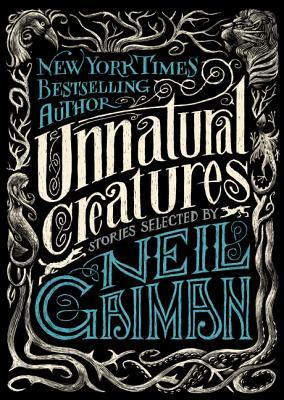
“I wished I could visit a Museum of Unnatural History, but, even so, I was glad there wasn’t one. Werewolves were wonderful because they could be anything, I knew. If someone actually caught a werewolf, or a dragon, if they tamed a manticore or stabled a unicorn, put them in bottles, dissected them, then they could only be one thing, and they would no longer live in the shadowy places between the things I knew and the world of the impossible, which was, I was certain, the only place that mattered.
          “There was no such museum, not then. But I knew how to visit the creatures who would never be sighted in the zoos or the museum or the woods. They were waiting for me in books and in stories, after all, hiding inside the twenty-six characters and a handful of punctuation marks. These letters and words, when placed in the right order, would conjure all manner of exotic beasts and people from the shadows, would reveal the motives and minds of insects and of cats. They were spells, spelled with words to make worlds, waiting for me, in the pages of books.”  

—Neil Gaiman, from the Introduction to Unnatural Creatures (Harper Collins, 2013)
16248246

a few opening lines (aka: correspondence 101)

“If you write to me, could you possibly seal your letter? Or if not, don’t mention the book, because I don’t want my servants to get to know all about that.”

“I enclose with this letter some unpublished pages extracted from my forthcoming book which I should very much like to see appear in your review.”

“The story is so well-known that the name of the fiancé will be obvious if I tell you that the lady in question is Madam Bischoffsheim…”

“I should be most grateful if you would read this letter to the end, destroy it or send it back to me, and not breathe a word of it to anyone whatsoever.”

“It was very nice of you to write to me about your marriage; it would have been nicer still if you had invited me to it.”

“I send you herewith, in very inelegant form and on the paper which I use to light my anti-asthmatic powders—all that I have to hand—my warmest and most sincere congratulations on your wonderful prize.”

“Although you abandon me I often look at your little face and think and think.”

“I telephoned you last night at the Gil Blas.”

“I’m already behindhand in thanking you for your beautiful letter and now I receive three cards.”

“I should be infinitely grateful if you could tell me whether, in your opinion, this contract prevents me legally (without risk of a lawsuit, etc.) from publishing my second volume with another publisher.”

“Thank you very much for your letter—one sentence was ravishing (crepuscular, etc.)…”

“I’m genuinely sorry to keep bothering you, especially if you are still on holiday and would no doubt prefer to forget for a while that there is such a thing as a stock exchange.”

“I should have preferred to tell you this in person.”

“You said you would write to me, you have written to me, and I am amazed.”

Opening lines to various letters, from Marcel Proust: Selected Letters, Volume Three, 1910 – 1917.
IMG_2419