spaces designated for art

“Very few buildings [were] built specifically to be art galleries in Canada. The National Gallery of Canada, for example, was housed in the ‘temporary’ quarters assigned to it in 1910, in a wing of the Victoria Memorial Museum. The building also housed the National Museum and the Geological Survey. Elsewhere in Ontario, London and Windsor had spaces designated for art exhibitions in their public libraries and in Oshawa art as displayed in the YWCA. While Montreal and Quebec City had ‘purpose-built’ galleries, farther east, in Fredericton, art was shown in a Quonset hut left over from WWII, Saint John had a gallery in the New Brunswick Museum and in Halifax there was an ‘art room’ in the public library and a gallery in the arts and administration building of Dalhousie University. To the west, the Winnipeg Art Gallery was housed in the Civic Auditorium Building and the Saskatoon Art Centre in the basement of  the King George Hotel; Calgary and Victoria showed art in converted houses, and in Edmonton art was shown in the Edmonton Motor Building. It would not be until the 1960s and ’70s that most Canadian cities would build galleries with the big white walls…”

~ Robert McKaskell, ‘1953, Fifty Years Later’, from 1953  (Catalogue of an exhibition by Painters Eleven, held at The Robert McLaughlin Gallery in Oshawa, 2003/04)
IMG_8711 - Copy

 The National Gallery of Canada


she washed; i dried


This month marks twenty-five years since my sister died of ALS.

Eleven years older than me, she had all the powers of an adult [or so I thought] but was more fun.

I inherited her green two-wheeler—too big for me to sit on and pedal at the same time but otherwise perfect—and a yellow cardigan that I wore with yellow stove-pipe jeans and white go-go boots. I was ten and the sweater came to my knees. It made me invincible.

She worked at Diana Sweets where she let me watch her copy menus on a Gestetner machine and later she worked at a greasy spoon near the canal where, when I’d run over to meet her after a shift, she’d pick me up and carry me back like a monkey.

She made the best toast I have ever tasted.

When she moved out I got her room. It was a nice room but I liked it better when she was in it.

For a while I phoned her every day to read her a joke from some book I got at the library.

Of all the people waving at the train station when I left for Edmonton, it was her that I was waving back at.

And when I returned, she was the first person I called.

On summer nights we’d sit in her yard, have a beer and talk about everything we hated and everything we loved.

When the disease got worse, I’d take her shopping in a wheelchair. I noticed the way people looked at her.

One time we drove to the beach and just sat in the car and she said she missed walking. I didn’t know what to say. I think on some level I was still pretending she could walk, that she just chose not to.

Eventually she couldn’t move. This is what ALS does, traps the person inside their own body while their mind continues to function perfectly well. Her only means of communication was very laboured, slurred words, hard to understand. And the effort exhausted her. So we organized conversations around questions she could answer by blinking once for yes, twice for no. Of course I couldn’t always tell if she was ‘talking’ or just blinking and sometimes the confusion made us laugh so hard we’d cry. I’d wipe her tears away first, then mine.

The last time I saw her she was a skeleton in the hospital, on serious morphine. I don’t know if she knew I was there or if she heard what I said to her; in fact I have no idea if I said anything at all…

**

A few million years ago, when we’d do the dishes together, she washed, I dried. Except for the big knife, which she washed and dried.

She liked roses, carnation, lily of the valley soap, and garage sales, and on rainy days, for fun, she’d pile her kids in the car and head to the countryside to look for deserted roads and puddles big enough to plough through at speeds that would render the windows thoroughly sploshed and the kids thoroughly thrilled.

She read cheesy books in the bathtub while eating chips and salami and had coffee with my mum every Tuesday.

She liked the sound of laughter in her house more than the sound of a compliment for décor or tidiness.

She was a master of chicken wings, potato salad, and lemon meringue pie.

And there was always room at her table for anyone who dropped by unannounced.

Her name was Mary.
IMG_5352

blackberries and a shrunken sweater — the things that stick

 
I was in Niagara recently, driving past the house where I grew up. An elderly woman was sweeping the front walk. I pulled over and watched, remembered how on that very bit of pavement, next to the stone planter, I wore a bathrobe with pink rosebuds and corduroy slippers and a bowl haircut and wrote my name in sparklers one firecracker night while my dad—in a Hawaiian shirt, cigarette tucked into a wide smile, face tanned and dark hair falling forward a bit, Clark Gable style—scrunched down, arms around me, for a photo.

He built that planter, two of them in fact, from stones I helped him collect at the beach. I see that someone has knocked one of them down and put nothing in its place.

On a whim I get out the car, pace in front of the house. The sweeping woman doesn’t seem to notice but it occurs to me the pacing might look odd so I decide to walk over, tell her I’m not staking the place out; I explain that I used to live here, that my parents lived here forty something years. She asks if I’d like to see around. I wasn’t expecting that, but yes. The woman’s name is Minerva. She’s from Nova Scotia and she says Come along then, my dear.

We start in the backyard. My dad’s gardens, rockeries [more stones from the beach] are wildly overgrown. Trees and shrubs haven’t been trimmed for years, a rose bush has become a tree. The vegetable garden is gone, but the conch shells my parents brought back from Bermuda thirty years ago are still there in a small triangle of white stones beside the patio.  I ask about the blackberries that grew on a trellis and she shows me through a forest of leaves that, yes, they’re still there. She says there’s not much fruit though. I don’t explain about pruning, how that increases yield. She’s smiling the whole time, proud, beaming, clearly in love with this mad wilderness.

We move inside where things are tidy with doilies on furniture, tea cups in a china cabinet. There are homemade quilts and afghans, newly stencilled walls. The bathroom is bright blue with a nautical theme, maybe for memories of Nova Scotia.  A mural of flowers and trees is painted on the inside of the front window. She takes time finding the switch to turn on fairy lights woven among some branches in a large floor vase, a gift from her son. She likes to knit. She shows me a yellow dress for her granddaughter.

The whole time, I’m kind of listening, mostly remembering. She’s made changes, yes, but not as many as I imagined. (She kept a wall-sized mural of a beloved Bermuda beach scene that my dad painted a million years ago.) It’s different, definitely, yet absolutely familiar. We are everywhere here—my mum, my dad, my sister. And we are nowhere. They’re gone, it’s just me.

And Minerva.

And her life in this house. Her son, her grandkids.

And it’s okay. It’s very good in fact. If anyone had to live here, I’m glad it’s her.

We’re oddly connected, all of us.

She tells me to come back anytime.
IMG_9524
I couldn’t find that firecracker night picture, but here’s another. Five hundred years ago, the blackberry trellis in the background. He, wearing a sweater I gave him that my mum accidentally shrunk and that he would not let her throw out.

a short history of peacock blue


FIRST DISCOVERED:  among the Laurentien pencil crayons purchased at Towers Department store. A momentous occasion after years of using generic brands with no pep and loose tips that refused to be sharpened easily.

LOVE AT FIRST SIGHT? Oh yes. Peacock Blue was head and shoulders above the other colours from the very start. Although Peacock Green and the most yellowy yellow were close behind. (The history of either or both, available on request.)

THE ROLE IT PLAYED: Not insignificant insofar as my choice of fabric for the Grade Seven HomeEc fashion show for which I made a stiff yet somehow baggy pair of peacock blue elastic waist pants (flood length because I ran out of material) and a matching checkered tunic, also stiffly A-line (peacock blue and white with a big Peter Pan collar) made even worse (hard to imagine, I know) with clunky white patent leather shoes and the fact that I went on stage right after Lisa Kiss who took modelling classes. Modelling classes. And who wore a tiny pink mini skirt and a pastel print popcorn blouse. Because having a name like Lisa Kiss was not already perfect enough…

Also used as eyeliner at some point. (the How To: leave for school naked-faced like a good girl then a few blocks along, near the mailbox, set down your binder, unzip your pencil-case, find your mirror and your Peacock Blue and lick the end. Apply to inner eye.)  Lead?? What lead?

Tried it as a nail colour. Didn’t work.

FAST FORWARD:
IMG_1486IMG_1490IMG_1491

Also this (click).

And a thousand more colours HERE.


this is not a review: indian horse by richard wagamese


I didn’t know exactly what to expect when I began reading Richard Wagamese’s Indian Horse . Everyone seems to be talking about it, I’d seen reviews, it’s a Canada Reads contender. I knew there was hockey. I’d heard the descriptions: ‘powerful’, ‘stunning’, ‘heartbreaking’. But I hadn’t heard the details.

Now I understand why.

The details are hard to talk about, hard to accept. Harder still to read but impossible to stop reading.

The in-a-nutshell version is this: An Ojibway man who is a mess due to a family history of residential schools, booze and unemployment, ends up in rehab after almost making it to the NHL.

If you think you’ve heard the story before, believe me, you haven’t. Not like this.

The book opens with images of life before the white man, before indigenous peoples were made to accept a pittance for the job of helping the government devastate their own land, before they beganindianhorse trading berries for bottles.
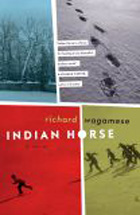
It soon moves ahead a few generations with the focus on Saul Indian Horse’s childhood and family: a nurturing grandmother; a father who’s fine when he’s working but work for Indians is rare; a mother who is already a wreck from her own years at residential school and is now forced to watch as her children are taken to the same place, one at gunpoint.

Saul himself ends up at the school—where, among other atrocities, children die standing up, bodies hang from rafters, wrists are slashed on bathroom floors and a young girl fills her pockets with stones and calmly walks into the creek to drown. Where another child, already dead inside, speaks matter-of-factly about the priest and the nuns coming to her in the night to share “god’s love”.

“They called it a school, but it was never that….There were no tests or examinations. The only test was our ability to survive.”

Despite the horrors there is not a trace of rancour in the writing, not one gratuitous scene to drive home a point. Quite the opposite in fact. Wagamese wields a strong but subtle hand on the subject, the power being in what’s left unsaid. One gets the terrible idea that what Saul knows, what any of us know, is merely the tip of the iceberg.

How Wagamese kept what must be his own deeply rooted feelings out of the story, focussing only on Saul, telling The Bigger Story through him… is a feat not many writers manage, much less manage so beautifully.

“When your innocence is stripped from you, when your people are denigrated, when the family you came from is denounced and your tribal ways and rituals are pronounced backward, primitive, savage, you come to see yourself as less than human. That is hell on earth, that sense of unworthiness.”

Escape for Saul comes in the form of hockey—and these are some of the most beautiful passages in the book. While I can watch a game and be soothed by the sound of skates on ice, puck meeting wood—even though I really know very little about what’s going on—I didn’t think I’d like reading about hockey and it was one of the reasons I initially hesitated picking up the book. Turns out reading about hockey the way Wagamese writes it is an utter joy, even for someone who doesn’t know a crease from a blue line. The passion and lyricism of those chapters could easily be applied to a description of any artist or athlete doing what they love.

Saul has the talent of a Gretzky or a Crosbie and he moves quickly up the ranks, becomes a local hero where ‘hockey brings unity to a fractured society’ and “Every reserve in the North had a team.” But the system has him move up even higher, to minor leagues, to big city games in the south where an Indian on skates is an event, a cause for racist headlines, jeering and jokes.

“During one game [the fans] broke into a ridiculous war chant whenever I stepped onto the ice…. When I scored, the ice was littered with plastic Indian dolls… A cartoon in one of the papers showed me in a hockey helmet festooned with eagle feathers, holding a war lance instead of a hockey stick.”

What once was his salvation proves to be just another thing that belongs to the white man. Hockey is metaphor for the “white man’s game”… the game of life. They expect him to play the role of savage Indian, and eventually, fueled by a lifetime of suppressed rage, and against his better instincts, he obliges them.

From there he spirals down until he’s at the New Dawn Rehab Centre where he discovers perhaps the most difficult layer of his past [a shocker I did not see coming…] and begins the long process of healing.

This is the part of the book that was hardest to take. We white folk in Canada pride ourselves on our multiculturalism, our supposedly easy acceptance of all races. But we don’t talk about the aboriginal population when we talk about race and racism. We don’t talk about the aboriginal population at all. Because, well, they live “up there somewhere” and very little that happens to them is reported in mainstream media, and even when it is, it’s a news blip not a serious problem. Contaminated water in Walkerton? A very big deal. Heads rolled. In Attawapiskat? Where’s that?

Ditto mould, insufficient housing, suicide.

But it’s not that we don’t care, it’s that we don’t know.

The Idle No More Movement has shown, at least to some degree, that there are large numbers of us, people of all description, that do care. And we crave information. Yes, we can ferret it out online, but perhaps the day has come where equal air time and ink in mainstream media is given to aboriginal issues.

The long and short of it is this: we know too little about the history of native communities. For this reason books like Indian Horse are important in that they convey a hard story that needs not only to be told to heal the teller—but heard, to help heal our world.

Indian Horse  is available for purchase on-line at Blue Heron Books. 

And Hunter Street Books.

Support indies!

slow tv

Very sad news.

Programming cuts at TVO.

Especially sad to lose Saturday Night at the Movies. After forty years and a tsunami of technology it seems that turning down the lights and putting one’s feet up and being content with whatever the film happens to be, and maybe it’s something you wouldn’t have chosen but you end up liking it anyway… is over.

Because now we have to have what we want when we want it and if, three seconds later, we’re bored with what we thought we wanted and want something else, we have to have that too.

Here is a sigh for the end of an era.

Sigh.

Popcorn will never be quite the same.

so the money thing… it’s not just a rumour??


Advertisement for the Palmer Institute of Authorship, from which a “free typical lesson package and book: The Art of Writing Salable Stories”, can be requested by mailing coupon to: 1680 N. Sycamore, Desk GD-16, Hollywood, CA.
~as seen in Astrology Guide, Vol 19, No 1, Jan-Feb 1956

Now then, should there be even the slightest doubt about the validity of writing programs offered in the front pages of astrology magazines… please consider a testimonial from J.G. Doar, whoever he may be: “After completing only the first few lessons I felt I knew what a short story is. My success will not affect my study of the Palmer Course.”

If that isn’t enough to convince the cynics, there are other devotees—equally giddy, confident and obscure in their success. (A.B. Aretz anyone?)

Had the Palmer folks been really smart or, better yet, prescient, they’d have asked for a few words from a young Raymond Carver who was among those that sent away for the package— and also came to know what a short story is. More or less.

(Though they did get one from A.E. Van Vogt, who claimed the Palmer course was a milestone in his career, after which his entire income, he said, was made through writing.)

[Incidentally, the man in the photograph above the caption: “Famous Author Praises Palmer” is Howard Hughes’ brother, Rupert Hughes.]

Interesting times.

the first time

It really doesn’t matter how good or not the first time is—it’s usually memorable and that’s enough. My first was James Michener. Well, not technically the first. There were plenty before him if you want to go back to Dr. Seuss. Then Lucy Maud and those Grimm Brothers, Heidi and Black Beauty, E.B. White, and Nancy Drew—who I used to think actually wrote the books; I was somehow oblivious to Carolyn Keene’s name prominently placed on all the covers. I’d love to know who I thought she was.

There were others, obscure names and stories I’ve long forgotten, picked up at the library or found among the slim pickings on my family’s shelves. But it was James that was the real first, the one I found myself opening and not being able to shut until it was done. The first time I went all the way in one fell swoop.

It happened under a tree.

It was summer. I was twelve. I had a bike. This was in the days before people got driven anywhere; when your parents could have cared less where you were as long as your room was clean, the dishes done, laundry hung, house vacuumed, garbage taken out and you were back in time for supper [‘cuz that table ain’t gonna set itself].

It was also in the days before the invention of plastic. At least in the shape of water bottles. People, everyone really, used to go places, everyplace, without water. It’s a miracle we all survived when you think about it now.

In any case, there I was on my bike in summer and it was hot. Very very hot. I rode across the canal into the country where the orchards lived and swiped a few peaches. And then I took those peaches to a small park—no, it wasn’t a park, more like a place for cars to pull over and check what the hell is making that rattling sound in the trunk. It was a small grassy space; there were trees, shade. Peaches. And James between the covers.

The book was The Fires of Spring. I remember the beginning best, how a little boy and his grandfather lived in a poorhouse, happy but poor, you know the type. The old man, beloved by all, died, leaving the little boy on his own. So he joined the circus, the way you do when your poor, beloved grandfather dies, and saw unspeakably exciting and horrifying things and possibly fell in love or lust or confusion. It gets foggy at this point. In fact, I remember very little and what I do recall may or may not even exist in the book. 

Who cares. The story isn’t the point. The feeling is the point and no one and nothing, including the actual plot, can erase the feeling of laying on that small slice of cool grass on that hot day, illicit peach juice dribbling down my chin onto James’ pages as I turned them one after the other after the next… all afternoon.

It was the book that showed me, in ways I can’t recall, the power and the magic of words. It wasn’t necessarily the best I’d ever read, I just remember it that way.

Recently, when Peter and I spend a weekend in Niagara, we find ourselves near the grassy place. I ask him to pull over, tell him about James…I spare him the details.

He finds my nostalgia quaint, smiles, stays in the car while I walk around. Which tree was it? This one, that one? I study branch formation, proximity to the road, until it occurs to me that where matters as little as the storyline. What matters is I”m suddenly breathing deeply, smiling, shoulders drop and I’m twelve, in yellow denim cutoffs—because I’m the only kid I know who doesn’t own blue jeans—lying tummy down on grass, surrounded by peach pits and so engrossed in a book a whole day goes by without me noticing. Best of all, I am not even slightly aware of how I will remember this day, for possibly ever.

a sense of presence

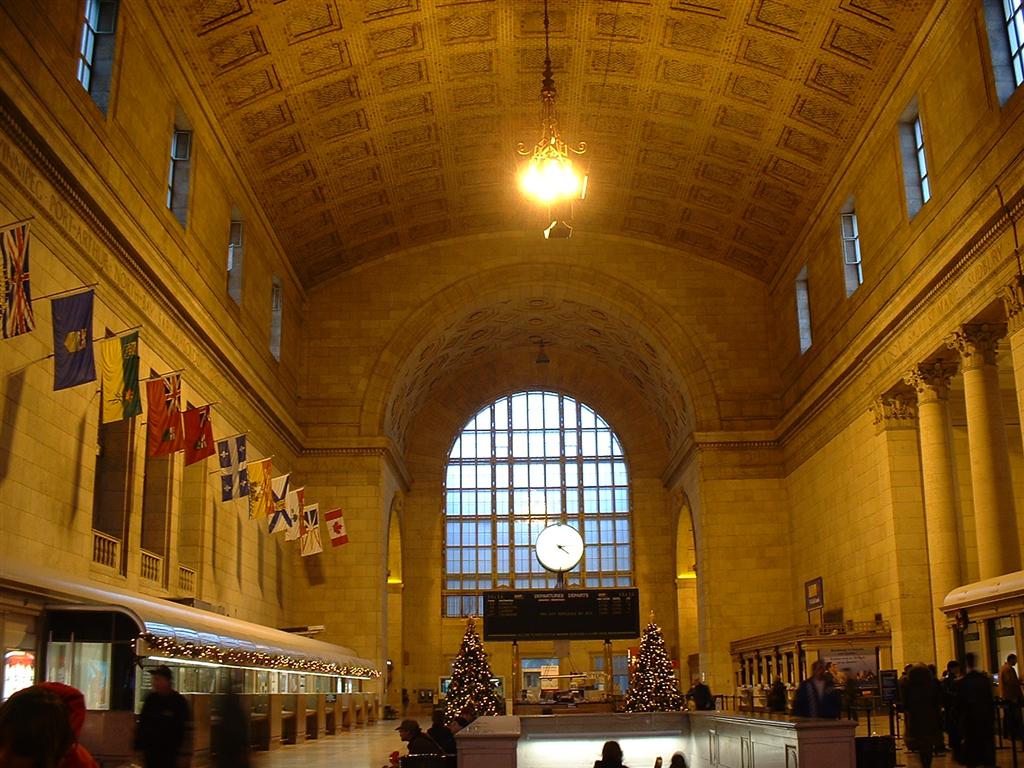
“A railway station, especially a large one, is something like a home: it acquires a certain aura after it has been used. I do not believe in ghosts or haunted mansions but I am always conscious when I enter any old building of the unseen presence of those who came before. It does not matter if the furniture and bric-a-brac have been stripped away; a sense of presence remains—a feeling, an echo perhaps, that tells you lives were lived here, tragedies enacted, triumphs rewarded, loves consummated, and that this building knew the cycle of birth, life, and death, of hope and despair, of sadness and joy. You cannot experience any of this when you enter a brand new structure. Freshly completed edifices lack a soul. It is the older ones, the ones who have served their purpose over the years, that rejoice in this kind of psychic patina. The sense of history, the feeling of nostalgia, the echoes of the past can never bey worked into an architect’s blueprint.”  (From ‘A Feeling, An Echo’—an essay on the *near demise of Union Station, by Pierre Berton)

*Because of a period of underutilization and a prevailing fashion for all things modern—a la the CN Tower at the time—there was serious talk during the early 70’s of  demolishing Toronto’s Union Station. It really is quite stunning how stupid we humans can be. Fortunately, there are a handful that occasionally get it right. And in this case at least, sanity prevailed.

~