this is not a review: ‘missing sarah’, by maggie de vries

 
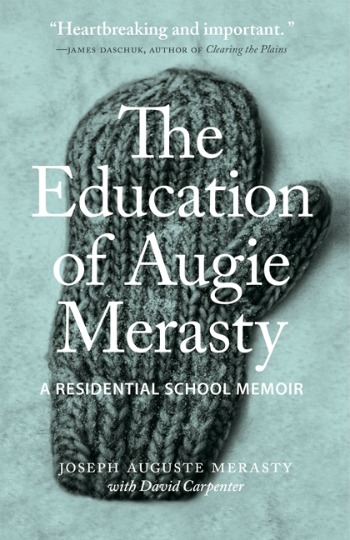
In Missing Sarah,  Maggie de Vries recalls the life, disappearance and death of her sister Sarah de Vries, whose murder was confirmed when her DNA was eventually found on a psychopath’s farm in Port Coquitlam, B.C.

DSC03213

Published in  2003, the book won the George Ryga Award for Social Awareness, the VanCity Book Prize, and was nominated for a Governor General’s Award.

I’ve wondered about Missing Sarah every time I’ve heard about another missing woman, but only recently read it… after chatting with a friend about books that need to be discussed more often.
DSC03215

Sarah de Vries disappeared from a Vancouver street in 1998. She was a young mother, an artist, a keeper of journals, a poet. She was kind, loving and funny, honourable and dignified. She had gorgeous wild hair and a big smile and in the last house she lived, in the scruffiest part of town, where junkies often stayed, there was a small, thriving garden planted beside the front door.

This image has stayed with me, this need to nurture, this need for beauty.

“The tragedy is that she never seemed to be able to turn that love and caring toward herself or accept from others in a way that would allow her to change her life as she always wished she could.”
DSC03216

She had two brothers, a sister, loving parents. A regular family. The family were white. Sarah was black. She’d been adopted as a toddler. She loved them deeply but on some level didn’t feel she fit in. When she discovered Vancouver’s downtown scene, something clicked for her. These were people who also didn’t fit in and together they made a different sort of family, dysfunctional and real as any other.

DSC03227

In her journal Sarah writes about the idea of home… “… but it’s too late. You’re already on your way and you don’t want to hear the words “I told you so”.”
DSC03217

Through letters, drawings, journal entries and conversations with people in Sarah’s life and the various relationships each had with her, Maggie de Vries comes to know her sister in a way she never managed while Sarah was alive.
DSC03222

She feels guilt over this, and it breaks my heart. Because how could she have known her any better? When Sarah was alive, things were chaotic. Not only with the drama of Sarah’s life—the constant coming and going, the worry over her safety, her health, her children—but the way it played havoc with her parents, whose marriage eventually broke down, which in turn caused further stress on family dynamics and individuals.

It’s in the writing, from this distance, that de Vries begins to realize there was never an opportunity to ‘get to know each other’, that everyone was simply getting through things in their own way.

This is the way of families. We only think we know them.

We barely know ourselves.

DSC03219
I was struck with the bravery of de Vries’ writing. How she said that it’s easy to believe that drugs are the problem rather than what’s going on at home.

“Kids are not only responding to tempting bait on the outside, they are driven by some deep discontent on the inside.”
DSC03224
She adds that getting rid of the ‘bad people’ out there won’t solve the problem, that it’s not enough to arrest the creeps and murderers.

“More ‘bad people’ will appear in their place; and, as long as we do not solve our problems at home, our children will continue to leave.”

Now there’s a hard truth. It would have been so much easier to blame anyone else. But de Vries doesn’t play the sympathy card, or even the shock value card. She’s writing this book, she says, “…to make it real for myself, to gather all that has passed in the last four years and pin it to the page.”  In the process she shares her road to understanding as she realizes that to effect change, we have to look at what we’re doing in our homes before we point fingers to the problems in society.

It’s beautiful, honest and bare-naked writing.
DSC03221

It’s about Sarah but it’s also about so many others, women, who found themselves working on the streets to survive.

They are individual stories and yet share a common bond.

Like life.

Your story, mine. Different and the same. The point, it seems, is to know this.
DSC03225

It’s about being human.

DSC03226

And it’s the kind of book you can read again and again and, like getting to know someone, you learn a new thing each time. And your eyes are opened and this world that you know nothing about suddenly becomes part of the world you live in, not the separate place you pictured. And you might be surprised to know the people in it bleed and laugh and love and *need* the way people do.
DSC03062

It’s a book to read and discuss as long as there are women disappearing from streets and dying in hotel rooms after ‘rough sex’ and perpetrators of ‘rough sex’ are being allowed to live their lives as if nothing happened.

DSC03223

Not everyone has a sister who will write books about them.

Sarah de Vries did.

(not so) wordless wednesday

DSC03059

Woke this morning expecting it to be Wednesday. But it didn’t sound anything like Wednesday. More like Sunday or New Years Day. So I wondered and then remembered the holiday and thought how amazing, really, that a few thousand people not going to work can change the atmosphere to this degree.

Even now as I write, the paperboy is making deliveries (with a red wagon, bless him); I hear the trundling sound of the wheels through an open window and neighbours chatting. The sun is out. A faint hum of traffic, birds sing, dogs bark, train whistle, wind chimes; it’s all there, all normal, and yet…

… something undefinable is quiet that usually isn’t.

Happy red and white day. (And keep it down, willya?)

Other Wordless Friends—

Cheryl Andrews
Allison Howard
Barbara Lambert
Allyson Latta
Elizabeth Yeoman

things that stuck

What he taught me:

Keep your vice closed at night.

For anyone without a dad-with-a-workshop, a vice is a clamping gizmo attached to the work bench… He obviously had great hopes for my future in carpentry.

Nail biting and driving don’t mix.

The deal was he wouldn’t teach me to drive until I stopped biting my nails. So I stopped. Then he taught me to drive by yelling at me from the passenger seat. This did my nails no favours.

A parking lot is the most dangerous place in the world.

Especially during the holiday season…

Happiness is a warm potato.

I once found him sitting on the stairs between the kitchen and the back door, eating a just-boiled potato with butter and salt. He shared it with me and as I sat there on the floor with him I thought — I knew  — it was the best thing I’d ever tasted.

Pioneers did too have aluminium foil.

They apparently wrapped their just-caught, so-small-it’s-barely-legal fish in foil then tossed the package into a hole dug behind their rented cabin and lit a bonfire on top, which, by the way does exactly diddly squat as far as cooking fish goes.

Do not answer a question, any question… with just one word.

It’s bloody rude!! he explained. (I think he might have regretted the lesson when I started answering simple questions in paragraphs and chapters.)

Spider!!!!! sounds like Fire!!!!!! when shouted by a small child from her bedroom in the middle of the night.

And when what’s been shouted is clarified, the dad who has rushed into the small child’s bedroom, will say oh for christ sake, is that all  but will take the spider outside before going back to bed.

If you get a chain letter and aren’t sure whether to make-ten million-copies as-instructed-or-you’ll-be-hexed… call the library!

Because the library knows everything. This was pre-internet but, still, libraries continue to trump in my books.

He also showed me that sitting can be an art, whether taking a break during or after hard work; it must be done with pleasure and deep contented sighs, coffee or tea, silence or words, alone or in company, and entirely without guilt. And that if you need a thing you haven’t got, see if you can make it before you go out and buy it. Not to save money but for the satisfaction you get from being clever and using stuff that’s just laying around anyway. He taught me about seeing and wondering and imagining impossible things that might just be possible and he showed me how to laugh until my stomach hurt in the best way and that even the strongest, tallest people in the world will cry sometimes.

In the months before he died I sat with him, a sense of pleasure at being in his company, thin contented sighs mixed with something else, often in silence, with tea, reading Emily Carr’s Growing Pains , holding his hand as he slept.

The things that stick.

untitled


earth to sanity, come in, sanity…

I read an article this weekend, a piece on something called ‘earthing’. You’ll be forgiven if you don’t know this means walking in your bare feet. Outside.

It talked about how earthing makes us feel connected to the earth and how we instinctively know this is A Good Thing. Researchers (yes, researchers in walking barefoot) have named this knowledge “Unconscious Evolutionary Intelligence”. Because (I’m guessing) researchers like naming things. And if this isn’t exciting enough, it seems that science is now discovering what is happening to us, biochemically, when we earth. Early findings confirm what instinct has long instincted: walking about in nature feels nice.

The article goes on to say more research is needed (naturally!), to more fully understand how earthing works… but what they DO KNOW at this early stage is that, generally, it’s a good thing. (They used bigger words but that’s the gist.)

They cite health benefits and say that being in nature is becoming the new Vitamin N. (N for nature).

Health benefits. From nature.  Imagine.

Also… it appears that walking in nature is more relaxing  than the same amount of walking on concrete in a crowded city. Significant results in improved mood, for example. Apparently even just looking  at nature has some effect (as through a window with a view of trees vs a brick wall; studies show the tree people felt less stress).

Is your mind blown yet?

Or are you thinking: yeah, sure, it sounds good, but how do I do it??

Fortunately, the article ends with an instructional, telling us that if you want to “get grounded with our planet’s surface” all you need to do is (are you ready for this?)… simply sit, walk or play outdoors.

Am I going too fast?

Okay, more slowly this time.

Earthing 101:

Sit.

Walk.

Or play.

Outdoors.

In your bare feet.

But, FYI, if you’d rather not do it in bare feet, you can buy Earthing Shoes with conductive powers. Or if you’d rather not do it outside at all, there are Universal Earthing Pads to put under floor mats. Or Earthing Sheets and Mattresses. Or Earthing Auto Seat Pads if you’d prefer to connect with the earth from the comfort of your Chevy.

Otherwise, this weekend found me swimming in the rain to Brahms. I’m not sure what that’s called.

Also reading on the living room couch in a house with open windows while afore-mentioned rain continued most of the day and a door somewhere, slightly ajar, kept tap tapping against the frame, which made me remember the house I grew up in where windows were always open and doors often tapped like this. I associate the sound with fresh air. I have no idea if this activity has been named, or even discovered for that matter.

I planted pots of scented things on the patio… valerian and helitrope and meadow sweet and my favourite: apple geranium. All purchased from a grower who does not use neonic’d seeds.

Was I aromatizing?  Scentographing?  Maxi-fragrancing?

I cut chicory and arugula and kale for a salad lunch, and ate outside. We do have a name for this one; we call it “having lunch outside”.

And when the sun came out I hung laundry in the backyard (sheeting?).

Despite soggy conditions, I earthed while I did it.

DSC03074

the story of my name

 
Oh, you spell it with a ‘c’…?

And an ‘i’…?

Well isn’t that different.

At which point I usually say yes, I guess so. My dad’s idea. He read it in a book. It was his turn to name the baby. My mum named my sister. Mary.

I was supposed to have a middle name. Lynn. No idea why. Another book probably. He liked the idea of how the two went together Carin Lynn, almost Carolyn but without the commitment.

But he forgot to mention the middle name at my christening or when they did the paperwork. Something.

I’m glad actually. I like having only one name.

Until I was ten or eleven or twelve, I thought that name was Karen. My parents were immigrants and when they enrolled me in school, the school wrote my name as Karen. My parents didn’t want to upset the apple cart with their weird immigrant spelling. They wanted to fit in. And so they let it stand. Never mentioned a thing to anyone, including me.

Until I was ten or eleven or twelve when, for whatever reason, they said Oh, by the way, you know your name is actually spelled with an ‘i’.

It is?? Well I’ll be darned.

So I started spelling it Karin. I still have a few notebooks and report cards that shows this progression.

Then in grade eight or nine I needed my birth certificate for some reason and noticed the Carin spelling.

What’s that about?  I’m not sure who I asked. My mother probably.

If she was stirring something at the time she didn’t stop. What do mean?? That’s your name, what do you think it is?  Stir, stir…

I suggested it was a little weird, didn’t she think???, that I was just now finding out how it was spelled. She, apparently, did not think it was weird.

That may have been when she told me the story of my name.

Or maybe it was my dad who told it.

Either way, it’s good to know how to spell my name. I’m glad I only have the one. And I’m glad it was my dad’s turn to pick.

My mum said her choice would have been Brunhilda.

brunhilde2

the sweet blather around us


“So did Japan bomb Pearl Harbour… or Halifax Harbour??”

Discussion among three teenaged schoolgirls, studying together
—Pickering Library (11:35 a.m. to noon):

I was going to buy a notebook [laughs], obvious, like, all this stuff we’ve learned, like, like, Imperialism, tests are easy, I don’t, oh, FaceBook without WiFi, nothing’s working??? click on something, I’m on a profile, wow I can’t go on mine, search, no internet connection, quiet revolution or whatever it is, civil rights, on TV, all I know, page 246, looking over my stuff, didn’t study hard, so nice not having to study, after science, history tomorrow, so simple, whatever, no WiFi, there is WiFi, here, don’t know anything about Nellie McClung, wasn’t she, speaker, fought for women in the kitchen, right to vote, go on page 40, like she was, women’s christian temperance movement, in french, oh, whatever, I thought it was WTCU, or women’s temperance christian union, or is that just the same? Halifax explosion, bombed harbour, only know from going to Halifax, and time of Germany, Hitler came out of nowhere, sided with Japan, U.S. got cheesed off, Japan decided to bomb Pearl Harbour, Canada got mad or whatever, Japanese people being treated bad, Pearl Harbour so close to Canada and so are they going to bomb Canada also? No, Halifax Harbour, oh. I think it was an accident, I got confused when she said Pearl Harbour, I kept thinking of Halifax, so Japan bombed Pearl Harbour or Halifax harbour? bombs in water, remember in Finding Nemo they had those chairs? have to know about bombing, I lost a whole section, who were the Bolsheviks? wanted higher salary, revolution in Russia, communism, I found prohibition, WCTU during war, proposed factories, used wheat for food for soldiers and ammunition, 1918, WWI or II? What time period??

IMG_4723 - Copy