this is not a review: ‘magnificat’, by k.d. miller

One of my annual pleasures is Steven Beattie’s, 31 Days of Stories, a tribute to the short story form by way of highlighting and reviewing a wide variety of work, from current to classic. I try to make a point of reading the daily posts (printed out on paper even) with tea each morning. I’m a little behind.

Just got to ‘Magnificat’ from K.D. Miller’s gorgeous collection All Saints.9781927428634_Cover_

It’s been a while since I read it but I didn’t remember it quite as described.

So I read it again.

And this is the most wonderful part about art of any kind, that there are several takes to be taken. The artist’s. Yours. Mine. And the millions of yours and mine’s out there reading/hearing /seeing/experiencing the same thing.

This never fails to fascinate me.

As a writer I enjoy hearing various takes on my own work, the way something I thought so obvious is missed or, conversely, something I hadn’t even seen appears to someone else as THE WHOLE POINT.

Who’s to say what’s right? The artist’s version, in my world anyway, merely counts as one opinion, one vote for ‘what it is’. It may appear to carry more weight because it has all that intention attached, but what it becomes when it flies through the atmosphere of our individual experience, can’t be denied.

And so, with ‘Magnificat’, for instance, my take is a little different from the one I read this morning…

In a nutshell–

Julia, an unattached, never married, middle-aged woman with blisters on her feet and a pretty ordinary life notices a young couple, Cathy and Gabe, having it off in the park. Only something’s not right about the scene and it makes Julia remember an incident of sexual abuse at the hands of a man who recited religious passages, which caused her to sing the Magnificat … essentially, a  survival technique.

“She remembers lying in bed, imagining herself the Virgin Mary.     Imagining the eyes of the angel on her. And his next words, the ones that would change her life forever, giving her cause to sing the Magnificat. My soul doth magnify the Lord…”

Beattie saw Julia as someone who has not experienced sex on any level and who witnesses the rough play in the park between Cathy and Gabe with a kind of lust. Whereas I see her watching with a sense of helplessness. Because of her own experience, she senses Cathy’s complicity in the situation and knows there’s no point in intervening and no crime to ‘report’. That for whatever reason people, often women, feel they deserve abuse of various kinds and, in order to survive it, are able to find a twisted sort of pleasure therein.

This experience of abuse may be the very thing (coupled with her parents’ cold relationship) that put her off the idea of marriage. Oddly, it may also serve as one of the reasons she’s drawn to the church… a convoluted means of putting things right that were made so wrong in *god’s* name.

That she sees not taking a husband as a “choice”, I think is a reference to burying the memory of the abuse. Anything that triggers it, is a source of discomfort.

And yet… she follows this strange couple, Cathy and Gabe, into a remote area of the park. She is afraid as she does so,  “… In a queer, thirsting way.”  The way she takes off her shoes, puts them on her hands to relieve her blisters, daring herself to continue past the pain… mirrors, in a way, what Cathy is doing, allowing herself to be drawn into the relationship with Gabe, hating it, fearing it, yet fearing it might end.

I see this as Julia wanting, at last, to confront her demons.

And yet… another reference to angels, this time from Cathy’s perspective in the middle of the aggressive and degrading sexual act:

“The grass is chafing her knees. Her fingers dig into the dirt… But she is surrounded by angels… Gabe. And Owen. And now this lady who is watching her… She is in a blue robe and a kind of white headdress, like a nun’s. Her feet are bare. She is wearing shoes on her hands.”

Julia watches the scene unfold as Cathy (also dressed in virginal blue and white) is undressed.

“When she saw the blue tunic come off, she pressed her palms flat to her heart. Prayed through dry lips… Then when the white T-shirt and the flesh coloured bra were shed, she wrapped her arms around herself to stop the swaying of the freed breasts.”

Julia begins to sing the Magnificat, and Cathy receives it with gratitude while her fingers dig into the dirt during the sexual act. This brief and unspoken connection, this understanding between the women is powerful, transporting Julia back to her childhood and when she comes back to reality, she finds herself checking to see her clothes are intact, “clutching at herself” as if to protect Cathy from the hands of this man, and herself from the hands of the abuser in her past.

Note: The Magnificat is a hymn of praise to god, in which god recognizes “the lowliness of his handmaid”. A song, no doubt, written by a bloke.

UPDATE: Was gob-smacked to find Steven Beattie’s re-visit to Miller’s story; even more gs’d to know my interpretation resonated. Because, well, what do I know?? Anyway, this is CanLit at its best: stories, discussion, open-minds.

I doff my cap.

All Saints  is available for purchase online at Blue Heron Books. 
Show indies some love.
things found

 
maggy and milly and molly and may
went down to the beach(to play one day)
DSC00355 - Copy
and maggy discovered a shell that sang
so sweetly she couldn’t remember her troubles,and

milly befriended a stranded star
whose rays five languid fingers were;

and molly was chased by a horrible thing
which raced sideways while blowing bubbles:and
DSC02311 - Copy
may came home with a smooth round stone
as small as a world and as large as alone.
DSC02322
For whatever we lose(like a you or a me)
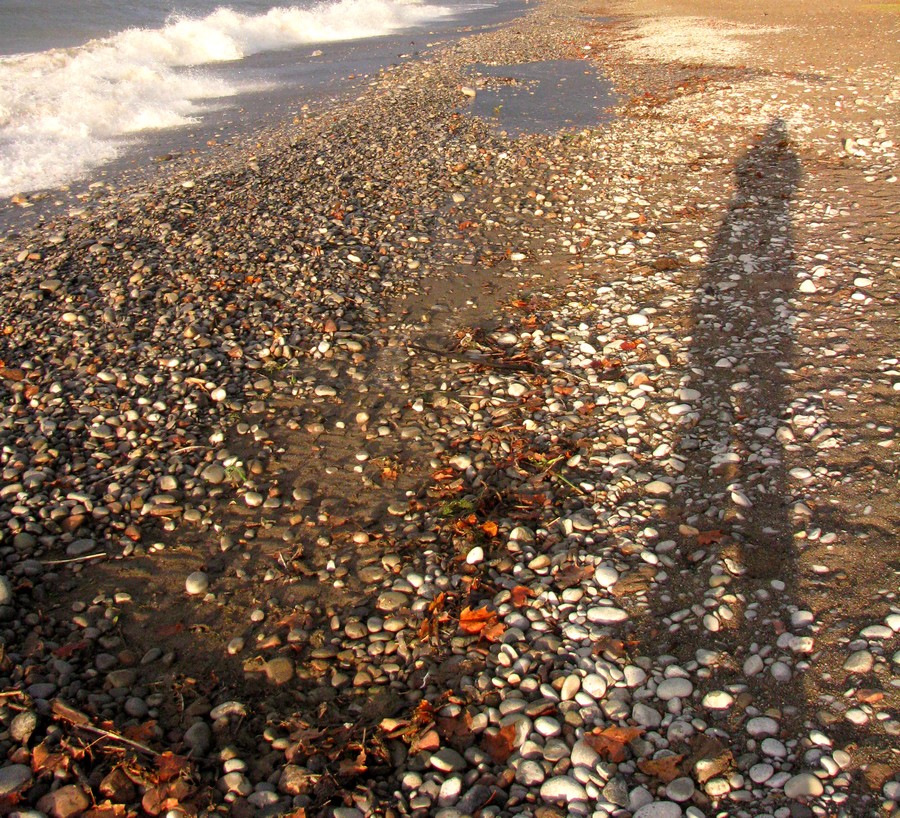
it’s always ourselves we find in the sea
IMG_4304

‘maggy and milly and molly and may’, by e.e. cummings

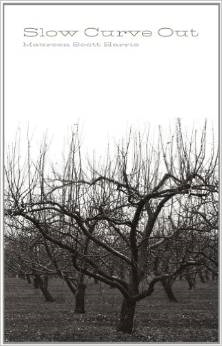
this is not a review: slow curve out, by maureen scott harris

 
I’ve read Maureen Scott Harris’ beautiful Slow Curve Out  twice so far—once in a skimming summertime kind of way on the patio where I am prone to being distracted by butterflies and motes of dust and pitchers of watermelon juice. And the second time on a Sunday morning in bed (fortunately motes of dust are so common in my house they are not distracting).

The book, a collection of poems, is divided into three sections.

Well, five, actually, if you consider the opening poem, ‘Walking in Saskatchewan with Rilke’ in which we are being prepared for what’s ahead, i.e. walking in the world with Maureen Scott Harris.

                                                                           —the way
things surge into being, here, claim eyes, claim
mind, claim my very heart, beating and beating,
bird in the breast, this longing for sound—

And the closing piece, ‘Homecoming’, that ends with warning and a powerful two word punch.

In between is Part One: ‘Back Up, Begin Again’, a paean to nature. The rhythm of recurring themes… birds, trees, light, wind, earth, the colour white, flight, dreams, walking and silence, begin in such a way that you don’t even notice the tapestry that’s being woven until you’re right there in the middle of that deeply textured landscape.

If I can get it right
my arms will sprout feathers, and I’ll bring home
the taste of poplars surprised by pale sun.

I read Part Two, ‘The Ten Thousand Things’, as a meditation on sound. The birds,untitled more visual in the earlier section, are now singing, calling, crying; voices enter, cacophonous, raucous, there is holler, hum and mutter; subtle references to songs; bleat and mourn; ghosts are a choir, slippers tap; yodelling fiddle, guitar, the thump of thunder, a siren, Rain and longing—what a racket on the roof!  Even the foliage makes a sound and sound canopies the street.

One day slides into another, sunshine
dissolving clouds which reassemble
overnight, and a whole week has drifted
past in birdsong and silences. Like
the tide going out, then coming in again.

By now we’re immersed in place. We know what’s around us, but do we know our place in  this place?

In Part Three — ‘Another Animal’ – the tapestry is plenty rich, but there’s an additional element: us. Or at least the focus is on us. How we change things, how we  change, how we interpret our  world vs the  world. Some hard truths are revealed and they’re not always the prettiest, but may be the most important.

Remember when we weren’t our own
gods but lived by the grace of animals?

I love this book for its energy, the way it takes me by the hand and, like the narrator in the opening poem, points out the sound, the silence, the colours, the textures and movement of the world around us.

It asks us to consider what it is we see, versus what we want to see.

And this thing, this motion I thought to show you,
tell you, is for the moment only
a smear across the view obstructing and obstructing
like the sheep dog that turns the sheep
in a slow curve out toward the stony pasture, their little hoofed
feet lifting and descending on the rocky path, slippery
in the aftermath of deep snow, a stutter,
like this  this    this    thing

Slow Curve Out, available online at Blue Heron Books. Support indies!


may be

 
I’ve written before about my relationship with May. I love it for all it’s taught me, through the best of times and the worst… until it’s no longer possible to take this month for granted, or not acknowledge it in some way.

This year I’d like to celebrate May by saying yes.

I’ve decided to play that game where you open up to things that normally cause much consternation followed by umm, I don’t think so, thanks, and a hasty retreat to the cave.

In this game there’s no thinking allowed.

Merely, yeses. (In response to requests within reason, I might add; I mean, there have to be some rules  because I can tell you right now that I am NOT going to accept an invite to go to, say, Mars. No matter how great the in-flight movie is or who’s paying. It’s just not my thing.)

Ah, but, you see? There I go again, talking about my thing. And as much as I adore my thing and am already looking forward to climbing back into its perfectly shaped embrace… for one month, I will not give it priority.

I will be open to whatever is on the other side of no.

In fact I’ve already begun. Instead of pretending my ankle isn’t sprained and that it will miraculously heal on its own even though it’s only gotten worse in the past couple of weeks, I said yes to seeing someone who knows about these things.

Imagine.

It’s almost like the possibilities are truly endless…

So off I go, with a limp in my step and a yes on my lips.

(Is it just me or is weirdly bright outside the cave?)

Will keep you posted via smoke signals.

Or carrier pigeon.

Symbol_thumbs_up_svg

in fairness to men

 
There’s so much inequality. For men, I mean.

For example, a couple of weeks ago, on International Women’s Day, a few chaps harhar’d about why isn’t there an International Men’s Day??

Turns out there is one.

But the sentiment remains: the women’s version gets more attention.

And that begs a few questions. Beginning with why?

Because if you look around, you’ll soon realize it’s all about the women. And I can see how men might be feeling left out.

Even something as simple as a title… women luck out. They’ve got so many to choose from. Miss (status: available), Mrs. (status: unavailable), Ms. (status: pain in the ass feminist who refuses to say if available or not). While men only get one. Mr. (status: male).  Fine, we know they’re male, but how are we expected to know their status??

It gets worse.

Consider the TV show, ‘Toddlers and Tiaras’. Where’s the boy version? One that features spray tanned four-year old lads in speedos and fake facial hair who are encouraged to pat their butts in saucy ways while winking and blowing kisses to strangers?

The moms on the show say this gives their girls confidence and boosts their self-esteem. Hello!  Boys need self esteem too. How else to prepare our sons for teen and young adulthood when, instead of being relegated to host or judge, they should be entering  beauty pageants.

Where are the beauty pageants for men??

And what about fashion? Why do designers hate men so much? It’s almost impossible to find skin-tight clothing in the lad’s department, never mind shoes with heels high enough to flatter the calves. And what about pushing things up? Couldn’t men benefit from a little under-wire support… somewhere?

While we’re at it where is there a Victor’s Secrets?

And the media, shame on them. Always focussing on what Angela Merkel is wearing. What about what Vladimir is wearing???  Sure, he pretends he doesn’t care, but all that attention to what he does rather than how he looks must get to him at some point.

And magazines. I can’t imagine being a man walking past a magazine stand in a corner shop, drug store, grocery store, newsstand, airport, well, everywhere really… they just can’t get away from the humiliation that is the outright boycott (let’s call it what it is) of men’s pretty smiles and perky buttocks on covers. After all, they have just as much right to air-brushing and ‘visibility’ as anyone else. Damn straight they do.

Then there’s what’s in  those magazines. And, as can be expected, it’s NOT men’s issues. Which begs the question:  where are the ads and articles and 10 Top Tips featuring Mens Problems? How are men supposed to know how much is desperately wrong with their eyes, neck, ear lobes, teeth, cheekbones, jaw line, hips… well, you know, things that are messed up. How are they supposed to become perfect if they don’t have instructions???

And where are the age-defying creams for men? It’s a travesty that the entire cosmetic industry appears to give less than a rat’s ass about the condition of a man’s pores or the depth of his wrinkles.

And his hair? Is it supposed to just go grey??? Is he supposed to walk around with grey hair??

Where are the instructions?

Men are right. Women get all  the attention.

And men do all the work.

Just watch any film. They’re doing all the work. Behind the scenes as well. And look at history. Men, men, men. They did it all. Women mostly knit while the universe was carved out by the fellas. And the space program and sports (yes, women do trouble themselves to play sports and get into rockets but who cares, they don’t do it right, or something). Look at science (it’s not hard to avoid the women)… it’s mostly frazzle-haired men we know the names of. The faces on our money. Painters, playwrights, protagonists, sculptors.

Consider what’s happening in any corporation, any religion, any government, any board of directors. Look at the military, any military. Hells bells, almost any industry you can name is run by men. Essentially, the entire world is run by men. Does anyone even begin to think how exhausting this must be? Obviously not or there would be a few more ads for spas featuring our menfolk in sexy robes and towel turbans sipping cellulite busting guava juice, legs crossed (also waxed), and chatting about non-essential, stress-free issues.

That we have an International Men’s Day is good news, but in fairness to men, that shouldn’t be where we leave things, with a simple token gesture. No, let’s give men a better start in life by treating them equally right from toddlerhood. Teach boys to cry and play coy and let other people ‘go first’. And let’s lobby the cosmetic and fashion industries to take into consideration the feelings of young males and how they, too, would like to know what’s wrong with them and that they, too, would like to think about this constantly and to have goals such as pectoral implants and hair extensions and striving to have an ass that looks good in skinny jeans.

Let us encourage our sons to be the go-go dancers in music videos.

And let’s explain how winning isn’t everything, it’s how you look and that maybe, if they look really, really good, they might find the right person one day and then what will winning matter anyway…

Let us tell our sons that if they must work, they should become nurses not doctors; waiters not chefs; receptionists not lawyers.

And please, let us for once and for all stop assuming that only men should do all the work.

Let us allow them fulltime child care, to assume the role of homemaker and caregiver to the elderly; baker for fundraisers, cafeteria monitor at Susie’s school, anything that will give them more time to just chill at home. To get their nails done.

Surely, this is the least of what they deserve.

Damn straight.

You go, boy!

501px-Maes_Portrait_of_a_man_in_a_wig

it was never home and it always will be

 
(Schmaltz warning)

Toronto.

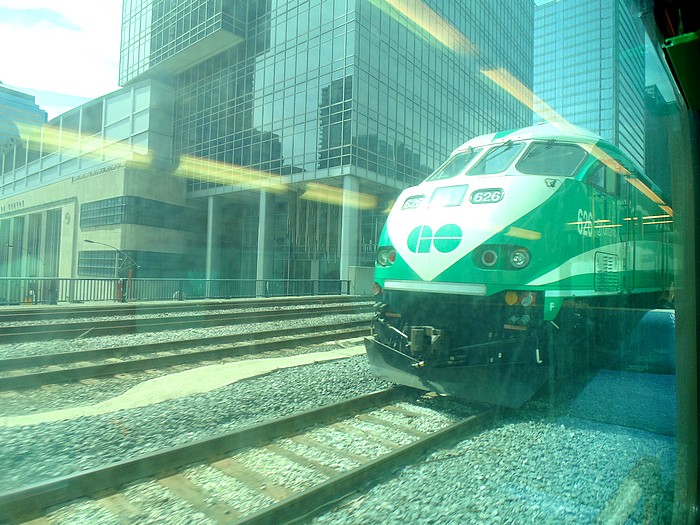
Seems like I’ve been coming or going, to and from it, forever.

DSC02443

First time was as a kid visiting family friends who lived on Admiral Road in the Annex. This was before it was The Annex.

DSC02444

And then I moved there myself.

DSC02449

And lived in at least a thousand apartments and houses.

DSC02450

Then I moved away.

DSC02452

And back.

DSC02453

And away again.

And back.

DSC02459

Away.DSC02461

Back.

DSC02463

Away.

DSC02466 DSC02464

I live away now.

DSC02468 DSC02471 DSC02472

But when I visit, and despite all the changes and the traffic and the lack of space and the changes… so many changes… I still remember the places that used to be and how the Annex was just a place we drove to on a Sunday for lunch and the kid we visited had one of the those table hockey games with flippers and levers and we played with it on the third floor and then after lunch walked around Bloor and Avenue Road… a perfume shop and a delicatessen come to mind…

DSC02474 DSC02475

And I remember so much of what came after that.

DSC02478 DSC02481

Changes, yeah.  DSC02484 DSC02485

But this place that was never home, that’s got this reputation for being cold, where when I first moved at eighteen my (envious I wonder now) friends back home said how could I stand the way nobody spoke to each other, nobody looked at each other…

DSC02487

well, every time I come back, this supposedly aloof and unsociable town in flux says… even after all these years… hey, good to see you; how you been?

DSC02490