wordless wednesday
◊♦◊
Other Wordless Friends—
Cheryl Andrews
Allison Howard
Barbara Lambert
Allyson Latta
Elizabeth Yeoman
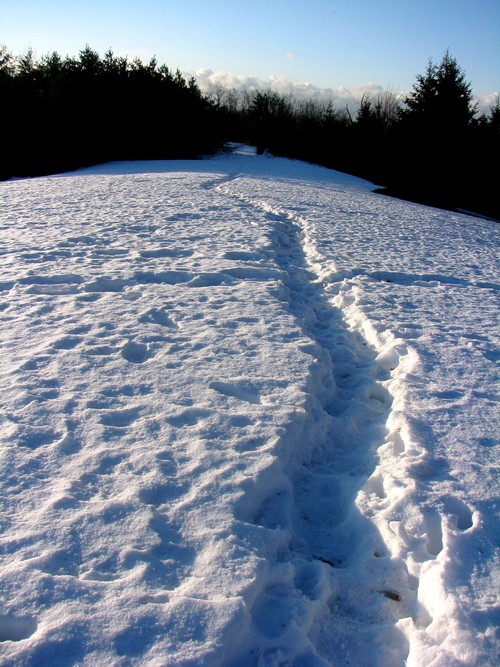
journal notes, solstice in muskoka, 2011
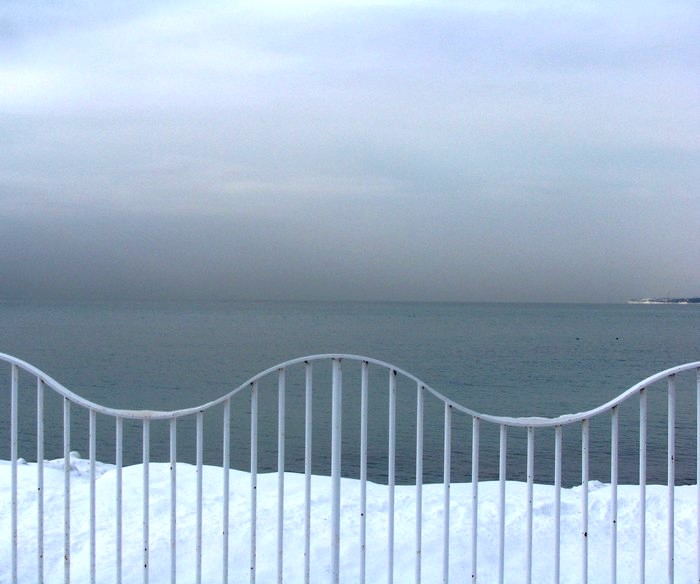
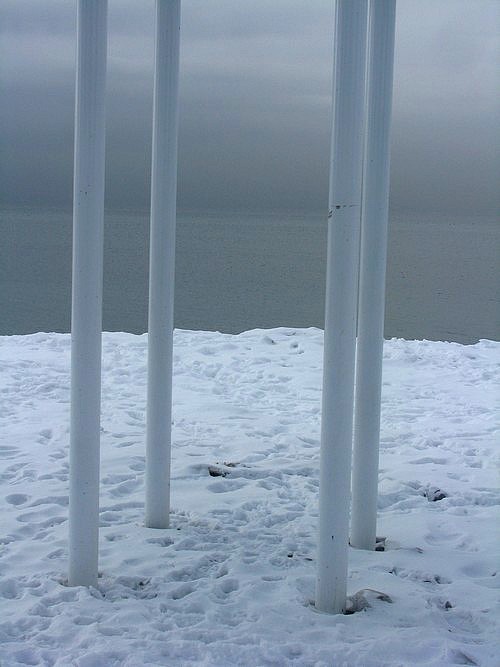
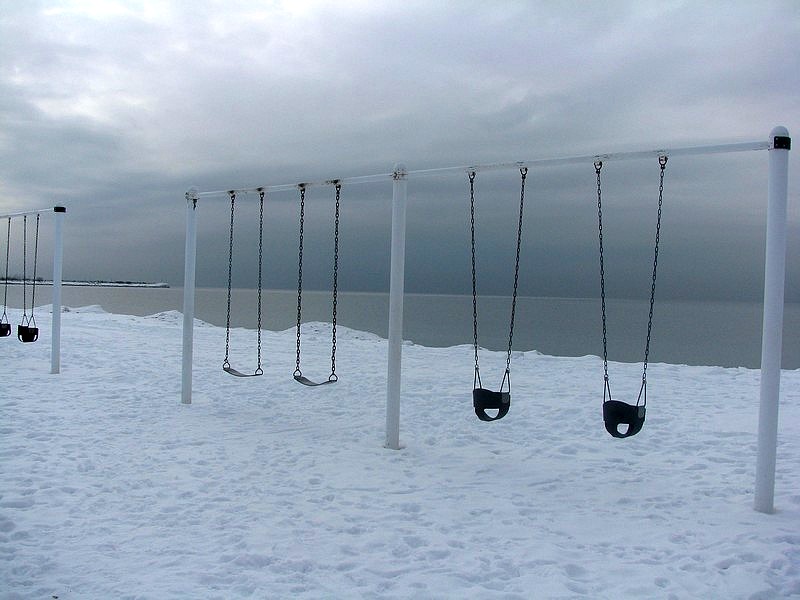
Silver morning. No, scratch that. Too cliché. Go with first instinct: grey and dull and lacking yesterday’s slow copper cherry sunrise followed by blue blue sky.
No. Scratch that too. Here’s the thing: this winter morning lacks nothing.
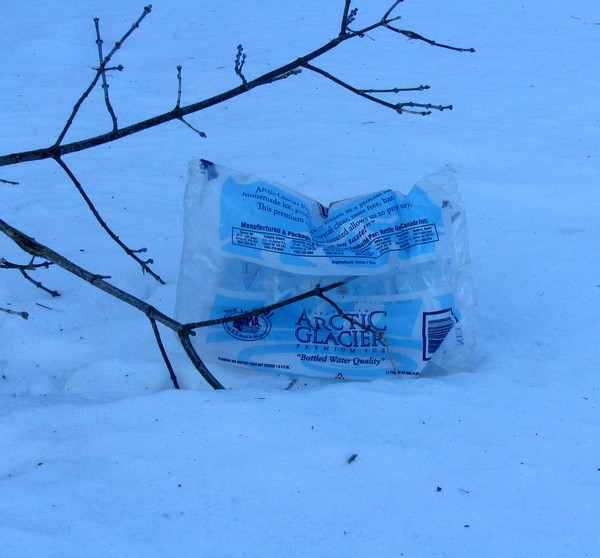
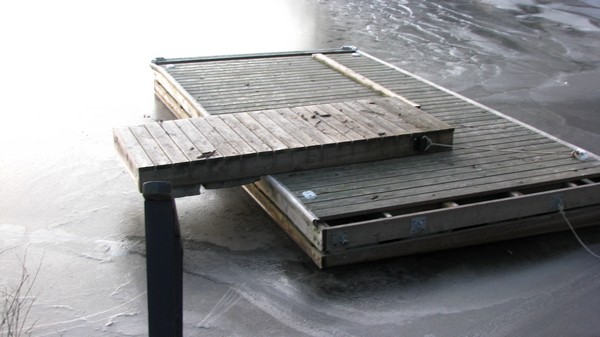
Frost on new wood of deck at water’s edge. In the lake, a plastic bottle, loose on the ice. I wonder how it got there; did somebody throw it to see if the lake was frozen? What is wrong with the somebodies of us?
The fire pit from last night where we burned marshmallows. No one believed me when I said roasting is an art. They said charcoal was their favourite flavour.

A writing exercise in a book I find tells me to write in third person.
She.
Not me.
She sits cross-legged on a lime green duvet cover that is identical to the one she used to have until it ripped and she gave it to the Humane Society instead of repairing it. Plus it had become too lime green for her taste. Animals, being colour blind [or so the rumour goes], may indeed like it, she figured.
People she knows will have done a series of sun salutations at the yoga studio in the town a few hundred kilometers south where she lives. Once the sun sets they’ll meet again for chanting and meditation. She is at a cottage with husband and stepson. There will be no chanting. Maybe a movie later.
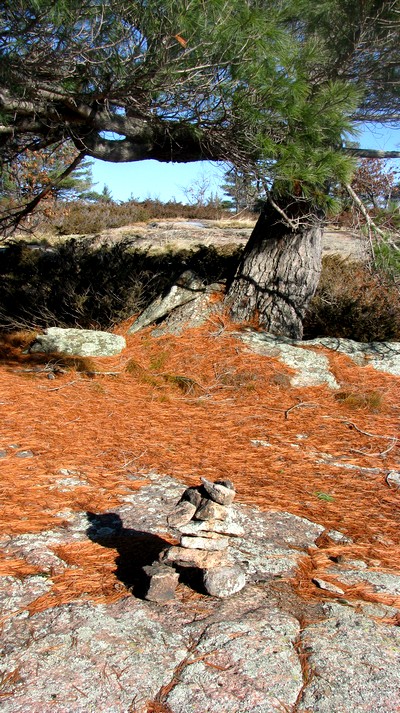
Last night at the bonfire she wanted to talk about all of it, the air, the frozen lake and the extraordinary ways of fish that they remain unfrozen; the lichen and inukshuks on their walk and the puddle in the shape of a rabbit; the smarts of nature and the distance humans have travelled from their original DNA. She wanted to hear about the books her husband and the boy were reading and talk about the day and the places they’d walked and what they’d seen and what thoughts, ideas and questions all of those places and sights had inspired.
But there were marshmallows to cook.

The exercise goes on to suggest that I write about what I see and what makes me comfortable. Excuse me, what makes her comfortable.
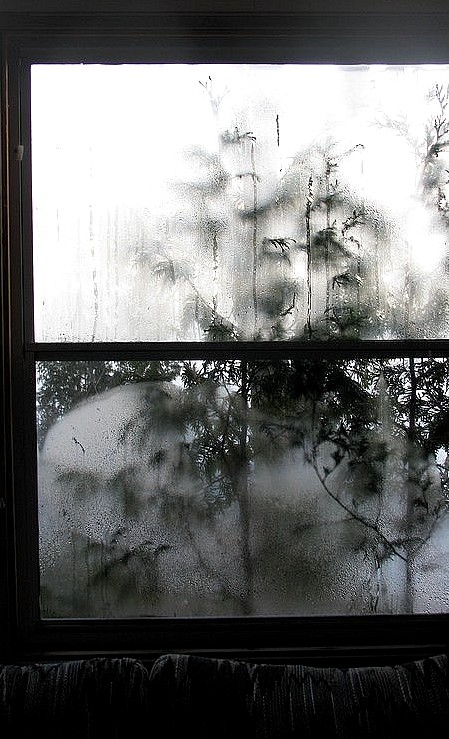
She is at a cottage. I think we’ve established that. And what she sees is the vague outline of a lake beyond cedars and through a window whose night-time glass is warming and what makes her comfortable is this rather odd and empty room off the main bedroom, where no one else goes because there is a proper living room elsewhere. This extra room is a private nook, a sanctuary, an addition to the cottage, an afterthought. But it’s heated and there are big windows on three sides and a door to the patio and steps. I like escape routes—she likes them.
She writes in this silent, private space, looking up only occasionally (although even a momentary pause in the writing is frowned upon by the rules of the exercise) to assure herself the lake is still there and when the snow turns to slushy rain she hears it on the roof of this thin-walled room and writes about it. And although it’s irrelevant she writes about how the friends who own the cottage lived here for six months after their dishwasher set fire to their house. The exercise recommends just going with whatever comes to mind so she writes about how she can’t imagine the noise and disruption of kids and a beautiful giant black dog in this space, and how remarkable that none of those frenetic vibes remain. And then she writes about vibes, about lingering energy, the kind you can feel and how some rooms you’ve never been in before can immediately feel good or bad.
She digresses here and writes about how she likes places—buildings, cabins, tents, trailers, everything habitable. She likes paintings and photographs of houses and the ones about to be demolished… she likes imagining their stories, the people who stood on those doorsteps on a thousand snowy Christmas Eves, bearing gifts and casseroles.

Coincidentally, the next step of the exercise is to write about diversions so I skip that.
After breakfast the husband and stepson go out and I’m alone with the radio and the rain in this lovely space and I read and write some more…
And before I know it I’m dancing to the hallelujah chorus on this silver day at noon.

wordless wednesday
◊♦◊
Other Wordless Friends—
Cheryl Andrews
Allison Howard
Barbara Lambert
Allyson Latta
Elizabeth Yeoman
pawsing the mantra
When—cross-legged on the living floor, palms up, silently reciting my ohms—I hear a rustling in the tissue paper next to me… I open my eyes and count this as part of my meditation.
And when tail and paws and one side of striped and whiskered face are sufficiently clean, another shuffle and re-shifting in cardboard nest is followed by stillness… then a deep breath is drawn—and we both close our eyes, Zen master and student.

wordless wednesday
◊♦◊
Other Wordless Friends—
Cheryl Andrews
Allison Howard
Barbara Lambert
Allyson Latta
Elizabeth Yeoman
she washed; i dried
This month marks twenty-five years since my sister died of ALS.
Eleven years older than me, she had all the powers of an adult [or so I thought] but was more fun.
I inherited her green two-wheeler—too big for me to sit on and pedal at the same time but otherwise perfect—and a yellow cardigan that I wore with yellow stove-pipe jeans and white go-go boots. I was ten and the sweater came to my knees. It made me invincible.
She worked at Diana Sweets where she let me watch her copy menus on a Gestetner machine and later she worked at a greasy spoon near the canal where, when I’d run over to meet her after a shift, she’d pick me up and carry me back like a monkey.
She made the best toast I have ever tasted.
When she moved out I got her room. It was a nice room but I liked it better when she was in it.
For a while I phoned her every day to read her a joke from some book I got at the library.
Of all the people waving at the train station when I left for Edmonton, it was her that I was waving back at.
And when I returned, she was the first person I called.
On summer nights we’d sit in her yard, have a beer and talk about everything we hated and everything we loved.
When the disease got worse, I’d take her shopping in a wheelchair. I noticed the way people looked at her.
One time we drove to the beach and just sat in the car and she said she missed walking. I didn’t know what to say. I think on some level I was still pretending she could walk, that she just chose not to.
Eventually she couldn’t move. This is what ALS does, traps the person inside their own body while their mind continues to function perfectly well. Her only means of communication was very laboured, slurred words, hard to understand. And the effort exhausted her. So we organized conversations around questions she could answer by blinking once for yes, twice for no. Of course I couldn’t always tell if she was ‘talking’ or just blinking and sometimes the confusion made us laugh so hard we’d cry. I’d wipe her tears away first, then mine.
The last time I saw her she was a skeleton in the hospital, on serious morphine. I don’t know if she knew I was there or if she heard what I said to her; in fact I have no idea if I said anything at all…
**
A few million years ago, when we’d do the dishes together, she washed, I dried. Except for the big knife, which she washed and dried.
She liked roses, carnation, lily of the valley soap, and garage sales, and on rainy days, for fun, she’d pile her kids in the car and head to the countryside to look for deserted roads and puddles big enough to plough through at speeds that would render the windows thoroughly sploshed and the kids thoroughly thrilled.
She read cheesy books in the bathtub while eating chips and salami and had coffee with my mum every Tuesday.
She liked the sound of laughter in her house more than the sound of a compliment for décor or tidiness.
She was a master of chicken wings, potato salad, and lemon meringue pie.
And there was always room at her table for anyone who dropped by unannounced.
this is not a review: ‘to love what is’, by alix kates shulman
I received this book as a gift from someone who knows that I’ve been a fan of the author’s work since reading her memoir Drinking the Rain some many, many years ago. One of the few books I re-read on a regular (used to be annual) basis. Go ahead. Ask me anything…
To Love What Is is her latest gem, an account of what happened after Shulman’s husband suffered brain damage from a fall—it will appeal to anyone who enjoyed Joan Didion’s The Year of Magical Thinking.
Only this is better.
Much better.
Heresy, I know. But there you are.
What I felt about Didion’s book [just to clear this up] was that rather a lot was missing. Here is what happened, she tells us, here is how mad I was with it, and we empathize, we’re with her, but after a while I wanted not just to read lists and repetitions of her [understandable] mania but for her to offer something deeper, how she felt and how she was changed by this extraordinary period in her life.
I thought its honesty was bordering on superficial and maybe she held back because she simply wasn’t ready or able to give more. Her prerogative of course, but then why write a memoir? I actually read Year of Magical Thinking twice because I couldn’t believe I was the only person on the planet who didn’t wholly embrace it. And then I stopped trying, and I began to wonder how it would rate or be discussed or ignored had it been written by an unknown. In other words, was the buzz created by the magic of Didion’s words… or was it our interest, and faith, in a beloved literary icon?
Shulman’s book, for whatever reason, didn’t elicit the same widespread reaction. At least I don’t recall it being discussed and applauded ‘everywhere’. Too bad. It’s an excellent piece of writing on a subject that has broad interest.
As in Didion’s book, things begin with a moment between husband and wife… after which everything changes.
“On a moonless summer night my husband fell nine feet from a sleeping loft to the floor and did not die…. though X-rays taken several hours later showed that he had broken most of his ribs and both feet; punctured both lungs, causing perilous internal bleeding; and suffered so many blood clots in his brain that each CAT scan of that precious organ resembled an elaborate filigree.”
Shulman dips into the past only enough so that we understand who her husband was [a sculptor, among other things], what their marriage was made of and how his limited recovery affects every aspect of life.
“Never again will we be able to mull over a problem together, negotiate a decision, chew over the news, arrange to meet on a street corner, discuss the meaning of a remark, consult each other for advice, dispute the wisdom of an action, confide our secret anxieties, appreciate each other’s wit, plan a trip, weigh our options, fantasize about the future…”
In the course of years—from event to completion of the book—she meets with countless doctors, reads tons of material and manages to condense it in a way that we begin to understand the mechanics of brain function, the various effects of brain injury, impact on memory, and how her husband Scott, while able to recover to the degree that he resembles, outwardly at least, an intelligent, charming, normally functioning man of his age, no longer has any concept of how a coat is buttoned.
“How can you think or reason without remembering the facts to reflect upon? How do you know which way to turn when you’ve forgotten where you’re trying to go? With no recall of time passing or of what has transpired, you are bound to be in a state of perpetual confusion or apprehension. And along with confusion, agitation and upset. No matter how eagerly you may wish to cooperate, you can’t respond to others’ expectations if you can’t remember what they are. If a minute is the same as an hour, when your wife goes to the bathroom, how do you know she hasn’t ‘evaporated’—and, without her, how you will survive?”
She writes of the time it has taken to arrive at this point, the dedication on both their parts, but doesn’t play the victim card, not even once. Though she admits to exhaustion, frustration, fear, doubt, cowardice, she does all this without ‘drama’. Shulman doesn’t do drama.
“Facing squarely for the first time the bleak prospect of spending the rest of my days as caretaker of a well-meaning, loving, but helpless and clueless man, I find myself succumbing in odd moments to unexpected bouts of grief, as if a life as ended. Not his life, but mine.”
She tries to make things as normal as possible; she mounts a show of his work. He mingles, chats, appears almost himself… “But once the show has been taken down, he has no memory of it, not even that it occurred. None. And again I face the recurring question: was it—is it—worth the effort? If so, for whom? I had thought it was for him, but if he remembers nothing?”
Aside from all else, the book broadens our understanding of brain injury and aspects of memory loss.
“… since memories of different kinds of things (colors, numbers, music, places, faces, names, among many others) are ‘stored’ in different, specific areas of the brain and can be altered over time with subsequent recollections, the generalized concepts of long-term and short-term memory are no more than theoretical constructs…. Cognitive scientists disagree as to how many kinds of memory systems there are, and they often divide memory into ever finer categories, including sensory memory (input from the senses), procedural memory (of skills and habits, such as tying your shoes or playing the violin), semantic memory (of the facts that make up or general knowledge of the world, as opposed to our personal experience of it…) episodic memory (of events that occurred to us…), associative memory (which can connect the taste of a madeleine, for example, with a flood of feelings from the past)…”
Initially devoted to ‘curing’ Scott, she finally accepts the reality of the situation and requires only “minimal conditions” to keep her spirit alive: “to be able to cook a meal without steady interference; to be free to read without constant interruption; to work on my writing every day.”
Shulman takes us to the brink of hard decision-making, not in a dithering way, but clearly thought out. She reads each passage of the book she’s writing [the one we’re reading] to Scott, and for as long as he can remember it, mere moments, he is able to comment honestly and intelligently. And this means everything to her.
They return to the Nubble, the cottage off the coast of Maine where the accident happened. This is also the setting for Drinking the Rain and a place on earth that is almost sacred to Shulman. She can’t bear the idea of giving it up. Or giving in.
“How little it takes to lift my spirits and restore my equanimity! Someone to spell me with Scott whom he accepts and I trust, a walk along the shore, a meal I can cook with imagination and freedom, and I am myself again.”
The title refers to many aspects of her situation, including the future, whatever it may bring—and I close the book hating the inevitability of what that future may hold for Shulman, but by then I’ve been assured, too, by her courage and straight up love of life, that whatever is thrown her way, she’ll manage to find the joy.
And all without a trace of saccharine.
Or self-indulgence.
And there it is, the challenge of memoir: how to write without myopia [or sticky sweetness in the case of love and loss… or to over-compensate and become one dimensional— self-protection disguised as aloofness, or vice versa]. Easy enough to circle the area but to venture anywhere close to that precarious edge without losing balance is the trick. And this, I suspect, has less to do with the brilliance of the writer than an ability to manoeuvre through the fearful territory of honesty without constantly looking in the mirror… or, worse, over one’s shoulder.
♦
To Love What Is, is available online at Blue Heron Books. Support indies!
wordless wednesday
Click bigger.
◊♦◊
Other Wordless Friends—
Cheryl Andrews
Allison Howard
Barbara Lambert
Allyson Latta
Elizabeth Yeoman
Am honoured to have this photo accompany the words of Alice Zorn.
♦◊♦
wordless wednesday
Click bigger.
◊♦◊
Other Wordless Friends—
Cheryl Andrews
Allison Howard
Barbara Lambert
Allyson Latta
Elizabeth Yeoman