the story of fred (a winter’s tale)

It begins, as most stories do, on a dark and stormy night in Edmonton. Nineteen eighty something. The storm was made of snow and arrived without warning at the end of the work day. Normally, this would have meant nothing more complicated than standing at the bus stop for a much longer than normal period in the whipping wind and infamous Edmonton but-it’s-a-dry-cold  minus forty temps. [They tell you that dry part as if it means your fingers won’t snap off as easily as if it were a wet cold.]

But all was not entirely normal… for that very day at lunch I had purchased a hamster cage.

Why? Because the sign said this: Buy A Cage and Get a Hamster FREE!!

Who could resist?

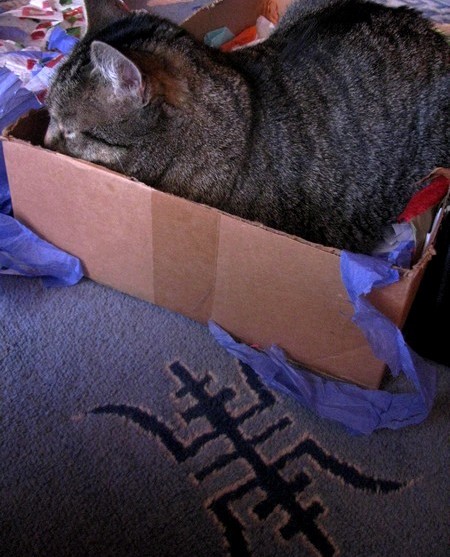
And so I had walked back to my office carrying, in one hand a hamster cage, cedar shavings and hamster food, and in the other a hamster in a cardboard box. Then I asked a guy at work to please transfer the furry little cherub from box to cage because a) I couldn’t imagine touching it myself, and b) the cherub was rapidly gnawing its way through the cardboard.

The guy’s name was Fred and now so was the hamster’s.

It might have been a reasonable enough series of events were it not for the storm. Suddenly the idea of standing in the but-it’s-a-dry-cold, waiting for a bus that might be hours away, wasn’t on… not with a hamster named Fred in an open-concept cage. I called for a taxi and was told the wait would be at least two hours. Undaunted, I did what anyone in this situation might do—I walked over to the Four Seasons Hotel [Fred’s cage wrapped inside my coat] with the genius plan of hopping into one of the many cabs queued up outside the front doors.

Except there was no queue.

Wait time: hours.

Well, the next logical step is obvious. I took solace in the hotel lounge… Fred on one chair, me on the other. A glass of wine between us. No need to panic. [Animals can sense fear.] We’d simply wait until a cab arrived. In the meantime I ordered something to eat, offered my companion some lettuce, and was grateful no one enforced the No Rodent Rule, [which I’m assuming is one of those things that gets waived during acts of god].

We eventually made it home and Fred seemed content enough with his new digs.

The story becomes considerably duller from here on out, mostly involving a wheel on which he ran several times the circumference of the earth.

I’ll spare you the scampering, squeaking, cedar scented details, other than to say I did, eventually, touch him but never loved the feel of his squirmy rodent-ness.

My tiny-toed flatmate lived to a respectable age and rests in a backyard on the south side.
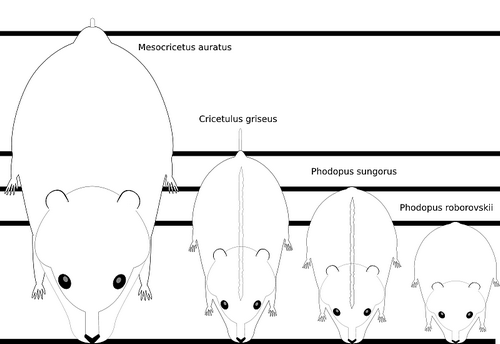
800px-Hamster_-_size_svg

fifth, sixth, seventh, eighth, ninth, tenth, eleventh and twelfth gifts of the season

5.  Discovering that dinner at my nephew’s would not be a turducken as he’d threatened, but free-standing birds along with perogies, couscous and snuffing [stuffing to the rest of the world]. Preceded and followed by impromptu salsa dancing.

6.  The way Elizabeth Simcoe led me to the origins of the word spinster. 
A noble word!

7.  Learning that unicorns are real. [Seems they’ve been heard by certain people of short stature who know about these things. They sound like reindeer.]
IMG_4979

8.  Preparing the annual package of food and clothing that’s then left on a dark and deserted and slightly rundown street with a note reading Merry xmas to whoever finds this. The two best parts: picking out the stuff that goes into it, and wondering about the moment it’s found.

9.  The doves. They’d been gone from the backyard for several seasons but earlier this year, after our little tortoiseshell girl died, they returned the very next day and have stayed. And in the most wonderful way this doesn’t feel insignificant.

10. Lunch with a friend. Fries, calamari, kale salad, a glass of chilled Canadian riesling… but mostly the part that had nothing to do with food or wine.
port

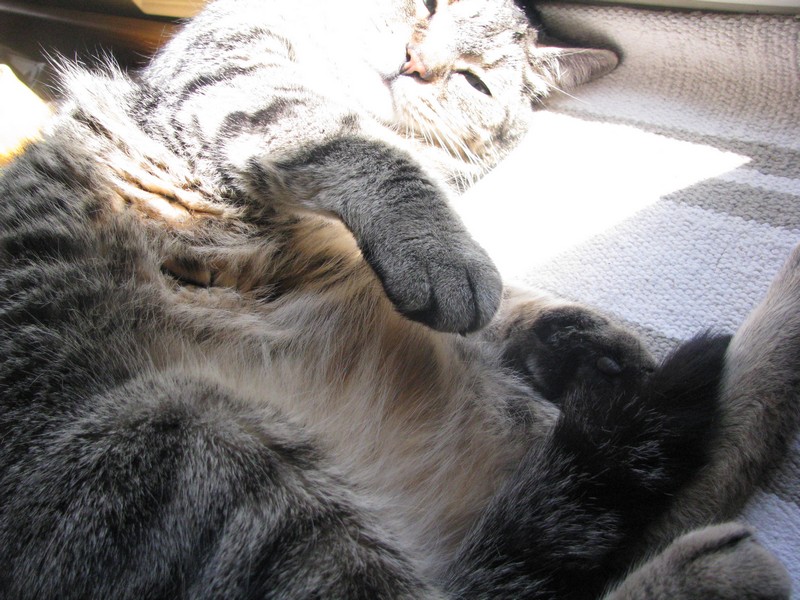
11. Home. Breath. Arms. Legs. The sound of a furball purring. You know, the good stuff.
IMG_7753

12. A walk to buy lemons and seeing that the hockey net from last year has returned. I don’t know who sets this up but, like a weird Inukshuk, it tells me whoever it is, is still about. I’m glad they’re well.
IMG_5149IMG_5146

***
The first four gifts are here.

impoverished spinsters may apply

“According to the usual pattern, she was educated at home with a series of governesses, and a weekly parade of drawing and dancing masters. Boarding schools, although increasingly popular as the century waned, were considered not quite good enough for gentry, since they were now infiltrated by rich merchants’ daughters in pursuit of the social graces of their superiors. It was much more genteel to be educated at home. The curriculum included English literature, a little geography, a very little arithmetic, and a smattering of languages, particularly French. At least half the time, however, was devoted to ‘accomplishments’, which included lessons in painting, music, embroidery and deportment. ‘Accomplishments’ were considered essential bait with which to trap a husband. Young ladies, after all, were educated for matrimony; there were no careers open to them, although it was considered respectable for gently born but impoverished spinsters to turn their hand to governessing, or to novel-writing.”

~ from The Embroidered Tent: Five Gentlewomen in Early Canada, by Marian Fowler (Anansi, 1982)

~

Am loving this book. Have read only the section on Elizabeth Simcoe so far, who I was prepared to label an entitled heiress [which of course she was] and dislike her for that reason. Turns out that despite her not so endearing trait of having zero compassion for underlings, or pretty much anyone of ‘lower class’, she was completely and utterly enchanted by the Canadian wilderness and heartbroken when her boring, whinging and militaristic husband John, decided to return to England. Her marriage was pretty loveless but for the [scads of] children [though children at that level of society were no trouble once ‘produced’ as they were farmed out to wet-nurses and nannies and had only a daily appointment with mother] and there’s a suggestion that she either had an affair, or thought about it a fair bit, with a much more upbeat and outdoorsy chap who lived on the shores of Lake Erie.

She was, it seems, a woman once the epitome of British upper class sensibility, raised to be ‘proper’, who discovered the joy of wading barefoot through a stream, who was never happier than when her husband went on extended sojourns, who learned to drive a wagon on her own over rough roads and who was only too happy to give up the daily round of social engagements and fancy dress balls she once enjoyed in order to watch eagles soar, seasons change, to paint fearlessly on the edge of Niagara Falls as her tight, precise watercolours changed to a wilder and freer style. She could have lived anywhere in Upper Canada but chose to build a home, ‘Castle Frank’, near the Don River, in a spot that, at the time, was no where near ‘civilization’. And then she obligingly gave it all up to return [at her husband’s insistence] to ‘society’ back in the U.K. where she ‘did her duty’ but apparently never completely embraced that world again…

Some of her paintings are in the British Museum, others, in the Province of Ontario Archives.
IMG_4942

Read this for origins on the word spinster.

yes, deer… tea


So I’m at a place. A place where I have just ordered a cup of tea. Not a coffee shop but a café-ish, snack-ish place in a high end facility of high-end art.

Wait. Let me start again. I have NOT ordered a cup of tea. Not quite yet. There’s a couple ahead of me who have ordered an Americano and a latte and the ‘beverage maker’ is tending to said order with an inordinate amount of flourish, twirling and dramatic gesture. It’s a production, a real bean-fueled drama, complete with intensity of face, a body one with the urns, flicking this way then flicking that. The only sound is the whooshing of steam. Whooooosh. We, the audience, are silent, some of us possibly in awe.

The whole thing seems a titch overblown but then I’m not a coffee drinker.
I stifle my inclination toward cranky cynicism at this point and consider the value, the ‘art’, of preparation instead…

The whole thing takes time.

Finally the coffees are served and the Americano and latte couple leave. It’s my turn. I step up to the counter.

“I’d like a cup of tea please.”

[cue the crickets]

The visual is this: picture a deer in the headlights. This artistse of foam and froth just stares blankly, no words, and then…

“Tea??” he asks in a tone that suggests concern, like maybe I’m making a rash decision.

“Yes,” I confirm.

He takes a cup and sticks it under a tap labelled ‘hot water’, drops in a teabag, shoves it in my general direction. “There you go.”

I laugh—part amusement, part delirium from having stood in line this long—and say I was hoping for a bit more ‘art’, and he, all seriousness and java wisdom says: “Nope, tea’s real simple.”

Real simple indeed.

It occurs to me that it would be pearls before swine to enlighten him… I make a mental note instead that next time I’m in the snack place of the high-end facility of high-end art, I’ll do us all a favour and just have a V-8.
622PX-~1

the first, second, third and fourth gifts of the season


The first gift was finding my old lumber jacket in the trunk of my car, in my Survival Box, which also included a flashlight that didn’t work and inedible chocolate.

IMG_4864The second was doing the debit machine at the grocery store without my glasses and when it said did I want cash back I pressed ‘Yes’ by mistake. I swore and the cashier said “Everything alright?” I said it was and happily received $20. I felt rich.

#3 was receiving a xmas card from a friend I worked with almost 40 years ago and haven’t seen since. It occurred to me that it’s a small miracle we’ve managed to keep in touch through all our moves. We’ve never talked on the phone, or exchanged email addresses. The only time we’re in touch is December, with whatever words can fit on the inside of a card… no white space.

The fourth was a passage recently stumbled over in Douglas Coupland’s 2004 Souvenir of Canada 2. The original is also a joy. As is City of Glass.
My favourite kind of reading: words about the ordinary laid down in such a way that makes you realize nothing is ordinary…

This is from a piece called ‘Zzzzzzzzzz…. The Sleepy Little Dominion’, essentially a love letter to Canada. It begins with the memory of hatching Canada goose eggs in a Johnny Walker box with his brother.

“When [they] hop out of their eggs, they’re turbocharged little bundles of fluff-packed fun… goslings are alert, affectionate, trusting, curious, loyal and entertaining—the exact characteristics we also treasure in our human friends. It was pure delight to watch them tumble and peep daily across our lawn, pond, patio and (J-Cloths in hand) kitchen floor. Because of their innocence, everything was permitted.”

They become part of the family, snuggling for naps with humans and family dog alike.

“By August, though, there was no denying that [they] were now geese, and the time had come for them to fledge… As we had no rules to follow, we simply corralled them … at the top of the cul-de-sac and ran down the hill flapping our arms—and they followed us.”

He goes on to describe watching the first moment of their flight and even though they immediately return to the yard, “you could sense the wildness leaking into their souls.”

Eventually the birds do leave and settle, temporarily, at a nearby lake and when Coupland and his brother call them, they still respond, and even return to the house a few times.

“But then came the next year, early spring. The geese would come home just once. They would land on the roof, always in the morning, and they would honk as if the world depended on it. In robes and T-shirts, we’d run out onto the lawn to look at them there on the roof’s apex. Once they’d seen us, there was a brief moment when it wasn’t humans and geese, but simply a group of friends happy to be together and alive.

“Then off they flew. Just like that. They’d done their duty, and now they vanished into the wild. I’ve spent my life trying to articulate just what that specific wild was they returned to, for that wild is Canada, and when I think of this country, I think of where the geese go when they leave home.”

1553650433

***
Gifts five to twelve are here.

(at) eleven with susan toy: island in the clouds

 
When I met Susan Toy through the Humber School for Writers online program some years ago, the first thing I learned about her was that she was obsessed with food and books. I’ve since learned that cats and coffee are a close third. [They may well be first…]

The other quality that made her stand out was a need/desire/talent for sharing information. I used to call her our ‘clipping service’. [For readers of a younger vintage, I’ll clarify: clipping service = google alerts with scissors and newsprint.]

We connected for all of the above reasons but also because she lived on an island in the Caribbean. And so had I for a short while. We traded some ex-pat joys and commiserations in between commiserations about our works in progress.

Her WIP eventually became Island in the Clouds, a murder mystery set on the island of Bequia, which Susan has called home for close to twenty years. It begins as all island mysteries should: with a dead body in the pool playing havoc with the pH balance. Toy writes with tongue-firmly-in-cheek, a pull no punches style that shows island life from an ex-pat perspective not afraid to laugh at itself while wringing its hands at the tribulations of island bureaucracy, customs and general shenanigans. The sounds, scents and sights of island life are always just there, not too far in the background. Ice-clinking is big here…

13456503Her protagonist, like so many ex-pats, is running away from a bad deal back home, but no one asks questions on Bequia; this is part of its charm. Days are made up of food and drink and gossip and oh yeah!  the need to make a living. But don’t be fooled by the palm trees and laissez faire vibe, there’s also a lot of nastiness going on and duplicitous friendships and, like any small town, everyone knows everyone else’s business, even if they don’t always talk about it. A lot of smiling through one’s teeth. Add island politics—and this is no small thing—and the result: when a murder is committed, the question is not so much who did it  but who’s willing to admit who did it. Everyone’s scratching someone else’s back.

If you’ve ever lived on an island, you’ll smile and nod your way through the familiar. If you haven’t, but think you’d like to, it’s a good eye-opener. And if you read it while on an island, even better. The mystery element is but a bonus in my view. For me, it’s all about the place.

As always, in my (at) eleven series, the Q&A is followed by a menu chosen by me of a meal the book most inspires. Or, put another way, the perfect nosh while reading, because food and books just go together…

“Eating is our earliest metaphor, preceding our consciousness of gender difference, race, nationality, and language. We eat before we talk.” ~Margaret Atwood from The Can Lit Food Book

And now, may I introduce… Susan Toy, island reporter, on-line pal and oh-so-generous clipping service…

~

1.   What literary character did you most identify with as a child, or want to become?

ST—It’s a toss-up between Harry the Dirty Dog and Curious George.

2.   At age fifteen, what were you reading?

ST—Everything I could get my hands on from the library about Down Syndrome, because the daughter of a family friend who played with my younger sister and me when they came to visit had me intrigued. I thought I might like to work with Down Syndrome children when I grew up. Then, that summer at the cottage, I read through an enormous stack of Harlequin romances with a babysitter the same age as me who had been hired to look after the neighbour’s children. I know … weird. I didn’t really discover real literature until after that year.

3.   Do you find there are recurring themes in your work, generally, that surprise you?

ST—The main issue that comes up, and this is mainly in my short stories, is of being trapped in a situation and not being able to get out of it. Reconciliation is another.

4.   What is a favourite passage from any book, and why…

ST—Finally! Someone has asked me this question, and now I can tell everyone about this wonderful passage from Ivan Doig’s Dancing at the Rascal Fair:

“There in the gap, Herbert whoaed the horses.

What had halted him, and us, was a change of earth as abrupt as waking in the snow had been.

Ahead was where the planet greatened.

To the west now, the entire horizon was a sky-marching procession of mountains, suddenly much nearer and clearer than they were before we entered our morning’s maze of tilted hills. Peaks, cliffs, canyons, cite anything high or mighty and there it was up on that rough west brink of the world. Mountains with snow summits, mountains with jagged blue-grey faces. Mountains that were free-standing and separate as blades from the hundred crags around them; mountains that went among other mountains as flat palisades of stone miles long, like guardian reefs amid wild waves. The Rocky Mountains, simply and rightly named. Their double magnitude here startled and stunned a person, at least this one—how deep into the sky their motionless tumult reached, how far these Rockies columned across the earth.”

This is one of the best descriptive passages I’ve ever read, because Doig put the exact words to my feelings the very first time I saw the Rocky Mountains, when I moved to Calgary in 1978. This passage still causes goosebumps.

5.   What is the writer’s role in society?

ST—I attended a seminar led by Aritha van Herk in which she said that the writer translates or interprets for the reader.  That’s the way I think of writers—we are translators and interpreters of experience.

6.   Island in the Clouds  begins with a wonderfully candid description of, and introduction to, the ‘character’ of contemporary Bequia via the book’s narrator. In this way, we meet the island before we meet our protagonist. How important was ‘place’ to you in writing this story? And the accuracy of place… versus a fictitious island, for example.

ST—Place was the most important aspect of this novel. It was suggested by early readers that the setting be fictitious, because I was perhaps a little too accurate—and honest—about the island. But I knew the greatest appeal of this story was that it was about Bequia, so I never considered telling the story any other way.

7.   Some elements of island life, especially local politics, are not always shown in the best light. Islands are small places… how was the book received by locals?

ST—I’ve received mixed reviews, but mainly positive comments, mostly from foreign tourists and ex-pats who say that I’ve nailed the place and what goes on here. I believe I portrayed the general local population in a generally favourable light. I know a few (very few) local people have read the book, but no one has criticized me for what I’ve written. I was told that one foreigner thought I had been too harsh in my depiction of the police – until she was robbed and had to deal with them herself. Then she said I had not been harsh enough. (I gave a signed copy to one of the gardeners who works for Dennis, and he said, “Sue, I will cherish this for the rest of my life!” That choked me up!)

8.   What brought you to Bequia?

ST—We first came to Bequia as tourists in 1989 after a customer at the Calgary bookstore where I was working suggested it as a possibly vacation spot. We were hooked from that very first time, kept coming back every year, and before we knew it we bought land, built a house, and moved here permanently in 1996.

9.   Any challenges/differences writing a male protagonist?

ST—No. Geoff’s was the first voice that came to me when I began writing this novel and that seemed quite natural for the story I wanted to tell. The second novel in the series is about a woman, and I really don’t notice that much difference writing in her voice from writing in the voice of a man in the first novel.

10.  Your background is almost entirely industry-related so you were not unfamiliar with the process of editing, publishing and marketing. You also developed your own imprint and chose the self pub route.  I’d like to think you knew the ropes so well there were no surprises…[ but I’m guessing there were surprises]. Would you share a few?

ST—No real surprises as far as publishing, editing and marketing were concerned. In fact, I discovered that I enjoyed the publishing end of the business so much that I set up a new imprint, IslandShorts, and am now ePublishing short fiction, poetry and novellas by other authors. I will likely only ePublish from now on, with a limited edition print run to pre-sell, so I won’t be stuck with unsold stock, as I still am with the first novel.

I have to say though that the biggest surprise of all was how little support I received from colleagues in the business. NO ONE came forward to say, Here, let me help you promote and sell your book like you’ve done for me. All the promotion ideas were my own; all the attempts to get publicity were my own; trying to get distribution in bookstores and setting up events were as a result of my own efforts. That was extremely disappointing, especially as I had been promoting and assisting so many other authors all along (and still do), and numbered many authors, booksellers and librarians among my personal friends. The reason I didn’t receive equal support was clear to me in hindsight—I’d gone the self-publishing route, and there’s still a lot of prejudice about self-published books and their quality … even though everyone knew I’d done a very professional job on this book. Other self-published authors I met along the way have supported me, but not the traditionally published authors. So that was the biggest surprise of all, and I’ve kept quiet about it until now, but since you’ve asked … A big disappointment for me.

11. Choices:

Vanilla or Chocolate? Chocolate

Ocean or lake? Both. I’m a swimmer.

Atwood or Munro? Ummm … Neither. Joan Barfoot

Pen or keyboard? Keyboard

Poetry or song? Song, because I have a musical background, but I do prefer the poet songwriters, like Van Morrison, Bob Dylan, Paul Simon

Mango or papaya? Banana

eBook or Paper? eBook

andre-kertesz_the_fork_1928_500px

Matilda’s Suggested Menu for Island in the Clouds:

Turtle soup, goat stew, tropical fruit salad and anything in a glass with ice.

Lots of ice.

And don’t be shy with the anything.

~

Susan M. Toy has been a bookseller, award-winning publishers’ sales rep, author impresario and publishing consultant. She has recently begun ePublishing short fiction, long-form creative author picnonfiction, and poetry under the imprint IslandShorts. Her eBook, That Last Summer, a novella set in Ontario cottage country in 1965, has just been released. She divides her time between Canada and the Caribbean island of Bequia and blogs at Island Editions.

~