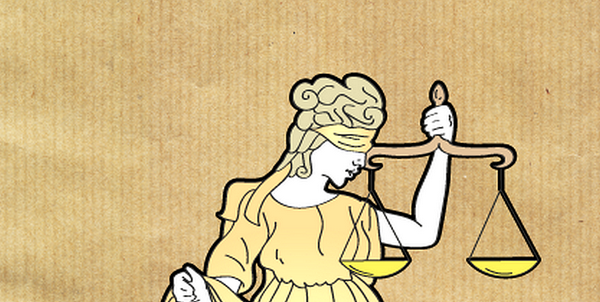
so the other day i had canada’s justice system explained to me


Still slightly gobsmacked after a conversation about our justice system with someone who knows how these things work, who is part of the system at a very high level (let’s call them Hank), during which conversation I was informed that the system is, in fact, designed to protect the accused… the onus being on the accuser to prove that a certain ‘thing’ occurred as alleged.

Okay…

I was also informed by Hank that, depending on which court the case is tried in (in this province that would be either the Superior Court of Justice or the Ontario Court of Justice), it’s up to the accused  as to whether or not they would *like* a jury. It’s also up to the accused as to whether or not they would *like* to take the stand. Or, I’m assuming, whether or not they’d like extra frothy froth on their latte.

The accuser (aka the alleged victim) has no such choice. Hmmm. So while they are repeatedly interrogated and grilled, dirty laundry hung out for all to see, the accused (aka the person who allegedly choked and punched them) is not asked a single question…. Have I got this right?

Hank nods. Yes indeedy, he says, repeating that it’s in order to protect the accused.  He goes on to say what a grand system it is too and if I’m ever accused of anything I’ll be darned pleased about it.

I’m sure I would be, I say, but something just doesn’t sit right. For example, it seems a tad unfair to the accuser (so often women it’s worth noting). Especially if the grilling gets into whacking territory.

Hank doesn’t comment on whacking. He winces instead. Then he explains (rather haughtily I think) that if we didn’t assume innocence for the accused until proven guilty, we’d be like Russia.

Or France, I add.

More wincing. (I’m pretty sure Hank is partial to French wine, croissants and the light in Provence.)

Or France, I say again…

Yes, yes. Or France. He admits that France (along with a number of other countries) subscribe to what is known as an Inquisitorial System, unlike Canada, which takes its model from the British Adversarial System, a system that allows the alleged aggressor to have frothy froth if they choose while the alleged choking victim who did some childish and stupid things in her past can just please sit there and explain why she can’t remember every detail of every day for the past fifteen years.

It’s called lying!  Hank says. He believes accusers whose can remember the choking but not the bikini are nothing but liars!!  He seems to enjoy the word,  insinuating the lying happens a lot. After all, he says, what’s to stop a woman saying whatever she wants?

Yeah, women get all the breaks, I say.

He doesn’t respond. And when I want to talk about the way trauma plays with memory Hank does not welcome this line of chat.

The worst thing he can think of happening, he tells me suddenly, is that an innocent person be found guilty. He says this with tremendous passion.

What about a guilty person who is found innocent? I ask. The question hangs in the air.

Finally, I mention the quite dandy idea of “a subset of judges with special training in the psychological dynamics of sexual assault” and while Hank agrees that it may not be an entirely bad thing he also says that it’s not entirely necessary. He also says Heather Mallick is crazy.

I disagree. Her piece last week is right on the money.

I ask Hank if it were his daughter that was in the accuser’s position, that is, a daughter who claims she was beaten and choked by a ‘date’, would he advise her to take the case to court?

He says he would not advise any such thing.

I regret not thinking at the time to ask him if it were his son who was in the accuser’s position, at the hands of, say a superior at work, a son who had been choked, threatened, punched. Would he advise his son to speak up or just put his tail between his legs and let it pass, keep going to work like a good boy. And if, after a dozen years when his son couldn’t keep it to himself any longer and spoke up for justice… but couldn’t remember every detail… couldn’t remember that, oh yeah, eleven years ago he accepted that invite to the boss’s backyard BBQ and even sent a thank you note…AFTER the (alleged) choking/punching incident… would you call your son a liar, Hank?

Would you??

And if you’d advise your son differently than your daughter… would you mind telling me why?

I’m curious. Plus, it’s not a small point. But even if the advice you were to give both your son and your daughter was the same, i.e. to let the accused (aka possibly known abusive person) go free and possibly do it again, and again… and again…  then would you mind telling me again about justice?

Because I think I missed something.

And you, Hank, you know about these things.

Oh, and, if anyone’s asking, I’ll have a little extra froth.

No one’s asking? Fine. Never mind….
scales


savoury sentences from several sources, part 3


“I imagined her at her closet, deciding what you’d wear to go learn something about your child that just might break your heart.”

from We Are All Completely Beside Ourselves,  by Karen Joy Fowler


“She said it with just a hint of bitterness in her voice, enough that I could taste it, like a squeeze of lemon in a glass of milk.”

— from ‘Serendipity’ in the collection Flesh & Blood,  by Michael Crummey


“She had no children and beautiful shoes in a range of colours, and each pair had its own matching bag.”

— from ‘The Green Road’,  by Anne Enright


“It surprises me that he could have seen any delight in Toby Whittaker, an exhausted-looking young man who, after shaking hands, said not a word from first to last, but whose silence emitted a faint air of disaster and gin.”

— from ‘A Serious Widow’,  by Constance Beresford-Howe


“Recently, everything around me felt familiar yet amiss, like the first time you ride in the back seat of your own car.”

— from  Let the Northern Lights Erase your Name,  by Vendela Vida


“The smoke in the dark looked like a dove that whispered the future to saints in paintings.”

— from Lullabies for Little Criminals,  by Heather O’Neill


“Home was something that you could fit into a suitcase and move in a taxi for ten dollars.”

— from Lullabies for Little Criminals,  by Heather O’Neill


“The mixture of cafe au lait and impatience was producing an exquisite vibration.”

— from Still Life,  by Louise Penny


“The problem is he married a Pole. Turns out she doesn’t know her arse from her elbow. Doesn’t even keep Keen’s mustard on hand.”

— from Are you Ready to be Lucky?,  by Rosemary Nixon


“That was the trouble with grown-ups: they always wanted to be the centre of attention, with their battering rams of food, and their sleep routines and their obsession with making you learn what they knew and forget what they had forgotten.”

— from Mother’s Milk,  by Edward St. Aubyn


“They were not merely sentences but compressed moments that burst when you read them.”

— from the essay, ‘Thank you, Esther Forbes’, by George Saunders

♦♦♦
 

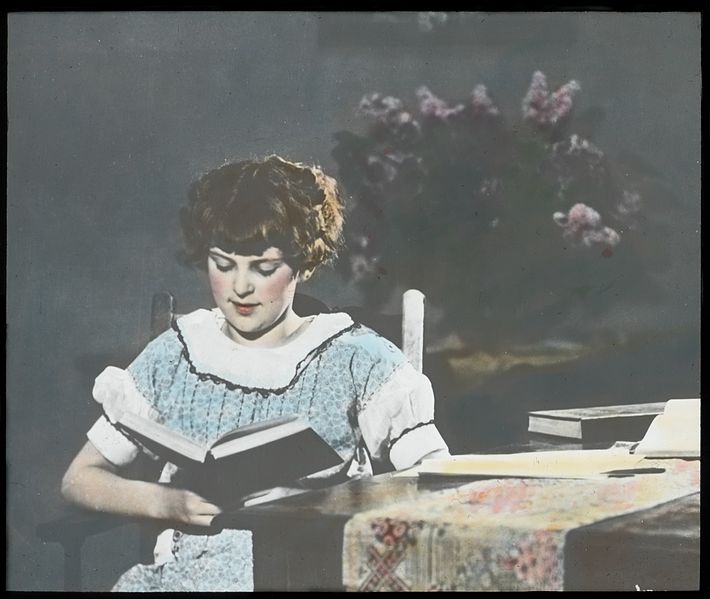
More sentences here 710px-Woman_reading,_1930s

and here.


reasons and benefits of aimless wandering


“Anything one does every day is important and imposing and anywhere one lives is interesting and beautiful.” —Gertrude Stein DSC04920“To see things in their true proportion, to escape the magnifying influence of a morbid imagination, should be one of the chief aims of life.” — William Edward Hartpole Lecky, The Map of Life (1899)

DSC04910

“The constant remaking of order out of chaos is what life is all about, even in the simplest domestic chores such as clearing the table and washing the dishes after a meal…but when it comes to the inner world, the world of feeling and thinking, many people leave the dishes unwashed for weeks so no wonder they feel ill and exhausted.” — May Sarton, Recovering DSC04916“I lived in solitude in the country and noticed how the monotony of a quiet life stimulates the mind.” — EinsteinDSC04921

“A fool sees not the same tree that a wise man sees.” — William Blake
DSC04907
“The secret of contentment is knowing how to enjoy what you have, and to be able to lose all desire for things beyond your reach.” — Yutang Lin
DSC04917
“One of the secrets of a happy life is continuous small treats.” — Iris Murdoch DSC04912“The future enters into us, in order to transform itself in us, long before it happens.“ — Rainer Maria Rilke

DSC04911
“There is more to life than increasing its speed.” — Gandhi
DSC04914“I once thought it was not worth sitting down for a time as short as [ten minutes]; now I know differently and, if I have ten minutes, I use them, even if they bring only two lines, and it keeps the book alive.” —Rumer Godden, A House with Four Rooms
DSC04905

“Nothing is ever the same as they said it was. It’s what I’ve never seen before that I recognize.” — Diane Arbuscarin

“Do not hurry; do not rest.” — Goethe

“Never hurry, never worry.” — Charlotte’s Web

Now go eat some chocolate. (see Iris Murdoch instruction above)


this is not a review: ‘the adventures of miss petitfour’, by anne michaels

 
The Adventures of Miss Petitfour  does pretty much what I like a book to do, it makes me hungry for cake and tea and cheese and adventures with a tablecloth; for another cat or two. (She has sixteen and no complaints at her end.) In fact the cats play a huge role in this gorgeous collection of sweet but not in any way saccharine stories. On the contrary, there’s much authorly humour, of the kind that allow two levels of reading: adult and child. Both will be amused but at different things.

We begin with an introduction to the lovely Miss Petitfour by way of an illustration “…just to be sure you recognize her”.  (And is it just me or does she look a little like the also-clever-but-in-a-very-different-line-of-work, Tabatha Southey?) By the way, Emma Block’s colour illustrations throughout are a pleasure to contemplate all on their own and, in fact, the whole book feels a little like a kind of petitfour… beautifully made with tea and pastry endpapers, a fixed ribbon marker, the kind of smooth semi-gloss pages your hands happily glide over and over and the whole thing just the right size for holding comfortably with one hand, leaving the other available for tea drinking, cake noshing or petting of resident kitty. Because after reading this you may have to get at least one.

The opening story takes Miss P. and her sixteen cats on an outing to find marmalade. This naturally includes a visit to a bookshop, which is cleverly divided, as all book shops should be, into two sides, marked ‘ho-hum’, and ‘hum’… that is, one side for people who prefer “books where nothing ever happens”  and the other for people who feel the need to “visit another planet, or to run away to sea to meet pirates, or to fall down holes, or to be blasted by a volcano, and that sort of thing.”

Wind plays a role, as wind ought. (Miss P. has a good command of air currents generally, a characteristic missing in most protagonists.)“It is often the case that the wind is not blowing in the right direction. This is just another petifour_hitiresome fact of life, like the fact that your feet grow too big for your favorite shoes, or that your favorite crayon gets shorter and shorter the more you use it.”

In the story ‘Birthday Cheddar’, my personal favourite, we go in search of Minky’s gift (she’s a “snow-pawed cat,” who fancies cheese). Correction, not merely fancies… “… she adored cheese, flirted with it, danced with it and brought it lovely presents, like pebbles from the garden, before devouring it with her little Minky teeth.”  There follows a description of how Parmesan affects the leaves of a salad and how, on cheese toast, the “cheddar melted into every little crevice and crater…”  And that’s just for starters. The whole passage is delicious. And then, because we aren’t happy/hungry enough, Michaels lists ten or so varieties of cheese. Minky of course has a cheese calendar that she sleeps with on which “Each month there was a big picture of a different kind of cheese in a mouthwatering pose: blue cheese cavorting with pears, cheddar laughing with apples, Gruyere lounging with grapes, Edam joking with parsley.” (Oh how I covet this calendar!)

Lessons on the art of storytelling are a brilliant thread throughout in highlighted, upper-case or bold type. Michaels points to words and phrases such as ‘unbelievably’, ‘by great good fortune’ and ‘by chance’, etc., revealing them as the devices they are to change the course of the story. And then she uses them to do just that. And then she might digress, telling us (in parenthesis) that this is a digression. It’s all so beautifully, tongue-in-cheekily done, like the ways of a favourite eccentric teacher.

So, yes, this is one seriously charming, creative and really quite perfect kid book (recently and somewhat reluctantly passed on to my niece) that any adult will easily love. Impossible to meet Miss Petifour, to travel with her in this tablecloth riding, tea drinking, food-filled land where you are encouraged (by Miss Petitfour herself) to hear only the parts of sentences you like the sound of… and not come away feeling just a bit lighter for it.

“Some adventures are so small, you hardly know they’ve happened. Like the adventure of sharpening your pencil to a perfect point, just before it breaks and that little bit gets stuck in the sharpener.”

One flaw, and that’s the unfortunate and (always) annoying use of U.S. spelling. Flavor. Color. Etc. Boo to that.

Three thumbs up to everything else.