five frivolous minutes over cheese al fresco, with ‘mo’ — age 65


I’ve known ‘mo’ since the 80’s when we were both working in various ends of marketing at a big ugly corporation. More importantly, we used to have lunch together. She with the perfectly made sandwiches carried in properly sized Tupperware made for exactly that purpose; beautifully wrapped and sliced fruit; an exquisite wedge of cheese. My lunch, on the other hand, amounted to a few slices of salami and unbuttered rye bread crammed into an old sour cream container as I flew out the door in the morning… to be unfolded and assembled later. Sometimes a going black banana. She found all this amusing.

I lived in Toronto then, the magnificent centre of the universe, and she didn’t, which I found both odd and amusing. She lived in a town, you see. A town with county carnivals and music in the park on Wednesday evenings. Bring a chair and bug spray, that kind of thing. Or so I gathered from the stories she told. I’d never been there. I lived in Toronto, remember… who needs to go anywhere else?

On Monday mornings I’d ask about village parades and swatting flies on the porch. I was young and cheeky. (And—because it can never be stated often enough—I lived in Toronto.) Eventually, we went our separate ways, she to work in publishing and me, I moved around a lot… jobs, apartments, cities, continents. But we never lost touch. And this was well before the internets made keeping in touch easy as pie.

Eventually the small town got too big for ‘mo’ and she moved to an even smaller place. And me, well, as it turned out, I eventually moved to the very same hicksville town ‘mo’ used to live in, the one with the flies and the porches and the parades.

Tell me that’s not amusing.

—A few things I know about ‘mo’: she doesn’t like to go barefoot, she’s been a vegetarian since childhood, and I’m pretty sure she still makes a precisely sliced lunch.

**

How long could you go without talking? All day.

Do you prefer silence or noise? Silence.

How many pairs of shoes do you own? Five.

If you won the lottery? Help those who need it, but without adversely changing their lives.

One law you’d make? Disrespect would be illegal.

Unusual talent? Pitman Shorthand. (which is properly done with a pencil, not a pen)

What do you like to cook? I don’t.

Have you or would you ever bungee jump? No. And no.

What’s the most dare-devilish thing you’ve done? Crossing a rope bridge in British Columbia. No idea why I did it. And the worst part was I had to come back the same way.

Do you like surprise parties, practical jokes? Somewhat.

Favourite time of day? Early morning. No. Mid-afternoon.

What tree would you be? A weeping willow; they’re quiet and I love those swaying branches.

Best present ever received? A brand new Remington Rand typewriter when I was sixteen.

What do you like on your toast? Butter.

The last thing you drew a picture of? I doodle all the time but I don’t draw. So, a doodle.

Last thing written in ink? Shopping list.

Favourite childhood meal? Egg and chips.

What [past] age is your favourite? My twenties.

Would you go back if you could? Yes.

Best invention? The wheel.

Describe your childhood bedroom. It was small, a box room they were called, with a bed against the wall. My dad made a side cupboard for toys and a corner cupboard. I begged him for a drawer in the corner cupboard, which I realize now would have been tricky to make, but he did it.

Describe your childhood kitchen.  It had a bay window; the sink and small work space overlooked the large garden. There was a tiled window ledge all around the inside of the bay window. There sat the soap dish, metal and in two parts, the water from the soap would drain into the bottom half. I loved giving it a good clean!

We had fitted cupboards–Dad made those. He also installed extra work surfaces where he could. The stove was in a corner all on its own, bit of a pain really because there wasn’t a work surface nearby.

The back door off the kitchen led to the side of the house, it was always open when cooking cabbage or chips,  and made the house very cold. The pantry led off the kitchen and had a cold stone, Dad fitted a lovely glass door on it.

There was a little barrel with a lid tucked away into a corner, I loved that as a child, sitting on it, or putting things inside.

We had a washing machine.

I don’t remember the colour of the walls, but the floor was a rusty mottled linoleum.

The cookies were kept in a biscuit barrel on the bay window ledge in the living/dining room. All the windows in our house were bay. Made for much bigger feeling rooms.

Afraid of spiders? Not afraid, but don’t like them. Wouldn’t kill one though.

Phobias? Heights.

Least favourite teacher and why? Mrs. Jenshaw, she taught English and was very strict and I was scared of her more than anything. As a teacher she was actually very good; I learned a lot from her.

Favourite children’s story? The Famous Five series, by Enid Blyton.

Ideal picnic ingredients? Soft rolls, egg salad, grapes, fresh fruit, potato chips, juice.

Is Barbie a negative role model? Yes.

Best thing about Canada? Standard of living.

Best thing about people in general? I’ve got no time for people, give me animals.

What flavour would you be? Cherry.

What colour? White.

What would you come back as? A cat.

Favourite saying: Give over!

DSC00545

—the frivolous five is a series of non-essential questions and answers

today…

I was going to Not Review a book today but then the guy that killed Eric Garner in Staten Island was not charged with killing him because, I suppose, he’s a policeman. And maybe because he’s white. And very possibly because Eric Garner isn’t.

The message is crystal clear: white policemen in America may kill whoever they damn well want, even if that person happens to be doing nothing more nefarious than selling untaxed cigarettes. And especially if they happen to be black. They may kill such persons by choking them on the street even while the dying person is informing them that they can’t breathe. I mean, he’s being killed right there on the street and what he does is inform the killer that he can’t breathe… as if, even in that moment he, Eric Garner, gave the policeman the benefit of the doubt that he, the policeman, would care to know that detail. It was a reasonable assumption… that if the policeman were aware that he was killing Eric Garner, he, the policeman would stop.

This is what I can’t breathe means.

It means Eric Garner was human and he made the mistake of thinking the policeman was too.

**

I can’t Not Review a book today when this comes on the heels of Michael Brown in Ferguson.

And the child that was shot for pointing a toy gun.

And. And.

Nor can I write about the beach or the moon or the sky or the amazing serendipity of life sometimes and the way so very much is beautiful, the way people can be beautiful. It’s all out there, it is… and mostly I’m drawn to finding it. It’s not that hard really. I think it’s important to share.

But today I’m thinking about injustice and hatred and the why of it all. Is there a why??  I’m thinking about the way it might feel to lose someone in this unspeakable way… the shock, sadness, frustration, fear, anger, despair, and how those emotions will add yet another ugly layer to society’s increasingly unattractive skin. I’m thinking why we allow the unattractiveness to grow, why it is we don’t improve, why we allow injustice, vote for it even. I’m thinking how tomorrow is the twenty fifth anniversary of the murder of fourteen women in Montreal and what we have learned in all that time… have we learned anything?

So, no, I can’t write about books today. Or even beauty…

Not today.
images


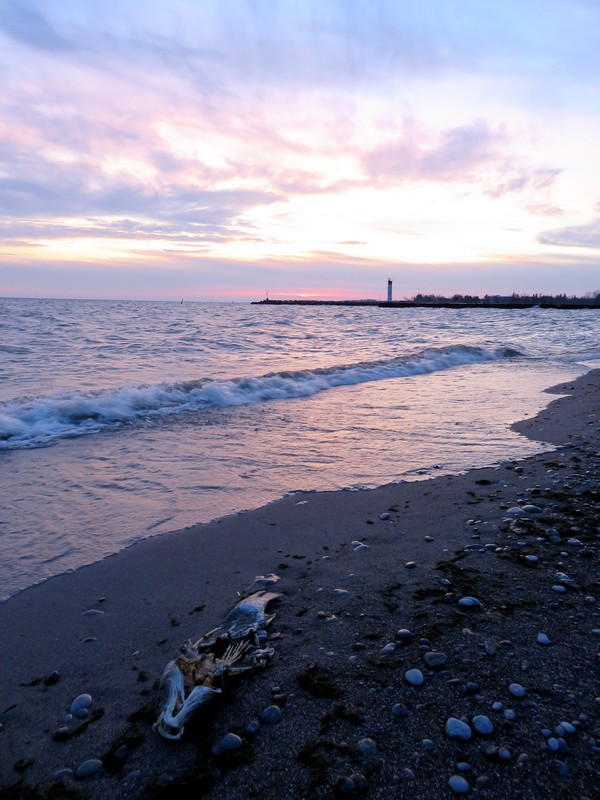
this sky at night, my own delight


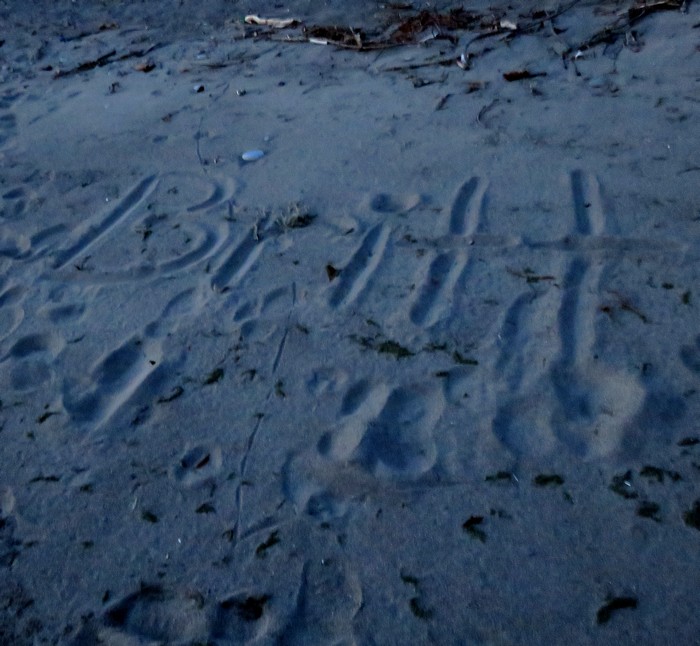
There is evidence of activity at the shoreline—

Someone has shuffled about in the sand, skipping stones maybe, or staring at the horizon, cloud formations, a sailboat…
IMG_0149
It’s almost as though someone else has been here.

But no. It feels too private, this place where I walk.

Except for the litter, the footprints, a name drawn with a stick, except for all that, surely I’m the only one ever to have been here.
IMG_0158 IMG_0159
Right now, that view, this red sky that delights me (possibly because I was a sailor in another life, a pirate according to a woman claiming to know such things; but I don’t like sailing, I explained. Ah, she said, that’s likely because I went down with my ship.)

—this sky

is mine.
IMG_0143IMG_0141IMG_0148IMG_0144
And no one—not pirates nor stone skippers—has ever seen it exactly like this.


you say salon, i say pass the cheese ball

So I had a salon. In my living room. Which may be redundant.

Let’s just call it Writers in My Residence.
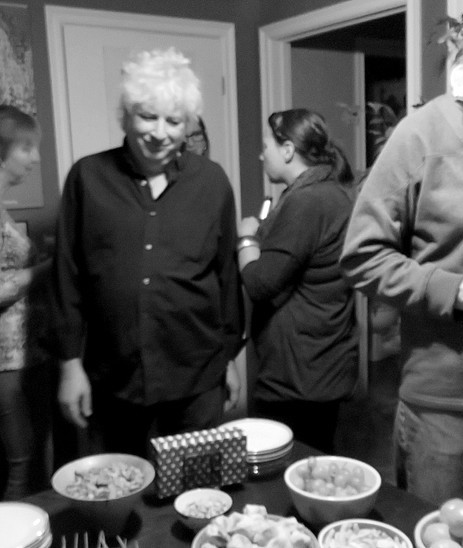
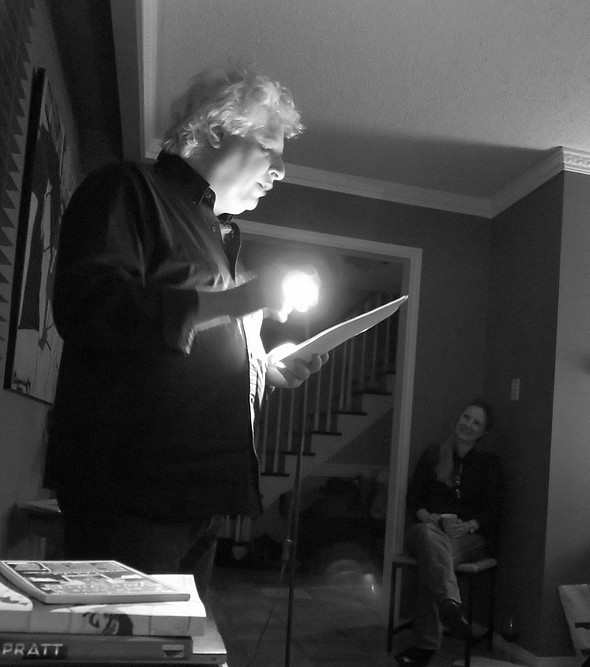
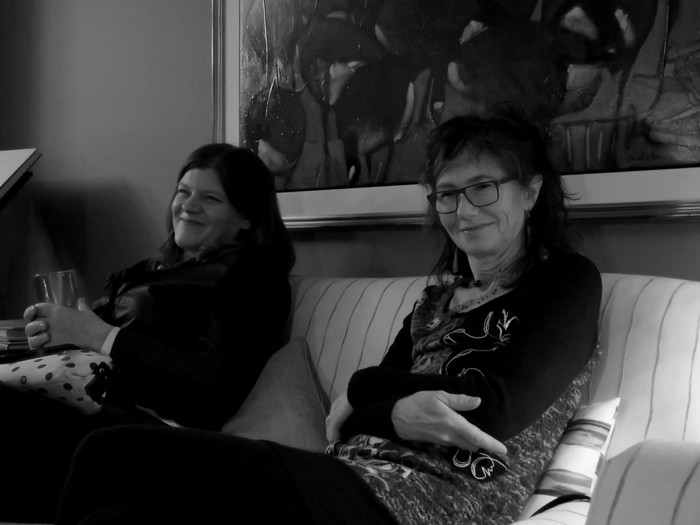
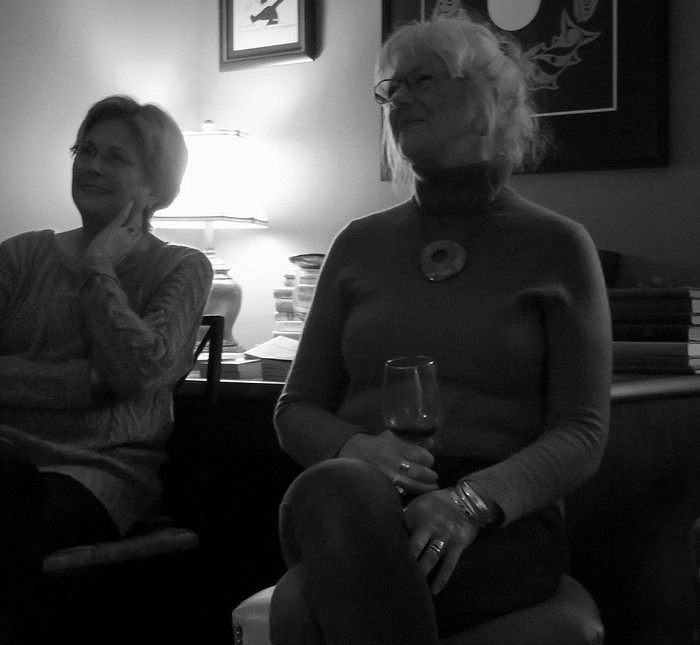
IMG_0102Bob Dylan came. He liked the samosas. IMG_0103I liked that I knew some people in six degrees of separation ways, but not really. It made for much to talk about. IMG_0104Sculptors and writers talking in the kitchen pleases me. IMG_0105Poets and painters talking in the front hall worries me. What are they plotting??? IMG_0106Here they are. Writers, artists of all stripes. Readers. Mostly readers. Word lovers. The best kinds of persons. Nestled in front of bright blue art by Rhonda Pearl.
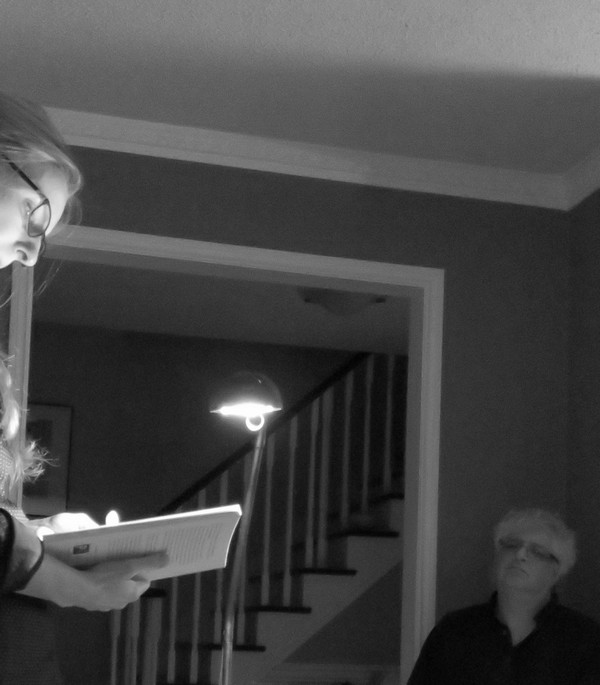
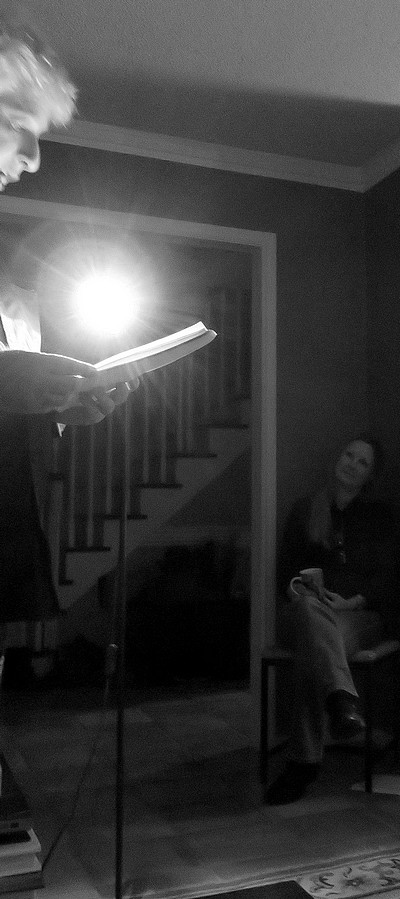
IMG_0109Reading and listening. IMG_0110One reading is about Anne Wilkinson, a little known modernist poet who is now being more known through The Porcupine’s Quill ‘Essential Poet’s’ series and the good work of Ingrid Ruthig, editor of the The Essential Anne Wilkinson. IMG_0116Another reading is new fiction by Stuart Ross, followed by poetry from his new book Our Days in Vaudeville (Mansfield Press). Here, the omnipotent poet holds in his hand an errant firefly that had been terrorizing the living room for months.IMG_0118 We laughed.
IMG_0119 We were enraptured. (Enrapturized?)
IMG_0120We had food and drink and indoor sunshine.

Such is the power of words in enclosed spaces.

Big thanks to a beautiful bunch of participants for this beautiful night.

<><><>

this morning, the smell of chrysanthymums

When they were still fresh, a month or two ago, my single pot of blooms took me directly to a wooden fence made by my dad from driftwood gathered at the beach. Planted alongside was a row of perennial chrysanths. Burgundy. Still the only shade I consider ‘real’ and their smell, decades later, is still about summer winding down, jackets, the grass feeling cooler, street lights coming on sooner.
DSC01598

This morning I notice how they’ve faded, they look more bronze than burgundy.

I lean down, inhale, expecting to be on that fence again but it’s a different smell, earthier, a pile of raked leaves from the pear tree (burgundy and bronze!) and some going brown. Leaves I’d raked myself, a few more every day, the pile growing until my dad said it was time to haul them away. (What did he do with them? Burn them? Bag them? Dig them into the garden?)

I only remember the raking and the leaping and the laying, starfish-like on top, staring up through a canopy of bare branches. I remember tossing handfuls in the air and the dewy wetness of the middle of the pile.

That’s the smell this morning. The middle of that sweet pile.
DSC01777


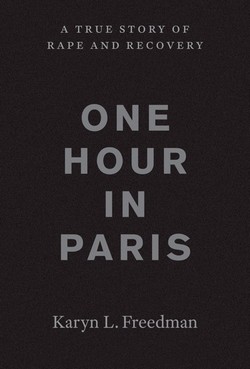
this is not a review: one hour in paris, by karyn l. freedman


Academic approaches to writing are never my favourite way to tell a story, but in the case of Karyn L. Freedman, Professor of Philosophy at the University of Guelph, it works. Indeed, she may be exactly the right person to have written this-book-that-needed-to-be-written. While it surely must have been tempting to veer too much in one direction or the other, in One Hour in Paris. Freedman has managed, for the most part, to balance facts and eye-opening statistics with what feels like heart on her sleeve honesty about the extreme emotions following a brutal event.

The book is about rape.

OneHourInParisCoverFinalBut that’s merely the grit, the sand in the shell that gets things going. The pearl that emerges is a story about trauma and how it can be experienced in as many ways as there are people experiencing it. Freedman’s analytical take on the subject works insofar as presenting a case for PTSD through her rape experience and showing us how society’s focus on the rape, or indeed any ‘incident of violence’, instead of the resulting trauma, diminishes the understanding of violence, undermines the victim and slows or even prevents healing.

In other words, we don’t tend to take these things seriously enough. Especially the lingering and messy aftermath of trauma. We give it an acronym, attach it vaguely to returning soldiers or first responders in newsworthy events. We sincerely hope they ‘get over it’, ‘get better’. But acronyms and hope don’t help. Trauma is hard enough to understand for those who are living with its effects without having to deal with the assumptions and judgements of those who have not experienced it, or who may have experienced it differently.

I’m not sure I would have been able to write that last paragraph before reading Freedman’s book. The way she explains the clinical aspects of trauma has given me a deeper and more practical understanding, not a more emotional one, and for that I’m grateful.

Freedman was raped in Paris on August 1st, 1990. The date is repeated throughout the book, to a degree that becomes slightly irritating, until one realizes that’s the point. She can no longer approach August 1st without remembering what happened. The date is embedded in her memory. She doesn’t need reminding. But reminders are there. Every year. And so by virtue of this repetition she shares with us the ‘irritation’ of not being able to forget something she can’t bear to think about.

She writes about the rape, what happened after, emotionally, professionally, how her father was instrumental in helping her case in ways that many other victims would never experience. For instance, the French government flew her back to Paris (from Winnipeg) at their expense in order to proceed with the case… a case which ultimately saw her compensated financially. While the benefit of such privilege tends to suggest that her trauma has been ‘resolved’, what it actually does is ask the question: what about the women that are raped and/or abused every day, citizens and visitors alike, for whom nothing is ever done, many of whom don’t even know who to tell or how to be heard or believed, much less be compensated and see the perpetrator sent to prison. It’s easy to start thinking that for women who receive this kind of privilege, it’s done. But Freedman is quick to point out that it’s not done. She knows she’s privileged, that this is not how it is for everyone. But all that is almost beside the point. The money, while substantial, is a token, the incarceration is merely fair. None of it is closure.

What’s needed is understanding, by society, a change in how we discuss issues of sexual violence against women, and how we understand the very real effects of trauma on the body, mind and spirit.

“… the sense of responsibility held by many rape survivors is at least partly driven by a dominant worldview regarding personal safety and harm. Although this picture is slowly changing, historically, at least in the West, girls have been taught from a young age that the world is basically a safe place and that so long as you are sufficiently careful and intelligent, you can protect yourself from any serious harm.

“Underscoring this narrative is the fact that in our entertainment-saturated media culture, the everday-ness of sexual violence against women is overlooked in favour of sensationalized stories of extreme violence. And because rape is typically experienced in private… the clear evidence of its pervasiveness is obscured from our collective vision….

“So how does the rape survivor reconcile this dominant worldview with what has happened to her? After all, it cannot be true both that the world is a safe place and that you were raped, unless, of course, the rape was your fault.” 
 
**

Any quibbles with the book are insignificant to the larger message.

__________________________________________

One Hour in Paris is available online at Blue Heron Books. Support indies!


it is not saying yes to a dream or illusion

[Our] ‘yes’ to life may initially be a passive ‘yes’, born of lassitude and of regrets, but it can eventually become a ‘yes’ of openness, of acceptance, a ‘yes’ of joy. This ‘yes’ to life, which springs from the deepest part of us, is not a naïve or idealistic ‘yes’’; it is not saying yes to a dream or illusion. It is a ‘yes’ to our deepest self, a ‘yes’ to our past, to our body, to our family, a ‘yes’ to our inner storms, our winters, our pain; a ‘yes’ also to the beauty of life, to sunshine, to fresh air, to running water, to children’s faces, to the song of birds. It is the ‘yes’, to our destiny and our growth. It is the ‘yes’ to our own true beauty, even if, at certain times, we cannot see it. 

~ from the beautiful spirit of Jean Vanier
DSC01705